

For decades, psychiatry has used trial-and-error symptom-based diagnoses and treatments. Standardized diagnostic frameworks brought much-needed consistency to the field, but they also grouped diverse patients with different biology. Consequently, many people receive unsuitable treatments.
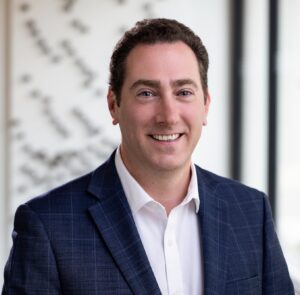
On this episode of Behind the Breakthroughs, Alto Neuroscience founder and CEO Amit Etkin, MD, PhD, discusses how precision medicine will change mental health care. Etkin explains how objective biological measures like cognitive testing, EEG brain activity, sleep and circadian rhythm monitoring, and advanced computational analysis can help identify patients who will benefit from specific therapies rather than just symptoms. Comparing psychiatry to precision oncology, he explains why it is at a turning point. Instead of finding a perfect biomarker, the field is developing practical, scalable tools to link brain function to targeted drug development.
Etkin shows from Alto’s clinical pipeline how matching therapies to biologically defined patient populations can improve outcomes and reduce psychiatric treatment uncertainty. We also examine the potential and limitations of genetics, multi-omics, wearables, and AI in precision psychiatry. Etkin explains why brain measurements may be more clinically useful than peripheral biomarkers and how AI can help find patterns in complex biological data. Finally, we discuss how precision psychiatry will become routine clinical practice, from regulatory acceptance and standardized data collection to the first biomarker-guided therapies. If successful, these advances could transform psychiatric disorder diagnosis, treatment, and understanding.
This interview has been edited for length and clarity.
IPM: What has been the key limiting factor to advancing precision psychiatry?
Etkin: There was a period of time in the 1940s, 1950s, and 1960s when psychiatry was beginning to develop. Our definition of diseases was bespoke to how you practiced them. They really made very little sense.
The DSM did a great job of bringing everybody under the same diagnostic umbrella. We can talk about a common set of symptoms and everybody’s talking about them. Yes, we have wonky definitions of diseases, but at least we’re starting to use the same definition.
We are finding large, heterogeneous groups of people that fit into a category. If you examine the words used to describe some psychiatric labels from the past, they sound antiquated because they are linked to outdated concepts and are inconsistently defined. That was good. The problem is that we never transitioned beyond that.
I try to focus on a much simpler approach to what we’re doing. Instead of thinking about biomarkers, machine learning, and so forth, it’s about knowing what we are doing. If what you’re doing is developing a drug for a population with depression, it’s a massive category where some people just symptomatically might sleep more and others sleep less, and some eat more and others eat less. There seems like it’s a bit of a mess. What would you want to know? At a very basic level, that would simply allow you to know what you’re doing better. What would you like to measure?
There are any number of answers. We know that some patients with depression have cognitive problems and others don’t and that people with cognitive problems have worse outcomes regarding standards of care and treatment. We’ve known that for a long time. But why aren’t we doing that measurement systematically in every single drug trial or in clinical care? Because if we did that one little thing systematically, we would see that some treatments or people saw it one way and others saw it another way just by collecting that data more systematically. That’s what we had been doing in the lab: figuring out what kind of data to collect systematically.
That’s what led us to the form Alto, understanding that there are certain measures, like cognition and brain activity. We do this non-invasively with electroencephalogram (EEG) brainwave recordings and wearables to look at circadian rhythms that are physiologically and biologically meaningful, easily scalable, low cost to meet our health system’s needs, and, if done consistently, insightful for separating populations and identifying mechanisms to develop for them and for translating back to an animal model, which is not possible if you only look at depressive symptoms.
Do we know what we’re doing now? No. We’re really just beginning on this journey as a field. But I do think people now recognize that this is the direction of travel. You can see that more and more companies and academic research centers are emerging under this theme.
IPM: What are your thoughts on the use of genomics, multi-omics, or blood-based biomarkers of the central nervous system?
Etkin: The way I interpret that literature is that there’s smoke but not yet fire. The classical molecular marker is genetics. We get that on every patient, but we do not use stratification here, as genetics cannot achieve meaningful stratification in our populations. It’s predominantly common variance with each of them, or in combination, having a very rare large effect size variance, which is really not going to be clinically meaningful from a drug perspective because you’re treating one out of every 10,000 people or whatever the prevalence is.
I don’t know the best polygenic risk score for schizophrenia, determined from 100,000 people, which is probably the high watermark for psychiatric genetics and may explain 1–2% of the variance. You needed to explain at least 10% to stratify the population even a little bit. I don’t think genetics will ever get us there for that purpose.
Where there’s smoke but not yet fire are immune measures. There have been many implications for different immune measures in psychiatric disorders, but every time it gets tested to see whether people with high inflammation respond to something that targets our process directly or indirectly, those studies never really work out.
Then there’s the even larger world of multi-omics, where you have a multiple testing issue and, fundamentally, the problem that what you’re sampling is very peripheral to the organ that matters. Where is the serotonin in the blood coming from? It’s mainly coming from platelets—it’s not coming from the brain. The bulk of serotonin in the body is in the gut. So you can measure… a ton of different proteins, different configurations, and modifications to those proteins probably have relatively little purchase on what is going on in the brain.
The simplest example is a protein called brain-derived neurotrophic factor (BDNF), which is a really important neuroplasticity protein in the brain. It’s also found in the blood, and people tried over and over and over again. You see some positive studies, but mainly studies that are negative and some that are just not published that come to the conclusion that there’s very little bearing of what you’re measuring peripherally to what’s going on centrally.
Measuring the brain directly with EEG or the output of specific brain circuits through behavioral tests is much more amenable and has better performance statistics and interpretability for gaining insights.
IPM: Has a specific layer or test modality enabled precision psychiatry programs for Alto Neuroscience, or are they ultimately based on aggregate measures?
Etkin: Less so in aggregate as measured together but each alone. We try not to combine everything into one model because it becomes very complicated, and we have already been told by the FDA in no uncertain terms that a multimodal biomarker is not something we will readily consider. To get a multimodal biomarker approved for some sort of use, you have to validate each and every component alone and their combination, which sounds like a headache. But I’m not sure you necessarily need to either.
What I would consider to be a win is getting a drug for the whole population with a marker that enriches finding ways to show additional value in a drug program through a biomarker perspective and, over time, an iteration. The field then transforms into one where oncology already exists, which means they expect you to know what you’re doing. You have to understand the population. You have to understand how your drug impacts the biology that defines the population. We’re not there yet.
But they weren’t there yet either, in the same kind of single stroke that we now envision. It was like the first precision therapeutics, like Herceptin, were approved well over a decade before the immuno-oncology (IO) revolution. That really brought precision oncology into maturity, as we understand it now. That history suggests we probably need our IO moment as an inflection point, but we are not yet ready for it.
We need that Herceptin moment first: start transitioning how people think and collect data and create a bit more of a common language across programs so that different drug makers and different academic labs aren’t collecting their own unique data sets that aren’t then harmonized across them. You can’t speak about a thing as an invariant measure of a process that doesn’t matter who is measuring; they get the same outcome.
The field has been somewhat resistant, probably for cultural reasons related to how people have historically operated, to a lot of data sharing and harmonizing of what we’re collecting, how we’re collecting it, and how we’re analyzing it. We’re just starting to really move in that direction. Those are all limits that gate the early-stage biomarker collection efforts.
IPM: Is there a future where someone walks in with a psychiatric condition and undergoes a battery of measurements that spits out a drug that has a high probability of being effective?
Etkin: I think that bar is a lot lower than that. It doesn’t have to be very effective—it just has to be more effective than chance. because that’s where we are. If I told you that instead of a 30% chance of remission with a drug, I could increase it to 40% or 45%, would that be helpful? That’s meaningful. You convert that to a number needed to treat it. For a clinician, this represents a significant effect, although it does not achieve perfect precision. All you need is something better than nothing, which is what we have. Of course, once you have something that’s better than nothing, now you have a new benchmark, and things will continue to improve, which is great. But the field’s got to start somewhere.
I don’t think it is that far away. I think in our efforts and the efforts of others in the field who have followed suit and taken a precision approach, something will work. When that changes, all of a sudden you can’t envision going back; it’s only going forward. That’ll be super exciting. It’s not like a “by the time I retire” kind of thing. It’s within the next five or a maximum of ten years that we will be at that inflection point.
IPM: Does precision psychiatry apply to the rest of neurology?
Etkin: If you anchored on the way I framed brain circuit function earlier. And what’s measurable is that there is no line between psychiatry and neurology. You have neurologists who are called “functional neurologists” or something in that vein, where they think about what I would call the “psychiatric aspects of neurology.”
A big part of Parkinson’s is cognitive impairment in a substantial portion of people, leading to dementia. Nothing to do with the movement disorder, but everything to do with the biology affecting different circuits. The right mood, in fact, is one of the earliest areas of perturbation in Parkinson’s that will then predict the development of the motor symptoms. Some people have perfectly well-controlled motor problems but have cognitive problems and mood problems that are even more prominent and lead to more, especially on the cognitive side, of their ultimate disabilities. Cognitive impairments are even a contraindication for deep brain stimulation.
Because of these interactions, all of these boundaries are artificial. It’s just a core engineering question of, can I know what I am measuring and what I am manipulating? There’s no reason we need to draw that line in an artificial way. It’s just about whether I can leverage the tools and the drugs in a useful way together.
The post Amit Etkin: Precision Psychiatry’s Future Isn’t Genomics—It’s Brain Activity appeared first on Inside Precision Medicine.