

School refusal behavior (SRB) is a prevalent and functionally heterogeneous problem among children and adolescents that can lead to serious academic, social, and psychological consequences. The School Refusal Assessment Scale–Revised (SRAS-R) is the most widely used instrument for identifying the functional motivations underlying school refusal, yet its psychometric properties have not been examined in Chinese clinical populations. The present study aimed to translate and culturally adapt the SRAS-R into Chinese and to evaluate its psychometric properties in a clinical sample of adolescents with depressive disorders. A total of 171 adolescent outpatients (age range 12–19 years; M = 15.5, SD = 1.90; 67.3% female) diagnosed with DSM-5 depressive disorders and meeting criteria for school refusal behavior completed both child and parent versions of the Chinese SRAS-R. Confirmatory factor analysis (CFA) using diagonally weighted least squares estimation was conducted. After removing Items 20 and 24, the four-factor model yielded strong CFI and RMSEA values for both parent (CFI = 0.99, RMSEA = 0.021, SRMR = 0.094) and child reports (CFI = 0.98, RMSEA = 0.028, SRMR = 0.097), although SRMR values were marginally above the prespecified threshold. Internal consistency reliability ranged from marginal to good across subscales (Cronbach’s α: parent = 0.664–0.815; child = 0.700–0.864), with parent-reported Factor 4 showing the weakest reliability. Factor 1 (avoidance of aversive school situations) obtained the highest mean scores for both informants, consistent with the depression-related negative affectivity characteristic of this clinical sample. Cross-informant discrepancy analyses revealed that children reported significantly higher scores than parents on Factor 2 (escape from social/evaluative situations; p = .017, d = 0.18) and Factor 4 (pursuit of tangible reinforcement; p <.001, d = 0.27), suggesting that parents may underestimate internally driven motivations. Intraclass correlation coefficients indicated fair to good parent–child agreement (ICC = 0.45–0.62), with the highest agreement for Factor 1 and the lowest for Factor 4. The findings provide initial internal-structure and reliability evidence for the Chinese SRAS-R in this single-site clinical sample and underscore the need for multi-informant assessment, while future studies should examine convergent, discriminant, criterion-related, and predictive validity in more diverse samples.
Global economic burden of depression in 154 countries from 2025 to 2050
Nature Medicine, Published online: 28 July 2026; doi:10.1038/s41591-026-04548-7
A macroeconomic modeling analysis across 154 countries estimates that depression will impose a US$12 trillion global economic burden between 2025 and 2050, equivalent to around 0.5% of the annual global GDP.
Mobility Patterns and Mental Health During the COVID-19 Pandemic: Longitudinal Observational Study Using Smartphone Mobility Data
<strong>Background:</strong> The COVID-19 pandemic disrupted mobility globally, but its mental health implications remain difficult to characterize because most studies relied on lockdown status, population-level mobility indicators, or self-reported mobility. These approaches may miss individual differences in actual movement patterns and cannot fully examine bidirectional relationships between mobility and mental health. Individual-level smartphone geolocation data may provide a more objective and temporally aligned measure of mobility during periods of societal disruption. <strong>Objective:</strong> This study aimed to use individual-level Google location history (GLH) data and population-level Google community mobility reports (GCMRs) to examine concurrent and longitudinal relationships between pandemic-era mobility patterns and mental health symptoms in Hong Kong. <strong>Methods:</strong> This study analyzed data from the CU-COVID19 cohort study, an online longitudinal survey study of the psychological impact of the pandemic in Hong Kong. Mental health symptoms over the previous 14 days were assessed at baseline, 6 months, and 12 months using the 9-item Patient Health Questionnaire, the 7-item Generalized Anxiety Disorder scale, and the 4-item PTSD Checklist for DSM-5. Participants provided retrospective GLH data reflecting their mobility during the corresponding 14-day survey periods. The analytic sample included 145 participants with baseline GLH data, of whom 110 had 6-month follow-up data and 49 had data available at all 3 assessment waves. GLH data were used to derive mobility factors representing journey diversity, immobility, and remoteness. Population-level mobility during the same 14-day periods was measured using Hong Kong GCMR residential stay data. Concurrent mediation models examined whether individual mobility mediated associations between population-level residential stay and mental health symptoms. Longitudinal models examined bidirectional associations between changes in individual mobility and mental health across 6-month intervals. <strong>Results:</strong> Population-level residential stay was not directly associated with mental health. In concurrent mediation models, higher population-level residential stay was associated with lower individual journey diversity (β=–0.36; <i>P</i><.001), and lower journey diversity was associated with higher depression (β=–0.29; <i>P</i>=.02) and posttraumatic stress disorder (PTSD) (β=–0.35; <i>P</i>=.002). Bootstrapped indirect effects suggested mediation through journey diversity for depressive symptoms (β=0.11, 95% CI 0.02-0.25) and PTSD symptoms (β=0.13, 95% CI 0.05-0.27), although the depression-related indirect effect became less robust after adjustment for local and individual COVID-19 infection indicators. Longitudinally, higher baseline depressive symptoms predicted subsequent reductions in journey diversity (β=–0.15; <i>P</i>=.02), and reductions in journey diversity predicted higher subsequent depressive symptoms (β=–0.43; <i>P</i>=.008). <strong>Conclusions:</strong> Individual-level mobility patterns, particularly lower journey diversity, showed more consistent associations with mental health symptoms than population-level residential stay. Findings suggest bidirectional relationships between mobility and mental health and demonstrate the potential of smartphone geolocation data for digital phenotyping. However, the modest and self-selected sample, limited GCMR availability, and observational design require cautious interpretation.

<![CDATA[Concussion recovery in teen athletes often masks anxiety or depression; learn warning signs, screening tips, and safer return-to-play steps.]]>
Historical trauma as a contributor to postpartum depression among Indigenous mothers
IntroductionPostpartum depression (PPD) is a significant public health concern. Moreover, research suggests that American Indian/Alaskan Native (AI/AN) mothers experience postpartum depression at higher rates than the general population (Heck, 2021; Ko et al., 2017). As a result, understanding the potential causes of higher PPD among AI/AN mothers is helpful to the development of better interventions to reduce PPD among AI/AN mothers. A potential cause of higher PPD symptoms among AI/AN mothers is historical trauma (HT). HT refers to the cumulative psychological wounding experienced across generations due to systemic oppression, colonization, slavery, and other traumatic events experienced by a group of individuals.MethodsTo test the theorized relationships between HT and PPD symptoms, we conducted an online survey of adult women who both identified as Indigenous and who give birth in the past five years (N = 56). The survey consisted of the psychometrically suitable measures of the Historical Loss Scale (HLS: Whitbeck at al, 2004) and the Edinburgh Postnatal Depression Scale (EPDS; Cox et al., 1987). .ResultsThe results indicated that a model of HLS scores as a predictor of PPD symptoms over and above the controls of income, mental health diagnosis, and the total number of children of the birth mother fit the data well (χ2 = 13.60; df = 10; p = .192; RMSEA = .081 [90% CI: .000, .178]; CFI = .949). Moreover, of all the predictors, the dimension of the HLS measuring mothers’ endorsement of the presence of oppressive governmental and institutional policies toward AI/AN was the strongest predictor of greater PPD (β = .28, p < .05). A Bollen Stine bootstrap test was also used to confirm the stability of the model. The Bollen Stine operates by comparing the theorized model to a model that perfectly fits the data. The results of the Bollen Stine test indicated that the theorized model was not significantly different than a model of perfect fit. .DiscussionSuch results suggest that a potential explanation of higher PPD symptoms among AI/AN mothers is the effects of HT. Future interventions to reduce PPD symptoms among AI/AN mothers may benefit from an additional focus on treating HT.
Clinical Outcomes and Predictors of Improvement With Virtual Behavioral Health Care for Gambling Disorder: Retrospective Cohort Study
<strong>Background:</strong> Gambling disorder is associated with substantial psychiatric and functional burden, yet few individuals receive treatment. Limited real-world evidence exists evaluating outcomes of virtually delivered behavioral health care for gambling disorder, particularly among clinically complex patients. <strong>Objective:</strong> The purpose of this study was to evaluate gambling symptom severity outcomes among adults with gambling disorder receiving care from Birches Health. We aimed to (1) characterize the clinical profile of adults seeking treatment for gambling disorder; (2) quantify changes in gambling symptom severity over the initial 12 weeks of treatment and examine whether baseline clinical complexity, such as gambling symptom severity, depression severity, and psychiatric comorbidities, was associated with differences in gambling symptom severity improvement over time; and (3) estimate the timing and likelihood of achieving clinically meaningful improvement in gambling symptom severity. <strong>Methods:</strong> This retrospective cohort study included 1305 adults receiving virtual behavioral health treatment for gambling disorder through Birches Health between June 2024 and April 2026. Gambling symptom severity was assessed using the Gambling Symptom Assessment Scale (G-SAS) weekly. Linear mixed-effects models evaluated changes in gambling symptom severity over 12 weeks and associations with baseline clinical characteristics. Clinically meaningful improvement was defined as a reduction of 4 or more points in the G-SAS score. <strong>Results:</strong> Participants had a mean age of 41.5 (SD 13.1) years, 65.2% (851/1305) were male, and baseline gambling symptom severity was moderate (mean G-SAS score 20.5, SD 11.83). Over half (730/1305, 56%) of participants presented with at least one psychiatric comorbidity, most commonly anxiety disorder (351/1305, 26.9%) and depressive disorder (276/1305, 21.1%). Gambling symptom severity declined significantly over the first 12 weeks of treatment, with G-SAS scores decreasing by approximately 0.099 points per day (<i>P</i><.001), corresponding to an estimated 8.3-point reduction over 12 weeks. Higher baseline depressive symptom severity was associated with faster improvement in gambling symptoms (<i>P</i>=.01), whereas depressive disorder (<i>P</i>=.03) and attention-deficit/hyperactivity disorder (<i>P</i>=.008) diagnoses were associated with slower improvement trajectories. Among patients with routine follow-up assessments recorded during the initial 12 weeks of treatment (1071/1305, 82.1%), 71.7% (935/1305) achieved clinically meaningful improvement in gambling symptom severity, with a median time to improvement of 14 days. <strong>Conclusions:</strong> A clinically complex population of adults receiving care through a national virtual behavioral health care provider demonstrated rapid and clinically meaningful reductions in gambling symptom severity. These findings highlight the potential of specialized virtual care models to expand access to gambling treatment and support symptom improvement in routine care settings. Future research should evaluate longer-term recovery trajectories and identify factors associated with sustained improvement and ongoing engagement in care.

Big Five personality profiles, self-reported distress, and resilience resources among adults in Italy after the acute COVID-19 emergency: a cross-sectional cluster-analytic study
IntroductionPsychological recovery after the acute COVID-19 emergency has been uneven, and brief non-diagnostic markers that stratify vulnerability may support public mental health monitoring. We examined whether person-centered Big Five profiles differentiated self-reported distress and resilience resources among adults living in Italy after the end of the World Health Organization-declared COVID-19 public health emergency.MethodsThis cross-sectional anonymous online survey included 2,169 adults assessed between 22 May 2023 and 23 December 2024. Participants completed the Big Five Inventory-10 (BFI-10), Generalized Anxiety Disorder-7 (GAD-7), Patient Health Questionnaire-9 (PHQ-9), Perceived Stress Scale-10 (PSS-10), and Resilience Scale for Adults-11 (RSA-11). Standardized Big Five scores were clustered using k-means, and the number of profiles was evaluated using elbow, silhouette, and hierarchical-clustering methods.ResultsA two-profile solution was retained, although separation was modest (average silhouette width = 0.185). Compared with the resourceful trait profile (n = 1,113), the vulnerable trait profile (n = 1,056), characterized especially by lower emotional stability and conscientiousness, reported higher anxiety symptoms (g = 0.74), depressive symptoms (g = 0.76), and perceived stress (g = 0.86), and lower resilience resources (g = −1.02; all p < 0.001).DiscussionBrief person-centered Big Five profiling differentiated adults with greater self-reported symptom burden and fewer resilience resources in a prolonged post-emergency context. These findings are non-diagnostic and do not establish COVID-specific causal mechanisms, but may inform vulnerability stratification during future prolonged crises.
A Digital Acceptance and Commitment Therapy and Education Intervention for Caregivers of Very Preterm Infants in the Neonatal Intensive Care Unit: Randomized Controlled Trial
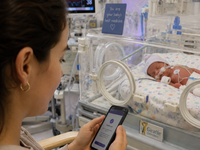
Background: Parents of very preterm infants admitted to the neonatal intensive care unit (NICU) experience high levels of psychological distress, yet access to timely, evidence-based mental health support is limited by staffing and resource constraints. Digital mental health interventions offer a scalable approach to addressing this gap; however, their effectiveness has not been well established in NICU caregiver populations, particularly during periods of acute stress. Objective: This study aims to evaluate the effectiveness of a self-guided digital acceptance and commitment therapy (ACT)–based intervention combined with NICU-specific education (NICU parent acceptance and commitment therapy [NPACT]). The study explored the intervention’s effects on stress among parents and primary caregivers of very preterm infants, compared to a digital education-only intervention, and active control. Methods: We conducted a 3-arm, single-center, randomized controlled cluster trial in a tertiary NICU. Parents and primary caregivers of very preterm infants (<32 wk’ gestational age,<1 wk old) were randomized by family cluster to (1) NPACT (ACT+ education), (2) a digital education-only intervention, or (3) active control. Digital interventions were delivered via a web-based platform over 2 weeks. The primary outcome was NICU-related stress on the Parent Stressor Scale: Neonatal Intensive Care Unit (PSS:NICU) at 2 weeks postrandomization. Secondary outcomes included caregiver anxiety, depression, perceived stress, and selected neonatal outcomes. Engagement and perceived helpfulness were assessed for digital interventions. Results: A total of 102 caregivers from 68 family clusters (79 infants; mean gestational age 28.1, SD 2.2 wk) were enrolled. There were no statistically significant between-group differences in the mean PSS:NICU scores at 2 weeks (NPACT 3.0, SD 0.9; education-only 2.5, SD 1; active control 2.6, SD 0.9; adjusted mean difference for NPACT vs active control 0.04, 95% CI −0.39 to 0.47). No between-group differences were observed for secondary psychological outcomes at any time point. However, caregivers in both digital intervention groups had higher odds of full breastfeeding at discharge compared with active control. Engagement with the digital interventions was high, with 97% (28/29) of NPACT participants and 76% (19/25) of education-only participants completing at least 5 of 7 modules, and both interventions were rated as very helpful. Conclusions: In this trial, an unguided digital mental health intervention delivered during NICU admission did not reduce NICU-specific parental stress or other psychological outcomes relative to active control. However, the intervention was highly used by caregivers. These findings suggest that while a brief digital mental health intervention can be successfully implemented in a high-stress clinical setting with caregivers, its capacity to reduce acute psychological distress may be limited. Secondary findings indicate potential benefits of the digital intervention on breastfeeding, generating hypotheses for future research. Digital mental health interventions in neonatal settings may be most effective when integrated within hybrid models of care and/or delivered beyond the acute admission phase. Trial Registration: Australian New Zealand Clinical Trials Registry ACTRN12623000641695; https://tinyurl.com/2e8677bb International Registered Report Identifier (IRRID): RR2-10.1016/j.cct.2024.107519
Art therapy for depression: a systematic review and meta-analysis
IntroductionDepression is among the leading causes of disability globally. Therefore, exploring the various non-medical treatment options for this condition is particularly important. The aim of the review was to assess the effect of art therapy on depressive symptoms.MethodsThe foundation of this review is a pre-planned, explorative, secondary analysis of a previously published umbrella review, encompassing the databases Cochrane Library, Embase, MEDLINE, CINAHL, ERIC, American Psychological Association PsycArticles, American Psychological Association PsycInfo, PSYNDEX, the German Clinical Trials Register, and ClinicalTrials.gov. Included were all randomized trials with any patient population receiving active visual art therapy. The outcome was depressive symptoms measured by depression assessment instruments. We followed the Preferred Reporting Items for Systematic Reviews and Meta-Analyses (PRISMA) guidelines and conducted a bias assessment using a modified Cochrane risk of bias tool. Data was pooled using a random-effects model and visualized in forest plots. A pooled standardized mean difference (SMD) with hedges g was calculated to measure the reduction of depressive symptoms.ResultsOf 3,100 identified reports we included 26 studies. Of these, 19 studies with 997 patients were eligible for inclusion in the meta-analysis. Overall, we found a standardized mean difference of 0.53 (95% CI: 0.30 to 0.76) for depressive symptoms, favoring the intervention group. Main sources of variation were different types of control groups, methodological quality, and patient populations.ConclusionOur results suggest that art therapy is associated with improved depressive symptoms. Therefore, art therapy should be accessible as complementary treatment for patients suffering from depressive symptoms.
Sex-related molecular phenotypes in anxiety-depressive disorders: a machine learning analysis of routine blood biomarkers
BackgroundAnxiety disorders and depressive disorders are the most prevalent mental disorders worldwide. Their diagnosis has long relied on clinical symptom assessment, and objective blood−based biomarkers remain lacking. Sex is a critical risk factor for these disorders; however, sex−specific divergence in blood biochemical profiles has yet to be systematically characterized.MethodsThis retrospective study enrolled 778 patients diagnosed with anxiety−depressive state at China−Japan Friendship Hospital. Demographic data, complete blood count parameters, and blood biochemical parameters were collected. Following missing value processing and multiple imputation, Mann–Whitney U tests were applied to identify sex−differentially expressed biomarkers. A random forest classifier was constructed to evaluate the discriminative capacity of combined multi−marker panels, with model performance comprehensively assessed through receiver operating characteristic curve analysis, SHAP−based explainability analysis, and multi−classifier probability projection. Age−stratified analyses were performed with a threshold of 50 years to explore the potential modifying effect of age on sex differences.ResultsSeveral biomarkers exhibiting significant differences between males and females were identified (FDR < 0.05), among which creatinine, hemoglobin, hematocrit, red blood cell count, and uric acid demonstrated the largest effect sizes. The random forest model achieved an area under the receiver operating characteristic curve of 0.902 on the independent test set. Multi−classifier probability projection following hyperparameter tuning yielded a Silhouette coefficient of 0.464 in the two−dimensional space, with permutational multivariate analysis of variance confirming highly significant centroid differences between groups (p < 0.001). Age−stratified analysis using hemoglobin as an example revealed that levels in males were significantly higher than those in females across both age strata, with the magnitude of the sex difference attenuated in the ≥50−year group compared with the <50−year group.ConclusionsRobust sex−related signals are embedded in routine blood biochemical markers. Although complete separation is difficult to achieve under unsupervised dimensionality reduction, these signals can be efficiently integrated through ensemble learning algorithms. This study provides a molecular phenotypic basis related to sex in patients with anxiety−depressive state and underscores the importance of fully considering sex as a variable in clinical laboratory testing.