Conditions: Asperger’s Disorder; Asperger Disorder; Autism Disorder; Autism; ADHD – Attention Deficit Disorder With Hyperactivity; ADHD; ASD; Alcohol Abuse/Dependence; Alcohol Addiction; Alcohol and Other Drug Use Disorders; Alcohol and Other Substance Use Prevention; Gambling Addiction; Gambling Disorder; Sex Abuse; Sex Behavior; Sex Crimes; Sex Disorder; Sex Disorders; Gender Dysphoria, Adult; Eating Behavior Disorders; Narcotic-Related Disorders; Narcotic Addiction; Narcissism; Psychiatric Disorder; Psychedelic Effects in Healthy Volunteers; Psychedelic Experiences; Psychedelic Drug Dependence; Marijuana Use Disorder; Marijuana Abuse and Dependence; Smoking (Tobacco) Addiction; Smoking Among Youth; Smoking Abstinence; Abstinence, Sex; Opiate Substitution Treatment; Opioid Abuse (Disorder); Opioid Abuse and Addiction; Cocaine Abuse; MDMA (‘Ecstasy’); Addiction Disorders; Homeless and Low Incomes People, Refugees; Homelessness; Reliability and Validity; Anger Problems; Child Abuse, Sexual
Interventions: Behavioral: AI City Hall Project (AIhealth4u – Public Health Central); Behavioral: AI City Hall Project (QAIAx Microcity A – AI Public Health Central)
Sponsors: Veterans Recovery Network Inc.; U.S. Special Operations Command; Central Virginia VA Health Care System; AI-119 Vulcan Project Research & Educational Technology Company (fka Henry Nanpei Academy Project)
The mission of the International OCD Foundation — to ensure that no one affected by OCD or related disorders suffers alone — requires the collaboration and dedication of countless individuals and professionals around the world. Each year, the IOCDF is honored to recognize a few of these contributors who have gone above and beyond to inspire hope, build community, and move us closer to a world where everyone has access to effective support and care.
These awards will be presented at the 31st Annual OCD Conference, sponsored by OCD Institute Texas, on Saturday, July 11, 2026.
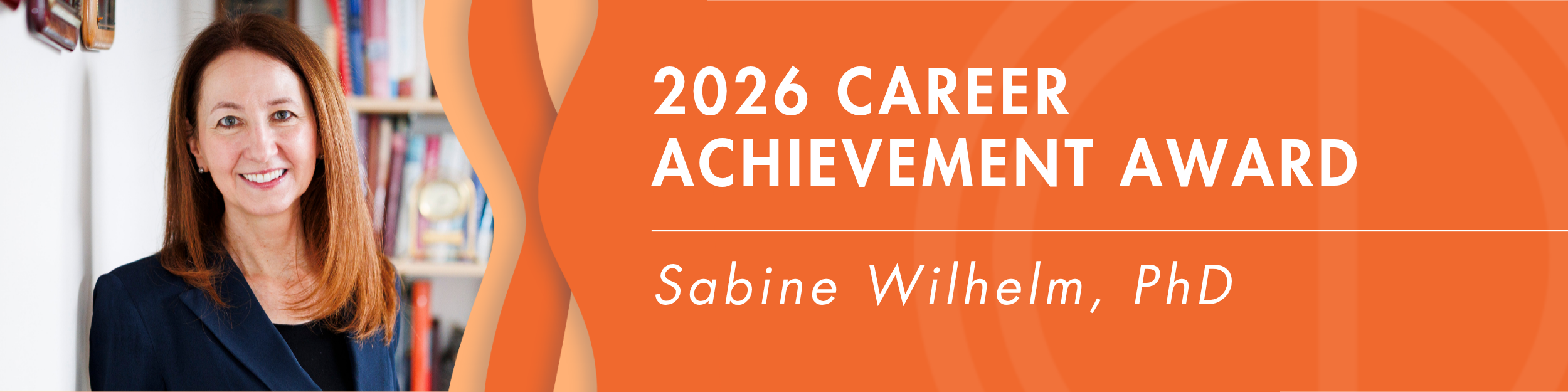
2026 Career Achievement Award Winner: Sabine Wilhelm, PhD
Highlighting the significant and notable contributions of a professional in the field of OCD and related disorders.
Sabine Wilhelm, PhD, is the Donovan-Chien Family Endowed Professor at Harvard Medical School and Chief of Psychology at Mass General Brigham. She directs both the Center for OCD and Related Disorders and the Center for Digital Mental Health at Massachusetts General Hospital. Dr. Wilhelm’s work leverages AI and technology to improve mental health care globally, focusing on developing personalized, scalable digital treatments. She has authored 375 publications and nine books. She has received major awards, including the NAMI Scientific Research Award and the Peter Ranney Innovation Award from the World Medical Innovation Forum. Dr. Wilhelm is the outgoing Chair of the IOCDF Scientific & Clinical Advisory Council after serving since 2023, and she has served on numerous committees to support the Foundation’s work to advance research and resources for OCD and related disorders.
2026 Patricia Perkins Service Award Winner: Aureen Wagner, PhD
Honors any professional or IOCDF member who has stood out as a long-time (10+ years) and active contributor to the IOCDF in multiple ways. This award is named after Patricia Perkins, IOCDF co-founder, past president of the Board of Directors, and previous executive director.
Winner Bio: Aureen Pinto Wagner, Ph.D., joined the IOCDF in 1992 as a newly-minted clinical psychologist. She presented a workshop for parents at her first conference in 2000, and has been a regular presenter at most conferences since then. Dr. Wagner has contributed to several IOCDF livestreams and presented at the annual Online OCD Camp for youth and parents since its inception in 2021. She serves on the Scientific and Clinical Advisory Board of the IOCDF and has been on the faculty of the Behavior Therapy Training Institute since 2001.
Dr. Wagner is dedicated to bringing hope and help to families experiencing OCD via evidence-based, developmentally-tailored treatment, and to increasing access to treatment by training clinicians to treat OCD. With the goal of disseminating evidence-based treatment, Dr. Wagner provides workshops and consultation to clinicians and has published a treatment manual focused on child-friendly treatment titled, “Treatment of OCD in Children and Adolescents: A Professional’s Kit.”
At The Anxiety Wellness Center in Cary, North Carolina, Dr. Wagner provides in-person and telehealth treatment for youth and adults with OCD, anxiety and related conditions, as well as parenting support for families. In keeping with her mission of empowering youth and families, Dr. Wagner wrote the award-winning books “Up and Down the Worry Hill: A Children’s Book about Obsessive-Compulsive Disorder and its Treatment,” “What to do when your Child has Obsessive-Compulsive Disorder: Strategies and Solutions” and “Worried No More: Help and Hope for Anxious Children.”
2026 Hero Award Winner: Stephen Smith
Recognizes any individual that has stood out as a particularly effective advocate for OCD and related disorders or who helped raise awareness of these disorders.
Stephen Smith is the Co-founder and Chief Executive Officer of NOCD, the world’s largest OCD-specialty treatment provider for both adults and children. After emerging from a personal struggle with undiagnosed OCD and experiencing the success of Exposure & Response Prevention (ERP) therapy first-hand, Stephen made it his mission to transform the behavioral health treatment system for people with OCD and related conditions. Under his leadership, NOCD has done that. NOCD drives OCD awareness campaigns that reach millions of people each year, cares for hundreds of thousands of people with OCD, and is contracted to serve more than 140 million commercial lives nationally.
2026 Youth Hero Award Winner: Gabriella Lee
Recognizes any youth (under 18) that has stood out as a particularly effective advocate for OCD and related disorders or who helped raise awareness of these disorders. This award is presented by UNSTUCK: an OCD kids movie.
Gabriella Chaeyoon Lee is a junior at Great Oak High School in California who is dedicated to promoting mental health awareness, particularly surrounding OCD. Inspired by her personal connection to OCD through her mother’s diagnosis, she actively works to reduce stigma and support others through her school club and independent initiatives. She is passionate about creating safe and inclusive spaces where individuals feel understood and supported. She hopes to continue her advocacy and contribute to meaningful change in mental health communities.
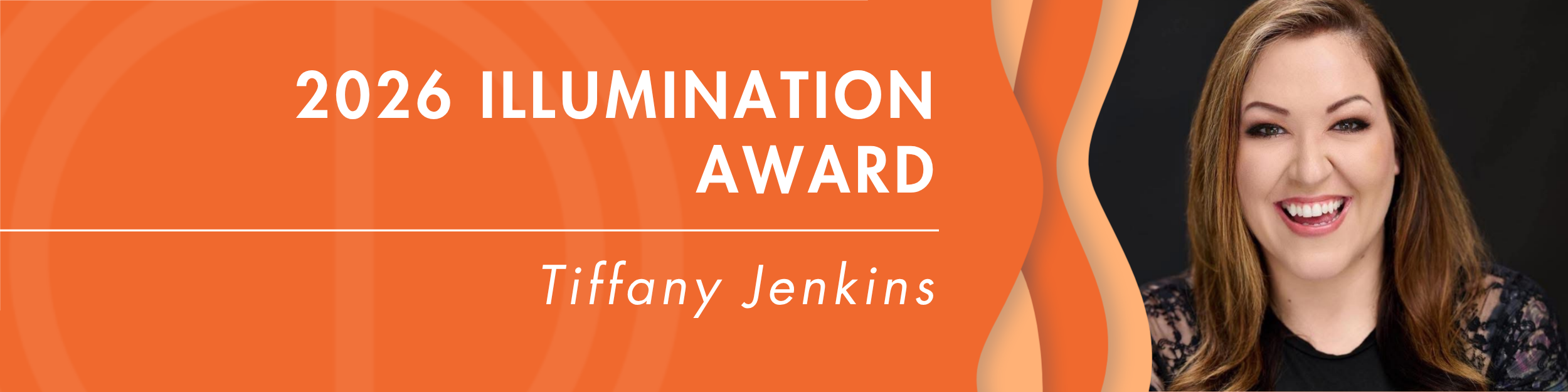
2026 Illumination Award Winner: Tiffany Jenkins
Honors media personalities who have represented OCD or related disorders in a respectful, accurate, and appropriate way, or who have challenged stereotypes and helped to fight stigma around mental health issues.
Tiffany Jenkins is a comedian, New York Times bestselling author, speaker, and podcast host with a combined social media following of over 9 million and more than one billion video views worldwide.
While widely recognized for her relatable and candid comedy, Tiffany is deeply committed to raising awareness around mental health and addiction. Drawing from her own lived experience in recovery, she travels across the United States speaking at high schools, correctional facilities, treatment centers, and conferences, where she delivers impactful, honest conversations that resonate with diverse audiences.
Above all, Tiffany is a devoted mother, bringing authenticity, resilience, and humor into both her work and her everyday life.
IntroductionMental health monitoring is crucial to long-term recovery in substance use disorder (SUD) treatment; however, little is known about how changes in physiological indicators align with changes in self-reported mental health over time.MethodsWe examined longitudinal associations of resting heart rate (RHR) and heart rate variability (HRV) collected via a WHOOP® photoplethysmography device with self-reported stress, anxiety, and depressive symptoms among individuals in SUD treatment. Participants (N = 59) continuously wore the device and completed at least two mental health and stress assessments during the first month of residential treatment. ResultsLinear regression results indicated favorable changes in mental health and/or physiologic metrics, with notable heterogeneity in concurrent subject-level trends. Among participants with decreased RHR (better physiological functioning), 39% (N=23) also endorsed decreased stress, 42% (N=25) decreased anxiety, and 39% (N=23) improved depressive symptoms. Of those with increased HRV (greater stress adaptability), 39% (N=23) endorsed decreased stress, 39% (N=23) improved anxiety, and 41% (N=24) reduced depressive symptoms.DiscussionConcurrent changes in physiologic and mental health metrics during the first month of treatment varied across participants. These findings highlight the importance of integrating subjective mental health measures with physiological indicators to capture clinically relevant change during early SUD treatment.
BackgroundAlcohol dependence is frequently accompanied by cognitive impairment. Brain-derived neurotrophic factor (BDNF) signaling plays a critical role in synaptic plasticity, while the precursor form, proBDNF, has been increasingly implicated in neurodegenerative and psychiatric disorders. However, the association between plasma proBDNF levels and cognitive impairment in alcohol dependence remains unclear.MethodsEighty male patients with alcohol dependence and forty-two matched healthy controls were enrolled. Plasma proBDNF levels were measured via enzyme-linked immunosorbent assay (ELISA). Cognitive function was assessed using the Mini-Mental State Examination (MMSE), the Modified Wisconsin Card Sorting Test (M-WCST), and the Verbal Fluency Test (VFT). Forty-one patients were reassessed after four weeks of abstinence. Group comparisons and correlation analyses were performed.ResultsPatients with alcohol dependence exhibited significantly elevated plasma proBDNF levels and impaired cognitive performance compared with controls. Plasma proBDNF levels were positively correlated with alcohol consumption severity, and linked to global cognitive deficits alongside nuanced executive performance variations. After four weeks of abstinence, plasma proBDNF levels decreased and cognitive performance improved; however, changes in proBDNF were weakly associated with cognitive recovery.ConclusionsElevated plasma proBDNF levels are associated with alcohol dependence severity and cognitive impairment, suggesting that proBDNF may serve as a peripheral biomarker reflecting the dynamic neurocognitive status in alcohol dependence.
When Robert F. Kennedy Jr. took office in February 2025, he broke new ground as the first health secretary openly in recovery from addiction to drugs and alcohol.
At a public appearance soon after, he delivered precisely the message that many substance use experts had hoped to hear: that evidence-based medications for treating opioid addiction, in particular, would remain essential components of the country’s response to its drug overdose crisis.
BackgroundWith the development of technology and the internet, social networks gained momentum quickly and play a central role in daily activities. Despite this, there is a public health concern over excessive or problematic social media use. There is also a debate whether excessive social media use should be considered as a behavioral addiction characterized by impulsivity or an impulse control disorder characterized by compulsivity. The goal of this study is to use neurocognitive tasks to investigate impulsivity and compulsivity among excessive social media users compared with non-excessive users.MethodThe study included 79 participants (age range 18 to 37), divided into two groups: 34 participants who excessively use social media (Mean Age = 23.03, SD = 2.71) and 45 participants who do not excessively use social media (Mean Age = 25.47, SD = 4.3). Participants filled out a demographic questionnaire, questionnaires on social media use, impulsivity, compulsivity, anxiety, and depression. They performed computerized cognitive tasks: GO/NO-GO (with Facebook and traffic sign pictures), Experimental Delay Discounting (EDT), and the Wisconsin Card Sorting Test (WCST).ResultsExcessive users of social media exhibited a lower ability to delay gratification on the EDT, indicating impulsivity. They made fewer non-perseverative errors on the WCST, which indicated high flexibility and test shifting, which is a contradicting evidence for compulsivity. Furthermore, on the GO/NO-GO task, individuals who excessively use social media made more omission errors in response to the “Facebook” sign compared to traffic signs (GO condition), indicating impaired selective attention. Finally, they also showed higher subjective ratings of anxiety, depression, impulsivity, and compulsivity.DiscussionThe results of this study provide evidence for impulsivity indicated by delay discounting tendency, which supports the behavioral addiction model, impaired selection attention and lack of evidence for compulsivity in excessive social media users. Further research on neurocognitive function in excessive social media users is required in order to determine whether it should be considered a behavioral addiction or an impulse control disorder.
ObjectiveThe importance of multiple gene-environment interaction (G × E) has been highlighted in understanding the etiology of negative emotions. This study examines the impact of oxytocin (OXT) polymorphisms (rs2740210, rs6133010, and rs2740209) in combination with alcohol dependence on anxiety and depression symptoms during acute alcohol withdrawal under different social and environmental contexts.MethodA total of 414 Chinese Han male adults undergoing acute alcohol withdrawal were recruited. Participants provided blood samples for genotyping, self-reported measures of depression and anxiety, assessments of alcohol dependence severity, and demographic information regarding social and environmental contexts.ResultsResults revealed a positive correlation between severity of alcohol dependence and symptoms of depression and anxiety, while oxytocin polymorphism did not have a direct effect on depressive and anxiety symptoms. A significant interaction between OXT polymorphism (rs2740210 and rs2740209) and alcohol dependence in relation to anxiety symptoms solely among adults living with family and/or those who were married was observed. Further analyses indicate that the GG and CC genotypes are risk genotypes, while the T allele (rs2740210) and G allele (rs2740209) are non-risk alleles in the interaction between OXT genotypes (rs2740210, rs2740209) and alcohol dependence on anxiety among the aforementioned participants.ConclusionsThese findings provide evidence for distinct G × E interaction effects on anxiety and depression symptoms during acute alcohol withdrawal, supporting the weak diathesis-stress model. Furthermore, the study highlights the importance of considering environmental factors when investigating the role of oxytocin as a biological substrate underlying social bonding and the regulation of negative emotions.
Using specialized contact lenses to stimulate the brain could offer a novel route to treating depression, preclinical research suggests.
The research, in mice, demonstrates how wearable neuromodulation devices can provide a versatile platform for mood and other brain disorders.
It brings eye-based neurotherapies a step closer towards clinical reality and reveals the feasibility of using contact lenses as a bioelectronic strategy for the treatment of depression.
“Our work opens up an entirely new frontier of treating brain disorders through the eye,” said lead author Jang-Ung Park, PhD, from Yonsei University.
“We believe this wearable, drug-free approach holds tremendous promise for transforming how depression and other brain conditions are treated, including anxiety, drug addiction, and cognitive decline.”
Depression is increasingly recognized as a disorder involving structural and functional abnormalities in brain networks.
Conventional treatments—such as pharmacological therapy, electroconvulsive therapy, and deep brain stimulation—target these abnormalities but can be invasive and are often limited in their efficacy or tolerability.
Park and team note that the eye provides a compelling gateway for indirect brain modulation due to its embryological derivation from the brain and extensive connectivity.
Studies also suggest that visual impairment with higher prevalence of depression, further recognizing the importance of the eye-brain axis.
To investigate this avenue further, the researchers developed a contact lens that uses transcorneal electrical stimulation (TES) based on temporal interference (TI) to stimulate the brain. This delivers two electrical signals to the retina, which only become active where they intersect, allowing specific areas of the brain to be targeted.
The platform circumvents the invasiveness and limited tolerability of conventional brain stimulation therapies by using the retina as a precise interface for the eye-brain axis.
Electrodes made from ultrathin layers of gallium oxide and platinum allow the lens to be flexible and transparent, conforming to the cornea and preserving natural vision.
The researchers examined the efficacy of the lenses in a stress-induced mouse model that recapitulated key behavioral and biological features associated with depression.
Depressed mice received either no intervention, temporal interference, or the SSRI fluoxetine and were compared with control mice that were not depressed before and after treatment. Machine learning was applied for comprehensive efficacy evaluation.
The team reported that the lenses restored behavioral, neural, and biological deficits in depression.
When machine-learning integration was used to integrate behavior, brain activity, and biomarkers, it consistently grouped the mice with lenses with the non-depressed control mice rather than the untreated depressed mice.
The researchers acknowledge their research is in its early stages, and that the current study employed a wired configuration to ensure precise waveform control and stimulation stability during proof-of-concept validation.
“Like any new medical technology, our contact lenses will need to go through rigorous clinical evaluation in patients before reaching the market,” said Park.
“Next, we plan to make the lens fully wireless, test it for long-term safety in larger animals, and personalize the stimulation for each user before advancing into clinical trials in patients.”