

Circadian rhythms are crucial to biological functions, and cognitive functions such as attention, choice, and preference-related behaviors are modulated by circadian rhythms and disrupted in mood disorders such as Seasonal Affective Disorder (SAD) and Major Depressive Disorder (MDD). These neuropsychiatric diseases can be induced or worsened by alterations to daily light patterns and can also be treated with circadian-timed bright-light therapy, suggesting modulatory effects of light brightness on mood and behavior. While most laboratory rodents are nocturnal, the Nile grass rat (Arvicanthis niloticus) is diurnal, offering a unique model to study light modulation effects relevant to humans. In this work, we track daily activity in male and female grass rats under varied lighting for several weeks, revealing sex-specific circadian patterns and responses. These findings establish a foundation for mechanistic studies of light effects on mood-related brain circuits in diurnal animals.
Developing Microbiome and Dietary Strategies Based on Chrono-nutrition for Targeting ADHD
Conditions: ADHD; ADHD – Attention Deficit Disorder With Hyperactivity
Interventions: Behavioral: Circadian fasting
Sponsors: Spanish National Research Council; Hospital Universitario Doctor Peset; Institute of Agrochemistry and Food Technology, National Research Council; State Research Agency, Spain
Enrolling by invitation
Interventions: Behavioral: Circadian fasting
Sponsors: Spanish National Research Council; Hospital Universitario Doctor Peset; Institute of Agrochemistry and Food Technology, National Research Council; State Research Agency, Spain
Enrolling by invitation
Usability, adherence and efficacy of coach-augmented dHealth cognitive behavioural therapy for insomnia in South African sexual assault survivors: a pilot study
IntroductionTreating sleep difficulties – a core symptom of posttraumatic stress disorder (PTSD) – can improve both sleep and broader psychiatric outcomes. Digital health (dHealth) applications offer a scalable way to deliver cognitive behavioural therapy for insomnia (CBT-i), particularly for trauma survivors facing barriers to care. However, adherence to these interventions is often poor and may be improved through human support, especially for more demanding components such as sleep rescheduling. This study evaluated the usability, adherence, and preliminary efficacy of a dHealth application delivering sleep rescheduling both with and without coach support, alongside self-guided stimulus control and sleep hygiene components.MethodsFemale sexual assault survivors were assigned to one of two groups comparing the sleep rescheduling component of the dHealth application: either coach-assisted (n = 27) or self-guided (n = 27). All participants received stimulus control and sleep hygiene information embedded in the application, in the form of a newsletter, including a third comparator group (n = 25), which received this information only. Usability and negative effects were self-reported. Adherence was assessed via dropout rates, application engagement, newsletter openings, and compliance with sleep prescriptions. Efficacy was measured by changes in insomnia, depressive, and PTSD symptoms.ResultsThe self-guided group reported lower satisfaction and more negative effects than controls. Compared to the self-guided group, coach-assisted participants showed better adherence to sleep prescriptions. Across groups, insomnia and depressive symptoms decreased significantly. Preliminary evaluation of efficacy showed that PTSD symptoms improved substantially in the coach-assisted and comparator groups, while improvements in the self-guided group plateaued after initial gains.DiscussionUnguided application use was associated with poorer usability, greater negative effects, lower adherence, and some potential weaker outcomes. Preliminary findings suggest that sleep rescheduling may benefit from human support to be effective. Where coaching is unavailable, simple stimulus control and sleep hygiene education may be preferable.
iACT & iTBS for Sleep Quality in Depressed Adolescents
Conditions: Depressive Disorder; Sleep Disturbance
Interventions: Behavioral: Internet-Delivered Acceptance and Commitment Therapy; Device: Intermittent Theta Burst Stimulation
Sponsors: Central China Normal University
Completed
Interventions: Behavioral: Internet-Delivered Acceptance and Commitment Therapy; Device: Intermittent Theta Burst Stimulation
Sponsors: Central China Normal University
Completed
The association between obstructive sleep apnea and total cerebral small vessel disease burden—Neurovascular insights of OSA
ObjectiveThis study was conducted to assess the relationship between the severity of obstructive sleep apnea (OSA) and the total burden score of cerebral small vessel disease (CSVD), global cerebral blood flow (CBF), and cognitive function. Moreover, the internal pathway through which OSA induces cognitive impairment by affecting cerebral perfusion, and overall cerebral small vessel lesions was determined in this study.MethodsIn total, 94 patients who received polysomnography (PSG) at the Mental Health Center of Inner Mongolia Autonomous Region from October 2024 to February 2026 were included in this study. Based on the apnea-hypopnea index (AHI), all individuals were classified into the control and the mild group (AHI < 15 times/h, n = 26), the moderate OSA group (15 ≤ AHI < 30 times/h, n = 27), and the severe OSA group (AHI ≥ 30 times/h, n = 41). Demographic information was collected from all patients, and their cognitive performance was evaluated using the Mini-Mental State Examination (MMSE), Trail Making Test (TMT), Choice Reaction Time task (CRT), Digit Symbol Substitution Task (DSST), and the Trails test with a paradigm similar to Part B of the Trail Making Test. Each patient underwent 3.0T magnetic resonance imaging, including conventional sequences, susceptibility weighted imaging (SWI), and arterial spin labeling (ASL). Finally, the total CSVD burden score was assessed.ResultsThe total CSVD burden and perivascular space (PVS) score in the severe OSA group were significantly higher than those in the moderate group and the control group (P < 0.05). The total CSVD burden was significantly positively correlated with the mean global CBF (P < 0.05). After the BMI was adjusted, the severity of OSA remained independently associated with the mean global CBF (P < 0.05). Total CSVD burden, PVS, lacunes, and global CBF were significantly associated with cognitive function domains (P < 0.05), which indicated that CSVD and global CBF abnormalities may jointly participate in OSA-related cognitive function.ConclusionThe severity of OSA might be related to the CSVD burden score. Neuroimaging characteristics strongly related to cognitive function in patients suffering from OSA, and abnormal global CBF may serve as a non-invasive imaging marker for evaluating neurocognitive damage.
Dynamic Relationships Between Estrogen Fluctuations, Sleep, and Psychiatric Complexity Among Adolescent Females With ADHD: A Pilot Study
Conditions: ADHD
Sponsors: Duke University
Not yet recruiting
Sponsors: Duke University
Not yet recruiting
Video Game Addiction and Kids: Understanding Internet Gaming Disorder
Every night, getting her 16-year-old son Ben to go to bed was a battle Karla would dread. He played video games online in the evening for hours, chatting with friends on his headset. As the time got late and she reminded him it was bedtime, inevitably he’d be in the middle of some campaign and wouldn’t stop. All his friends were still playing together, Ben would argue, and he would miss out.
It’s a classic disagreement in families: Parents are worried that their kids have a video game addiction — they’re unable to limit their time spent playing — and kids think their parents are overreacting. Who’s right?
The jury is still out. While researchers and clinicians acknowledge that gaming has addictive qualities, what constitutes a disorder and how to recognize the signs are still up for debate.
Why parents worry about video game addiction
“There are lots of reasons why parents don’t like video games,” says Dave Anderson, PhD, a clinical psychologist who treats teens at the Child Mind Institute. “They’ll say kids spend too much time playing, and they’re not spending enough time on schoolwork. The video games are violent and contain sexualized content. They’re playing the game online with their friends, and in the chat, they seem to be saying inappropriate things.”
For many kids, video games are a place for entertainment and social connection — it’s fun and something to do with friends. Problems arise when parents need them to stop. “A lot of parents will say it leads to major conflicts when we’re asking them to stop playing video games,” Dr. Anderson says. “But that does not necessarily mean the kid has a gaming disorder.”
What is internet gaming disorder?
While parents might call it “video game addiction,” it’s called “internet gaming disorder” in the official Diagnostic and Statistical Manual of Mental Disorders (DSM-5). Internet gaming disorder is not a fully recognized disorder in the most recent edition of the DSM-5. Since 2013, it has been provisional, categorized as a condition for further study, underscoring the lack of clear consensus on whether it should be a standalone disorder, even as concerns mount about the mental health effects of video games and internet use generally.
The DSM-5 proposes that someone could have internet gaming disorder if they experience at least five of the following over a 12-month period:
- Preoccupation with video games where it becomes the dominant activity in daily life
- Withdrawal symptoms such as irritability, anxiety, or sadness when games are taken away
- Needing to spend increasing amounts of time playing video games
- Has made unsuccessful attempts to control how much time they spend playing games
- Loss of interest in other hobbies
- Has continued game-playing despite being aware that it’s causing problems in their life
- Has lied to others about how much they are playing video games
- Uses gaming to escape or relieve a negative mood
- Has jeopardized or lost a significant relationship, job, or educational opportunity because of gaming
While gaming disorder hasn’t yet been accepted as an official disorder in the United States, the World Health Organization (WHO) adopted it in their standard classification in 2019, and it went into effect in 2022. The criteria are simpler in what’s called the International Classification of Diseases (ICD-11). By the ICD-11 definition, someone has a gaming disorder if they fit at least two of the following over a 12-month period:
- Impaired control over gaming (e.g., onset, frequency, intensity)
- Increased priority given to gaming so that it takes precedence over other life interests and daily activities
- Continuation or escalation of gaming despite negative consequences
Some researchers argue that the simpler ICD-11 definition, with its focus on how gaming negatively affects other aspects of life, is better at capturing when gaming is truly a problem. Kids who use gaming as an escape when they are unhappy might get labeled with internet gaming disorder according to the DSM-5, for example, so clinicians are concerned about risks of overdiagnosis. While there is growing recognition that excessive gaming can be harmful, experts are still studying whether it is an addictive disorder.
Internet gaming disorder and other diagnoses
Dr. Anderson notes that gaming disorder rarely occurs without other disorders, such as ADHD, depression, or social anxiety. “Most of the time we see problematic gaming, it is co-occurring with something else, like ADHD,” he says. “Or they might be on the autism spectrum, and having a hard time making friends, so gaming becomes a kind of retreat. Or they’re depressed, and they feel like other activities aren’t necessarily going to be that rewarding. So they turn to gaming.”
But that doesn’t mean that it isn’t important to take it seriously. Douglas Gentile, PhD, a professor of psychology at Iowa State University who researches the effects of video games and media, notes that several disorders occurring together isn’t unusual. “In fact comorbidity is the norm, not the exception, in mental health,” he says. And he adds that his own research has found evidence that problematic gaming can lead to or exacerbate depression.
“Let’s say there’s a kid who’s not doing well in school, doesn’t have a lot of friends and gets depressed,” he hypothesizes. “So he goes home and he plays games as a way of relieving the stress of that. And that, of course, doesn’t help him make new friends, and it doesn’t help his grades. So he doesn’t get better at those. So he gets more depressed, so he plays more games, so he gets more depressed, right? At some point, the gaming can become a problem on its own.”
Dr. Gentile stresses that it’s valuable for pediatricians, clinicians, and counselors to ask about gaming habits along with other mental health concerns. That’s why he hopes gaming disorder will be recognized as a full disorder in the next edition of the DSM: “We will start remembering, oh, we should ask about this, too, because it often does co-occur with ADHD, depression, anxiety, social phobia, poor school performance, aggression.”
How to tell when gaming is a problem
When a family is concerned about excessive time spent playing video games, Dr. Anderson will ask families for information:
- How much time does your child spend gaming?
- How does it impair their functioning and academic performance?
- How does it affect their sleep?
- How does it lead to conflict?
- What other diagnoses do they have?
Dr. Anderson is cautious about making the diagnosis of gaming disorder if he thinks there’s an underlying condition, because treating that underlying condition might mean the problematic gaming will resolve as well.
“If I think a kid’s depressed and they’re also gaming too much, I am going to make sure that I emphasize the treatment for depression,” Dr. Anderson says. “Because treatment for depression involves behavioral activation — getting the kid involved in certain activities in life, boosting their mood with that kind of that involvement and social support — which is antithetical to the gaming. So that would treat the downstream problem of gaming.”
Treatment for internet gaming disorder
Treatment for internet gaming disorder usually involves cognitive behavioral therapy (CBT), including emotion regulation training skills, which can help people face their problems in life if they’ve been using gaming as an escape. Clinicians also may use motivational interviewing and family-based therapy.
Dr. Gentile has seen programs where family involvement seems to make a difference. One theory, he says, is that kids play video games because it satisfies the deep human need for autonomy, belonging, and competence: They are in control, play with friends, and are good at it.
“If you’re not getting these needs met in real life but you’re getting them met by playing games, you’re more motivated to keep doing the games,” Dr. Gentile says. So the program works with families to get those needs filled with real-life activities, like learning to fish or joining a sports team. Parents also sit down and learn to play video games alongside their child, so they better understand why the kid likes it so much — and that creates a bridge to help improve communication.
Setting boundaries on gaming
While some parents want kids to stop gaming entirely, Dr. Anderson advises against that in most cases. “There are a lot of kids who see themselves as gamers — it’s a part of their identity,” he says. Instead, he encourages parents to place reasonable boundaries on gaming so that their child is investing enough time in four main areas: academics, extracurricular activities, face-to-face time with friends, and sleep.
“This is the thing we’re trying to collaboratively problem solve for,” Dr. Anderson says. “How do we get it so that you complete your homework, you have at least one activity you’re invested in — whether you play an instrument or a sport, or you’re in the school play. You’re spending time with friends in person, and you’re getting enough sleep.” When those are in place, then families can test out having the child engage in a moderate amount of gaming. “Time spent on games is a want, not a need. It’s earned,” he says.
Kids will push back on restrictions, of course. “That just means that we might need more of a behavioral approach — how they earn video game playing time, or think more about the consequences if they, for example, break the controller when they come off of it,” Dr. Anderson says.
“The complaints we hear from kids are, ‘My friends are on at different times. You’re making it so I can’t connect to my friends,’” he says. “And we’ll say, ‘Look, we’re willing to make a reasonable accommodation to try to figure out how you can be on with your friends at the right time. We need these other things that are best for your development. We can then negotiate about when gaming happens.’”
Tips to limit video games
To enforce limits on gaming, Dr. Anderson coaches parents on how to make sure games aren’t available except during the designated times. With younger kids, games are usually played on devices like an iPad that can be taken away. The difficulty in setting boundaries, he says, “usually involves an ‘extinction burst,’ which is the idea that if you’ve got a kid who throws tantrums, their tantrums are going to get worse before they get better when we set boundaries.” He helps parents make a plan to maintain everyone’s safety to get past these behaviors, and he works with the child to learn emotion regulation skills to use when they have to stop doing an activity they enjoy.
But older kids need computers to do schoolwork, so limiting access to games is more difficult. To control cellphone use, he suggests setting screen time limits or blocking apps by using a device like Brick. To control access to video game consoles or computers, parents can remove the power cord.
With kids of all ages, families work on reducing conflict by making access to games something that is predictable and available as long as their other essential developmental needs are fulfilled.
“I want parents to realize that all of those symptoms in youth don’t happen in isolation,” Dr. Anderson says. “Even if you think your child has internet gaming disorder, frequently what we want is a comprehensive diagnostic evaluation to be sure there’s not something else treatable that’s underlying this behavior. Then we can then restore a bit of balance to life and make it so that gaming is not the major activity this kid’s engaging in.”
Frequently Asked Questions
Internet gaming disorder is a term used for playing video games so much that it’s difficult to control and starts interfering with important parts of life. It’s included in the DSM-5 as a condition for further study, meaning experts are still debating exactly how it should be defined.
Experts agree that excessive gaming can become problematic for some kids and adults, but there is still debate about whether it should be categorized as an addiction disorder.
Warning signs include being unable to cut back on gaming, losing interest in other activities, becoming upset when gaming is restricted, and continuing to play despite negative consequences. Gaming can also start affecting sleep, school performance, friendships, or family relationships.
Clinicians look at whether gaming has become hard to control and whether it is causing significant problems in daily life over an extended period of time. They also consider factors like sleep, school performance, family conflict, and whether conditions such as ADHD, anxiety, or depression may be contributing to the behavior.
The post Video Game Addiction and Kids: Understanding Internet Gaming Disorder appeared first on Child Mind Institute.
Young Researchers Honored During the 2026 Youth Mental Health Academy Capstone Awards
Now in its fourth year, the Youth Mental Health Academy (YMHA) at the Child Mind Institute welcomed more than 400 high school students this summer. For five weeks, they engaged in hands-on learning, career exploration, mentorship, and professional development.
Created in partnership with the state of California, YMHA is designed to expand access to mental health career pathways — with a focus on young people from communities historically underrepresented in the mental health workforce. Since launching in 2023, the program has served more than 3,000 students.

Students in the 2026–2027 cohort developed capstone projects focused on mental health topics that matter to them and their communities. From the impact of social media and screen time to the relationship between identity, economic background, and mental health outcomes, they brought their own questions, perspectives, and experiences to their research.
On the final day of the program, students presented their capstone projects to an audience of their peers, mentors, and program staff. Following the presentations, students and their projects were selected for special recognition in six categories: community impact, research excellence, innovation, communication, collaboration, and leadership.
Meet the 2026 YMHA Capstone Award Winners
Community Impact Award
Growing Up Too Soon: The Impact of Parentification on Relationship and Emotional Well-Being
Zamya Slack, Daniela Velazquez, Brenda Ramirez, Amy Marroquin, and Brandon Mares Lopez
YMHA Site: Compton College
Research Excellence Award
Siobhan Walsh, Samian Syed, Sinthia Salcedo, Sn’cer Wannamaker, and Sophia Park
YMHA Site: Virtual
Online Mental Health Resources and Underserved Communities
Carl Aragones, Chloe Tan, Arturo Perez, and Natalia Martinez
YMHA Site: Virtual
Innovation Award
The No-Sleep Club: How Does Lack of Sleep Affect the Youth in Low-Income Communities
Ivery Norman, Jaide Hood, Jocelyn Segovia, and Jackson McGhee
YMHA Site: California State University, Dominguez Hills
Excellence in Communication Award
More Than a Game: Investigating the Effects of High School Sports Team Bonding on Teen Mental Health
Jayden Tcheyacnou, Mattox Williams, Landen Cassel, and Joseph Malana
YMHA Site: California State University, Dominguez Hills
Collaboration Award
Positive vs. Negative Peer Pressure: How It Affects Teen Mental Health
Erica Mandujano, Samaria Ramirez, Prevailer Umejesi, and Zhiyah White
YMHA Site: California State University, Dominguez Hills
Student Leadership Awards
Devin Bennett
YMHA Site: California State University, Dominguez Hills
Mercy Quezada
YMHA Site: Compton College
Julian Sanchez
YMHA Site: Virtual
Explore award-winning capstone projects from previous YMHA cohorts.
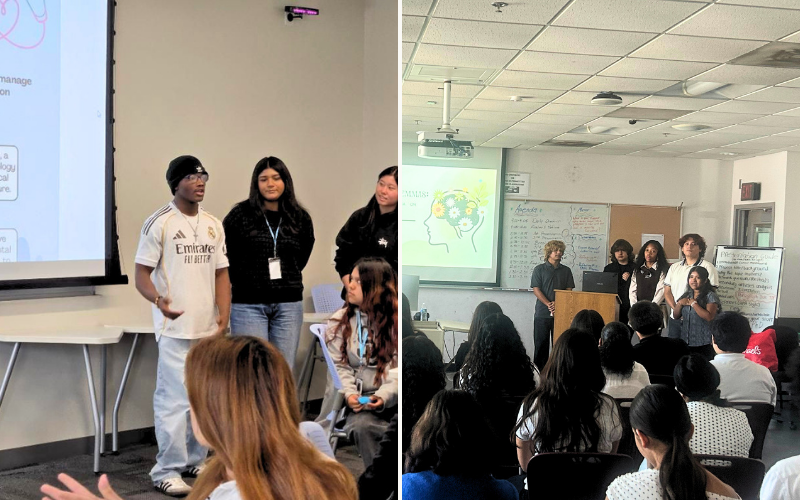
While the Summer Academy has come to an end, the YMHA journey continues for these students. Throughout the school year, they will participate in mentorship, workshops, networking opportunities, and other programming designed to build on their summer experience as well as support their academic and career development.
The mental health field needs diverse voices and professionals who understand the communities they serve. YMHA gives young people the opportunity to explore their interests, build meaningful connections, and begin to see themselves as part of the field.
Learn more about the Youth Mental Health Academy.
The post Young Researchers Honored During the 2026 Youth Mental Health Academy Capstone Awards appeared first on Child Mind Institute.
The relationship between trait mindfulness and psychotic-like experiences in a brief AI-generated music listening context: the roles of presence, perceived interactivity, and emotional arousal
Background and objectiveWithin the interdisciplinary field of cyberpsychology and mental health, trait mindfulness has been associated with lower levels of subclinical anomalous symptoms, such as Psychotic-Like Experiences (PLEs), has gained increasing attention. However, in the context of daily digital human-computer interactions (e.g., listening to AI-generated music), the specific pathways through which Mindfulness operates (the involvement with Presence and Perceived Interactivity) and the boundary conditions of physiological arousal, remain to be clarified. This study aims to explore the direct predictive relationship between mindfulness and individuals’ PLEs, and to investigate the multipath effect of brief AI-generated music listening context (with Presence and Perceived Interactivity), along with the moderating effect of Arousal.MethodsWith a cross-sectional survey design, self-reported multimodal data were collected from 527 Chinese participants. Structural equation modeling (SEM) was conducted using Mplus 8.3 to empirically test the main effects (path coefficients) of the theoretical hypotheses and the moderation model.ResultsBoth the measurement and structural models demonstrated good fit. The path analysis results indicated that: (1) trait trait mindfulness was significantly and negatively associated with PLEs (p < 0.001); (2) regarding the main effect paths of brief AI-generated music listening context, mindfulness significantly and positively predict individuals’ Presence and Perceived Interactivity, while both significantly and negatively predict PLEs; (3) Arousal played a significant moderating role in the relationship between mindfulness and brief AI-generated music listening context, exhibiting a synergistic enhancement effect. Higher levels of Arousal significantly amplified the positive prediction of Mindfulness on both Presence and Perceived Interactivity (p < 0.01).ConclusionsWith the help the SEM, this study maps out the underlying multipath network through which mindfulness is associated with lower PLEs within a brief AI-generated music listening context. The observed associations suggest that presence and perceived interactivity may function as pivotal correlational nodes relevant to mental health correlates, while these results also nuance classic cognitive load assumptions by indicating a potential synergistic association between trait mindfulness and emotional arousal. These results provide a solid empirical foundation and prospective insights, for the mental health-oriented design of AI music products, such as the immersive acoustic environment construction and dynamic, arousal-based interaction recommendations.
Altered tryptophan metabolism as a contributor to cognitive impairment in chronic kidney disease: a narrative review
Approximately 40% of patients with chronic kidney disease (CKD) experience cognitive impairment (CI), which is strongly associated with increased mortality. CI is driven by multiple factors, including vascular injury, accumulation of uremic toxins, disruption of the blood–brain barrier, and chronic inflammation. Recent evidence suggests that kidney disease and neurocognitive decline are mechanistically linked through dysregulated tryptophan metabolism. Tryptophan is metabolised through three main pathways: the kynurenine, indole, and serotonin pathways, each producing bioactive metabolites with distinct neurophysiological effects. The hallmarks of CKD include chronic inflammation, gut microbial dysbiosis, and impaired renal clearance, all of which alter tryptophan metabolism. Inflammation drives tryptophan metabolism towards the kynurenine pathway, increasing the formation of neurotoxic compounds that promote oxidative stress, excitotoxicity, and neuronal injury. However, reduced availability of tryptophan for serotonin synthesis impairs serotonergic signalling and neurotransmission, as well as melatonin biosynthesis, thereby contributing to circadian rhythm disturbances and impaired glymphatic clearance. Concurrently, gut dysbiosis and reduced renal clearance promote the accumulation of indole-derived uremic toxins, leading to endothelial dysfunction, neuroinflammation, and disruption of the blood–brain barrier. This review highlights the current evidence of dysregulated tryptophan metabolism in CKD and its impact on the pathogenesis of neurocognitive complications. The review also discusses potential biomarkers and therapeutic strategies, including kynurenine pathway inhibitors, gut microbiota modulation, uremic toxin adsorption, melatonin supplementation and personalised medicine to mitigate cognitive impairment in CKD.