

Background: Quality of life (QoL) is an important surgical outcome, commonly assessed through self-reports, and has the potential to be enhanced by objective information from personal technologies such as smartphone apps and wearables. Understanding patients’ perspectives on this application of personal technologies is scarce. Objective: This study aimed to identify operational aspects of smartphone- and wearable-based assessments, as well as human and operational factors that may influence the acceptability of already owned (mostly smartphone) or new (mostly wearable) technologies by patients for pre- and post-surgery QoL assessments. Methods: Through purposive sampling, 41 patients from 3 health care centers in Switzerland, the United States, and the United Kingdom, who were undergoing or scheduled for surgery for degenerative cervical myelopathy (DCM), liver transplantation, or total hip replacement, were interviewed about their perceptions of QoL, current use of smartphones, health apps, and wearables for self-management and their views on using these technologies to assess QoL before and after surgery. Results: Across the 3 studies (n=41), most (n=36) patients reported improved QoL after surgery, mainly due to reduced pain and fatigue and regained autonomy, while a few patients with DCM reported no change (n=2) or worsening (n=1). Patients were generally comfortable using smartphones and tablets, but few (n=4) used them for health management. Wearables were perceived differently across groups: they were well accepted in transplant@US, moderately in hip@UK, and least in myelopathy@CH. Many patients with DCM found wearables “useless,” believing they added little to their self-awareness or recovery and could not replace human clinical judgment. Others expressed concerns about privacy, complexity, notifications, and battery life, while some acknowledged their motivational value when the data were clearly interpreted. Despite varying acceptance levels, most participants said they would consider using such devices if they contributed to research or improved care. Conclusions: Given a mostly negative attitude of patients toward wearables, we discuss the use of smartphone-based automated logging of physical functioning (sleep and physical activity) instead. Such logging may be less accurate than a dedicated wearable, but it may be accurate enough to measure their pre- and post-surgery physical functioning changes. Additionally, a smartphone has the advantage of being already well integrated into the daily life of patients from the perspective of its functionality and the patients’ routines, contrary to wearable devices, which would have been provided to the patients in the context of pre- and post-surgery clinical care and require additional attention for their continuous wear, charging, and data synchronization, among others.
<img src="https://jmir-production.s3.us-east-2.amazonaws.com/thumbs/bcd470214df20bf7565f949b56fb5ae1" />
A narrative review on oxytocin at the intersection of sleep, stress, and social behavior
Sleep, stress regulation, and circadian rhythms form an interdependent network that shapes cognition, emotion, and social behavior. Disruption of any component can amplify stress sensitivity and impair emotional regulation, leading to neurobehavioral instability. This review discusses evidence from human and animal studies to illustrate how oxytocin (OT) may function at multiple brain regions to modulate sleep regulation, stress physiology, and social interaction. We discuss mechanisms by which sleep deficiency heightens hypothalamic–pituitary–adrenal (HPA) axis activity and stress-related behavioral reactivity and impulsivity, and how OT signaling is thought to counteract these effects by reducing HPA output and stress-induced behavioral responses. Furthermore, converging evidence from preclinical and emerging human studies suggests that OT release may contribute to non-rapid eye movement (NREM) and rapid eye movement (REM) sleep stability potentially via modulation of hippocampal-amygdalar circuits and thalamocortical network activity, including sleep spindle-related dynamics, thereby enhancing emotional processing and social memory. Social isolation, a potent stressor, reduces OT signaling and disrupts sleep–wake dynamics, suggesting a mechanistic link between positive social interaction and sleep maintenance. Collectively, we propose OT as a key neuromodulatory regulator at the intersection of sleep, stress resilience, and social behavior, providing new insights into the neuroendocrine pathways that underlie adaptive emotional regulation and identifying potential therapeutic targets for stress-related sleep disturbances.
Analysis of characteristics of hospitalized patients with chronic insomnia: a single-center retrospective study
ObjectiveInsomnia is a prevalent health issue within the general population. Nonetheless, there is a paucity of research specifically addressing chronic insomnia among hospitalized patients. Consequently, the objective of this study is to investigate chronic insomnia in adult inpatients.MethodsA retrospective analysis was conducted on hospitalized patients at Fengjie County People’s Hospital in Chongqing from January 2022 to June 2025. The study included patients aged 18 to 100 years, with comprehensive documentation of their demographic information, laboratory test results, and insomnia treatment details. Patients with incomplete data or those under 18 years of age were excluded from the study. The analysis focused on the age distribution, gender ratio, and BMI distribution of the patients, as well as the prevalence of primary diagnostic categories and the distribution characteristics of fasting blood glucose levels and dyslipidemia.ResultsThe study included a total of 871 patients, with a male representation of 39.6%. The mean body mass index (BMI) was 23.1 ± 3.7 kg/m², and the mean age was 64.1 ± 13.9 years. The predominant sources of disease were identified as infectious diseases, cardiovascular diseases, neurological disorders, tumors, and musculoskeletal conditions. A significant proportion of patients presented with elevated fasting blood glucose levels and dyslipidemia.ConclusionChronic insomnia in hospitalized patients predominantly affects elderly women. Chronic insomnia in hospitalized patients predominantly affects elderly women, who primarily present with infectious diseases, cardiovascular conditions, neurological disorders, tumors, and musculoskeletal issues. These patients often exhibit dyslipidemia and elevated fasting blood glucose levels, necessitating clinical attention.
Developing and Testing a Preventive Primary Care Parenting Intervention to Strengthen Parent-Infant Co-Regulation in Families Experiencing Early Regulatory Difficulties
Conditions: Infant Regulatory Problems; Regulatory Problems in Infancy; Parental Stress; Parental Self-efficacy
Interventions: Behavioral: Structured early parenting support program, called “Eat, sleep, cry – repeat”
Sponsors: Universiteit Antwerpen; KU Leuven; Opgroeien
Not yet recruiting
Interventions: Behavioral: Structured early parenting support program, called “Eat, sleep, cry – repeat”
Sponsors: Universiteit Antwerpen; KU Leuven; Opgroeien
Not yet recruiting
Lilly to Acquire Kelonia for Up to $7B, Expanding Cancer Cell Therapy Pipeline
Eli Lilly has agreed to acquire Kelonia Therapeutics for up to $7 billion, the companies said today, in a deal that would bolster the buyer’s oncology pipeline with an early clinical phase lentiviral in vivo chimeric antigen receptor T-cell (CAR T) therapy under study in relapsed/refractory multiple myeloma.
Kelonia’s lead program KLN-1010 is a one-time intravenous gene therapy designed to generate anti-B-cell maturation antigen (BCMA) CAR T cells, targeting the BCMA protein expressed on the surface of multiple myeloma cells.
In December at the American Society of Hematology (ASH) 2025 Annual Meeting, Kelonia presented positive early clinical data for KLN-1010 from the Phase I inMMyCARTM trial (NCT07075185). The data showed the CAR T therapy to have 100% minimal residual disease (MRD)-negative response rate across four patients, all of whom remained in response through the longest follow up of five months.
Those and other results, according to the company, provided initial clinical validation of KLN-1010 and demonstrated promising tolerability. In January, Kelonia won FDA clearance for an investigational new drug (IND) application for KLN-1010, enabling the trial to expand from Australia into multiple clinical sites across the United States.
“The early clinical data for KLN-1010 are highly encouraging, both as a potential step forward for patients with multiple myeloma and as proof of concept for Kelonia’s platform,” Jacob Van Naarden, executive vice president and president of Lilly Oncology and head of corporate business development, said in a statement.
Investors appeared more sanguine about the Kelonia acquisition as Lilly shares were all but flat in early Monday trading as of 11 a.m. ET, to $927.16 from Friday’s close of $927.03. Kelonia is privately held.
KLN-1010 applies the company’s in vivo gene placement system (iGPS®), which uses engineered lentiviral-based particles designed to efficiently and selectively enter T-cells inside the body, enabling a patient’s own body to generate CAR T therapies designed to treat underlying disease.
Lilly and Kelonia reason that KLN-1010 could transform treatment of multiple myeloma by eliminating challenges associated with both ex vivo patient-specific cell therapy manufacturing, and pre-administration chemotherapy.
“Autologous CAR T therapies have meaningfully improved outcomes for patients with various cancers, but significant manufacturing, safety, and access barriers mean that only a fraction of eligible patients actually receive them,” Van Naarden added. “Kelonia’s in vivo platform has the potential to change that by delivering rapid, durable responses in a far simpler, off-the-shelf format.”
Kelonia marks Eli Lilly’s fourth announced acquisition of a smaller biotech this year:
- In March, Lilly committed up to $7.8 billion to acquire Centessa Therapeutics, a developer of sleep disorder drugs.
- A month earlier, Lilly announced plans to buy out circular RNA cell therapy developer Orna Therapeutics for up to $2.4 billion, targeting advancements in cell therapy.
- And in January, Lilly inked a $1.2 billion acquisition of Ventyx Biosciences, an NLRP3-targeting oral drug developer focused on inflammatory diseases.
Behind the deals
Behind all the deals is the pharma giant’s desire to capitalize on the billions of dollars it is generating from sales of its obesity and diabetes drugs based on glucagon-like peptide 1 (GLP-1) receptor analysts alone or in tandem with a glucose-dependent insulinotropic polypeptide (GIP). Lilly markets tirzepatide, a GLP-1/GIP dual agonist, in obesity as Zepbound® ($13.542 billion in 2025 sales) and in diabetes as Mounjaro® ($22.965 billion).
Lilly stands to generate even more in obesity-related sales in coming years once it brings to market its oral obesity drug Foundayo (orforglipron), a small molecule GLP-1 receptor agonist—though analysts predict the drug’s 2026 sales will likely be lower than once expected because of the price war Foundayo faces competing head to head with Lilly’s arch-rival in obesity drugs, Novo Nordisk. In December, Novo Nordisk got a jump on Lilly when the Danish biotech giant won FDA approval for oral Wegovy® (semaglutide), a once-daily 25 mg GLP-1 receptor agonist tablet indicated for chronic weight management.
A Lilly buyout of Kelonia could compel Johnson & Johnson to take a closer look at acquiring Legend Biotech, Kostas Biliouris, PhD, a managing director on the biotechnology research team of Oppenheimer, wrote Sunday in a research note. He cited the fact J&J’s Janssen Biotech successfully partnered with Legend to develop Carvykti® (ciltacabtagene autoleucel), a B-cell maturation antigen (BCMA)-directed CAR T-cell therapy indicated for adults with relapsed or refractory multiple myeloma who have received at least one prior line of therapy. Carvykti generated $1.877 billion in sales last year, up nearly double (96%) from $963 million in 2024.
Also, Biliouris cited the presence in Legend’s pipeline of LUCAR-G39D, a clinical in vivo CAR T program designed to treat B-cell non-Hodgkin’s lymphoma by targeting CD19xCD20. LUCAR-G39D showed positive first-in-human safety and efficacy data from a Phase I trial (NCT06395870) at ASH last December.
“We believe in vivo CAR T technology has strong potential, as treatment process is fast and circumvents the need for lymphodepletion, but think it will likely take ~6-8years before safety/durability questions are addressed, and regulatory approval is granted,” Biliouris predicted.
Lilly has agreed to acquire Kelonia for $3.25 billion upfront plus up to $3.75 billion in future payments tied to achieving specified clinical, regulatory, and commercial milestones. The acquisition deal is subject to regulatory approvals and other customary closing conditions, and is expected to close in the second half of 2026.
Upon closing, Lilly said, it will determine how to account for the transaction in accordance with Generally Accepted Accounting Principles (GAAP), then reflect the deal in future financial results and financial guidance.
“Kelonia’s leadership in advancing the immense promise of in vivo cell therapy is unmatched, extending its reach and impact beyond the traditional boundaries of personalized medicine,” Kelonia CEO Kevin Friedman, PhD, stated. “We have demonstrated the ability to achieve deep multiple myeloma remissions with significantly reduced complexity and cost relative to ex vivo CAR T-cell approaches.”
“In combination with Lilly’s strengths, our in vivo iGPS platform is positioned to broaden the reach of cell therapy beyond the current CAR T landscape in hematologic malignancies and to transform treatment across a far wider range of cancers and other serious diseases,” Friedman added.
The post Lilly to Acquire Kelonia for Up to $7B, Expanding Cancer Cell Therapy Pipeline appeared first on GEN – Genetic Engineering and Biotechnology News.
10x Genomics Unveils Atera Spatial Platform at AACR Meeting
The genomics community’s long wait for 10x Genomics’ highly anticipated news is finally over. On Saturday night, at the Hard Rock Café Hotel in San Diego—across the street from the American Association for Cancer Research (AACR) conference—the company hosted the “Impossible” party to announce its new spatial instrument—the Atera.
Serge Saxonov, PhD, CEO of 10x Genomics, walking onto the stage to thunderous applause, noted that there is “a gap between what we need to see and what we have been able to measure.” The Atera, which enables whole-transcriptome spatial biology at scale, “obliterates the typical trade offs” that come with existing spatial tools, he said.
“This is the biggest launch in our history. I am the most excited I’ve ever been about any product, or any product category, across the board,” Saxonov told GEN. “It has been a long time in development, and it is what we have known the world needs for a long time. I think it will fundamentally change how we measure and understand biology, and it really puts research on a new trajectory. It is really exciting to be at a place now where we can deliver it to the world.”
Nuts and bolts
Atera offers more plex, throughput, and sensitivity than 10x Genomics’ Xenium—enabling whole-transcriptome at scale. More specifically, when compared to Xenium, Atera has four times the throughput, six times higher plex capacity for targeted assays, 3.6x higher plex, and 2–3x sensitivity for whole transcriptome assays.
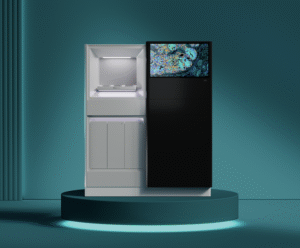
The price for Atera is $495,000, and the instrument measures roughly 53” x 36” x 64” or (4.42 ft × 3 ft × 5.33 ft). Orders are currently being taken, and the instrument will be available in the second half of this year.
The instrument can run up to 800 1 cm2 whole transcriptome samples (FFPE and fresh frozen) per year, with flexible run configurations, and a greater than 5 cm² imageable area per slide (for greater than 2,000 mm² total tissue per run when using all four slides.)
There are 18,000-genes on the Atera WTA (whole transcriptome) with stackable customization of 1,000-gene Atera Select panels available now, and optional stacking of up to three 1,000-gene panels coming in the future.
“Spatial genomics with whole-transcriptome profiling capabilities is the ultimate approach to measure single cells in their tissue context,” Holger Heyn, PhD, ICREA professor at the Centro Nacional de Análisis Genómico (CNAG) and member of the Human Cell Atlas, added. “All other lower-plexity approaches have been just a warm-up phase leading to this application.”
Jasmine Plummer, PhD, associate member of the St. Jude Faculty and director of the Center for Spatial OMICs points out that the whole transcriptome, while exciting, can bring a big “sticker shock” for many researchers because it will require a lot more probes in contrast to a sequencing-based platform, where a library accesses all of the genes.
The instrument uses standard glass microscopy slides, which is exciting to Plummer. In the past, she said, slides have posed a challenge when coordinating with other researchers, and using regular slides will be more “pathology friendly.”
An end to tradeoffs?
Existing spatial technologies, which are still relatively nascent in genomics, have been constrained by tradeoffs between plex, resolution, and throughput. Researchers have had to make choices and prioritize.
“In general, with the landscape as it is today, there is a tradeoff,” Nick Banovich, PhD, VP of scientific development at TGen, and professor of bioinnovation and genome sciences division and director of the Center for Spatial Multi-Omics (COSMO), told GEN. “The closer you walk toward whole transcriptome, the lower the per gene sensitivity.”
“The most exciting thing [about Atara],” he continued, “is that there is still quite good sensitivity with whole transcriptome breadth. That’s the huge advantage of this system; there is no tradeoff anymore.”
However, this launch comes just over three years after Xenium’s launch. Purchasing a new instrument so soon may pose a challenge. Plummer notes: “In this economy, with the uncertainty of scientific funding, it is concerning to ask customers—many of whom just landed a machine—to spend another several hundred thousand dollars.”
Why AACR?
Oncology is one of the most exciting, most promising applications of spatial, especially in the near term, noted Saxonov. This is, in large part, because the work exists across the spectrum—from basic discovery to translation to clinical applications. Spatial is unambiguously important, he asserted.
Unveiling at AACR “just made a lot of sense.”
In addition to the party, the company will host a digital launch event on Tuesday, April 21. Within the AACR program, a presentation from the German Cancer Research Center (DKFZ) will include data generated on the platform, highlighting Atera’s ability to uncover cancer biology not accessible with legacy approaches. Researchers distinguished multiple malignant and stem cell states across disease stages, within a single colorectal tumor sample, and mapped how these populations interact with the surrounding immune microenvironment. The data reveal a more complex immune landscape that could inform future therapeutic strategies and drug development. In addition, two posters (#7116, #6216) will include data from Atera.
The future
10x Genomics said that Atera will play a role in advancing large data studies. For example, the company noted that Atera will enable the goal of the Human Cell Atlas (HCA) as it continues its mission to map every cell type in the human body.
“With the Human Cell Atlas entering its next phase of generating spatially resolved atlases, whole-transcriptome approaches will be the workhorse for data generation,” Heyn told GEN.
“I am excited to see the Atara platform being launched now,” he added. “It is very timely as we ramp up production for the Human Cell Atlas 2.0 phase.”
Atera’s future
The company presented a roadmap with future plans at the AACR event, highlighting spatial proteomics, automation, base by base sequencing (a de novo sequencing assay) and software improvements.
Atera, Saxonov told GEN, is a fundamental platform that the company will continue enabling. It lays the groundwork for the next decade of research and work. This point in time, he said, feels similar to the early days of next generation sequencing (NGS). And although the company will continue to develop its other platforms and product lines, Atera has “massive amounts of headroom to keep building on top of it. It is the convergence of all these different technology stacks and different fields onto one.”
“What the platform can do right out of the gate is exciting. And all the things that it can do in the future will be really, really exciting,” he asserted.
The post 10x Genomics Unveils Atera Spatial Platform at AACR Meeting appeared first on GEN – Genetic Engineering and Biotechnology News.
Use of Wearable Devices to Augment Traditional Measurements of Postoperative Outcomes Following Total Joint Arthroplasty: Systematic Review
Background: Wearable devices enabling remote monitoring by surgeons of their patients have gained prominence around total joint arthroplasty (TJA), offering continuous patient data to identify those not meeting postoperative goals, thereby facilitating timely interventions. While multiple studies highlight the utility of these devices in tracking postoperative progress, a standardized approach to their application is lacking. This review aims to synthesize existing literature on the use of wearable device-tracked activity for monitoring TJA outcomes. Objective: We examined the current literature to evaluate how wearable devices are used in monitoring and improving patient rehabilitation and outcomes following TJA. Methods: A systematic review was conducted following Cochrane methodology. A literature search of all available literature was performed in April 2024 and identified 102 studies to undergo full-text review. Systematic reviews, duplicate papers, and theoretical papers were excluded. Ultimately, 35 studies met the selection criteria. Results: The review revealed that 32 of 35 (91.4%) studies used wearable devices to monitor step counts. A total of 21 (60%) studies incorporated joint-specific patient-reported outcome measures, though the specific measures varied. Further, 9 studies used standardized performance-based outcome measures, which also differed across studies. Finally, 7 (20%) studies collected sleep data; however, the methods and outcomes for sleep measurement were inconsistent among these studies. Conclusions: Remote monitoring via wearable devices offers a novel approach to tracking outcomes in TJA patients. Although the use of these devices in perioperative care is expanding, significant variability exists in the data reported across studies. Wearable monitoring is often integrated with patient-reported outcome measures and standardized functional assessments, yet the optimal data parameters that best correlate with established outcome metrics remain undefined. Additionally, data collected by wearables has not yet been shown to predict patient recovery or satisfaction. Further research is essential to refine these data parameters and the development of postoperative protocols that leverage wearable devices to enhance patient compliance and improve clinical outcomes. Trial Registration: PROSPERO CRD420261346230; https://www.crd.york.ac.uk/PROSPERO/view/CRD420261346230
<img src="https://jmir-production.s3.us-east-2.amazonaws.com/thumbs/84cacc21227b2261fe37fe6071778bab" />
Impact of Prescribed and Self-Selected Music Interventions on Stress, Sleep, Heart Rate Variability, and Brain Connectivity in Surgeons Using 7-Tesla Functional Magnetic Resonance Imaging and Wearable Actigraphy: Multimodal Feasibility Randomized Controlled Trial
<strong>Background:</strong> Stress, sleep deprivation, and burnout are significant safety risks for acute care surgeons, negatively impacting performance, well-being, and clinical outcomes. <strong>Objective:</strong> This pilot randomized controlled trial aimed to measure neurophysiological effects of prescribed music (PM) and self-selected music (SSM) on surgeon stress, burnout, and neurophysiological responses using a multimodal protocol that integrated functional magnetic resonance imaging (fMRI), wearable biosensor monitoring, and psychological self-assessments. <strong>Methods:</strong> Full-time attending surgeons at a quaternary care hospital were invited to participate in a 3-armed trial (1:1:1 block allocation). Intervention groups were instructed to listen to 30 minutes (minimum 15 minutes) of either PM or SSM daily at bedtime for 6 weeks, reflecting real-world conditions. PM comprised original compositions based on elements promoting perceived relaxation from a prior study. The control arm avoided music in the 30 minutes before bed. Allocation was concealed from the recruiting investigator; the fMRI technicians, the statistician, and lead investigators were blinded until analyses were completed. Functional connectivity patterns were measured using fMRI at baseline and 6 weeks while participants listened to simulated intensive care unit noise, PM, and SSM. Secondary outcomes included continuous actigraphy for sleep quality and self-reported anxiety, sleep quality, and burnout using validated scales (State-Trait Anxiety Inventory, Pittsburgh Sleep Quality Index, and Maslach Burnout Inventory). <strong>Results:</strong> A total of 22 surgeons were assessed; demands of fMRI and data collection schedule led 3 to decline and 2 (allocated to PM) not to finish baseline measures; 6 PM, 5 SSM, and 6 controls received allocated intervention; 2 PM participants were withdrawn for nonadherence and missing follow-up data and 1 control missed follow-up collection due to scheduling (final analysis set after missing data: PM: n=4, SSM: n=5, control: n=5). One control participant experienced transient vertigo in fMRI. Trends in fMRI data indicated that both intervention groups experienced less negative emotional arousal and anxiety, with physical tension reduced in the PM group. The PM group exhibited reduced stress response in the frontal lobes when exposed to intensive care unit alarms, suggesting diminished attentional response to the high-stress auditory environment, compared to control. However, lack of statistical significance and baseline variability entail cautious interpretation. Observations of sleep quality were mixed, and no statistically significant differences in stress surveys were observed. <strong>Conclusions:</strong> Both music interventions trended toward positive changes in neurophysiological responses, suggesting potential benefits in reducing surgeon stress. However, due to the small sample, mixed or nonsignificant results, and the exploratory nature of this study, findings should be considered preliminary. Further research with larger, diverse cohorts is required to confirm trends, refine both the intervention approach and recruitment strategies, and determine whether objective compositional elements or personally selected music drive the mechanisms of potential positive effects. <strong>Trial Registration:</strong> ClinicalTrials.gov NCT05980429; https://clinicaltrials.gov/study/NCT05980429

Psychometric validation of the revised Chinese version of the Dimensional Anhedonia Rating Scale in psychiatric outpatients
ObjectiveTo refine the Chinese version of the Dimensional Anhedonia Rating Scale (DARS) and evaluate the psychometric properties of the Revised Chinese DARS (RC-DARS) in a large sample of first-visit psychiatric outpatients.MethodsThe study was conducted in two sequential phases at a specialized psychiatric hospital. In Phase I (n = 277), the existing Chinese DARS underwent semantic and cultural refinement in accordance with ISPOR and TRAPD guidelines, incorporating cognitive interviews and back-translation procedures. In Phase II (n = 788), the RC-DARS was administered alongside the Self-Rating Depression Scale (SDS), Self-Rating Anxiety Scale (SAS), Pittsburgh Sleep Quality Index (PSQI), and the MMPI Suicide Ideation Subscale (MMPI-SI). Exploratory and confirmatory factor analyses were conducted using common-factor extraction and the WLSMV estimator for ordinal indicators. Internal consistency, gender-based measurement invariance, and convergent validity were evaluated.ResultsExploratory analyses supported a four-factor domain structure. Confirmatory factor analysis demonstrated good model fit for the domain-based model (χ²/df = 3.81, CFI = 0.98, TLI = 0.97, RMSEA = 0.08, SRMR = 0.05), with substantially superior fit relative to an alternative reward-processing model. Internal consistency was excellent (Cronbach’s α = 0.95; McDonald’s ω = 0.96). Multi-group analyses supported configural, metric, and scalar invariance across gender (ΔCFI < 0.01). RC-DARS total scores were significantly negatively correlated with depressive symptoms (r = −0.443), anxiety (r = −0.317), sleep disturbance (r = −0.494), and suicide risk (r = −0.312) (all p <.001). Individuals with severe depressive symptoms exhibited significantly lower RC-DARS scores than those below the clinical threshold.ConclusionsThe RC-DARS demonstrates robust psychometric properties in a first-visit outpatient sample. The revision primarily enhances semantic precision and structural differentiation without materially altering score distributions. The scale may serve as a refined instrument for dimensional assessment of anhedonia in similar clinical contexts, pending longitudinal and multi-site validation.
The noise we make is hurting animals. Can we learn to shut up?
When the covid-19 pandemic started, Jennifer Phillips thought about the songs of the sparrows.
They were easier to hear, because the world had suddenly become quieter. Car traffic plummeted as people sheltered at home and shifted to remote work. Air travel collapsed. Cities—normally filled with the honking, screeching, engine-gunning riot of transportation—became as silent as tombs.
For years, Phillips has studied how animals react to “anthropogenic noise,” or the racket created by human activity. Most animals really don’t like it, she and her colleagues have learned. Animals constantly listen to the world around them: They’re on the alert for the rustle of approaching predators, or a mating call from a member of their species. As human society has expanded—with sprawling cities, industrial mines, and roads crisscrossing the world—it has gotten noisier too, and animals have trouble hearing one another.
Noise is invisible; there’s no billowing smokestack, no soiled waterway. We just got used to it as it vibrated in the background.
Phillips and her colleagues had spent time in the 2010s in San Francisco recording the sound of white-crowned sparrows in the Presidio. It’s a park that is half peaceful nature and half automobile noise, since it’s filled with thick clumps of trees and grassy fields but also has two highways that slice through it, feeding onto the Golden Gate Bridge. In past recordings, starting in the 1950s, sparrows had sung with complex and lower-pitched melodies and three major “dialects.” But by the 2010s, traffic in the Presidio had exploded, and the hubbub was so loud that the birds began to sing with faster trills—and at a higher pitch—so their fellows could hear them. The two quietest dialects were either dead or on their way to extinction.
They’re “screaming at the top of their lungs,” says Phillips. “They really can’t hear the lower frequencies when the traffic noise is present.” Urban noise can even change birds’ bodies; they get thinner and more stressed out. Their mating calls aren’t as effective, because female birds, as researchers have found, generally don’t enjoy high-pitched, high-volume shouting. (It makes them wonder if the males are unhealthy.) The noise can increase bird-on-bird conflict, because when birds can’t hear warning cries they accidentally stumble into enemy territory. Perhaps worst of all, in situations like these biodiversity takes a hit: Entire species that can’t handle urban clamor simply head out of town and never come back.
But as the sudden, eerie silence of the pandemic descended, Phillips sat at home thinking, It’s really quiet. And then she wondered: Would the Presidio birds now be able to hear each other better?
She raced over to the park and started recording. Sure enough, the park was seven decibels quieter—a huge drop. (That’s like the difference between the noise of the average home and whispering.)
And remarkably, the researchers found that the songs of the white-crowned sparrows had transformed. They were singing more quietly, with a richer range of frequencies. A bird could be heard twice as far as before. And the mating calls had gotten more sultry.
“They could sing a higher performance, basically a sexier song, but not have to scream it so loud,” Phillips says.
It was as if time had been reversed and all the damage abruptly repaired. And it proved what Phillips and her peers have been increasingly documenting: that anthropogenic noise is the newest form of pollution we need to tackle. The noise of our relentlessly on-the-move industrial society affects all life on Earth, wildlife and humans, in ways we’re just beginning to grasp. Yet strategies such as electrification and clever urban design could help. As the Presidio showed, noise can vanish overnight—once we figure out how to shut up.
Hidden impacts
Many forms of pollution are obvious to us humans. Dumping toxic goo into lakes? Sure, that’s bad. Coal smokestacks pumping soot and carbon dioxide, plastic bags and sea nets choking whales—we now understand that these, too, are problems. Even an idea as gauzy as light pollution has penetrated the public consciousness to some extent, since it’s why city dwellers can’t see many stars, and we’ve heard it confuses migratory birds.
But noise, mostly from transportation, took longer to hit our radar. This is partly because it’s invisible; there’s no billowing smokestack, no soiled waterway. We just got used to it as it vibrated in the background.

GETTY IMAGES

MDF/WIKIMEDIA COMMONS
There were a few studies in the ’70s and ’80s showing that animals were upset by our noise. But the field really began to take off in the ’00s, in part because digital technology made it easier to record long swathes of sound out in nature and analyze them. One early salvo came from the biologist Hans Slabbekoorn, who was studying doves in the city of Leiden and irritatedly noticed that he could rarely get a clean recording because of the background noise. Sometimes he’d see the doves’ throats moving as they cooed but couldn’t hear them. “If I’m having difficulty hearing them,” he thought, “what about them?”
So he and a colleague started recording ambient sound levels in different parts of Leiden. Some were quiet residential areas, which registered a soothing 42 decibels, and others were noisy intersections or areas near highways, which reached 63 decibels, about as loud as background music. Sure enough, he found that birds in the noisy areas were singing at a higher pitch.
Over the next two decades, research in the field bloomed. Noise, the scientists found, has a few common ill effects on animals. It disrupts communication, certainly. But it also generally stresses them, reducing everything from their body weight to their receptivity to mating calls. If an animal nests closer to a road, its reproduction rates can go down; eastern bluebirds, for example, produce fewer fledglings. Truly cacophonous noise—like planes taking off at a nearby airport—can cause hearing loss in birds. And animals can wind up becoming less aware of threats from predators. They’ll wander closer to danger, because they can’t hear it coming. (And sometimes they’ll do the opposite: They’ll develop a rageaholic hair-trigger temper, because they’re constantly on high alert and regard everything as a threat.)
Even in deep rural areas, where things are normally pretty quiet, highways can disrupt wildlife—the noise carries far into the fields nearby. Fraser Shilling, a biologist at the University of California, Davis, has stood up to half a mile from rural highways and recorded sound as loud as 60 decibels, which is at least 20 decibels higher than you’d typically find in the wilderness. “The motorcycles and the 18-wheelers are really the ones that project a lot of noise,” he told me.
Above 55 decibels, many skittish animals get into a fight-or-flight panic. The prevalence of bobcats—an endangered species famously rattled by noise—“starts dropping off the cliff,” says Shilling. Above 65, “you’re really starting to exclude almost all wildlife.”
And that’s not even the upper limit of what wildlife is exposed to. There are roughly a half-million natural-gas wells around the US, and piercingly loud compressors are used to shoot water down into most of them. Up close, the compressors can kick out 95 decibels, a sound as loud as a subway train; at one Wyoming gas well the sound still registered around 48 decibels nearly a quarter-mile away.
Historically, it wasn’t always easy to prove that noise was causing whatever problems the animals were experiencing. Maybe it was other factors; maybe animal populations reduce near a road because some are hit by vehicles?
But several clever experiments have proved that noise—and noise alone—can disrupt wildlife. One was the “phantom road” experiment by the conservation scientist Jesse Barber and his team, then at Boise State University. They went out to a quiet, uninhabited area of the Boise foothills in Idaho, far away from any roads. In this valley in the mountains, thousands of migratory birds stop on their way south each year; they’ll gorge themselves on cherry bushes, gaining weight for the next days of flying. The researchers strapped 15 pairs of speakers to Douglas fir trees, in a half-kilometer line. Then they blasted recordings of highway noise. They played the noise for four days and then turned it off for four days. Then they observed thousands of birds, capturing many to measure their body mass.
The noise truly rattled the birds. When the sound was turned on, nearly a third left the area. Those that stuck around ate less: While birds should be heavier after a day of foraging, these ones didn’t gain much. The noise seemed to have so interrupted their feeding that they weren’t packing on the weight needed for their migratory trip.
Other, similarly nifty A/B tests followed. One was led by David Luther, a biologist at George Mason University (who also worked with Phillips on the covid-19 study in San Francisco). In 2015, these researchers took 17 white-crowned sparrows at birth and raised them in a lab. To teach them their species’ songs, they played the nestlings recordings of adult sparrows singing, at low and high pitches. Six of the nestlings heard the songs without any interference; with the other half, the researchers played the sounds of city noise at the same time.
The results were stark. The lucky birds that were spared the traffic noise learned to perform the quieter, sweeter, more complex songs. But the birds that had traffic noise blasted learned only the higher, faster, more stressed-out songs. From the cradle, noise changed the way they communicated.
Humans hate noise too
You can’t pull the same experiment with humans, raising them in a lab to see how noise affects them. (Not ethically, anyway.) But if we could, we’d likely find the same thing. We, too, are animals—and it appears that we suffer in similar ways from anthropogenic noise, even though we’re the ones creating it.
The sound of traffic is correlated with lousy sleep, higher blood pressure, more heart disease, and higher stress.
Stacks of research in the last few decades have found that noise—most often, as with wildlife, the sound of traffic—is correlated with lousy sleep, higher blood pressure, more heart disease, and higher stress. A Danish study followed almost 25,000 nurses for years and found that an additional 10 decibels hit them hard; over a 23-year period they had an 8% higher rate of death, plus higher rates of nearly every bad thing that could happen to you: cancers, psychiatric problems, strokes. (They controlled for other malign health influences.) As you’d probably predict by now, children fare badly too. When Barcelona researchers followed almost 3,000 elementary school kids for a year, they found that those in noisier schools performed worse on assessments of working memory and ability to pay attention.
“We think of ourselves as being ‘used to it,’” says Gail Patricelli, a professor of evolution and ecology at the University of California, Davis. “We’re not as used to it as we think we are.”
It’s also true that there’s a trade-off. Many people understand that noise from cities and highways is aggravating, but we tolerate it because we get benefits along with the hassles. Cities are crammed with jobs and connections and dating opportunities; cars and trucks bring us the things we need and increase our personal mobility.
It turns out that animals make a similar calculus. Some species appear to benefit in certain ways from proximity to noise, so they move toward it.
Clinton Francis, a biologist at California Polytechnic State University, and a team studied bird populations near noisy gas wells in rural New Mexico. Most species avoided the riot of the well pumps. But Francis was surprised to find that some hummingbirds and finches preferred it, and by one important measure they thrived: They were nesting more in the noisy areas than in the quieter areas. Additionally, several species had more success at fledging chicks in noisier locations.
What was going on? It’s likely that the noise makes it harder for predators to hear the birds and hunt down their nests. “It’s essentially a predator shield,” Francis says. Since his research found that predators can cause as much as 76% of failures of eggs to produce healthy offspring, that’s a significant survival advantage.
Cities can offer the same protections to certain species. Consider the case of Flaco, a Eurasian eagle-owl that escaped from the Central Park Zoo in February of 2023 and found he was in a terrific place to hunt. The incessant traffic ought to have caused him trouble. “An owl like this is among the most vulnerable species to intrusions from noise pollution. They’re listening for extremely faint signals or cues that their prey provide,” Francis notes. But New York has its compensations, because prey animals abound. They’re also naïve and unguarded, never expecting an owl with a six-foot wingspan to swoop down and devour them.

EDDIE GUY
Granted, these upsides don’t cancel out the negatives. Human noise may shield some birds from predators, but in other ways it leaves them faintly miserable, with high levels of stress hormones and lower weight.
Worse, the species that manage to thrive in cities or near highways are often the same ones all over the country. And they represent only a minority of species; most are driven further away, with less and less land to live on as civilization spreads ever outward.
“Overall, it’s kind of a nightmare for diversity,” says Luther.
How to silence the world
In the early ’00s, the village of Alverna in the Netherlands began to get louder. A major intercity road cut straight through the town, and traffic had gone up by two-thirds in the previous decade. Facing complaints about the din, the town offered to put up some 13-foot walls on either side of the route. Residents hated the idea. Who wants to look out the window at massive walls?
So instead town planners redesigned the road in subtle ways. They lowered it by half a meter, slightly blocking the tire sounds. They built wedges that rise up three feet on either side, and surfaced them with attractive antique stone; that blocked even more sound. They planted sound-absorbing trees. And as a final coup de grâce, they reduced the speed limit from about 50 to 30 miles per hour. When a car is moving slowly, the engine is producing most of the roar—but once it’s going 45 mph or faster, the rumble of tires on the pavement takes over and is much louder. Each intervention had only a small effect, but cumulatively they made the road a blessed 10 decibels quieter.
This tale illustrates one curious upside of noise. Compared with other forms of pollution, it can be ended quickly. Toxic pollutants or CO2 can hang around for tens of thousands of years; the microplastics in your pancreas are probably never coming out. But with noise, the instant you reduce the source, the benefits are immediate.
Plus, most of what works is “not rocket science,” Shilling says. A tall wall at the side of a highway will cut noise by 10 decibels; fill a double-sided wall with rubble and it’s even better. That could cut the traffic noise to below 55 decibels, he notes, which would help particularly skittish forms of wildlife. Walls can block animal movement, though, so in animal-heavy areas it’s better to build berms—small hills on either side of a highway. Areas of high ecological importance could be prioritized to keep costs down.
“If there’s a great chunk of wetland habitat and it’s the only one around for 50 miles in any direction? Well, then we should build noise walls around it,” he says. We should also build overpasses and underpasses to help animals get around. And to quiet the din of gas wells out in the countryside, states could require companies to build walls around them. (They’ll likely only do that, though, when human neighbors complain or launch lawsuits; animals don’t have lawyers.)
Cities, too, can learn to shut up, as Alverna proved. At the most ambitious, some have buried noisy highways that once cut through the downtown core. Boston put a massive elevated highway underground in its “Big Dig”; in Slabbekoorn’s hometown of Amstelveen—a suburb of Amsterdam—they’re currently enclosing the A9 highway in a tunnel and turning the surface into a verdant park with new buildings. “That’s amazing, getting back a lot of the space as well,” he says.
Granted, this sort of reengineering can be brutally expensive, which is why politicians blanch when they’re asked to reduce road noise. The Big Dig cost $15 billion, and with interest up to $24 billion. When I mentioned cost to Shilling, he sighed. “It’s not as expensive as a B-1 bomber or tax cuts for rich people,” he says. “Environmental stuff is considered expensive just because our expectations are low, not because we can’t afford to do it.”
There are cheaper and more politically palatable fixes, though. Reducing urban speed limits is one; Paris recently cut the top speed on its ring roads from 70 to 50 kilometers per hour (43 to 31 mph), and noise at night went down by an average 2.7 decibels—a noticeable drop. Planting more trees and vegetation all around roads and cities can cut a few decibels more, and residents love it.
Growing adoption of electricity would also bring down the volume. “Electric vehicles of all kinds have the potential to make a big difference,” Patricelli says; when the light turns green and an EV next to you accelerates away, it’s up to 13 decibels quieter than a comparable gas-powered vehicle. These benefits won’t be felt as much on highways, because EVs still make tire noise at high speeds. But in the slower stop-and-go traffic of urban life, they are far more pleasant to the ears, both animal and human. Indeed, the electrification of everything that currently uses a gas-powered motor will make urban life quieter. Cities like Alameda, California, and Alexandria, Virginia, are increasingly banning gas-powered leaf blowers and lawn mowers, which operate at hair-raising volume while electric ones whisper along.
We’ve engineered a civilization that roars, but the next phase is making it purr. The animals will thank us.
Clive Thompson is a science and technology journalist based in New York City.