Conditions: Attention Deficit Hyperactivity Disorder; Depression; Anxiety; Academic Performance
Sponsors: Assiut University
Not yet recruiting
Sponsors: Assiut University
Not yet recruiting


Radically different
Nature Medicine, Published online: 03 September 2026; doi:10.1038/s41591-026-04682-2
A large, multimodal molecular characterization of the adult human hippocampus provides evidence for sustained neurogenesis and identifies a stalled neurogenic process in major depressive disorder (MDD). Cell- and circuit-specific genetic, epigenetic, stress, immune, metabolic and synaptic mechanisms are identified that underlie impaired hippocampal plasticity, providing a framework for disease subtyping and therapeutic development.
By Delice Lumbu, Director of Youth Engagement, SNF Global Center for Child and Adolescent Mental Health, Child Mind Institute
There are moments in youth engagement that remind you why the work matters. As we look ahead to the second “Global Summit on Youth Mental Health” at the Child Mind Institute’s headquarters in New York this September, I’m reflecting on the recent SNF Nostos 2026 celebration in Greece. The sense of leadership, collaboration, and possibility was palpable.
The event marked 30 years of the Stavros Niarchos Foundation (SNF)’s global impact and was centered on Humanity at the Core. Throughout the week, the SNF Global Center at the Child Mind Institute participated in important conversations across three panels — exploring topics like cross-country collaborations, digital innovation, and community-led approaches.
The SNF Global Center also introduced Growing Up Digital: An Evidence-to-Policy Synthesis, a landmark report developed through the Child and Adolescent Mental Health Initiative (CAMHI) in Greece — focusing on risks and solutions associated with adolescent mental health in a digital world, and incorporating the perspectives of the initiative’s Youth Advisory Groups from across Greece. And as part of a panel on SNF’s Global Health Initiative (GHI), Founding President and Medical Director of the Child Mind Institute Harold S. Koplewicz, MD, and Senior Vice President of Global Programs at the Child Mind Institute Giovanni Salum, MD, PhD, explored actionable solutions in shaping stronger systems of care during a conversation moderated by SNF Co-President Andreas Dracopoulos.

“The next frontier will be focused on ensuring evidence informs policy and practice at scale. SNF Nostos 2026 demonstrated what’s possible when philanthropy, research, and youth leadership come together with a shared commitment to action. That is how lasting progress is built,” says Dr. Salum.
As Director of Youth Engagement, I had the privilege of working closely with members of the SNF Global Center’s Global Youth Advisory Council (GYAC) from South Africa, Brazil, and Greece. At SNF Nostos 2026, they took center stage.
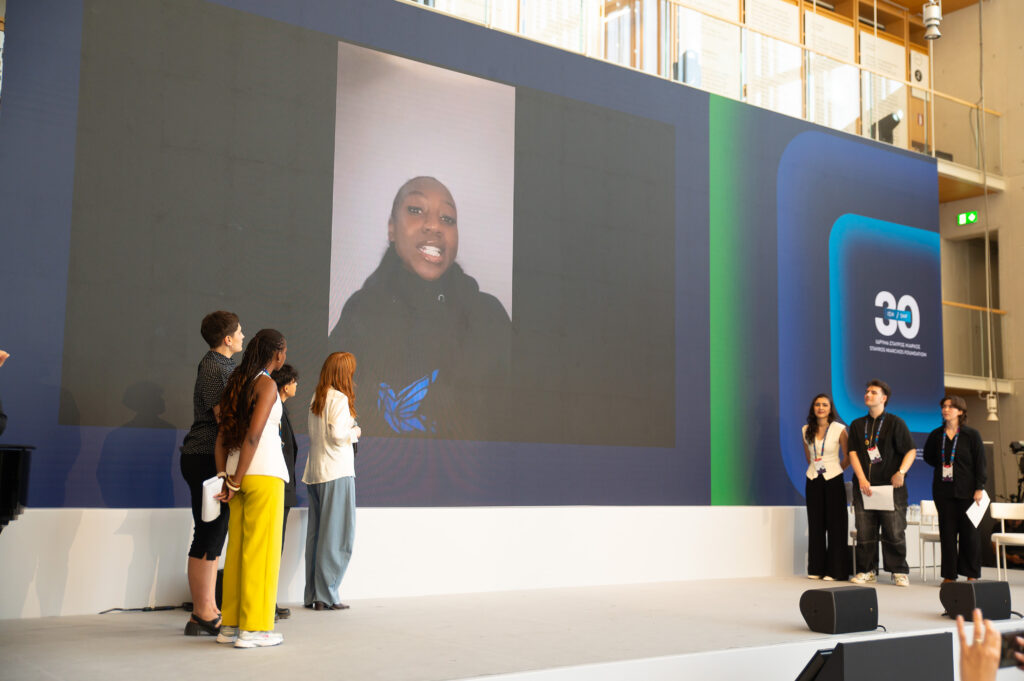
Throughout the months leading up to the conference, I watched ideas evolve into plans, uncertainty turn into confidence, and six young people grow into a team that trusted one another enough to challenge ideas, embrace different perspectives, and speak with one collective purpose. The GYAC’s debate explored the complex relationship between technology, education, and youth mental health — moving through a series of interconnected perspectives rather than presenting technology as simply “good” or “bad.”
The conversation opened by examining the potential negative impacts of technology when introduced into schools without sufficient guidance, before exploring the broader mental health implications for children and adolescents. From there, the discussion challenged the idea that simply banning technology is the answer. Instead, members of the council considered the role of parents, families, schools, and communities in helping young people navigate digital spaces safely — and how they can be better supported. The GYAC also explored the generational cycle of digital habits, recognizing that young people often learn how to engage with technology from the adults around them. The debate concluded with a call for stronger digital literacy in schools. Members of the council also voiced the need for a collective approach that equips young people with the knowledge and skills to navigate technology in ways that support, rather than undermine, their mental health.
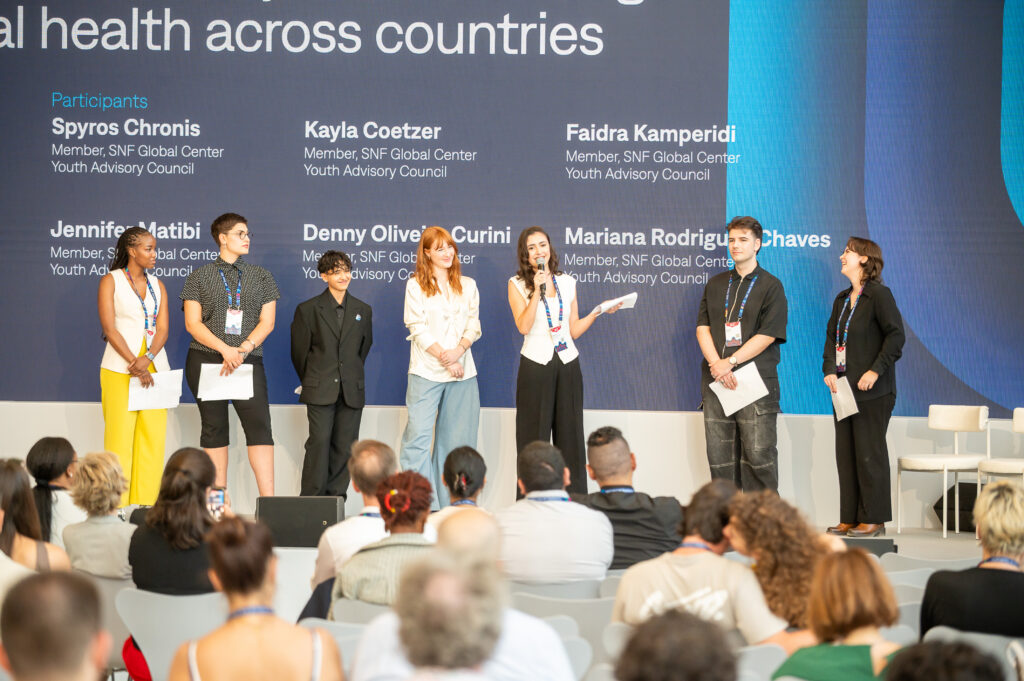
Additionally, the conference featured a cross-country panel exploring how evidence and partnerships can come together to strengthen child and adolescent mental health systems. Moderated by South African GYAC member Kayla Coetzer, the conversation brought together perspectives from Greece, Brazil, South Africa, and Mozambique — highlighting how different countries are working to translate research and evidence into meaningful action. The discussion emphasized that sustainable systems of change require collaboration between researchers, governments, practitioners, communities, and young people. Panelists shared real examples of how partnerships can help move evidence beyond research and into scalable interventions that respond to local needs and contexts.
In front of an international audience of experts and leaders in child and adolescent mental health, the six young members of the GYAC brought perspectives that were thoughtful, challenging, and grounded in lived experience. The council also created a space for the audience to think differently about the relationship between technology and mental health. Through debate and discussion, they challenged assumptions and demonstrated the value of giving young people genuine ownership of the issues that affect them.
That is the power of bringing young people together across borders.
We asked members of the GYAC to reflect on their time at SNF Nostos 2026
Q: Looking back on your experience at SNF Nostos 2026, what is one moment that will stay with you, and why?
SPYROS:
Of all the memories from SNF Nostos 2026, one stands out above the rest: the second our feet hit the stage. In an instant, the background anxiety transformed into pure presence as we shared our work, our ideas, and our honest fears with the audience. Standing next to my colleagues made all the hard work worth it. It was a collective victory that I’ll carry with me for a long time.
KAYLA:
What stays with me is the incredible feedback following our group debate. After months of planning and in-person rehearsals, to then finally getting to present it and having that hard work be recognized felt amazing. To have people say they will be using our structure with their own youth engagements was truly incredible and felt like what we brought to the table was being seen and then used to spark a different kind of youth engagement that we created and presented.
Denny:
The moment we shared our seeds and thorns after the session, everyone in the Lighthouse came together and connected.
MARIANNA:
The panel because I felt like the audience was really interested in our discussion. Also, I felt like I made a real impact in some people’s lives after receiving positive feedback.
JENNIFER:
The one moment that will stay with me is seeing youth representation woven throughout every part of SNF Nostos 2026. Young people were present in every space — leading conversations, working behind the scenes, and showcasing the impactful work they’re doing in their own countries. It was inspiring to see that youth were not included simply to fill seats or meet a quota, but were genuinely empowered to shape discussions, contribute their perspectives, and drive meaningful change in the mental health space.
FAIDRA:
One of the things that really stayed with me from my experience at SNF Nostos 2026, particularly during our session, was how interested the audience was in hearing young people’s perspectives on the issues and concerns we are facing today. Overall, my experience was truly positive and enjoyable.
Q: What did being part of the Global Youth Advisory Council at SNF Nostos 2026 teach you about youth leadership, collaboration, or meaningful youth engagement?
SPRYOS:
Being part of the GYAC taught me that meaningful youth leadership goes far beyond tokenized representation. Meeting and working with people across the globe and seeing how similar we all are and what we want to achieve. Geography and structural differences are what separates us and changes our journey towards the same goals. All together we can get along, co-create and work towards what we believe. Youth engagement is only authentic when institutions move past using young people as decoration and instead give them direct agency to challenge systems, shape strategy, and advocate for real, structural change.
KAYLA:
It showed me the power of collaboration beyond age, culture, gender, and language. The power of feeling at home amongst difference. I got to see how youth leadership looks outside of just South Africa and celebrate all its forms with my GYAC cohort.
DENNY:
It taught me that youth can actively change and impact spaces with their experiences and ideas.
FAIDRA:
As a young person, I had the opportunity to be surrounded by incredibly talented and knowledgeable people, and I was fortunate enough to listen to their experiences and learn from them. It opened up new perspectives for me and made me see things in ways I hadn’t before. I would absolutely love to have the opportunity to experience something like this again.
MARIANNA:
Being part of GYAC at SNF Nostos 2026 taught me that finding people with similar values is one of the greatest things we can do for ourselves. During the process of preparing for the panel, having people around me who were open to feedback and to true collaboration rather than competition made the experience unforgettable.
JENNIFER:
It taught me the importance of valuing everyone’s contribution in bringing a bigger vision to life. It also showed me the power of breaking down complex concepts so that everyone can understand them deeply and, most importantly, how to collaborate effectively as a diverse team with different backgrounds, perspectives, and lived experiences.
As we continue preparing for the second annual Global Youth Summit on Youth Mental Health and the next chapter of the Global Youth Advisory Council’s work, I carry this experience with me as a reminder of what becomes possible when young people are trusted with leadership.
Not only are they the leaders of tomorrow, but they are already leading today.
Learn more about our work with youth.
The post From Preparation to Purpose: Reflections on the Global Youth Advisory Council at SNF Nostos 2026 appeared first on Child Mind Institute.

Every night, getting her 16-year-old son Ben to go to bed was a battle Karla would dread. He played video games online in the evening for hours, chatting with friends on his headset. As the time got late and she reminded him it was bedtime, inevitably he’d be in the middle of some campaign and wouldn’t stop. All his friends were still playing together, Ben would argue, and he would miss out.
It’s a classic disagreement in families: Parents are worried that their kids have a video game addiction — they’re unable to limit their time spent playing — and kids think their parents are overreacting. Who’s right?
The jury is still out. While researchers and clinicians acknowledge that gaming has addictive qualities, what constitutes a disorder and how to recognize the signs are still up for debate.
“There are lots of reasons why parents don’t like video games,” says Dave Anderson, PhD, a clinical psychologist who treats teens at the Child Mind Institute. “They’ll say kids spend too much time playing, and they’re not spending enough time on schoolwork. The video games are violent and contain sexualized content. They’re playing the game online with their friends, and in the chat, they seem to be saying inappropriate things.”
For many kids, video games are a place for entertainment and social connection — it’s fun and something to do with friends. Problems arise when parents need them to stop. “A lot of parents will say it leads to major conflicts when we’re asking them to stop playing video games,” Dr. Anderson says. “But that does not necessarily mean the kid has a gaming disorder.”
While parents might call it “video game addiction,” it’s called “internet gaming disorder” in the official Diagnostic and Statistical Manual of Mental Disorders (DSM-5). Internet gaming disorder is not a fully recognized disorder in the most recent edition of the DSM-5. Since 2013, it has been provisional, categorized as a condition for further study, underscoring the lack of clear consensus on whether it should be a standalone disorder, even as concerns mount about the mental health effects of video games and internet use generally.
The DSM-5 proposes that someone could have internet gaming disorder if they experience at least five of the following over a 12-month period:
While gaming disorder hasn’t yet been accepted as an official disorder in the United States, the World Health Organization (WHO) adopted it in their standard classification in 2019, and it went into effect in 2022. The criteria are simpler in what’s called the International Classification of Diseases (ICD-11). By the ICD-11 definition, someone has a gaming disorder if they fit at least two of the following over a 12-month period:
Some researchers argue that the simpler ICD-11 definition, with its focus on how gaming negatively affects other aspects of life, is better at capturing when gaming is truly a problem. Kids who use gaming as an escape when they are unhappy might get labeled with internet gaming disorder according to the DSM-5, for example, so clinicians are concerned about risks of overdiagnosis. While there is growing recognition that excessive gaming can be harmful, experts are still studying whether it is an addictive disorder.
Dr. Anderson notes that gaming disorder rarely occurs without other disorders, such as ADHD, depression, or social anxiety. “Most of the time we see problematic gaming, it is co-occurring with something else, like ADHD,” he says. “Or they might be on the autism spectrum, and having a hard time making friends, so gaming becomes a kind of retreat. Or they’re depressed, and they feel like other activities aren’t necessarily going to be that rewarding. So they turn to gaming.”
But that doesn’t mean that it isn’t important to take it seriously. Douglas Gentile, PhD, a professor of psychology at Iowa State University who researches the effects of video games and media, notes that several disorders occurring together isn’t unusual. “In fact comorbidity is the norm, not the exception, in mental health,” he says. And he adds that his own research has found evidence that problematic gaming can lead to or exacerbate depression.
“Let’s say there’s a kid who’s not doing well in school, doesn’t have a lot of friends and gets depressed,” he hypothesizes. “So he goes home and he plays games as a way of relieving the stress of that. And that, of course, doesn’t help him make new friends, and it doesn’t help his grades. So he doesn’t get better at those. So he gets more depressed, so he plays more games, so he gets more depressed, right? At some point, the gaming can become a problem on its own.”
Dr. Gentile stresses that it’s valuable for pediatricians, clinicians, and counselors to ask about gaming habits along with other mental health concerns. That’s why he hopes gaming disorder will be recognized as a full disorder in the next edition of the DSM: “We will start remembering, oh, we should ask about this, too, because it often does co-occur with ADHD, depression, anxiety, social phobia, poor school performance, aggression.”
When a family is concerned about excessive time spent playing video games, Dr. Anderson will ask families for information:
Dr. Anderson is cautious about making the diagnosis of gaming disorder if he thinks there’s an underlying condition, because treating that underlying condition might mean the problematic gaming will resolve as well.
“If I think a kid’s depressed and they’re also gaming too much, I am going to make sure that I emphasize the treatment for depression,” Dr. Anderson says. “Because treatment for depression involves behavioral activation — getting the kid involved in certain activities in life, boosting their mood with that kind of that involvement and social support — which is antithetical to the gaming. So that would treat the downstream problem of gaming.”
Treatment for internet gaming disorder usually involves cognitive behavioral therapy (CBT), including emotion regulation training skills, which can help people face their problems in life if they’ve been using gaming as an escape. Clinicians also may use motivational interviewing and family-based therapy.
Dr. Gentile has seen programs where family involvement seems to make a difference. One theory, he says, is that kids play video games because it satisfies the deep human need for autonomy, belonging, and competence: They are in control, play with friends, and are good at it.
“If you’re not getting these needs met in real life but you’re getting them met by playing games, you’re more motivated to keep doing the games,” Dr. Gentile says. So the program works with families to get those needs filled with real-life activities, like learning to fish or joining a sports team. Parents also sit down and learn to play video games alongside their child, so they better understand why the kid likes it so much — and that creates a bridge to help improve communication.
While some parents want kids to stop gaming entirely, Dr. Anderson advises against that in most cases. “There are a lot of kids who see themselves as gamers — it’s a part of their identity,” he says. Instead, he encourages parents to place reasonable boundaries on gaming so that their child is investing enough time in four main areas: academics, extracurricular activities, face-to-face time with friends, and sleep.
“This is the thing we’re trying to collaboratively problem solve for,” Dr. Anderson says. “How do we get it so that you complete your homework, you have at least one activity you’re invested in — whether you play an instrument or a sport, or you’re in the school play. You’re spending time with friends in person, and you’re getting enough sleep.” When those are in place, then families can test out having the child engage in a moderate amount of gaming. “Time spent on games is a want, not a need. It’s earned,” he says.
Kids will push back on restrictions, of course. “That just means that we might need more of a behavioral approach — how they earn video game playing time, or think more about the consequences if they, for example, break the controller when they come off of it,” Dr. Anderson says.
“The complaints we hear from kids are, ‘My friends are on at different times. You’re making it so I can’t connect to my friends,’” he says. “And we’ll say, ‘Look, we’re willing to make a reasonable accommodation to try to figure out how you can be on with your friends at the right time. We need these other things that are best for your development. We can then negotiate about when gaming happens.’”
To enforce limits on gaming, Dr. Anderson coaches parents on how to make sure games aren’t available except during the designated times. With younger kids, games are usually played on devices like an iPad that can be taken away. The difficulty in setting boundaries, he says, “usually involves an ‘extinction burst,’ which is the idea that if you’ve got a kid who throws tantrums, their tantrums are going to get worse before they get better when we set boundaries.” He helps parents make a plan to maintain everyone’s safety to get past these behaviors, and he works with the child to learn emotion regulation skills to use when they have to stop doing an activity they enjoy.
But older kids need computers to do schoolwork, so limiting access to games is more difficult. To control cellphone use, he suggests setting screen time limits or blocking apps by using a device like Brick. To control access to video game consoles or computers, parents can remove the power cord.
With kids of all ages, families work on reducing conflict by making access to games something that is predictable and available as long as their other essential developmental needs are fulfilled.
“I want parents to realize that all of those symptoms in youth don’t happen in isolation,” Dr. Anderson says. “Even if you think your child has internet gaming disorder, frequently what we want is a comprehensive diagnostic evaluation to be sure there’s not something else treatable that’s underlying this behavior. Then we can then restore a bit of balance to life and make it so that gaming is not the major activity this kid’s engaging in.”
Internet gaming disorder is a term used for playing video games so much that it’s difficult to control and starts interfering with important parts of life. It’s included in the DSM-5 as a condition for further study, meaning experts are still debating exactly how it should be defined.
Experts agree that excessive gaming can become problematic for some kids and adults, but there is still debate about whether it should be categorized as an addiction disorder.
Warning signs include being unable to cut back on gaming, losing interest in other activities, becoming upset when gaming is restricted, and continuing to play despite negative consequences. Gaming can also start affecting sleep, school performance, friendships, or family relationships.
Clinicians look at whether gaming has become hard to control and whether it is causing significant problems in daily life over an extended period of time. They also consider factors like sleep, school performance, family conflict, and whether conditions such as ADHD, anxiety, or depression may be contributing to the behavior.
The post Video Game Addiction and Kids: Understanding Internet Gaming Disorder appeared first on Child Mind Institute.

Background: Mental health chatbots are increasingly used to support people with depressive symptoms, and large language models make these systems more flexible than rule-based chatbots. However, it remains unclear how well large language model–based chatbots deliver structured psychological interventions. Objective: This study examined how well a GPT-4o–based chatbot delivered a behavioral activation intervention for young people with depression using sessions with artificial users and clinical expert assessment. It also identified limitations and potential refinements. Methods: We implemented a GPT-4o (gpt-4o-2024-08-06; OpenAI)–based chatbot using a structured system prompt to deliver a single-session behavioral activation intervention for people with depression aged 14 to 29 years. We generated 48 sessions with GPT-4o–based artificial users derived from clinical vignettes varying across 7 characteristics. Ten clinical experts, either licensed psychotherapists or advanced psychotherapy trainees, independently assessed the sessions using the 14-item Quality of Behavioral Activation Scale (Q-BAS), rated from 0 to 6, supplemented by rating therapeutic capabilities, artificial user authenticity and difficulty, and qualitative feedback. Results: The chatbot completed all 7 intervention phases in every session. The mean holistic session quality rating was 3.94 (SD 1.23), and the mean Q-BAS rating was 4.03 (SD 1.18). Thirteen of 14 Q-BAS components exceeded the satisfactory threshold of 3. Ratings were highest for mood assessment (mean 5.42, SD 1.09) and activity planning (mean 4.98, SD 1.41) and lowest for explaining positive reinforcement (mean 2.92, SD 2.30) and supporting activity-mood monitoring (mean 3.02, SD 2.04). Therapeutic capability ratings were highest for message safety (mean 5.90, SD 0.37), message clarity (mean 5.56, SD 0.77), and objective, nonjudgmental communication (mean 5.17, SD 1.04) and lowest for therapeutic rapport (mean 4.12, SD 1.45) and natural conversation flow (mean 4.25, SD 1.42). Artificial users were rated below the scale midpoint for authenticity (mean 2.75, SD 1.41) and difficulty (mean 1.23, SD 1.46). Clinical experts described the chatbot as structured, clear, and safe but identified insufficient clinical reasoning as the main limitation, particularly in evaluating the therapeutic suitability and feasibility of activities, barriers, solution strategies, and rewards. Artificial users were often highly compliant, especially when identifying positive activities. Conclusions: In expert-rated sessions with artificial users, the chatbot delivered the behavioral activation intervention as intended and performed strongest on procedural components. It performed less well on positive reinforcement and activity-mood monitoring, indicating refinement needs in clinical reasoning, follow-up questioning, and evaluating whether proposed activities, plans, barriers, solution strategies, and rewards are therapeutically appropriate and feasible. The findings identify targets for improvement before testing with human users, while the artificial user design and expert ratings limit conclusions about real therapeutic interactions.
<img src="https://jmir-production.s3.us-east-2.amazonaws.com/thumbs/aa46859a41c5bdc7894b4daa9f0258ca" />