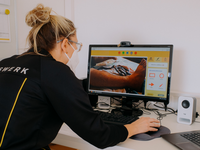
Background: Demographic and epidemiological changes are increasing pressure on health and long-term care systems, underscoring the need for digital innovations. Remote Care Assist is a digital system that enables home care staff to connect with care experts for exchange and support via real-time video calls. Although technology acceptance is crucial for successful implementation, little is known about how care staff’s expected benefits for care recipients influence acceptance in professional home care. Objective: This study examined predictors of user acceptance of the Remote Care Assist among home care staff, with a particular focus on the role of staff’s expectations of benefits for home care service users. Methods: Technology acceptance data were collected from staff in home care organizations in Austria and Luxembourg. Among 337 survey respondents, 139 participants who reported using Remote Care Assist at least once per month over a period of 5-6.5 months were included in the acceptance analysis (45 care experts and 94 on-site care staff). Partial least squares structural equation modeling was used to test a contextualized technology acceptance model. Results: Technology acceptance was measured by “Behavioral Intention to Use” the Remote Care Assist. “Behavioral Intention to Use” was positively associated with “Expected Benefit for Home Care Service Users” (EBC; =0.506, 95% CI 0.364 to 0.658; <.001), “Perceived Usefulness (PU)” for care staff (=0.314, 95% CI 0.151 to 0.460; <.001), and “Perceived Ease of Use” (PEOU; =0.130, 95% CI 0.038 to 0.231; =.01). “EBC” (=0.415, 95% CI 0.276 to 0.537; <.001), “Perceived Efficiency” (=0.396, 95% CI 0.267 to 0.531; <.001), and “PEOU” (=0.170, 95% CI 0.083 to 0.266; =.001) were positively associated with “PU” for care staff. “PU” also positively mediated the associations of “EBC” (=0.130, 95% CI 0.061 to 0.194; =.001) and “PEOU” (=0.053, 95% CI 0.017 to 0.101; =.02) with “Behavioral Intention to Use.” “Reliable Functionality” was not significantly associated with “PU.” Conclusions: This study suggests that the technology acceptance of a digital system for enhancing professional exchange between different staff groups in home care is shaped not only by established predictors of acceptance, such as PU and PEOU, but also by a currently neglected predictor, namely care staff’s expectations that the technology will benefit home care service users, which plays an important role in technology acceptance. In addition to usability and workflow support, successful implementation strategies for digital technologies should clearly communicate the technology’s potential benefits for care staff, care service users, and the broader care ecosystem.