


Going Non-Viral: Gene Delivery Enters Its Translation Era

Kunwoo Ryan Lee
Kunwoo Ryan Lee, PhD
CEO, BreezeBio

Kunwoo Ryan Lee, PhD, knew as early as 2012 that solving the delivery problem would be crucial in fulfilling the promise of the newly discovered CRISPR-Cas9 gene editing technology. He felt strongly that gene editing had potential to transform medicine by curing genetic disorders, but the viral and non-viral vectors available at the time had significant drawbacks. With the support of CRISPR pioneers Jennifer Doudna and Stanley Qi, Lee completed his doctoral thesis on a gold nanoparticle delivery system for Cas9 ribonucleoprotein. He went on to co-found BreezeBio, formerly GenEdit, in 2016 with the aim of creating the next generation of gene editing-based therapeutics. To realize that goal, Lee and his team looked beyond traditional viral gene delivery systems and instead invented a new technology from the ground up.

Most clinical gene therapy trials use viral vectors, including retroviruses, lentiviruses, adenoviruses, and adeno-associated viruses. However, viral vectors are limited in the size of the gene they can deliver. They also tend to trigger strong immune reactions and usually can’t be dosed more than once due to acquired immunity.

Non-viral vectors are an alternative technology that offer greater gene loading capacity, more straightforward preparation, and less likelihood of triggering problematic immune reactions. BreezeBio and other biotechnology companies are reimagining gene delivery through non-viral approaches like targeted LNPs, transposons, and novel chemistry.
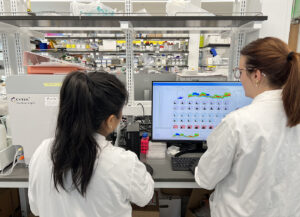
BreezeBio’s laboratory
Flow cytometry analysis of immune cells in BreezeBio’s laboratory. [BreezeBio]

BreezeBio’s hydrophilic nanoparticle (HNP) platform, NanoGalaxy, hearkens back to Lee’s doctoral work. Lee said he and his cofounders realized that a hydrophobic molecule was needed to deliver a gene payload into cells, because the cell membrane is a lipid bilayer. Lee also noted that the best molecule for targeting different cell types is an antibody, a hydrophilic molecule. Pairing these two elements introduced a complex manufacturing challenge that the company solved by using a polyamide as a backbone structure and conjugating a hydrophobic small molecule to that backbone for targeting, resulting in the hydrophilic HNP. The company then used artificial intelligence to optimize HNPs for different tissue types.

“Using the platform, we have demonstrated that we can deliver to the spleen, immune system, heart, and lung,” Lee said. The firm also developed a set of nanoparticles targeted to the central nervous system.

Based on those targeted delivery profiles, the Brisbane, California-based BreezeBio has worked with multiple partners to provide delivery solutions for their products, including a multiyear collaboration with Genentech, a member of the Roche Group, signed in 2024. Meanwhile, the company is also advancing its own pipeline of therapeutics built on the NanoGalaxy platform, including a lead candidate for type 1 diabetes, as well as investigational therapies for autoimmune disease and cancer.

Lee said a key advantage of the NanoGalaxy platform for their pipeline, which heavily leans toward autoimmune disease, is that, unlike a viral vector, the company’s studies have shown it does not activate the innate immune system. “That enabled us to use our technology for autoimmune applications and in more targeted oncology applications, as well,” Lee said.

Snug as a bug in a rug

The red flour beetle, a notorious scourge of grain and cereal stores, is the surprising source of Bio-Techne’s transposon-based, non-viral gene delivery system. The system, dubbed TcBuster for the beetle’s scientific name, Tribolium castaneum, was invented by B-MoGen, a spin-out of the University of Minnesota, which was acquired in 2019 by Minneapolis-based Bio-Techne. Researchers at B-MoGen and Bio-Techne developed a hyperactive version of the natural TcBuster transposon by creating a library of three million unique genetic variants and screening each in mammalian cells. In a proof-of-concept study, CAR NK cells engineered using TcBuster demonstrated in vitro functionality and improved survival in a preclinical model of Burkitt lymphoma with a single dose.1

“The reason you want a hyperactive version is that wild-type transposon systems are fairly low activity,” said Miles Smith, PhD, a product manager for cell and gene therapy at Bio-Techne. “For generating a cell therapy, you want something that’s going to be comparable to the state of the field, and that’s lentivirus.”
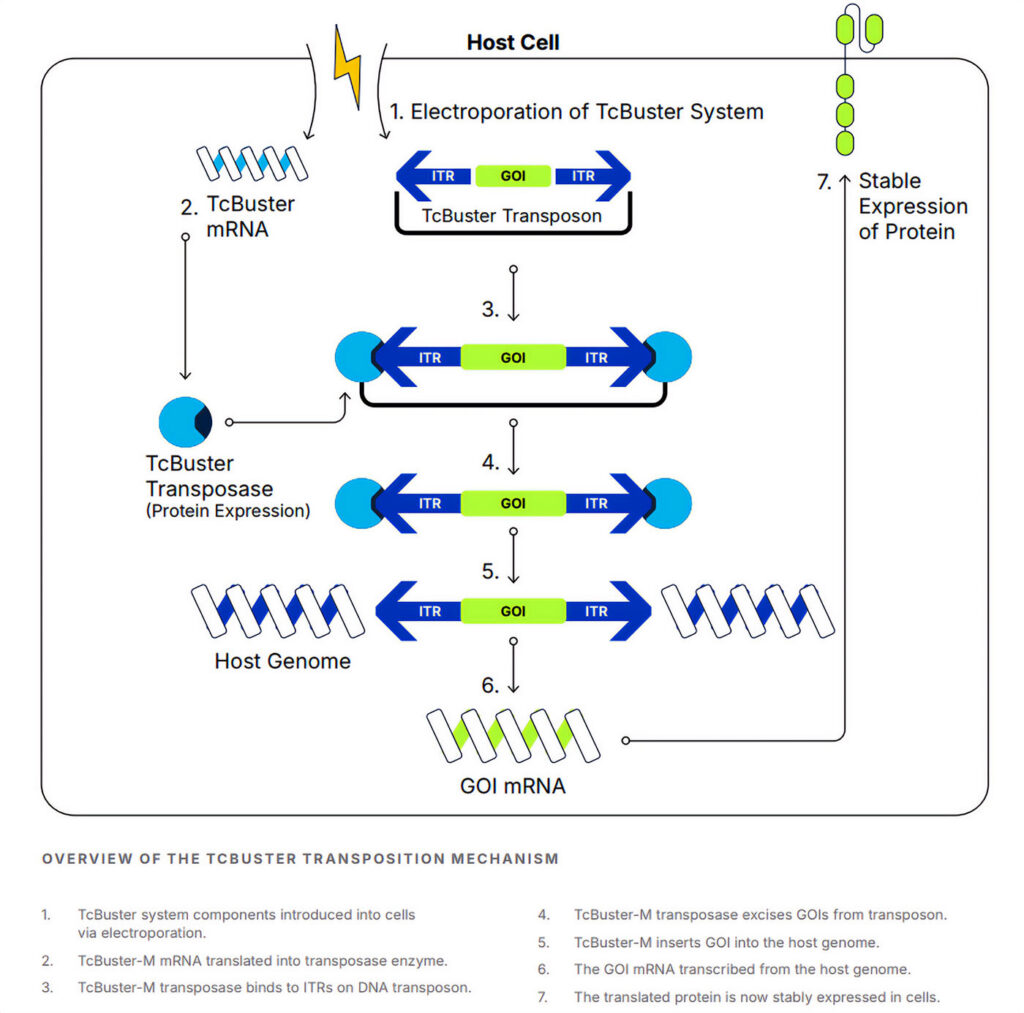
TcBuster system illustration
The TcBuster system is electroporated into cells where its components are translated, and TcBuster transposes and excises genes of interest and inserts DNA cargo into the host cell genome. [Bio-Techne]

Smith said the TcBuster system, which comprises an mRNA encoding transposase and a DNA transposon, can be produced faster than a lentiviral vector. The system is also more scalable, more cost-effective, and has increased gene cargo capacity, according to Smith. TcBuster can deliver multiple genes in a single vector, and it can be multiplexed with other gene therapy tools. “If you wanted to use base editors or CRISPR-based knockout gene editing in conjunction with TcBuster, you could do that in one step, compared to multiple steps with a viral system,” Smith said.

Unlike other commercial transposon systems for gene delivery, like Sleeping Beauty and PiggyBac, Smith said TcBuster is not restricted by exclusive licensing. “The turnaround time for GMP material is just a couple of months,” Smith said. “Versus something that might take a lot longer if you have to go through licensing or create a viral batch.”

Gene therapy SORTed

ReCode Therapeutics is developing a pipeline of genetic medicines based on its selective organ targeting (SORT) LNP platform, which adds an additional lipid to the standard LNP formulation, allowing it to zero in on specific organs. Conventional LNPs comprise four lipids—cholesterol, a helper phospholipid, a PEGylated lipid, and an ionizable lipid—that encapsulate a therapeutic gene cassette. These traditional LNPs are primarily taken up by the liver after intravenous administration, limiting their usefulness for other organs and systems. ReCode engineered its SORT LNPs with a biochemically distinct fifth lipid that enables the body to direct the particle to the targeted organ, such as the lung or spleen, bypassing the liver, if necessary.

“Because mRNA in a cell has a relatively short half-life, maybe a day or so, in order to have constant protein production, you need to administer it relatively frequently,” Vladimir Kharitonov, PhD, senior vice president of CMC and pharmaceutical sciences at ReCode, said. “With viral delivery, you can’t really administer it repeatedly.”

ReCode’s laboratory in Menlo Park
Scientists conducting qualification of the semi-automated filling and stoppering machines at ReCode’s laboratory in Menlo Park. [ReCode]

The Menlo Park, California-based firm’s two clinical-stage therapies are given by inhalation using a nebulizer. SORT lipids enable targeting specific cell types in the lung epithelium.

In 2024, ReCode presented preclinical data from its cystic fibrosis program showing its mRNA-based therapeutic RCT2100 significantly restored CFTR function in human bronchial epithelial cells derived from patients with cystic fibrosis. In vivo studies using a ferret model demonstrated improvement in mucociliary clearance. ReCode launched the first clinical trial of RCT2100 later that year. The LNP for RCT2100 contains SORT lipids to fine-tune its delivery to the airway epithelial cell types that have a defective or mutated CFTR protein, causing cystic fibrosis. The company is also developing a second mRNA therapy delivered via SORT LNP, RCT1100, for primary ciliary dyskinesia, which targets different cell types in the lung epithelium.

From idea to therapy faster

Gene delivery is just one of many services offered by GenScript to support research from discovery through clinical testing, including gene synthesis, CRISPR reagents, antibodies, and more.

Jianpeng Wang
Jianpeng Wang, PhD
Senior Director, GMP Manufacturing
GenScript

“Gene editing is entering a new era, and the focus has shifted from discovery to translation,” said Jianpeng Wang, PhD, senior director of nucleic acid and peptide R&D at GenScript. “Our goal at GenScript is to help scientists move from idea to therapy faster.”

When it comes to non-viral vectors, the firm offers off-the-shelf and bespoke solutions to fit the customer’s need for delivery of DNA, RNA, siRNA, peptides, and other molecules. Through its targeted LNP service, GenScript offers LNPs designed to enhance precision in directing genetic material to cells. GenScript’s ReadyEdit LNP solutions include Cas9 knock-in and knock-out, Cas12 knock-out, and base or prime editing tailored for the customer’s needs.

“In our ecosystem, we include all of the materials needed,” Wang said. “This integration can help scientists evaluate gene editing efficiency early, both ex vivo and in vivo.”

Wang said the choice of a vector is heavily dependent on the specific therapeutic program. “There isn’t a universally effective or better way to deliver a therapy, either viral or non-viral,” Wang said. He noted, for example, that viral vectors remain a good choice when long-term gene expression is desired. And for viral vectors, the manufacturing process might be more mature, easing transfer to a contract development and manufacturing organization.

However, Wang cautioned that viral vectors still present certain safety concerns. “In recent years, an increasing number of scientists and the FDA have recognized these risks,” he said, “leading to a surge in interest for non-viral delivery methods—particularly for in vivo CAR T therapy and gene editing.”

GenScript has provided LNP services to several customers globally. The most advanced of those is using GenScript’s GMP CRISPR materials (gRNA, HDR templates, and nuclease) alongside a customized LNP encapsulation recipe and is preparing an investigational new drug application.

Foundational LNP science

Vancouver-based Genevant traces its scientific lineage through a string of predecessor companies dating back to the early 2000s and controls foundational intellectual property for the field. Based on its scientists’ work at Protiva Biotherapeutics, the intellectual property comes to Genevant via Arbutus Biopharma, which acquired Protiva in 2015 and partnered with Roivant in 2018 to establish Genevant.

Unlike many companies developing nucleic acid delivery platforms that focus on a single payload modality, Genevant has applied its LNP to many payloads, including mRNA, siRNA, and gene editors in fields spanning antiviral, oncology, and metabolic disorders. The firm’s LNP platform is part of the first RNA-LNP product to achieve regulatory approval, Alnylam Pharmaceuticals’ Onpattro (patisiran), a treatment for polyneuropathy in people with hereditary transthyretin-mediated amyloidosis. Genevant’s LNP technology is also behind Moderna’s COVID-19 vaccines, which were confirmed earlier this month with the resolution of a longstanding patent dispute. An infringement case against Pfizer and BioNTech is pending. Genevant collaborated with Chula Vaccine Research Center and the University of Pennsylvania to develop a COVID vaccine for low- and middle-income countries in Southeast Asia during the pandemic. The program had success, demonstrating non-inferiority to Pfizer and BioNTech’s Comirnaty in clinical trials.

Some key differentiators for Genevant’s LNPs include strategies for optimized delivery in non-human primates instead of mice,2 which has resulted in improved gene editing in the liver, and novel chemistries for biodegradable LNPs that prevent accumulation in tissue.3 The company has recently disclosed data showing targeted delivery to T cells for in vivo CAR T therapy, as well as hematopoietic stem and progenitor cells (HSPC) and hepatic stellate cells.


References

  1. Skeate JG, Pomeroy EJ, Slipek NJ, et al. Evolution of the clinical-stage hyperactive TcBuster transposase as a platform for robust non-viral production of adoptive cellular therapies. Mol Ther. 2024;32(6):1817-1834. doi:10.1016/j.ymthe.2024.04.024
  2. Lam K, Schreiner P, Leung A, et al. Optimizing lipid nanoparticles for delivery in primates. Adv Mater. Published online March 27, 2023. doi: 10.1002/adma.202211420
  3. Holland, R, Lam K, Jeng S, et al. 2024. Silicon ether ionizable lipids enable potent MRNA lipid nanoparticles with rapid tissue clearance.” ACS Nano. 2024;18 (15): 10374–87. doi:10.1021/acsnano.3c09028.

The post Going Non-Viral: Gene Delivery Enters Its Translation Era appeared first on GEN – Genetic Engineering and Biotechnology News.

“Click Clotting” Technique Rapidly Creates Stronger Blood Clots

Researchers at McGill University have developed a rapid way to engineer blood clots that stop severe bleeding and support tissue healing more effectively. Their technique, called “click clotting,” links red blood cell surface proteins through a chemical reaction, resulting in a biocompatible clot that is 13 times more resistant to fracturing and four times more adhesive than natural blood clots. The team said the method could be used to develop life-saving biomaterials to help control severe bleeding, as well as benefit people with clotting disorders.

“Natural blood clots can be slow to form and mechanically fragile, which limits their ability to stop severe bleeding and can compromise healing,” said Jianyu Li, PhD, senior author and professor of mechanical engineering and Canada research chair in tissue repair and regeneration. “Our work shows that, when engineered appropriately, red blood cells can play a central structural role, enabling the design of stronger and more functional biomaterials.”

Senior and corresponding author Li, together with first author Shuaibing Jiang, PhD, reported on the development in Nature, in a paper titled “Engineering tough blood clots for rapid hemostasis and enhanced regeneration.” In their paper the team concluded, “Our strategy enables instantaneous clotting and markedly enhanced fracture resistance despite low structural polymer content, while preserving the intrinsic bioactivity of blood clots to enhance hemostasis and regeneration.”

Jiang, now a postdoctoral associate at Harvard Medical School, led the research during his PhD studies at McGill. Researchers at the University of British Columbia, the Medical College of Wisconsin, the University of Colorado Boulder, the University of Toronto and the research institute Versiti also contributed.

“Blood clots are pivotal for hemostasis and regeneration, but they are mechanically weak and form slowly, posing risks for life-threatening hemorrhage and limiting broader applications,” the authors wrote. “These limitations are attributed to complex coagulation cascades, abundant mechanically ineffective cells, and little structural polymers.”

Previous efforts to crosslink red blood cells (RBCs) have used chitosan, a polymer derived from crustacean shells, but these led to brittle clots, ruptured cells, and inconsistent clotting. In “click clotting,” the clot structure is fundamentally strengthened through a fast, bio-safe chemical reaction that connects proteins on the red blood cell surface, forming a solid gel in just five seconds. Because the “click” reaction doesn’t interfere with normal blood chemistry, it can work alongside the body’s natural clotting process. As a result, the artificial cell‑based gel, called a “cytogel,” can be added to whole blood, where it becomes embedded within the body’s own fibrin clot.

Shuaibing Jiang (left) and Jianyu Li [Jianyu Li]

“Here we report a strategy that rapidly crosslinks red blood cells into tough cytogels and integrates them within blood clots,” the team further explained. “The resulting engineered blood clots (EBCs) form within seconds and exhibit a 13-fold increase in fracture toughness, and a 4-fold improvement in adhesion energy compared with native clots … Our strategy is advantageous over previously reported methods using chitosan to crosslink RBCs, which lead to brittle clots, hemolysis or inconsistent clotting.”

Li added, “The technology enables both autologous clots (using the patient’s own blood) and allogeneic clots (using type-matched donor blood). Autologous clots can be prepared in approximately 20 minutes, while allogeneic clots can be prepared within about 10 minutes. Given typical clinical time constraints, this approach has strong potential for in-patient emergency care, wound management and related settings.”

The team confirmed their results through in vitro testing, as well as through tests in rodents. “In vivo studies demonstrate that EBCs can rapidly halt hemorrhage, promote tissue regeneration, mitigate inflammation and foreign body reactions, and prevent postoperative adhesion,” the authors stated. Of particular note was effective healing and regeneration observed in the injured liver, with performance exceeding that of a clinically used product tested also tested as part of the study. “Compared with previously reported biomaterials for liver regeneration, EBC demonstrated milder inflammation and more efficient tissue regeneration,” the authors noted. Analyses showed minimal evidence of immune reactivity and no toxicity in major organs.

The researchers say that while further study is required before the cytogel can be used in clinical settings, the research establishes a foundation for its design and application.  “Overall, EBC, as a native scaffolding material, can promote tissue regeneration with minimal inflammation and foreign body responses, and prevent postoperative adhesions, outperforming the clinically used products,” the scientists concluded. “This work may motivate the development and translation of highly cellularized materials for bleeding control, wound management, tissue repair and regenerative medicine.”

“Engineered blood clots have strong potential for broad clinical use and could improve outcomes across many medical situations,” Li said.

The post “Click Clotting” Technique Rapidly Creates Stronger Blood Clots appeared first on GEN – Genetic Engineering and Biotechnology News.

It’s time to make a plan for nuclear waste

Today, nuclear energy enjoys a rare moment of support across the political spectrum in the US. Interest from tech companies that are scrambling to meet demand for massive data centers has sparked a resurgence of money and attention in the industry. That newfound interest is exactly why it’s time to talk about an old problem: nuclear waste. 

In the US alone, nuclear reactors produce about 2,000 metric tons of high-level waste each year. And there’s nowhere to put it.

Though newly popular, the nuclear program in the US is nothing new. The US hosts more reactors and production capacity than any other country in the world. And yet nearly seven decades after the first permanent nuclear facility in the US went online, there’s still not a long-term solution for nuclear waste. 

Used fuel is largely stored onsite at operating and shut-down reactors, in pools and casks made of steel and concrete. Experts generally agree that these methods are safe, but they’re not designed to be permanent.

The leading strategy around the world for long-term storage of this high-level radioactive waste is to house it in a deep geological repository—dig a hole, put radioactive material down there, and fill it up with concrete. These holes, hundreds of meters underground, are designed to be a permanent home.

There aren’t any operating geological repositories for spent fuel yet, but some countries are well on their way. Finland is the furthest along; as of 2026, the country is testing its facility. Final approvals are expected soon, and operations could start later this year. Some other countries aren’t far behind.

France is home to over 50 nuclear reactors, and its grid gets more of its power from nuclear than any other. The country also has the world’s most established program for reprocessing spent fuel. The process separates out the plutonium and uranium to create a type of fuel known as mixed oxide (MOX) fuel. But reprocessing isn’t a perfect recycling loop, so the leftovers from this process still need somewhere to go. The country currently stores waste onsite at the La Hague reprocessing plant, but it plans to build a repository. Initial approvals could come later this decade, and pilot operations could start up by 2035.

Technically, the US also has a destination for its spent fuel: Yucca Mountain in Nevada. The site, which is on federal land, was designated by Congress in 1987. However, progress has entirely stalled out because of political opposition. In 2011, the federal government stopped providing funding for the site, and for roughly a decade, there’s been no activity to speak of.

In the meantime, waste continues to pile up.

The nuclear industry is kicking into a new gear around the world. China is home to the world’s fastest–growing nuclear energy program, and countries including Bangladesh and Turkey are building their first reactors.

Even the long-established US program is seeing growth: Interest in and approval for nuclear energy have spiked, and Big Tech is throwing money around to meet rising electricity demand. Companies are proposing (and beginning to receive regulatory approval for) next-generation reactors, which employ different coolants, fuels, and designs.

Given all this new interest, and the impending arrival of new types of nuclear waste, it’s time for nuclear companies, as well as their powerful customers, to push for progress on building geological storage facilities. As the richest country on the planet and home to a large chunk of the activity in next-generation reactors, the US should aim to join the leaders rather than continue to lag behind. 

Directing even a small fraction of the recent surge in funding and attention to progress on waste could make a difference. Some experts are calling for a new organization in the US to manage nuclear waste rather than leaving it to the Department of Energy. This organization would mirror programs in Finland, Canada, and France.

The process of planning, building, and commissioning a permanent solution for nuclear waste is a long one. Finland started planning in the 1980s and selected its site in the early 2000s, and it’s nearly ready to start accepting waste. For countries that don’t have a permanent storage solution sorted, the best time to start was decades ago. But the second-best time is now. 

This article is from The Spark, MIT Technology Review’s weekly climate newsletter. To receive it in your inbox every Wednesday, sign up here

Kingstec advances real-time medical asset tracking

NEWS RELEASE: Kingstec celebrates Technology Trace Inc.’s breakthrough in real-time medical asset management Strategic manufacturing partnership instrumental in bringing innovative medical asset tracking technology to Ontario hospitals Kingstec Technologies, a leader in project management, engineering, manufacturing, and logistics solutions, is proud to announce the successful implementation of Technology Trace Inc’s trevii platform at St. Joseph’s Healthcare Hamilton (St.…

The post Kingstec advances real-time medical asset tracking appeared first on Medical Design and Outsourcing.

Prostate Cancer Therapy Targets Disordered Region of Androgen Receptor

In a new study published in Nature Signal Transduction and Targeted Therapy titledDrugging the intrinsically disordered transactivation domain of androgen receptor,” researchers from the University of British Columbia and BC Cancer present a new approach for designing drugs that bind more strongly to intrinsically disordered proteins. These proteins play a central role in a wide range of diseases, including cancer, neurodegenerative disorders, heart disease and autoimmune conditions, and are extremely difficult to target due to their flexible nature.

Transactivation domains (TADs) of transcription factors are enriched in intrinsically disordered regions (IDRs) that lack a stable three-dimensional structure. The plasticity of an IDR permits dynamic conformations that regulate cellular and biological functions. 

The new study developed inhibitors that bound to the TADs of the androgen receptor, a therapeutic target for prostate cancer. While therapeutic interventions often target its folded ligand-binding domain (LBD), resistance ultimately develops due to reactivation of androgen receptor signaling. 

Inhibitors stabilized the protein in the inactive state to prevent the activation of genes that drive cancer growth. In animal studies, several compounds slowed prostate cancer growth more effectively than a commonly used prostate cancer treatment. Notably, several antigen receptor TAD inhibitors displayed strong binding affinities higher than, or were comparable to the LBD-inhibitor enzalutamide, with dissociation constants in the picomolar to low-nanomolar range 

“Most drug discovery is like designing a key for a very specific lock,” said Marianne Sadar, PhD, professor of pathology and laboratory medicine at the UBC faculty of medicine, distinguished scientist at BC Cancer, and co-corresponding author of the study. “But disordered proteins don’t behave like locks at all, they’re more like moving strands of spaghetti.”   

“This study shows that proteins previously thought to be undruggable can be drugged with remarkable efficacy,” she continued. “The findings could have profound implications for the treatment of cancer and other diseases, providing a roadmap for the development of new treatments.”   

“What surprised us was how effectively these molecules could attach to a protein that doesn’t have a fixed structure,” said Raymond Andersen, PhD, professor in UBC’s department of chemistry and co-corresponding author of the study. “We were able to shut down the androgen receptor even in situations where current prostate cancer drugs stop working.”   

The researchers now aim to advance the most promising candidates toward clinical trials, with the goal of developing prostate cancer drugs for early intervention and with fewer side-effects.  

“If the approach continues to prove successful, it could dramatically expand the number of proteins that scientists can target with medicines—turning what was once considered a dead end into a promising new frontier for drug discovery,” said Sadar. 

The post Prostate Cancer Therapy Targets Disordered Region of Androgen Receptor appeared first on GEN – Genetic Engineering and Biotechnology News.

Oxygen extraction fraction is differentially associated with pathological biomarkers in Alzheimer’s disease and non-Alzheimer’s dementias

IntroductionWe aimed to understand the pathophysiological differences between 16 Alzheimer’s disease (AD) and 15 non-AD dementia patients by quantifying oxygen extraction fraction (OEF) in cortical (CGM) and deep gray matter (DGM) regions.MethodsTo achieve this, we used a novel MRI-based OEF mapping technique, QQ, which estimates OEF from routine multi-echo gradient echo data. Multiple linear regression analyses were performed to compare the associations between OEF and white matter hyperintensities (WMH) or cognitive impairment (measured by Montreal Cognitive Assessment (MoCA) between the two groups.ResultsIn the AD and non-AD group, OEF showed negative associations with WMH in DGM and positive associations with MoCA in DGM and CGM.DiscussionOur study suggests that QQ is a promising tool for differentiating between AD and non-AD dementias, by revealing abnormalities in tissue oxygen usage and their relationships to microvascular changes and cognitive impairment.

Health-care AI is here. We don’t know if it actually helps patients.

I don’t need to tell you that AI is everywhere.

Or that it is being used, increasingly, in hospitals. Doctors are using AI to help them with notetaking. AI-based tools are trawling through patient records, flagging people who may require certain support or treatments. They are also used to interpret medical exam results and X-rays.

A growing number of studies suggest that many of these tools can deliver accurate results. But there’s a bigger question here: Does using them actually translate into better health outcomes for patients?

We don’t yet have a good answer.

That’s what Jenna Wiens, a computer scientist at the University of Michigan, and Anna Goldenberg of the University of Toronto, argue in a paper published in the journal Nature Medicine this week.

Wiens tells me she has spent years investigating how AI might benefit health care. For the first decade of her career she tried to pitch the technology to clinicians. Over the last few years, she says, it’s as though “a switch flipped.” Health-care providers not only appear much more interested in the promise of these technologies, they have also begun rapidly deploying them.

The problem is that many providers aren’t rigorously assessing how well they actually work.

Take “ambient AI” tools, for example. Also known as AI scribes, they “listen” to conversations between doctors and patients, then transcribe and summarize them. Multiple tools are available, and they are already being widely adopted by health-care providers.

A few months ago, a staffer at a major New York medical center who develops AI tools for doctors told me that, anecdotally, medics are “overjoyed” by the technology—it allows them to focus all their attention on their patients during appointments, and it saves them from a lot of time-consuming paperwork. Early studies support these anecdotes and suggest that the tools can reduce clinician burnout.

That’s all well and good. But what about patient health outcomes? “[Researchers] have evaluated provider or clinician and patient satisfaction, but not really how these tools are affecting clinical decision-making,” says Wiens. “We just don’t know.”

The same holds true for other AI-based technologies used in health-care settings. Some are used to predict patients’ health trajectories, others to recommend treatments. They are designed to make health care more effective and efficient.

But even a tool that is “accurate” won’t necessarily improve health outcomes. AI might speed up the interpretation of a chest X-ray, for example. But how much will a doctor rely on its analysis? How will that tool affect the way a doctor interacts with patients or recommends treatment? And ultimately: What will this mean for those patients?

The answers to those questions might vary between hospitals or departments and could depend on clinical workflows, says Wiens. They might also differ between doctors at various stages of their careers.

Take the AI scribes, as another example. Some research on AI use in education suggests that such tools can impact the way people cognitively process information. Could they affect the way a doctor processes a patient’s information? Will the tools affect the way medical students think about patient data in a way that impacts care? These questions need to be explored, says Wiens. “We like things that save us time, but we have to think about the unintended consequences of this,” she says.

In a study published in January 2025, Paige Nong at the University of Minnesota and her colleagues found that around 65% of US hospitals used AI-assisted predictive tools. Only two-thirds of those hospitals evaluated their accuracy. Even fewer assessed them for bias.

The number of hospitals using these tools has probably increased since then, says Wiens. Those hospitals, or entities other than the companies developing the tools, need to evaluate how much they help in specific settings. There’s a possibility that they could leave patients worse off, although it’s more likely that AI tools just aren’t as beneficial as health-care providers might assume they are, says Wiens.

“I do believe in the potential of AI to really improve clinical care,” says Wiens, who stresses that she doesn’t want to stop the adoption of AI tools in health care. She just wants more information about how they are affecting people. “I have to believe that in the future it’s not all AI or no AI,” she says. “It’s somewhere in between.”

This article first appeared in The Checkup, MIT Technology Review’s weekly biotech newsletter. To receive it in your inbox every Thursday, and read articles like this first, sign up here.
 

One town’s scheme to get rid of its geese

“Pull over!” I order my brother one sunny February afternoon. Our target is in sight: a gaggle of Canada geese, pecking at grass near the dog park. As I approach, tiptoeing over their grayish-white poop, I notice that one bird wears a white cuff around its slender black neck. It’s a GPS tracker—part of a new tech-centered campaign to drive the geese out of my hometown of Foster City, California. 

the United States with a dot on the California coast line
__________________________
THE PLACE
Foster City, CA
USA

About 300 geese live in this sleepy Bay Area suburb, equal to nearly 1% of our human population—and some say this town isn’t big enough for the both of us. Goose poop notoriously blanketed our middle school’s lawn, and the birds have hassled residents for generations. My own grandmother remembers when geese took over her garage for five whole minutes before waddling out. She says, “I wanted to kill them, but I thought I’d get in trouble.”

Indeed, that idea doesn’t fly here. City officials backed out of a previous plan to kill 100 geese following uproar from local environmentalists. Still, the poop creates a public health hazard; the birds need to go. 

So the city paid nearly $400,000—roughly $1,300 per goose—to Wildlife Innovations, a company that resolves conflicts between humans and wildlife, to haze the geese with gadgets. The company’s approach is “basically, making the geese less comfortable,” Dan Biteman, head of the goose management plan and senior wildlife biologist at Wildlife Innovations, tells me.

The need for such conflict resolution is on the rise as land development collides with changes in animal behavior. Though overpopulation of Canada geese is a national nuisance in the US, such tensions also surface with other species in this country and elsewhere, including grizzlies on the Montana prairies, coyotes on San Francisco streets, and savanna elephants in Tanzania parks. 

So the people whose job it is to deal with recalcitrant critters are bringing on the gadgets.

Back in Foster City, I spot a black camera mounted to a tree trunk at Gull Park by the lagoon. They’re in seven parks around town, programmed to snap photos every 15 minutes and transmit them back to Wildlife Innovations HQ. If they detect geese, a biologist immediately drives over to disperse the birds. One team member uses devices like lasers or drones; another brings along a goose-hating border collie named Rocky. 

An orange foam pontoon boat with yellow eyes and sharp-looking jagged teeth
Belligerent birds must grapple with the Goosinator.
ANNIKA HOM

As a special measure, staff deploy the “Goosinator,” a small, remote-controlled neon-orange pontoon boat with a fearsome dog-like mouth painted on its bow, meant to evoke geese’s fear of coyotes and bright colors. It comes with attachable wheels and can zoom around on land or water to chase birds away. Biteman tells me the company is thinking about mounting speakers on trees and flying drones that will screech the calls of goose predators like red-tailed hawks or golden eagles. 

The company received federal permits required by the Migratory Bird Treaty Act to stick GPS trackers on 10 geese, too. This way, staff can surveil the geese and research their behavior and movements. 

At local goose hangouts, signs that look like “Wanted” posters alert the public to the new plan. As I watch some culprits graze (and defecate) on a church lawn, I think to myself: Enjoy it while it lasts. 

Annika Hom is an award-winning independent journalist. She’s written for National Geographic, Wired, and more.

Sepsis Fast Diagnostics Could Save Lives and Billions in Costs

Fast diagnostics could improves patient outcomes and save billions in healthcare costs if used systematically to identify sepsis in hospitalized adults at risk due to bloodstream infections, according to an independent report.

The research encompassing all G7 countries revealed multiple benefits from earlier intervention for time-critical infections through the extensive application of fast identification and antimicrobial susceptibility testing (Fast ID/AST).

The Value of Fast Diagnostics in Time-critical Infections report by the independent Office of Health Economics showed how systematic use of fast diagnostics would lead to far fewer sepsis-related deaths and significantly decrease long-term post-sepsis complications, thereby improving patients’ quality of life.

The multi-country economic evaluation, commissioned and funded by bioMérieux, also showed major savings in healthcare costs each year, with the magnitude dependent on country size, incidence, and cost structures.

“While the magnitude varies by country, the direction is consistent: the model demonstrates that early diagnostics reduce the likelihood that high-risk patients progress to sepsis,” said Julien Textoris, PhD, vice president of EMEA medical affairs at bioMérieux.

“Preventing cases of sepsis could therefore reduce the risk of long-term complications after hospital discharge, including recurrent infections, cognitive decline, psychological effects, and organ-specific complications.”

Sepsis is a life-threatening reaction to an infection responsible for 21 million deaths worldwide each year. The initial hours of management are crucial, with targeted antibiotic treatment a key predictor of survival.

However, conventional methods for diagnosis takes at least a couple of days deliver results and nearly one in five bloodstream infection patients receive an inappropriate initial treatment.

In a model-based health economic analysis, Shaheer Hassan and co-workers at the OHE examined what would happen if fast ID/AST were systematically used early in the care pathway before clinical deterioration occurs.

The study encompassed Canada, France, Germany, Italy, Japan, the United Kingdom, and the U.S. and used expert-validated clinical inputs, country-specific cost data, and conservative assumptions.

Results revealed consistent cost savings regardless of the structure or financing of the healthcare system.

More than half of all savings—between 53% and 83%—would occur during the initial hospitalization, when the clinical and economic consequences of deterioration are most evident.

This is because early diagnostic information would prevent the chances of patients progressing into one of the most resource intensive stages of sepsis care.

The savings per patient ranged from €500 in Canada to €3,800 in Japan. This was primarily driven by fewer admissions to the intensive care unit, shorter hospital stays, and educed management of severe complications.

Annual national savings ranged from €26 million in Canada to €2.5 billion in the U.S. and reflected both cost savings in the acute phase and from reduced long-term complications.

“To realize these benefits, hospitals must address structural and workflow barriers so fast results translate into faster therapy, alongside broader system reforms to correct the persistent undervaluation of diagnostics,” the report maintained.

“Overcoming the underutilization and undervaluation of diagnostics will require coordinated system-level action, with the G7 countries included in this analysis well-positioned to lead.”


The post Sepsis Fast Diagnostics Could Save Lives and Billions in Costs appeared first on Inside Precision Medicine.

Effect of a nursing-based information–motivation–behavioral model on older patients with type 2 diabetes mellitus

BackgroundOlder patients with type 2 diabetes mellitus (T2DM) frequently encounter challenges, including a diminished capacity for self-management, a high prevalence of negative emotions, and cognitive decline and physiological changes attributable to long-term disease burden, leading to compromised glycemic control and impaired quality of life. Traditional diabetes nursing interventions often lack systematic strategies to address the psychological and cognitive needs specific to this patient population. The Information-Motivation-Behavioral Skills (IMB) model is a theoretical framework designed to promote health behavioral changes; however, research investigating its specific application in regulating psychological state and managing cognitive function in older patients with T2DM remains limited.AimTo investigate the effectiveness of a nursing intervention based on the IMB model in older patients with T2DM.MethodsData from 86 older patients with T2DM were divided into 2 groups: intervention (structured IMB model-based nursing + routine care [n = 43]); and control (conventional T2DM care [n = 43]). Psychological state (Self-Rating Anxiety and Depression Scales [SAS, SDS]), cognitive function (Mini-Mental State Examination [MMSE] and Montreal Cognitive Assessment [MoCA]), glycemic control (fasting blood glucose [FBG], 2 h postprandial blood glucose [2hPBG], and glycated hemoglobin A1c [HbA1c]), and satisfaction with nursing were compared between the 2 groups before and after a three-month intervention.ResultsSAS and SDS scores significantly decreased in both groups after intervention, with a more pronounced reduction in the intervention group (P < 0.05). MMSE and MoCA scores improved in both groups, with significantly higher scores in the intervention group (P < 0.05). Glycemic control (FBG, 2hPBG, and HbA1c) improved substantially in the intervention group (P < 0.05). Satisfaction with nursing among the intervention group (95.35%) was significantly greater than that in the control group (79.07%) (P < 0.05).ConclusionThe IMB model-based nursing intervention alleviates anxiety and depression, improves cognitive function, enhances glycemic control, and increases satisfaction with nursing in older patients with T2DM, thus meriting broader clinical implementation.