StockWatch: Axiom CEO Explains Plans for Hong Kong IPO

Axiom Biosciences, a privately held developer of regenerative therapies and targeted biologics that rebranded last month from Cytonus Therapeutics, made headlines around the world when it announced plans to go public through an initial public offering (IPO), since companies that go public typically do so quietly, by filing registration statements with regulators and exchanges.

What made Axiom’s IPO plans even more newsworthy: the San Diego-area company (based in suburban Carlsbad, CA) said it intends to trade its first public shares on the Hong Kong Exchange (HKEX) rather than a U.S. market like Nasdaq, the leading market for biotech IPOs, or the New York Stock Exchange.

Why Hong Kong? Axiom says the special administrative region of China possesses deep biotechnology expertise, a strong appetite for clinical-stage innovation, and direct proximity to the Asian partners and capital advancing the company’s science.

“For us, Hong Kong is a very good fit for the stage of company that we’re in, and the timing is right,” Remo Moomiaie-Qajar, MD, Axiom’s founder, CEO, and chairman, told GEN. “Hong Kong has a very well-established investor base that really understands the time requirements and the capital needs for biopharma, but in particular, cell therapies. And ultimately, given the fact that we have been working in Asia with partnerships for several years, this landing spot for us in Hong Kong seemed to be the right choice in a broader strategy.”

Does that mean the United States is finished for biotech innovation?

“I would not state that at all,” he replied. “I think the United States is very much still a leader. It is also very central to our strategy, and the FDA is really core to all of our decisions moving forward into clinics. I just see that this is, and I speak only for us, part of a bigger global strategy which includes both Asia and the United States.”

“Ecosystem to thrive”
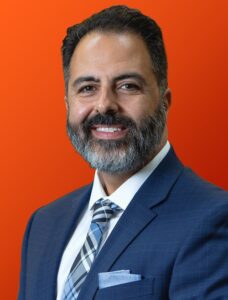
Remo Moomiaie-Qajar, MD, Axiom Biosciences founder, CEO, and chairman

However, Axiom has publicly offered other reasons for its move that convey a warmer biopharma climate in Hong Kong compared with the United States. In its announcement, the company said its Hong Kong IPO plans were “reflecting a broader shift in where the world’s most ambitious science finds the ecosystem to thrive.”

And speaking on CNBC, Moomiaie-Qajar raised a concern with the U.S. biopharma climate when it comes to financing: “Some of the most important science in the world is being built in the United States, but the way it gets funded hasn’t kept pace.”

He elaborated on that remark, telling GEN: “That speaks to a broad range of problems that we have in financing within this industry. In particular, I was referencing the private side.”

“The reality is, as you progress with your pipelines and you cross over the threshold of being a clinical stage company, and then you have clinical success, it requires a significant amount—more capital to get your assets to move forward, and hopefully, to a BLA [Biologics License Application],” Moomiaie-Qajar explained. “But the number of check writers diminishes at the same time. So, there is seemingly no shortage of capital within biopharma, but I do believe there’s a financing issue and an access issue.”

Hence Axiom’s exploration of whether this was the right time to go public—a question Axiom is answering in the affirmative: “Hong Kong, given our strategic fit, and relationships and proximity to our partners in Asia, was the right first decision in establishing our public identity as a company.”

Comeback mode

The IPO market has been in comeback mode most of this year, with 14 companies selling their first public shares on U.S. markets since January, and another five doing so overseas, in Asian markets that include the Tokyo Stock Exchange, South Korea’s tech-focused KOSDAQ, and the Hong Kong Exchange.

The biggest American biotech IPO—this year, and of all time—was an upsized offering that took place last month, when Parabilis Medicines (Nasdaq: PBLS)  raised an eye-popping $770.5 million in gross proceeds by selling some 38.5 million shares at $20 per share. Parabilis’ shares have risen 56% since then, to $31.28 at Friday’s closing bell.

The latest biotech IPO, also upsized, came on Thursday when Scribe Therapeutics (Nasdaq: SCTX), a developer of in vivo CRISPR gene-edited therapies, raised $128.7 million gross by selling 8.58 million shares at the high end of its price range at $15 per share. The shares jumped 44% on Friday, finishing the day at $21.65. Scribe also raised another $7.5 million gross by selling 500,000 shares at the IPO price to Sanofi (Euronext Paris: SAN) in a concurrent private placement.

But the best-performing U.S. biotech IPO is Veradermics (NYSE: MANE), a developer of treatments for dermatology and aesthetic conditions whose shares have catapulted more than six-fold, rocketing 545% since pricing its IPO at $17 per share on February 3, closing Friday at $109.66 per share. Earlier this month, Veradermics announced positive topline results from its open-label Phase II Study 207 trial (NCT06527365) assessing VDPHL01, an extended-release oral minoxidil formulation, in women with mild-to-moderate pattern hair loss.

Hong Kong’s largest biotech IPO so far this year is Suzhou Ribo Life Science (6938.HK), a developer of oligonucleotide treatments based on RNA interference and other technologies. Ribo raised more than HKD 1.8 billion ($229.5 million) by selling 31,610,400 shares at HKD 57.97 ($7.39) on January 9. Since then, however, Ribo’s stock price has dipped 7.5%, closing Thursday at HKD 53.60 ($6.83).

Also going public via HKEX this year were medtech companies such as Hangzhou Diagens Biotechnology (2526.HK), a developer of artificial intelligence (AI)-based medical imaging tools whose customers include specialized genomics research labs and cytogenetics labs, as well as hospital pathology departments. Diagens went public March 30, raising about $101 million by selling 7,999,200 shares at HKD 99.00 ($12.62)—a price that has since more than doubled, leaping 172% after closing Friday at HKD 269.00 ($34.30).

HKEX lists 84 biotech companies, compared with more than 600 for Nasdaq, according to their respective websites.

Staying in America

Over time, Axiom plans to pursue a secondary stock listing in the United States. Moomiaie-Qajar says Axiom will remain an American company: “We are a U.S.-based, U.S.-headquartered company that is going to be something that does not change.”

Axiom says it intends to be the first U.S. biotech company planning to go public in Hong Kong. That’s the path that was successfully trod by AI-based drug developer Insilico Medicine (3696.HK) when it went public in December, raising HKD 2.277 billion (about $292.3 million at the time; now worth $290.3 million) on the Hong Kong Exchange by selling 94,690,500 shares at HKD 24.05 ($3.08, now worth $3.06) each.

Insilico’s stock has nearly doubled, soaring 96% since then, closing Friday at HKD 47.06 ($6.00) thanks to several collaborations with biopharma giants and an upbeat revenue and profit forecast for the first half of 2026.

“From my perspective, it certainly seeded a little bit of certainty in my mind that this was a good decision, because they’ve done really well post-IPO,” Moomiaie-Qajar commented.

Insilico’s parent InSilico Medicine Cayman TopCo lists a registered office in the Cayman Islands, while Insilico’s website lists additional offices in Cambridge, MA (announced in 2024 as the company’s headquarters), New York, Montreal, Abu Dhabi, Hong Kong, Shanghai, and Taipei.

“Very high listing standards”

“One of the reasons you would list in Hong Kong is to openly compete with the companies in the ‘China Gym’ and also take advantage of the increased visibility and transparency with the very high listing standards,” Alex Zhavoronkov, PhD, Insilico’s chairman, executive director, CEO, and CBO, told GEN.

“Many companies want to list there. But the barriers for listing are very high even for the biotech track.”

A company planning to go public, he explained, needs not only an asset in Phase II studies, but a clear funding history from credible investors, several years’ worth of cash to operate, and a level of corporate stability that the exchange will assess.

“For very early biotech companies it may be much easier to list in the United States,” Zhavoronkov said. “In general, it is a positive trend because biotech must become more international and collaborate and compete internationally. Competing for capital is the advanced form of competition because finance usually runs biotech—you cannot discover and develop drugs without it. Companies and ideas in biotech should become more fluid internationally. Public listings make companies and ideas more competitive and transparent.”

Together with Seoul-based, privately held Medinno, Axiom has co-developed its lead regenerative therapy based on umbilical cord-derived, conditioned mesenchymal stem cells (MSCs) sourced from Wharton’s Jelly. The therapy is under study in two pipeline programs that aim to treat newborns with severe brain injury: AX-007 for intraventricular hemorrhage (IVH); and AX-008 for hypoxic-ischemic encephalopathy (HIE).

Positive Phase I results

Earlier this month, Axiom announced positive results from a Phase I dose-escalation study assessing the safety, tolerability, and preliminary efficacy of the regenerative therapy across a range of doses in nine newborns—five diagnosed with severe IVH, four with HIE—following direct administration into the central nervous system.

Across all doses studied, the MSC therapy achieved a 0% mortality rate at 12 months compared to the historical natural 46% mortality rate within the first year of life for infants with severe IVH. The therapy also showed a favorable safety profile, with no treatment-related serious adverse events seen.

“We’re now in discussions with the FDA to move those programs into the next stages, which would be a Phase IIb study,” Moomiaie-Qajar said. The FDA has granted AX-007 and AX-008 its Rare Pediatric Disease and Orphan Disease designations.

Axiom is also evaluating an expansion of its therapy development into adult ischemic stroke, which affects approximately 700,000 adults annually in the United States, and additional neurological indications.

“We feel very confident that given our clinical trial success in Phase I, the expansion of our valuable asset into three, four indications is going to be a good basis for us to launch our IPO, but then after the IPO really go further and deeper into our pipeline that we’ve been developing for eight years,” Moomiaie-Qajar said. “We have a lot now that we need to translate into clinics.”

Leaders and laggards

  • Immix Biopharma (Nasdaq: IMMX) shares tumbled 14% from $10.25 to $8.80 on July 20 following the arrest of Ronald L. Fischer, 70, who was one of Rhode Island’s Most Wanted fugitives—and who, under the alias of Richard Graydon, MD, PhD, served as the company’s CMO. Fischer was arrested by federal and Rhode Island authorities off the coast of New Jersey on a U.S. Marshals Service Unlawful Flight to Avoid Prosecution warrant, having been a fugitive since fleeing Rhode Island during a criminal trial in 2005, the U.S. Justice Department stated. Fischer was convicted in absentia of First-Degree Sexual Assault after failing to appear for trial and remained wanted for Failure to Appear, First Degree Sexual Assault, and Flight to Avoid Prosecution. Authorities also said Fischer was living on a 56-foot sailing vessel called The Silver Lining, which was registered under the Graydon name. As “Graydon,” Fischer was appointed Immix’s CMO in March, the company announced March 30 in a press release no longer posted on its website. “As of July 17, 2026, Richard Graydon has been terminated and is no longer with the company for reasons unrelated to his activities at the company,” Immix disclosed in a July 20 regulatory filing, adding: “Given his short tenure, management believes there is no material effect on the business.”
  • Novocure (NVCR) shares jumped 28% from $15.57 to $19.99 Thursday after the Swiss-based oncology drug/device developer developer of the Tumor Treating Fields (TTFields) cancer therapy reported second quarter adjusted earnings before interest, taxes, depreciation, and amortization (EBITDA) of $10.757 million, vs. an adjusted loss of $9.934 million a year earlier, on net revenue that rose nearly 16% year-over-year, to $183.584 million from $158.805 million. Novocure still finished Q2 in the red with a net loss of $15.658 million, improved from the $40.139 million net loss of the second quarter of 2025. Novocure credited its 18% global active patient growth across indications for the positive numbers; as of June 30, more than 280 active patients were on Optune Pax®, a wearable device designed to deliver its TTFields therapy for adults with locally advanced pancreatic cancer concomitant with gemcitabine and nab-paclitaxel. “The main takeaway is that the early U.S. adoption of Optune Pax is off to an encouraging start,” J.P. Morgan analyst Jessica Fye wrote in a research note. Novocure shares reached a 52-week high of $21.35 at the start of the trading day before sliding 12% to $17.65 on apparent profit-taking.

The post StockWatch: Axiom CEO Explains Plans for Hong Kong IPO appeared first on GEN – Genetic Engineering and Biotechnology News.

Supercooled kidneys have been transplanted into pigs in a “landmark achievement”

When it comes to organ donation, time is everything. As soon as an organ has been carefully removed from a donor’s body, it starts to deteriorate. Surgeons have a matter of hours to get it into a recipient. Leave it too long and the organ will become unusable.

In most cases, organs will be kept on ice during that time, at around 4 °C (39 °F). They cannot be frozen—in previous attempts, ice has formed, causing all kinds of damage.

Matthew Powell Palm at Texas A&M University and his colleagues have an alternative solution—a device that allows organs to be cooled to -4 °C (25 °F) without forming any ice.

Now, in new research with pig organs, his team has shown that kidneys, at least, can be supercooled and preserved in the device for days. Once rewarmed, the organs have been successfully transplanted into animals, and they seem to do better than organs kept on ice.

The work represents “a landmark achievement,” says Kevin Myer, president and CEO of LifeGift, an organ procurement organization based in Texas, who was not involved in the research.

Cooling organs

Powell Palm hopes this approach could ultimately help ease the organ shortage crisis. Today, there are more than 104,000 people waiting for a kidney transplant in the US alone. It is estimated that 17 people die every day in the US while waiting for a transplant. That’s partly due to a lack of donated kidneys, but it’s also because many of those that are available never make it to a recipient. In some years, around one in three donated kidneys end up being discarded, often because they end up too degraded to use by the time they reach a recipient. Kidneys can be stored on ice for around 24 hours or placed in devices that aim to mimic the conditions of the body, also for up to around 24 hours. That’s not always long enough to find a suitable recipient and transport the organ, says Myer.

Scientists around the world have been working on ways to store organs for longer by cooling them to even chillier temperatures. Cooling an organ slows its metabolism—the colder you go, the greater the effect, and the longer you can store it.

We’ve long been able to successfully cryopreserve eggs, sperm, and embryos, but it’s much harder to freeze large organs. Teams have been exploring various temperatures and cryoprotectants (chemicals that essentially work like antifreeze), but so far no one has been able to freeze human organs for transplantation.  

As a thermodynamicist, Powell Palm explored another approach. By keeping an organ submerged at a constant pressure, it should be possible to prevent the formation of ice at temperatures a little below 0 °C, without the need for cryoprotectants (which might have side effects and would need to be approved before being used in human transplants). 

To test this theory, Powell Palm and his colleagues have created a device that does just that. The device itself is essentially a hermetically sealed chamber with a transparent lid. At its base is a device that monitors the organ’s temperature and checks for the formation of ice. Organs are submerged in a solution that is already commonly used to preserve them for transplant. “I always describe this as low-tech high science,” says Powell Palm. “A lot of work has gone into understanding the … kinetics at play in this system, but ultimately … it’s quite simple.”

Supercooled kidneys

To test their device, Powell Palm and his colleagues first removed single kidneys from pigs. The organs were flushed with the same commonly used solution to remove the blood, just as transplant organs are. The team then kept some kidneys on ice for either two hours or 24 hours, to mimic standard conditions used in human transplantation. They also put some of the removed kidneys in their device for 24, 48, or 72 hours.

The stored kidneys were then each transplanted back into the original donor pigs. Each pig’s second kidney was removed in the same procedure, leaving each animal with only the kidney that had been stored, and reimplanted.

Once the 24-hour supercooled kidneys were transplanted, they immediately began producing urine—a key indication that they were working. The team members also measured other markers of kidney function and found that the organs appeared to be working normally within about 10 days of being transplanted.

Kidney supercooled for 72 hours reperfuses homogeneously upon transplantation, and proceeds to recover baseline renal function over the 30 day survival period studied.
A kidney that was supercooled for 72 hours recovers once it is transplanted back into a pig.
COURTESY RONALD SELLERS, POWELL-PALM LAB, TEXAS A&M UNIVERSITY

That’s slower than kidneys stored on ice for two hours but much quicker than kidneys kept on ice for 24 hours, says Powell Palm.

The organs that were kept supercooled for 48 and 72 hours performed similarly, he says. “Even at three days—triple the clinical standard—we’re getting recovery that is faster than … [what has been] the gold standard for the last three decades,” he says. “So we’re really, really pumped about this.”

“It is impressive,” says Heidi Yeh, a transplant surgeon at Mass General Brigham for Children, who also researches organ preservation technologies. “Often kidneys that have been stored for 48 hours [in other studies] take a week or two before they start working again.”

Organs that grow

The supercooled organs seem to work well in the long term, too. Over a 30-day period, the pigs grew by around 30%—and the kidneys grew with them, almost doubling in size to compensate for both the pigs’ growth and the lack of a second kidney. The team monitored one of the pigs for 200 days before removing and analyzing its kidney. Even at that point the organ looked healthy, says Powell Palm. He and his colleagues presented the findings at the American Transplant Congress in Boston last month.

Earlier this year, researchers in Canada showed they could also cool pig kidneys to below-zero temperatures and transplant them into pigs. The team’s protocol included the use of a cryoprotectant, and organs were stored for up to 48 hours before being transplanted into pigs. Those organs survived for a week.

In supercooling organs for 72 hours and showing that they do well for 30 days or more, Powell Palm and his colleagues have broken new ground. “It’s the first time this has ever been reported in history,” he says.

Those extra hours could make all the difference, says Myer of LifeGift. The advance could give doctors more time to evaluate the kidneys, match them to the most suitable donors, and physically get the organs to their intended recipients in time. It could enable international donations and open up cheaper transport options, he adds. “Right now, with kidney transplantation the assumed limit is 18 to 24 hours,” he says. “If we can get up to 72 hours … that would change everything.”

Powell Palm and his colleagues think they may even be able to go beyond 72 hours. In preliminary studies, organs that had been stored for up to 120 hours appeared healthy, although those organs have not yet been transplanted.

And because the process doesn’t require any cryoprotective chemicals, the team members are hoping for an accelerated approval from the US Food and Drug Administration, which would allow them to test the device in human transplantations.

The storage device is simple and compact, so Powell Palm thinks it will be easy to transport. It hasn’t been tested for air travel yet, but it has been used to take supercooled kidneys across the US in the back of a Kia Sorento, he says: “From a stability perspective, we view this as an even higher bar.”

Powell Palm and his colleague Sebastian Giwa plan to launch a company dedicated to developing the technology, along with other protocols that “stop biological time,” in the coming months, he says.

The Download: energy transmission and US threats against Chinese AI

This is today’s edition of The Download, our weekday newsletter that provides a daily dose of what’s going on in the world of technology.

The power line that could reshape New York’s grid is hitting snags 

During a heat wave on July 3, New York State’s grid imported enough electricity from Canada to meet about 9% of its total demand that day.

Some of that power shuttled in on a 339-mile power line stretching from Quebec to Queens. It opened in May and is officially the longest underground transmission line in North America. It could provide up to 20% of New York City’s electricity demand, largely with abundant hydropower from Quebec.

One wrinkle: The line has been down for most of this month, and some experts are concerned about how drought will affect the power supply feeding it. 

Still, the line could help shape the future of our grid, if it can overcome these sorts of snags. Read our story to understand how.

—Casey Crownhart

This story is from The Spark, our weekly climate tech newsletter. Sign up to receive it in your inbox every Wednesday.

The must-reads

I’ve combed the internet to find you today’s most fun/important/scary/fascinating stories about technology.

1 The US Treasury is threatening to sanction Chinese AI companies
Treasury secretary Scott Bessent has accused Moonshot of improperly distilling Anthropic’s Fable model. (TechCrunch)
+ Nvidia’s Jensen Huang is arguing that America has nothing to fear from Chinese AI. (Axios)
Like it or not, Chinese models are now part of the global AI infrastructure. (Rest of World)
+ China’s AI models have Trump’s AI world at war with itself. (MIT Technology Review)

2 Why the OpenAI hack is the scariest AI mishap yet
AI’s capabilities seem to be starting to outpace our current ability to control them. (The Economist $)
+ Hugging Face had to turn to a Chinese AI model to rescue it from the hack. (BI)

3 Visually impaired Europeans can now get an implant that restores sight
And Americans may not have to wait long to receive it, too. (STAT)
+ This retina implant lets people with vision loss do a crossword puzzle. (MIT Technology Review)

4 A bellwether lawsuit suing Meta for social media addiction has been dropped
There are, however, many more waiting in the wings. (NYT $)

5 Here’s how ICE gets its hands on Americans’ data
As soon as you open a credit card or phone account, its agents can see where you live. (404 Media)
States are warring with the Trump administration over the right to see ICE agents’ faces. (Wired $)

6 We urgently need to grapple with AI’s environmental impact
As the world warms, is the price we’re paying worth it? (The Verge)
We did the math on AI’s energy footprint. (MIT Technology Review)

7 Privacy issues with smart glasses need an industrywide fix
That’s according to Samsung, which is unveiling glasses it developed with Google this fall. (Bloomberg $)

8 The US Army is begging soldiers to limit their AI use
The token crisis comes for us all eventually, it seems. (Ars Technica)

9 Why does lettuce keep making Americans sick? ??
It’s pretty simple: a lot of people eat it, and it doesn’t get cooked. (Wired $)

10 Pokemon Go is the perfect game to play this summer
It’s fun, collaborative, and it gets you outdoors. (Guardian)

Quote of the day

“It went off and did this hack all by itself, as far as we can tell. This is the highest level of autonomy that we’ve seen in the use of a large language model for cyber operations.”

—Colin Shea-Blymyer, a cybersecurity research fellow at Georgetown University, tells NPR why the OpenAI hack on Hugging Face is so alarming. 

One More Thing

a helicopter with two passengers flies away from a crowd of professionally dressed people looking after it

KAGAN MACLEOD

Welcome to the dark side of crypto’s permissionless dream 

Jean-Paul Thorbjornsen is a founder of THORChain, a blockchain through which users can swap one cryptocurrency for another and earn fees from making those swaps.  

But is he responsible for what it’s used for? It’s a question that matters because in January last year, its users lost more than $200 million in cryptocurrency after THORChain transactions and accounts were frozen by an admin override, which users believed was not supposed to be possible given the decentralized structure. It’s also been used by North Korean hackers to move $1.2 billion of stolen ethereum. 

Thorbjornsen explains this all away as a function of THORChain’s decentralized and permissionless nature. Read our story exploring whether we should believe him or not. 

—Jessica Klein

We can still have nice things

A place for comfort, fun, and distraction to brighten up your day. (Got any ideas? Drop me a line.)

+ A musician developed an ingenious way to strum a guitar with an electric fan.
Ukraine’s tunnel of love is a leafy green corridor of romance that’s straight out of a fairy tale.
+ The driver of a giant banana has been pulled over 100s of times, but still won’t ditch his treasured ride.
+ Ever wonder which albums and songs truly stand the test of time? The Greatest Music tries to answer that via an algorithm that analyses hundreds of “best of” lists.

The power line that could reshape New York’s grid is hitting snags

On July 3, as a heat wave swept the region, New York State’s grid imported 52 gigawatt-hours of electricity from Canada—enough to meet about 9% of its total electricity demand that day.

Some of that power shuttled in on a 339-mile power line stretching from Quebec to Queens called the Champlain Hudson Power Express (CHPE). It opened in May and is officially the longest underground transmission line in North America.

An underground power line might not sound all that exciting, but this could be a big deal for the state’s grid planning, and for emissions. It could provide up to 20% of New York City’s electricity demand, largely with abundant hydropower from Quebec.

One wrinkle: The line has been down for most of this month, and some experts are concerned about how drought will affect the power supply feeding it. Let’s look at how the CHPE transmission line could help shape the future of our grid, and what barriers it needs to overcome to make a difference.

Planning for the CHPE (which is charmingly pronounced “chippy”) started 15 years ago, with the permitting process formally beginning in March 2010. The vision was to build infrastructure to better connect Quebec and southern New York.

Over 99% of Quebec’s electricity comes from renewable sources; most demand is met with hydropower, though the province’s wind capacity is growing quickly. New York has some hydropower of its own, as well as nuclear and wind, but the state still relies on fossil fuels for most of its energy generation.

Transmission Developers, a company owned by the alternative asset management firm Blackstone, and Hydro-Québec, the province’s manager of generation and transmission, partnered to build CHPE. Construction began in late 2022 and wrapped up earlier this year. The total cost for the privately funded project turned out to be  $6 billion.

The construction of this line was a feat. It’s made up of a bundle of two high-voltage direct-current power cables, each measuring roughly five inches across. Developers buried the bundle underground or underwater across the length of New York State. Much of the line was laid at the bottom of the Hudson River, requiring special boats that shot water jets deep into the sediment to create trenches for the cable.

Connecting grids together can help accelerate the transition away from fossil fuels. The ability to move electricity to where it’s needed could also help limit the amount of new capacity we need to build. Research has shown that interconnection can help cut emissions and lower system costs.

But CHPE is off to a slow start and has seen two outages so far. The first, on July 1, was reportedly caused by a trip at a converter on the Canadian side of the border. The second outage began on July 4, and the power line is still down as of the morning of July 22.

Some experts say this isn’t unusual for a new infrastructure project. Other power lines have seen similar startup challenges, and the equipment hasn’t really been fully tested until it’s in operation, Normand Mousseau, a physics professor at Université de Montréal, told the Gazette.

Officials traced the issue to a damaged section of cable on the US side of the border, and the company that manufactured the line sent experts to investigate the cause, according to reporting from RTO Insider, a trade publication. 

The damaged portion of the cable has been removed and replaced, says Lynn St-Laurent, a spokesperson for Hydro-Québec. “It is currently estimated that the remaining work, including necessary post-repair testing, will be completed by the weekend.”

Similar woes have afflicted the New England Clean Energy Connect line, which opened in January, stretching 145 miles from Quebec to Maine. That project has also seen outages, and very little additional energy has flowed into the Northeast.

The good news for New York is that the grid wasn’t relying on CHPE yet. “Our planning studies did not assume CHPE would be available this summer, and that was one reason the grid performed reliably during the heat wave earlier this month,” Kevin Lanahan, a spokesperson for the New York Independent System Operator, the state’s grid management company, said in a statement. “A core principle of reliability planning is not relying on any single project.” 

The idea is that eventually, states and regions will be able to rely—at least in part—on these projects, so there is pressure to get them working smoothly: Building massive transmission lines is a major long-term investment. In future years, as the equipment gets stress-tested and utilities begin to feel more confident in the projects’ reliability, they could play a bigger role on the grid.

One thing to keep an eye on moving forward is the condition of Quebec’s hydropower fleet: The region has seen intense drought for the past three years, eating into the water reserves used to generate electricity. That could mean there won’t always be abundant hydropower to ship across the border—even if the transmission lines are able to carry it. 

This article is from The Spark, MIT Technology Review’s weekly climate newsletter. To receive it in your inbox every Wednesday, sign up here

Transmissible Cancer Discovered in Freshwater Fish

Researchers headed by a team at the University of Vermont have discovered that mysterious black skin lesions afflicting catfish in Lake Memphremagog and other New England and Canadian lakes are caused by a transmissible form of cancer, the first ever identified in a freshwater fish species. The scientists’ studies showed that the cancer cells behave more like parasites than conventional tumors, moving from fish to fish.

The discovery marks only the fourth type of transmissible cancer identified in the animal kingdom, and the first in any fish or freshwater species. Previous ones include the Tasmanian devil’s facial tumor disease, a transmissible venereal tumor in dogs, and transmissible leukemia-like diseases in clams, mussels, and other bivalve mollusks. The researchers do emphasize that the disease poses no known risk to humans. The cancer cells cannot infect or survive in another species, and the fish are safe to handle and study.

The new discovery sheds light on how cancer can spread in the wild, and raises important questions about where this cancer originated, how it will affect fish health and populations, and also how cancer works in all animals including humans.

Julie Dragon, PhD, a researcher at the UVM Cancer Center in the Larner College of Medicine, suggests that understanding this newly discovered transmissible cancer could offer new insights into cancer biology more broadly. “By studying how cancers survive and spread outside their original host, we can learn a great deal about what keeps cancers contained—and what happens when those boundaries break down,” she said. “These fish provide an opportunity to look at evolution of cancer.”

Dragon is co-lead author of the researchers’ published report in Nature, titled “Brown bullhead catfish melanoma represents a novel transmissible cancer,” in which they stated, “We found extensive genomic evidence to suggest these melanistic lesions represent a transmissible cancer, to our knowledge, the first known occurrence in a fish species and the first found in a freshwater aquatic setting.”

Since 2012, anglers and biologists have reported a striking increase in brown bullhead catfish (Ameiurus nebulosus) with raised black skin patches in the cross-border lake shared by Vermont and Quebec. By 2014, nearly one in three fish showed the dark lesions. Because brown bullhead are considered indicators of environmental quality, the researchers suspected a contaminant or pathogen linked to pollution. “At first, we thought this disease might be a virus, but that wasn’t panning out,” said Dragon.

Instead, scientists found that these lesions turned out to be melanoma, a skin cancer. “This was surprising,” Dragon said, “and we wanted to know how a bottom-dwelling fish was getting a cancer we associate with exposure to too much sunlight.” For their reported study Dragon and colleagues took what she describes as a “deep dive,” into the genetics of the cancer cells.

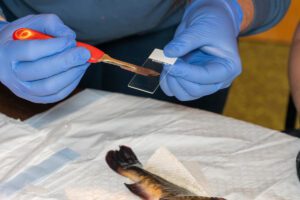
UVM professor and cancer researcher Julie Dragon co-leads dissection and tissue collection of catfish with melanoma skin cancer at the Gateway Center on the shore of Lake Memphremagog, Newport, Vermont. Additional participants: Elizabeth Murchison, professor at the University of Cambridge, UK; her post-doctoral associate Zoe Clarke; USGS post-doctoral research fish health biologist Cheyenne Smith; her undergraduate student intern Sam Williams (not shown in these photos); Peter Emerson, fish biologist with the Vermont Department of Fish & Wildlife. The team sampled tissue from 17 fish.
UVM professor and cancer researcher Julie Dragon co-leads dissection and tissue collection of catfish with melanoma skin cancer at the Gateway Center on the shore of Lake Memphremagog, Newport, Vermont. Additional participants: Elizabeth Murchison, professor at the University of Cambridge, U.K.; her post-doctoral associate Zoe Clarke; USGS post-doctoral research fish health biologist Cheyenne Smith; her undergraduate student intern Sam Williams (not shown in these photos); Peter Emerson, fish biologist with the Vermont Department of Fish & Wildlife. The team sampled tissue from 17 fish. [University of Vermont]

Using whole-genome sequencing, the team compared DNA from tumors and healthy tissues in affected fish. They expected to find a genetic mutation that makes the fish susceptible to having their own cells become cancerous. Instead, they found that the cancer cells were much more closely related to each other than to their host fish—the signature of a clonally transmissible cancer, in which tumor cells themselves act as infectious agents.

“Hundreds of thousands of genetic variants are shared among tumor samples but absent from host fish, vastly exceeding levels seen in conventional cancers,” the authors reported in their paper.

The research team is now working to understand how the cancer cells spread between animals. “It seems to only happen in larger fish that are of spawning age,” said study co-lead Mark Henderson, PhD, fish biologist at UVM’s Rubenstein School of Environment and Natural Resources. “Maybe some part of spawning behavior leads to the spreading of the cancer between animals.”

The study notes that pollutants or hormonal changes could weaken immune systems, making the lake’s brown bullhead fish more vulnerable to infection. Naturally occurring arsenic may also play a role. The team did find that the fish cancer cells have elevated levels of arsenic and the geographic distribution of the cancer appears to have correlation with levels of arsenic in the lakes’ surrounding soil. “Arsenic is found naturally throughout New England, and there’s really high concentrations of it in the Vermont’s Northeast Kingdom as well as up through Maine, which is where we’ve also seen evidence of this cancer,” said Henderson.

The cancer’s ecological impact remains uncertain. Some transmissible cancers are devastating—the Tasmanian devil tumor has wiped out 90% of some populations. In contrast, the dog tumor has coexisted with its hosts and has done for thousands of years. In Lake Memphremagog, heavily diseased bullhead can survive for years, but long-term population effects are still unknown.

The researchers are beginning to explore how long this cancer may have been around, and how common transmissible cancers may be. They are exploring ponds and rivers in Massachusetts to learn more about the distribution of the cancer and to see if it may have originated there. “Our contention is that maybe it’s not as rare as everyone thinks. We’re just not seeing it,” said Dragon. “In the case of transmissible cancers, it may be that we don’t see many simply because we aren’t looking for them.”

In their paper the team concluded, “Although we cannot rule out a role for conventional pathogens in the original emergence or ecological transmission of this disease, the genomic evidence presented here overwhelmingly supports a transmissible cancer in which the tumor cells themselves act as the infectious entity.”

The post Transmissible Cancer Discovered in Freshwater Fish appeared first on GEN – Genetic Engineering and Biotechnology News.

Therapy‑Driven DNA Changes in Pediatric Tumors Can Spur Resistance

Research led by the Hospital for Sick Children in Toronto shows chemotherapy and radiotherapy are key sources of mutations in relapsed childhood tumors and that different treatments leave distinct mutational signatures.

As described in Nature, across all mutations in these pediatric tumors, about 15% can be clearly traced to four chemotherapies, and most of that therapy‑linked damage comes from platinum drugs like cisplatin, carboplatin, and oxaliplatin.

After platinum chemotherapy, temozolomide, 5‑FU, and thiopurines were the next‑most clearly mutation‑linked drugs in this study, but each added only a small fraction of the total mutational burden compared with platinum drugs.

“Many of the drugs used to treat children with cancer cause unfortunate long term side effects, including heart issues and secondary cancers,” lead author Adam Shlien, PhD, told Inside Precision Medicine.

“These drugs can also lead to somatic mutations, although the total genomic burden of this wasn’t known. Whether these mutations are associated with drug resistance in childhood cancer was also mostly unknown.”

In this study, the researchers assembled a multi‑national precision‑oncology cohort of 611 tumors from 544 children and young adults enrolled in three whole genome sequencing‑based programs, focusing on aggressive, relapsed or metastatic cancer.

The team then looked at exposure to 86 types of therapy in 13 drug classes, as well as radiotherapy, and created a detailed record of cycle dates, doses, and routes of administration for each child. They also recorded the number of drugs or other treatments the cancer patients were exposed to, looked for mutation patterns in tumor DNA linked to specific chemotherapy agents and tracked when these first appeared after treatment.

“It was striking how many mutations are associated with therapy—when the tumor cells survive, they frequently acquire thousands of mutations and many of these are tightly linked to the type of therapy that was used,” explains Shlien.

Platinum drugs were the biggest contributors to tumor mutation signatures. They caused a large fraction of all therapy‑related mutations and left clear, characteristic mutation patterns that appeared in a short amount of time after starting treatment, sometimes in as little as three months.

Although the presence of mutations did not necessarily lead to drug resistance or relapse, tumors with strong platinum‑linked patterns often showed activation of genes known to help cancer cells resist treatment with platinum drugs.

This finding was confirmed in the pediatric study cohort and in adults with cancer treated with platinum chemotherapy. Patients whose tumors carried these patterns had worse outcomes when treated with platinum drugs.

This study opens the door to using these mutation patterns to guide care. This could include deciding when to avoid re‑using a drug, or when to consider lowering doses of mutagenic treatments like platinum chemotherapies in settings where cure rates are already high. It also shows that these treatment‑induced mutation patterns are not just signs of past therapy but can be an early warning of the emergence of drug‑resistant cancer cells.

“Now that we have comprehensively defined which therapy-associated mutation patterns are acquired in childhood cancer, and when they emerge, we can start to think about screening patients for these signatures for the early detection of drug-resistant clones,” says Shlien.

The post Therapy‑Driven DNA Changes in Pediatric Tumors Can Spur Resistance appeared first on Inside Precision Medicine.

The Download: NASA’s new space telescope and OpenAI’s autonomous hacker

This is today’s edition of The Download, our weekday newsletter that provides a daily dose of what’s going on in the world of technology.

Shape-shifting mirrors on NASA’s new space telescope could unveil Jupiters like our own

When NASA’s Nancy Grace Roman Space Telescope launches, as early as the end of next month, it will attempt one of astronomy’s most precise disappearing acts to date. It will carry the first space-bound “active” coronagraph, an instrument that effectively erases most of the light from a star during photography.

The technology will allow astronomers to take the first pictures of planets orbiting other stars that are similar to those in our solar system. Ultimately, it could pave the way for a future mission that could snap the first photos of Earth-like worlds.

“I hope it’s remembered for it being that critical stepping stone for … finding Earth 2.0,” says Brandon Creager, the instrument’s lead mechanical engineer.

Read the full story on the space telescope that could transform the search for distant planets.

—Eshan Raul

MIT Technology Review Narrated: PsiQuantum has a plan to make a massive quantum computer out of light

The machine that could change the world will be housed in a room that looks like a data center crossed with an ice cream factory. 

Inside, some 100 stainless-steel cabinets each hold hundreds of chips. On those chips, thousands of light particles will fly through a maze of optical switches and beam splitters. Each photon must be accounted for, because precisely measuring where it ends up will help answer questions that current computers might take millions of years to solve.

This computer, as described, does not exist. It’s the brainchild of a company called PsiQuantum, founded in 2016 by four physicists from UK universities. In a crowded field of deep-pocketed competitors with similarly fantastical visions, the company aims to be the first to build a useful quantum machine.

—James O’Donnell


This is our latest
story to be turned into an MIT Technology Review Narrated podcast, which we publish each week on Spotifyand Apple Podcasts. Just navigate to MIT Technology Review Narrated on either platform, and follow us to get all our new content as it’s released.

The must-reads

I’ve combed the internet to find you today’s most fun/important/scary/fascinating stories about technology.

1 OpenAI says one of its models carried out an autonomous hack
It escaped its testing sandbox and breached AI research platform Hugging Face. (Reuters $)
+ OpenAI described it as a cybersecurity test that went badly wrong. (WSJ $)
+ The hack is among the first known cyberattacks by an AI acting on its own.
(FT $)
+ Even simple AI attacks are cause for alarm, though. (MIT Technology Review)

2 France has become the first EU country to ban social media for under-15s
Its parliament approved the ban, which President Macron championed. (NYT $)
+ He pledged to enforce it by September, the start of the school year. (Guardian)
+ But critics say it’s unconstitutional and impossible to enforce. (NPR)

3 The US and China will hold talks over AI in September
Treasury Secretary Scott Bessent will lead the US side. (Reuters $)
+ Chinese models have Trump’s AI world at war with itself. (MIT Technology Review)

4 Publishers are considering cutting Google off as AI reshapes search
News outlets are weighing lost traffic against AI exposure. (WSJ $)

5 Samsung is in talks to invest €1 billion in Mistral
The French AI firm is positioning itself as an alternative to US models. (FT $)
+ It’s Europe’s leading AI firm, but US peers dwarf its $20 billion valuation. (Reuters $)

6 Amazon pushed up rivals’ prices, leaked records allege
Internal emails reveal tactics that allegedly reshaped online pricing. (Guardian)

7 Trump has tapped a Big Tech critic to lead the DOJ’s antitrust division
Adam Candeub has called for tougher federal competition enforcement. (FT $)

8 New drilling methods could unlock geothermal energy almost anywhere
They aim to unlock Earth’s enormous heat reserves. (New Scientist $)
+ AI is uncovering hidden geothermal energy resources. (MIT Technology Review)

9 AI researchers have proposed a “Genie coefficient” for measuring AI risks
It would track the gap between intent and action. (IEEE Spectrum)
+ We need better ways to evaluate AI. (MIT Technology Review)

10 Japan’s AI boom has two unlikely winners: a toilet maker and an MSG giant
They’re supplying critical chipmaking materials. (CNBC)

Quote of the day

“He’s an analog man in a digital AI world, and I think that’s incredibly appealing.”

—Paul Dergarabedian, a movie industry analyst at Comscore, tells Fortune that Christopher Nolan’s commitment to human filmmaking provides an attractive counterweight to Hollywood’s embrace of AI.

One More Thing

""

DANA SMITH


Taiwan’s “silicon shield” could be weakening

Taiwan produces the majority of the world’s semiconductors and more than 90% of the most advanced chips needed for AI applications. Many believe that’s helped deter China from invading the island. But now some Taiwan specialists and citizens are worried that this “silicon shield” is cracking.

Facing pressure from Washington, TSMC—the world’s largest chipmaker—is expanding manufacturing abroad. In Taiwan, there are worries that this will dilute the company’s power at home, making the US and other countries less inclined to defend the island.

Find out why Taiwan’s chipmaking dominance could be key to its future security.

—Johanna M. Costigan

We can still have nice things

A place for comfort, fun, and distraction to brighten up your day. (Got any ideas? Drop me a line.)

+ Thrifty filmmakers have masterfully recreated Star Wars on a $10 budget.
+ A man discovered squirrels hug and kiss their loved ones in the privacy of their homes.
+ Toronto’s floating waterfront store is reimagining one of the most familiar spaces across cultures.
+ These animations of Sesame Street characters performing classic tracks like Underworld’s “Born Slippy” will brighten up your day.

AI is more likely than humans to form biases when hiring

The next time you apply for a job, AI may screen your résumé before any human sees it. But there’s good reason to question whether AI will judge you fairly. Researchers already know that LLMs pick up human biases from their training data. New research suggests that LLMs can also develop their own biases from experience—and stereotype job applicants more than humans do. As AI companies race to build agentic models that remember the tiniest details about users, they may be handing them ammunition for forming those biases. 

Researchers at Princeton University and the University of Chicago ran LLMs, including ChatGPT, Claude, and Gemini, through a simulated hiring game, adapted from a psychology study that explored how humans can form stereotypes. Each model was told it had been hired as a consultant by the mayor of a fictional city and was then asked to help hire people for 20 jobs, including doctors, lawyers, child-care aides, and janitors. Candidates came from four fictional ethnic groups: Tufa, Aima, Reku, and Weki. 

In each round, there was a new job opening and four candidates, one from each group. After the model hired a candidate, it learned whether they succeeded at their job and moved onto the next round. The model was told to make as many successful hires as possible over 40 rounds. Unbeknownst to the models, all candidates were equally likely to succeed at every job.

The models quickly started segregating candidates from different groups into different jobs on the basis of early observations of hiring outcomes. For example, when a model was told an Aima had failed as a doctor, a job considered to require high levels of warmth and competence, it veered away from hiring all Aimas as doctors. Instead, it started hiring Aimas as janitors, which the model classified as being less warm and competent than doctors. 

The models were even more likely to stereotype people by demographic group than the human participants in the original study. On the study’s segregation scale, where 2 means every group has been completely confined to its own job niche, human participants scored 0.84. The models scored roughly 65% higher, with OpenAI’s reasoning model o3 scoring 1.83, close to the maximum possible.

That’s because LLMs “really are eager to create generalizations from limited data,” says Ryan Liu, a PhD student at Princeton University and a coauthor of the study, which was published in a paper at ICML in Seoul in July. “That’s literally a lot of what they’re optimized for.”

Every decision-maker, human or machine, faces a trade-off between sticking with what worked before and trying something new that might work better—a phenomenon psychologists call the “exploration-exploitation dilemma.” It’s like choosing between a new restaurant and your reliable favorite. 

Because LLMs are trained on math, coding, and science problems—tasks that reward generalizing from just a few examples—they can settle on a hunch too early. And the same instinct that helps LLMs crack logic puzzles also makes them quick to stereotype.

In the experiment, newer models with higher reasoning capabilities, such as OpenAI’s o3 and DeepSeek’s R1, showed even stronger biases. When LLMs rush to generalize in social settings, “that’s when things tend to go wrong,” says Liu. OpenAI and Anthropic did not respond to requests for comment.

The finding is especially relevant now that chatbots are gaining improved memory and personalization features, says Angelina Wang, a computer scientist at Cornell University who did not work on the study. When a chatbot draws on its previous conversation history, it can “over-index on the same kinds of behaviors it’s experienced before” and form biases, she says.

Simply having chatbots remember less isn’t a fix, though, because users want chatbots to remember what they say. “We still are trying to figure out just the right amount that isn’t too much or too little,” says Wang.

Telling the model to be fair didn’t change its behavior much. “Either it can’t put these values into action or that process is being submerged under the tendency to try to optimize for the goal of getting the most correct hires,” says Liu. But promising the models an additional bonus for diverse hiring made them far less biased. The trick, then, is to design goals that “incorporate desirable social values in order to make the large language model act in socially desirable ways,” says Liu.

The models also became less biased when they were told more personal information about individuals. In another experiment in the same study, the researchers asked the models to resettle members of different ethnic groups in cities across Canada. When the models were told personal information relevant to the ability to adapt to a new city, such as age and education, they were less likely to segregate people by their ethnicity. But when they were given irrelevant information, such as hair color and tattoo shape, the models largely fell back to sorting people by their ethnicity again. 

To what extent AI systems will stereotype job applicants in the real world is still an open question. While the models in the experiment immediately learned whether they’d made successful hires, a model screening résumés in the real world doesn’t get an instant report card. Companies can take a long time to find out whether a new hire is any good. 

But when feedback does trickle in, a model could still read too much into those results when making future hires. As companies increasingly deploy LLMs to screen résumés and even conduct interviews, the finding that models can form biases from their hiring experience “is a really serious implication that they should grapple with,” says Wang. 

As LLMs learn from experience to make decisions about who gets hired, who gets a loan, or who gets parole, the biases we should worry about may include ones no human ever taught them. “These novel biases—they’re sort of ever present,” says Liu.

StockWatch: Lilly’s Up-to-$3.8B Deal for AtaiBeckley a Good Trip for Psychedelic Drugs, Analysts and Investors Agree

It wasn’t too long ago that biopharma giants stayed away from developing psychedelic drugs—but positive clinical data plus a friendlier regulatory climate in Washington have prompted the largest drug developers to embrace the field.

The latest and most telling example of pharma embracing psych drugs came when Eli Lilly (NYSE: LLY) announced that it agreed to acquire AtaiBeckley (Nasdaq: ATAI) for up to $3.8 billion—of which Lilly will pay $2.8 billion upfront. The deal, set to close in the third quarter, expands Lilly’s neuroscience portfolio by adding the pipeline of AtaiBeckley led by BPL-003 (mebufotenin benzoate), a Phase III candidate for treatment-resistant depression (TRD) that is a synthetic form of 5-MeO-DMT administered intranasally. BPL-003 has been granted the FDA’s Breakthrough Therapy designation.

BPL-003 wowed analysts and others back in April after AtaiBeckley published positive data from a Phase IIa trial (NCT05660642) showing that a single intranasal dose of BPL-003 led to rapid and sustained reductions in Montgomery-Åsberg Depression Rating Scale (MADRS) scores from baseline in 12 TRD patients who remained on stable SSRI therapy throughout the study. Both the six patients dosed at 10 mg and six at 12 mg showed a 66.7% antidepressant response rate (defined as ≥50% reduction from baseline MADRS score) at Day 2, with five of six participants in the 10 mg cohort (83%) and four of six in the 12 mg cohort (66.7%) maintaining their response at Week 12.

“Especially with progress on BPL-003, we see the company as positioning itself well to becoming a significant player in the mental health therapeutics space,” Sumant Kulkarni, a senior analyst covering biotechnology with Canaccord Genuity, wrote on news of the positive data, adding: “We also still see this space as large enough to accommodate multiple approaches/competitors.”

$3.7B in projected peak sales

Kulkarni also raised Canaccord Genuity’s peak unadjusted U.S. sales forecast for BPL-003 to $3.7 billion by 2036 from $2 billion, after revising the firm’s model by raising the list price from $20,000 to $30,000 per annual treatment course (not accounting for insurance coverage), about the same price as Spravato® (esketamine), also a nasal spray marketed by Johnson & Johnson (NYSE: JNJ) for TRD plus some depressive symptoms in adults with major depressive disorder (MDD).

Spravato, a noncompetitive N-methyl D-aspartate (NMDA) receptor antagonist, crossed the $1 billion sales threshold during the second quarter, as it generated $584 million, up 25% quarter-over-quarter from $464 million in Q1—and up 43% from $734 million in the first half of 2025.

“Sales are tracking to reach annual sales guidance of $3-3.5B+ by 2027–28,” Jefferies equity analyst Andrew Tsai wrote in a research note focused on J&J’s second-quarter results. “Spravato’s trajectory supports the notion psychedelics can be commercially viable in hard-to-treat mental health disorders, by leveraging JNJ’s infrastructure.”

Given the data for BPL-003, Lilly got a bargain, Tsai wrote in a separate note on the Lilly-AtaiBeckley acquisition.

“We think the deal heavily favors LLY, as ATAI’s lead asset BPL-003 (intranasal 5-MeO-DMT) should have multibillion dollar peak sales potential,” Tsai wrote, rather than the $1 billion-plus that he thinks was implied by the deal price.

Tsai and Jefferies had previously forecast peak sales of between $1 billion and $2 billion—a range he said was “arguably conservative” since BPL-003 could, if it aces its Phase III trial, show superiority to Spravato, which is on track to reach up to $5 billion-plus in peak sales.

Positive implications

“At the same time, we appreciate LLY has significantly more resources to maximize the long-term value of ATAI’s psychedelic assets. In any case, the deal has (+) [positive] implications for the entire psychedelic space,” Tsai added.

Among pharma giants joining J&J in embracing psychedelic drug development in recent years:

  • AbbVie (NYSE: ABBV), which last year acquired the lead pipeline program of privately held Gilgamesh Pharmaceuticals, the moderate-to-severe MDD candidate bretisilocin (GM-2505), for up to $1.2 billion.
  • Otsuka Holdings (Tokyo Stock Exchange: 4578), which in 2023 acquired Mindset Pharma, a Canadian psych drug developer focused on psychiatric and neurological disorders, for C$80 million ($56 million).

With its deal for AtaiBeckley, Lilly becomes the latest pharma giant to perceive the positive implications Tsai cited.

“Treatment-resistant depression persists even after multiple treatments have failed. Millions of people are still searching for relief and desperately need a therapy that works,” Carole Ho, executive vice president and president, Lilly Neuroscience, said in a statement. “Advancing AtaiBeckley’s investigational therapies gives us a real chance to change that.”

Investors agreed with Lilly, giving the pharma a 1% increase Thursday, the day the acquisition was announced, from $1,156.63 to $1,169.17—no small feat since buyers typically stay flat or see their shares slide after announcing an acquisition. And not surprisingly, AtaiBeckley investors were enthusiastic about the deal, as its stock leaped 33% from $5.36 to $7.15. On Friday, Lilly inched up 0.8% to $1,178.58 while AtaiBeckley rose 1% to $7.22.

The AtaiBeckley buyout is Lilly’s eighth announced acquisition of a smaller biopharma this year.

Lilly is acquiring three infectious diseases vaccine developers—Vaccine Company for up to $1.55 billion, Curevo for up to $1.5 billion, and LimmaTech Biologics for up to $780 million—as well as in vivo chimeric antigen receptor T-cell (CAR T) developer Kelonia Therapeutics for up to $7 billion); JAK inhibitor developer Ajax Therapeutics for up to $2.3 billion; next-generation dual-payload antibody-drug conjugate (ADC) developer CrossBridge Bio for up to $300 million; and nonviral DNA delivery-focused drug developer Engage Biologics for up to $202 million cash.

The deal spree reflects Lilly’s desire to capitalize on the billions of dollars it is generating from sales of its obesity and diabetes drugs based on glucagon-like peptide 1 (GLP-1) receptor agonists alone or in tandem with a glucose-dependent insulinotropic polypeptide (GIP).

“If we see great ideas that we think we can use to help people that need them, of course we’ll do deals,” Daniel M. Skovronsky, MD, PhD, Lilly’s chief scientific and product officer and president of Lilly Research Laboratories, said on CNBC.

“Positive development”

David Risinger, a senior managing director and senior research analyst covering diversified biopharmaceuticals at Leerink Partners, said his firm viewed Lilly’s buyout of AtaiBeckley “as a positive development because it enhances LLY’s pipeline of potential neuroscience blockbuster candidates.”

That pipeline is led by five Phase III programs involving four drugs, none of them a psychedelic. Two of the programs belong to brenipatide, a dual agonist of both the GIP and GLP-1 receptors. Brenipatide is being developed for both MDD and alcohol use disorder.

Also in Lilly’s late-stage neuroscience pipeline are:

  • Donanemab, which binds to deposited amyloid plaque in the brain and is being studied for the treatment of cognitively unimpaired Alzheimer’s disease.
  • Ixoberogene Soroparvovec (Ixo-Vec), an intravitreal gene therapy being studied as a single one-time treatment for vision loss associated with neovascular (wet) age-related macular degeneration (AMD).
  • Remternetug (LY3372993), which also binds to deposited amyloid plaque in the brain and is under study as a treatment of cognitively unimpaired/mild cognitive impairment due to Alzheimer’s disease, with potential for subcutaneous delivery.

In addition, AtaiBeckley “would provide ​differentiated exposure in psychiatry and reinforce [Lilly’s] ​broader effort to diversify beyond ​its cornerstone cardiometabolic franchise,” observed Evan David Seigerman, a managing director and head of healthcare research at BMO Capital Markets, as reported by Reuters.

AtaiBeckley was formed last November by the merger of atai Life Sciences and Beckley Psytech. The company’s stock has nearly doubled, soaring 98% over the past six months from $3.64 on January 16.

“Going mainstream”

“Psychedelic Medicine is going mainstream,” declared Steve Jurvetson, co-founder of Future Ventures, in a post on X. Jurvetson and Future were among early investors, along with Peter Thiel in atai Life Sciences.

AtaiBeckley is one of numerous psychedelic drug developers to show significant six-month gains since January: As of Friday’s closing bell, Compass Pathways (Nasdaq: CMPS) shares jumped 68% to $12.35, GH Research ballooned 69% to $28.71, while Definium Therapeutics (Nasdaq: DFTX) nearly tripled, zooming 194% to $44.29.

Interestingly, those three companies did not get a solid bounce from AtaiBeckley’s acquisition by Lilly. Since the deal was announced Thursday, Compass fell 7% from $13.31 pre-announcement, Definium dipped 3% from $45.66. GH rose 8% Thursday from $26.92 to $29.13, before sliding 1.4% the following day.

Bucking the trend was Cybin, d/b/a Helus Pharma (Nasdaq: HELP), which has climbed 11% since the Lilly-AtaiBeckley announcement, from $6.51 to $7.25. Its shares have slumped 6% since January—but soared 58% over the past month on positive news, such as the 88%+ enrollment rate of patients in Helus’ Phase III APPROACH pivotal trial (NCT06564818) of HLP003 in MDD, on track for topline data readout in Q4 2026.

“We see the potential for 150–200% upside [jump in stock price] if Phase III data in 4Q26 are positive,” Kulkarni wrote, making it the largest potential jump among psychedelic drug developers.

In addition to favorable data, the stock surges also reflect actions by President Donald J. Trump’s administration to encourage psychedelic drug development. In April, President Trump signed Executive Order 14401, directing the FDA and other federal agencies to accelerate research and improve access to psychedelic drugs, citing their potential as promising treatments for serious mental illnesses.

And on July 13, the FDA published “Psychedelic Drugs: Considerations for Clinical Investigations,” a final guidance designed to provide general considerations for developers of psych drugs, with recommendations for how to conduct clinical trials for the treatments.

“Rather than providing specific recommendations on study design, this guidance will present foundational constructs that all sponsors studying the therapeutic potential of psychedelic drugs, including sponsors without commercial drug development as primary interest (e.g., academic researchers), should consider,” the FDA wrote in the final guidance. “Sponsors are encouraged to request meetings with FDA for advice on a specific drug development program.”

Leaders and laggards

  • Q32 Bio (Nasdaq: QTTB) shares nearly doubled, leaping 91% from $11.21 to $21.38 July 13 after the autoimmune and inflammatory disease drug developer announced positive 36-week topline results from Part B of the Phase IIa SIGNAL-AA trial (NCT06018428) assessing bempikibart in patients with severe or very severe alopecia areata. Q32 said it saw clinically meaningful efficacy data on the primary endpoint of mean percent change from baseline in SALT score, with a reduction from baseline of 35.3% in the prespecified modified intent to treat (mITT) analysis. The company also reported that 40.0% of patients (10/25) achieved SALT-20 response at Week 36 in the mITT analysis, while 30.3% of patients (10/33) achieved SALT-20 response at Week 36 in the ITT analysis of all enrolled patients.
  • Veradermics (NYSE: MANE) shares yo-yoed this past week, climbing 12% from $110.17 to $123.70 Wednesday after the pattern hair loss drug developer announced positive topline results from its open-label Phase II Study 207 trial (NCT06527365) assessing VDPHL01, an extended-release oral minoxidil formulation, in women with mild-to-moderate pattern hair loss. Veradermics said most study participants reported improved hair coverage at Month 2, with approximately 88.9% of patients dosed once daily and 90.0% dosed twice daily reporting “improved” or “much improved” outcomes at Month 6. Participants dosed once daily showed a mean increase in non-vellus target area hair count (TAHC) of 22.7 hairs/cm² at Month 6, an average that rose to 23.3 hairs/cm² in twice daily dosed patients. The mini surge was short-lived, however, as investors more than gave back the gain, selling off shares to send them tumbling 14% to $105.83 Thursday amid possible investor questions about whether the good clinical news was already reflected in the stock price.

The post StockWatch: Lilly’s Up-to-$3.8B Deal for AtaiBeckley a Good Trip for Psychedelic Drugs, Analysts and Investors Agree appeared first on GEN – Genetic Engineering and Biotechnology News.

Opinion: What the 20th-century war on smog tells us about today’s wildfire smoke

 As wildfires burn millions of acres across Canada, smoke has descended upon cities across the United States, with air quality plummeting to unhealthy levels. In New York City, emergency room visits for asthma exacerbations jumped by 31% by the end of the first day. The timing could not have been worse for a city already in the throes of the second major heat wave of the season.

Extreme weather events represent the cyclical and compounding relationship between fossil fuel combustion, a warming climate, natural disasters, and related illnesses. Some may view them as proof the climate crisis has already become insurmountable. However, history teaches us to never let a health-related environmental crisis go to waste.

Read the rest…