STAT+: 931 days. The drug approval scandal hiding in plain sight

This story first appeared in Adam’s Biotech Scorecard, a subscriber-only newsletter. STAT+ subscribers can sign up here to get it delivered to their inbox.

Northwest Biotherapeutics, a public biotech company developing a treatment for brain cancer, submitted a marketing application to U.K. regulators in late December 2023. The review was supposed to take 150 days, under an expedited regulatory pathway for drugs that address serious unmet medical needs.

As you’re reading this newsletter, two years, six months, and 18 days have elapsed without an approval decision. Why the extra-long delay? Regulators at the U.K’s Medicines and Healthcare products Regulatory Agency, or MHRA, won’t comment, telling anyone who inquires, including me, that it’s up to Northwest Bio to provide an update on its brain cancer treatment, called DCVax.

Continue to STAT+ to read the full story…

Fujifilm Selected with Six Others in FDA PreCheck Pilot Manufacturing Program

Fujifilm Biotechnologies reports that its commercial-scale cell culture manufacturing facility in Holly Springs, NC, has been selected as one of only seven participants in the FDA’s PreCheck Pilot Program. The program, which also includes Amneal Pharmaceutical, Cellares, Eli Lilly, Kriya Therapeutics, Kyowa Kirin, and Regeneron, is a strategic initiative designed to strengthen America’s pharmaceutical manufacturing capabilities and help accelerate patient access to critical medicines.

“We are honored that our Holly Springs site has been selected to participate in the FDA’s PreCheck Pilot Program,” said Lars Petersen, president and CEO of the company. “We’re committed to helping our customers bring life-changing therapies to patients faster, and participation in this initiative will help support greater access to critical medicines in the U.S.”

The pilot program is designed to enhance FDA-industry engagement by facilitating earlier interactions to minimize uncertainty associated with manufacturing readiness, with the goal of creating a more efficient regulatory review process, and strengthening the resilience of the U.S. pharmaceutical supply chain. The FDA PreCheck Pilot Program will focus on manufacturing readiness, regulatory predictability, and expedited facility inspections.

Fujifilm’s customers at the Holly Springs site includes argenx, Johnson & Johnson, Regeneron, and a number of other pharma firms. On behalf of its customers, Fujifilm’s Holly Springs site manufactures monoclonal antibodies (mAbs), including treatments for complex diseases.

bioreactor
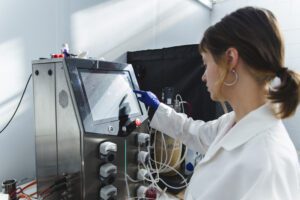
The pilot program is designed to enhance FDA-industry engagement by facilitating earlier interactions to minimize uncertainty associated with manufacturing readiness. [Westend61/Getty Images]

“As our customers continue advancing innovative biologic therapies, manufacturing readiness and regulatory predictability are increasingly important,” said Laurie Braxton, senior vice president and site head, Holly Springs at Fujifilm. “Our participation in the program reinforces our commitment to providing customers with high-quality manufacturing capabilities.”

Fujifilm’s Holly Springs facility is one of North America’s largest end-to-end cell culture biopharmaceutical manufacturing facilities and represents a key node in the company’s growing global manufacturing network, according to Lars Petersen. The $3.2 billion manufacturing site opened with a capacity of 8 x 20,000 L mammalian cell culture bioreactors, and will add a drug product line in early 2027, followed by Finished Goods. An expansion is underway to double drug substance capacity with an additional 8 x 20,000 L bioreactors.

With an increase in demand for U.S. manufacturing capacity, Fujifilm officials say they will accelerate the opening of its expansion by six months, targeting late FY2027. The Holly Springs site recently surpassed 800 employees, with the overall goal of hiring a total of 1,400 local employees by 2031.

Designed with standardized platforms and advanced digital capabilities, the site is part of the company’s interconnected kojoXTM operating system, which harmonizes systems, equipment, and processes across global sites to enable faster technology transfer, greater manufacturing flexibility, and consistent quality for customers worldwide


The post Fujifilm Selected with Six Others in FDA PreCheck Pilot Manufacturing Program appeared first on GEN – Genetic Engineering and Biotechnology News.

Epitope Editing Strategy Could Enable Less Toxic Stem Cell Transplants

Stem cell transplantation and gene therapy are among the most powerful curative approaches for blood diseases such as sickle cell disease, β-thalassemia, immune deficiencies, and some blood cancers. Replacing or correcting the blood-forming stem cells can offer the possibility of long-lasting benefit or a cure. However, before patients can receive these therapies, they usually need intensive and potentially toxic chemotherapy or radiation to clear space in the bone marrow for the new stem cells.

Researchers headed by teams at Boston Children’s Hospital and Dana-Faber Cancer Institute have developed a new strategy to make stem cell transplants safer by replacing chemotherapy-based treatment with a more targeted approach. Instead of using toxic agents that damage DNA throughout the body, the team developed an donor stem cell epitope-editing strategy and antibodies that recognize surface markers only on the blood-forming stem cells that need to be depleted. Reporting on their developments in Nature (“Non-genotoxic transplantation and in vivo selection through epitope editing,”) the team demonstrated that these antibodies can help clear the patient’s existing stem cells from the bone marrow in a more selective, less toxic way.

Hematopoietic stem/progenitor cell (HSPC) transplantation (HSCT) is a cornerstone therapy for a wide range of malignant and non-malignant conditions, “… leveraging the unique regenerative capacity of HSPCs to replenish the hematopoietic system,” the authors wrote. However, they pointed out, the short-term and long-term effects of pre-transplant genotoxic conditioning represent real barriers to broader use of HSPC transplantation and gene therapies.

Although monoclonal antibodies have been proposed as alternatives to chemotherapy or radiotherapy, they are also associated with efficacy and safety challenges, the team noted. An antibody normally cannot distinguish between the patient’s original stem cells and the infused therapeutic stem cells from the treatment. If the antibody remains in the body, it may also attack these transplanted cells, preventing them from integrating. “… immune-based agents pose efficacy and safety challenges due to nonselective targeting of transplanted HSPCs and prolonged half-life, leading to on-target depletion,” the investigators stated.

Researcher Pietro Genovese, PhD, of the Dana-Farber/Boston Children’s Cancer and Blood Disorders Center, and his team solved this problem by giving the therapeutic stem cells a form of molecular protection. Using precise genome-editing tools, they made changes to a tiny recognition site—epitope—on the surface of the donor stem cells. This small change prevented the antibody from binding to the therapeutic cells, while preserving the normal function of the protein. “… we identified amino acid changes in the extracellular domain of KIT that disrupt the binding of two therapeutic monoclonal antibodies, which impair stem cell factor (SCF)-mediated signaling without affecting KIT expression or functionality,” they explained.

The edited stem cells were in effect given a molecular camouflage. They could hide from the antibody, while the unedited cells remained vulnerable. In previous work the team had used the same general principle of epitope editing to protect healthy blood stem cells from cancer immunotherapies, such as CAR T cells or therapeutic antibodies, while allowing those therapies to attack leukemia cells.

The newly reported approach included therapeutic editing of blood stem cells to increase fetal hemoglobin (HbF), a protective form of hemoglobin that can compensate for the defective adult hemoglobin found in sickle cell disease and β-thalassemia. “In our experiments, KIT and BCL11A were efficiently co-edited in primary HSPCs, endowing their progeny with both HbF induction and mAb resistance,” the investigators commented. The results showed that the protected, epitope-edited stem cells can survive antibody treatment, integrate in the bone marrow, and enrich gradually over time. The findings point to a new way to make room for transplanted cells, and also selectively favor the therapeutic cells after transplantation.

“By avoiding chemotherapy, we can open up stem cell transplants for diseases that are less severe or for fragile patients normally too sick or too high risk for transplantation,” said first author Gabriele Casirati, MD, an instructor in Genovese’s lab. “Typically, bone marrow transplants are reserved for patients with life-threatening diseases but are simultaneously limited to those patients who can tolerate the chemotherapy.”

This work could have implications for the future of both stem cell and gene therapy. First, it may help enable chemotherapy-free or chemotherapy-sparing transplantation approaches, reducing the burden of treatment for patients who currently face the risks of DNA damage. Second, because the antibody can continue to select for protected cells after transplantation, the strategy could help therapeutic stem cells reach the levels needed for clinical benefit. “In conclusion, our findings support the paradigm-shifting potential of epitope editing to design next-generation HSCT,” the team stated.

The broader significance extends beyond inherited blood disorders. Together, these studies suggest that epitope editing could become a flexible platform: one application could make stem cell transplantation and gene therapy safer, while another could expand the use of cancer immunotherapy by protecting normal blood formation from unintended damage. “… by overcoming the limitations of monoclonal antibody pharmacokinetics, epitope editing enables novel hematopoietic replacement regimens that are not limited by on-target graft elimination, allowing prolonged immune-based conditioning that maximizes hematopoietic niche clearance without chemo-radiotherapy or monoclonal antibody wash-out,” they noted.

“Although this work is still preclinical, it points toward a future in which patients may receive curative stem cell therapies with less toxicity, less reliance on chemotherapy, and greater precision,” said Genovese. “By combining targeted biological conditioning with molecularly protected therapeutic stem cells, this strategy offers a new framework for safer and more accessible treatments for a wide range of blood diseases.”

The technology used in this study is jointly owned by Boston Children’s and Dana-Farber Cancer Institute. In their paper the team commented, “We envision a future where patients receive life-saving stem cell therapies without risks of prolonged aplasia, infertility or secondary malignancies, and with minimal or no hospitalization.”

The post Epitope Editing Strategy Could Enable Less Toxic Stem Cell Transplants appeared first on GEN – Genetic Engineering and Biotechnology News.


Local PBMC Isolation Enables Four-Hour Processing in San Diego

Fast, local cryopreservation is a consistent bottleneck for autologous cell therapy developers, even in major cell and gene therapy hubs. For the peripheral blood mononuclear cells (PBMCs) that form the foundation of immunotherapies, vaccine development and autologous therapies, every hour between leukapheresis collection and cryopreservation can degrade cell viability and functional integrity.

OrganaBio’s new PBMC isolation facility in San Diego removes that bottleneck for one of the three major cell and gene therapy hubs in the world. The opening of the new PBMC processing and cryopreservation laboratory at Excellos Labs (which OrganaBio acquired in May) makes it possible to isolate and cryopreserve PBMCs within three to four hours of collection, rather than losing time and quality by shipping live material across the country.

“The quality you lock in at cryopreservation is the quality the developer gets back months later,” Justin Irizarry, CEO, OrganaBio, tells GEN. “Get the first few hours right and you have protected everything downstream. Having that processing happen locally is what makes the few-hour window realistic rather than aspirational.”

The San Diego lab reports an average PBMC viability of “around 99.1% and recovery above 2.9 million cells per milliliter, with consistency from batch to batch,” Irizarry says. He credits those statistics to rapid time to cryopreservation, validated standard operating procedures “including sponsor-specific protocols,” personnel trained in each of those procedures, and a single quality system for each of OrganaBio’s sites. That combination ensures consistency across batches and sites, so “a sample processed in San Diego is indistinguishable from one processed in Miami,” he emphasizes.

In contrast, one German study comparing cells cryopreserved within six hours or 20 hours of collection notes a higher percentage of apoptotic natural killer (NK) cells associated with the longer hold time. Specifically, after 20 hours, 41% of the cells were apoptotic versus 24% for those preserved within six hours of collection. Robustness also declined with the longer hold times.

Robust local sourcing for PBMCs is a strategic advantage for San Diego’s clinical-stage biotherapeutic developers. In addition to gaining higher-quality starting materials, they can expect to benefit from tighter manufacturing timelines and less supply chain risk. Local processing reduces the inherent risk associated with cold-chain and transportation variables, while enhancing redundancy provided by OrganaBio’s West Coast sites in San Diego, Irvine, and San Francisco Bay, and its East Coast headquarters in Miami.

OrganaBio expects continued growth, “including clinical trial services, manufacturing services, and product manufacturing,” Irizarry says. The company is onboarding new customers and programs and deepening relationships with existing customers. “We also will evaluate opportunities to expand into additional markets for clinical trial services, particularly where there is strong population growth, good ethnic and racial diversity, and a lack of professionalized PBMC isolation services in the market.”

The post Local PBMC Isolation Enables Four-Hour Processing in San Diego appeared first on GEN – Genetic Engineering and Biotechnology News.
Interface Mismatches Remain Key Barrier to Continuous Bioprocessing

Achieving end-to-end continuous bioprocessing without introducing surges and pooling remains a goal for biomanufacturers. As they transition from vat to hybrid or continuous processing, biomanufacturers optimize individual steps but often overlook their interfaces, creating an imbalance in the system.

“The primary barrier to end-to-end continuous biomanufacturing is often not the lack of continuous unit operations themselves. The larger challenge is integrating technologies such as perfusion culture, multicolumn chromatography, continuous viral inactivation, and continuous filtration into a coordinated manufacturing train,” Moo Sun Hong, PhD, assistant professor, Seoul National University, tells GEN.

“Our review suggests that unresolved interface mismatches between unit operations, particularly between steady upstream harvest and cyclic downstream purification, remain the dominant obstacle to achieving true end-to-end continuity,” Hong says. Interface engineering is vital to manage throughput, residence times, process robustness, and product quality across interconnected units.

One part of the study compared batch and continuous biopharmaceutical manufacturing across 10 metrics, while another considered the various degrees of continuous processing. They concluded that the advantages of continuous processing result mainly from process intensification, which, in itself, introduces new vulnerabilities such as measurement latency and uncertainty around residence time distribution.

The challenge for manufacturers is that limited coordination between upstream and downstream processing results in flow-rate mismatches. “Unit operations operate with fundamentally different dynamics,” Hong acknowledges. “Upstream perfusion generates a relatively steady harvest stream, whereas many downstream operations operate cyclically. This creates flow-rate and residence-time mismatches that often require surge tanks or hold steps. Eliminating these interruptions requires careful interface engineering, synchronization of cycle times, real-time monitoring, and coordinated control across the entire process train.”

Take a systems approach

Hong and colleagues recommend evaluating batch-to-continuous processing transitions based upon “integrated techno-economic, sustainability, and operational performance metrics rather than isolated unit-operation productivity alone.” Therefore, process engineers can design the interfaces and control strategies in a way that enables a fully-connected, automated, continuous manufacturing platform that functions in a near steady-state without the need for holding tanks between units.

In a continuous processing environment, control strategies based on process analytical technology (PAT) and digital twin technology are vital. Hong calls them “the backbone of integrated continuous manufacturing.”

Specifically, PAT provides visibility and real-time monitoring for rapid responses to process variances, while digital twins provide enhanced predictive models, as well as fault detection, optimization, and analysis. Additional automation and control architectures also should be included “…that connect sensors and programmable logic controller/supervisory control and data acquisition (PLC/SCADA) systems, as well as process data repositories, control loops, and supervisory models across the integrated process train,” the scientists advise.

“In our view,” Hong concludes, “the challenge is not simply making individual operations continuous, but making the entire manufacturing platform function as an integrated system.”

The post Interface Mismatches Remain Key Barrier to Continuous Bioprocessing appeared first on GEN – Genetic Engineering and Biotechnology News.
Plant Expression Platforms May Be Better Option for Biopharma in the Global South

Mammalian cell-based manufacturing systems cannot meet the needs of the Global South, say researchers, who suggest that local production with plant-based expression platforms is a potential low-cost alternative. The researchers made their case in a recent paper, arguing that although mammalian systems are a good option for countries where centralized production facilities can be established, they are less suited to resource-limited regions.

“Mammalian cell lines, particularly Chinese hamster ovary cells, are the industry standard for producing complex biologics that require human-like PTMs [post-translational modifications], offering high-quality mAbs and vaccines with established regulatory approvals for pandemic applications.

“However, their high operational costs, slow doubling times, susceptibility to viral contamination, and dependence on expensive media significantly limit global equity and accessibility, particularly in resource-constrained settings such as the Global South,” the authors write.

Plant-based expression

Overcoming these constraints and increasing access to medicines in the Global South, will require the establishment of local production capacity that is both economically and environmentally sustainable, the authors say, citing plant-based systems as a potential option.

“Plants are increasingly used as platforms for producing vital biological molecules, such as pharmaceuticals and industrial biomaterials, through advanced strategies, including genetic engineering, process automation, and precision agriculture.”

The authors point to things like the Gaucher’s disease drug, Elelyso, the Ebola treatment, ZMapp, and the COVID-19 vaccine, Covifenz, as examples of current plant-made biopharmaceutical products.

And the potential advantages are significant. For one thing, plant-based systems are generally faster to produce protein and more easily scalable than mammalian platforms, according to the authors.

“Plant-based expression systems, particularly seed-based platforms such as rice, wheat, tobacco, sorghum, etc., offer scalable, field-level production regarded as safe status, low-cost PTMs, and exceptional environmental advantages.

“These systems enable decentralized, long-term stable storage of biologics and the production of animal-free, glycosylated therapeutics, significantly enhancing health security in resource-limited settings,” they write.

And the utility of plant-based expression systems is being further enhanced by new genetic modification techniques. The authors cite AI-driven genomic optimization and glyco-engineering as examples of how such systems are being improved.

“Drought-tolerant plant platforms can significantly enhance local production capacity in developing economies, addressing critical barriers such as limited investment, infrastructure constraints, and regulatory hurdles.”

Seeds not cells

Plant-based systems can also help biopharma address one of the major challenges of working in the global south—the need for extensive cold chain logistics infrastructure.

Mammalian cells are sensitive to environmental conditions and, as a result, manufacturers use temperature-controlled environments to prevent damage. These concerns are less of an issue for plant-based systems produced from seeds.

“Seed-based platforms offer a strategic advantage by enabling ambient-temperature storage of recombinant proteins for extended periods without loss of bioactivity. This capability significantly reduces cold-chain dependency and enhances logistical resilience in resource-limited settings.

“Consequently,” the authors continue, “plant-based expression systems represent a premier, cost-effective pathway for the large-scale production of biologics.”

The post Plant Expression Platforms May Be Better Option for Biopharma in the Global South appeared first on GEN – Genetic Engineering and Biotechnology News.

Perfusion Technologies Gain Momentum in Biomanufacturing

Perfusion-based manufacturing is gaining traction across the biopharmaceutical industry as companies seek to boost biologics output, improve product quality, and increase manufacturing flexibility without expanding facility footprints. Long viewed as a promising but operationally complex alternative to fed-batch production, perfusion is benefiting from a wave of technological advances that are making the approach more practical and economically attractive for commercial-scale manufacturing.

“Perfusion helps maintain cells at very high viable cell densities,” said Charles Solanke, senior scientist of upstream process development at Cytovance Biologics. “This produces significantly more product per unit bioreactor volume compared to traditional fed-batch processes.”

One of perfusion’s key advantages is its ability to continuously harvest product while maintaining healthy cell cultures. “Continuous removal of toxic metabolites creates a more stable environment,” Solanke notes. “This supports prolonged culture duration and high cell viability.”

Product-quality improvements are emerging as another major driver of adoption. Because biologics are harvested continuously, manufacturers can reduce variability in critical quality attributes, such as glycosylation patterns and aggregation profiles.

Technological developments are further expanding the performance ceiling of perfusion operations. High-intensity perfusion media can now support cell densities reaching 100–200 million cells per milliliter, enabling substantially greater productivity than previous generations of processes. At the same time, advances in alternating tangential flow (ATF) and tangential flow filtration (TFF) technologies improve cell-retention performance and reduce filter fouling, which is one of the most persistent challenges in long-duration perfusion runs.

Automation is also reshaping the field. Real-time monitoring technologies—including Raman spectroscopy, capacitance probes, soft sensors, and advanced process-analytical technology—are increasingly being integrated into commercial processes to provide continuous insight into culture conditions. “Real-time monitoring and process control help maintain stable culture conditions,” Solanke said. “The advances have also helped improve process robustness and manufacturing reliability.”

Despite the progress, challenges remain. Perfusion systems typically require higher media consumption, more sophisticated process controls, and additional equipment investments than conventional fed-batch operations. Extended run durations can also increase contamination risks if robust aseptic controls are not maintained.

Looking ahead, industry efforts are increasingly focused on developing cell lines specifically optimized for ultra-high-density perfusion cultures, reducing media consumption through concentrated formulations, and deploying fully autonomous process control systems. “The integration of fully automated perfusion control systems represents a promising opportunity,” Solanke said. “Together, these advancements have the potential to make perfusion processes more productive, cost-effective, and easier to operate.”

The post Perfusion Technologies Gain Momentum in Biomanufacturing appeared first on GEN – Genetic Engineering and Biotechnology News.

Oligonucleotide Therapeutic Industry Readies Itself to Move to the Next Phase

Synthetic oligonucleotide therapeutics are now validated for treating a wider range of diseases and, as companies move to larger-scale development, they should become familiar with the Chemistry, Manufacturing, and Control (CMC) aspects of their workflow.

That’s the view of Bao Zhang Cai, PhD, vice president of oligonucleotide CMC at GondolaBio. Cai will be giving a talk about CMC strategies for oligonucleotide therapies at the upcoming Bioprocessing Summit in Boston.

“The trend is very clear. Oligonucleotide therapies are becoming increasingly popular, as they tackle the root causes of diseases, not just the symptoms, and I can confidently say they’re now a validated therapeutic modality,” he says.

“But to achieve their potential, you need the right development strategy at the right time—you don’t want to apply late commercial staging to early development.”

According to Cai, synthetic oligonucleotide therapeutics have seen significant development over the last decade. They started as therapies for rare or ultra-rare diseases, but their applications have now widened.

With more patients needing treatment, a growing number of drugs are reaching the later phases of clinical trials and, as a result, CMC is increasingly important.

Cai suggests that product purification is important to consider, as it is often [genetic] sequence-dependent.

“You need to think about it upfront or as early as possible,” he says. “This is why, in general, it helps to identify and take advantage of an existing platform.”

An oligo-specific challenge, he explains, is that these products consist of a hydrophobic element conjugated to a water-soluble section.

“These two extremes put together generate unique challenges during purification, and you need to find the best route—do you want to perform the conjugation in solution or on a solid support?” he explains.

Finally, he says, as synthetic oligonucleotides are a relatively new product type, the critical quality attributes and product specifications can typically start quite broad. A focus on CMC can help manufacturers collect the data to narrow these specifications over time.

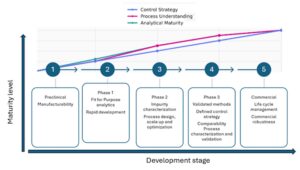
Technology maturity and development stage [Bao Zhang Cai, PhD, GondolaBio]

“Better process understanding can mean that, in the early phase, you have a poorly resolved method, and you get, say, 90% purity. But, later, you have a better method, and the purity will drop, and that’s a tough case to explain to the regulator,” he says.

“But, if you have process knowledge and understanding, you can demonstrate the product quality remains the same, and the purity level only looks lower because your methods have improved.”

The post Oligonucleotide Therapeutic Industry Readies Itself to Move to the Next Phase appeared first on GEN – Genetic Engineering and Biotechnology News.

Astrocytes Preserve Memory Persistence Through Ankyrin-2 Protein in Mice

Although scientists have long studied how memories are formed in the brain, how certain memories persist over time for learning and cognitive function remains unclear. 

A new study published in Nature Communications titled, “Astrocytic ankyrin-2 enables memory persistence in the mouse hippocampus,” suggests that astrocytes play a critical role in long-term memory through the regulatory protein ankyrin-2 (Ank2). 

Removing Ank2 function led to significantly impaired memory in mice after after two weeks. Under normal conditions, these mice showed standard locomotion, sociability, and recent memory immediately after learning.  

Astrocytes lacking Ank2 formed significantly less physical contacts with nearby engram neurons, the specialized neurons for memory storage. Additionally, the maintenance of long-term potentiation (LTP) was impaired while normal synaptic transmission remained intact. The findings suggest that astrocytes stabilize the neural circuits required for preserving memories long after they are formed. 

On the molecular level, researchers found that Ank2 is required for brain-derived neurotrophic factor (BDNF) signaling through the astrocytic TrkB.T1 receptor and IP3R2-mediated calcium signaling. In the absence of Ank2, calcium signaling weakened, astrocytes failed to undergo normal structural remodeling, and showed reduced ability to maintain contacts with memory-encoding neurons. 

The researchers further demonstrated that hippocampal BDNF infusion normally strengthens long-term memory persistence, but this effect disappeared when astrocytic Ank2 was deleted, showing that Ank2 is essential for BDNF-dependent memory stabilization. 

To determine whether astrocytic BDNF signaling alone is sufficient to enhance memory, the team developed an optogenetic tool called Opto-T1. Activation of this pathway promoted astrocyte remodeling, maintained long-term potentiation, and significantly enhanced remote memory without affecting recent memory.  

“Our findings show that astrocytes are not passive support cells, but active regulators that determine how long memories last,” said Wuhyun Koh, PhD, senior research fellow at Institute for Basic Science (IBS) and corresponding author of the study. “By identifying Ank2 as a key regulator of astrocyte remodeling and BDNF signaling, we have uncovered a new mechanism that helps stabilize long-term memories and opens new avenues for understanding and potentially treating memory disorders.” 

The researchers indicate the study provides a new framework for understanding how astrocytes contribute to neurological diseases. 

The post Astrocytes Preserve Memory Persistence Through Ankyrin-2 Protein in Mice appeared first on GEN – Genetic Engineering and Biotechnology News.

The Download: worms fight pollution, and geoengineering faces reality

This is today’s edition of The Download, our weekday newsletter that provides a daily dose of what’s going on in the world of technology.

Why worms (and microbes) are catching on as a manure pollution solution

Anthony Agueda, a third-generation California dairy farmer, pulls a rake through a bed of dark, wet wood chips to reveal a half-dozen squirming red earthworms. There are likely hundreds of thousands more wriggling just under the surface.

The worms and microbes are part of a “vermifiltration” system that cleans manure wastewater. The approach may dramatically cut methane, nitrous oxide, and water pollution.

Vermifiltration is just one of a variety of methods that farmers, companies, and scientists are employing to drive down manure pollution as the livestock industry faces growing pressure to address the environmental harms from one of the smelliest parts of the business.

Explore how the humble earthworm could reshape the future of sustainable farming.

—James Temple

MIT Technology Review Narrated: geoengineering gets a reality check

Solar geoengineering, the controversial idea that we could deliberately intervene in the climate system to counteract global warming, is moving beyond computer simulations and into the practical engineering challenges required to make it real.

Researchers are now working on aircraft, materials, and other systems for solar geoengineering. But as they delve into these details, they’re finding that even early deployment would require significant new infrastructure, time, and investment.

—James Temple


This is our latest
story to be turned into an MIT Technology Review Narrated podcast, which we publish each week on Spotify and Apple Podcasts. Just navigate to MIT Technology Review Narrated on either platform, and follow us to get all our new content as it’s released.

The must-reads

I’ve combed the internet to find you today’s most fun/important/scary/fascinating stories about technology.

1 The Trump administration has lifted restrictions on OpenAI’s GPT 5.6
The green light came after additional testing and meetings. (Axios)
+ OpenAI subsequently said it will launch widely tomorrow. (Bloomberg $) 
+ The rollout had been delayed due to security concerns. (Verge)
+ Does AI know too much? (MIT Technology Review)

2 China is looking at curbing overseas access to its top AI models
Alibaba, ByteDance, and Z.ai attended meetings about the plan. (Reuters $)
+ Beijing is also weighing the security risks of open-weight AI. (SCMP)
+ And has issued a “backdoor” security alert over Claude Code. (CNBC)

3 European NATO allies have unveiled a $50 billion high-tech missile plan
They will engineer stealth and high-speed hypersonic weapons. (BBC)
+ Which can strike targets at least 300 km away. (Reuters $)
+ The Dutch and British are also developing amphibious ships. (Bloomberg $)
 
4 Meta is testing “super sensing” AI glasses that record every moment
It plans to disable privacy LEDs that alert people when they’re “on.” (FT $)
+ It’s also released an AI image generator. (NYT $)
+ Which lets anyone use your Instagram photos in AI images. (Wired $)
 
5 China’s DeepSeek is developing its own AI chip, sources say
It could reduce the company’s reliance on Nvidia and Huawei. (Bloomberg $)
+ DeepSeek V4 was a win for Chinese chipmakers. (MIT Technology Review)
 
6 Wikipedia is fighting to survive the internet’s next era
It’s under attack from MAGA, AI raids, and repressive regimes. (NYT $)
+ AI has given Wikipedia a language problem. (MIT Technology Review)
 
7 SpaceX plans to launch its first model coproduced with Cursor
The new frontier model could arrive as soon as this week. (Information $)
+ It’s built with AI startup Cursor, which SpaceX is buying for $60 billion. (FT $)
 
8 A new academic “humanizer” tool can erase signs of AI-written text
But researchers are very divided over its potential impact. (Nature $)

9 Scientists have detected a mystery chemical on Pluto and Titan
It appears to absorb light in a way we don’t currently understand. (Wired $)

10 A Waymo robotaxi reportedly called the cops on drinking teens
Officers then approached the vehicle with guns drawn. (404 Media)

Quote of the day

“Parents do you know where your teens are? Waymo does!” 

—Local police post on Facebook that a Waymo in California called the cops on two teenagers for “drinking and shooting from the vehicle.”

One More Thing

MICHAEL BYERS


Your boss is watching

Dora Manriquez has spent nine years driving for Uber and Lyft, where every ride she accepts or rejects is tracked by the apps she relies on for work. Having found herself unable to score enough better-­paying rides, she has had to file for bankruptcy. 

App-based employers aren’t the only ones keeping a very close eye on workers today. Jobs today—whether in an office, a warehouse, or your car—can mean constant electronic surveillance with little transparency, and potentially with livelihood-ending consequences if your productivity flags.

All that data is shifting the relationships between workers and managers—and protections are lagging. Read the full story on the widening power imbalance it’s created.

—Rebecca Ackermann

We can still have nice things

A place for comfort, fun, and distraction to brighten up your day. (Got any ideas? Drop me a line.)

+ Literary worlds collide in this marvellous Dr Seuss/Stephen King mashup.
+ A daring snorkeler saved a dolphin from a suckerfish—and then celebrated with its whole pod.
+ This clever musical project seamlessly constructs an original song from vocal snippets of 50 artists singing US city names.
+ A long-lost wallet from 1970 was recently unearthed, creating a cute time capsule from its owner’s high school years.