Nature Biotechnology, Published online: 28 July 2026; doi:10.1038/s41587-026-03264-4
The new laws break away from 20-year-old restrictive GMO directives to give an official nod to plants made with new genomic techniques.


Radically different
Nature Biotechnology, Published online: 28 July 2026; doi:10.1038/s41587-026-03264-4
The new laws break away from 20-year-old restrictive GMO directives to give an official nod to plants made with new genomic techniques.
Biotechs are spending billions to cure a rare liver disorder most Americans have never heard of. The contentious race features dueling technologies, patent wars, a broken alliance, and a boiling competition between the U.S. and Chinese drug industries.
The disease, known as alpha-1 antitrypsin deficiency (AATD), is a slow-moving disaster for patients. Thanks to a single misspelled letter of DNA, their livers produce a mutant version of a protein that normally travels through the bloodstream and protects the lung from damage.
Sarepta Therapeutics, the bruised maker of Duchenne muscular dystrophy treatments, on Monday named Michael Severino, formerly the CEO of Tessera Therapeutics, as its new chief executive, starting Tuesday.
Severino is replacing Doug Ingram, who announced earlier this year that he planned to retire after leading the biotech for nearly a decade. During his tenure, the company got three Duchenne treatments approved, but has faced ongoing questions about how effective they are and run into regulatory scrutiny over the safety of its gene therapy.
The company’s share price has tanked from where it was at the beginning of 2025.
This is today’s edition of The Download, our weekday newsletter that provides a daily dose of what’s going on in the world of technology.
Nuclear power provides about 9% of global electricity today, and that fraction could tick up as countries look to build new reactors. New, cheaper methods to obtain fuel could help ensure that those nuclear projects stay on track.
One of those methods is called laser enrichment. It allows you to separate out the material you want (in this case, uranium) from others in a mixture of old waste.
A company called Global Laser Enrichment (GLE) is about to start testing whether the technology works at commercial scale. Read our story about their efforts.
—Casey Crownhart
It’s super difficult to freeze organs. Once ice forms in them, they’re done. The ice crystals create all kinds of damage and render the organs unusable. That hasn’t stopped many researchers from trying.
In new research, one team has been able to supercool the kidneys of pigs and preserve them for days. The kidneys survived being stored at −4 °C (25 °F) and eventually reimplanted back into pigs. And that’s just the latest development in a field that is positively buzzing.
Read about why it’s such an exciting time for organ preservation—and what could be coming next.
—Jessica Hamzelou
This story is from The Checkup, our weekly biotech newsletter. Sign upto receive it in your inbox every Thursday.
The must-reads
I’ve combed the internet to find you today’s most fun/important/scary/fascinating stories about technology.
1 Silicon Valley is split over how to respond to Chinese AI
It boils down to whether AI models should be open or closed. (NYT $)
+ Nvidia, Microsoft and Meta warn that restricting open models would backfire. (CNBC)
+ AI companies are spending record sums on lobbying Washington. (FT $)
+ China’s AI models have Trump’s AI world at war with itself. (MIT Technology Review)
2 Trump can’t post his way out of this war
Iran has revealed hard limits to his ability to bend reality to his will. (Atlantic $)
+ Trump has been forced to abandon further escalation due to dwindling munitions stockpiles. (NYT $)
+ An Iranian strike on CIA facilities has raised questions about Russian involvement. (Reuters $)
3 Wildfires are surging across Europe
Repeated heat waves have turned parts of the continent into a tinder box. (BBC)
+ One of the fires forced NASA to evacuate a tracking station in Spain. (Ars Technica)
+ Americans are increasingly grappling with smoky skies too. (Atlantic $)
4 OpenAI didn’t notice its agent going on a days-long hacking spree
It only cottoned on after the threat was contained and the FBI had been alerted, sources say. (Reuters $)
5 The AI jobs wipeout still hasn’t arrived
In fact, a lot of companies are now embarking on hiring sprees. (WSJ $)
+ AI’s impact is increasingly falling short of expectations. (The Guardian)
+ Here’s a much-needed reality check on the AI jobs hysteria. (MIT Technology Review)
6 A six-year-old girl died in a Chinese gene-editing trial
Experts say it should have never been allowed to go ahead. (Science)
+ This baby boy was treated with the first personalized gene-editing drug. (MIT Technology Review)
7 What it’s like to use a North Korean smartphone
They’re growing in popularity—but represent another avenue for government control. (WP $)
8 The FCC’s ban on foreign-made drones is not working
You can’t change global supply chains at the stroke of a pen. (The Verge $)
9 The “summer of Ludd” shows it’s fun to be a Luddite
A growing anti-tech movement is all about raw, anarchic joy. (404 Media)
+ We’re in the era of AI malaise. (MIT Technology Review)
10 Why Jimothy the racoon is the internet’s latest obsession 
It’s his irresistible combination of chaos and cuteness. (BBC)
Quote of the day
—Marian Agnew, a nine-year-old, from Norman, Oklahoma, tells Wired she’s not impressed by AI models’ tendency to make up facts.
One More Thing

Inside a romance scam compound—and how people get tricked into being there
Gavesh’s journey started, seemingly innocently, with a job ad on Facebook promising work he desperately needed.
Instead, he found himself trafficked into a business commonly known as “pig butchering”—a form of fraud in which scammers form close relationships with targets online and extract money from them.
The Chinese crime syndicates behind the scams have netted billions of dollars, and they have used violence and coercion to force their workers to carry out the frauds from large compounds, several of which operate openly in the quasi-lawless borderlands of Myanmar.
Read our story about these scam syndicates and how they could be broken up.
— Peter Guest and Emily Fishbein
We can still have nice things
A place for comfort, fun, and distraction to brighten up your day. (Got any ideas? Drop me a line.)
+ I want to make every single one of these delicious-looking Korean dishes.
+ If you like origami, you’ll love this guy’s tutorials.
+ How to deal with those old gadgets that are collecting dust in your drawer.
+ Enjoy these old art deco public transport posters from London.
Nature Biotechnology, Published online: 27 July 2026; doi:10.1038/s41587-026-03229-7
Polyketide synthases are engineered for the production of sustainable plastics.
Argenx said Monday it would buy Forte Biosciences to expand its immunology pipeline, continuing the sector’s acquisition run, as even midsize companies hunt for pick-up targets.
The deal, worth $2.2 billion in cash, values Dallas-based Forte at $77 per share, a 41% premium to the biotech’s closing price on Friday.
Argenx, which has its main operations in Belgium, has become a top success story in immunology. Its drug Vyvgart, approved to treat the autoimmune diseases generalized myasthenia gravis and chronic inflammatory demyelinating polyneuropathy, has delivered steady sales increases as its label has been widened to cover more patients.
Axiom Biosciences, a privately held developer of regenerative therapies and targeted biologics that rebranded last month from Cytonus Therapeutics, made headlines around the world when it announced plans to go public through an initial public offering (IPO), since companies that go public typically do so quietly, by filing registration statements with regulators and exchanges.
What made Axiom’s IPO plans even more newsworthy: the San Diego-area company (based in suburban Carlsbad, CA) said it intends to trade its first public shares on the Hong Kong Exchange (HKEX) rather than a U.S. market like Nasdaq, the leading market for biotech IPOs, or the New York Stock Exchange.
Why Hong Kong? Axiom says the special administrative region of China possesses deep biotechnology expertise, a strong appetite for clinical-stage innovation, and direct proximity to the Asian partners and capital advancing the company’s science.
“For us, Hong Kong is a very good fit for the stage of company that we’re in, and the timing is right,” Remo Moomiaie-Qajar, MD, Axiom’s founder, CEO, and chairman, told GEN. “Hong Kong has a very well-established investor base that really understands the time requirements and the capital needs for biopharma, but in particular, cell therapies. And ultimately, given the fact that we have been working in Asia with partnerships for several years, this landing spot for us in Hong Kong seemed to be the right choice in a broader strategy.”
Does that mean the United States is finished for biotech innovation?
“I would not state that at all,” he replied. “I think the United States is very much still a leader. It is also very central to our strategy, and the FDA is really core to all of our decisions moving forward into clinics. I just see that this is, and I speak only for us, part of a bigger global strategy which includes both Asia and the United States.”
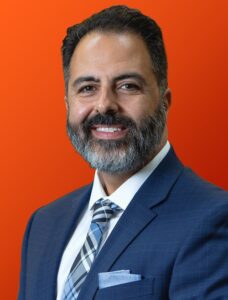
However, Axiom has publicly offered other reasons for its move that convey a warmer biopharma climate in Hong Kong compared with the United States. In its announcement, the company said its Hong Kong IPO plans were “reflecting a broader shift in where the world’s most ambitious science finds the ecosystem to thrive.”
And speaking on CNBC, Moomiaie-Qajar raised a concern with the U.S. biopharma climate when it comes to financing: “Some of the most important science in the world is being built in the United States, but the way it gets funded hasn’t kept pace.”
He elaborated on that remark, telling GEN: “That speaks to a broad range of problems that we have in financing within this industry. In particular, I was referencing the private side.”
“The reality is, as you progress with your pipelines and you cross over the threshold of being a clinical stage company, and then you have clinical success, it requires a significant amount—more capital to get your assets to move forward, and hopefully, to a BLA [Biologics License Application],” Moomiaie-Qajar explained. “But the number of check writers diminishes at the same time. So, there is seemingly no shortage of capital within biopharma, but I do believe there’s a financing issue and an access issue.”
Hence Axiom’s exploration of whether this was the right time to go public—a question Axiom is answering in the affirmative: “Hong Kong, given our strategic fit, and relationships and proximity to our partners in Asia, was the right first decision in establishing our public identity as a company.”
The IPO market has been in comeback mode most of this year, with 14 companies selling their first public shares on U.S. markets since January, and another five doing so overseas, in Asian markets that include the Tokyo Stock Exchange, South Korea’s tech-focused KOSDAQ, and the Hong Kong Exchange.
The biggest American biotech IPO—this year, and of all time—was an upsized offering that took place last month, when Parabilis Medicines (Nasdaq: PBLS) raised an eye-popping $770.5 million in gross proceeds by selling some 38.5 million shares at $20 per share. Parabilis’ shares have risen 56% since then, to $31.28 at Friday’s closing bell.
The latest biotech IPO, also upsized, came on Thursday when Scribe Therapeutics (Nasdaq: SCTX), a developer of in vivo CRISPR gene-edited therapies, raised $128.7 million gross by selling 8.58 million shares at the high end of its price range at $15 per share. The shares jumped 44% on Friday, finishing the day at $21.65. Scribe also raised another $7.5 million gross by selling 500,000 shares at the IPO price to Sanofi (Euronext Paris: SAN) in a concurrent private placement.
But the best-performing U.S. biotech IPO is Veradermics (NYSE: MANE), a developer of treatments for dermatology and aesthetic conditions whose shares have catapulted more than six-fold, rocketing 545% since pricing its IPO at $17 per share on February 3, closing Friday at $109.66 per share. Earlier this month, Veradermics announced positive topline results from its open-label Phase II Study 207 trial (NCT06527365) assessing VDPHL01, an extended-release oral minoxidil formulation, in women with mild-to-moderate pattern hair loss.
Hong Kong’s largest biotech IPO so far this year is Suzhou Ribo Life Science (6938.HK), a developer of oligonucleotide treatments based on RNA interference and other technologies. Ribo raised more than HKD 1.8 billion ($229.5 million) by selling 31,610,400 shares at HKD 57.97 ($7.39) on January 9. Since then, however, Ribo’s stock price has dipped 7.5%, closing Thursday at HKD 53.60 ($6.83).
Also going public via HKEX this year were medtech companies such as Hangzhou Diagens Biotechnology (2526.HK), a developer of artificial intelligence (AI)-based medical imaging tools whose customers include specialized genomics research labs and cytogenetics labs, as well as hospital pathology departments. Diagens went public March 30, raising about $101 million by selling 7,999,200 shares at HKD 99.00 ($12.62)—a price that has since more than doubled, leaping 172% after closing Friday at HKD 269.00 ($34.30).
HKEX lists 84 biotech companies, compared with more than 600 for Nasdaq, according to their respective websites.
Over time, Axiom plans to pursue a secondary stock listing in the United States. Moomiaie-Qajar says Axiom will remain an American company: “We are a U.S.-based, U.S.-headquartered company that is going to be something that does not change.”
Axiom says it intends to be the first U.S. biotech company planning to go public in Hong Kong. That’s the path that was successfully trod by AI-based drug developer Insilico Medicine (3696.HK) when it went public in December, raising HKD 2.277 billion (about $292.3 million at the time; now worth $290.3 million) on the Hong Kong Exchange by selling 94,690,500 shares at HKD 24.05 ($3.08, now worth $3.06) each.
Insilico’s stock has nearly doubled, soaring 96% since then, closing Friday at HKD 47.06 ($6.00) thanks to several collaborations with biopharma giants and an upbeat revenue and profit forecast for the first half of 2026.
“From my perspective, it certainly seeded a little bit of certainty in my mind that this was a good decision, because they’ve done really well post-IPO,” Moomiaie-Qajar commented.
Insilico’s parent InSilico Medicine Cayman TopCo lists a registered office in the Cayman Islands, while Insilico’s website lists additional offices in Cambridge, MA (announced in 2024 as the company’s headquarters), New York, Montreal, Abu Dhabi, Hong Kong, Shanghai, and Taipei.
“One of the reasons you would list in Hong Kong is to openly compete with the companies in the ‘China Gym’ and also take advantage of the increased visibility and transparency with the very high listing standards,” Alex Zhavoronkov, PhD, Insilico’s chairman, executive director, CEO, and CBO, told GEN.
“Many companies want to list there. But the barriers for listing are very high even for the biotech track.”
A company planning to go public, he explained, needs not only an asset in Phase II studies, but a clear funding history from credible investors, several years’ worth of cash to operate, and a level of corporate stability that the exchange will assess.
“For very early biotech companies it may be much easier to list in the United States,” Zhavoronkov said. “In general, it is a positive trend because biotech must become more international and collaborate and compete internationally. Competing for capital is the advanced form of competition because finance usually runs biotech—you cannot discover and develop drugs without it. Companies and ideas in biotech should become more fluid internationally. Public listings make companies and ideas more competitive and transparent.”
Together with Seoul-based, privately held Medinno, Axiom has co-developed its lead regenerative therapy based on umbilical cord-derived, conditioned mesenchymal stem cells (MSCs) sourced from Wharton’s Jelly. The therapy is under study in two pipeline programs that aim to treat newborns with severe brain injury: AX-007 for intraventricular hemorrhage (IVH); and AX-008 for hypoxic-ischemic encephalopathy (HIE).
Earlier this month, Axiom announced positive results from a Phase I dose-escalation study assessing the safety, tolerability, and preliminary efficacy of the regenerative therapy across a range of doses in nine newborns—five diagnosed with severe IVH, four with HIE—following direct administration into the central nervous system.
Across all doses studied, the MSC therapy achieved a 0% mortality rate at 12 months compared to the historical natural 46% mortality rate within the first year of life for infants with severe IVH. The therapy also showed a favorable safety profile, with no treatment-related serious adverse events seen.
“We’re now in discussions with the FDA to move those programs into the next stages, which would be a Phase IIb study,” Moomiaie-Qajar said. The FDA has granted AX-007 and AX-008 its Rare Pediatric Disease and Orphan Disease designations.
Axiom is also evaluating an expansion of its therapy development into adult ischemic stroke, which affects approximately 700,000 adults annually in the United States, and additional neurological indications.
“We feel very confident that given our clinical trial success in Phase I, the expansion of our valuable asset into three, four indications is going to be a good basis for us to launch our IPO, but then after the IPO really go further and deeper into our pipeline that we’ve been developing for eight years,” Moomiaie-Qajar said. “We have a lot now that we need to translate into clinics.”
The post StockWatch: Axiom CEO Explains Plans for Hong Kong IPO appeared first on GEN – Genetic Engineering and Biotechnology News.
Researchers at Kobe University have generated off-the-shelf, mass-producible induced pluripotent stem cell (iPSC)-derived gamma delta T cells (γδT cells) that in a small preclinical study suppressed tumor growth in mouse colorectal cancer (CRC) xenograft models. The team says their development could point to the potential for developing faster, cheaper cancer immunotherapy.
Research lead Takashi Aoi, PhD, and colleagues reported on the work in Stem Cell Reports, in a paper titled “Allogeneic iPSC-derived γδT cells demonstrate antitumor efficacy against patient-derived tissues,” commenting “Our current findings provide robust preclinical evidence supporting the efficacy of T cell therapy for CRC.”
“Various immunotherapies have been developed to treat malignant tumors, and autologous CAR T-cell therapy is clinically used for certain malignancies,” the authors wrote. However, CAR T-cell therapies demonstrate limited efficacy against solid tumors, and current techniques for modifying T cells extracted from the patient are expensive and time consuming. “… obstacles such as the time and cost required to initiate autologous treatment impede their widespread adoption.”
![In the journal Stem Cell Reports, Kobe University stem cell researcher AOI Takashi and his team report that they created iPS cells from a subclass of T cells that can be used across patients and could reproducibly turn them back into T cells with an overall 80,000-fold multiplication and without using animal cells or extracts, and that the resulting T cells attack and shrink human patient-derived colorectal cancer tumors that were implanted into mice. [AOI Takashi]](https://www.genengnews.com/wp-content/uploads/2026/07/Low-Res_260723-Aoi-CRC-Incubator-300x233.jpg)
Consequently, the authors noted, there is growing interest in allogeneic, or off-the-shelf, cell therapy. Researchers have considered turning to a subclass of T cells called gamma-delta (γδ) T cells that don’t need to be tailored toward each individual patient but can be harvested from a donor and used in other people. “… the development of novel therapies for CRC, a highly heterogeneous cancer, remains a paramount challenge in global healthcare, and γδT cells are considered a promising candidate modality,” the authors stated. “γδT cells represent approximately 3–5% of peripheral blood lymphocytes and are capable of targeting various types of tumors in an MHC-unrestricted manner with a single type of γδT cell receptor.”
However, these cells are much fewer, making the harvesting approach infeasible, and they also cannot be directly multiplied well in the lab. Aoi stated, “Based on our experience with induced pluripotent stem cells, also called iPS cells, we thought that we could approach this issue by creating such easily storable and growable cells from these specific T cells, and then only turning them back into T cells when actually needed.” In their paper the authors added “We focused on γδT cells as a potential therapeutic modality for colorectal cancer (CRC).”
Through their reported study the investigators showed that they could create iPS cells from the subclass of T cells that can be used across patients and reproducibly turn them back into those T cells with an overall 80,000-fold multiplication. Importantly, they achieved this without relying on animal cells or extracts, which is a requirement for clinical applications. “To the best of our knowledge, this is the first study to report the successful induction of differentiation of γδT cells from iPS cells under feeder-free, serum-free conditions.”
Their study was also the first to show, on a small preclinical scale, that the resulting iPSC-derived γδT cells (iγδT cells) attack and shrink human patient-derived colorectal cancer tumors that were implanted into mice, with tumor weights in treated animals reduced by up to 88%, when compared with control mice.
“We demonstrated that these iγδTs exhibit cytotoxic activity against CRC and leukemia cell lines, as well as against patient-derived CRC organoids in vitro, while also exerting antitumor effects in vivo in xenograft models,” they noted. “Cancers from cell culture lines don’t have the same drug insensitivities as actual cancers and also don’t emulate the physical barriers that actual tumors have,” explained first author Ryoko Futai, PhD. “That’s why patient-derived organoids are highly significant for evaluating new cancer treatment approaches,” explained first author.
When they designed the study, the Kobe University team imagined that their approach would be used fighting metastasizing cancers. They also checked whether their T cells would find their targets not only when administered close to the tumor but when administered intravenously a week after the tumor was implanted. And indeed, even in this setting tumor weights decreased 43%, 82% and 92% in the three treated mice. Futai noted, “This suggests potential for future systemic therapy. We believe this achievement represents an important step toward the development of a new immunotherapy for solid tumors.”
The study was conducted at a small scale, with only three or four mice in each experiment and tumor models derived from only two different patients. This is especially important because colorectal cancer tumors are known for their high variability. “This study is a preclinical investigation demonstrating the potential using iPS cell-derived T cells and is not yet at a stage where it can be used on patients,” cautions Futai.
But by conducting further studies using these easily multipliable and very standardized cells, the Kobe University development may also be used to elucidate where the variability comes from and what steps to take to counter it. Aoi commented, “Furthermore, by combining this approach with cell modification techniques such as CAR therapy, we hope that this research will eventually lead to the development of new therapeutic possibilities for patients with solid tumors.” And in their paper the authors concluded, “Our findings will pave the way for the realization of off-the-shelf allogeneic γδT cell therapy.”
The post Colorectal Cancer Targeted with Mass-Produced iPSC-Derived Allogeneic T Cells appeared first on GEN – Genetic Engineering and Biotechnology News.
This week, I covered a fascinating effort to preserve organs outside the body. There’s a huge shortage of donor organs, and one of the main reasons is time—they survive only a matter of hours outside the body, even when they’re kept on ice.
Doctors dream of organ banks—stores of human organs that can be preserved for days, weeks, months, or even longer. That would allow them to run tests on organs, find the best matches for them, and transport the organs to those recipients.
In new research, one team has been able to supercool the kidneys of pigs—animals whose organs are of a similar size to human ones—and preserve them for days. The kidneys survived being stored at −4 °C (25 °F) and eventually reimplanted back into pigs. And that’s just the latest development in a field that is positively buzzing.
It has proved super difficult to freeze organs. Once ice forms in them, they’re done. The ice crystals create all kinds of damage and render the organs unusable. That hasn’t stopped many researchers from trying.
Some have focused on cryopreservation—rapid extreme cooling that essentially leaves cells in a glasslike state. This process is now routine for eggs, sperm, and embryos, which are cooled to −196 °C in less than two seconds and can be used even after decades in storage.
No one has managed to cryopreserve and thaw human organs for transplantation. But plenty of human bodies and brains have been stored at ultra-low temperatures in the hope that they might one day be rewarmed and brought back to life. (You can read more about why some people opt for cryonics here.)
In March, I wrote about Stephen L. Coles, a gerontologist who had opted to cryopreserve his own brain. After the scientist died in 2014, his body was taken to Alcor, a cryonics facility in Arizona. A team at the facility removed Coles’s head, perfused his brain with cryoprotective chemicals (which work like antifreeze), removed the brain from the skull, and cooled it to −146 °C.
When Coles’s friend Greg Fahy, a cryobiologist, studied pieces of his brain years later, he found that the brain cells, which had shrunk, “bounced back” once they were rewarmed. But that doesn’t mean the cells are alive, or that it might one day be possible to reanimate the brain. As Matthew Powell Palm of Texas A&M told me at the time: “There are so many ways those neurons could be toast.”
Powell Palm is working on other ways to preserve organs. It was he, along with his colleagues, who managed to store supercooled pig kidneys and successfully transplant them, in a study described as “a landmark achievement.” Those organs did better than kidneys stored on ice, he says.
His approach didn’t require cryoprotectants. But other teams are exploring potential chemical cocktails that might allow them to store organs at lower temperatures, potentially for longer periods of time. (More on this in The Checkup soon!)
Another way to prolong the lifespan of an organ is to use a machine that perfuses it with nutrients, mimicking what happens inside the body. Machine perfusion devices have become more commonly used over the last decade or so and are typically used to maintain livers and kidneys for up to about 24 hours.
Researchers are now adapting this protocol for a growing list of organs, even eyeballs—a recent feat that might enable whole-eye transplants. In March, I went to visit scientists in Valencia who had developed a perfusion system for uteruses. They had used their device—which they nicknamed “Mother”—to keep a human uterus alive for a day.
It’s an exciting time for organ preservation. Keep an eye out for more coverage from MIT Technology Review in the coming weeks.
This article first appeared in The Checkup, MIT Technology Review’s weekly biotech newsletter. To receive it in your inbox every Thursday, and read articles like this first, sign up here.
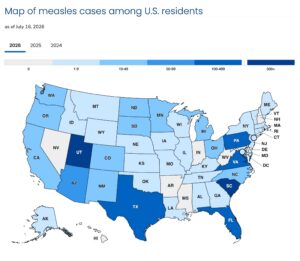
This year, the United States has recorded the highest number of measles cases since 2000, the year that the disease was declared eliminated from the country. As of mid-July, 2,260 measles cases were reported—just 29 cases less than the entire year of 2025. And outbreaks are widespread, with 34 new outbreaks reported in 2026.
The reason for this surge in cases is waning vaccination rates across the country. Given that, the production of new antivirals is an urgent matter.
Now, the new oral antiviral drug candidate GHP-88310 has shown promising results in a ferret model of infection. When administered before or after direct contact or airborne exposure to canine distemper virus (which causes measles-like disease in ferrets) GHP-88310 blocked transmission of the virus and reduced clinical symptoms in ferrets.
“We were very excited to see that GHP-88310 given by mouth completely prevented airborne transmission in our ferret model of measles,” said Carolin Lieber, PhD, a postdoctoral fellow in the Plemper lab at Georgia State University. “This finding is unprecedented for a viral polymerase inhibitor and demonstrates the extraordinary antiviral potency of this drug.”
This research is published in Nature Microbiology in the paper, “Antiviral GHP-88310 blocks contact-mediated and airborne transmission in a ferret model of measles-like disease.”
“Silencing measles outbreaks quickly is essential to reestablish control over the virus,” said Richard Plemper, PhD, professor and director of the Center for Translational Antiviral Research (CTAR) at Georgia State University. “This study follows our recent development of the drug candidate GHP-88310. It demonstrates that the drug is suitable to augment traditional ring vaccination against measles.”
GHP-88310 (described earlier this year in Science Advances) is known to be an orally efficacious broad-spectrum orthoparamyxovirus polymerase inhibitor. But its effect on viral transmission has remained unclear. This study explored whether prophylactic administration of GHP-88310 prevents virus transmission through close contact or through the air. The results demonstrate that GHP-88310 efficiently blocks both forms of viral spread. In addition, the study showed that treatment of infected animals shortened the time period in which infected animals could transmit the virus.
To explore relevant conditions of viral transmission, the researchers established both direct-contact and airborne canine distemper virus transmission models to examine pharmacological suppression of virus spread. The transmission systems allowed them to pair infected and uninfected animals in direct physical contact or shared airspace, each under controlled environmental parameters.
“We designed the study to recapitulate viral spread between people with direct contact, for instance in a household, and between more distant social contacts, for example in classrooms or other indoor settings that bring people into proximity without direct interaction,” said Plemper.
The results showed that pre- and post-exposure prophylactic GHP-88310, given twice daily to air contacts, prevented transmission. The authors note that once-daily prophylactic administration mediated complete survival with all air contacts undergoing seroconversion. In addition, they note that therapeutic treatment of air contacts mitigated clinical signs, and animals survived, whereas all vehicle-treated air contacts succumbed. In addition, therapeutic treatment of infected source animals shortened the contagious phase by five days.
“In addition to this prophylactic benefit, GHP-88310 used therapeutically shortened the duration of disease in our model,” noted Plemper. “If equally applicable to human hosts, it may shorten the severe social and economic burden of prolonged quarantine of patients and further aid outbreak management.” The investigators are now readying GHP-88310 for formal clinical testing.
The post Oral Antiviral Blocks Measles-Like Virus Transmission in Ferrets appeared first on GEN – Genetic Engineering and Biotechnology News.