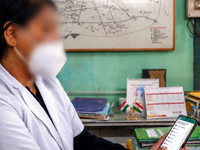
<strong>Background:</strong> Pneumonia remains the leading cause of mortality in individuals aged 5 years or younger globally, with India bearing a disproportionately high burden. The introduction of the pneumococcal conjugate vaccine (PCV) in India necessitated innovative approaches to support frontline health workers (FLHWs), particularly in remote settings. To address this, a customizable WhatsApp-based PCV chatbot was developed as a complementary tool to traditional training and reference materials. <strong>Objective:</strong> This study aimed to document the opportunities, challenges, and mitigation measures encountered during the development and rollout of the PCV chatbot, and to explore its use and user experience as a capacity-building and support tool for FLHWs during new vaccine introduction. <strong>Methods:</strong> A qualitative study was conducted across 4 Indian states—Arunachal Pradesh, Delhi, Karnataka, and West Bengal—using purposive sampling at the district and block levels. Data collection involved key informant interviews with immunization officials and chatbot developers, and focus group discussions with auxiliary nurse midwives. A Likert scale–based tool captured quantitative feedback on user satisfaction. <strong>Results:</strong> Stakeholders appreciated the chatbot’s accessibility, familiarity (through WhatsApp), and multilingual functionality. Most auxiliary nurse midwives found it easy to use and rated responses highly for completeness and usefulness. The chatbot enabled immediate access to information, saving time and bridging gaps, especially when traditional training was delayed or unavailable in hard-to-reach areas. Challenges included occasional technical issues, limited content related to dropout and left-out scenarios, and difficulties in typing regional languages. Recommendations included implementing predictive text, expanding scenario coverage, and strengthening user-centered design and field testing. <strong>Conclusions:</strong> The PCV chatbot demonstrated acceptability and perceived value as an on-demand knowledge tool among FLHWs. Continuous user-driven refinement, expanded content, and enhanced usability are essential for its scalability and sustained use in vaccine introduction and capacity-building efforts.