

“Can you say hi? He’s saying something!”
For most new parents, that’s an interaction—you get the baby’s attention, and the baby babbles back—that is expected to happen. For Sierra, that never happened with her son, Travis. Born six weeks early, Travis spent about a week in the NICU. To get out of the NICU, he had to pass a newborn hearing test. Only Travis didn’t pass.
Initially, Sierra and her husband were told that it likely was something simple and common, like fluid in his ears. But that all changed when they met with an audiologist, who, after some testing, found that Travis’s ears could hear, but his brain wasn’t getting the signal. He was deaf. 100% deaf. The type of deafness that isn’t amenable to cochlear implants or hearing aids. If a child’s hearing loss is caused by auditory nerve issues (or a missing cochlea), they likely are not eligible for a cochlear implant.
Sierra went back to her home in East Greenbush, NY, a town near Albany that’s about a three-hour drive from NYC, where, like many concerned mothers, she dove into the world of internet research. That’s when she found the story of Opal Sandy. A British toddler born completely deaf, Opal made global headlines when she became the youngest patient in the world to have a gene therapy injection in the ear. Opal’s congenital deafness was linked to mutations in the OTOF gene, critical to inner hair cell function. At just 11 months old, a 16-minute procedure would provide a functional OTOF gene—an infusion of an AAV1 gene therapy into Opal’s cochlea—that ultimately restored her hearing, even without aids.
When Sierra saw Opal’s story, something clicked. In speaking with Inside Precision Medicine, Sierra replays the moment: “I wonder if that’s what this is. There’s nobody in my family or around the father’s family that’s deaf, so what are the chances?”
Feeling hopeful, Sierra went to the audiologist and asked whether Travis could be dealing with the same thing and whether genetic testing could be done. But Sierra was shot down by the audiologist, attributing the deafness to jaundice and being born prematurely. Sierra, refusing to back down, said, “I really advocated for it. ‘Can we just rule it out?’ Opal’s story is incredible. What’s the chance? It’s really rare. So, I fought for it.”
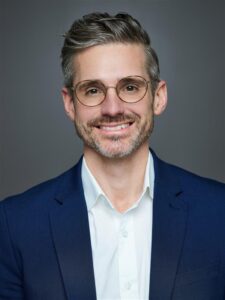
For the ensuing months, Sierra tirelessly tried to get in touch with a doctor who could take on Travis’s case and found Larry Lustig, MD. Lustig is one of the nation’s leading experts in hearing loss, chair of the Department of Otolaryngology—Head and Neck Surgery at the Columbia University College of Physicians and Surgeons and otolaryngologist in chief at New York-Presbyterian Hospital/Columbia University Medical Center. That meant Lustig was within driving distance. He also happened to be at the early stages of a clinical trial testing a brand new OTOF gene therapy.
Gene therapy and the genetics of deafness
The inner ear, with its complex network of sensory neurons and hair cells, was shrouded in mystery for a long time because of the dearth of reliable research techniques. The majority of the diagnoses were “geographic,” meaning they were attributed to the physical locations of sensory structures.
Modern genetics transformed hearing research by identifying specific genes and chromosomal loci responsible for deafness. In the late 20th century, linkage studies mapped key loci and identified major genes like POU3F4, DIAPH1, and GJB2, which accounts for a large percentage of congenital non-syndromic hearing loss cases. As genetic testing became more common, more than half of children with hearing loss had a genetic cause, many of which were loss-of-function. Today, over 150 genes have been identified that can lead to hearing loss.
In the 1990s, Christine Petit, MD, PhD, and her team at the Institut Pasteur investigated a type of congenital hearing loss called autosomal recessive, nonsyndromic prelingual deafness, or DFNB9. Using a candidate gene approach, the DFNB9 locus was mapped to chromosome 2p23.1 in 1996 by studying a genetically isolated family from Lebanon. In 1999, Petit lab researcher Shin’ichiro Yasunaga led an effort that identified that the DFNB9 locus resided in a novel human gene, OTOF, work that was published in Nature Genetics.
Petit’s lab wrote another Cell paper in 2006 describing otoferlin as a Ca²⁺-sensor needed to transmit hair cell sensory transduction signals to the auditory nerve. That article, co-led by Isabelle Roux and Saaid Safieddine, also provided an essential tool: a mouse knockout of OTOF.

In 2009, Lustig, then at the University of California, San Francisco (UCSF), and colleagues created a mouse knockout for a gene called VGLUT3, which had almost the same characteristics as the OTOF knockout, from the deafness phenotype to the structure and function of the synapse. Three years later, Lustig’s lab restored the hearing in the VGLUT3 knockout mouse using virally mediated gene therapy—an important discovery for the treatment of genetic deafness. This success launched Lustig onto the pathway of cochlear gene therapy, and by 2019, Lustig’s team had successfully restored normal hearing in animals with OTOF-related deafness.
After Lustig began genetically restoring hearing in mice, Regeneron developed the DB-OTO program under Jonathon Whitton, AuD, PhD. That was in 2017, a time when few believed in gene therapy, and by 2023, Whitton, Lustig, and other collaborators had launched the CHORD (Children/Infants with Hearing Loss Due to Otoferlin Mutations) trial.
By the time Sierra had met with Lustig in 2024, the stage had been set for 6-month-old Travis to qualify for the CHORD trial. “When I found out that it was a genetic thing, that they were working on it, and this was the one mutation they could cure—like, what is the chance that the year I find out my son has this, they’re working on it at the same time?” said, “Everything lined up perfectly.”
The question was whether Travis was fit. To find out, the next year was filled with a battery of tests, and if Travis were a candidate for the trial, the treatment was by no means a guarantee since the CHORD trial was in its infancy—no child had been treated yet.
“It was really scary because I sat down with Dr. Lustig, and he said, ‘Hey, we don’t know the risks,’” said Sierra. “At that point, he’d never even done the surgery before. When I signed up for it, I wasn’t sure what would happen. They’re drilling into my one-year-old’s head. It’s a very scary thing as a mother to make that decision.”
About a year after first meeting Lustig, On June 16, 2025, when Travis was 18 or 19 months old, the surgery happened. By that time, Lustig had performed the operation on two other children.
Hearing, for real
Lustig and Whitton often refer to a video filmed by a mother of a child from the CHORD trial months after being treated with DB-OTO. Standing behind her daughter, the mother unexpectedly claps. To her surprise, her daughter spins around for the first time in her life and looks at her mom. The mother goes wild with joy. According to the mother, the moment was so shocking that the father didn’t believe the mother until he got home and saw it with his own eyes.
A year later, the family shared another video showing their daughter reading outdoors with her mother despite the distraction of background noise. In the video, the child stopped and said she heard an ambulance, which is barely audible. That moment wasn’t a one-off, as parents of the children who received DB-OTO could hear their parents from a distance. “If they’re in the park and your kid runs away—which happens, I have a three-year-old…that’s what they do—you can call your kid and they hear you and stop,” said Whitton. “This same parent had a child who only has implants, and they said their child runs away; they’re gone. They can’t hear. That’s a real safety issue.”
That passive listening is also incredibly important for child development. “Most things that kids learn are not things we’re trying to teach them,” said Whitton. “They overhear stuff all the time. That’s how they learn how to say curse words and things like that. They’re constantly learning from their environment, and it’s really important that kids can do that.”
The FDA granted accelerated approval to Otarmeni (lunsotogene parvec-cwha) on April 23, 2026, making it the first and only gene therapy available to treat genetic sensorineural hearing loss. Whitton, Lustig, and their colleagues will continue following participants for a decade to study durability and long-term development. But for many involved, the results already feel transformative. “This is the first approved medicine, period, for inherited deafness,” said Whitton. “So, it’s only the beginning there.”
Researchers say the FDA’s fast-track process validated the strength of the early data and accelerated momentum throughout the field. “Now we have a legitimate therapy that works,” Lustig said, adding that early results “work better than cochlear implantation.” The treatment also appears to be durable, with reports from clinical trials across multiple Chinese hospitals using an almost identical OTOF gene therapy approach suggesting benefits continue to improve “well over a year out.”
Perhaps most significantly, the success has energized efforts to develop therapies for more common forms of genetic deafness. “We’re going to be seeing a number of different clinical trials in the next couple of years,” Lustig said. “To me, that’s just an amazing place to be. I never would have thought we would have been here even five years ago.”
Buzzing with approval
The extraordinary excitement doesn’t end the results and accelerated approval of Regeneron’s gene therapy. What surprised many experts most was Regeneron’s decision to provide the therapy free of charge. The decision could reshape the economics of rare disease treatment. “It’s amazing for patients, particularly those that may not have access to them otherwise because their insurance companies wouldn’t want to pay for them,” Lustig noted.
Unlike many gene therapies that target conditions with no existing treatment, genetic deafness already has an established intervention in cochlear implants. “Cochlear implants work great, but it’s not natural hearing,” Lustig explained. “Suddenly you have this natural hearing, and if you’re going to charge $1 million a shot, it will be hard to get people to join in when you have a much cheaper alternative that we know works.”
Arthur L. Caplan, PhD, a leading bioethicist from New York University Grossman School of Medicine, called Regeneron’s free Otarmeni strategy “brilliant.” Given the small eligible population, the commercial upside is inherently limited, with a price point that would likely sit “in the seven figures.”
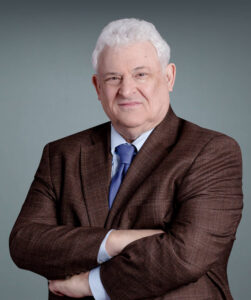
Caplan thinks Regeneron’s scale enables the pricing decision, contrasting it with smaller biotech firms that must immediately recoup investment. In his view, “the only way to take some of these gene therapies to market is to start the work as a small entity but then get sold to someone much bigger that has the resources to be able to price a bit more reasonably.”
Caplan emphasized that the decision to make Otarmeni free is not totally purely altruistic. “There’s a point to it that is somewhat in the company’s interest,” said Caplan. “By saying we’re going to do it free, they still get to collect data.” He added that Regeneron could also achieve something broader: “redeem the reputation of gene therapy.” The field has recently faced setbacks, including inconsistent efficacy and safety concerns. In that context, the pricing strategy aims to “rehabilitate” gene therapy’s image.
Ultimately, the decision to make the therapy free is viewed as both bold and experimental. “I was surprised, but kind of pleasantly surprised,” Caplan said. And the presence of regulatory acceleration only adds to the sense that the field is shifting quickly: “it shows regulatory cooperation with the kind of innovation people want examples of.”
And for people like Sierra, the decision is life-changing. “When I first started emailing all these companies, I didn’t know how much the surgery was going to be,” said Sierra. “I was ready to take out every loan and sell everything I owned. If my kid can hear how much I love him, it’s worth it. I’d sell everything.”
Look who’s talking
In his most recent hearing tests, about nine months post-surgery, Travis has shown gradual improvement. But it’s not perfect: his right ear has mild hearing loss, and the left is more moderate to severe. Yet, there’s still a chance for it to improve.
DB-OTO has not only begun to give Travis his hearing back—he’s beginning to speak. “Before the surgery, he was completely silent and did not make any noise at all,” said Sierra. “Now he’s jibber-jabbering, as a seven- or eight-month-old hearing baby would. He’s starting to try to talk.”
Though Travis is delayed, with speech therapy and possibly hearing aids, soon he could be walking and talking, living as close to a normal life as any child could.
The post Ephphatha! When a $1M Deafness Cure Comes at No Cost appeared first on Inside Precision Medicine.