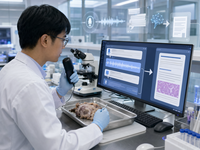
Researchers at Jiangnan University have engineered microbial “cell factories” to sustainably produce the UV-protective compound gadusol, a compound that could eventually serve as a sunscreen ingredient and an antioxidant additive.
Found in the eggs of various fish and other marine organisms, gadusol helps protect against ultraviolet damage. However, “it is scarce in nature, and extracting it is inefficient and can carry environmental costs,” said research lead Ping Zhang, PhD. “We want to find a scalable and greener way to produce gadusol.” Previous efforts to acquire gadusol have relied mainly on extraction from fish eggs or tissues at specific developmental timepoints. For their reported study, rather than harvest the molecule from nature, the team turned microbes into mini chemical factories, increasing yield more than 90 times.
The researchers reported on their developments in Trends in Biotechnology, in a paper titled “Multidimensionally engineered Escherichia coli for efficient gadusol biosynthesis with high-throughput quantitative analysis, in which concluded “This work provides valuable insights into gadusol biosynthesis and establishes a solid basis for future investigations into the feasibility of its industrial applications.”
How do fish survive sunlight in the open waters without getting burned? They make their own natural sunscreen. Gadusol is “a naturally occurring cyclohexenone compound that has attracted significant attention due to its potent UV-absorbing properties and broad biological functionalities,” the authors wrote. “Gadusol, as a cyclohexenone compound with potent antioxidant and biological properties, has shown significant potential for applications in pharmaceuticals, cosmetics, and nutraceuticals.”
The compound has been identified in the eggs of various fish species, including zebrafish, salmon, and sturgeon, as well as in coral reef ecosystems, where it shields marine embryos and coral from UV radiation. Moreover, the researchers explained, “Beyond its photoprotective role, gadusol also demonstrates pronounced antioxidant activity, with extracts from fish eggs exhibiting free radical scavenging capacity comparable to that of ascorbic acid under physiological pH and even superior chain-breaking activity against peroxyl radicals.”
However, the team pointed out, extracting gadusol from fish eggs is labor intensive and costly, and results in low yields. For their newly reported study the team rebuilt a zebrafish’s pathway for making gadusol inside the bacterium Escherichia coli, then tweaked the microbes’ genetics and growing conditions. “In this study, we constructed the gadusol biosynthetic pathway in E. coli and established an integrated engineering strategy to enable its efficient production,” they noted.
These modifications increased gadusol yield by nearly 93 times, from 45.2 milligrams per liter to 4.2 grams per liter. The compound’s antioxidant property inspired a useful shortcut, in the form of a color-based screening test. In the test, a purple chemical signal turns yellow when gadusol neutralizes free radicals. This color shift allows researchers to quickly identify bacterial strains that produce more of the compound. “Compared with traditional chemical analysis, this approach is more convenient, efficient, and economical,” said senior author Ruirui Xu,” PhD. “In addition, an efficient downstream process for gadusol extraction and purification was established, strengthening the translational potential of this platform,” the authors noted.
![Producing gadusol through a microbial cell factory for sun protection. [Science Center for Future Foods, Jiangnan University]](https://www.genengnews.com/wp-content/uploads/2026/05/Gadusol-CREDIT-Science-Center-for-Future-Foods-Jiangnan-University-300x89.jpg)
The lab-made compound showed promise in preliminary UV-protection tests. “Achieving this level of production in the lab is very promising,” says Zhang. “It suggests that we may be able to meet future demand for natural sunscreen ingredients through microbial production.” The compound may offer more than just sun protection. In experiments, gadusol showed antioxidant activity comparable to that of vitamin C, suggesting it may help neutralize cell-damaging free radicals from UV exposure.
In their paper the authors suggested that “Beyond laboratory-scale optimization, this work demonstrates a practical and scalable route for manufacturing gadusol, a natural, nontoxic UV-protective, and antioxidant cyclohexenone.” The research comes amid growing interest in alternatives to some conventional sunscreen ingredients, which can irritate sensitive skin, harm marine organisms, or rely on petrochemicals. Gadusol’s combination of UV protection and antioxidant activity could make it an attractive ingredient for sunscreens and skin-care products. The team in addition pointed out, “By enabling sustainable microbial production independent of marine extraction, this strategy provides a renewable alternative to synthetic UV filters and antioxidants that may raise environmental or health concerns.”
But gadusol won’t make it into our beach bags just yet. The study did not compare gadusol head-to-head with commercial sunscreens, nor assess long-term safety or large-scale manufacturing. Regulatory approval would also be needed. Still, Xu believes that the research provides a starting point for moving gadusol toward practical applications. Based on current technology, he expects to start seeing some products appear on the market within two years.
“For small molecules with application potential, we hope people look beyond traditional extraction methods,” Zhang commented. “Microbial cell factories are emerging as a greener and more sustainable way to bring laboratory discoveries into real-world use.”
The post Synthesizing a Natural Sunscreen and Antioxidant in <i>E. coli</i> appeared first on GEN – Genetic Engineering and Biotechnology News.