Currently, formal models of addiction focus either on the complex individual decision-making processes involved in addiction or on the social dynamics of addiction. They do not integrate these two levels, which has been identified as a key shortcoming of current formal models of addiction. To address this, we propose a nonlinear dynamical modeling framework of addiction integrating both the individual level and social level of addictive behavior. The individual level of our modeling framework is a formalization of a dual-process theory, where one type of process increases the consumption of addictive goods, and another type of process limits consumption. For our formalization, we build on a well-studied model from ecology, originally used to model periodic outbreaks of the spruce budworm population. To this model, we add the process of incentive sensitization at the individual level and at the social level, we incorporate the critical processes of selection homophily and peer influence. We show that our integrated modeling framework can be used to explain key phenomena identified in addiction literature: a gradual transition to heavy use, sudden relapse and sudden quitting, relatively stable use states over time (i.e., abstinence moderate use, and heavy use), social contagion and sudden outbreaks, clustering of users, and social aid in recovery. In addition, we demonstrate how our modeling framework can be extended to include mutualistic, competitive, and more complex interactions between different addictive behaviors. Finally, we show how our framework can lead to new insights and predictions and suggest avenues for future research. (PsycInfo Database Record (c) 2026 APA, all rights reserved)
Recent studies have demonstrated the close association of mutations in the dehydrodolichyl diphosphate synthase (DHDDS) gene with neurodevelopmental disorders and the onset of epilepsy. This report describes a female patient harboring a de novo heterozygous variant c.110G>A (p.Arg37His) in the DHDDS gene, characterized by childhood-onset myoclonus-like movement disorder (at age 6) and late-onset epilepsy (at age 17). The movement disorder was remarkably improved through the levetiracetam+ clonazepam+ haloperidol triple therapy, and epileptic seizures were also effectively controlled. A retrospective analysis of 59 epilepsy patients with DHDDS gene variants revealed significant clinical heterogeneity in disease phenotypes caused by DHDDS mutations. Epilepsy was identified as the predominant symptom, commonly accompanied by movement disorders and varying degrees of intellectual disability. Furthermore, while pathogenic mutations in DHDDS tend to be relatively clustered, no definitive genotype-phenotype correlation has been established. This study highlights the clinical manifestations, imaging features, treatment experiences, and genetic testing results through case reports and literature review, thereby providing crucial references for the clinical diagnosis, treatment, and further research of such diseases.
Background: Persisting symptoms affect about one-third of youth following concussion. Mental health history, distress, and coping style are key predictors of prolonged recovery. Early and scalable psychological interventions, such as mindfulness-based intervention (MBI) delivered via smartphones, may improve patients’ ability to regulate their emotions and neurophysiologically recover, reducing overall symptom burden. However, no digital therapeutic (DTx) trials in adolescents experiencing concussion exist. Objective: This study primarily aimed to assess the feasibility of conducting a larger randomized controlled trial (RCT) evaluating the effectiveness of a DTx-MBI in adolescents with a concussion compared with an attention-matched sham intervention. Methods: This was a Health Canada-regulated, parallel-group, blinded, single-crossover feasibility RCT. Adolescents aged 12 to <18 years presenting to a Pediatric Emergency Department or interdisciplinary concussion clinic within 7 days of a physician-diagnosed concussion were approached for participation from November 2022 to June 2024. After providing consent, participants were randomized (1:1), stratified by sex, to either the experimental group (DTx-MBI) or the control group (sham, attention-matched math puzzle game). The DTx-MBI was delivered via the AmDTx platform (Mobio Interactive Pte Ltd, Singapore) as a custom-designed 4-to-8-week program of 8 standardized modules for adolescents with concussion, including audio-recorded guided mindfulness exercises, goal setting, journaling, and psychoeducation. The control intervention, delivered through the same interface, excluded mindfulness content and instead featured the open-source game “2048”. Participants in both groups were encouraged to engage with the app for at least 10 minutes/day, at least 4 days/week. Feasibility criteria to support progression to a full-scale RCT included: eligibility rate >40% of those screened; recruitment rate >50% of eligible participants randomized; intervention credibility >70% scoring above the midpoint on the credibility and expectancy questionnaire (CEQ) at 1 week; retention >75% of randomized participants completing 4-week outcomes; and adherence >70% completing 10 minutes of intervention on at least 4 days/week for 4 weeks. Results: A total of 124 out of 195 (63.6%) screened youth met eligibility criteria. Of these, 99/124 (79.8%) consented and were randomized to either the DTx-MBI group (n=49, median [IQR] age=15.28 [13.66‐16.19] years, 30 [61.2%] female) or the Sham group (n=50, median [IQR] age=14.92 [13.32‐16.71] years, 30 [60.0%] female). Credibility was high, with 62/83 (74.7%) of participants scoring above the credibility midpoint (DTx-MBI: 75.0%; Sham: 74.4%). Retention was strong, with 89/99 (89.9%) of participants completing the 4-week outcomes (DTx-MBI: 89.8%; control: 90.0%). Overall adherence was moderate (54/99 [54.5%]; DTx-MBI: 59.2%; control: 50.0%), and a little higher among outcome assessment completers (53/89 [59.6%]; DTx-MBI: 63.6%; Sham: 55.6%). Feasibility indicators were similar between groups. Conclusions: This feasibility trial supports the implementation of a larger RCT, with modifications to enhance adherence, to rigorously evaluate the clinical efficacy of the DTx-MBI. By targeting modifiable psychological risk factors through a scalable digital platform, DTx-MBI could be a low-burden, cost-effective adjunct to pediatric concussion care. Trial Registration: ClinicalTrial.gov NCT05105802; International Registered Report Identifier (IRRID): RR2-10.2196/57226
By Mai El Shoush, Partnerships Campaign Manager, Stavros Niarchos Foundation (SNF) Global Center for Child and Adolescent Mental Health at the Child Mind Institute
In Conversation with Waves for Change
The world’s oceans have long been profound forces that shape coastlines, cultures, and scientific discovery. And today, through targeted programs, they also serve as therapeutic environments transforming youth mental health worldwide.
As global health systems continue to explore solutions that minimize resource constraints while addressing child and adolescent mental health demands, innovative approaches like surf therapy are demonstrating remarkable effectiveness as low-intensity initiatives. From the beaches of California to the coastal communities of South Africa, Australia, Hawai’i, the United Kingdom, and Senegal, these programs are creating accessible entry points for young people.
Wave for Change (W4C) — a South Africa-based organization and valued implementation partner of the Stavros Niarchos Foundation (SNF) Global Center at the Child Mind Institute — has developed an evidence-based Surf Therapy program for youth in underserved communities. We spoke with their chief development officer Paula Yarrow and senior grant manager Jill Sloan about the award-winning program. As a highly regarded Cape Town‑based NGO that uses surfing as a therapeutic tool to support youth mental health, W4C offers safe spaces, evidence‑based emotional regulation tools, community mentorship, and a pathway to resilience for young people growing up in challenging environments.
The partnership includes the identification of workforce gaps and training needs for frontline workers such as NGOs, to further expand evidence-based support and brief interventions through culturally appropriate, low-intensity psychological therapy approaches. The context-specific training materials are expected to be piloted later in the year in South Africa and are intended to improve access to quality mental health care for young people.
W4C launched Surf Therapy in 2009, which has since helped more than 10,000 adolescents experiencing high-stress environments gain valuable coping skills across its hubs in the Western and Eastern Cape as well as Cape Town. Participants learn how to build positive social networks and develop self-regulation skills to support healthy emotional and behavioral responses to stress, with coaches themselves aged between 18-25. The program creates a fun, culturally relevant environment through the Take 5 model — a framework W4C has designed to be adapted for a range of sports, arts, and cultural initiatives. The model has been utilized by several leading global organizations, including UNICEF.
Waves for Change also played a key role in the founding of the International Surf Therapy Organization (ISTO), connecting practitioners, clinicians, and researchers to advance science research, raise awareness, and support surf therapy.
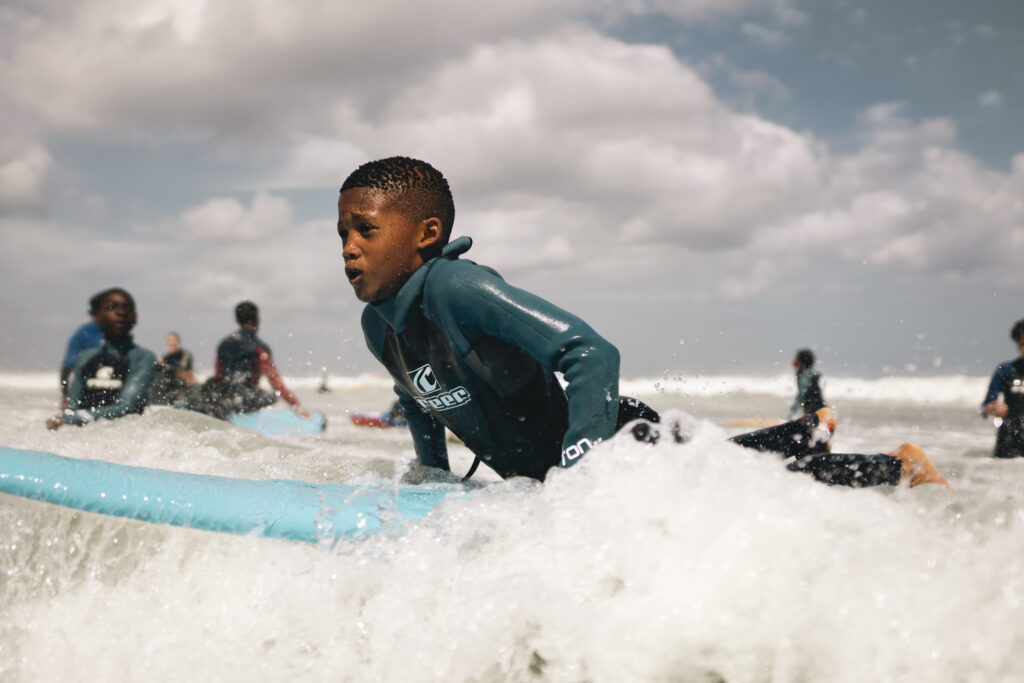
Catching a wave at Surf Therapy – Image Nelson Rosier Coulhan
How does Waves for Change use evidence-based Surf Therapy and capacity building as a solution to fill the gap in youth mental health care?
Approximately 90 percent of the world’s adolescents live in low- and middle-income countries (LMICs). In the most underserved communities, adolescents may experience repeated exposure to violence, unmet basic needs, and limited access to safe spaces or trusted caregivers. Typically, there are very few mental health services that are accessible to such youth.
The more Adverse Childhood Experiences (ACEs) a child or adolescent has whilst growing up, the more likely they are to develop toxic stress — an ongoing stress state without respite. This can often lead to mental health conditions such as anxiety, depression, substance misuse, and cognitive impairment. This can also result in the development of physical health conditions such as heart disease as they grow into adulthood.
The main problem we’ve identified is that there aren’t enough trained workforces (e.g., sports coaches, youth facilitators) that are able to deliver simple, fun, structured play-based sessions with consistency at scale. Our work provides a response to this issue within the adolescent mental health promotion and illness prevention arena. Additionally, our initiatives significantly increase the number of individuals — coaches, teachers, mentors or others — who are already in contact with young adolescents and can provide them with mental health support to foster their immediate and longer-term mental health.
How has Waves for Change adapted the organization’s Surf Therapy program to develop the Take 5 model?
Waves for Change’s Take 5 training model has been incubated, tested, and rigorously evaluated within W4C’s award-winning Surf Therapy program. Take 5 distils the key components of our Surf Therapy program, providing coaches with the essential skills they need to build and sustain caring relationships with children. And it uses a simple teaching routine that creates consistently engaging, fun, structured programs for children and adolescents that suit their language, culture, and context.
Take 5 is low intensity and cost-effective — tailored for high-stress environments and the unique mental wellness needs of adolescents living in multidimensional poverty, conflict, or crisis.
How has partnering with young people to research and co-develop programs made the work more impactful?
In research studies we’ve conducted, adolescent participants (ages 10-16) reported experiencing between 6-8 adverse events every year, including violence and abuse. When asked what sorts of spaces they wanted to see at Waves for Change, the adolescents identified core components such as access to a safe space where they could have fun, be heard, and learn skills to cope. These components now form the bedrock of our Surf Therapy program. We initially worked with 9-12-year-olds and have since developed the follow-on programme for adolescents up to age 16 who have graduated the Surf Therapy programme. This is called Surf Club and is available to all Surf Therapy graduates.
Waves for Change also conducts pre- and post-intervention surveys with participants to monitor the impact of our work. Our coaches (ages 18-25) are at the frontline of delivering our services. A key role they play is to listen with care and respect to the adolescents’ concerns, and to share them with our Child Protection team for review and follow-up when needed.
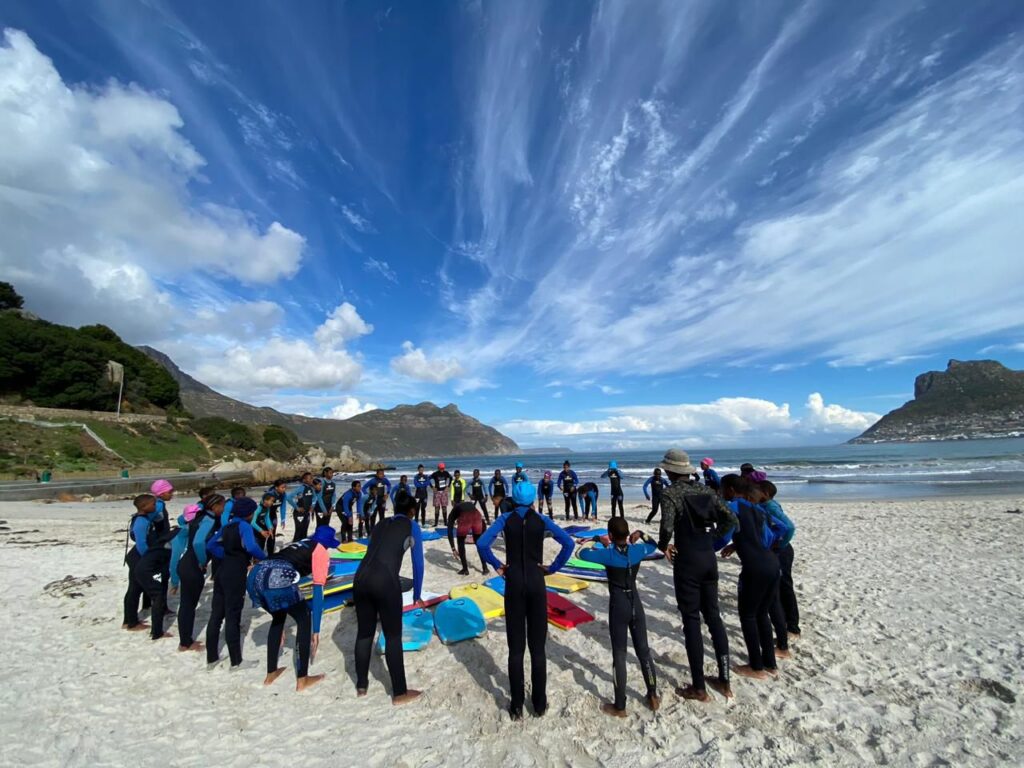
Surf Therapy at Hout Bay – Photo credit Waves for Change
What makes your partnership with the SNF Global Center at the Child Mind Institute unique?
Working with the Child Mind Institute allows Waves for Change to collaborate with and learn from colleagues doing similar work in the adolescent mental health space across South Africa, the United Kingdom, and Brazil. The partnership offers an opportunity to learn about approaches that have been successful in other health systems. It has also allowed Waves for Change to share detailed information about the training and supervision protocol used to develop key competencies in the coach workforce that leads Surf Therapy in South Africa. This has helped the Child Mind Institute to develop a comprehensive guide for other similar workforces.
Can you expand on the importance of partnerships in strengthening youth mental health care and community empowerment?
Partnerships allow for the consolidation of skills and resources so that a greater impact can be achieved. For example, at Waves for Change, we work with over 70 referral partners every year to identify young adolescents who can benefit from our Surf Therapy program. We are also partnering with the Department of Cultural Affairs and Sport to use our Take 5 model to train MOD and YearBeyond coaches and mentors, who are already reaching large numbers of children and young adolescents through their work. And we’re contributing to building the broader ecosystem of mental health support for adolescents and children by training large national NGOs, government agencies, and humanitarian organizations with our Take 5 model.
How can non-profits further help foster strong peer networks and inclusive safe spaces?
Some of the key lessons we have learnt are the following:
In the field of youth mental health, make youth the leaders on program implementation
Provide youth with skills, opportunities, supervision, and support so that they can grow and develop further
Maintain a strong culture of protection, respect, and communication so that all participants feel safe, welcome, accepted, and heard
Read more about W4C’s Surf Therapy from Youth Liaison Officer, Azola Sibanda and Training Manager Jamie-Lee Davids
Steroid receptor coactivator-1 (SRC-1), also known as nuclear receptor coactivator-1 (NCOA1), represents the first identified member of the p160 nuclear receptor coactivator family and plays a pivotal role in integrating steroid hormone signals, regulating gene transcription, and maintaining neural homeostasis in the central nervous system (CNS). SRC-1 exhibits region-specific, cell-type-specific, and sexually dimorphic expression patterns in the brain, with prominent distribution in key regions including the hippocampus, cerebral cortex, hypothalamus, and amygdala. Functional studies demonstrate that SRC-1 participates in diverse neural functions such as learning and memory, energy metabolism, emotional regulation, and reproductive behavior through modulation of synaptic plasticity-related genes, neurotrophic factors, and metabolic pathways. Aberrant SRC-1 expression is closely associated with neurodegenerative diseases, autism spectrum disorders, and glioblastoma. This review systematically summarizes the molecular structure, expression characteristics, physiological functions of SRC-1, and its roles in neurological disorders, while discussing its potential applications as a diagnostic biomarker and therapeutic target.
BackgroundFreshmen often experience challenges when adjusting from high school to college, which may elevate levels of depression, anxiety, and stress. This phenomenon is particularly pronounced in medical schools, where the overall academic atmosphere is widely regarded as exceptionally demanding and stressful.ObjectivesTo examine the indirect effect of sedentary behavior on the relationship between phubbing and depression anxiety stress of first-year medical students.MethodsThis study conducted a cross-sectional survey with 795 first-year medical students from Soochow University in China from October 2024 to November 2024 by using electronic questionnaire. The instruments were Depression Anxiety Stress Scale-21 (DASS-21), Generic Scale of Phubbing (GSP), and Adolescent Sedentary Activity Questionnaire (ASAQ).ResultsThe findings indicate that first-year medical students’ phubbing and sedentary behavior positively affects their depression anxiety stress (r = 0.120 ~ 0.815, both p < 0.01), and phubbing positively impacts medical students’ sedentary behavior (r = 0.128, p < 0.01). Additionally, sedentary behavior acts as a significant mediator between phubbing and depression, anxiety, and stress. The indirect effect contributes to 1.9%~2.5% of the total effect.ConclusionThese findings indicate that reducing depression anxiety stress in first-year medical students can be achieved not only through direct improvements in phubbing but also through the indirect effects of reducing sedentary behavior.
AimThis study investigated how disaster-related imagery affects emotional and autonomic nervous system (ANS) responses, using heart rate (HR) and heart rate variability (HRV), in individuals with indirect exposure to the 2011 Great East Japan Earthquake (GEJE).MethodsThirty-six healthy adults who had experienced strong ground shaking during the GEJE, but not the tsunami directly, viewed four types of videos: natural scenery (neutral), earthquake scenes, tsunami footage, and promotional videos repeatedly broadcast after the disaster. Subjective emotional responses (State-Trait Anxiety Inventory, Positive and Negative Affect Schedule), HR, and HRV indices were measured before, during, and after each video.ResultsCompared to the neutral video, disaster-related videos significantly decreased HR and HRV during viewing, indicating an orienting or freeze-type ANS response. Earthquake footage, likely to evoke autobiographic fear, predominantly suppressed parasympathetic indices, while tsunami footage, associated with vicarious fear, predominantly suppressed sympathetic activity. Immediately after viewing, sympathetic activation increased significantly, consistent with a rebound active defense pattern. Notably, promotional videos did not induce subjective distress but still altered HR and HRV indices, suggesting unconscious physiological reactivity.ConclusionDisaster-related imagery evokes distinct ANS responses depending on the emotional content and the viewer’s trauma history. Autobiographic and vicarious fear may differentially affect sympathetic and parasympathetic suppression, respectively. Furthermore, this cross-sectional evaluation demonstrates that even seemingly non-invasive media exposure years after a disaster can trigger autonomic changes. These findings underscore the urgent need for appropriate media broadcasting guidelines to protect public health following both seismic and climatic catastrophes.