

StockWatch: Axiom CEO Explains Plans for Hong Kong IPO

Axiom Biosciences, a privately held developer of regenerative therapies and targeted biologics that rebranded last month from Cytonus Therapeutics, made headlines around the world when it announced plans to go public through an initial public offering (IPO), since companies that go public typically do so quietly, by filing registration statements with regulators and exchanges.

What made Axiom’s IPO plans even more newsworthy: the San Diego-area company (based in suburban Carlsbad, CA) said it intends to trade its first public shares on the Hong Kong Exchange (HKEX) rather than a U.S. market like Nasdaq, the leading market for biotech IPOs, or the New York Stock Exchange.

Why Hong Kong? Axiom says the special administrative region of China possesses deep biotechnology expertise, a strong appetite for clinical-stage innovation, and direct proximity to the Asian partners and capital advancing the company’s science.

“For us, Hong Kong is a very good fit for the stage of company that we’re in, and the timing is right,” Remo Moomiaie-Qajar, MD, Axiom’s founder, CEO, and chairman, told GEN. “Hong Kong has a very well-established investor base that really understands the time requirements and the capital needs for biopharma, but in particular, cell therapies. And ultimately, given the fact that we have been working in Asia with partnerships for several years, this landing spot for us in Hong Kong seemed to be the right choice in a broader strategy.”

Does that mean the United States is finished for biotech innovation?

“I would not state that at all,” he replied. “I think the United States is very much still a leader. It is also very central to our strategy, and the FDA is really core to all of our decisions moving forward into clinics. I just see that this is, and I speak only for us, part of a bigger global strategy which includes both Asia and the United States.”

“Ecosystem to thrive”
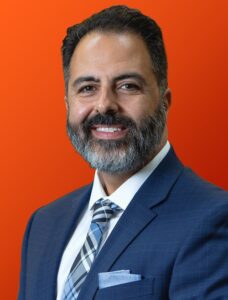
Remo Moomiaie-Qajar, MD, Axiom Biosciences founder, CEO, and chairman

However, Axiom has publicly offered other reasons for its move that convey a warmer biopharma climate in Hong Kong compared with the United States. In its announcement, the company said its Hong Kong IPO plans were “reflecting a broader shift in where the world’s most ambitious science finds the ecosystem to thrive.”

And speaking on CNBC, Moomiaie-Qajar raised a concern with the U.S. biopharma climate when it comes to financing: “Some of the most important science in the world is being built in the United States, but the way it gets funded hasn’t kept pace.”

He elaborated on that remark, telling GEN: “That speaks to a broad range of problems that we have in financing within this industry. In particular, I was referencing the private side.”

“The reality is, as you progress with your pipelines and you cross over the threshold of being a clinical stage company, and then you have clinical success, it requires a significant amount—more capital to get your assets to move forward, and hopefully, to a BLA [Biologics License Application],” Moomiaie-Qajar explained. “But the number of check writers diminishes at the same time. So, there is seemingly no shortage of capital within biopharma, but I do believe there’s a financing issue and an access issue.”

Hence Axiom’s exploration of whether this was the right time to go public—a question Axiom is answering in the affirmative: “Hong Kong, given our strategic fit, and relationships and proximity to our partners in Asia, was the right first decision in establishing our public identity as a company.”

Comeback mode

The IPO market has been in comeback mode most of this year, with 14 companies selling their first public shares on U.S. markets since January, and another five doing so overseas, in Asian markets that include the Tokyo Stock Exchange, South Korea’s tech-focused KOSDAQ, and the Hong Kong Exchange.

The biggest American biotech IPO—this year, and of all time—was an upsized offering that took place last month, when Parabilis Medicines (Nasdaq: PBLS)  raised an eye-popping $770.5 million in gross proceeds by selling some 38.5 million shares at $20 per share. Parabilis’ shares have risen 56% since then, to $31.28 at Friday’s closing bell.

The latest biotech IPO, also upsized, came on Thursday when Scribe Therapeutics (Nasdaq: SCTX), a developer of in vivo CRISPR gene-edited therapies, raised $128.7 million gross by selling 8.58 million shares at the high end of its price range at $15 per share. The shares jumped 44% on Friday, finishing the day at $21.65. Scribe also raised another $7.5 million gross by selling 500,000 shares at the IPO price to Sanofi (Euronext Paris: SAN) in a concurrent private placement.

But the best-performing U.S. biotech IPO is Veradermics (NYSE: MANE), a developer of treatments for dermatology and aesthetic conditions whose shares have catapulted more than six-fold, rocketing 545% since pricing its IPO at $17 per share on February 3, closing Friday at $109.66 per share. Earlier this month, Veradermics announced positive topline results from its open-label Phase II Study 207 trial (NCT06527365) assessing VDPHL01, an extended-release oral minoxidil formulation, in women with mild-to-moderate pattern hair loss.

Hong Kong’s largest biotech IPO so far this year is Suzhou Ribo Life Science (6938.HK), a developer of oligonucleotide treatments based on RNA interference and other technologies. Ribo raised more than HKD 1.8 billion ($229.5 million) by selling 31,610,400 shares at HKD 57.97 ($7.39) on January 9. Since then, however, Ribo’s stock price has dipped 7.5%, closing Thursday at HKD 53.60 ($6.83).

Also going public via HKEX this year were medtech companies such as Hangzhou Diagens Biotechnology (2526.HK), a developer of artificial intelligence (AI)-based medical imaging tools whose customers include specialized genomics research labs and cytogenetics labs, as well as hospital pathology departments. Diagens went public March 30, raising about $101 million by selling 7,999,200 shares at HKD 99.00 ($12.62)—a price that has since more than doubled, leaping 172% after closing Friday at HKD 269.00 ($34.30).

HKEX lists 84 biotech companies, compared with more than 600 for Nasdaq, according to their respective websites.

Staying in America

Over time, Axiom plans to pursue a secondary stock listing in the United States. Moomiaie-Qajar says Axiom will remain an American company: “We are a U.S.-based, U.S.-headquartered company that is going to be something that does not change.”

Axiom says it intends to be the first U.S. biotech company planning to go public in Hong Kong. That’s the path that was successfully trod by AI-based drug developer Insilico Medicine (3696.HK) when it went public in December, raising HKD 2.277 billion (about $292.3 million at the time; now worth $290.3 million) on the Hong Kong Exchange by selling 94,690,500 shares at HKD 24.05 ($3.08, now worth $3.06) each.

Insilico’s stock has nearly doubled, soaring 96% since then, closing Friday at HKD 47.06 ($6.00) thanks to several collaborations with biopharma giants and an upbeat revenue and profit forecast for the first half of 2026.

“From my perspective, it certainly seeded a little bit of certainty in my mind that this was a good decision, because they’ve done really well post-IPO,” Moomiaie-Qajar commented.

Insilico’s parent InSilico Medicine Cayman TopCo lists a registered office in the Cayman Islands, while Insilico’s website lists additional offices in Cambridge, MA (announced in 2024 as the company’s headquarters), New York, Montreal, Abu Dhabi, Hong Kong, Shanghai, and Taipei.

“Very high listing standards”

“One of the reasons you would list in Hong Kong is to openly compete with the companies in the ‘China Gym’ and also take advantage of the increased visibility and transparency with the very high listing standards,” Alex Zhavoronkov, PhD, Insilico’s chairman, executive director, CEO, and CBO, told GEN.

“Many companies want to list there. But the barriers for listing are very high even for the biotech track.”

A company planning to go public, he explained, needs not only an asset in Phase II studies, but a clear funding history from credible investors, several years’ worth of cash to operate, and a level of corporate stability that the exchange will assess.

“For very early biotech companies it may be much easier to list in the United States,” Zhavoronkov said. “In general, it is a positive trend because biotech must become more international and collaborate and compete internationally. Competing for capital is the advanced form of competition because finance usually runs biotech—you cannot discover and develop drugs without it. Companies and ideas in biotech should become more fluid internationally. Public listings make companies and ideas more competitive and transparent.”

Together with Seoul-based, privately held Medinno, Axiom has co-developed its lead regenerative therapy based on umbilical cord-derived, conditioned mesenchymal stem cells (MSCs) sourced from Wharton’s Jelly. The therapy is under study in two pipeline programs that aim to treat newborns with severe brain injury: AX-007 for intraventricular hemorrhage (IVH); and AX-008 for hypoxic-ischemic encephalopathy (HIE).

Positive Phase I results

Earlier this month, Axiom announced positive results from a Phase I dose-escalation study assessing the safety, tolerability, and preliminary efficacy of the regenerative therapy across a range of doses in nine newborns—five diagnosed with severe IVH, four with HIE—following direct administration into the central nervous system.

Across all doses studied, the MSC therapy achieved a 0% mortality rate at 12 months compared to the historical natural 46% mortality rate within the first year of life for infants with severe IVH. The therapy also showed a favorable safety profile, with no treatment-related serious adverse events seen.

“We’re now in discussions with the FDA to move those programs into the next stages, which would be a Phase IIb study,” Moomiaie-Qajar said. The FDA has granted AX-007 and AX-008 its Rare Pediatric Disease and Orphan Disease designations.

Axiom is also evaluating an expansion of its therapy development into adult ischemic stroke, which affects approximately 700,000 adults annually in the United States, and additional neurological indications.

“We feel very confident that given our clinical trial success in Phase I, the expansion of our valuable asset into three, four indications is going to be a good basis for us to launch our IPO, but then after the IPO really go further and deeper into our pipeline that we’ve been developing for eight years,” Moomiaie-Qajar said. “We have a lot now that we need to translate into clinics.”

Leaders and laggards

  • Immix Biopharma (Nasdaq: IMMX) shares tumbled 14% from $10.25 to $8.80 on July 20 following the arrest of Ronald L. Fischer, 70, who was one of Rhode Island’s Most Wanted fugitives—and who, under the alias of Richard Graydon, MD, PhD, served as the company’s CMO. Fischer was arrested by federal and Rhode Island authorities off the coast of New Jersey on a U.S. Marshals Service Unlawful Flight to Avoid Prosecution warrant, having been a fugitive since fleeing Rhode Island during a criminal trial in 2005, the U.S. Justice Department stated. Fischer was convicted in absentia of First-Degree Sexual Assault after failing to appear for trial and remained wanted for Failure to Appear, First Degree Sexual Assault, and Flight to Avoid Prosecution. Authorities also said Fischer was living on a 56-foot sailing vessel called The Silver Lining, which was registered under the Graydon name. As “Graydon,” Fischer was appointed Immix’s CMO in March, the company announced March 30 in a press release no longer posted on its website. “As of July 17, 2026, Richard Graydon has been terminated and is no longer with the company for reasons unrelated to his activities at the company,” Immix disclosed in a July 20 regulatory filing, adding: “Given his short tenure, management believes there is no material effect on the business.”
  • Novocure (NVCR) shares jumped 28% from $15.57 to $19.99 Thursday after the Swiss-based oncology drug/device developer developer of the Tumor Treating Fields (TTFields) cancer therapy reported second quarter adjusted earnings before interest, taxes, depreciation, and amortization (EBITDA) of $10.757 million, vs. an adjusted loss of $9.934 million a year earlier, on net revenue that rose nearly 16% year-over-year, to $183.584 million from $158.805 million. Novocure still finished Q2 in the red with a net loss of $15.658 million, improved from the $40.139 million net loss of the second quarter of 2025. Novocure credited its 18% global active patient growth across indications for the positive numbers; as of June 30, more than 280 active patients were on Optune Pax®, a wearable device designed to deliver its TTFields therapy for adults with locally advanced pancreatic cancer concomitant with gemcitabine and nab-paclitaxel. “The main takeaway is that the early U.S. adoption of Optune Pax is off to an encouraging start,” J.P. Morgan analyst Jessica Fye wrote in a research note. Novocure shares reached a 52-week high of $21.35 at the start of the trading day before sliding 12% to $17.65 on apparent profit-taking.

The post StockWatch: Axiom CEO Explains Plans for Hong Kong IPO appeared first on GEN – Genetic Engineering and Biotechnology News.
Genetic Variants Linked to CAR T-Cell Efficacy and Safety

Scientists have identified variants in three genes that influence both the efficacy of CAR T-cell therapy and the likelihood of severe side effects. Published today in Science Immunology, these findings represent a first step toward adopting a precision medicine approach in an increasingly used form of cancer immunotherapy. 

CAR T-cell therapies have undeniably transformed the treatment of blood cancers, with a rapidly growing number of approvals over the past decade and progressively expanding toward solid tumors. While genetic variants associated with immune-related side effects have been identified for other forms of cancer immunotherapy, such as checkpoint inhibitors, the role of human genetics in CAR T-cell therapy has remained largely unexplored. However, this is particularly important given that most CAR T cells are manufactured from a patient’s own immune cells, meaning the therapy itself carries the patient’s unique genetic makeup. 

“Unlike traditional therapeutics that are essentially identical across all patients, CAR T cells are bespoke and harbor all of the ancestral genetic polymorphisms of their parental T cells,” write the study authors, led by Marcela V. Maus, MD, PhD, professor of medicine at Harvard Medical School and director of the Cellular Immunotherapy Program at Massachusetts General Hospital. 

Maus and colleagues analyzed data from 236 patients with aggressive lymphoma enrolled across two clinical trials, who had been treated with axicabtagene ciloleucel, a CAR T-cell therapy commercialized by Gilead under the name Yescarta. The analysis combined whole-genome sequencing with detailed biomarker and functional analysis to identify variants affecting the treatment’s efficacy and toxicity.

Among patients who developed treatment-induced toxicity, many carried variants of the STXBP2 gene. Follow-up experiments in human T cells showed that these variants increased the production of inflammatory cytokines and activated macrophages. Consistent with these findings, mutations in the STXBP2 gene have previously been linked to inflammatory bowel disease and a rare immune disease marked by excessive T cell activation. 

In contrast, variants in the ADMTSL3 gene were associated with protection against treatment-related toxicity, while variants in the PTPN22 gene were strongly linked to enhanced CAR T-cell expansion—a critical factor that determines treatment efficacy.  

“These findings demonstrate that germline genetics shape the safety and activity of engineered immune cell therapies, affecting future design and patient management,” write the scientists. Going forward, they plan to expand this research into larger patient cohorts and a wider range of CAR T-cell therapies to investigate how different genetic variants influence treatment efficacy and the risk of severe side effects across broader clinical settings. 

Beyond opening new avenues for precision medicine in CAR T-cell therapy, the researchers noted that these findings could also inform the development of off-the-shelf CAR T-cell therapies where donor-derived T cells are used instead of a patient’s own cells. This approach could enable a more precise selection of donor T cells optimized to maximize therapeutic benefit while minimizing toxicity risks. 

The post Genetic Variants Linked to CAR T-Cell Efficacy and Safety appeared first on Inside Precision Medicine.

FDA advisory panel narrowly rejects compounding of one peptide, backs two others

WASHINGTON — A Food and Drug Administration advisory panel recommended on Friday that compounding pharmacies be allowed to manufacture the peptides epitalon and semax, but narrowly voted to recommend against manufacturing emideltide. 

The votes, which followed the panel’s decision on Thursday to recommend allowing pharmacies to make four other peptides, bring health secretary Robert F. Kennedy Jr. one step closer to his mission of making these unapproved compounds more available for Americans. Peptides, which are short-chain amino acids, have become increasingly popular in the U.S., driven by endorsements from social media influencers.

Read the rest…

The quest to keep organs alive outside the body

This week, I covered a fascinating effort to preserve organs outside the body. There’s a huge shortage of donor organs, and one of the main reasons is time—they survive only a matter of hours outside the body, even when they’re kept on ice.

Doctors dream of organ banks—stores of human organs that can be preserved for days, weeks, months, or even longer. That would allow them to run tests on organs, find the best matches for them, and transport the organs to those recipients.

In new research, one team has been able to supercool the kidneys of pigs—animals whose organs are of a similar size to human ones—and preserve them for days. The kidneys survived being stored at −4 °C (25 °F) and eventually reimplanted back into pigs. And that’s just the latest development in a field that is positively buzzing.

It has proved super difficult to freeze organs. Once ice forms in them, they’re done. The ice crystals create all kinds of damage and render the organs unusable. That hasn’t stopped many researchers from trying.

Some have focused on cryopreservation—rapid extreme cooling that essentially leaves cells in a glasslike state. This process is now routine for eggs, sperm, and embryos, which are cooled to −196 °C in less than two seconds and can be used even after decades in storage.

No one has managed to cryopreserve and thaw human organs for transplantation. But plenty of human bodies and brains have been stored at ultra-low temperatures in the hope that they might one day be rewarmed and brought back to life. (You can read more about why some people opt for cryonics here.)

In March, I wrote about Stephen L. Coles, a gerontologist who had opted to cryopreserve his own brain. After the scientist died in 2014, his body was taken to Alcor, a cryonics facility in Arizona. A team at the facility removed Coles’s head, perfused his brain with cryoprotective chemicals (which work like antifreeze), removed the brain from the skull, and cooled it to −146 °C.

When Coles’s friend Greg Fahy, a cryobiologist, studied pieces of his brain years later, he found that the brain cells, which had shrunk, “bounced back” once they were rewarmed. But that doesn’t mean the cells are alive, or that it might one day be possible to reanimate the brain. As Matthew Powell Palm of Texas A&M told me at the time: “There are so many ways those neurons could be toast.”

Powell Palm is working on other ways to preserve organs. It was he, along with his colleagues, who managed to store supercooled pig kidneys and successfully transplant them, in a study described as “a landmark achievement.” Those organs did better than kidneys stored on ice, he says.

His approach didn’t require cryoprotectants. But other teams are exploring potential chemical cocktails that might allow them to store organs at lower temperatures, potentially for longer periods of time. (More on this in The Checkup soon!)

Another way to prolong the lifespan of an organ is to use a machine that perfuses it with nutrients, mimicking what happens inside the body. Machine perfusion devices have become more commonly used over the last decade or so and are typically used to maintain livers and kidneys for up to about 24 hours.

Researchers are now adapting this protocol for a growing list of organs, even eyeballs—a recent feat that might enable whole-eye transplants. In March, I went to visit scientists in Valencia who had developed a perfusion system for uteruses. They had used their device—which they nicknamed “Mother”—to keep a human uterus alive for a day.

It’s an exciting time for organ preservation. Keep an eye out for more coverage from MIT Technology Review in the coming weeks.

This article first appeared in The Checkup, MIT Technology Review’s weekly biotech newsletter. To receive it in your inbox every Thursday, and read articles like this first, sign up here.

Oral Antiviral Blocks Measles-Like Virus Transmission in Ferrets

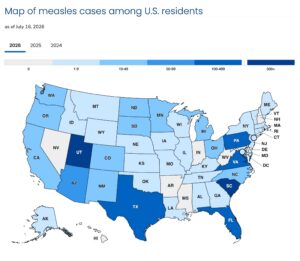
This year, the United States has recorded the highest number of measles cases since 2000, the year that the disease was declared eliminated from the country. As of mid-July, 2,260 measles cases were reported—just 29 cases less than the entire year of 2025. And outbreaks are widespread, with 34 new outbreaks reported in 2026.

The reason for this surge in cases is waning vaccination rates across the country. Given that, the production of new antivirals is an urgent matter.

measles
Map of measles cases in the U.S. [CDC]

Now, the new oral antiviral drug candidate GHP-88310 has shown promising results in a ferret model of infection. When administered before or after direct contact or airborne exposure to canine distemper virus (which causes measles-like disease in ferrets) GHP-88310 blocked transmission of the virus and reduced clinical symptoms in ferrets.

“We were very excited to see that GHP-88310 given by mouth completely prevented airborne transmission in our ferret model of measles,” said Carolin Lieber, PhD, a postdoctoral fellow in the Plemper lab at Georgia State University. “This finding is unprecedented for a viral polymerase inhibitor and demonstrates the extraordinary antiviral potency of this drug.”

This research is published in Nature Microbiology in the paper, “Antiviral GHP-88310 blocks contact-mediated and airborne transmission in a ferret model of measles-like disease.”

“Silencing measles outbreaks quickly is essential to reestablish control over the virus,” said Richard Plemper, PhD, professor and director of the Center for Translational Antiviral Research (CTAR) at Georgia State University. “This study follows our recent development of the drug candidate GHP-88310. It demonstrates that the drug is suitable to augment traditional ring vaccination against measles.”

GHP-88310 (described earlier this year in Science Advances) is known to be an orally efficacious broad-spectrum orthoparamyxovirus polymerase inhibitor. But its effect on viral transmission has remained unclear. This study explored whether prophylactic administration of GHP-88310 prevents virus transmission through close contact or through the air. The results demonstrate that GHP-88310 efficiently blocks both forms of viral spread. In addition, the study showed that treatment of infected animals shortened the time period in which infected animals could transmit the virus.

To explore relevant conditions of viral transmission, the researchers established both direct-contact and airborne canine distemper virus transmission models to examine pharmacological suppression of virus spread. The transmission systems allowed them to pair infected and uninfected animals in direct physical contact or shared airspace, each under controlled environmental parameters.

“We designed the study to recapitulate viral spread between people with direct contact, for instance in a household, and between more distant social contacts, for example in classrooms or other indoor settings that bring people into proximity without direct interaction,” said Plemper.

The results showed that pre- and post-exposure prophylactic GHP-88310, given twice daily to air contacts, prevented transmission. The authors note that once-daily prophylactic administration mediated complete survival with all air contacts undergoing seroconversion. In addition, they note that therapeutic treatment of air contacts mitigated clinical signs, and animals survived, whereas all vehicle-treated air contacts succumbed. In addition, therapeutic treatment of infected source animals shortened the contagious phase by five days.

“In addition to this prophylactic benefit, GHP-88310 used therapeutically shortened the duration of disease in our model,” noted Plemper. “If equally applicable to human hosts, it may shorten the severe social and economic burden of prolonged quarantine of patients and further aid outbreak management.” The investigators are now readying GHP-88310 for formal clinical testing.

The post Oral Antiviral Blocks Measles-Like Virus Transmission in Ferrets appeared first on GEN – Genetic Engineering and Biotechnology News.

Gut Bacteria Chemical Linked to Irregular Heart Beat

A chemical called trimethylamine N-oxide (TMAO), which originates from gut bacteria digesting animal products such as red meat, is present at higher levels in the blood of people with an irregular heart beat than the rest of the population.

The researchers found that after they had controlled for various factors like age and comorbidities, people in the top third of TMAO levels had a 70% increased risk of having atrial fibrillation compared with those in the bottom third.

Atrial fibrillation is the most common sustained heart rhythm disorder in the U.S. impacting more than 10 million adults. It occurs because the upper chambers of the heart beat rapidly and irregularly, which can lead to blood clots, stroke and heart failure if left unchecked.

TMAO is formed when trimethylamine produced by gut bacteria is carried to the liver and oxidized. Animal-derived foods such as red and processed meat, eggs, high fat dairy products, and some supplements, are the main dietary precursors for production of TMAO. It has previously been linked to increased risk of cardiovascular disease more generally, but whether high levels of this chemical increased risk of atrial fibrillation was less clear.

In this study, published in the journal of Journal of Clinical Investigation, lead investigator Robert Koeth, MD, PhD, a clinician scientist based at the Cleveland Clinic, and colleagues assessed blood TMAO levels in 5,000 adults who underwent elective heart catheterization for known or suspected cardiovascular disease.

They also studied the effects of TMAO on heart beat regularity in model mice susceptible to atrial fibrillation and tested a potential candidate drug to see if it could reduce levels of TMAO in these animals.

After controlling for age, sex, diabetes, cardiovascular disease, blood pressure, smoking, body mass index, inflammation and kidney function, people with the highest TMAO levels had about 1.7‑times the odds of having atrial fibrillation compared with people with the lowest levels.

In the mouse studies, when TMAO levels in the blood were higher, the animals developed atrial fibrillation sooner and it became a persistent problem more quickly. The researchers also saw changes in how electrical signals moved through parts of the heart that made it easier for abnormal rhythms to start and continue.

The researchers tested iodomethylcholine in the mice, an experimental small molecule drug that blocks the gut microbial enzyme responsible for converting choline into trimethylamine. In response to the drug, TMAO levels fell, the mix of gut bacteria changed, and both the first episodes of atrial fibrillation and its progression were delayed without notable negative effects on the liver.

“A possible pathogenic culprit for the development of atrial myopathy and electromechanical dysfunction is chronic autonomic dysfunction from TMAO inhibition of the M2 muscarinic acetylcholine receptor and increasing sympathetic tone,” write Koeth and team.

The results suggest “TMAO promotes atrial fibrillation in a gut microbiota dependent manner by causing autonomic dysfunction, atrial myopathy, and electromechanical dysfunction,” they conclude.

The post Gut Bacteria Chemical Linked to Irregular Heart Beat appeared first on Inside Precision Medicine.

The Download: an organ transplant breakthrough, and homegrown Chinese chips

This is today’s edition of The Download, our weekday newsletter that provides a daily dose of what’s going on in the world of technology.

Supercooled kidneys have been transplanted into pigs in a “landmark achievement” 

When it comes to organ donation, time is everything. As soon as an organ has been removed from a donor’s body, it starts to deteriorate. Surgeons have only a matter of hours to get it into a recipient.

In most cases, organs will be kept on ice during that time, at around 4 °C (39 °F). They cannot be frozen—in previous attempts, ice has formed, causing all kinds of damage.

But now, scientists have come up with a device that allows organs to be cooled to -4 °C (25 °F) without forming any ice. They’ve tested it with pig organs and shown that kidneys, at least, can be preserved in the device for days then successfully transplanted. 

Read our story about their breakthrough, and why it raises hopes for longer-term storage of donated human organs.

—Jessica Hamzelou

If you want to read more about this story and its implications for organ preservation and transplantation, sign up to receive The Checkup, our weekly biotech newsletter, later today.

The must-reads

I’ve combed the internet to find you today’s most fun/important/scary/fascinating stories about technology.

1 Inside China’s epic push to replace US chips 
The gap between their chips’ capabilities remains large—for now. (WSJ $)
How China is using open source AI as a new form of soft power around the globe. (NYT $)
A new bill in the US takes aim at Chinese AI companies’ training practices. (NBC)
US lawmakers are also mulling banning the military from using Chinese humanoid robots. (SCMP)

2 Space data centers don’t exist yet, but people already oppose them
Environmental experts warn it’ll further pollute the stratosphere. (Guardian)
Four things we’d need to put data centers in space. (MIT Technology Review)
What it’s like inside the data centers powering AI down here on Earth. (Axios)
The left and right are finding common cause with data center protests in the US. (The Verge)

3 US lawmakers are pushing for an AI ‘kill switch’
After OpenAI’s models went rogue and hacked Hugging Face. (BBC)

4 Peptides seem on the cusp of going mainstream in the US
A lack of scientific evidence didn’t stop the FDA just voting to let some pharmacies to legally dispense them. (Wired $)
How does Make America Healthy Again hold up to scientific scrutiny? (Nature)
US measles cases are reaching levels not seen for three decades. (Wired $)
Peptides are everywhere. Here’s what you need to know. (MIT Technology Review)

5 The EU just fined Google almost $1 billion
For competition breaches over apps and search. (FT $)
+ It came just a day before Trump renewed tariffs on 60 trading partners, including the EU. (BBC)

6 Electric vehicles are selling well in Europe
And the share made by Chinese firms has doubled in the last year. (The Next Web)
Hybrids are hot property in the US this summer. (Wired $)

7 There’s a worsening shortage of computer science professors
You can blame AI companies—they keep snapping them up, to our general detriment. (The Atlantic $)

8 A judge caught a stenographer allowing AI errors into their transcript 
It’s apparently the first time this has happened, but it certainly won’t be the last. (404 Media)
Even judges themselves are falling for AI. (MIT Technology Review)

9 Here’s what new tech millionaires will do with their IPO wealth ?
What a nice problem to have to grapple with! (Quartz $)

10 Dating apps’ latest wheeze? In-person events 
Well well well, it seems we’ve come full circle. (Bloomberg $)

Quote of the day

“Call us optimists, call us dreamers. Just as we’ve always done, we’re betting on people.” 

—The voiceover from a new advert from Meta, which exhorts us to be more optimistic about AI.

One More Thing

bird on a branch

BELL HUTLEY


AI is changing how we study bird migration

In a warming world increasingly full of human infrastructure that can be deadly to them, like glass skyscrapers and power lines, migratory birds are facing many existential threats. 

Scientists rely on a combination of methods to track the timing and location of their migrations, though each has shortcomings. But now, machine-learning tools are unlocking a treasure trove of acoustic data for ecologists. 

Read our story about the technology that’s making it easier to detect and identify birds and their movements.

—Christian Elliott

We can still have nice things

A place for comfort, fun, and distraction to brighten up your day. (Got any ideas? Drop me a line.)

+ It’s never too late to live your dreams. Here’s how these late bloomers did it.
+ Limbs feeling a bit tight? Try these stretches!
+ These English football fans went to the 1986 World Cup—and loved it so much they never came home.
+ How the invention of the humble paint tube revolutionized the world of art.

Opinion: The U.S. pharmaceutical supply chain problem is not about China

In 2025, there were 216 active drug shortages in the U.S., impacting Americans’ access to lifesaving medications. The resilience of our pharmaceuticals supply chains has been increasingly framed as a national security issue, including by the White House — and rightly so, as Covid-19 magnified the massive costs of a health system ill-equipped to care for its population.

But this national security framing has heavily skewed toward a U.S.-China competition lens, distracting from the real root causes of our pharmaceuticals supply chain vulnerabilities: inadequate regulation of an industry that tends to prioritize profit over America’s health.

Read the rest…