Fujifilm Biotechnologies reports that its commercial-scale cell culture manufacturing facility in Holly Springs, NC, has been selected as one of only seven participants in the FDA’s PreCheck Pilot Program. The program, which also includes Amneal Pharmaceutical, Cellares, Eli Lilly, Kriya Therapeutics, Kyowa Kirin, and Regeneron, is a strategic initiative designed to strengthen America’s pharmaceutical manufacturing capabilities and help accelerate patient access to critical medicines.
“We are honored that our Holly Springs site has been selected to participate in the FDA’s PreCheck Pilot Program,” said Lars Petersen, president and CEO of the company. “We’re committed to helping our customers bring life-changing therapies to patients faster, and participation in this initiative will help support greater access to critical medicines in the U.S.”
The pilot program is designed to enhance FDA-industry engagement by facilitating earlier interactions to minimize uncertainty associated with manufacturing readiness, with the goal of creating a more efficient regulatory review process, and strengthening the resilience of the U.S. pharmaceutical supply chain. The FDA PreCheck Pilot Program will focus on manufacturing readiness, regulatory predictability, and expedited facility inspections.
Fujifilm’s customers at the Holly Springs site includes argenx, Johnson & Johnson, Regeneron, and a number of other pharma firms. On behalf of its customers, Fujifilm’s Holly Springs site manufactures monoclonal antibodies (mAbs), including treatments for complex diseases.
The pilot program is designed to enhance FDA-industry engagement by facilitating earlier interactions to minimize uncertainty associated with manufacturing readiness. [Westend61/Getty Images]
“As our customers continue advancing innovative biologic therapies, manufacturing readiness and regulatory predictability are increasingly important,” said Laurie Braxton, senior vice president and site head, Holly Springs at Fujifilm. “Our participation in the program reinforces our commitment to providing customers with high-quality manufacturing capabilities.”
Fujifilm’s Holly Springs facility is one of North America’s largest end-to-end cell culture biopharmaceutical manufacturing facilities and represents a key node in the company’s growing global manufacturing network, according to Lars Petersen. The $3.2 billion manufacturing site opened with a capacity of 8 x 20,000 L mammalian cell culture bioreactors, and will add a drug product line in early 2027, followed by Finished Goods. An expansion is underway to double drug substance capacity with an additional 8 x 20,000 L bioreactors.
With an increase in demand for U.S. manufacturing capacity, Fujifilm officials say they will accelerate the opening of its expansion by six months, targeting late FY2027. The Holly Springs site recently surpassed 800 employees, with the overall goal of hiring a total of 1,400 local employees by 2031.
Designed with standardized platforms and advanced digital capabilities, the site is part of the company’s interconnected kojoXTM operating system, which harmonizes systems, equipment, and processes across global sites to enable faster technology transfer, greater manufacturing flexibility, and consistent quality for customers worldwide
Researchers from the University of Pennsylvania and New York University have received a $4 million grant from the Wellcome Trust to develop an AI-driven platform to train mental health clinicians using simulations of real patients.
Within the next two years, the partners will work on the development of the STELLAR platform, which stands for Steering-Vector Enhanced LLM Agents for Realistic Digital Twins in Mental Health. The platform will create digital twins of patients that trainees can use to practice conducting clinical interviews and evaluating psychiatric symptoms.
“STELLAR brings together behavioral data, clinical expertise, and AI to ask a very practical question,” said Sharath Chandra Guntuku, PhD, associate professor of computer and information science at Penn Engineering. “Can we build training tools that better prepare clinicians for how varied and complex patients are?”
Preparing future mental health clinicians for clinical interviews can be challenging as patients will often report overlapping symptoms that shift over time and subjective experiences that can be expressed differently by each individual. STELLAR will give trainees an ethical option for trainees to simulate interviewing patients with a broad range of symptoms, backgrounds, and clinical scenarios.
“In psychiatry, the details of symptom experience matter: how someone describes distress, how symptoms overlap, how severity changes over time, and how context shapes the clinical interaction,” said Raquel E. Gur, MD, PhD, professor of psychiatry, neurology, and radiology at Penn’s Perelman School of Medicine.
Patient simulations will be created drawing from clinical data from the Philadelphia Neurodevelopmental Cohort, a repository including psychiatric assessments and clinical interviews from thousands of young people created by Penn Medicine and the Children’s Hospital of Philadelphia. Rather than copying individual patients, the simulations will create composites based on real-world data for clinicians to practice realistic conversations in the context of a clinical interview.
This will allow trainers to precisely control the symptoms students encounter, their intensity, and how they interact with each other. For instance, a trainee may practice interviewing a patient with mild anxiety and another whose anxiety overlaps with depression or psychosis to learn how to distinguish the differences in presentation between both.
Because many mental health symptoms manifest beyond formal clinical settings, the platform will also be trained using data from social media platforms, where people discuss mental health symptoms in everyday language.
“Patient simulations will only be useful for clinician training if they are grounded in real clinical speech and evaluated as clinical interactions, not just plausible AI dialogue,” said Neville Ryant, PhD, researcher at Penn’s Linguistic Data Consortium. “[Our] role is to bring speech and language science into the core of the project: adapting speech-recognition tools to clinical interviews, creating high-quality transcripts and annotations, and helping evaluate both what the simulations say and how they say it. That includes assessing the language generated by the models, the naturalness of synthetic voices, how well those voices reflect target speech patterns, and the behavior of the avatar during real trainee interactions.”
To ensure the conversations are realistic, respectful, and useful to trainees, the team will involve people with lived experience of mental health conditions as well as family members and caregivers to provide their perspective into the evaluation process. Their feedback will help researchers assess the accuracy of simulations, avoid stereotyping patients, and prepare trainees for complex and nuanced clinical conversations with real patients.
“The promise of this approach is that we can move beyond stylized and potentially biased simulations,” said João Sedoc, PhD, assistant professor of technology, operations and statistics at NYU’s Stern School of Business. “If we can create digital patients that simulate controllable plausible symptom expression and responsibly evaluate, we can augment current clinician training practices with the kinds of conversations that are essential to better mental health care.”
BOSTON — Governor Maura Healey has summoned the state’s largest health system and its striking nurses to the State House on Wednesday in an attempt to broker a new contract, according to the Massachusetts Nurses Association.
The calling of the late-afternoon meeting came hours after a boisterous start to Massachusetts’ biggest-ever nurses strike, and the first at Brigham and Women’s Hospital. Mayor Michelle Wu also helped arrange the meeting, the union said.
Thousands of Brigham nurses and supporters poured onto Francis Street near the hospital starting at 7 a.m., shaking cowbells, banging on plastic buckets and cheering at a deafening chorus of supportive honks from passing cars. The nurses, sporting “Union Strong” and “Brigham Nurses United” shirts, waved signs calling out management. “Value Nurses Like You Value Your Bonu$e$,” one sign read.
WASHINGTON — Last week, pharmaceutical leaders filed into a meeting room in the Eisenhower Executive Office Building, next to the White House, for a meeting with Secretary of State Marco Rubio, health secretary Robert F. Kennedy Jr., and HHS Chief Counsel Chris Klomp.
The administration officials had a message for the industry: It’s time to bring production of essential medications back to the U.S. — or at least closer to home.
The meeting, described by an administration official and two people familiar with the event, focused on increasing U.S. control of the supply chains for the 86 medicines deemed essential by the health department’s Assistant Secretary for Preparedness and Response.
A high-fat diet can result in better outcomes from cancer immunotherapy by improving the balance of microbes in the gut, early research shows.
The findings reveal how diet shapes immune states and how altering it could improve cancer treatment outcomes.
The study, reported in Nature, revealed that an obesogenic diet improved response to immune checkpoint inhibitors, with this occurring outside its impact on bodyweight or metabolism.
Instead, the benefits were linked with the creation of a favorable microbial ecosystem, which worked synergistically with the diet.
The results offer a potential explanation for the obesity paradox in cancer treatment, in which high body mass index is associated with improved immunotherapy responses to several types of cancer.
“Prolonged obesogenic diets are associated with well-established health risks and are not proposed as long-term interventions for patients with cancer,” caution researcher Lysanne Desharnais, PhD, from McGill University in Montreal, Canada, and colleagues.
“Rather, our work highlights the therapeutic potential of short-term dietary modulation, and of specific bacteria or microbial-derived metabolites, to create an optimal host ecosystem for immunotherapy responses.”
Previous research has indicated that the gut microbiota regulates immunotherapy responses, with diet shaping both the microbial and metabolic states that influence immune function.
Gut dysbiosis is a hallmark feature of obesity that links diet, the microbiome and health risk factors. Yet paradoxically, studies have shown that high BMI is associated with improved ICI responses for several types of cancer.
To investigate further, Desharnais and colleagues examined the impact of 12 mouse diets to designed to reflect variation in the human diet and also studied the impact of fecal microbiota transplants (FMTs).
In addition to traditional low fat, high fat, and Western diets, they used diverse ingredients as sources of protein, carbohydrates, fat and fiber to mimic Mediterranean, Japanese, vegan, American and ketogenic diets.
The team found that the efficacy of immune checkpoint inhibitors was dependent on the diet-gut axis rather than metabolic dysfunction, creating a favorable host ecosystem for therapy.
Lactobacillus johnsonii was as one of several key gut species associated with response against programmed cell death protein (PD-1), a protein found on T immune cells that helps keep immune responses in check.
Nonetheless, the researchers reported, “FMT, monocolonization, and diet switch experiments demonstrated that diet was more influential than microbiota composition alone, with maximal benefits observed when favorable bacteria were paired with favorable diets, due to synergistic metabolic remodeling.”
Obesogenic diets were not uniformly beneficial.
For example, the Mediterranean diet—high in fat from olive oil—retained a microbiota resembling lean, metabolically healthy mice, including low Lactobacillus, and remained insensitive to immune checkpoint inhibitors.
Conversely, a diet high in the soluble plant fiber inulin was lean and responsive to immune checkpoint inhibitors, yet had a distinct microbial composition characterized by low Lactobacillus and high Bifidobacteria.
Aromatic amino acid metabolites mediated the efficacy of immune checkpoint inhibitors. Tyrosine-derived phenylpropionate metabolism was a key pathway leading to production of desaminotyrosine and related metabolites, which enhanced T cell effector function.
There were also beneficial rises in indole-containing tryptophan metabolites, including indole-3-lactic acid, although this was not specifically dependent on Lactobacillus.
The researchers concluded: “Together, our findings identify diet–microbiome synergy as a mechanistic basis for the obesity paradox in cancer immunotherapy and a tractable target for improving therapeutic responses across diverse patient populations.”
This is today’s edition of The Download, our weekday newsletter that provides a daily dose of what’s going on in the world of technology.
Why worms (and microbes) are catching on as a manure pollution solution
Anthony Agueda, a third-generation California dairy farmer, pulls a rake through a bed of dark, wet wood chips to reveal a half-dozen squirming red earthworms. There are likely hundreds of thousands more wriggling just under the surface.
The worms and microbes are part of a “vermifiltration” system that cleans manure wastewater. The approach may dramatically cut methane, nitrous oxide, and water pollution.
Vermifiltration is just one of a variety of methods that farmers, companies, and scientists are employing to drive down manure pollution as the livestock industry faces growing pressure to address the environmental harms from one of the smelliest parts of the business.
MIT Technology Review Narrated: geoengineering gets a reality check
Solar geoengineering, the controversial idea that we could deliberately intervene in the climate system to counteract global warming, is moving beyond computer simulations and into the practical engineering challenges required to make it real.
This is our latest story to be turned into an MIT Technology Review Narrated podcast, which we publish each week on Spotify and Apple Podcasts. Just navigate to MIT Technology Review Narrated on either platform, and follow us to get all our new content as it’s released.
The must-reads
I’ve combed the internet to find you today’s most fun/important/scary/fascinating stories about technology.
1 The Trump administration has lifted restrictions on OpenAI’s GPT 5.6 The green light came after additional testing and meetings. (Axios) + OpenAI subsequently said it will launch widely tomorrow. (Bloomberg $) + The rollout had been delayed due to security concerns. (Verge) + Does AI know too much? (MIT Technology Review)
2 China is looking at curbing overseas access to its top AI models Alibaba, ByteDance, and Z.ai attended meetings about the plan. (Reuters $) + Beijing is also weighing the security risks of open-weight AI. (SCMP) + And has issued a “backdoor” security alert over Claude Code. (CNBC)
3 European NATO allies have unveiled a $50 billion high-tech missile plan They will engineer stealth and high-speed hypersonic weapons. (BBC) + Which can strike targets at least 300 km away. (Reuters $) + The Dutch and British are also developing amphibious ships. (Bloomberg $)
4 Meta is testing “super sensing” AI glasses that record every moment It plans to disable privacy LEDs that alert people when they’re “on.” (FT $) + It’s also released an AI image generator. (NYT $) + Which lets anyone use your Instagram photos in AI images. (Wired $)
5 China’s DeepSeek is developing its own AI chip, sources say It could reduce the company’s reliance on Nvidia and Huawei. (Bloomberg $) + DeepSeek V4 was a win for Chinese chipmakers. (MIT Technology Review)
6 Wikipedia is fighting to survive the internet’s next era It’s under attack from MAGA, AI raids, and repressive regimes. (NYT $) + AI has given Wikipedia a language problem. (MIT Technology Review)
7 SpaceX plans to launch its first model coproduced with Cursor The new frontier model could arrive as soon as this week. (Information $) + It’s built with AI startup Cursor, which SpaceX is buying for $60 billion. (FT $)
8 A new academic “humanizer” tool can erase signs of AI-written text But researchers are very divided over its potential impact. (Nature $)
9 Scientists have detected a mystery chemical on Pluto and Titan It appears to absorb light in a way we don’t currently understand. (Wired $)
10 A Waymo robotaxi reportedly called the cops on drinking teens Officers then approached the vehicle with guns drawn. (404 Media)
Quote of the day
“Parents do you know where your teens are? Waymo does!”
—Local police post on Facebook that a Waymo in California called the cops on two teenagers for “drinking and shooting from the vehicle.”
One More Thing
MICHAEL BYERS
Your boss is watching
Dora Manriquez has spent nine years driving for Uber and Lyft, where every ride she accepts or rejects is tracked by the apps she relies on for work. Having found herself unable to score enough better-paying rides, she has had to file for bankruptcy.
App-based employers aren’t the only ones keeping a very close eye on workers today. Jobs today—whether in an office, a warehouse, or your car—can mean constant electronic surveillance with little transparency, and potentially with livelihood-ending consequences if your productivity flags.
A place for comfort, fun, and distraction to brighten up your day. (Got any ideas? Drop me a line.)
+ Literary worlds collide in this marvellous Dr Seuss/Stephen King mashup. + A daring snorkeler saved a dolphin from a suckerfish—and then celebrated with its whole pod. + This clever musical project seamlessly constructs an original song from vocal snippets of 50 artists singing US city names. + A long-lost wallet from 1970 was recently unearthed, creating a cute time capsule from its owner’s high school years.
You get a CGM, you get a CGM, everybody gets a CGM? For the first time in the United States, children 2 and older can also get a continuous glucose monitor without a doctor’s prescription.
Is that a good thing? The Food and Drug Administration thinks so.
Novartis has agreed to acquire Myricx Bio, a London-based developer of next-generation antibody-drug conjugates (ADCs), for up to $1.5 billion in a deal designed to bolster the buyer’s oncology pipeline with a next-generation ADC payload platform designed to fight cancer.
Privately-held Myricx specializes in developing ADCs that use N-myristoyltransferase inhibitor (NMTi) payloads, an approach designed to deliver a differentiated cancer-killing payload directly to tumor cells. Myricx says its ADC approach holds the potential to address limitations of TOPO-1 inhibitors, tubulin inhibitors, and other commonly used ADC payload classes—ranging from toxicity to healthy cells, to tumor resistance, to dose-limiting adverse events.
The acquisition deal is designed to combine Myricx’s two lead ADC assets and next-generation first-in-class NMTi payload platform with Novartis’ expertise in developing cancer therapies.
According to Myricx Bio, preclinical data suggests that its NMTi payload may have broad activity across multiple solid tumors, including TOPO-1-resistant models, and may enable more effective use of ADCs in settings where existing payload classes have limitations. NMT is an enzyme responsible for the addition of myristic acid, a 14-carbon fatty acid, to the N-terminus of multiple proteins that are crucial for cancer cell survival.
“ADCs have become an important part of cancer treatment, but there remains a clear need for new payload mechanisms to overcome resistance and expand their impact for patients,” Fiona Marshall, PhD, Novartis’ president of biomedical research, said in a statement. “Myricx Bio has developed a promising NMTi payload platform with a differentiated mechanism that could broaden the use of ADCs across multiple tumor settings.”
Marshall added that the Myricx Bio acquisition “reflects our strategy to scale innovative platforms, as we have with radioligand therapies, to deliver more durable, transformative treatments for patients.” In February, Novartis announced plans to build a 46,000-square-foot radioligand therapy (RLT) manufacturing site in the Dallas-Fort Worth suburb of Denton, TX.
Novartis investors reacted by sending its shares traded on the SIX Swiss exchange down 2% Monday, from CHF 127.92 ($157.69) to CHF 125.10 ($154.22). Novartis’ American Depositary Shares (ADSs) traded on the New York Stock Exchange dipped 3%, from $159.90 to $155.08 as of 10:13 a.m. ET
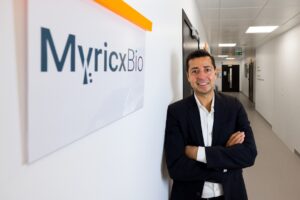
Mohit Rawat, Myricx Bio’s CEO
Until now, Myricx has said little about its two lead NMTi-ADC candidates, except to disclose on its website that it is prioritizing one that targets B7-H3 and the other, HER2, “based on compelling preclinical efficacy and safety data across multiple solid tumor-associated antigens and cancer cell types.”
Novartis agreed to shell out $1.1 billion cash upfront plus up to $400 million tied to achieving milestones. The transaction is expected to close in the second half of this year, subject to satisfaction or waiver of customary closing conditions, including regulatory approvals.
“Transformative promise”
“We are delighted that Novartis recognizes the transformative promise of our NMTi-ADC platform to deliver this next-generation of potential first-in-class, highly differentiated ADC therapeutics,” stated Mohit Rawat, Myricx Bio’s CEO.“Together with Novartis, we look forward to building upon our work to transform the landscape of cancer treatment.”
Rawat joined Myricx last year with the goal of steering the company through preclinical development and its next stage of growth.
Founded in 2019, Myricx Bio was spun out from Imperial College London and the Francis Crick Institute by Ed Tate, PhD; Roberto Solari, PhD; and Andrew Bell, PhD, with support from Cancer Research UK, as well as seed investment from Brandon Capital and Sofinnova Partners.
Myricx’s co-founders and their collaborative teams discovered that NMT played a vital role in maintaining multiple critical, diverse cellular processes in cancer cells, including vesicle trafficking, growth factor signaling, cancer cell survival, mitochondrial biogenesis, and cancer cell metabolism.
Under CTO Robin Carr, PhD, Myricx Bio raised £90 million ($114 million) in a Series A financing in mid-2024 led by Novo Holdings and Abingworth, joined by British Business Bank, Cancer Research Horizons, Eli Lilly, and existing investors. This enabled the company to scale its operations and expand the team to rapidly advance its pipeline.
The planned acquisition of Myrocx Bio is Novartis’ third major deal this year focused on boosting its cancer pipeline.
On June 24, Antares Therapeutics announced it would receive $105 million upfront from Novartis through a strategic collaboration to discover, develop, and commercialize small molecule therapies against promising but historically undruggable oncology targets. Novartis also committed to paying Antares upto $1.8 billion tied to achieving additional option exercise, development, regulatory, and commercial milestones, as well as tiered royalties on global net sales.
And in March, Novartis committed up to $2 billion upfront toward acquiring Pikavation Therapeutics, a subsidiary of Synnovation Therapeutics that specializes in developing PI3Kα inhibitor programs designed to treat forms of cancer. Novartis also agreed to pay up to $1 billion in payments tied to achieving development, regulatory, and commercial milestones.
Vertex Pharmaceuticals has agreed to acquire Crinetics Pharmaceuticals for $10 billion cash, the companies said, in a deal that would expand the buyer’s rare disease portfolio beyond its anchor indication of cystic fibrosis (CF), by adding an approved treatment and a pipeline anchored by two Phase III candidates, all predicted to generate more than $5 billion in annual revenue.
Based in San Diego, Crinetics focuses on discovering, developing, and commercializing therapeutics for endocrine diseases. The company’s first marketed drug Palsonify® (paltusotine), an oral SST2 agonist, was approved by the FDA in September as the first and to date only once-daily oral therapy for adults with acromegaly, a debilitating condition which affects an estimated 20,000 Americans. Palsonify won European Commission approval in April and is under review by regulators elsewhere in the world.
Palsonify has enjoyed rapid uptake among acromegaly patients, with Crinetics reporting the drug generated net product revenue of $10.3 million during the first quarter, with 232 patients enrolling for treatment. Approximately 70% of patients treated with Palsonify at the end of Q1 were on reimbursed therapy—reflecting payers increasingly agreeing to cover the treatment, according to the company.
Within the first two quarters of its U.S. launch, Palsonify was prescribed by 263 unique healthcare providers.
Under its generic name paltusotine, the drug is in Phase III study for a second indication of carcinoid syndrome, a rare condition resulting from neuroendocrine tumors.
‘Excellent strategic fit’
Reshma Kewalramani, MD, Vertex Pharmaceuticals CEO and President
“Crinetics is an excellent strategic fit for Vertex, with its focus on serious diseases in specialty markets with significant unmet need, well-understood causal human biology, and potentially best-in-class medicines that could deliver transformative benefit to patients,” Reshma Kewalramani, MD, Vertex’s CEO and president, said in a statement. “We believe Vertex can build on the strong momentum of the Palsonify launch by applying our experience in commercializing medicines for rare genetic diseases.”
Crinetics investors agreed, roaring their approval of the pending acquisition as the company’s shares all but doubled in early trading Tuesday, zooming 99% to $83.54 as of 10:28 am ET from yesterday’s closing price of $42.03. Vertex shares dipped 2% to $516.48 from $529.59 at Monday’s closing bell.
Also in late-stage development is Crinetics’ lead pipeline candidate atumelnant, an oral adrenocorticotropic hormone (ACTH) antagonist now under development for congenital adrenal hyperplasia (CAH) and ACTH-dependent Cushing’s syndrome.
In classic CAH, a rare chronic genetic disease with 17,000 addressable patients in the U.S., atumelnant is in a pair of clinical trials. One is a Phase III study in adults with the most common cause of the disease, 21-hydroxylase deficiency (21-OHD). The study’s estimated primary completion date is May 2027 (NCT07144163). The other trial is a Phase II/III study in children ages one to <18, which has an estimated primary completion date of March 2030 (NCT07159841).
Earlier Phase II studies of atumelnant showed that patients treated with the therapy achieved near normalization of excess androgen levels on physiologic replacement doses of glucocorticoids—a therapeutic profile that Crinetics has said positions atumelnant to become the leading treatment for people with CAH.
Atumelnant (formerly CRN04894) is also being developed for ACTH-dependent Cushing’s syndrome, and is under study in a Phase Ib/IIa open-label, multiple-ascending dose exploratory study (NCT05804669) designed to evaluate safety, tolerability, pharmacokinetics (PK), and pharmacodynamic biomarker responses associated with the treatment.
‘Significant potential’
“We are also excited by the significant potential of atumelnant to transform the treatment landscape for CAH, setting a new standard of care where patients do not have to choose between managing their excess adrenal androgens and enduring the side effects of high-dose steroids,” Kewalramani said.
One analyst said a Vertex buyout would be good news for Crinetics.
“This is a solid outcome for CRNX, given stock pressure from the near-term Palsonify launch (generally slow and steady launch but (+) [positive] progress by CRNX so far) and the fact that key Phase III catalyst for CAH isn’t until late 2027/28,” Jefferies equity analyst Dennis Ding wrote today in a research note.
In a regulatory filing yesterday, Crinetix shared an email it sent to employees, stating: “We have always been confident in the ability of Crinetics to achieve our plan and were not actively looking to sell the company when Vertex approached us. However, after careful consideration, our board unanimously determined that the transaction is in the best interests of our shareholders.”
Crinetics’ pipeline of more than 10 disclosed candidates includes:
CRN09682, a Phase I nonpeptide drug conjugate candidate being developed to treat somatostatin receptor 2 (SST2) expressing neuroendocrine tumors and other SST2 expressing solid tumors.
Discovery-phase preclinical programs focused on endocrine targets that include thyroid stimulating hormone (TSH), parathyroid hormone (PTH), somatostatin receptor 3 (SST3), growth hormone (GH), glucagon-like peptide 1 (GLP-1), and glucose-dependent insulinotropic polypeptide (GIP), as well as GPCR-targeted oncology indications.
Vertex said the deal was expected to contribute immediately to revenue growth via the ongoing launch of Palsonify, which the company says has blockbuster (greater than $1 billion in annual sales) potential in acromegaly. Longer term, Vertex says, atumelnant could also generate multiple billions of dollars in CAH, with additional revenue potential in Cushing’s syndrome.
$5B revenue forecast
R. Scott Struthers, PhD, Crinetics’ Co-founder and CEO
At peak year, Palsonify and atumelnant could deliver more than $5 billion in combined annual revenue, Vertex said, and thus contribute toward its goal of delivering sustained double-digit revenue growth, plus industry leading operating margins. The transaction is expected to add to non-GAAP operating income as of 2029.
Jefferies analyst Ding commented that atumelnant in CAH is expected to generate the largest share of the projected $5 billion, as in $2 billion to $3 billion, plus another $1 billion to $2 billion for Cushing’s syndrome–with the remaining $1 billion to be generated by Palsonify in acromegaly.
Scotiabank analyst Louise Chen told Reuters: “The deal adds a fifth vertical, endocrinology, which helps diversify VRTX’s concentration in CF.”
That concentration has proven lucrative for Vertex: During Q1, CF treatments generated $2.915 billion in total revenues, 98% of the company’s total revenue of $2.987 billion.
Vertex has agreed to acquire all outstanding shares of Crinetics common stock for $85 per share cash, in a deal valued at $8.8 billion net of estimated cash acquired. Vertex said it expects to finance the acquisition using a combination of cash on hand and debt, supported by $4.5 billion of fully committed bridge financing from Bank of America and Morgan Stanley Senior Funding.
Vertex finished the first quarter with cash, cash equivalents, and total marketable securities of $13 billion, up from $12.3 billion as of December 31, 2025. The company attributed the increase primarily due to cash flows from operating activities, partially offset by repurchases of Vertex’s common stock.
The transaction is expected to close in the third quarter subject to customary closing conditions, including receipt of regulatory approvals and approval by Crinetics shareholders.
“Nearly 18 years ago, we founded Crinetics with a clear goal of transforming the lives of patients living with endocrine-related diseases. Today marks a historic milestone as we embark on this next chapter with Vertex,” stated R. Scott Struthers, PhD, Crinetics’ co-founder and CEO. “Vertex’s global infrastructure and commercial footprint will serve to amplify the reach of our science and allow us to maximize the impact of Palsonify, atumelnant and our pipeline.”
The U.S. Food and Drug Administration has cleared CoRegen’s Investigational New Drug (IND) application for CRG-150, allowing the company to initiate a first-in-human Phase I/IIa clinical trial of its autologous CRISPR-engineered regulatory T (Treg) cell therapy in patients with advanced solid tumors. The study will evaluate safety and preliminary efficacy in metastatic triple-negative breast cancer (TNBC), metastatic HR-positive/HER2-negative breast cancer, and metastatic prostate cancer at leading academic cancer centers.
The clearance advances into the clinic an immunotherapy strategy that differs fundamentally from existing cell therapies. Rather than engineering cytotoxic lymphocytes to recognize tumor antigens, CRG-150 uses CRISPR gene editing to reprogram regulatory T cells (Tregs), with the goal of reversing the immunosuppressive tumor microenvironment and restoring endogenous antitumor immunity.
The approach emerged from more than three decades of research at Baylor College of Medicine on steroid receptor coactivator-3 (SRC-3), a transcriptional regulator that sits upstream of numerous immune signaling pathways. According to CoRegen, CRISPR-mediated disruption of SRC-3 fundamentally alters Treg biology, removing one of the mechanisms tumors use to evade immune surveillance.
Suneet Varma, Chairman of the Board at CoRegen [Baylor College of Medicine]
“What was fantastic about this discovery was that it allowed us to engineer a regulatory T cell to knock out SRC-3,” said Suneet Varma, chairman of the board of CoRegen. “By knocking out SRC-3, we have essentially removed the cloak of invisibility that cancer was hiding behind. Once you remove that cloak of invisibility, the tumor is recognized by the immune system, and CD4-positive T cells, CD8-positive T cells, and natural killer cells flood the tumor.”
The company reports that preclinical studies in multiple murine solid tumor models demonstrated durable tumor eradication following treatment with SRC-3-disrupted regulatory T cells. Investigators subsequently rechallenged animals with the original tumor and observed rapid elimination consistent with immunologic memory. In additional experiments, mice challenged with different tumor types, including pancreatic cancer after initial treatment of triple-negative breast cancer, also mounted antitumor responses, suggesting that the mechanism may not depend on a single tumor antigen or histology. Those findings now await validation in humans.
“This is a new, never-been-done-before approach to immuno-oncology,” Varma said. “We’ve cured many, many mice. But we need to now treat and cure humans. There’s a lot of work between here and there.”
Reversing the biology of immune suppression
Since the identification of FOXP3 as the master transcription factor governing regulatory T-cell development more than two decades ago, Tregs have become recognized as essential regulators of immune homeostasis. By suppressing excessive immune activation, they prevent autoimmunity and maintain peripheral tolerance. The same biology, however, is frequently co-opted by cancer. Many solid tumors recruit or expand Tregs within the tumor microenvironment, where they suppress cytotoxic T lymphocytes and natural killer (NK) cells, limiting endogenous antitumor immunity and contributing to resistance against immunotherapy.
That dual biology has made Tregs both attractive and challenging therapeutic targets. Most clinical development in the field has focused on harnessing their suppressive properties. Multiple companies are developing autologous, allogeneic, and CAR-engineered Treg therapies for autoimmune diseases, inflammatory disorders, and transplantation, where augmenting immune tolerance is desirable. By contrast, relatively few cell therapy programs have sought to manipulate Tregs in oncology because selectively disrupting their immunosuppressive function without broadly compromising immune regulation has proven difficult.
For example, last week, the FDA approved Orca Bio’s Tregzi, an unmodified donor-derived cell therapy designed as an alternative to traditional matched-donor stem cell transplantation for blood cancer patients. The therapy uses three purified donor cell populations—including regulatory T cells, conventional T cells, and hematopoietic stem and progenitor cells—selected to preserve immune control while supporting blood system recovery. By leveraging naturally occurring immune-regulating cells, Tregzi aims to reduce complications such as chronic graft-versus-host disease, marking a key milestone for the broader effort to harness Tregs as a next-generation approach in cancer treatment.
Sonal Gupta, MD, PhD, Chief Medical Officer at CoRegen [CoRegen]
CoRegen’s strategy is to alter Treg biology directly through CRISPR-mediated disruption of SRC-3, a steroid receptor coactivator that functions as a transcriptional regulator upstream of numerous immune signaling pathways. Sonal Gupta, MD, PhD, chief medical officer of CoRegen, explained that SRC-3 occupies a regulatory position upstream of numerous genes involved in immune signaling, including pathways associated with immune checkpoint regulation. “What we do is use CRISPR editing to knock out the SRC-3 gene,” Gupta told Inside Precision Medicine. “That changes the biology of regulatory T cells.”
She compares unmodified Tregs to “bouncers at a nightclub,” preventing immune cells from entering tumors. Following gene editing, the cells no longer maintain that suppressive phenotype, allowing endogenous immune cells to infiltrate the tumor microenvironment. Unlike checkpoint inhibitors, which interrupt individual inhibitory pathways such as PD-1/PD-L1 or CTLA-4, the company hypothesizes that reprogramming Tregs through SRC-3 disruption may produce broader remodeling of tumor immune suppression.
The therapy is also differentiated from CAR T cells. “CAR T cells directly kill the cancer cells by targeting something on the cancer cell, and, in our case, we genetically modify regulatory T cells,” said Gupta. “Regulatory T cells play a very important role in the tumor microenvironment. They basically do not allow the endogenous immune system to kill the cancer. When we gene-modify them the way we do, they allow the endogenous immune system to enter and kill the cancer cells.”
From laboratory discovery to first-in-human testing
The origins of CRG-150 trace back more than three decades to the laboratory of the late Bert W. O’Malley, MD, at Baylor College of Medicine. O’Malley, widely regarded as one of the founders of molecular endocrinology, spent much of his career studying steroid receptor coactivators (SRCs), proteins that regulate large transcriptional networks controlling cellular behavior.
According to Varma, bringing that body of work together with advances in regulatory T-cell biology transformed a long-running academic research program into a therapeutic platform. “Our goal was to take this tremendous body of evidence and receptor biology and move what was in an academic laboratory into a biotech environment where we could demonstrate the potential impact in patients,” he said.
CRG-150 begins with collection of autologous peripheral blood cells rather than bone marrow. Regulatory T cells are isolated, edited using CRISPR to disrupt SRC-3, expanded ex vivo, and then reinfused into the patient.
Gupta believes beginning with an autologous product provides the strongest opportunity to demonstrate proof of concept. “Autologous really is the gold standard,” she said. “Because the cells come from the patient, they’ve already been exposed to the tumor antigens.”
Another potentially important distinction is the absence of lymphodepleting chemotherapy prior to treatment. Current CAR T therapies typically require depletion of endogenous lymphocytes before infusion, adding toxicity and limiting outpatient administration. “Unlike CAR T cells, these patients do not have to undergo depletion and have their immune system knocked out before receiving therapy,” Gupta said. “There is potential for this therapy to actually be outpatient.”
Varma noted that because the therapy relies on a standard blood collection rather than more invasive procedures, the collection process should also be broadly accessible. “Not all autologous therapies are created equal,” he said. “We wanted the process to be as simple as possible and the vein-to-vein time as manageable as possible.”
The company has partnered with Lonza under a multi-year manufacturing agreement to support clinical production. Varma said manufacturing consistency formed an important component of the IND package reviewed by the FDA. “The FDA concurred that we had achieved what we needed to achieve to proceed,” he said.
Gupta added that recent advances in Treg manufacturing have substantially improved the feasibility of clinical development. “Being able to expand regulatory T cells to generate sufficient doses for patients has been a very important advance,” she said.
Testing a new therapeutic paradigm
Historically, novel oncology therapies enter clinical testing in heavily pretreated patients before moving into earlier treatment settings if efficacy is demonstrated. Varma believes CRG-150 may ultimately challenge that paradigm because its mechanism depends on mobilizing endogenous immunity. “We would really benefit from a healthier immune system, since that’s what we’re activating,” he said. “Scientifically, it suggests the therapy should ultimately be used earlier.”
The initial study, however, appropriately begins in advanced disease. The Phase I/IIa trial will use a dose-escalation and cohort-expansion design. Phase I will establish safety and identify the recommended Phase II dose, followed by expansion cohorts evaluating preliminary efficacy in metastatic TNBC, HR-positive/HER2-negative breast cancer, and metastatic prostate cancer. According to Gupta, the long-term objective is to generate sufficient data to support discussions with the FDA regarding a subsequent registration study.
The company reports strong interest from academic investigators participating in the study. “We’ve had more interest from clinical sites than we can currently support,” Varma said.
The FDA clearance positions CoRegen within a rapidly evolving landscape of engineered immune cell therapies. Most current Treg programs are directed toward restoring immune tolerance in autoimmune disease or transplantation, whereas oncology developers have largely focused on engineered effector cells such as CAR T cells, T-cell receptor-engineered T cells, and tumor-infiltrating lymphocytes. CRG-150 occupies a distinct niche by seeking to reprogram, rather than expand or eliminate, regulatory T cells within the tumor microenvironment.
The company is already exploring future iterations of the platform, including allogeneic products and in vivo approaches, as well as expansion into additional tumor types including pancreatic cancer, glioblastoma, melanoma, colorectal cancer, and non-small cell lung cancer. For now, however, the focus is on determining whether a strategy that has generated durable immune responses across multiple preclinical solid tumor models can safely translate into patients. The Phase I/IIa trial will provide the first opportunity to answer that question.