NEW YORK — Nearly 1,000 people in Michigan have been diagnosed with a parasitic infection that can cause weeks of watery diarrhea, making it the largest such outbreak in state history and one of the nation’s largest in years.
No deaths have been reported and the source of the cyclospora infections hasn’t been identified. Meanwhile, investigations into similar illnesses have been going on in 28 other states, including in Ohio, where people just across the Michigan border are also becoming sick.
ARPA-H, the U.S.’ “moonshot” agency for health research, announced Thursday that it will spend up to $160 million to push forward custom gene editing treatments for a spate of rare diseases.
The program, called THRIVE, will back seven different teams pursuing various groups of conditions affecting different organ systems.
Each team has a deadline of starting clinical trials by year three of the program, although some may start much sooner.
Want to stay on top of the science and politics driving biotech today? Sign up to get our biotech newsletter in your inbox.
A father fights to create and then save his daughter’s gene therapy, the White House nears a decision on an FDA chief, and the Trump administration pushes drugmakers to reshore generics manufacturing.
A quest to save Grace — and help rare disease patients everywhere
With $70 million and seemingly every fiber of his being, Matt Wilsey built a gene therapy company from scratch — recruiting Nobel laureates and biotech veterans to will an experimental treatment into existence for his daughter Grace. The treatment, for the ultra-rare disorder NGLY1 deficiency, landed her back in the hospital before she slowly began to recover, STAT’s Jason Mast and Matt Herper write.
Agrigenomics is, to use an analogy, spring looking toward summer. Wielding modern genomics tools fine-tuned to agriculture, along with AI-driven insights from field technologies and satellites in low Earth orbit, traditional agriculture is transitioning to precision farming and the bounty it brings. Insights are compressing 30 years of field trials into a single growing season and enabling growers to express specific traits without introducing foreign genes and without hit-and-miss Mendelian hybridization.
This intensive application of science starts with comprehensive soil analyses and extends, not only to the major row crops, but also to such lesser-studied areas as fruits and forestry.
It’s all about the soil
Nate Kelly CEO, Miraterra
Healthy, productive crops all need a good growing environment. “Soil is the most complex, beautiful system on the planet,” Nate Kelly, CEO, Miraterra, points out. Yet, “The soil measurement system in place today is quite archaic,” with manual systems and complex chemistries.
Miraterra’s lead technology is the Digitizer. With shifted-excitement Raman difference spectroscopy as its core, it also employs lasers and advanced signal processing to remove the noise that previously made Raman spectroscopy untenable for soil samples. Robust modeling transforms those data into a molecular fingerprint of soil to 30 ppm, with significantly enhanced resolution anticipated. The Digitizer shortens analysis time from hours to minutes, and makes toxic chemical analysis unnecessary. “Today, we measure texture, organic matter, and carbon and—soon—nutrients,” Kelly says.
After acquiring Trace Genomics and its large soil microbiology data set last year, the company can identify approximately 400,000 different biological components of soil, “things like nitrogen fixers, phosphorus solubilizers, pathogens, and nematodes,” Kelly says.
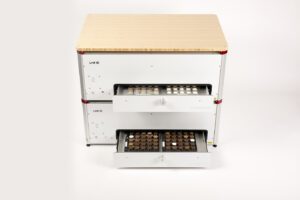
Miraterra Fill Tray. Healthy crops begin with deep knowledge of soil’s chemistry, biology, and structure. [Miraterra]
As its capabilities increase, Miraterra plans to measure soil chemistry, texture, and biological content. It already accesses public data, satellite imaging, and LiDAR to develop reports, such as nutrient flow, on plots as small as 10 square meters. By adding AI to identify patterns predictive of pest infestations and disease prevalence, he says the company expects to correlate soil health with plant conditions and pathogens.
“Soil is too complex [chemically and biologically] to stick a simple probe in the ground and try to get a reading,” Kelly says. “My aspiration is to cut the cost [of soil analysis] by about 90%, to democratize measurement,” Kelly says. “That means turning a $40 analysis into one that costs less than $5.”
CRISPR: Beyond corn and soy
CRISPR technology is being applied to agrigenomics with the same revolutionary results it created for medicine. As the basis of Pairwise’s Fulcrum Platform, it is expanding agrigenomics well beyond the major crops of corn and soybeans.
Ryan Bartlett, PhD CTO, Pairwise
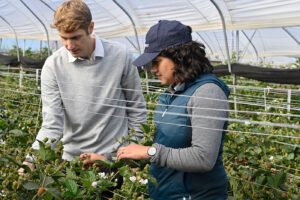
Fulcrum technology produced the world’s first seedless blackberry—now in field trials—and a more compact blackberry plant that is commercialized in the Americas. With this compact Fontana blackberry, “Growers can plant more blackberry plants per acre, which helps them be more efficient and produce more yield,” Ryan Bartlett, PhD, CTO, says. A thornless blackberry plant is on the horizon.
The goal is to “make growers more sustainable and efficient, and to give consumers the opportunity to consume more healthy things, like blackberries,” Bartlett says. Fast, precision editing will also help plant breeders quickly adjust to climate change.
Fulcrum features plant-specific CRISPR editing that fine-tunes gene expression rather than simply turning genes on or off. The platform includes additional gene editing tools, enzymes, and trait libraries to help breeders design and test changes and quickly advance specific phenotypes into field trials.
Bartlett calls this “traditional breeding on an accelerated basis.” With Fulcrum, these new blackberries were produced in about three years. Using traditional Mendelian breeding would have taken 10 to 40 years.
Genomics tools coupled with advanced analytics enable growers to plant more per acre. [Pairwise]
The speed comes from genome editing that generates the desired phenotype in one cycle, eliminating the need for generations of crosses to develop the features growers want.
Pairwise is also working with “additional permanent crops like cherries,” Bartlett says. “There haven’t been a lot of advancements in the past 50 years.” That may soon change, as Pairwise is working with Sun World to develop a pitless cherry.
New opportunities
“Accelerating timelines and lowering the cost of crop improvement [will] unlock expansive opportunities in agriculture, new species, new geographics, and new traits,” Brad Zamft, PhD, CEO and co-founder of Heritable Agriculture, says.
Heritable focuses on breeding indoor vegetables and forestry, although it also develops fruits and row crops with strategic partners. “The majority of the unmet need comes from placing existing plants in the right places and determining what crosses would make them better,” Zamft says.
Brad Zamft, PhD CEO, Heritable Agriculture
Consider strawberries. “We think we’re going to bring a new strawberry variety to the market—start to finish—within four years. The status quo is around a decade.” Heritable can identify desired traits, determine the genes involved, and validate them in growing plants within 18 months, versus 3 to 12 years using traditional methods. Currently, Heritable is adapting genetics from Consorzio Italiano Vivaisti’s (CIV’s) strawberries to grow indoors in Canada.
To speed the process, Heritable uses digital field trials and an AI engine developed in-house specifically for agrigenomics. Potential applications are global. “We have scalable integration of weather and soil to 10-meter resolution anywhere in the world,” Zamft says.
Increasingly accurate correlations of genes to phenotypes shorten the development timeline, Zamft adds. For example, three of the top eight genes Heritable’s team discovered for flowering time in corn proved causative, and three of three in a flavor project for leafy greens. In contrast, he cited a literature analysis that reported that out of 1,671 unique genes that were field-tested across multiple traits, only 22 were identified as validated leads.
To produce and commercialize these innovations, Heritable relies on an alliance of partners in which each partner brings vital strengths to the endeavor, from genomics through production, distribution, and sales. The company also engages in trait development with seed developers and growers, and recently launched a software-as-a-service platform to enable users to predict plant performance under multiple variables.
The company is also active in commercial forestry, using AI to help breeders make placement and breeding decisions that could shorten the breeding cycle by more than half.
Gene editing = no GMOs
Verinomics built its foundation on plant genomics, computational biology, and trait mapping to enable breakthroughs in multiple crops. Most recently, it developed Nonpareil+, a self-pollinating Nonpareil almond variety that may increase per-acre productivity by 30%.
That anticipated productivity gain is directly tied to self-pollination. Because the Nonpareil variety—which is the dominant commercial almond variety in California—is self-incompatible, it requires cross-pollination. That, in turn, requires planting alternating rows of other almond varieties as pollinators and then renting beehives (at about $400 per acre) to pollinate the orchard.
Stephen Dellaporta, PhD Founder, Verinomics
“There’s no way to create a self-compatible Nonpareil using conventional breeding,” Stephen Dellaporta, PhD, founder of Verinomics and professor at Yale University, points out. Therefore, using Verinomics’ Genesis gene editing platform, “we identified the self-incompatibility gene and edited it to a self-compatible gene.” The resultant Nonpareil+ is genetically identical to the Nonpareil except that it is self-pollinating.
Growers are beginning to plant it this year, with the expectation of reducing or eliminating the need for multi-variety almond orchards and bee hives. If it works as expected, growers can harvest all the trees at once, rather than needing separate harvests for multiple varieties.
Almonds aren’t the only crop on Dellaporta’s mind. Back in the lab, “we just completed 60 whole genome sequences, assemblies, and annotations,” he says. The company works with partners to address concerns in multiple crops, making adaptations without introducing foreign DNA.
The bacterial disease known as citrus greening is an example. It’s killed millions of acres of citrus trees, according to the U.S. Department of Agriculture. “There’s no known resistance within the domesticated citrus germplasm,” Dellaporta says. Crossing a wild-type, resistant citrus with a domesticated citrus would take decades to produce a resistant, domesticated citrus, he points out. “Gene editing may create a modification to allow the plant to be resistant without losing varietal identity.”
Precision farming can bring incredible benefits to agrigenomics, just as precision genomics is doing for medicine. As agrigenomics begins to bear fruit, developers can look forward to a genomics-fueled bounty very, very soon.
Thanks to booming sales of blockbuster obesity and diabetes treatments, the amount that Americans spent on prescription drugs this year is on track to surpass $1 trillion, according to a report released in April by the American Society of Health-System Pharmacists (ASHP).
That would be a sharp, above-inflation 9.3% increase from the $915 billion in U.S. drug sales recorded last year, one of the fastest one-year percentage jumps ever recorded by the group. That 12.7% jump is higher than the one-year increases achieved by healthcare costs, and growth in the overall economy.
Even more eye-opening: Nearly one-third of prescription drug spending growth came from the $132 billion spent on a single category, namely glucagon-like peptide 1 (GLP-1) receptor agonists indicated for obesity/wight management and for type 2 diabetes.
“GLP-1s have fundamentally reshaped the drug-spending landscape,” Eric Tichy, PharmD, MBA, lead author of the report and division chair of supply chain management at Mayo Clinic. “And we are still on the steep part of the curve.”
According to ASHP, the 2025 and projected 2026 leaps in drug spending reflect more medications being used by more patients, with spending growth being predicted to range from 10–12% overall.
That would appear to explain the robust increases in sales by every one of the top 10 best-selling prescription drugs (based on 2025 sales) featured in this GEN A-List. Top-selling drugs are ranked based on sales or revenue reported for 2025 by biopharma companies in press announcements, annual reports, investor materials, and/or conference calls. Each drug is listed by name, sponsor(s), 2025 sales, 2024 sales, and the percentage change between those years.
The total 2025 aggregate value of the top 10 best-selling drugs was $188.136 billion, up 21.5% from $154.888 billion in 2024—and more than double (up 127.5% over 10 years from the $82.694 billion generated by 2016’s top 10 sellers, as reported by GEN.
Just missing the top 10 at #11 was Novo Nordisk’s Wegovy®, the glucagon-like peptide 1 (GLP-1) receptor agonist indicated for weight loss in obese or overweight adults. Treatments ranked number 11 through number 15 in 2025 generated between approximately $8.4 billion and $12.2 billion in revenues. In addition to Wegovy, best sellers Nos. 12-15 include:
Opdivo® and its subcutaneous injection version Opdivo Qvantig (nivolumab / nivolumab and hyaluronidase-nvhy), marketed by Bristol Myers Squibb (BMS) worldwide except Japan, South Korea, and Taiwan, where Ono Pharmaceutical markets the drug.
Trikafta® (elexacaftor/tezacaftor/ivacaftor and ivacaftor) from Vertex Pharmaceuticals, which markets the drug outside the U.S. as Kaftrio®.
Ocrevus®(ocrelizumab) from Roche and its U.S. subsidiary Genentech.
Farxiga®(dapagliflozin), from AstraZeneca, which markets the drug outside the U.S. as Forxiga®
Three drugs that ranked between #11 and #15 on last year’s A-List based on 2024 sales placed lower this year: Eylea/Eylea HD (aflibercept) from Regeneron Pharmaceuticals and Bayer, which ranked No. 17 in 2025 sales; Gardasil/Gardasil 9 (Human Papillomavirus Quadrivalent (Types 6, 11, 16, and 18) Vaccine, Recombinant/Human Papillomavirus 9-valent Vaccine, Recombinant) from Merck & Co., now No. 27; and Humira® (adalimumab) from AbbVie, which had long been the top-selling drug for years until being surpassed by Keytruda® but is now No. 32.
Eylea and Humira now face competition from biosimilars, while Merck halted Gardasil shipments to China last year, citing declining sales.
1. Keytruda® / Keytruda Qlex1
(pembrolizumab / pembrolizumab and berahyaluronidase alfa-pmph) Merck & Co.
Starting in 2025, Merck combined into a single figure the sales of Keytruda (pembrolizumab) and Keytruda Qlex, a subcutaneous injectable immunotherapy consisting of pembrolizumab and berahyaluronidase alfa, and which like Keytruda is indicated to treat multiple types of cancer.
Figure differs from the $18.655 billion reported by GEN in last year’s A-List of Top 10 Best-Selling Drugs due to currency fluctuations.
Sanofi records global net product sales of Dupixent, with each company recording its half-share of profits on global sales of the drug.
Figure differs from the $15.125 billion reported by GEN in last year’s A-List of Top 10 Best-Selling Drugs due to currency fluctuations.
All sales figures are recorded by Johnson & Johnson, with Genmab receiving royalties on worldwide sales from J&J. Genmab does not disclose specific royalty revenues for Darzalex and Darzalex Faspro but has furnished a 2025 royalty figure for the treatments of $2.443 billion, up 12.5% from DKK 13.922 billion ($2.172 billion) in 2024. Genmab changed its reporting and functional currency to U.S. dollars from Danish kroner as of 2025.
Lilly includes revenues from Glyxambi® (empagliflozin/linagliptin), Synjardy® (empagliflozin/metformin hydrochloride), and Trijardy® XR (empagliflozin, linagliptin, and metformin hydrochloride) in its revenue figures for the Jardiance family—which includes net product revenue as well as collaboration and other revenue.
Figure differs from the $12.832 billion in 2024 sales reported by GEN in last year’s A-List of Top 10 Best-Selling Drugs due to currency fluctuations.
This is today’s edition of The Download, our weekday newsletter that provides a daily dose of what’s going on in the world of technology.
Four nuclear reactors hit a big milestone in the US
—Casey Crownhart
I was really looking forward to July 4, and not just because I love a poolside barbecue. This year the American holiday also marked a big symbolic deadline for US nuclear power.
Last year the Trump administration set a goal to see three new microreactors achieve criticality, a technical milestone establishing that a reactor can sustain a chain reaction, by the nation’s 250th birthday. And just in time, not just three, but four reactors did so.
It’s a positive sign for nuclear technologies at a time of increasing need for electricity and emissions-free energy sources. But achieving criticality doesn’t mean a reactor is ready to provide electricity for the grid (or at all, for that matter).
This story is from The Spark, our weekly climate tech newsletter. Sign up to receive it in your inbox every Wednesday.
The must-reads
I’ve combed the internet to find you today’s most fun/important/scary/fascinating stories about technology.
1 China plans to let its top AI firms buy Nvidia H200 chips Alibaba, ByteDance, and DeepSeek are set to get permission. (Information $) + China had previously withheld approval despite US authorization. (Reuters $)
2 NATO is building a network to stop Russian attackers in their tracks It will use sensors, drones, satellites, and AI to detect them. (Business Insider) + Troops are donning odd camouflage to elude drones. (Economist $) + The US wants cheaper drones as Iran’s wrecking its Reapers. (Ars Technica)
3 Researchers have a new idea to fight future El Niños: dimming the sun Deflecting solar energy could cool the ocean and mitigate the risks. (Wired $) + But there could be unexpected consequences. (New Scientist $) + And geoengineering as a field is getting a reality check. (MIT Technology Review)
4 Meta is patenting an AI device that records users to analyse emotions It ostensibly aims to tailor workout plans to the user’s mood. (404 Media) + AI memory is privacy’s next frontier. (MIT Technology Review)
5 Chipmakers are going vertical as Moore’s Law slows They’re stacking transistors to keep chips advancing. (Economist $) + IBM is betting on the technique. (MIT Technology Review)
6 Ivy League students suspected of AI cheating saw scores fall in person From 96% all the way down to 48%. (Ars Technica) + AI giants want to take over the classroom. (MIT Technology Review)
7 A new study says parents’ phone addictions damage bonds with kids It can exacerbate “insecure attachment” for life. (Bloomberg $) + And make children more anxious and avoidant. (Gizmodo)
8 A judge approved Musk’s $1.5 million Twitter settlement with the SEC Despite what she called “serious misgivings” and “red flags.” (Reuters $) + Musk was accused of skirting stock disclosure rules. (Fortune)
9 Shoebox-sized “detector satellites” could find nuclear bombs in space Cubesats carrying the detector could sense a bomb’s radiation. (Space) + Russia is suspected of developing space-based nukes. (Reuters $)
10 A World Cup match drove Google Search traffic to a new record The milestone came after Argentina’s comeback against Egypt. (CNBC)
Quote of the day
“I talk about it on Tic Tac.”
—President Donald Trump tells the public where to find his insights on the dangers of communism, Gizmodo reports.
One More Thing
Robots are bringing new life to extinct species
Paleontologists aren’t easily deterred by evolutionary dead ends or a sparse fossil record. And in the last few years, they’ve developed a new trick for turning back time and studying prehistoric animals: building experimental robotic models of them.
In the absence of a living specimen, an ambling, flying, swimming, or slithering automaton is the next best thing for studying the behavior of extinct organisms. Learning more about how they moved can in turn shed light on their lives, such as their historic ranges and feeding habits. Scientists can simply sit back and observe their behavior in different environments.
Texas Biomedical Research Institute signed a cooperative research and development agreement (CRADA) with the U.S. Department of War to help protect service members and civilians from emerging and high-consequence biological threats.
The agreement with the Capability Program Executive for Chemical, Biological, Radiological, and Nuclear Defense (CPE CBRND), which manages the nation’s investments in chemical, biological, radiological, and nuclear (CBRN) defense diagnostics and medical countermeasures (MCMs), establishes a collaborative framework to accelerate the development, testing, and validation of medical countermeasures while strengthening national preparedness, according to Cory Hallam, PhD, professor and executive vice president of Applied Science and Innovation at Texas Biomed.
“We are proud to offer our unique scientific capabilities to support the nation’s biodefense mission,” said Hallam. “Texas Biomed excels in reducing the time between scientific insight and operational impact, which is critical for proactive preparedness and responding quickly when threats emerge.”
Collaborative framework
The CRADA establishes a framework for Texas Biomed and CPE CBRND to collaborate on MCM projects that protect global populations, including U.S. soldiers serving at home and abroad. The agreement recognizes Texas Biomed’s operational impact capabilities, including high containment research and adherence to Good Laboratory Practice standards that support FDA regulatory requirements.
The Institute is also home to one of the nation’s seven National Primate Research Centers, offering expertise in translational studies and model development.
The CRADA framework is intended to ensure that critical resources for biological threats, whether from naturally emerging diseases or engineered risks, are continuously ready and available on demand, rather than episodically, continued Hallam.
“This is a long-term investment in resilience,” added Larry Schlesinger, MD, president and CEO of Texas Biomed. “As biological threats continue to evolve, partnerships like this are increasingly essential. Under this agreement, we have the potential to build new joint capabilities that will serve the nation not just today, but for decades to come.”
LONDON — In a blow to its cardiovascular aspirations, AstraZeneca said Thursday that its drug for a heart disease — one that has become an increasingly competitive target for biopharma companies — failed in a pivotal trial.
The drug, called Wainua, on which AstraZeneca is partnered with Ionis Pharmaceuticals, did not outperform placebo in reducing cardiovascular death and clinical events for patients with a condition known as ATTR-CM, or transthyretin-mediated amyloid cardiomyopathy.
AstraZeneca’s U.S. shares were down some 8% in premarket trading, while its London-listed shares were down 9% early Thursday. Ionis shares, meanwhile, were down 12% in premarket hours.
The Great American State Fair in Washington wraps up this week. During its two-week run, the programming included two “MAHA Mondays,” which featured speakers and administration officials representing the Make America Healthy Again movement.
STAT Washington correspondent Chelsea Cirruzzo and I stopped by the second MAHA Monday earlier this week. We spoke with Health and Human Services senior adviser Calley Means about the event and how health and wellness fits into the American identity. We also spoke with acting Surgeon General Stephanie Haridopolos about a recent surgeon general’s advisory on the harms of screen use.
I was really looking forward to July 4, and not just because I love a poolside barbecue. This year the American holiday also marked a big symbolic deadline for US nuclear power.
Last year the Trump administration set a goal to see three new microreactors achieve criticality, a technical milestone establishing that a reactor can sustain a chain reaction, by the nation’s 250th birthday. And just in time, four reactors did so.
It was a lofty goal, and seeing not just three but four companies meet it is certainly a positive sign for emerging nuclear technologies at a time when the world is facing increased need to increase electricity supply and address climate change with emissions-free technologies.
But achieving criticality doesn’t mean a reactor is ready to provide electricity for the grid (or at all, for that matter). Let’s untangle what this program’s success could mean for nuclear power in the US, and where these companies might go from here.
The Reactor Pilot Program essentially opened a special door for prototype reactors to fast-track development. In August, the US Department of Energy selected 11 reactor projects for the program and offered them land and support from the national labs system. These are all microreactors; the large light-water reactors that dominate the grid today are tens or even hundreds of times their size.
Antares Nuclear was the first to achieve criticality, reaching the milestone in June in its Mark-0 test reactor. Reactors from Valar Atomics, Deployable Energy, and Aalo Atomics followed. (Aalo hit the mark in the early hours of July 4—an inspiring example of just barely meeting a deadline.)
The speed with which these companies hit this milestone is impressive, especially in an industry known for massive projects that frequently blow past deadlines and stated budgets. (Valar, Antares, and Aalo were all founded in 2023, and Deployable started in 2025.) But reaching criticality and running a reactor that can produce electricity are two totally different things.
All these reactors reached what’s called zero-power criticality. Basically, it’s a test of whether you can start a nuclear chain reaction, with no meaningful power coming from the reactor. “A zero-power-criticality test can be achieved without making real engineering progress on fuel or design,” Kathryn Huff, a former assistant secretary for nuclear energy and chair of the Department of Nuclear Engineering and Engineering Physics of the University of Wisconsin–Madison, said on an episode of the Catalyst podcast earlier this year.
Now, with the completion of this program, the companies will need to continue their work to make power, which could involve some big technical challenges. In some cases they’ll need to add significant equipment, like the cooling systems to transfer the heat out of the reactor core.
The companies are projecting aggressive timelines moving forward. Aalo says it’s already begun work on the second reactor and plans to produce 10 megawatts of electricity to power an on-site data center in 2027. Deployable Energy says it plans to deploy commercial reactors by 2028.
I tend to take timelines from startups, especially in nuclear, with a grain of salt. Not only are these remarkably complex technical machines, but companies often run into problems outside their own control, like regulatory challenges—which these new projects could soon face.
The Nuclear Regulatory Commission is in charge of civilian and commercial nuclear use in the US, and historically, the process to get nuclear reactors approved has been quite slow.
The agency did propose a new framework for microreactor approvals earlier this year, which is designed to speed up the process—but it’s yet to be seen how quickly things will move. (And it’s worth noting here that some nuclear experts have questioned whether the agency under the Trump administration is loosening nuclear rules too much.)
Some nuclear supporters aren’t applauding the microreactor milestone. Federal focus on the program is an “unhelpful diversion” from goals to meaningfully increase nuclear capacity, according to one analysis by Third Way, a public policy think tank. “Artificially accelerating project timelines is a short-term solution, not a long-term fix,” the memo reads.
Criticality is a big first step, but a lot will still have to happen for any of these microreactors to come online, much less for these small reactors to be a significant source of electricity for the grid.
This article is from The Spark, MIT Technology Review’s weekly climate newsletter. To receive it in your inbox every Wednesday, sign up here.



 Platform, it is expanding agrigenomics well beyond the major crops of corn and soybeans.