Protein Design’s AI Revolution: Inside David Baker’s “Communal Brain”

“I have this idea of a communal brain.” David Baker, PhD, told me as I sat in his office at the University of Washington (UW) surrounded by colorful and complex figurines of protein structures. It was the one-year anniversary of his Nobel Prize in Chemistry win. 

Just outside his doors, a lab of more than 100 researchers was united by the shared ambition to design proteins from scratch (or de novofor powerful applications across pharmaceuticals, vaccines, biosensors, and more. This “communal brain” housed at the UW Institute for Protein Design (IPD), where Baker led as director, was hard at work developing deep learning methods that could achieve atomic precision. 

A small protein composed of 100 amino acids had an astronomical 20¹⁰⁰ possible sequences. Yet, only a vanishingly tiny fraction could fold into stable, functional structures. Misplacing a residue by an angstrom could mean the difference between a drug binding tightly to its target or complete failure.   

For the antibody drug market worth hundreds of billions of dollars, Nathaniel Bennett, PhD, former postdoctoral researcher in the Baker lab, says AI-guided antibody design that bypasses the need for time-consuming experimental screens has long been a “holy grail” for a breadth of indications, including cancer and autoimmune disease. 

Last November, Bennett and colleagues published Nature paper demonstrating that full length de novo antibodies could bind user-specified epitopes. AI models could now construct antibody loops, the key region involved in binding that has been historically challenging to design due to its flexible nature.   

Despite this technological leap, AI-designed proteins that were manufacturable, remained stable in the body, and avoided unwanted side effects, were still a step away. The gap fueled an industry debate over whether generating de novo medicines was even possible. 

When I asked Baker to separate the hype from reality, he didn’t hesitate. 

“The reality is that we can now design proteins on a computer,” Baker explained in our video interview. “The hype is that for therapeutics, there’s a lot more than the basic activity of a protein binding or catalyzing a reaction. Whether de novo proteins will revolutionize medicine will require improving our understanding of the biology.” 

Nobel guests 

Bennett is continuing molecular design research as a co-founder at Xaira Therapeutics. The AI-focused biotech launched in 2024 with over $1 billion in total funding and a star-studded leadership team, including Baker, as a scientific advisor, and Marc Tessier-Lavigne, PhD, former president of Stanford and CSO of Genentech, as CEO. Carolyn Bertozzi, PhD, Nobel laureate in chemistry, Scott Gottlieb, MD, former FDA head, and Alex Gorsky, former CEO of Johnson & Johnson, are among the board of directors. 

Xaira is among a staggering list of biotech companies that Baker has co-founded over the past three decades. 

“Science all becomes obsolete quickly because the field’s moving!” Baker told me. “The people that you mentor are more important than any science you do. They all go on and do great things.” 

2024 Nobel Week was a testament to Baker’s scientific reach. Nearly 200 current and former members of his lab gathered in the Grand Hôtel in Stockholm to celebrate the newly named laureate, who was among a cohort of renowned AI experts who swept the awards ceremony.  

Baker shared the Nobel Prize in Chemistry with Google DeepMind duo, CEO Demis Hassabis, PhD, and then-senior research scientist, John Jumper, PhD, whose AI model, AlphaFold, solved the protein structure prediction problem and has become one of the most widely adopted computational tools for drug discovery.  

Meanwhile, the Nobel Prize in Physics was jointly awarded to Geoffrey Hinton, PhD, professor emeritus at University of Toronto, and John Hopfield, PhD, professor emeritus at Princeton University, for foundational discoveries that enabled machine learning with neural networks 

Together, the prizes represented a pivotal moment. AI was no longer confined to computer science but had become a transformative force across disciplines, earning recognition as a breakthrough deemed to confer the “greatest benefit to humankind.” 

Back at the IPD, Baker’s research group spanned multiple floors. Yet, he knew everyone’s name, where they sat, and moved easily between conversations, bringing together researchers whose expertise might unlock a new direction. In the weeks after receiving the historic Nobel call, Baker chose to remain fully present for his team, implementing a strict “no travel rule,” despite the avalanche of invitations and media attention that accompanied the prize. 

“David’s really good at forcing you to break the ice with people,” said Seth Woodbury, a graduate student who is designing metallohydrolases, enzymes that cleave some of the strongest bonds in biology for sustainability applications, including degrading pollutants. “Once you talk to your colleagues at happy hour, it’s not so scary to go ask them a question.” 

Woody Ahern, graduate student and co-author of the metallohydrolase Nature paper, adds that Baker has a “very reasonable disdain for hierarchy.” 

“Anyone can speak up in meetings. Anyone can question the work. It breeds this culture of staying focused on what matters in an interdisciplinary way,” said Ahern. 

When Ria Sonigra was applying to graduate schools in the U.S., every option felt equally far from her home in India. She recalled sending Baker a cold email with questions about the lab. He quickly replied and offered to connect her with another international student who could help her navigate the application process. Today, Sonigra is an IPD graduate student, designing programmable nanopores for molecular sensing and sequencing. 

People outside the lab may think that David can’t pay attention to everyone, which is not true,” Sonigra said. “He knows your project and what he expects of you before the next meeting, even if he has a hundred trainees.” 

At one point, Baker waved me over with a smile. “You’re missing chocolate hour!” he said, inviting me to one of many small weekly rituals that embodied the collaborative culture he had built. 

Lowest energy search 

At GEN’s inaugural virtual event, The State of AI in Drug Discovery, I asked Baker for his initial reactions to winning the Nobel.  

My group was not the first to do protein design,” he said humbly. 

The field’s early innings trace back to 1988, when William DeGrado, PhD, demonstrated that sequences not found in nature could achieve stable 3D folds. The work challenged the long-held belief that functional proteins could only arise through evolution. 

Steps toward computational design came a decade later, when for the first time, an in silico predicted protein was experimentally validated to adopt a target structure. The work was published in Science study led by Steve Mayo, PhD.  

Baker, alongside then-postdoctoral researcher, Brian Kuhlman, PhD, went a step further in 2003, expanding the design scope to include flexible backbones that represented entirely new folds, making it possible to not only modify natural proteins, but to create new ones from scratch. 

“The prize was given because protein design has so much promise now, and that reflects the work of the whole community,” Baker continued.  

Today, Degrado, Mayo, and Kuhlman are continuing to advance structural biology as prominent faculty members across University of California, San Francisco (UCSF), California Institute for Technology, and University of North Carolina (UNC) Chapel Hill, respectively.  

Top7 was the first protein created on a computer with a custom amino acid sequence that folds into a never-before-seen structure. When viewed at an angle, the transparent partition allows the two forms to become superimposed, illustrating the beauty of uniting sequence and structure. [UW Institute for Protein Design]

Decades before OpenAI co-founder, Andrej Karpathy, coined the term “vibe coding,” Baker’s team was writing a program in FORTRAN. Named Rosetta, the molecular modeling suite simulated proteins atom-by-atom based on biophysical properties, from hydrogen bonds to backbone torsion angles. By calculating free energy, Rosetta could estimate which sequences were most likely to achieve a desired structure: the lower the energy, the more stable the predicted fold. 

Yet, a protein’s energy landscape is rugged, with countless local minima among an astronomical number of conformations. Success was rare. Researchers were searching for a single grain of sand across the desert. 

Still, “Rosetta was impressive,” said Sierin Lim, PhD, an associate professor at Nanyang Technological University, who is among a group of researchers engineering self-assembling nanoscale containers, known as protein cages, for applications across drug discovery, imaging, and materials science. She recalled watching molecules move on her screen in Singapore in the early 2000s. At the time, Rosetta was the only program that could model proteins. 

Over the next twenty years, Baker adamantly pushed Rosetta to be openly available, inviting collaborators to not only use the software, but to improve it.  

PyRosetta, a user-friendly Python-based implementation developed by Johns Hopkins University researchers led by Jeffrey Gray, PhD, broadened Rosetta’s access for structural biologists without a strong computational background. Meanwhile, progress in generating high affinity and selective ligand binders and epitope scaffolds for vaccine development were bringing computational proteins closer to real-world medicines. 

What started as a single lab project grew into the Rosetta Commons, an international collaboration spanning more than 100 laboratories. 

“It was a great move making Rosetta open, seeing what it can do now,” Lim said.  

CASP14 

Then came a seminal 2017 report titled simply, “Attention Is All You Need.”  

Researchers from Google introduced the transformer, a neural network architecture that enabled machines to analyze entire sequences at once. By using a “self-attention” mechanism, AI models could now uncover patterns across massive datasets at unprecedented scale. Soon, large language models (LLMs) trained on internet-scale text could not only understand, but converse in eloquent dialogue with humans.

The generative AI era had begun. 

While the rest of the world was captivated by chatbots, structural biologists were sitting on a treasure trove of biological data pristine for machine learning.  

For over fifty years, researchers had painstakingly deposited hundreds of thousands of experimentally determined structures in the Protein Data Bank (PDB) for public use. This molecular atlas now offered AI a window into the rules of biology. 

In 2020, Baker received a phone call from one of the organizers of the Critical Assessment of protein Structure Prediction (CASP) competition, the biannual experiment that assesses the field’s latest state-of-the-art models. 

“The first thing he said was, ’David somebody has done amazingly well this year, and it isn’t you!’” Baker recalled during his Nobel banquet speech. “That was how I first learned about the work of Demis and John.” 

Instead of relying on human-defined biophysical rules, AlphaFold quickly learned decades of biochemistry from the PDB, uncovering the hidden instructions governing an amino acid sequence to fold into its 3D shape. At CASP14, the model remarkably predicted structures that were indistinguishable from real-world proteins. Months of laboratory work turned into a computational task completed in minutes. 

Hassabis was quick to translate the breakthrough into medicine, taking the helm of DeepMind’s drug discovery spinout, Isomorphic Labs, as CEO a year later. 

Today, the company’s IsoDD (Isomorphic Labs Drug Design Engine) platform, expands the druggable landscape by probing previously inaccessible biology, including predicting induced-fit interactions, where proteins change shape upon ligand binding, and identifying hidden binding pockets for drug targeting. 

Isomorphic was betting, not on single therapeutic assets, but on a general discovery engine applicable across any disease area. That vision has since secured major pharma partnerships with Novartis, Eli Lilly, and Johnson & Johnson. 

“I’ve always believed the No.1 application of AI should be to improve human health,” wrote Hassabis on LinkedIn when announcing Isomorphic’s whopping $2.1 billion funding raise in May. 

Diffusion evolution 

Concurrently, Baker’s team began applying deep learning to de novo design, drawing inspiration from AI’s emerging ability to generate realistic images. These diffusion models could operate on atomic coordinates and create entirely new protein backbones. Designs were conditioned for desired structural and functional constraints, opening the door to programmable biology. 

When Baker’s team presented de novo design model, RFdiffusion (RoseTTAFold diffusion), in Nature in 2023, Mohammed AlQuraishi, PhD, assistant professor of systems biology at Columbia Universitydescribed the advance as “a really big deal.” 

‘‘Prior to the ‘diffusion evolution’, the success rates were probably on the order of 1 to 10,000, if you’re lucky,’’ AlQuraishi told me shortly after RFdiffusion’s publication. ‘‘With diffusion models, the success rates are closer to the single percentages when you get into the laboratory. It’s a huge magnitude improvement of what it used to be.” 

Donald Hilvert, PhD, professor emeritus at ETH Zurich, met Baker twenty years ago while working on enzyme design with Defense Advanced Research Projects Agency (DARPA). Traditional Rosetta methods would carve out binding pockets in existing proteins and install a new catalytic apparatus. 

“But the activities were not very good,” Hilvert recalled. Designing catalysis, where success depended on precisely positioning chemical groups to stabilize fleeting transition states, proved far more difficult than engineering a stable protein fold. Rosetta struggled to achieve that level of accuracy, prompting much of the field, including Baker, to turn attention elsewhere. 

“Two years ago, David called me and said, ‘Why don’t you come and visit? All these new AI-driven techniques are really changing the game!’” Hilvert told me.  

Hilvert has spent the past two summers at the IPD, collaborating with Woodbury, Ahern, and IPD postdoctoral researcher, Donghyo Kim, PhD, to design metallohydrolases using RFdiffusion. He “hardly knew how to turn on a computer,” yet was reading Python scripts and generating his first computational designs within weeks. To his amazement, experiments quickly yielded five or six promising hits.  

“There is this common purpose of people helping one another,” Hilvert said. “David sets the tone from the top.” 

Application generalist 

As I walked through the halls of the IPD, I saw the extraordinary reach of protein design applications firsthand. Desks were intermingled across fields. The proximity was deliberate for ideas to travel as far as possible. 

Florence Hardy, PhD, is a postdoctoral researcher tackling a new enzyme design project for global health applications, including streamlining the manufacturing process for therapeutics. 

I always say that I can only think in a ten angstrom sphere at a time,” she chuckled.  “That’s just as big as the active site.” 

“Most medicines focus on inhibitors,” Xinru Wang, PhD, explained when describing her postdoctoral research developing insulin agonists, or binders that lead to activation, to address metabolic disease. In contrast to blocking activity, “turning on” a signaling complex required precise structural tuning that was a natural fit for the IPD’s expertise. 

Last November, Wang and colleagues published a study in Molecular Cell, demonstrating that de novo designed insulin receptor (IR) agonists could extend glucose-lowering effects. The findings offered a therapeutic alternative to escalating insulin doses, which is a known contributor to resistance. Notably, these engineered agonists avoided triggering cancer proliferation that is often associated with excessive insulin activation. Wang is currently an assistant professor at Northeastern University.  

Tabitha Tcheau designs DNA binding proteins inducible with small molecules that can recognize novel pathogens and trigger the plant immune system. The highlight of her project, she says, is the ability to span interdisciplinary subgroups, from conformational dynamics, small molecules, and nucleic acids.  

One thing that blew me away here is that people are extremely supportive,” Tcheau told me. “Everyone you ask is super eager to help.” 

Enisha Sehgal is among a team of researchers designing sequence specific DNA binding proteins that can power programmable transcription factors, targeted gene regulation, and new genome engineering tools.  

“Being in this lab allows you to be a specialist in protein design, but a generalist in all the applications,” Sehgal said. “You get answers faster. You can iterate faster. Science moves faster.” 

Visiting researcher and machine learning scientist, Kieran Didi, reiterates how the IPD’s interdisciplinary team enables rapid experimental validation of models. I’m not going to spend two months in this fantasy world of computational benchmarks,” he said. “In the next week, I know if the model is actually working. Someone will quickly put it to the reality test.” 

Postdoctoral researcher and chemist, Declan Evans, PhD, concurs and sees himself as the Alpha tester. 

“I can go straight to the developer and say, ‘this is not how computational chemists would use this software,’” Evans said. “You can see changes being made in real time.” 

Back in Baker’s office, he told me about his regular weekend escape to the mountains, one of the benefits of living in Seattle. Skiing and hiking were activities he valued highly. When asked to contribute an item to the Nobel Prize Museum, Baker chose a broken ski pole as a symbol that progress often comes through overcoming setbacks. 

“But I don’t think people get ideas on top of mountains,” Baker tempered. “If you’re going to be a [principal investigator], you have to really like mentoring. For me, it’s super fun!” 

Baker’s most enduring creation may not be any single protein, but rather the network he built—the diverse, inviting, and interconnected communal brain.  

The post Protein Design’s AI Revolution: Inside David Baker’s “Communal Brain” appeared first on GEN – Genetic Engineering and Biotechnology News.

Honoring the Innovators Driving AI’s Next Era in Life Sciences and Healthcare

Nebius, an AI cloud company, sponsored its second “AI Discovery Awards” event and dinner earlier this month in London, where the winning companies were announced. The event highlighted leading startups in biopharma, genomics, medical devices, and digital health that are using AI to deliver advances in healthcare and life sciences.

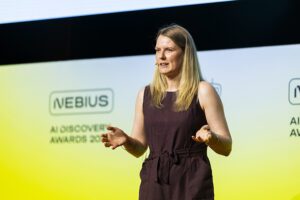
During the evening awards ceremony, event, artificial intelligence demonstrated that it is rapidly reshaping biomedical research. However, practitioners agree that AI’s success depends on more than advanced algorithms. [Nebius]
During the evening awards ceremony, artificial intelligence demonstrated that it is rapidly reshaping biomedical research. However, practitioners agree that AI’s success depends on more than advanced algorithms. [Nebius]

At a Nebius-hosted morning discussion before the awards dinner, several researchers highlighted the importance of powerful computing infrastructure, high-quality biological data, and laboratory validation.

Examples included AI models that predict osteoarthritis years before symptoms and an Alzheimer’s platform, which achieved 97% diagnostic accuracy when paired with protein biomarkers. A Stanford Medicine scientist described CRISPR-GPT, an AI assistant that helps design and troubleshoot gene editing.

The investigators also spotlighted AI-powered lab automation, multimodal datasets, and AlphaFold’s dramatic acceleration of protein structure prediction. Across every application, participants emphasized that collaboration among academia, healthcare, industry, and governments will be essential to advance preventive, personalized medicine and to translate AI discoveries into clinical practice.

Ilya Burkov, PhD, who has a background in clinical medicine, is now global head of healthcare and life science at Nebius. Burkov began his research career focusing on osteoarthritis, osteoporosis, hip and knee replacements, and trying to figure out how such diseases develop and progress.

“My goal was to work backward from the end stage of disease and determine whether we could predict who was at risk years before serious joint damage occurred,”  he explained. “If we could identify those patients early enough, perhaps we could delay disease progression.”

Machine learning

Speaking with colleagues in a hospital, he was asked: “Have you looked at it from any machine learning perspective?” Burkov had no formal background in artificial intelligence, but he was intrigued by the idea of using emerging AI models and advanced algorithms to analyze long-term medical imaging data.

Ilya Burkov, PhD
Ilya Burkov, PhD [Nebius]

The concept was simple but powerful: if AI could identify patterns shared by patients who later developed osteoarthritis or osteoporosis, it might be able to detect subtle biomarkers long before the disease became clinically apparent.

“That idea became the focus of my PhD research. AI models were not a thing ten years ago when I was in the hospital. There were transformer models and algorithmic-based approaches.


“I developed techniques capable of predicting the early onset of osteoarthritis and osteoporosis with an accuracy of roughly 80% to 90%,” he pointed out. “The models identified imaging features that consistently appeared years before patients required joint replacement surgery.

“This made it possible to examine scans from otherwise healthy individuals and estimate their future risk. In some cases, we could tell patients that, without changes to certain lifestyle factors, they had a high probability of requiring a hip replacement within the next 10 to 15 years.”

For Burkov, that was transformative. AI made it possible to move beyond treating individual patients and instead create tools that could benefit entire healthcare systems. Rather than applying clinical expertise one patient at a time, scalable technologies could be created capable of helping clinicians identify high-risk patients earlier and intervening before irreversible damage occurred.

That realization ultimately convinced him to transition from clinical medicine into industry, where he saw the opportunity to build technologies that could have a much broader impact. Whether it’s a small academic lab with only a handful of researchers or a global pharmaceutical company operating at massive scale, every organization faces different computational challenges.

“At Nebius, our role is to provide the computing infrastructure and technology that enables researchers to train increasingly sophisticated AI models and accelerate scientific discovery to advance biomedical research and improve patient care,” he said.

Alzheimer’s disease

Artificial intelligence is rapidly reshaping drug discovery, but many researchers believe the greatest challenge is not designing drugs—it’s knowing what biological targets to pursue.

Prima Mente, a previous AI Discovery Award winner, is tackling that problem by building foundation AI models designed to uncover the molecular mechanisms behind Alzheimer’s disease and other neurodegenerative disorders. By combining blood-based biomarkers, multimodal biological data, and transformer-based AI, the London startup hopes to identify the molecular drivers of neurodegenerative disease—and ultimately accelerate the development of new therapies.

“If we can diagnose disease earlier, better stratify patients, and understand what’s actually driving Alzheimer’s, we can help create better treatments,” said co-founder Hannah Madan, PhD.

Based in London’s King’s Cross innovation district, Prima Mente has grown to approximately 35 employees across London, San Francisco, and the United Arab Emirates. Madan, whose academic background includes a master’s degree in pharmacology and a PhD investigating the relationship between bowel cancer and diabetes, has spent most of her career building biotechnology startups. Prima Mente is the fifth company she has helped launch.

The company’s mission addresses one of healthcare’s most pressing challenges. Dementia is the leading cause of death in the U.K. and the sixth highest in the U.S. Alzheimer’s disease remains the most common form of dementia worldwide.

Looking beyond traditional biomarkers

Prima Mente’s scientific strategy draws inspiration from advances in cancer diagnostics, particularly liquid biopsy technologies that detect circulating tumor DNA in blood samples. The company wondered whether a similar approach could work for neurodegenerative disease.

“When we started three years ago, many people thought we were a little crazy,” noted Madan. “The prevailing view was that very little DNA from dying brain cells entered the bloodstream.”

Hannah Madan, PhD
Hannah Madan, PhD [Nebius]

The team has since demonstrated that cell-free DNA originating from neurons, microglia, and astrocytes can be detected in blood. More importantly, those DNA fragments retain epigenetic information that may reveal the biological state of brain cells before they died.

Rather than focusing solely on DNA sequences, Prima Mente analyzes methylation patterns carried on cell-free DNA. Because methylation reflects how genes are regulated within specific cell types, these signals can provide insight into disease progression and cellular dysfunction.

“When cells die, they release fragmented DNA into the bloodstream,” Madan explained. “Those fragments preserve methylation signatures that tell us what state those brain cells were in.”

The biological strategy is paired with an equally ambitious computational one. Prima Mente believes that transformer architectures—the same AI technology underlying large language models such as ChatGPT—can learn the language of biology.

“If ChatGPT can understand human language, our hypothesis is that similar models can understand biological languages,” noted Madan.

Instead of converting sequencing data into simplified numerical counts, the company trains models directly on raw biological sequences, including DNA, methylation signals, RNA transcripts, and proteomic data. By preserving more of the underlying biological information, Prima Mente believes its models could uncover relationships that conventional bioinformatics pipelines often overlook.

The company’s first foundation model, known as Pleiades 1, demonstrated the potential of that approach. Initially trained to identify Alzheimer’s disease from blood-derived molecular data, the model successfully diagnosed a subset of patients. After protein biomarkers were incorporated, diagnostic accuracy increased to approximately 97% within the study dataset—exceeding the performance of current clinical standards, according to Madan.

AI tokens are the fundamental units of data processed by AI models during training and inference. They represent smaller components of text, audio, images, or other modalities, enabling models to understand, predict, and generate outputs effectively. Pleiades 1 was trained on 1.9 trillion tokens. Its successor, Pleiades 2, is being trained on 80 trillion tokens spanning five biological data modalities, with the long-term goal of building a 100-billion-parameter foundation model.

Prima Mente partnered with AI infrastructure provider Nebius, which supplied a dedicated 32-node computing cluster powered by NVIDIA GPUs. The additional computing capacity enabled the company to scale from a 1-billion-parameter model to a 10-billion-parameter model within weeks while increasing training throughput from roughly 8,000 tokens per second per device to more than 1.1 million tokens per second across a 16-node cluster.

Beyond model development, Prima Mente is collaborating with the U.K.’s National Health Service (NHS) through the Sandbox Study, which collects blood samples from patients with suspected neurological disease. The real-world data help researchers develop AI models aimed at detecting Alzheimer’s earlier, potentially enabling treatment before irreversible brain damage occurs.

Dementia Alzheimer's Patient
Dementia is the leading cause of death in the U.K. and the sixth highest in the U.S. Alzheimer’s disease remains the most common form of dementia worldwide. [Cecille Arcurs/Getty Images]

Unlike AI companies that rely primarily on public datasets, Madan said Prima Mente is generating much of its own training data. The company collaborates with 20 NHS memory clinics throughout the U.K., collecting blood samples, speech recordings, clinical notes, and imaging data from patients at the earliest stages of cognitive decline. It also participates in the U.K.’s Sovereign AI initiative.

Lab validation is integrated into the company’s development process. Candidate discoveries generated by AI models are tested using stem cell systems, brain tissue, and additional blood-based experiments, creating a continuous feedback loop between computational prediction and experimental validation.

That combination of proprietary data generation, lab experimentation, and AI model development represents what the company views as a significant competitive advantage.

While AI has attracted enormous attention for accelerating drug discovery, Madan argues that identifying the right biological target remains the industry’s greatest bottleneck. She compares today’s AI revolution to the impact AlphaFold had on protein structure prediction. As computational tools become increasingly capable, designing drug candidates may become faster, cheaper, and more routine.

“But if you don’t know what biology actually matters,” she said, “there’s little value in having better tools to build drugs.”

For Prima Mente, Madan says the opportunity lies upstream of drug development—discovering the cellular pathways, biomarkers, and molecular mechanisms that should become tomorrow’s therapeutic targets.

That strategy recently received external validation when the company won the AI Insights Prize for Alzheimer’s from the Gates Foundation, receiving $1 million to expand research into microglial biology. The funding will support AI models designed to identify gene perturbations in specific brain cell types that could serve as the basis for future Alzheimer’s therapies.

As foundation models continue to expand beyond language into biology, Madan is betting that the next major AI breakthrough in medicine will not simply generate better drugs—it will reveal entirely new biology that makes those drugs possible.

CRISPR-GPT

CRISPR-GPT is a large language model developed by Stanford Medicine to automate key steps in CRISPR gene-editing research. Acting as an AI agent, it interprets scientific literature, designs guide RNAs, suggests experimental parameters, and integrates with lab automation systems to execute and refine experiments. By reducing manual planning and accelerating iterative testing, the system enables researchers to complete complex gene-editing workflows more efficiently and consistently, noted Stanford researchers.

CRISPR-GPT is also credited with lowering the barrier for scientists with limited CRISPR expertise, improving accessibility. The platform represents an emerging class of AI tools that can “reason” through complex scientific tasks, recommend next steps, and accelerate discovery. Potential applications include developing gene therapies, improving cancer research, engineering cell therapies, and expanding access to genome-editing technologies.

The goal, according to Le Cong, PhD, assistant professor of pathology and genetics is to help scientists produce life-saving drugs faster. “The hope is that CRISPR-GPT will help us develop new drugs in months instead of years,” he said.

Le Cong, PhD
Le Cong, PhD [Stanford Medicine]

Cong and team developed CRISPR-GPT using Nebius AI Cloud as its core infrastructure. The group leveraged Nebius’ GPU clusters to train their specialized CRISPR-Llama3 model, rapidly iterate on architectures, and scale from prototyping to full model training.

CHAT-GPT could also expand the pool of scientists who can effectively use gene editing technology—no experience required, pointed out Cong. “Trial and error is often the central theme of training in science, but what if it could just be trial and done?” he added. Cong is the senior author of a study “CRISPR-GPT for agentic automation of gene-editing experiments,” published July 2025, in Nature Biomedical Engineering.

AI Discovery Awards

At the AI Discovery Awards dinner in the evening, the sponsors announced that the 2026 program added medical devices and medical imaging to the existing biopharma, genomics, and digital health tracks to reflect the growing role of AI in connected medical equipment and diagnostic imaging.

“Our winners—and indeed all of the 647 submissions we reviewed—reflect how rapidly AI is changing the pace of healthcare research,” said Ilya Burkov during a short presentation. “Across all categories, startups are compressing timelines that once took years into months or even weeks, and bringing capabilities to clinical and laboratory settings that simply did not exist before.

Margaret Hua, founding chief of staff at Phylo, accepts $100,000 in GPU credits for first prize in the biopharma category. The company is building AI research assistants that can independently help biomedical scientists think through problems, design experiments, analyze data, and suggest what to do next, with the aim of speeding up scientific and biomedical discovery. [Nebius]
Margaret Hua, founding chief of staff at Phylo, accepts $100,000 in GPU cloud credits for first prize in the biopharma category. The company is building AI research assistants that can independently help biomedical scientists think through problems, design experiments, analyze data, and suggest what to do next, with the aim of speeding up scientific and biomedical discovery. [Nebius]

“The AI Discovery Awards exist to accelerate that momentum, and to connect the most promising teams with the compute resources, investor networks, and mentorship they need to move from promising research to bringing products to market.”

Alongside the awards program, Nebius previewed its Nebius Scientific AI and Healthcare Platform, which is an AI infrastructure built to meet the specialist needs of healthcare and life sciences organizations, explained a Nebius official.

The 2026 AI Discovery Awards were open to companies from pre-seed through to Series D that put AI and machine learning at the core of their product. Category winners were selected from 647 applications from around the world by an independent panel of 28 judges representing leading pharmaceutical companies, academic institutions, and venture capital firms. Submissions were evaluated based on the use of AI within the product, use of compute, technical innovation, functionality and advantages, performance and efficiency, global impact, market potential, and business sustainability.

A full list of shortlisted companies, as well as qualification criteria and a jury list, can be found on Nebius’s website.

The post Honoring the Innovators Driving AI’s Next Era in Life Sciences and Healthcare appeared first on GEN – Genetic Engineering and Biotechnology News.

Novel Epigenetic Therapy Targets Treatment-Resistant and TP53-Mutant AML

The results of a preclinical study by researchers at the University of Texas MD Anderson Cancer Center have found that an investigational epigenetic therapy called NTX-301 remained effective in treatment-resistant acute myeloid leukemia (AML) by activating the Hippo pathway, a tumor-suppressing pathway linked to cancer growth and drug resistance.

In preclinical models, the hypomethylating agent (HMA) NTX-301 was more effective than standard hypomethylating agent therapy and retained anti-leukemia activity in treatment-resistant and TP53-mutant AML. The team also found that the therapy activated the Hippo pathway through targeted epigenetic changes, revealing a previously unrecognized mechanism that may contribute to its anti-leukemia effects.

“Leukemia cells are remarkably adaptable and often find new pathways to survive after treatment,” said Michael Andreeff, MD, PhD, professor of medicine at the University of Texas MD Anderson Cancer Center and research co-lead. “These findings suggest NTX-301 may disrupt several of those survival mechanisms simultaneously while reactivating pathways that normally restrain cell growth. That dual effect could help explain why NTX-301 remained active in some of the most therapy-resistant forms of AML.”

The findings suggest a potential new strategy for patients whose disease relapses after frontline therapy, including those with TP53 mutations, one of the highest-risk forms of AML. Andreeff, together with leukemia professor and study co-lead Bing Z. Carter, PhD, and colleagues, reported on their studies in Clinical Cancer Research, in a paper titled “The novel hypomethylating agent NTX-301 reprograms epigenetic and Hippo signaling pathways and exhibits preclinical activity in venetoclax-resistant and TP53-mutant AML.”

First-generation hypomethylating agents, including 5-azacytidine (5-AZA) and decitabine (DAC), are used as standard clinical care for patients with AML and myeloid dysplastic syndromes (MDS), the authors wrote. Combining HMAs with the BCL-2 inhibitor venetoclax has further improved outcomes for patients.

“Hypomethylating agent (HMA) and the BCL-2 inhibitor venetoclax (VEN) combinations have evolved into frontline therapies for patients with acute myeloid leukemia (AML), yielding high response rates,” they stated. However, while such combination therapy works well initially, resistance and relapse remain common.

The challenge is particularly significant in AML with mutations in the TP53 gene, which normally helps cells respond to damage and prevent uncontrolled growth. When that gene is mutated, leukemia cells can become resistant to therapy and more difficult to eliminate. “… most patients ultimately relapse, particularly those with TP53 mutations,” the researchers continued.

Efforts have been made to develop improved and more effective HMAs, they noted, and NTX-301 is such a next-generation HMA. But as they pointed out, “… previous reports of NTX-301 preclinical studies in leukemia were conducted primarily in cell lines and xenograft models … its activities in therapy-resistant settings have not been investigated.” And while a Phase I study (NCT04167917) of the oral agent NTX-301in patients with AML and MDS has been completed, the team noted in their paper that the study has not yet been reported.

For their newly reported preclinical study, the researchers evaluated NTX-301 across multiple preclinical models of treatment-resistant AML, including patient-derived xenograft (PDX) models of AML with acquired resistance. Their results showed that NTX-301 therapy consistently reduced leukemia cell survival more effectively than azacitidine (AZA), a commonly used hypomethylating agent.

Importantly, NTX-301 remained active in leukemia cells that had already developed resistance to both hypomethylating therapy and venetoclax, and demonstrated anti-leukemia activity in TP53-mutant AML models. When combined with venetoclax in resistant leukemia samples, NTX-301 produced stronger anti-leukemia effects than either treatment alone. The combination was effective not only against leukemia blasts but also against leukemia stem and progenitor cells, which are believed to contribute to disease persistence and relapse.

In summary, they wrote, “Therapeutically, NTX-301 is more potent than 5-AZA in AML cells with various genetic backgrounds, is active in AML cells with acquired resistance to HMA or VEN, overexpressing VEN-resistant factors MCL-1 or BCL-2A1, and in isogenic AML cells with TP53 deletions/mutations in vitro and in vivo in xenograft models, exhibits activities against AML blasts and stem/progenitor cells from patients resistant to/relapsed from VEN-based therapies and with TP53 mutations in vitro and in vivo VEN/DAC-resistant PDX models, and enhances VEN activity.”

To understand why NTX-301 appeared more effective than existing drugs, researchers analyzed changes in DNA methylation, a process that can switch genes on or off without altering the underlying genetic code. Unlike current hypomethylating therapies, which broadly affect DNA methylation, NTX-301 focused on a more selective set of genes and pathways, including the Hippo pathway, which functions as a natural cell growth regulator.

NTX-301 increased activity of key Hippo pathway genes while reducing activity of YAP, a protein frequently linked to cancer cell survival, treatment resistance, and stemness. These findings suggest Hippo pathway reactivation may be an important reason the therapy remained effective in resistant leukemia models and could represent a new strategy for overcoming treatment resistance in AML. “Collectively, our data suggest that NTX-301 exhibits more potent anti-leukemia activities compared to current HMAs and synergizes with VEN in VEN-resistant and TP53-mutant AML and AML stem/progenitor cells,” the team concluded.

Additional studies are needed to determine whether these results translate to patients and to identify which populations may benefit most. The findings suggest that patients with relapsed AML, venetoclax-resistant disease, and TP53 mutations may be important groups for future clinical evaluation. “Taken together, the numerous NTX-301 targets identified here, its novel mechanism of action, and its superior activity against VEN-resistant and TP53-mutant AML compared to 5-AZA, warrant the future clinical development,” the investigators noted. “Given the strong preclinical data in TP53-mutant AML and the unmet clinical need, this should be a primary target group in the next clinical trial.”

Carter said, “An encouraging aspect of this study is that it identified both a potential therapeutic opportunity and a biological explanation for why it may be effective. The results provide a rationale for continued clinical development and suggest that targeting Hippo signaling may help address treatment resistance in AML.”

The post Novel Epigenetic Therapy Targets Treatment-Resistant and TP53-Mutant AML appeared first on GEN – Genetic Engineering and Biotechnology News.

The Download: Claude’s inner workings, and the future of world models

This is today’s edition of The Download, our weekday newsletter that provides a daily dose of what’s going on in the world of technology.

What Anthropic’s latest AI discovery does—and doesn’t—show

—James O’Donnell

When Anthropic announced last week that it had found a new window into its models’ “internal thoughts” as they reason through answers, there was one colleague I had to talk to: senior editor Will Douglas Heaven.

Aside from having a PhD in computer science, Will has spent a lot of time digging into what we can say about how AI models work. I spoke with him about what we should take from Anthropic’s new (and typically quirky) research. Here’s what he had to say.

This article is from The Algorithm, our weekly AI newsletter. Sign up to receive it in your inbox every Monday.

How will AI understand the real world?

Today’s AI systems can generate text, images, and code with impressive skill, but they still struggle with the complexities of the physical world. To bridge this gap, many researchers believe you need something called a world model.

At a LinkedIn Live event today, MIT Technology Review will investigate how this technology could transform robotics and help unlock a new generation of intelligent machines. Join Will Douglas Heaven, our senior editor for AI, and Sam Sinha, founding AI researcher and head of world models at 1X Technologies, for the discussion. 

Register here to attend the free session at 9:30 PDT, 12:30 PM EDT, and 5:30 PM BST. 

The must-reads

I’ve combed the internet to find you today’s most fun/important/scary/fascinating stories about technology.

1 New York has become the first state to enact a data center moratorium
Its governor banned large data-center construction for up to a year. (WSJ $)
+ A bill passed by state lawmakers could go even further. (Verge)
+ Everyone hates data centers. (MIT Technology Review)

2 Smartphone shipments have hit a 13-year low due to the memory crunch
They fell 11% in the second quarter of 2026. (Reuters $)
+ The memory chip ‌shortage has increased prices. (Gizmodo)
+ And threatens the promise of Moore’s Law. (MIT Technology Review)

3 Sugar molecules have been found in interstellar space for the first time
It hints that life on Earth may have been seeded from space. (Nature
+ And boosts the odds of living organisms existing elsewhere. (New Scientist $)
+ Researchers used radio telescopes and data to spot the molecules. (NYT $)

4 Nvidia has halved its Asia buyer list to stop AI chips reaching China
It introduced a “white list” of companies that passed tougher checks. (FT $)
+ It moved amid tighter chip controls from the ‌Trump ⁠administration. (Reuters $)

5 Russian state hackers are targeting routers to spy and steal, the US warns
The government has warned users to secure their devices. (Ars Technica)
+ Now is a good time for doing crime. (MIT Technology Review)

6 Trump moved his crypto gains into stocks while urging people to buy more
His crypto projects earned him a fortune—but steep losses for retail buyers. (Reuters $)
+ He’s called for Congress to pass a new crypto bill to honor Lindsey Graham. (CNBC)

7 A new cell therapy has saved four children with terminal brain cancer
They were treated with an experimental immunotherapy. (New Scientist $)
+ Access for older children will also be limited. (Bloomberg $)

8 The LAPD has halted use of Flock surveillance cameras due to privacy issues
Flock’s automated license plate readers have caused concerns. (LA Times $)
+ It’s also been criticized for sharing data with state and federal officials. (Engadget

9 The US has approved launching a space mirror that reflects sunlight onto Earth
As part of a controversial plan to power solar panels round the clock. (Wired $)
+ But geoengineering faces many practical challenges. (MIT Technology Review)

10 Anthropic says Claude’s values vary depending on your language
It’s most cautious in English and most deferential in Arabic. (Gizmodo

Quote of the day

“The age when humans are the highest life form on earth will end. For better ​or for worse, it will happen and it can’t be stopped.” 

—SoftBank CEO Masayoshi Son predicts that AI will overtake human intelligence by 2040 in a speech at his company’s annual corporate conference in Tokyo, Reuters reports.

One More Thing

Inside the strange limbo facing millions of IVF embryos

Millions of embryos created through IVF sit frozen in time, stored in cryopreservation tanks around the world. Many are left in a peculiar limbo, with no clear path forward.

UK residents can discard them, make them available to other prospective parents, or donate them for research. People in the US can also opt for “adoption,” “placing” their embryos with families they get to choose. In Germany, people aren’t typically allowed to freeze embryos at all. And in Italy, unused embryos must remain frozen, ostensibly forever. 

While these embryos remain in suspended animation, patients, clinicians, embryologists, and legislators must grapple with the essential question of what to do with them. What do these embryos mean to us? Who should be responsible for them? 

Dive into the ethical and legal challenges surrounding frozen IVF embryos.

—Jessica Hamzelou

We can still have nice things

A place for comfort, fun, and distraction to brighten up your day. (Got any ideas? Drop me a line.)

+ This website turns live LA Metro data into music.
+ British grammar is enlivening the American World Cup.
+ Comedy icon Mel Brooks recently turned 100. Here’s a look back at his legendary career.
+ Take a trip through modern music with this cinematic set from Thomas Bangalter, one-half of French house music duo Daft Punk.

FDA authorized Zyn nicotine pouches without knowing what they were made of, says former agency scientist

Four years into the U.S. Food and Drug Administration’s review of Zyn nicotine pouches, and not long before the agency approved them for sale, an FDA toxicologist ran some informal tests in her kitchen that led her to question whether the agency truly understood the addictive product it was about to green-light.

Christy Leppanen worked for the FDA’s Center for Tobacco Products, where she led a project examining the potential for microplastics exposure. A scientist who had worked on an environmental assessment of Zyn had repeatedly told her that the nicotine pouches melt in the mouth. But during a public health conference in late 2024, Leppanen said, she talked to an academic who reinforced her understanding that they don’t. 

Read the rest…

STAT+: 10 charts that explain America’s hidden alcohol epidemic

The Deadliest Drug,” a multipart series by STAT, spotlights an epidemic hidden in plain sight: excessive alcohol use. Alcohol kills more Americans each year than all illicit drugs combined, and yet health officials, industry leaders, and the public rarely focus on it. STAT reporters Isabella Cueto and Lev Facher examined the epidemic’s human cost and the complex causes — from personal to political — of the most harmful substance use crisis in the U.S. STAT data editor J. Emory Parker amplified many of the findings in data-rich charts. 

These charts capture the toll, emerging risks, shifting usage, and economic stakes of America’s relationship to alcohol. 

Drinking-related adverse events, including emergency room visits, have soared in recent decades. American emergency rooms recorded roughly 5.4 million visits due to alcohol in 2022, and in many states, alcohol-related hospitalizations dwarf those stemming from other substances, like opioids. 

Continue to STAT+ to read the full story…

PsiQuantum has a plan to make a massive quantum computer out of light

The machine that could change the world will be housed in a room that looks like a data center crossed with an ice cream factory. Inside will be some 100 stainless-steel cabinets, each about six feet tall and connected to a supply of liquid helium that keeps them only a few degrees above absolute zero. Inside those cabinets will be hundreds of chips, and on those, thousands of particles of light flying through a maze of optical switches and beam splitters. Each photon must be accounted for, because precisely measuring where it ends up will help answer questions that current computers might take millions of years to solve.

This computer, as described, does not exist. It’s the brainchild of a company called PsiQuantum, founded in 2016 by four physicists from UK universities. In a crowded field of deep-pocketed competitors with similarly fantastical visions, the company aims to be first to fulfill its promise.

In the years since the physicist Richard Feynman first envisioned them in 1981, quantum computers have promised to speed up everything from medical research to AI by harnessing the qualities of quantum particles. Unlike normal computer bits, which can be either a 1 or 0, quantum bits can exist in multiple states at once. And combining enough of those quantum bits together could produce a computer capable of tasks well beyond the reach of today’s conventional machines. But even today’s best quantum prototypes are too small and error-prone to do anything useful.

That makes PsiQuantum’s promises for what its computers will ultimately do all the more bold. Consider the company’s hopes for predicting the effects of cytochrome P450 enzymes, which often break down drugs in the body. If pharma companies knew more precisely how they would work on a particular molecule, they could design more effective medications faster. Estimating this for a specific drug can take over 10 years with today’s methods, says Philipp Ernst, vice president of quantum applications for PsiQuantum, but “we aim to get it down to four minutes.”

construction worker installing the Mk2.1 cabinet
The company’s chips will be contained in large cabinets. A quantum computer powerful enough to be commercially useful is expected to require roughly 100 of these cabinets connected together.
COURTESY OF PSIQUANTUM

In a field full of such claims, PsiQuantum has attracted unusual investment and scrutiny for two reasons: It is one of the few companies aiming directly at building a large and useful machine, and it is already working with a major chip manufacturer to build its systems using existing semiconductor fabs. Its vision has attracted momentum: Last year, PsiQuantum raised $1 billion in funding and broke ground in Chicago on a site it’s building in partnership with local governments. It also has a second site in the works in Australia, which it promises will be operational—meaning hardware-ready—in 2027. And it’s one of just two companies (along with Microsoft) to reach the third stage of an intensive government evaluation program to see which quantum companies might succeed.

Evaluating whether PsiQuantum will do what it says is harder than, say, judging a drugmaker by its clinical trial results: Advances in quantum computing are incremental, opaque, and tough to verify from the outside. But the company is now approaching its prove-it moment, when years of closed-door work and hundreds of millions in investment will either culminate in a useful quantum computer or fall short. We could start to know which as soon as next year.

A new kind of machine

Terry Rudolph, one of PsiQuantum’s four founders, is soft-spoken and shaggy-haired. He was born in Malawi and learned only after earning his first physics degree that he is a grandson of the famed physicist Erwin Schrödinger. He later self-published a 150-page book to explain quantum computing to teenagers (my PR contact gave me a signed copy with a wink that said “We never expect anyone to actually read this,” but I can report that it is a funny and helpful book). 

Around 2014, Rudolph and his cofounders became increasingly convinced that the quantum breakthroughs they were finding to be possible in theory might also be possible in a real machine. They eventually left their academic positions and divided the tasks before them: Rudolph worked on theory, Mark Thompson on engineering, Pete Shadbolt on scaling the technology up, and Jeremy O’Brien on articulating the vision and finding investors (O’Brien served as CEO until February; he’s been replaced by Victor Peng, a veteran of the semiconductor industry). 

To understand why the quantum computer the company is building would be a big deal, consider how imprecise much of modern science remains. We cannot reliably predict, for example, which lithium-ion battery will catch fire or how quickly a critical aircraft component will corrode.

This isn’t just because these systems are complex, though they are. It’s that, at their core, they are governed by quantum mechanics. Subatomic particles don’t have well-defined properties—this location and that velocity—but instead occupy quantum states spread across many possibilities. And that in turn influences a range of atomic and molecular behavior. Schrödinger (Rudolph’s grandfather, remember) showed how to describe this haziness mathematically a century ago this year, but precisely carrying out the calculations on real-world systems quickly becomes unfeasible even for the best computers. Scientists cope with this gap using approximations, imperfect simulations, or experiments on animals.

""

WINNI WINTERMEYER

WINNI WINTERMEYER

PsiQuantum co-founder and chief scientific officer Pete Shadbolt (left), and machinery the company has built to manufacture its own barium titanate, a material with the perfect qualities for routing light particles (right).

Feynman, David Deutsch, and other physicists in the 1980s wondered if we could do better. Maybe such complexity could instead be modeled using a new kind of machine. Rather than using transistors that are only ever on or off, this one would use particles held in quantum states, manipulate them to perform calculations, and then measure them at the end for an answer. Using quantum systems to simulate quantum systems would for the first time allow a simulation of physics and chemistry that directly reflected reality. It would be an invaluable tool for designing new drugs, materials, or really anything affected by quantum mechanics. Revolutionary, in other words.

Humankind’s leaps in understanding how nature works have often resulted in the invention of powerful new tools, Rudolph told me. “I don’t think it’s a coincidence that the Industrial Revolution coincided with our ability to calculate and simulate the laws of Newtonian mechanics, the laws of thermodynamics,…the laws of classical electromagnetism,” he says. “Whenever we have more power to calculate and simulate and understand things, we build incredible machines that come from it.” He sees something similar coming with quantum computers.  

Chasing photons

One mystery has always been which quantum thing—ions, atoms, or something entirely new engineered with quantum properties—could be made stable and controllable enough to use as a qubit, the basic unit in the quantum computing world. Quantum systems are delicate, and observing any particular particle causes it to collapse into one state rather than a superposition of multiple states. If this happens during the computation rather than at the end, it produces an error that must be corrected for. Too many of these means the computer fails to produce a useful answer. 

Just as engineers in the early days of aviation weren’t sure whether airplane wings would be fixed or flap like a bird’s, we’re not yet sure which of these quantum things will work best. Google and IBM are betting on superconducting qubits, superconducting circuits made of aluminum or other metals. Intel is using electrons. PsiQuantum is using photons, the particles that make up light.

“Photons have lots of nice things going for them,” Rudolph says. They can maintain quantum states for a long time; indeed, the photons in the universe’s cosmic microwave background may have done so for billions of years. But photons also move fast and scatter easily. More importantly, two photons are more likely to pass through one other than interact. That makes them a challenging candidate for quantum computation, in which qubits need ways to influence one another. 

For a while, this last flaw seemed to doom the idea of quantum computing with light. But in 2001, researchers from the Los Alamos National Laboratory and the University of Queensland found a loophole. They discovered they could essentially fake interactions between photons by sending the light particles through a network of beam splitters and detectors. Their paper changed everything. PsiQuantum was created to make the theory a reality.

Size was the first problem; previous plans would have required a computer as large as California. Mercedes Gimeno-Segovia, who was a PhD student of Rudolph’s in the early 2010s (after almost becoming a professional violinist instead), thought of a way for the machine to be smaller. 

The basic process since then has been this: First create photons with lasers and then “entangle” them, exploiting a quantum phenomenon in which the particles no longer have individual states but instead share one. Next, route them through a maze of gates that perform computations, and finally read out details of their quantum state at the end, all while tracking and correcting for the errors that occur. Succeeding at each of these steps millions of times is not so much an engineering hurdle as a brick wall. And building the supply chain—like manufacturing new materials with the qualities to route individual photons around—is arduous.

A sizable chunk of PsiQuantum’s funding is being spent on custom cooling machinery that uses tanks of liquid helium to cool the company’s chips. Shown here is part of the PsiQuantum’s cooling system at a facility in Milpitas, California.
COURTESY OF PSIQUANTUM

To get a sense of it all, last year I joined Shadbolt at the SLAC National Accelerator Laboratory, in Menlo Park, California. The center has helped produce several Nobel Prizes and played a role in the 1968 discovery of quarks, fundamental building blocks of matter that make up protons and neutrons. But PsiQuantum set up shop there essentially to siphon liquid helium from SLAC’s giant cryoplant. This is what the company uses to cool its computing cabinets down to deep-space temperatures.

Right now the cabinets operate at 2 K, or -456 °F, but the goal is to be able to run them slightly warmer—at a balmy -452 °F. Most quantum approaches require the whole machine to be cooled to superconducting temperatures, so that much of the expense in running it will actually be spent on refrigeration. But photonic computers require only one piece to be this cold—the detectors that measure single photons at the end of the computation. And the required temperature can be a bit higher. (PsiQuantum said in May that it will spend some of the $100 million award in CHIPS Act funding it’s slated to get on these detectors). 

The siphoning setup was a temporary solution; PsiQuantum now has its own cooling system at its testing facility in Milpitas, California, and is setting up a larger one at its production site in Australia next year. These helium systems represent some of the biggest capital expenditures for any quantum company and will consume a significant chunk of PsiQuantum’s $1 billion funding round.

In the afternoon we drove to a lab in San Jose, where I donned a cleanroom suit—a head-to-toe covering that keeps dust at bay—to watch the manufacture of a blueish crystal called barium titanate. 

It’s prized by PsiQuantum because it quickly and reliably routes light particles with very little electrical input, keeping the precious photons undisturbed as they move through the circuit. But for all barium titanate’s theoretical value to the company, its structure makes it a pain to manufacture, and the material wasn’t available at scale when PsiQuantum got its start. The company, in what Rudolph told me was an agonizing decision, opted to make it in-house, requiring a massive investment. I saw a technician—operating at what looked like a giant pressure cooker—adding the base elements to several hoppers; then I watched through a porthole as the elements got heated, vaporized, and finally crystallized into a thin layer on a wafer disc. At that time each disc took about 12 hours to make; the company now says several are produced each day. The discs then get shipped to the chipmaker GlobalFoundries in Malta, New York, where PsiQuantum’s chips are made.

WINNI WINTERMEYER

WINNI WINTERMEYER

The company has invested heavily in making its own barium titanate, a material whose delicate crystalline structure is tedious to manufacture.

PsiQuantum’s bet is that this entire supply chain, byzantine as it might sound, will make the company more efficient than its competitors. That’s because, if you squint, it looks like a souped-up and high-precision version of the existing supply chain for silicon photonic chips, another type of technology that transmits information with light—one that’s already used in data centers. If PsiQuantum produces its chips at scale, it can take advantage of tools and infrastructure that already exist.

But it’s not a given that one working chip can easily be wired up to thousands more. That’s why the company is testing in phases: Its Milpitas site has connected three cabinets together, with 250 chips in each, but the next step is to scale the systems up and see whether the company’s techniques for correcting errors can keep up. Once the cooling system arrives at the Australian site late next year, the company says, it aims to connect about 100 cabinets together. Then PsiQuantum will work up to running the world-changing algorithms it has promised.

The timeline for this, it’s worth noting, is up for debate. News articles have said that 2027 is the year that PsiQuantum aims to have its first full-scale quantum computer come online at its Australian site, but the company insists the deadline has been misread, and that it only intends for its facility to be “operational” by the end of next year. That means cooling systems in place and ready for hardware to be installed, but no promises about what size computer will be ready. In an industry where timelines are perpetually in flux yet central to how companies are judged, that distinction isn’t trivial.

Into the unknown

The outsider with perhaps the best guess of whether PsiQuantum will succeed is the Pentagon. The US Defense Advanced Research Projects Agency—the Pentagon’s research and development arm—has been running an initiative to determine which of the boastful quantum companies might actually deliver. In the last year and a half, the heads of the program have been sounding more confident. Joe Altepeter, who ran the program until last year and proudly described himself as a “quantum skeptic,” told me in March 2025: “I am more optimistic now than I have been at any point in the past 10 years.” And in a statement earlier this year, his successor, Micah Stoutimore, said “it now seems likely that someone will build a utility-scale quantum computer by 2033,” referring to a machine that generates more value from its calculations than it costs to build and operate. 

The program has been scrutinizing PsiQuantum’s systems for over a year and putting them through the third stage of a benchmarking initiative meant to determine whether the technology will actually work. But to the rest of the industry, PsiQuantum is sort of a black box.

PsiQuantum has broken ground at the Illinois Quantum and Microelectronics Park outside Chicago, pictured here, and on another site in Moreton Bay, Australia. It aims to build large-scale quantum computers at each site.
COURTESY OF PSIQUANTUM

“It is very hard for an outsider to evaluate,” says Scott Aaronson, a theoretical computer scientist at the University of Texas at Austin who runs a popular blog that often covers the industry. Other companies, like Google and Quantinuum, have regularly published results over the years demonstrating chips and systems with incremental improvement, publicly laying the engineering groundwork needed to eventually build large machines.

PsiQuantum has instead focused squarely on a commercial goal—a computer with one million qubits, which is the scale that researchers expect to unlock research currently not possible on normal computers. PsiQuantum often differentiates itself with this industrial-scale goal, but IBM, which debuted a development road map in 2020, has been progressively building bigger and bigger systems. It initially targeted 2028 for a large-scale, error-corrected system, a deadline that now appears to have been pushed out to 2030.

Making it useful

On top of actually building the machine, a major focus for PsiQuantum is getting the rest of the world to develop a plan for how to use it. PsiQuantum has announced partnerships with customers including the defense giant Lockheed Martin, which intends to use it for materials design; the automaker Mercedes, which wants it for battery design; and the aerospace manufacturer Airbus.

That these companies don’t have a computer to experiment with is not a problem, according to Ernst at PsiQuantum. “There’s a PlayStation 6 probably coming up from Sony next year or the year after, and people are programming those games right now,” he says. “This is, in principle, very similar.” (It’s a glib analogy but not an entirely empty one; the quantum algorithms for solving a research problem can be cracked even if there is not yet hardware to run them on.) 

The idea is that experts in quantum information from both PsiQuantum and its customers will be able to translate design problems—say, the requirements for a battery in a Mercedes electric vehicle—into algorithms the computer could solve. The company offers a software package called Construct, which companies can use to design their own algorithms that might one day run on the computer.

The future of quantum computing hinges on these algorithms. Quantum computers get painted as a speedup for everything, but in reality, they’re suited to a subset of problems, and answering a question with this sort of machine requires the question to be formulated with very specific types of algorithms. People spend entire careers working on such algorithms, even if the computers to run them don’t exist yet. At their core, they use the rules of quantum mechanics to manipulate probabilities in ways that ordinary computers can’t. 

The most famous example, and a reason the government is so interested in quantum computers, is Shor’s algorithm. It was developed in 1994 by the theoretical computer scientist Peter Shor and could effectively break many forms of encryption used online, for everything from credit card numbers to military intelligence. The thing keeping the world together, for now, is that nobody has a computer to run the algorithm on (and security experts are already launching new encryption methods that could withstand attacks from a quantum computer). PsiQuantum is researching how long its systems might take to run Shor’s algorithm.

WINNI WINTERMEYER

WINNI WINTERMEYER

PsiQuantum’s chips are manufactured at GlobalFoundries in Malta, New York, and tested at company headquarters in California. Both PsiQuantum and GlobalFoundries have been awarded federal CHIPS Act funding.

The company also published a paper in December in collaboration with Airbus, essentially seeing if a new algorithm developed by the authors could beat a classical computer in modeling fluid dynamics, like the turbulence around an airplane wing. Andrew Childs, an expert in quantum simulation, told me PsiQuantum achieved only a moderate speed increase over what today’s computers can do. “It’s probably unlikely that speedups like this will have a significant practical impact until we have very large-scale quantum computers,” he said in an email. (When I asked Ernst, he agreed the improvement was modest.)

Some of the algorithms PsiQuantum is working on are not expected to be perfected or even used in the first applications of its computer. Instead, its initial tasks might be more along the lines that Feynman envisioned way back in 1981: simulating the smallest particles of our world. 

The company’s most significant research in this realm is in modeling quantum chemistry. Take those pesky P450 enzymes. More precisely understanding how they operate, PsiQuantum says, would allow for faster drug development and testing.

Last year, PsiQuantum published methods for doing these sorts of chemistry calculations on a quantum computer, along with another paper demonstrating an algorithm that can simulate the collision of two molecules and estimate the likelihood of different outcomes femtosecond by femtosecond (there are one quadrillion femtoseconds in a second). It’s a remarkable amount of detail not currently possible with today’s technology, and it would allow drug and materials researchers to simulate new chemical interactions. 

Dominic Berry, who developed some of the core techniques used in the collision paper but isn’t involved in PsiQuantum, says the company made impressive improvements, but to do the simulations scientists are most curious about would require the algorithm to be made even faster and PsiQuantum’s early computer to have fewer errors than currently expected.

Until PsiQuantum’s computers are up and running, the breakthroughs that these research papers tease remain in the realm of theory. It’s a space where Rudolph operates quite comfortably. He told me that Alan Turing created the theory of classical computing with pen and paper, imagining how the 1s and 0s would be represented in the machine, and how with the right approach to logic you could compute almost anything. 

“But there is no way that by hand, with a pen and paper, Turing was ever going to produce—you know—Minecraft and Facebook,” he says. That took more than 70 years of tinkering (during which we fortunately created more useful things than Minecraft and Facebook).

For all the time Rudolph spends dreaming up things quantum computers might do, in other words, people working on those problems are still stuck with pen and paper for now: “Until you have the actual machine in hand, you don’t have the opportunity to really explore its potential.”

GLP-1 Treated Patients with Diabetes Have Raised Risk for Eye Condition

A large study of people with type 2 diabetes suggests that those who started treatment with a glucagon‑like peptide (GLP)‑1 receptor agonist after diagnosis had slightly increased risk of developing a serious eye condition called ischemic optic neuropathy than people with diabetes treated with other medications.

As reported in the Annals of Internal Medicine, the risk for patients given GLP-1 drugs was about twice that of those given a sodium–glucose cotransporter (SGLT)‑2 inhibitor or a dipeptidyl peptidase (DPP)-4 inhibitor although the absolute risk was still low in all groups.

Ischemic optic neuropathy occurs when the optic nerve sustains damage caused by reduced or blocked blood flow, leading to loss of nerve tissue and vision. The main symptom is sudden, usually painless vision loss in one eye, often with missing areas of the visual field that are frequently permanent. It is a rare condition, with 4-10 cases per 100,000 people per year in the U.S., with some factors like age and conditions like type 2 diabetes increasing risk.

In this study, Chintan Dave, PhD, a researcher at Rutgers University, and colleagues included claims data from 161,489 adults aged 18 to 65 years with type 2 diabetes who were newly prescribed a GLP-1 receptor agonist, 122,114 who started a SGLT‑2 inhibitor, and 86,047 who started a DPP‑4 inhibitor.

They excluded anyone who had previously used these drugs or previously had ischemic optic neuropathy. They approximated randomization by balancing more than 80 characteristics across groups. They then collected follow up data for up to 18 months to see who was later diagnosed with ischemic optic neuropathy.

Over 18 months, about nine out of every 10,000 people in the GLP-1 group were diagnosed with ischemic optic neuropathy, compared with about six out of 10,000 in the GLT‑2 inhibitor group and about four out of 10,000 in the DPP‑4 inhibitor group. Essentially there were three to four extra cases of ischemic optic neuropathy per 10,000 patients in the GLP-1 compared with the other groups.

The researchers note that the apparent excess risk was concentrated in older adults, men, and people with more advanced diabetes or eye or cardiovascular conditions.

GLP-1 receptor agonists are now widely used, both in lower doses for treatment of type 2 diabetes and in higher doses to treat obesity.  “Despite the very low absolute risk for ischemic optic neuropathy, the rapidly expanding use of GLP-1 receptor agonists in patients with and without type 2 diabetes increases the clinical and public health importance of any potential association,” conclude the authors.

“Given that type 2 diabetes itself is a risk factor for nonarteritic anterior ischemic optic neuropathy [which constitutes approximately 75% of ischemic optic neuropathy cases] the potential for GLP-1 receptor agonists to further augment this risk has relevant implications for clinical decision making.”

The post GLP-1 Treated Patients with Diabetes Have Raised Risk for Eye Condition appeared first on Inside Precision Medicine.

STAT+: AIDS activists slam Biden R&D deal with Gilead over HIV prevention drug patents

After more than a year of squabbling, a group of AIDS activists obtained an R&D agreement that was at the heart of a settlement between the U.S. government and Gilead Sciences over patents for HIV prevention drugs. But in their view, the deal shows the Biden administration missed a “historic” opportunity to invest in — and expand access to — HIV prevention tools.

As noted previously, the settlement resolved a lawsuit that was filed six years ago by the previous Trump administration after the Centers for Disease Control and Prevention maintained that Gilead infringed on its patent rights. The agency had helped fund academic research that later formed the basis for two Gilead HIV pills, Truvada and Descovy.

The administration had alleged that Gilead ignored the contributions by CDC scientists, exaggerated its own role in developing HIV prevention drugs, and refused to sign a licensing agreement despite “multiple attempts” at reaching a deal after unfairly reaping hundreds of millions of dollars from research funded by taxpayers.

Continue to STAT+ to read the full story…