

Obsessive-compulsive disorder (OCD) may develop following brain lesions, but lesion distribution and connectivity patterns are unknown.
“Failure to Launch” Syndrome: How to Stop Enabling Your Grown Child
When Zeke was in high school, he struggled with anxiety and substance use problems, and he left college after the first semester. Now 25, he is living at home, and his mom Carol is frustrated. While she’s pushed him to go back to school or work, he has only held one part-time job at a local smoothie shop and quit after a few months, embarrassed that high school classmates would see him working there. Another attempt at trade school to become an electrician also didn’t take — it didn’t feel like the right fit. Now he rarely leaves the house, stays up all night playing video games or scrolling online, and sleeps most of the day.
Failure to launch syndrome, highly dependent adult children, boomerang kids — there’s no standard term or definition, but if you’re a parent in this situation you recognize it. You are worried and frustrated about your adult child’s difficulty in leaving the nest, and you don’t know what to do because everything you’ve tried so far hasn’t worked.
“These aren’t kids who come back home because they finished school, and the first job they get doesn’t pay enough for them to afford rent on an apartment,” says Theresa Welles, the Shapiro Family Director of the Bubrick Center for Pediatric OCD at the Child Mind Institute. “We’re talking about young adults who functionally have hit a wall, so to speak. They’re caught in a loop of dependency.”
What is failure to launch syndrome?
It’s not uncommon for adult children to live with their parents: According to Pew Research Center, 18 percent of adults ages 25 to 34 lived in their parents’ home in 2023, with young men more likely than young women to do so (20 percent vs. 15 percent). Young adults might leave home for a period of time and then move back in with their parents because they can’t find a job. Or for religious or cultural reasons, some adult children expect to live in the family home until they get married. Living at home is not the main criterion for determining a “failure to launch.”
While there is no official clinical definition, researchers who study this group of young adults generally categorize someone as a highly dependent adult child if they are:
- Not in school, working, or actively looking for work (though physically capable of doing so)
- Financially dependent on their parents for housing and other necessities
- Emotionally reliant on parents (i.e., needing constant reassurance that they are okay)
They usually have very limited social interactions other than online. Often, they have mental health challenges such as anxiety, depression, or OCD, which is a contributing factor, Dr. Welles says.
“They’re at the developmental stage of early adulthood, they’re figuring out who they are,” Dr. Welles says. “The fancy term in psychology is ‘individuation,’ but it’s essentially who you are, both as part of your family and separate from your family.” Highly dependent adult children haven’t made much progress in this stage for several years. Many of them want to change their life path and become more independent, but they struggle with anxiety or fear of failure and don’t follow through on the necessary steps. “Reliance on parents reduces opportunities to build autonomy, which in turn maintains that reliance,” she says. So, they remain stuck.
Dependent behaviors and parental accommodations
Young adults who are highly dependent often fall into certain patterns of behavior. They don’t do their own laundry, cook, clean, or help out around the house. They rarely leave the home and often shut themselves in their bedroom or live in the basement, avoiding talking to others in person. As a result, they rely on their parents to act as an intermediary with the outside world, such as making doctor’s appointments. They might blame their parents for their difficulties in life.
While parents may not like the situation, they struggle to get their adult child to change. So instead, they accommodate them — especially when they are concerned about their child’s mental health challenges.
“In the world of neurodiversity, accommodations are a good thing — we want accommodations for testing and sensory environments,” says Natalia Aíza, LPC, the author of the forthcoming Anxious to Launch: Parenting Strategies to Help Your Adult Child Move On. “But in the anxious-to-launch world, accommodations are actually interfering with your child becoming independent.”
Aíza gives some examples of unhelpful family accommodations: You make sure there’s food in the fridge, don’t ask them to contribute to paying bills, and may give them spending money. When they get angry or upset, you accept the behavior and feel guilty, thinking you are to blame for the situation. If they are anxious when you aren’t nearby, you don’t travel because it causes them stress. Instead of expecting them to take steps to find a therapist, you do the legwork.
“The number one behavior of the highly dependent adult child is avoidance. I cannot emphasize this enough,” Aíza says. “If your child has a full-on virtual life, that’s their social outlet. They are avoiding real-life challenges. They are avoiding working at jobs that are unpleasant. They are probably avoiding adulting tasks that should fall on them at this point. So, we swoop in and take care of those tasks for them.”
A modern version of an old problem
While adult children have lived with their parents in past generations, researchers argue that phenomenon of highly dependent adult children is on the rise, and young people today seem particularly susceptible. Adolescence is more prolonged now in many cultures, and there’s an emphasis on finding a fulfilling career, not just a job that pays the bills.
Technology contributes to the problem. Playing video games, watching videos, scrolling through social media — “these activities don’t help matters because they can do things that feel like they’re accomplishing something,” Dr. Welles says.
How to stop enabling your grown child
In Dr. Welles’s practice, she has worked with families where she initially treated the teen for anxiety or OCD, then involved the parents more deeply when the young adult had trouble launching. In one case, the son was in the habit of playing video games late at night and would sleep through class the next day. He had anxiety and depression, and his parents didn’t want to take away video games because it was the one thing he enjoyed doing. But they started turning off the Wi-Fi in the house at a certain time at night.
“It sounds so extreme, like he’s being punished,” Dr. Welles says. “But it’s about saying to him, ‘We’re going to pull back on ways we’ve accommodated that may have unintentionally made your anxiety worse.’” It was important that the parents validated his feelings, saying things like, “You feel like you’re in danger, as if you’re standing in front of a bear, and that’s really hard. But that’s the anxiety lying to you, and it won’t go away if we keep accommodating things that allow you to avoid what you need to do in order to overcome this anxiety.”
And tactics like these made a difference over time. The son is now attending college part-time and working as a server at restaurant. He has a girlfriend and has plans to save enough to move into an apartment with a friend.
Setting boundaries with your adult child
If the adult child doesn’t seem motivated to find a job, Aíza has recommended that parents take them off the family cellphone plan, giving them warning that this will happen by the next month’s bill. “This is not necessarily the most strategic financial choice” because it’s often much cheaper per person on a family plan, she acknowledges. “But it is a perfect first accommodation to remove because it is telling your adult child, ‘This is something you can handle. You can be responsible for it financially and logistically. It is something that I control, and I want to stop controlling parts of your life.’” And it’s often the motivation they need to find a job — something that can earn them $100 for the monthly cell phone bill is small enough that it feels doable.
When families take steps like these, the adult child will likely get angry or upset. “That’s hard. But think about when your kids were toddlers, and they wanted to touch a hot stove,” Dr. Welles says. “They were mad when you said, ‘No, you can’t touch that stove,’ but that didn’t mean you let them do it.”
“The good news is, generally speaking, even if there’s unhappiness in the beginning,” she continues, “pretty quickly, once they start to feel better and are doing the things that they actually care about, it can really help.”
Supporting without enabling adult children
Highly dependent adult children might accuse parents of not being supportive when they pull back on accommodations. Dr. Welles suggests communicating that you hear them and validate their feelings: “You can say things like, ‘Hey, I know this is tough or ‘I know that this makes you really nervous.’ But you combine it with the confidence that they can do it, like ‘I also know you can do it, as hard as it is.’”
Sometimes, you might think you are being supportive when you are actually enabling — like filling out a job application on behalf of the child. “Even if it works and they get an interview, you’re accommodating their anxiety,” Dr. Welles says. “But also, there’s going to be a point when you can’t do something for the child — the interview or the job itself — so the earlier that you can pull back the better.”
If your adult child has both ADHD and anxiety, you can support their executive functioning skills without accommodating the anxiety. “Maybe you sit down with them on Mondays and look at their schedule to help them determine if there’s a way you can help them organize, as opposed to you stepping in and letting them avoid things they need to do because they’re anxious about it,” Dr. Welles says.
Aíza encourages giving the adult child the minimum amount of help needed, to avoid creating another form of dependency. “It’s about noticing, ‘Am I working harder at this than they are?’” she says. “A lot of times the answer is ‘yes,’ and that’s a signal to back off and put more expectations on the child.”
Treatment for highly dependent adult children
While there is no standard treatment for highly dependent adult children, early evidence has shown a form of therapy called SPACE-FTL (Supportive Parenting for Anxious Childhood Emotions – Failure to Launch) to be promising. A variation on an effective treatment for anxiety and OCD, SPACE-FTL involves only the parents, since the adult child is often resistant to seeking help. The program helps parents reduce accommodations step by step and engage extended family and friends to help de-escalate conflict.
One tactic is to make a plan to deliver a change in accommodation in writing — for instance, explaining that you will stop paying the cellphone bill at the end of the month and why. Doing it in writing (on paper or in a text) makes the message clear and helps you remain calm and non-reactive. If you are expecting an angry or violent response, they can ask a grandparent, uncle, or family friend be in the house when you deliver the letter, since that might make the response less extreme. The relative or friend may even spend the night if the adult child is more likely to cool off when others are present.
Asking for others’ help also helps you stop blaming yourself for the situation. “A lot of parents of highly dependent adults feel shame, but this is not something happening to only one family,” Aíza says. “We need to build on our social supports and get other people on our team so that we don’t feel so isolated in this process. Your adult child may be resisting change, but you don’t have to. It might sound cruel, but our central mandate as parents is making sure our child is okay after we’re gone. We brought them on earth to survive us — that is the design.”
Frequently Asked Questions
“Failure to launch” isn’t a formal diagnosis but describes young adults who are stuck in a pattern of dependence. They’re typically not working or in school, rely on parents financially and emotionally, and struggle to move forward with adult responsibilities.
Change often starts with parents gradually pulling back on accommodations while staying supportive and calm. Set clear expectations, validate their feelings, and shift responsibility back to them in manageable steps so they can build confidence and autonomy.
The post “Failure to Launch” Syndrome: How to Stop Enabling Your Grown Child appeared first on Child Mind Institute.
Statement on Mental Health and Access to Evidence-Based Care
The IOCDF is proud to be a member of the Mental Health Liaison Group, which distributed the below statement. To learn more about appropriate treatment for OCD, including the use of medication and SSRIs, visit IOCDF’s Treatment Guide.
Following the MAHA Institute May 4, 2026, Summit entitled, “Mental Health and Overmedicalization,” and HHS’ MAHA Action Plan to Curb Psychiatric Overprescribing, the Mental Health Liaison Group (MHLG)— a nonprofit coalition of national organizations representing people with mental health and substance use conditions, family members and caregivers, providers of mental health and substance use treatment and support, advocates, and other stakeholders— reaffirms that improving mental health outcomes requires expanding access to comprehensive, evidence-based care.
MHLG recognizes that mental health care should be appropriate, individualized, and guided by clinical expertise and informed patient decision-making. The goal is the right care, delivered at the right time and tailored to each person’s unique needs.
A strong body of evidence supports a range of effective, individualized treatments, including psychotherapy and, when clinically appropriate, medications such as Selective Serotonin Reuptake Inhibitors (SSRIs). These treatments are effective for many individuals when appropriately prescribed, monitored, and supported as part of a comprehensive care plan. Individuals should be supported in working with their health care providers to determine and refine over time the care plan, including the benefits and risks, that best meets their needs, and engage in medical professional recommendation-based treatment, which for many may include psychotherapy and medication as part of a comprehensive approach to care.
Public discussion of mental health treatment should be informed by scientific evidence to support informed decision-making and patient-centered care. Misinformation or claims not supported by evidence may discourage individuals from seeking or continuing treatment, particularly at a time when many already face significant barriers to care.
MHLG supports policies that support ongoing research to expand access to comprehensive, evidence-based mental health services, reduce stigma, and strengthen the ability of individuals to initiate and remain engaged in appropriate care across the continuum of prevention, treatment, crisis and recovery. These priorities are consistent with MHLG’s principles, available at https://www.mhlg.org/about-us/
MHLG stands ready to engage with the Administration and policymakers as they consider and advance approaches impacting mental health care.
The Mental Health Liaison Group (MHLG) is a nonprofit coalition of national organizations representing people with mental health and substance use conditions, family members and caregivers, providers of mental health and substance use treatment and support, advocates, and other stakeholders committed to strengthening Americans’ access to mental health and substance use care. As trusted leaders in the field, our 100+ member organizations are dedicated to elevating the national conversation around mental health and substance use. Together, we work to advance federal policies that support prevention, early intervention, treatment, crisis response, and recovery services and supports.
The post Statement on Mental Health and Access to Evidence-Based Care appeared first on International OCD Foundation.
Role of Theta Frequency Oscillations in Proactive and Reactive Control Processes in Youth With Attention Deficit Hyperactivity Disorder (ADHD) and Obsessive Compulsive Disorder (OCD)
Conditions: ADHD; Obsessive Compulsive Disorder (OCD); Healthy Volunteer
Sponsors: National Institute of Mental Health (NIMH)
Not yet recruiting
Sponsors: National Institute of Mental Health (NIMH)
Not yet recruiting
Human Ventral Tegmental Local Field Potentials in Treatment-Resistant Depression and Obsessive-Compulsive Disorder
The ventral tegmental area (VTA) is a key node within the limbic circuitry. Through dense dopaminergic, glutamatergic, and GABAergic projections, the VTA forms reciprocal loops with prefrontal and limbic cortices that are consistently implicated in major depressive disorder (MDD) and obsessive–compulsive disorder (OCD) (1,2). Decades of animal research have established the VTA as a central hub for motivational drive and reward prediction error signaling (3,4). Despite its presumed critical role in mental disorders, direct electrophysiological recordings from the human VTA have so far remained absent.
Colossal Biosciences said it cloned red wolves. Is it for real?
If you want to capture something wolflike, it’s best to embark before dawn.
So on a morning this January, with the eastern horizon still pink-hued, I drove with two young scientists into a blanket of fog. Forty miles to the west, the industrial sprawl of Houston spawned a golden glow. Tanner Broussard’s old Toyota Tacoma bumped over the levee-top roads as killdeer, flushed from their rest, flew across the beams of his headlights.
Broussard peered into the darkness, looking for traps. “I have one over here,” he said, slowing slightly. A master’s student at McNeese State University, he was quiet and contemplative, his bearded face half-hidden under a black ball cap. “Nothing on it,” he said, blandly. The truck rolled on.
Wolves and their relations—dogs, jackals, coyotes, and so on—are classed in the family Canidae, and the canid that dominated this landscape in eastern Texas was once the red wolf. But as soon as white settlers arrived on the continent, Canis rufus found itself under siege. The war on wolves “lasted 200 years,” federal researchers once put it, in a surprisingly evocative report. “The wolf lost.” By 1980, the red wolf was declared extinct in the wild, its population reduced to a small captive breeding population.
Still, for decades afterward, people noted that strange wolflike creatures persisted along the Gulf Coast. Finally, in 2018, scientists confirmed that some local coyotes were more than coyotes: They were taller, long-legged, their coats shaded with hints of cinnamon. These animals contained relict red wolf genes. They became known as the ghost wolves.
Broussard grew up in southwest Louisiana, watching coyotes trot across his parents’ ranch. The thrilling fact that these might have been not just coyotes but something more? That reset a rambling academic career. In 2023, Broussard had recently returned to college after a seven-year pause, and his budding obsession with wolves narrowed his focus. Before he finished his bachelor’s degree, he began to supply field data to a prominent conservation nonprofit.

COURTESY OF COLOSSAL BIOSCIENCES
Then, last year, just before he began his master’s studies, he woke to disconcerting news. A startup called Colossal Biosciences claimed to have resuscitated the dire wolf, a large canid that went extinct more than 10,000 years ago. Pundits debated the utility of the project and whether the clones—technically, gray wolves with some genetic tweaks—could really be called dire wolves. But what mattered to Broussard was Colossal’s simultaneous announcement that it had cloned four red wolves.
“That surprised pretty much everybody in the wolf community,” Broussard said as we toured the wildlife refuge where he’d set his traps. The Association of Zoos and Aquariums runs a program that sustains red wolves through captive breeding; its leadership had no idea a cloning project was underway. Nor did ecologist Joey Hinton, one of Broussard’s advisors, who had trapped the canids Colossal used to source the DNA for its clones. Some of Hinton’s former partners were collaborating with the company, but he didn’t know that clones were on the table.
There was already disagreement among scientists about the entire idea of de-extinction. Now Colossal had made these mystery clones, whose location was kept secret. Even the purpose of the clones was murky to some scientists; just how they might restore red wolf populations was unclear.
Red wolves had always been a contentious species, hard for scientists to pin down. The red wolf research community was already marked by the inevitable interpersonal tensions of a small and passionate group. Now Colossal’s clones became one more lightning rod. Perhaps the most curious question, though, was whether the company had cloned red wolves at all.
You can think of the red wolf as the wolf of the East—an apex predator that once roamed the forests and grasslands and marshes everywhere from Texas to Illinois to New York. Smaller than a gray wolf (though a good bit larger than a coyote), this was a sleek beast, with, according to one old field guide, a “cunning fox-like appearance”: long body, long legs; clearly built to run across long distances. Its coat was smooth and flat and came in many colors: a reddish tone that comes out in the right light, yes, but also, despite the name, white and gray and, in certain regions and populations, an ominous all black.
We know these details thanks to a few notes from early naturalists. As writer Andrew Moore writes in his new book, The Beasts of the East, by the time a mammalogist decided to class these eastern wolves as a standalone species in the 1930s, the red wolf had been extirpated from the East Coast and was rapidly dwindling across its range. Working with remnant skulls and other specimens, the mammalogist chose the name red wolf—which was later enshrined with the Latinate Canis rufus—because that’s what these wolves were called in the last place they survived.
The looming extinction of the red wolf turned out to be a good thing for coyotes. Canis latrans is a distant relative of wolves that split away from a common ancestor thousands of years ago and might be considered, as one canid biologist put it to me, the “wolf of the Anthropocene.” Their smaller size means they need less food and can survive in smaller and more fragmented territory, the kind that modern humans tend to build.
The last red wolves, which lived in Louisiana and Texas, decided a strange and smaller mate was preferable to no mate at all.
Red wolves had kept coyotes out of eastern America, outcompeting them for prey. Now, as the wolves declined, the coyotes began to slip in. The last red wolves, which lived in Louisiana and Texas, decided a strange and smaller mate was preferable to no mate at all. Soon the territory became a genetic jumble, home to both wolves and coyotes and hybrids that, after several generations of intermixing, came in every shade between. Scientists call such a population a “hybrid swarm,” and it poses a genetic threat to the declining species: As more coyotes poured east, and as all the canids kept interbreeding, there would be nothing that was “purely” wolf.

TRISTAN SPINSKI
For years, no one seemed to notice. Perhaps trappers in the region mistook the new hybrids for wolves—or were happy to take the higher bounty that a wolf pelt earned. Finally, though, by the 1960s, as the concept of endangered species first emerged, biologists began to worry for the disappearing wolf.
The best solution they could come up with was a program of mass extermination. Over several years, trappers rounded up hundreds of canids in Texas and Louisiana. Those deemed true red wolves (on the basis of their howls and skull shape) were whisked away to breed in captivity. Most of the rest were euthanized. In 1980, the red wolf was declared extinct in the wild. To put it plainly: The red wolf was wiped out intentionally, in a roundabout effort to keep it alive.
Just 14 individuals survived this gauntlet; today’s wolves descend from 12 of those. They became the ark, the source material for the few hundred red wolves that live today. There are about 280 in the “Species Survival Plan” population, living in captivity, and another 30 or so that roam a federal refuge in coastal North Carolina, and that the government deems “nonessential” and “experimental.” According to the US Fish and Wildlife Service, to be classified as a representative of the protected entity known as Canis rufus, an animal must trace at least 87.5% of its lineage to the 12 founders.
The scientist who led this trapping-and-breeding program understood that the federal government would be narrowing the red wolf’s gene pool precipitously—so much so that the result could be an entirely new species. None of those notably black wolves persisted in the new population, for example. But what other choice existed? A new kind of wolf, free of the taint of the invading coyote, seemed better than no wolf at all.
After I learned about Colossal’s clones, I decided to travel to eastern Texas. The clones were hidden away on an unnamed refuge, but on this coastline, I might be able to at least see the animals that provided their genetic material. I arrived in the small town of Winnie on a balmy afternoon in January and met up with Broussard and another graduate student, Patrick Cunningham, at a Tex-Mex joint to discuss the challenges of studying red wolves.
“We don’t have a good reference genome,” Cunningham said. We can collect DNA from the descendants of the 12 founders, but not from the countless wolves that had been killed. It’s difficult to extract usable DNA from old samples. So our picture of what the species used to look like is limited.
Studies of the genes we do have, meanwhile, have proved controversial. When a Princeton geneticist named Bridgett vonHoldt dug into the genome of the Species Survival Plan population, she found little about their DNA that could set them apart from other wolflike American canids. In 2016, in a paper in Science Advances, vonHoldt and her coauthors wondered if there ever really was a separate southern wolf species. Perhaps the 12 founders were just coyotes injected with some smaller portion of wolf.
It’s long been clear that North America’s soup of Canis genes is something less like a family tree and more like a river—one that’s broken by islands and sandbars into many braided channels that split and merge and re-split.
Her paper called for complex new interpretations of the Endangered Species Act. We should, she wrote, focus less on species and more on the function a group of animals performs. The red wolves deserved protection, then, as creatures that filled the same role as truly endangered wolves and carried some of their genetics. Nonetheless, for Canis rufus, the timing of the paper was bad news.
The red wolves roaming that federal reserve in North Carolina are supposed to be a first step toward the species’ return to the wild. But some locals never liked the idea of living alongside wolves. By 2016, state officials had turned against the recovery program and were requesting its termination. The wild population, which had included as many as 120 a few years earlier, was falling. But the US Fish and Wildlife Service had paused further releases of wolves. Now a group of scientists, led by vonHoldt, was saying that the red wolf showed “a lack of unique ancestry.” Why spend money, some people wondered, on a species that does not exist?
Part of the problem was that the concept of a “species” is less sturdy than your high school biology teacher might have led you to believe. The most familiar definition is that a species consists of animals that can produce fertile offspring. But that’s a rule various species of canids violate all the time; it’s long been clear that North America’s soup of Canis genes is something less like a family tree and more like a river—one that’s broken by islands and sandbars into many braided channels that split and merge and re-split.
VonHoldt suggested that the modern red wolf is a channel in that river, part wolf and part coyote, that appeared surprisingly recently. But a year after her study came out, other researchers claimed that her data, if interpreted differently, could suggest that the red wolf braid had emerged tens of thousands of years ago, meaning this was a species that had long been on its own evolutionary journey.
These nuances were confusing for the policymakers who oversaw actual, living animals. “Congress was just like, ‘What is going on?’” Cunningham said. “‘Why is there not just a simple explanation for what this thing is?’”
Given the policy implications, the National Academies of Science, Engineering, and Medicine tasked a panel of scientists with finding that simple answer. Their report, published in 2019, declared that the red wolf is, by virtue of its appearance and seemingly long-standing isolated population, a species. As their study got underway, though, a new question was arising: What to make of the strange canids on the Gulf Coast, those today called the ghost wolves?
The path to that name began in 2008, when a photographer from Galveston Island, Texas, grew obsessed with the oversized local coyotes. He began to take photos of the packs, which he distributed to scientists, seeking answers: What were they? By 2016, the photos had reached Joey Hinton, then a postdoctoral researcher at the University of Georgia.
Hinton had spent more than a decade trapping wolves and coyotes in North Carolina, and his work has always focused on live animals, especially visual ways to distinguish red wolves and coyotes. So he was a good choice for helping the photographer, Ron Wooten, figure out the status of the canids. In his freezer Wooten also had tissue samples he’d collected from road-killed coyotes. These could be used by a geneticist to give a fuller picture of the canids’ ancestry. So vonHoldt was brought in too. The result was a 2018 paper, with Hinton as a coauthor, that identified the Galveston Island canids as at least part red wolf.
These canids were not, to be clear, actual red wolves; no canid on the Gulf Coast is descended from the government’s 12 canonical founders, so under current policy, none can be officially classified as a wolf. Subsequent studies have found that, on average, the ancestry of the region’s canids is less than half red wolf, and often far less. In scientific terms, the red wolf had introgressed into the Gulf Coast population—its genes had leaked across the species boundary and lodged themselves in a different population.
Hinton, vonHoldt, and their coauthors also noted the presence of what they called “ghost alleles”—DNA sequences unknown in any other named species. The Occam’s razor assumption was that, in these already wolfy coyotes, these sequences likely represented Canis rufus genetics that had not been captured in the sweep of the marsh that yielded the Species Survival Plan population. Since so much of the red wolf gene pool had been lost, these genes seemed to be a potential resource for the species—a way to expand its diversity. When the New York Times covered this discovery a few years later, the headline popularized the “ghost wolf” moniker that has proved so indelible.
As it happened, a separate team, focused on canids in and around federally protected marsh in Louisiana, published a similar paper in 2018, at nearly the same time. The twin discoveries raised new questions—What should we make of these creatures, the latest branch in the canid river? What do they mean for the wolves in North Carolina?—and helped researchers secure new funding.
In 2020, vonHoldt and Kristin Brzeski, a former postdoc under vonHoldt and now a professor at Michigan Technological University, launched what they called the Gulf Coast Canine Project. Brzeski, who led the field work, hired Hinton to do much of the canid trapping and sample collection. In 2022, vonHoldt, Hinton, and Brzeski were all coauthors of another paper that identified even more red-wolf-descended canids in Louisiana and noted a positive correlation between red wolf ancestry and body mass—the more red wolf genes, the bigger the animal. The paper also suggested that given this newly discovered reservoir of red wolf DNA, “genomic technologies” could prove useful in the long-term survival of the species.

TRISTAN SPINSKI
VonHoldt and Brzeski eventually conceived of an ambitious project. They hoped that by carefully matching the most wolf-descended canids and breeding them together, over three generations they’d increase the proportion of red wolf genes—de-introgression. “I’m expecting, based on these pairings of animals, that I can stitch together the puzzle pieces,” vonHoldt told me recently. “We are very likely to get puppies each generation that are higher and higher red wolf content”—enough wolf content, she hopes, to eventually win her permission to breed the resulting animals with the Species Survival Plan population of red wolves. They’d essentially be adding a new founder to the limited lineage.
Hinton told me he felt he’d been kept in the dark about the de-introgression idea. He was also worried, he says, to learn that Colossal Biosciences hovered in the background. (In a draft proposal for the project, vonHoldt indicated that Colossal would be in charge of “live capture.”) Hinton says he was not comfortable collecting materials for a for-profit company that has to keep its shareholders happy.
Hinton says he reached out to state and federal officials and found they knew little about the project. (The US Fish and Wildlife Service declined to make anyone available for an interview for this story, and the Louisiana Department of Wildlife and Fisheries did not reply to requests for comment.) He knew the group’s next phone call would be difficult, and indeed it was. He wound up speaking one-on-one with vonHoldt for at least half an hour.
“We didn’t reach an agreement,” he says. After the call, he sent her a text: He was exiting the project. He believes that had Colossal not been involved, they’d all still be working as a team. Both vonHoldt and Brzeski declined to comment on what felt to them like a matter of interpersonal relationships rather than a scientific dispute. “There were challenges over time, and the tone and manner of the interactions became increasingly difficult to navigate productively,” Brzeski said in an email.
Colossal was cofounded in 2021 by George Church, an eminent Harvard geneticist who, thanks to investors, could finally embark on a long-discussed dream. He wanted to make de-extinction a reality—using CRISPR gene-editing technology to, say, turn a modern elephant into something like the extinct woolly mammoth. The concept has drawn skepticism from the beginning—at best it would only be possible to make something like a woolly mammoth. Was there any point to that? Some scientists note that genes alone do not teach an animal how to exist in the world; indeed, since social structures affect how genes are expressed, an animal without parents may not effectively fill its ecological niche.
Less reproachable, though, was Colossal’s interest in partnering with scientists who, like vonHoldt and Brzeski, focus on extant species that are endangered. This gave more heft to Colossal’s gee-whiz de-extinction projects: They would, along the way, supply technology that could save our natural world.
For red wolves, such technologies could offer a quick way to expand the limited gene pool. Through genetic engineering, Colossal could take clones of the Gulf Coast canids and tune up the wolf, tune down the coyote. It would be a high-tech shortcut past vonHoldt and Brzeski’s careful breeding program. “You can do the same thing much more precisely, much more quickly, much more efficiently, in vitro,” says Matt James, Colossal’s chief animal officer and the executive director of the Colossal Foundation, the company’s nonprofit arm. VonHoldt notes that the old-fashioned approach, with breeding, means she has to take a few individual canids out of the wild, into captivity—never ideal but, in her view, a worthwhile price for progress. The advantage of cloning, which Colossal has managed to do with blood samples alone, is that the wild canid populations can be kept intact.
VonHoldt has always been an advocate for wolves. Indeed, when she hypothesized that the red wolf had hybrid origins, in 2016, she’d framed it as an argument for protecting the gray wolf, which the federal government was considering removing from the Endangered Species List. (In short: If all wolves were one wolf, then it was undeniable that the species’ range had contracted precipitously.) But she’d grown frustrated with the federal government’s efforts to restore the red wolf, which after half a century had seen few meaningful successes, she says.
VonHoldt joined Colossal’s scientific advisory board in 2023. “I love the bold, the shock and awe,” she told me, explaining her decision. She saw the fact that Colossal sparked controversy as an asset, given the problems she sees in conservation: “Get something out there. Start pushing buttons and start forcing these conversations,” she says. The red wolf was akin to a terminal patient who was ready to accept any and all therapies, however experimental. Why not embrace biotech?
She also notes that the federal budget for endangered species conservation is incredibly limited. Rely only on that money and “we can kiss our world goodbye,” she said in an e-mail. The $100 million raised by the Colossal Foundation is essential, then, she says. As for the samples the team had collected on the Gulf Coast, she says, limited freezer space is often devoted to animals that are officially categorized as threatened or endangered, which the Gulf Coast canids are not. Colossal could take the samples, and the team passed them along to the company.

RICH SAAL
It was Hinton—a source for a former story—who first alerted me to Colossal’s work on red wolves; he described vonHoldt and Brzeski’s de-introgression project, which won federal funding in late 2024, as nefarious-sounding work to “disappear” canids off the Gulf Coast. But he did not have all the details of the project, which had changed after he left the team. He suggested they’d be “just throwing animals together,” whereas vonHoldt described a careful program of observing the canids in the wild so she could determine which acted most wolflike, findings she’d cross-reference with their genetic data.
Colossal did not wind up participating in the de-introgression project. But the company is doing work on the red wolf that vonHoldt views as complementary: Its scientists are assembling a “pangenome” of North American canids by studying samples pulled from museums, universities, zoos, and other institutions. This data set is expected to clarify both what genetic sequences are shared across the entire canid family and what snippets differ in certain populations. The hope is that this will provide a clearer picture of the red wolf in its early days, before the coyotes arrived and the gene pool narrowed. That might shift what Colossal’s James calls the government’s arbitrary definition of the red wolf, to encompass more of the species’ full former diversity.
The pangenome, then, might allow vonHoldt’s de-introgressed canids, descended from the Gulf coast canids, to qualify as actual red wolves. Indeed, James suggested to me that more information about historic red wolves might force the government to take a new look at the Gulf Coast canids; some individuals might have high enough red wolf ancestry to be classified as red wolves. (“That has management implications that terrify state and federal government,” he added.)

TRISTAN SPINSKI
The purpose of vonHoldt’s de-introgression project is to bring back certain lost red wolf genes—to create a whole new wolf lineage. But she has also pushed against the idea of “genetic purity,” which she thinks limits what we protect with conservation laws; she told me emphasizing it reminds her of the human history of eugenics and “makes every part of my soul hurt.” She cares less about what species are out there, in the landscape, than what ecological function the animals play, and she sees coyotes and red wolves as closely related animals that may have a role to play in one another’s future survival.
As for Colossal’s clones, even vonHoldt seems to describe them as something less than a conservation breakthrough. They are a “proof of principle that we, collectively, as a scientific community, know how to do it,” she told me. If an urgent need arises to clone red wolves, the groundwork has been laid.
Hinton, meanwhile, is one of several scientists I spoke with who were skeptical Colossal was doing good science, given that so much is conducted behind closed doors. He implied that the clones were nothing but an empty showpiece, a way to earn headlines and attract funders. “The work is anything but symbolic,” James responded via e-mail. “It expands the genetic toolkit available for critically endangered species, demonstrates scalable approaches to biodiversity restoration, and contributes directly to preserving imperiled lineages.” He noted that Colossal had intentionally decided to avoid the “snail’s pace” of the peer review process and suggested that the skepticism from scientists may actually be a “panicked response to being outpaced.”
Until some evidence confirms that the Gulf Coast canids—the source material for the clones—are red wolves, they can’t legally be classified as such for federal conservation purposes. Nonetheless, Colossal’s press release claimed that the company had “birthed two litters of cloned red wolves, the most critically endangered wolf in the world.” On the same day that press release dropped, Colossal’s CEO and cofounder, Ben Lamm, appeared on The Joe Rogan Experience and claimed that he had offered to create hundreds of red wolves for the federal government to use in recovery—for free! He was miffed when the government, under the Biden administration, replied that it wanted to spend several years and many millions of dollars to study the potential for cloning before it would take any action. (The company has gotten more traction with the Trump administration, Lamm said.)
When I first spoke to James at Colossal, he said that he was “cognizant” of the concerns over the names and labels and that the company’s own materials described the clones as “red ‘ghost’ wolves.” He suggested that if anyone assumed the clones were actual red wolves, that was because journalists had failed to grasp the nuances of the science. But this phrase appears so late in a long document that it was cut off in some versions. Later, over email, James indicated that further analysis had convinced him that what the company had created were red wolves, and that anyone who disagreed either could not grasp the science or is “so ideologically opposed to Colossal’s conservation revolution that they are willing to compromise their scientific integrity.”
VonHoldt has had her own issues with the company’s communications; she told me it was “stressful” when Lamm described the clones as red wolves—which, she notes, “federally, they’re not.” But she values the company’s work, she says, and “the thing that I value the most is shaking things up.” People are paying attention to red wolves. If it’s hard to decide what to call the animals on the Gulf Coast—where some heavily wolfy animals live alongside others that are more coyote—that’s just proof that our concept of a “species” does not capture the complex realities on the ground.
In 2025, the same year as Colossal’s wolf announcement, Hinton launched the Texas-Louisiana Canid Project. He’s working in partnership with Broussard, the master’s student at McNeese, in slightly different territory from vonHoldt and Brzeski—and focusing more on the animals’ appearance and behavior than their genes. The Gulf Coast canids are stable and faring better than the North Carolina red wolves, and his hope is that if we learn why they’ve been successful for so many years, we might be able to help the official red wolf population, which is only just limping along.

TRISTAN SPINSKI
I had planned to join Hinton in the field, but by the time I was able to visit, he’d had to go home to his family. So I joined Broussard on his last days trapping in Texas that season. Before I’d left for Winnie, I’d told my friends I’d be out chasing the last surviving red wolves. But there, on the Gulf Coast, I came to understand that this was just as much a story about coyotes.
That’s what Broussard and Cunningham both called the creatures. Hinton does too; he considers the animals to be a specific “ecotype” of coyote, featuring an injection of wolf DNA that has helped them adapt to the local marshes.
At vonHoldt’s behest, I drove an hour down the coast to Galveston Island, where she and Brzeski began working with the island’s animal control department; when locals find a coyote, the animal is captured so its blood can be collected and a GPS collar fitted on its neck. A small group of locals who support the project have come to call themselves the “ghost wolf team.” They hoped that the presence of these remarkable creatures might rein in the rapid development of the island’s last stands of green. Still, the people I spoke to in Galveston conceded that the animals were, if special, nonetheless a form of coyote.
VonHoldt describes Galveston Island as a potential model for what conservation could look like in the future. Top-down recovery hasn’t been working, but helping more places fall in love with their local animals might. And for that to happen, we need to stop obsessing over whether or not something is a “pure” wolf. What matters, she argues, is that an animal is doing what a larger predator does in an ecosystem. She embraces the “ghost wolf” name because, more than “Gulf Coast canid,” it makes clear that there’s something special on the coast—something worth protecting.
Her vision is enticing: Focus on function over purity. Let evolution proceed. Stop protecting the wolf of the past and consider the wolf of the future. Such rapid genetic exchange may be necessary to help predators adapt to a hotter, increasingly shattered world, she says.
If we throw out the concept of “endangered species,” will we really protect “endangered functions” instead?
Then again, we already know what’s adapted to the world we’re building: coyotes. The argument against genetic purity can sound like giving up on wolves entirely, with the possible exception of whatever specimens we produce in cloning facilities. And there is the matter of politics: If we throw out the concept of “endangered species,” will we really protect “endangered functions” instead? Under an administration already rolling back environmental protections, the likeliest outcome may be protecting nothing at all.
I tried in Galveston, too, to see the coyotes. Ron Wooten, the local resident who helped alert scientists to this population, dropped some pins on a map, pointing me toward several likely spots. That evening, after the sun set, I chose a quiet road that passed through marshes until it reached the island’s eastern beach. It was mating season, Wooten had noted. The animals should be on the move, he said; look to the bushes. As I drove up and down the road, my headlights revealed only empty darkness. No coyote. No wolf. Fitting, perhaps—isn’t absence the essence of a ghost? But whether this was a good omen was less clear. As individuals, these animals do best by avoiding us humans. As a group, their survival—like the survival of the red wolves—depends on our knowing that they are here, and were here, and deciding that is reason enough to care.
In Winnie the next morning, I went out one last time with Broussard, and we struck out again. With no coyotes in his traps and the new semester looming, he decided to take down his game cameras. Back at the hotel, I caught at least an image of what I’d been chasing: In black and white, the animals were appropriately silver, spectral, dashing across the midnight fields. In one clip, a canid paused and howled. “That’s super cool,” Broussard said quietly, as an echoing, interweaving chorus responded from somewhere deeper in the marsh.
Boyce Upholt is a journalist based in New Orleans and founding editor of Southlands, a magazine about Southern nature.
You have no choice in reading this article—maybe
Uri Maoz loved doing his human research, back when he was getting his PhD. He was studying a very specific topic in computational neuroscience: how the brain instructs our arms to move and how our gray matter in turn perceives that motion.
Then his professor asked him to deliver an undergrad lecture. Maoz assumed his boss was going to tell him exactly what to do, or at least throw some PowerPoint slides his way. But no. Maoz had free rein to teach anything, as long as it was relevant to the students. “I could have gone to human brain augmentation,” he says. “Cyborgs or whatever.”
Yet that admittedly fun and borderline sci-fi topic wasn’t what popped, unbidden, into his mind. His idea, he recalls with excitement: “What neuroscience has to say about the question of free will!”
How—or whether—humans make decisions (like, say, about what to discuss in an undergrad lecture) had been on his mind since he’d read an article in his early twenties suggesting that … maybe they didn’t. This question might naturally beget others: Had he even had a choice about whether to read that article in the first place? How would he ever know if he was responsible for making decisions in his life or if he just had the illusion of control?
“After that, there was no turning back,” says Maoz, now a professor at Chapman University, in California. He finished his PhD work in human movement, but afterward he scooted further up the neural chain to find out how desires and beliefs turn into actions—from raising an arm to choosing someone to ask out to dinner on a Friday night.
Today, Maoz is a central figure in the attempt to (sort of, maybe) answer how that neural chain functions. His research has since overturned and reinterpreted canonical neuroscience studies and united the straight-scientific and philosophical sides of the free-will question. More than anything, though, he’s succeeded in uncovering new wrinkles in the debate.
Machines and magic tricks
The concept of free will seems straightforward, but it doesn’t have a universally accepted definition. One intuitive notion is that it’s the ability to make our own decisions and take our own actions on purpose—that we control our lives. But physicists might ask if the universe is deterministic, following a preordained path, and if human choices can still happen in such a universe.
That’s a question for them, Maoz says. What neuroscientists can do is figure out what’s going on in the brain when people make decisions. “And that’s what we’re trying to do: to understand how our wishes, desires, beliefs, turn into actions,” he says.
By the time Maoz had finished his PhD, in 2008, neuroscientific research into the question had been going on for decades. One foundational study from the 1960s showed that a hand movement—something a person seemingly decides to do—was preceded by the appearance in the brain of an electrical signal called the “readiness potential.”
Building on that result, in the 1980s a neuroscientist named Benjamin Libet did the experiment that had first piqued Maoz’s interest in the topic—one that many, until recently, interpreted as a death knell for the concept of free will.
An electrical impulse in our brains can shed only so much light on whether we truly are the architects of our own fates.
“He just had people sit there, and whenever they feel like it, they would go like this,” says Maoz, wiggling his wrist. Libet would then ask where a rotating dot was on a screen when they first had the urge to flick. He found that the readiness potential appeared not only before they moved their hand but before they reported having the urge to move—or, in Libet’s interpretation, before they knew they were going to move.
Studies since have confirmed the observation and shown that the readiness potential appears a second or two—and maybe, fMRI implies, up to 10 seconds—before participants report making a conscious decision. “It suggests we are essentially passengers in a self-driving car,” says Maoz. “The unconscious biological machine does all the steering, but our conscious mind sits in the driver’s seat and takes the credit.”
Maoz initially approached his own research with variations on Libet’s experiments. He worked with epilepsy patients who already had electrodes in their brains, for clinical purposes, and was able to predict which hand they would raise before they raised it.
Still, some of the Libet-inspired studies people were doing nagged at him. “All these results were about completely arbitrary decisions. Raise your hand whenever you feel like it,” he says. “Why? No reason.” A decision like that is quite different from, say, choosing to break up with your partner. Try telling someone they weren’t in the driver’s seat for that.
The field wasn’t looking at meaningful decisions, he says—the ones that actually set the course of lives.
Maoz began pulling in philosophers to help guide his approach. They would challenge him to confront the semantic differences between things like intention, desire, and urge. Neuroscientists have tended to lump those concepts together, but philosophers tease them apart: Desire is a want that doesn’t necessarily progress toward an action; urge carries implications of immediacy and compulsion; and intention involves committing to a plan. (Maoz has come to focus specifically on intention—including, recently, the potential intentions of AI.)
In 2017, he organized his first in a series of free-will conferences, drawing many autonomy-interested philosophers. “Thank you so much for coming,” he recalls saying at the opening of the meeting. “As if you had a choice.” One day, the crew took an excursion out on a lake. As the group munched on shrimp, someone joked that they hoped the boat didn’t sink, because everybody in the field would die.
The comment didn’t make Maoz feel existential dread. Instead, he figured that if the whole field was already there, why not lasso them all into writing a research grant? “He just thinks what should be the next step and just has a very good ability to just make it happen,” says Liad Mudrik, a neuroscientist at Tel Aviv University and a frequent collaborator.
That ability is special among scientists, says Chapman colleague Aaron Schurger, with whom Maoz co-directs the Laboratory for Understanding Consciousness, Intentions, and Decision-Making (LUCID, appropriately). “I really think that Uri is kind of at the nexus of this field right now because he’s really, really good at bringing people together around these big ideas,” he says.
Donations and interruptions
Maoz has recently been making progress on one of the big ideas that have consistently occupied his working hours: how trivial and significant decisions play out differently in the brain. In collaborations with Mudrik, he’s parsed the neural difference between picking and choosing—their terms for arbitrary decisions and those that change your life and tug on your emotions.
Readiness potential? Their measurements didn’t clock it ahead of choices. In 2019, Maoz and a crew published a paper measuring the electrical activity in people’s brains as they pressed a key to choose one of two nonprofits to donate $1,000 to—for real, with actual dollars. Then the researchers compared that activity with what they saw when the same group pressed a key at random to donate $500 each to two nonprofits. The team saw the readiness potential in the arbitrary decision, but not for the $1,000 question.
Libet’s result, they concluded, doesn’t apply to the important stuff, which means readiness potential might not actually be a sign that your brain is making a choice before you’re aware of it. “If Libet would have chosen to focus on deliberate decisions, then maybe the entire debate about neuroscience proving free will to be an illusion would have been spared from us,” Mudrik says.
Maoz’s research has spurred others to reinterpret Libet’s work. It’s “enriched my thought process a great deal,” says Bianca Ivanof, a psychologist whose dissertation scrutinized Libet’s methods. They turn out to identify readiness potential at different times depending on how the rotating-dot setup is designed, complicating the ability to compare and interpret results.
Maoz has also continued to gather data on the subject. Last year, for example, he used an EEG to measure electrical signals in people’s brains as they got ready to press a keyboard space bar. At random moments, he interrupted their preparations with an audible tone and asked them about their intentions. He saw no connection between the readiness potential and whether or not they were planning to tap the key—evidence that the potential doesn’t represent the buildup of either conscious or unconscious plans. The team did see a signal, though, in a different part of the brain when people said they were preparing to move.
So … that’s free will? Sadly, Maoz would be compelled to say Well, not exactly. An electrical impulse in our brains can shed only so much light on whether we truly are the architects of our own fates. And maybe the confusing data from neurons is actually the point. “I don’t think it is a yes-or-no question,” Maoz says. Maybe our less meaningful choices aren’t mindfully made but big ones are; maybe we have the conscious power to change an intended action, but only if our brains are in a particular state.
Neuroscientists likely can’t figure out, on their own, if free will exists. But they can, Maoz says, parse how semantically distinct decision-making forces—desires, urges, intentions, wishes, beliefs—manifest in our brains and become actions. “That is something that we are making progress on,” he says, “and I think that that’s going to help us understand what we do control.” And perhaps also help us make peace with what we do not.
Sarah Scoles is a freelance science journalist and author based in southern Colorado.
In Memoriam: Edna B. Foa, PhD
Dr. Edna Foa served for decades as a professor of clinical psychology in psychiatry at the University of Pennsylvania, where she also directed the Center for the Treatment and Study of Anxiety (CTSA), the internationally renowned program she founded in 1979. Through the CTSA, Edna created not only a hub for groundbreaking research, but also a training ground that would shape the future of evidence-based treatment for anxiety, obsessive compulsive disorder (OCD), and post-traumatic stress disorder (PTSD).
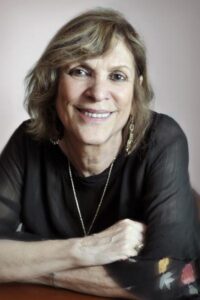
At a time when OCD was poorly understood and often ineffectively treated, Edna helped establish and rigorously validate exposure and response prevention (ERP) as a gold-standard intervention. Building on the early behavioral work of pioneers before her, she brought a level of empirical precision, clinical sophistication, and dissemination that transformed ERP from a promising approach into a cornerstone of modern treatment. In doing so, she fundamentally changed what recovery could look like for millions of people living with OCD.
Her influence extended well beyond OCD. Dr. Foa was also a central figure in the development of cognitive-behavioral models and treatments for PTSD, including prolonged exposure therapy, which has become one of the most widely used and effective interventions for trauma-related disorders. Across both domains, her work exemplified a rare integration of theory, research, and clinical application—always grounded in a singular goal: to reduce suffering and restore lives.
Her connection to the International OCD Foundation (IOCDF) was a natural extension of her commitment to bridging science and real-world impact. Edna was deeply engaged with the IOCDF community over many years, contributing to its mission of improving access to effective treatment and advancing understanding of OCD. The Foundation awarded her with the Outstanding Career Achievement Award in 2011. She was a frequent presence at conferences, where she not only shared her research but also helped elevate the standards of clinical care through teaching, mentorship, and collaboration.
The IOCDF’s growth into a global leader in OCD advocacy, education, and training reflects, in many ways, the scientific foundation that Edna helped build. Her work made it possible for organizations like the IOCDF to promote treatments that are not only evidence-based, but truly life-changing. And through her direct involvement, she helped ensure that the connection between research and practice remained strong, dynamic, and accessible.
Edna Foa showed us what it means to dedicate a life to advancing knowledge in the service of humanity. She illuminated a path forward for so many, and her influence will continue to guide the field for generations to come.
Below are several tributes to Dr. Foa from IOCDF community members.
From Jonathan Grayson, PhD
My mentor, Tom Borkovec, used to talk about our psychological lineage; that in 1979, you only had to go back a few generations of your “forefathers” to reach the founders of American psychology. In this respect, Tom is my psychology father – he taught me to discipline my thinking – he encouraged wild flights of speculation, but to always temper it in print with what could be researched and proved. With this in mind, Edna is my psychology mother. As I noted elsewhere, for all of us who work with OCD, we are her children, grandchildren and so on.
I first met Edna in 1979 at Joseph Wolpe’s Behavior Therapy Unit at Temple University. She hired me as an adjunct research assistant professor. This was in the ancient days at the height of the first wave. There was no cognitive behavioral therapy. ABCT was AABT, American Association of Behavior Therapy. The disorder we were studying was OC, the DSM labeling it obsessive compulsive disorder doesn’t yet exist. Edna was on the first of her landmark OC grants.
She was the flashpoint for all that we do with OCD. Don’t get me wrong, she didn’t invent ERP, but her work was/is the basis of all OCD treatment today. In the same way that cognitive therapy techniques existed before Aaron Beck, but his work was the flashpoint of that second wave; and the techniques of ACT pre-exist Stephen Hayes, but his work and thinking were the flashpoint of the third wave. There was no OC Foundation.
I joined Edna and Gail Steketee and to work with Edna was always a collaboration. So many hours of discussing, designing and analyzing research. Writing papers together often until midnight and beyond. You may have heard that Edna was demanding. She was, but that had nothing to do with the hours we worked. The same clinical skills she used with patients, she used in choosing those who worked with her. We were all driven. There are those who found her direct delivery difficult, but it wasn’t anger or belittling, it wasn’t intimidating (okay, maybe a little), she was simply direct without sugar coating. The truth about Edna was that she was caring and very generous.
As I said, our research was a collaboration and the order of authors on publications reflected our contributions. If you had a research idea that was tangential to her main projects, she would support you. When I told her I thought we should have support groups to help sufferers maintain their gains, I was given a free hand to develop and run GOAL as I saw fit. When my son was nine months old and I told Edna that I was going to change my work hours to: one and a half daytime hours and the rest of my hours after 4 pm, she accepted this. She didn’t have to admonish me or warn me to do my job, Edna knew the kind of people she had chosen. She wanted the people who worked with her to grow. When it came time for me to move on, she was like any parent, sorry for me to go, but happy for me to pursue my life. She was like that with all of us. So many of those who have shaped the OCD world worked with Edna. While I was there, Michael Kozak joined the team and later Edna and Michael published their ground breaking paper on emotional processing. Alec Pollard, Charly Mansueto and Rich McNally also passed through our center. Marty Franklin and Jon Abramowitz came after me making up the many generations of her “children.”
For those whom I’ve neglected to mention, forgive me, but the list is too long. My OCD career began in 1979. Her loss is a hole in the fabric of reality, but her legacy and wisdom lives on through all of us whose OCD psychological lineage can be traced back to Edna Foa.
From Marty Franklin, PhD
I am writing this tribute while waiting at an airport gate for a flight to a national conference. Over the course of the next few days I will have the opportunity to present applied research data, participate in a clinical roundtable about OCD and its treatment, & engage with colleagues as we toss around ideas for how best to move the field forward. Edna’s profound influence on my career, my life, and even my thinking is most often accessible during relatively quiet moments like this, where opportunities for reflection make their way forward amidst the work I have committed to myself to doing. Indeed, I learned of Edna’s passing a few weeks ago while right in the middle of presenting a clinical training about exposure-based treatments for OCD. I paused for a moment to take it all in, but before I could decide how best to proceed under the circumstances, I heard Edna’s voice, in her characteristic and unmistakable Israeli accent, telling me that these clinicians took time out of their busy schedules to receive this training, and therefore I must continue straight through to the end. My feelings? You can process those later. Classic Edna.
My very first day of internship in 1991 at the Medical College of Pennsylvania was spent in Edna’s presence at her Center for the Treatment and Study of Anxiety, the unit she established in 1979 to develop, test, and disseminate cognitive-behavioral interventions for anxiety and related conditions. Edna’s work even by then was highly influential, and her legend was already well in the making. At that initial meeting, Edna slid a formidable stack of old-school medical charts across the table to me and said, “Marty, is it? These are your OCD cases for this rotation.” I thanked her, then asked the first of myriad naïve questions in the legendary Tuesday Meetings: “When will I receive the training to treat these cases?” She pivoted back to look at Michael Kozak, her Clinical Director, as if to wax nostalgic about the process of indoctrinating yet another green intern. Edna then gestured at the pile, and said, “The training is in there.” Edna was a fine clinician too, and thus read well my horrified expression, then offered, “But don’t worry: we’ll help you.” True to her word, she did exactly that.
Edna’s influence on the field broadly speaking, on the development and expansion of cognitive-behavioral theory, on using clinical science to alleviate human suffering, and in pushing the proverbial envelope, has been chronicled elsewhere and cannot ever be overstated. Edna was one of the true pillars of clinical psychology, and the effects of her work will live on in perpetuity, of that I have little doubt. What was less well known except for those of us fortunate enough to have been mentored by Edna was the incredible amount of time and emotional investment she made in seeding the field with the next generation of theorists, scholars, and clinicians who would carry that work forward in the years to come. I count myself in that incredibly lucky group, all of whom were blessed by her personal investment in our training and careers. Edna had exacting standards for herself and for us, and fully expected that same level of investment and intensity on our part. Vigorous debate was just part of the process, where occasionally the fur would fly. But Edna also knew us well enough to understand what each of us needed in order to help us make the commitment needed to join her in the vanguard. In one of our many career development conversations back in the mid 1990s, likely in her East Falls office well after 8 pm, I was fretting about the “soft money” environment of academic psychiatry, and openly wondering if it was time to pivot to hard-line academic psychology or even to private practice. Edna stopped my rumination dead in its tracks, looked into the depths of my soul (which she did regularly), and said, “It’s only soft money if you can’t get it…and I know you can get it. Plus, academia is a really fun way to make a living, and a life.” Edna Foa believed in me: it was about damn time to believe in myself as well, and to make the commitment required to honor that belief. And to always keep pushing to get better at the work, which is truly a never-ending process.
Sitting in this airport now, on my way to give another set of talks on topics I have come to know very well and continue to pursue with the passion that comes from also believing that this work is vital, I concur with Edna’s assessment of academia, and am truly grateful that I listened. Thank you, Edna, for illuminating a path forward for me, as I know you did for countless others. You were unforgettable, and your work will continue on in the hands of those you mentored and trained to carry on the legacy.
From Gail Steketee, PhD, MSW
I had the pleasure and helpful educational challenge of training under Dr. Edna Foa beginning in 1976 and continuing for a decade during which I worked closely with her studying OCD and co-authoring manuscripts and federal grant applications. Edna generously provided me with excellent clinical supervision during my training at the Behavior Therapy Unit at Temple University where I learned how to treat phobias, agoraphobia and panic, and especially OCD. Edna’s encouragement and specific feedback guided my understanding of patients and how to provide effective treatment. Her supervision coincided with the end of her important early study of the impact of exposure and response prevention, following in the steps of Victor Meyer, Isaac Marks, and Jack Rachman. I treated the last few patients with OCD in her study and co-authored a case report stemming from that work – my first published paper in the field in 1977.
Edna opened many doors for me to join colleagues around the world who were studying OCD and behavioral treatment methods. Together we wrote and published 26 papers and 14 book chapters. And I mean “together”. We would schedule writing times during which Edna generated ideas and spoke aloud in her heavily accented Israeli English while I contributed my thoughts and sharpened the language as we went along. Grant applications were a special challenge as NIMH became strict about page limits. More than once we stayed up all night writing grants to meet the deadline – we were both younger then – and once we actually drove to Bethesda to deliver a grant application just in time for the deadline. I joined Edna at many conferences in the U.S. (especially AABT [now ABCT] and OCF [now IOCDF]) and in Europe at EABCT and WCBCT (the World Congress of CBT). We met many delightful OCD researchers and clinicians – it was an exhilarating time. I traveled with Edna and friends to her home country of Israel where she treated us to delightful sights and experiences including the Dead Sea.
The 10 year period with Edna was a heady time as my career unfolded. She supported my decision to get a PhD in social work at Bryn Mawr while working full time with her on our research. Eventually, I left Temple to take a full-time faculty position at Boston University, arriving with a strong publication record already in hand thanks to Edna’s masterful training and modeling of how to design and conduct research, how to write papers that accurately reflected the study and its findings, how to write strong grant applications, and how to connect with energizing colleagues around the world. I am grateful for her mentoring that enabled me to establish my own career and become a mentor to others. She was a brilliant theoretician who spawned impressive thinking and research on OCD, PTSD, behavior therapy, and related topics. Hers was a long and full life. She will be sorely missed.
The post In Memoriam: Edna B. Foa, PhD appeared first on International OCD Foundation.
In Memoriam: Judith L. Rapoport, MD
Dr. Judith L. Rapoport has left an indelible mark on the field of obsessive compulsive disorder (OCD) — not only through her extraordinary scientific contributions, but through the compassion, curiosity, and humanity she brought to her work. For countless individuals and families, her legacy is not just measured in research breakthroughs, but in hope restored and lives changed.
At a time when OCD was widely misunderstood, often hidden, and rarely discussed, Dr. Rapoport helped bring it into the light. Through her pioneering work at the National Institute of Mental Health, she gave shape and voice to a condition that many struggled to name. She was among the first to recognize that OCD could affect children, and that these young people deserved understanding, accurate diagnosis, and effective care. This insight alone transformed the trajectory of the field and opened doors for earlier intervention and support for families who had long felt alone.
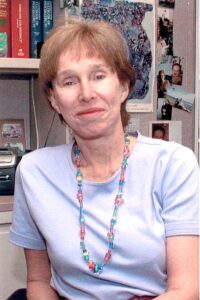
What set Dr. Rapoport apart was not only her intellect, but her deep commitment to the people behind the science. She approached each question with both rigor and empathy, helping to establish treatments that have since become the gold standard, including exposure and response prevention (ERP) and medication. Her work helped shift the narrative—away from blame or misunderstanding, and toward recognition of OCD as a real, treatable medical condition.
Beyond the lab and clinic, Dr. Rapoport had a rare gift for storytelling. Her book, The Boy Who Couldn’t Stop Washing, brought readers into the lived experience of OCD with clarity and care. For many, it was the first time they saw their own struggles reflected with such honesty and dignity. It helped families feel seen, understood, and less alone — an impact that continues to ripple outward today. The Boy Who Couldn’t Stop Washing impacted professionals as well, providing an eye-opening introduction and gateway to the world of working with OCD.
For these accomplishments and more, Dr. Rappaport received the IOCDF’s 2018 Career Achievement Award. Her influence extends through the many clinicians and researchers she has mentored, each carrying forward her dedication to both excellence and empathy. Through them, her work continues to grow, shaping the future of OCD research and care in ways that are both profound and deeply human.
To honor Dr. Judith Rapoport is to honor a career defined not only by discovery, but by kindness and purpose. She helped the world better understand OCD — but more importantly, she helped people living with OCD feel understood. And in doing so, she changed lives in ways that will endure for generations.
The post In Memoriam: Judith L. Rapoport, MD appeared first on International OCD Foundation.
Methylome-Wide Association Study of Obsessive-Compulsive Disorder
Obsessive-compulsive disorder (OCD) is a debilitating psychiatric condition influenced by both genetic and environmental risk factors. Epigenetic modifications, such as DNA methylation, may offer insights into biologically meaningful differences associated with the disorder.