

The approval of the first non–dopamine-blocking therapy for schizophrenia marks a defining moment in psychiatry. Muscarinic M1/M4 modulation, alongside emerging TAAR1 and glutamatergic pathways, signals a shift beyond dopamine dominance toward circuit-level integration. These advances embody mechanistic humility: the scientific courage to prioritize clinical signal over mechanistic certainty. It is the scientific curiosity to revisit older hypotheses, question single-pathway models, and integrate multiple mechanisms. Building on the recognition of dopamine blockade’s experiential burdens, this new era guides psychiatry toward a pluralistic framework. The challenge for 2026 is not to replace dopamine, but to rebalance it, moving from receptor blockade dominance to circuit modulation informed pluralistic treatment. This evolution aims to restore harmony not just among neural circuits, but within the lived experience of patients.
Digital Health Coffee Time Briefing ☕
Today’s briefing features a free digital platform built for unpaid carers in the UK and an AI-enabled platform for eating disorder services.
What The Atlantic Missed About OCD: There Is Hope
Dear Editor,
The Atlantic’s recent article, “When Mentally Ill Teenagers Ask to Be Put to Death,” brings needed attention to the profound and often misunderstood suffering caused by obsessive compulsive disorder (OCD). As the story illustrates, OCD can be severe, chronic, and life-threatening — so much so that individuals with OCD are at significantly elevated risk of suicide.
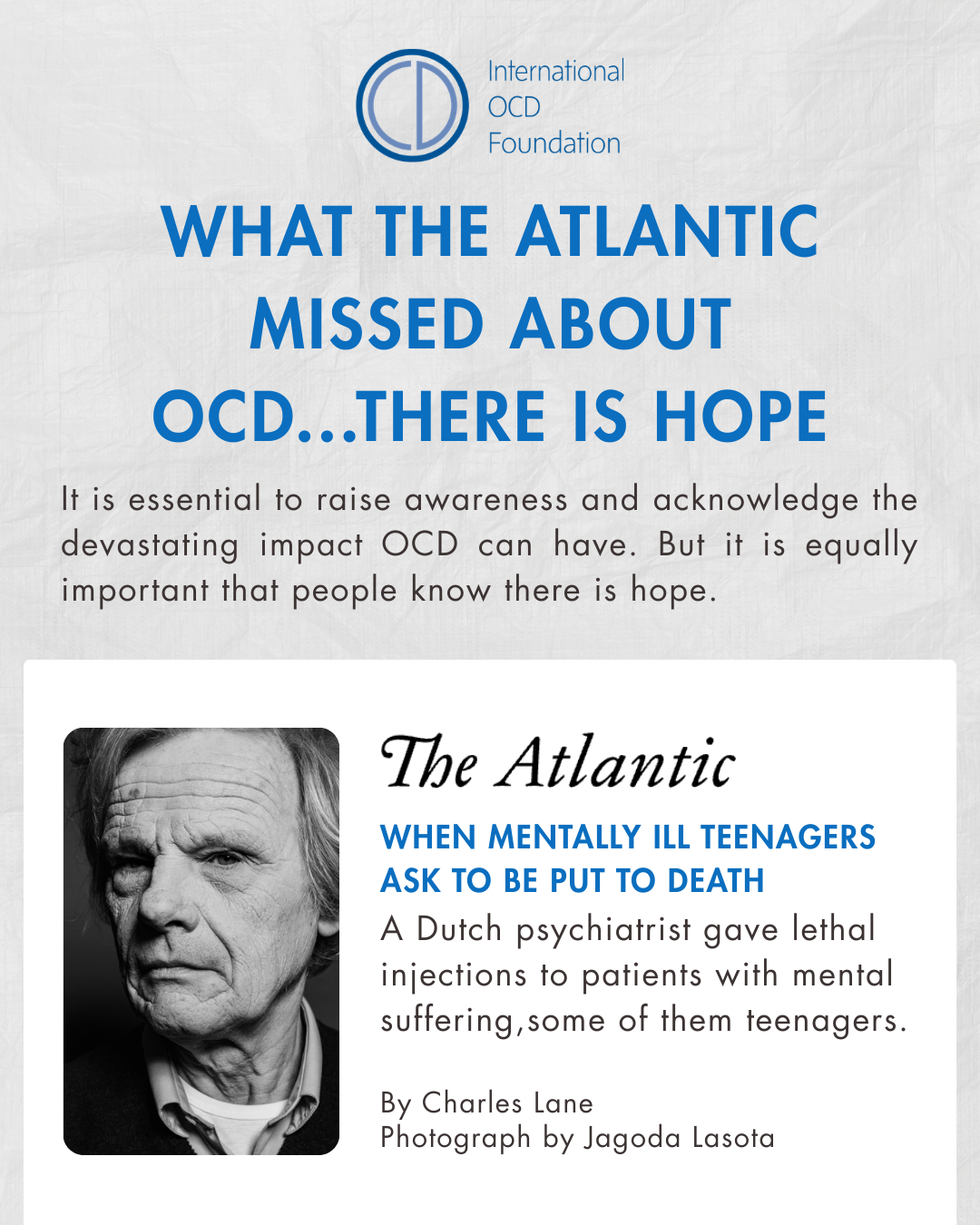
However, what is missing from this important conversation is an equally critical truth: effective, evidence-based treatments for OCD exist. Unfortunately, even after years in care, up to 98% of people never receive the many first, second, and third-line approaches that are available due to systemic breakdowns in proper screening, diagnosis, referral, and access to specialized care.
With appropriate care, many individuals who once felt trapped by their symptoms are able to reclaim their lives, pursue their goals, and thrive. At the International OCD Foundation, we regularly hear from people affected by OCD who have gone from a place of despair to one of hope because they were able to access evidence-based treatment, specifically Exposure and Response Prevention therapy (ERP).
It is essential to raise awareness and acknowledge the devastating impact OCD can have. But it is equally important that people know there is hope. The tragic outcomes outlined in “When Mentally Ill Teenagers Ask to be Put To Death” are not inevitable. With continued efforts on raising accurate awareness of OCD and strengthening our systems of care around the globe, more people with OCD can access the effective, life-saving treatment they deserve.
For those seeking help, resources and treatment guidance are available at iocdf.org.
The post What The Atlantic Missed About OCD: There Is Hope appeared first on International OCD Foundation.
IOCDF Calls for Reinstatement of SAMHSA Grants, Renewed Commitment to Mental Health Support
The International OCD Foundation is alarmed by the apparent sudden and widespread termination of grants supporting vital mental health and addiction services previously funded through the U.S. Substance Abuse and Mental Health Services Administration (SAMHSA).
These programs provide life-saving services for individuals experiencing acute mental health crises and help prevent symptoms from escalating to emergency or inpatient levels of care.
As detailed in our recent white paper, America’s OCD Care Crisis, 95% of Americans with obsessive compulsive disorder (OCD) are not receiving the most effective treatment. When OCD goes untreated or is treated with approaches that are not evidence-based, individuals face increased distress, functional impairment, isolation, and elevated risk of crisis. Access to trained clinicians and community-based mental health services is essential for helping people remain safe during periods of heightened distress and navigate next steps for treatment.
At a time when so many people with OCD and related disorders already struggle to access appropriate care, reducing support for frontline mental health professionals further weakens an already fragile system.
The IOCDF urges the reinstatement of these grants and continued federal commitment to accessible, evidence-based mental health and addiction services for all who need them.
Contact your congressional representative now to support the reinstatement of SAMHSA grants >>
The post IOCDF Calls for Reinstatement of SAMHSA Grants, Renewed Commitment to Mental Health Support appeared first on International OCD Foundation.
Facing the Monster: My Journey Living with OCD and Finding Hope
by David Kedeme
I remember the day my white high top Puma sneakers my parents gifted me for Christmas became the exact opposite of the color they came boxed in. It was a post rainy day in middle school, on a mulch covered, semi grassy area we considered our soccer field with two benches representing goals. After enjoying an intense match, what I did not enjoy but assumingly brushed off was the fact of how dirty my shoes were. Fast forward to later that day, I spent hours cleaning the shoes, trying to restore them to their original look.
Something felt different than other times I cleaned.
Every speck had to be clean. The more time I spent, the more visible other “not as clean” areas of the shoes became, requiring their own dedicated time of cleaning. Slowly, this cascaded into many other aspects of life such as my bedroom and closet needing to be organized a certain way, a tornado of relentless doubts concerning my relationships, with this dark monster in my head controlling what I can do, think, and feel. It felt like an eternity but at the same time as if no time passed from when I first touched to clean those shoes to when I could not sleep in my own bedroom and instead slept downstairs due to not wanting to mess the space up and not being able to enter and exit my closet as easily, so needing to rewear clothes days on end. I thought that doing what the monster or voice or whatever it was wanted would lead me to peace, as the relief from the sky high anxiety and gloom that came from performing what I know now as compulsions came only to have what I learned were obsessions come back, if not stronger, reinforcing this vicious cycle. My parents noticed my change in behavior, from avoiding my room at most costs to being late to dinner by up to an hour or two at times. I had only vaguely heard of obsessive compulsive disorder, OCD, and brought the idea up to my parents. The landscape we were dealing with was completely new and I felt even more alone due to this in addition to the isolation the condition induces you to be in. But we began to look for therapists, where I started talk therapy, with the therapist trying their best but the therapy modality was not the right one for me. Next up was a hypnotherapist, which also did not work for me. I needed some action to be okay with the high emotion filled state I was in when the bouts came on, in other words, exposure and response prevention therapy. After doing some research, I landed upon NOCD, an OCD teletherapy and advocacy organization.
I could not believe what I was hearing through the basement, not my room, laptop screen about actually going into my room, and that was not even the worst part. I just had to open my closet, take clothes out, move items in my room, and not do anything. “Maybe it is, maybe it is not” was a phrase that my therapist told me throughout therapy. With the significant support of my family, therapist, and friends, I was able to be okay with not being okay. Exposure and response prevention therapy makes you face the monster, making you enter the state in which you experience high anxiety. The therapy makes you look the monster in the face and realize it was not that big, not talking or engaging with you, making you sit in the discomfort and not do anything you so desperately want to do. With this methodology and rigor, I was able to coexist with the beast, and slowly it shrank, still existing though. But that is okay. That happens.
OCD belongs to a category of disorders called Obsessive Compulsive and Related Disorders within the Diagnostic and Statistical Manual for Mental Disorders, Fifth Edition, a manual that influences not only how patients receive care but also research funding and medical training. Although not officially recognized in the manual, there are many discussed subtypes of OCD depending on the obsessions and or compulsions one experiences. Some people, like me, had symptoms that ebbed and flowed in terms of severity and percolated from subtype to subtype. My symptoms throughout my experience with the condition range from having to keep most of the items in my room a certain way, doubting whether I want to be with my partner, questioning my morals, wondering whether something happened in the past pertaining to people in my life even though it did not, and more. Throughout typing this, thoughts flood my head, similar to ones I experienced, say, six years ago.
I hope to be able to perform research in the condition as well as treat people who were and are in my shoes. With up to 242 million people worldwide meeting clinical diagnostic criteria for OCD, about 40 to 60 percent experiencing treatment resistant OCD, more than two thirds of the general public not being able to accurately identify OCD, and mental health still being stigmatized today, there is more needed to be done from all fronts. When one type of online treatment is sought, about two thirds of patients achieve a clinically significant outcome, but on average, it takes greater than seven years for someone to receive a diagnosis of OCD and it can take up to seventeen years for an individual diagnosed with OCD to receive treatment. This is a multifaceted problem that requires a multifaceted approach which requires a banding of people worldwide to come together to promote awareness of the condition and a safe space for people throughout who have OCD.
Today, as I am typing this, I still am experiencing many of the symptoms I have before. The condition does not just go away, but it does become more manageable. If you are struggling, there is hope, there is a way, no matter how impossible it feels. I felt as if there was none, no light at the end of the tunnel, spending many hours crying out asking why to a source I was not even aware of, answered only by my own repetitive thoughts. But as someone who has been there, you will be okay. Even if multiple therapeutic modalities do not work, you feel like you want to give up because a current exposure seems impossible to do, you feel more anxiety at times, you feel like you are letting people down if you do not improve, you feel like the monster you were once fighting off keeps going, keep going. Seek help in many ways, rely on your community, and for those who have a hard time finding one, we are here for you, the International OCD Foundation community, and I most certainly am as well. Thank you for reading this and I am sending you hope and luck wherever you are. You are never alone.
The post Facing the Monster: My Journey Living with OCD and Finding Hope appeared first on International OCD Foundation.
Attenuation of mGluR1/5-dependent synaptic plasticity and ERK pathway dysfunction in the hippocampus of diabetic rats
Streptozotocin-induced diabetic rats (STZ rats), an established animal model of type 1 diabetes mellitus, develop cognitive decline, which has been linked to impairments in hippocampal synaptic plasticity. Long-term depression (LTD) in the hippocampus may be induced by the activation of different types of G protein-coupled receptors, particularly metabotropic glutamate receptors (mGluRs) and muscarinic acetylcholine receptors. We previously demonstrated that acetylcholine receptor activation-dependent LTD was impaired in STZ rats, and herein investigated group I mGluR (mGluR1/5)-dependent LTD in the Schaffer collateral-CA1 synapses of STZ rats. Extracellular field recordings revealed that the chemical activation of mGluR1/5 with (S)-3,5-dihydroxyphenylglycine (DHPG, 50 μM, 10 min) induced sustained LTD in both control and STZ rats; however, the magnitude of DHPG-LTD was significantly smaller in STZ rats. Moreover, the paired-pulse ratio between before and 80 min after the application of DHPG increased in both control and STZ rats, and DHPG-LTD was independent of NMDA receptor activation. A Western blot analysis showed that DHPG-induced extracellular signal-regulated kinase (ERK) phosphorylation was reduced in STZ rats, whereas DHPG-induced phosphoinositide-dependent kinase 1 phosphorylation and the expression level of the scaffold protein, Homer1, were unchanged. Collectively, these results suggest that impaired ERK/MAPK signaling affected hippocampal mGluR1/5-dependent LTD in STZ rats, and the dysregulation of ERK may contribute to diabetes-associated cognitive decline because of its crucial role in protein synthesis-dependent synaptic plasticity.
Commercial or industrial use of mental health data for research: primer and best-practice guidelines from the DATAMIND patient/public Lived Experience Advisory Group
BackgroundRoutinely collected health data, such as that held by United Kingdom (UK) national health services (NHS), has important research uses. However, its use requires public trust and transparency. Access by commercial/industrial organisations is especially sensitive for the public, as is mental health (MH) data. Although existing MH data science guidelines emphasise patient/public involvement (PPI), they do not cover commercial uses specifically.ObjectivesTo develop patient- and public-led guidelines for the commercial and industrial use of MH data for research. Though UK-focused, their principles may apply internationally.MethodsA PPI Lived Experience Advisory Group (LEAG) was created within DATAMIND, a UK data hub for MH informatics. Initial discussion yielded a requirement for definitions and explanations of concepts relating to MH data research, developed iteratively. Subsequently, the LEAG developed guidelines via a qualitative quasi-Delphi approach. The agreed scope excluded data provided for research with informed consent, data processing arrangements (e.g. companies hosting electronic systems on the instruction of health services), and compliance with legal minimum requirements. The scope included the use of routinely collected MH data for research by commercial/industrial organisations without explicit consent, and aspects of industry-led MH data collection conducted with consent.ResultsAlongside the primer in MH data research concepts, the LEAG provide best-practice guidelines relating to commercial/industrial research use of MH data, for organisations controlling MH data (such as NHS bodies) and for commercial applicants seeking access. Core principles include transparency, patient rights, meaningful PPI, stringent governance, and statistical disclosure control. The guidelines recommend a risk–benefit approach to assessing data access applications, within limits that include avoiding the export of unconsented patient-level data outside NHS-controlled secure data environments, and not providing commercial applicants with access to unconsented free-text MH data. Further recommendations for NHS executive and regulatory bodies relate to public choice and transparency, clarity of guidance to research-active NHS organisations, and support for de-identification.ConclusionsMH data research requires patient/public involvement and understanding. These guidelines reflect the views of people with personal or family experience of mental ill health. We hope they are useful to the MH research community and increase public transparency and trust.
Synergies in psychedelic-assisted therapy: a qualitative interview study of psychotherapeutic processes
Research on the therapeutic effects of psychedelics in psychiatry, commonly referred to as Psychedelic-Assisted Therapy (PAT), has expanded substantially in recent years. The context-dependent nature of psychedelics has sparked discussion about the importance of the psychotherapeutic environment in achieving beneficial outcomes. This study explores the contribution of psychotherapeutic factors on PAT in Switzerland, where psychedelic treatments can be implemented within long-term clinical frameworks. Seven semi-structured interviews were conducted with Swiss therapists to explore how they frame psychedelic treatments and the role of the psychotherapeutic setting in facilitating therapeutic outcomes. Thereby, individual experiences of the patients as reported by the therapists, were particularly considered. Thematic analysis identified two main themes, each with several sub-themes. The first theme revealed that while psychotherapeutic techniques are adapted to PAT, they retain similarities to non-psychedelic psychotherapy practices, supporting patients in having meaningful therapeutic experiences. The second theme describes a synergistic relationship between psychedelics and psychotherapy, amplifying underlying general psychotherapeutic factors such as trust, a sense of profundity, and the emergence of therapeutic experiences. The interviewed therapists agreed that psychedelics work as unspecific catalysts for psychotherapeutic processes, while still acknowledging the potential for psychopharmacological effects or the interaction between psychedelics and psychotherapy to create unique psychotherapeutic processes. Findings from our sample suggest that, for specific indications, incorporating psychedelics into long-term psychotherapeutic treatment may strengthen therapeutic processes. Future research could investigate the efficacy of PAT within the framework of specific psychotherapeutic modalities or in different settings, including prospective quantitative assessments of outcomes. Ultimately, clarifying mechanisms of action of PAT may help to enhance its efficacy and potentially to integrate psychedelic treatments into mainstream mental health care.
Asking for help: the development of a simulation-based mental health application to enhance depression literacy, mental health communication, and help-seeking among Black autistic youth
Black autistic youth experience disproportionately high rates of depression and face intersecting barriers such as racial discrimination, stigma, and limited access to care, yet few interventions address their needs. This study introduces Asking for Help (A4H), a culturally responsive, simulation-based intervention designed to improve depression literacy and help-seeking skills through an e-learning module and interactive conversation practice. Guided by mental health literacy theory, the Theory of Help-Seeking Behavior, the Theory of Planned Behavior, and Disability Critical Theory, A4H was developed using community-engaged and user-centered design principles. Usability testing employed a mixed-methods design with 32 participants (12 youth, 10 caregivers, 8 specialists) using the System Usability Scale (SUS), Patient Health Questionnaire-9 (PHQ-9), and semi-structured interviews. Black autistic youth reported moderate depressive symptoms (mean PHQ-9 = 14.7) and rated usability slightly below benchmark (mean SUS = 66.2), while caregivers and specialists scored higher (73.5 and 71.0). Qualitative feedback highlighted cultural relevance and immediate feedback as strengths, with recommendations for simplified language, improved navigation, and multimodal supports; emotional safety and trust were critical for engagement. No short-term symptom change was observed, consistent with the formative design. Findings indicate A4H is feasible and culturally responsive but requires refinements before efficacy testing to assess impacts on literacy, help-seeking intentions, and communication skills.
Epigenetic changes associated with multi-generational trauma: characterization, mechanisms, and therapeutics
Trauma can contribute to lasting psychological, behavioral, and physiological effects that extend across generations. Intergenerational trauma refers to trauma-related effects observed in children of exposed parents, while transgenerational trauma describes effects observed in later generations without direct exposure. Proposed mechanisms involve interacting biological and psychosocial processes, including stress-responsive regulatory systems, epigenetic variation, and caregiving environments. This review synthesizes evidence on epigenetic changes associated with acute, chronic, and complex traumatic exposures and their relevance to multi-generational outcomes. Studies published between 1990 and 2025 were identified through PubMed and Google Scholar and evaluated for reported epigenetic findings, caregiving patterns, and offspring health outcomes. Across trauma contexts, reported epigenetic variation most consistently involves pathways related to stress-response regulation, immune-inflammatory signaling, neurodevelopment, metabolic processes, and developmental programming. Patterns across exposure types suggest that acute events are most often associated with stress-related and inflammatory signaling that may influence developmental programming, whereas chronic and complex trauma reflect cumulative physiological adaptation involving broader alterations in stress-regulatory, metabolic, and neurodevelopmental systems. Offspring outcomes most consistently include increased vulnerability to anxiety, depressive symptoms, stress-related disorders, and certain chronic medical conditions, often described alongside shifts in caregiving behaviors and psychosocial environments that may shape developmental vulnerability. Interpretation of the current literature is limited by small sample sizes, varying definitions of trauma, and limited multi-generational cohorts. Overall, current evidence supports a model in which trauma-related outcomes across generations reflect interacting biological and caregiving processes, highlighting the importance of integrated molecular and psychosocial frameworks for prevention and intervention.