BackgroundWith the increasing integration of artificial intelligence (AI) technologies into daily life, the underlying mechanisms of emotional interactions between users and AI have emerged as a critical research topic in the field of human-computer interaction (HCI). Existing studies have predominantly adopted traditional technology acceptance models or satisfaction scales, which lack targeted applicability in capturing unique features of AI interactions, such as parasocial relationships and emotional dependence. The present study aims to develop a self-report instrument, the AI Emotional Engagement Scale (AEES), and examine its psychometric properties for assessing users’ level of AI Emotional Engagement with AI systems.MethodsThis study was conducted based on Norman’s three-level theory of emotional design. Study 1 (N = 24) extracted core information from interview data using qualitative analysis, and generated an initial item pool through multiple rounds of expert review. Study 2 (N = 103) conducted a pre-test of the initial items to examine indicators including item quality and relevance, optimized the item design, and developed the formal item set. Study 3 (N = 924) verified the factor structure of the AEES via exploratory factor analysis (EFA) and confirmatory factor analysis (CFA), conducted reliability and validity tests of the scale, and finalized the factor structure of the 28-item, three-dimensional scale.ResultsResults of EFA indicated that AI Emotional Engagement consists of three dimensions: the visceral level, behavioral level, and reflective level, which was consistent with the theoretical framework, with a cumulative variance contribution rate of 68.32%. Results of CFA demonstrated that the three-factor model had a good fit (χ²/df = 3.765, CFI = 0.91, TLI = 0.90, RMSEA = 0.077, SRMR = 0.0496). The overall AEES and its three dimensions exhibited good internal consistency reliability, with reliability coefficients ranging from 0.90 to 0.97.ConclusionThe AEES has favorable psychometric properties, and can serve as a reliable instrument for researchers and practitioners to assess users’ AI Emotional Engagement with AI systems.
Differentiating the potential of continuum beliefs to reduce the public stigma of schizophrenia, depression, and alcohol dependence: associations with illness recognition and treatment recommendations
PurposePromoting continuum beliefs has been discussed as a strategy for stigma reduction. The current study examines associations of continuum beliefs with stigma aspects (stereotypes, emotions, and social distance) and mental health literacy (illness recognition and treatment recommendations).MethodsIn 2011, a sample of the German population (N = 3,642) completed a vignette-based interview on attitudes regarding schizophrenia, depression, or alcohol dependence. Logistic regression analyses were performed and predicted probabilities were used to calculate prevalence estimates and depict direct effect sizes.ResultsIncreased continuum beliefs were strongly related to a decreased likelihood of social distance and endorsement of some negative stereotypes (e.g., being alien for schizophrenia) and an increased likelihood for endorsement of other negative stereotypes (e.g., lack of willpower for schizophrenia and depression) and emotions (e.g., anger for schizophrenia). Effect sizes indicated a greater reduction in negative stereotypes and desired social distance than increases in negative stereotypes or emotions. Furthermore, continuum beliefs were associated with a decreased probability of illness recognition for schizophrenia and recommending treatment for schizophrenia and depression, but an increased likelihood for illness recognition and recommending treatment for alcohol dependence.ConclusionPotentially harmful associations of continuum beliefs were found for schizophrenia and depression and should be considered by future studies and intervention designs. These potentially harmful associations are likely outweighed by helpful associations based on prevalence estimates and effect sizes. Associations between continuum beliefs and mental health literacy seem to be illness-dependent. Because of the sociocultural context and the time gap between the study and publication, representativeness for current public attitudes is limited.
The association between obstructive sleep apnea and total cerebral small vessel disease burden—Neurovascular insights of OSA
ObjectiveThis study was conducted to assess the relationship between the severity of obstructive sleep apnea (OSA) and the total burden score of cerebral small vessel disease (CSVD), global cerebral blood flow (CBF), and cognitive function. Moreover, the internal pathway through which OSA induces cognitive impairment by affecting cerebral perfusion, and overall cerebral small vessel lesions was determined in this study.MethodsIn total, 94 patients who received polysomnography (PSG) at the Mental Health Center of Inner Mongolia Autonomous Region from October 2024 to February 2026 were included in this study. Based on the apnea-hypopnea index (AHI), all individuals were classified into the control and the mild group (AHI < 15 times/h, n = 26), the moderate OSA group (15 ≤ AHI < 30 times/h, n = 27), and the severe OSA group (AHI ≥ 30 times/h, n = 41). Demographic information was collected from all patients, and their cognitive performance was evaluated using the Mini-Mental State Examination (MMSE), Trail Making Test (TMT), Choice Reaction Time task (CRT), Digit Symbol Substitution Task (DSST), and the Trails test with a paradigm similar to Part B of the Trail Making Test. Each patient underwent 3.0T magnetic resonance imaging, including conventional sequences, susceptibility weighted imaging (SWI), and arterial spin labeling (ASL). Finally, the total CSVD burden score was assessed.ResultsThe total CSVD burden and perivascular space (PVS) score in the severe OSA group were significantly higher than those in the moderate group and the control group (P < 0.05). The total CSVD burden was significantly positively correlated with the mean global CBF (P < 0.05). After the BMI was adjusted, the severity of OSA remained independently associated with the mean global CBF (P < 0.05). Total CSVD burden, PVS, lacunes, and global CBF were significantly associated with cognitive function domains (P < 0.05), which indicated that CSVD and global CBF abnormalities may jointly participate in OSA-related cognitive function.ConclusionThe severity of OSA might be related to the CSVD burden score. Neuroimaging characteristics strongly related to cognitive function in patients suffering from OSA, and abnormal global CBF may serve as a non-invasive imaging marker for evaluating neurocognitive damage.
Correction: Locomotor and endocrine alterations link to metabolic dysfunction induced by pathopharmacological interaction between neurodevelopmental disorders and antipsychotics: evidence from clinical and animal study
Follow-up attendance and documented reasons for non-attendance in child and adolescent mental health care: a retrospective analysis
BackgroundFailure to continue scheduled follow-up is a common challenge in child and adolescent mental health services and may reduce treatment effectiveness.ObjectiveThe present retrospective study aimed to examine demographic, clinical, and treatment-related characteristics associated with attendance at the last scheduled follow-up appointment among children and adolescents receiving outpatient psychiatric care and to identify characteristics associated with the documented reasons for non-attendance among patients who missed their last scheduled follow-up appointment.MethodsA retrospective study was conducted using medical records of 841 patients aged 1–18 years who attended a tertiary child and adolescent psychiatry outpatient clinic between 2015 and 2026. Demographic, clinical, and treatment-related characteristics were summarized descriptively. Associations between categorical variables were examined using Pearson’s chi-square test, and effect sizes were reported using Cramér’s V.ResultsOf the 841 patients, 142 had no scheduled follow-up appointment and were excluded from the attendance analysis. Among the remaining 699 patients, 56.8% attended their last scheduled follow-up appointment. No significant associations were observed between attendance and the demographic, clinical, or treatment-related characteristics examined. Among the 302 non-attendees, unspecified reasons (36.8%) and scheduling conflicts (17.5%) were most frequent. Documented reasons for non-attendance were significantly associated with medication prescription status (χ² = 9.749, p = 0.008, Cramér’s V = 0.181) and drug class (χ² = 10.202, p = 0.037, Cramér’s V = 0.130).ConclusionsLast scheduled follow-up attendance was not significantly associated with the demographic, clinical, or treatment-related characteristics examined. Among non-attendees, documented reasons for non-attendance were associated with medication prescription status and drug class. Systematic documentation of non-attendance reasons may help identify barriers to continuity of care and inform targeted follow-up strategies.
A Pragmatic SMART Study of Medication and CBT Sequencing in Pediatric Anxiety Disorders: A Randomized Clinical Trial
American Journal of Psychiatry, Volume 183, Issue 9, Page 668-681, September 01, 2026.
Convergence of TMS Sites and Lesion Locations Associated With Nicotine Addiction Improvement on a Common Brain Circuit
American Journal of Psychiatry, Volume 183, Issue 9, Page 646-656, September 01, 2026.
Dynamic Relationships Between Estrogen Fluctuations, Sleep, and Psychiatric Complexity Among Adolescent Females With ADHD: A Pilot Study
Conditions: ADHD
Sponsors: Duke University
Not yet recruiting
Sponsors: Duke University
Not yet recruiting
This Study Will Evaluate Cardiorespiratory and Muscular Fitness to Examine Associations With Anthropometric Characteristics and Other Indicators of Cardiometabolic Risk Among Patients With or Without Autism Spectrum Disorder
Conditions: Autism Spectrum Disorder (ASD); Cardiometabolic Health Indicators; Cardiometabolic Risk Factors; Metabolic Syndrome; Prediabetes
Sponsors: University of Virginia
Recruiting
Sponsors: University of Virginia
Recruiting
Remotely Supervised, Home-Based Transcranial Direct Current Stimulation for Major Depressive Disorder: Systematic Review and Meta-Analysis
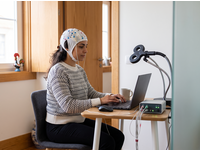
Background: Major depressive disorder affects over 280 million people worldwide, and access to effective treatment remains limited. Transcranial direct current stimulation (tDCS) is a noninvasive option, and portable devices now allow for home-based delivery under varying degrees of remote supervision. Objective: This study aimed to systematically review and meta-analyze the efficacy, safety, feasibility, and acceptability of home-based and remotely supervised tDCS for depressive disorders. Methods: Following the PRISMA (Preferred Reporting Items for Systematic Reviews and Meta-Analyses) 2020 and PRISMA-S (Preferred Reporting Items for Systematic Reviews and Meta-Analyses literature search extension) guidelines, we searched MEDLINE, Embase, Web of Science, the Cochrane databases, ClinicalTrials.gov, and the World Health Organization International Clinical Trials Registry Platform up to July 2025, with backward and forward citation searching. Two reviewers independently screened records, extracted data, and assessed risk of bias (version 2 of the Cochrane risk-of-bias tool for randomized trials, Newcastle-Ottawa Scale for observational studies, and Critical Appraisal Skills Programme for qualitative studies) and certainty of evidence (Grading of Recommendations Assessment, Development, and Evaluation; GRADE). Results: This review included 12 distinct studies (16 reports), of which 6 (50%) were randomized sham-controlled trials forming the meta-analytic pool. Active home-based tDCS produced a small, statistically significant improvement over sham (pooled Hedges =0.36, 95% CI 0.06-0.66; =.03; =34.3%). The effect was not robust to removal of the single largest positive trial (omitting the one study from 2025: =0.39, 95% CI −0.12 to 0.91), and trial-level results were mixed: the 2 largest trials (one unsupervised [n=210] and one self-administered [n=141]) were negative on their primary depression outcomes, whereas the largest real-time supervised trial (n=174) was positive (between-group 95% CI 0.51‐4.01; =.01). This estimate was concordant in direction with an independent peer-reviewed meta-analysis of overlapping trials, which reported a pooled Montgomery-Åsberg Depression Rating Scale reduction (weighted mean difference −2.74, 95% CI −4.19 to −1.29) and Hamilton Depression Rating Scale reduction (weighted mean difference −2.24, 95% CI −4.16 to −1.49), attenuating to nonsignificance (>.05) in major depressive disorder without comorbid cognitive impairment. The pooled effect fell at or near the minimal clinically important difference. GRADE certainty was moderate. Adverse events were predominantly mild: one pilot study was terminated early for skin lesions, and one nonfatal suicide attempt occurred in an unsupervised trial. Conclusions: Home-based and remotely supervised tDCS produces a small, statistically significant but clinically modest antidepressant effect that is sensitive to the inclusion of the largest positive trial, with the 2 largest trials being negative. The available controlled evidence does not establish supervision intensity as a determinant of efficacy. Current data are insufficient to recommend routine clinical adoption; adequately powered trials with standardized supervision and longer follow-up are needed. Trial Registration: PROSPERO registration number CRD420251109275; https://www.crd.york.ac.uk/PROSPERO/view/CRD420251109275