

Exchange Marketplace Launched to Help Stalled Cell and Gene Therapies

A type of exchange marketplace for cell and gene therapies has launched to try and reinvigorate and relaunch candidate therapies that are no longer being developed due to financial constraints, despite having good science behind them.

CGTxchange, an online platform enhanced by artificial intelligence, is the brainchild of the American Society of Gene and Cell Therapy (ASGCT) and the Orphan Therapeutics Accelerator. The latter was set up in 2024 as a patient‑centered, non‑profit biotech accelerator that acquires “shelved” clinical‑stage therapies for ultra‑rare diseases and completes their development and commercialization so patients can actually access them.

The new platform was launched at the ASGCT conference in Boston and is designed to help stalled assets to find a new home. This is designed to address funding pull‑backs, program terminations, and company exits, which are forcing hundreds of cell and gene therapy programs to be discontinued or indefinitely paused despite having good scientific promise.

CGTxchange will link up companies who want to develop their assets with funders and partners who are looking for new development opportunities in cell and gene therapy.

“The cell and gene therapy field has built an extraordinary base of clinical evidence, and yet too many of those programs sit on the shelf for reasons that have nothing to do with the science,” said Terry Flotte, MD, dean of University of Massachusetts Chan Medical School and president of the ASGCT, in a press statement.

“CGTxchange gives our community a structured way to bring those programs back into view, and to connect them with the partners and funders who can help reactivate them.”

The platform is built so that people who own assets they want to develop can securely upload information about them into a database that is then searchable by possible interested parties such as investors, nonprofits, biotechs, and academic groups. They will have to pay a fee for this service, but the press statement says, “up to 10 of the initial listings will be eligible for discounted onboarding.”

When a match is achieved then the asset owner and the interested party will come to some sort of agreement on further financing. This could include traditional or alternative development and financing models, including nonprofit and hybrid structures.

The platform can theoretically be used by people from around the world, but users must apply and be approved rather than simply signing up. According to the platform’s terms and conditions on its website, “access is restricted to authorized representatives of biotechnology companies, academic institutions, nonprofits, and accredited investors.”

The post Exchange Marketplace Launched to Help Stalled Cell and Gene Therapies appeared first on Inside Precision Medicine.


RAGE Implicated in Worsening Breast Cancer Mortality with Age

Researchers at Georgetown’s Lombardi Comprehensive Cancer Center have identified a mechanism that may help to explain why older people experience worse outcomes from breast cancer. The study in different mouse breast cancer models and in human breast cancers implicates RAGE (receptor for advanced glycation end-products), a cell surface receptor that amplifies inflammatory signaling, and which also becomes increasingly active with metastatic progression. The study findings in addition suggested that inhibiting RAGE may offer a well-tolerated adjunctive breast cancer therapy in older patients.

“Our study addresses a major gap by showing that aging dramatically increases breast cancer metastasis and that this effect depends on RAGE, a receptor on the surface of cells that fuels inflammation,” said Barry Hudson, PhD, associate professor of oncology at Georgetown Lombardi. “Most laboratory studies rely on young mice, which has limited our understanding of how aging itself alters the host environment, including immune function and chronic inflammatory states that, in turn, influence cancer behavior.” Hudson is corresponding author of the researchers’ Communications Biology published paper titled “Aging promotes a RAGE-dependent increase in breast cancer metastasis.” In their paper the authors concluded that their findings “… identify RAGE as a mechanistic link between aging and metastasis and a potential therapeutic target in older patients.” They say the findings will also be featured in the Nature portfolio special collection, Cancer and Aging.

Age is the primary risk factor for the development of adult cancers, including breast cancer, with almost half of new breast cancer diagnoses and more than half of breast cancer-specific deaths occurring in women aged 65 years and older, the authors wrote. And while advances in screening and therapy have improved survival, older women continue to have higher breast cancer-specific mortality. “Despite accumulating evidence that metastasis in murine breast cancer models increases with advancing host age, the mechanisms underlying this have not been elucidated, highlighting the need for further mechanistic studies,” the team continued.

And while breast cancer is more prevalent in older women, most cancer research in mouse models has used young, 2–3-month-old adult mice, which are about equivalent in age to 15–20-year-old humans. Timing and chance presented Hudson and colleagues with opportunities to carry out their newly reported study. During COVID, when there was reduced laboratory activity, some of the research team’s mouse colonies aged longer than originally planned. This created a rare opening to study cancer in these older animals—normally a difficult and expensive endeavor—giving the scientists the ability to directly compare how tumors behave in younger versus older mice.

RAGE is a proinflammatory molecule that is being considered as a therapeutic target in multiple aging-related diseases, including various cancers, cardiovascular and neurodegenerative diseases.

Using three different mouse models of triple-negative breast cancer (TNBC), the researchers discovered that aged mice developed substantially more lung metastases than younger mice, despite similar primary tumor growth. The team then showed that genetic deletion of RAGE in mice almost completely eliminated this age-related surge in metastasis.

Through their studies, the team demonstrated that aging increased levels of inflammatory molecules that activate RAGE. These included the proteins S100 and HMGB1, found in both primary tumors and at metastatic sites. These changes made it easier for cancer cells to invade and spread. “These findings show that aging doesn’t just increase cancer risk—it actively changes the body in ways that help tumors spread,” said Hudson. “RAGE appears to be a key mediator of these harmful age-related pathways.” In their paper the authors stated that their data “… suggest that aging promotes multiple prometastatic processes within the tumor and its microenvironment, and that RAGE is required for the induction of these inflammatory and tumor-promoting pathways in aged hosts.“

The team also analyzed breast cancer data from more than 1,000 patients and found that higher expression of AGER (the gene encoding RAGE) and related inflammatory gene signatures were associated with worse outcomes in patients, supporting the clinical relevance of their findings. They noted, “… in human breast cancers, high AGER expression, as well as enrichment for mouse tumor-derived aging- and RAGE-associated gene signatures, predicted poorer outcomes, particularly in older women …Together, these data indicate that in older individuals with breast cancer, intratumor RAGE overexpression amplifies aging-associated transcriptional programs, linking age-dependent inflammation to promote metastatic progression.”

RAGE is already being explored as a therapeutic target in several age-related diseases, highlighting its potential relevance in cancer. In prior work, the researchers had shown that the RAGE inhibitor TTP488 (azeliragon) can suppress breast cancer metastasis in preclinical models. In the current study, they also tested the drug in the lab and found that TTP488 was able to reduce tumor cell invasiveness that was induced by blood sera from aged mice.” Pharmacologic inhibition of RAGE by TTP488 (PF-04494700 or azeliragon) suppressed migration and invasion towards aged serum, further supporting the requirement of RAGE signaling for age-dependent metastasis,” the team noted.

A clinical study is underway at Lombardi evaluating TTP488 in breast cancer patients receiving chemotherapy, with a focus on safety and cognitive outcome. The drug has demonstrated a favorable safety profile in people, making it an optimal choice for further study. “TTP488 has demonstrated an excellent safety profile in Phase I/II clinical studies in older adults with Alzheimer’s disease, supporting its potential for repurposing,” the authors wrote. “Therapeutic RAGE inhibition may provide a well-tolerated means to counteract inflammaging and improve cancer outcomes in the elderly, who often face limited treatment options due to toxicity,” the investigators wrote.

“This study highlights the importance of the host environment in cancer,” Hudson added. “While cancer is often viewed as driven primarily by mutations intrinsic to tumor cells, systemic factors such as aging and inflammation play a critical role in shaping how cancers behave,” said Hudson. “Most deaths due to cancer occur because tumors spread to other organs, so understanding these influences may help identify new strategies to limit metastasis.”

The post RAGE Implicated in Worsening Breast Cancer Mortality with Age appeared first on GEN – Genetic Engineering and Biotechnology News.

PPG-Derived Digital Biomarker Developed for Peripheral Artery Disease Detection

A research team at the University of California, San Diego has developed a machine learning-based screening approach for peripheral artery disease (PAD) that uses a light-based technology called photoplethysmography (PPG) that can measure changes in blood volume in tissue. The researchers reported that short-duration PPG recordings in a patient’s toe, analyzed by machine learning models, identified PAD with a high degree of accuracy and may provide the basis for a scalable digital screening tool that could eventually be deployed through smartphones, pulse oximeters, and wearable devices. The team’s findings are published in npj Digital Medicine.

“PPG works by shining a light into tissue, in our case, the toe,” said co-first author Ava J. Fascetti, a PhD student in the digital health technology lab of senior author Edward J. Wang, PhD. “A photosensor measures how much light is reflected back, allowing us to detect tiny changes in blood volume: what we call the PPG signal.”

PAD is caused by plaque buildup in arteries that restricts blood flow, particularly to the legs and lower extremities. The disease affects an estimated 12 million Americans and 200 million adults worldwide. PAD substantially increases the risk of limb loss and major cardiovascular events, yet many patients are not diagnosed until later stages of disease progression. The researchers noted that the condition disproportionately affects underserved populations and is underdiagnosed in part because the current standard diagnostic, ankle-brachial index (ABI), requires specialized equipment, staff, and clinic visits.

“There exists a glaring unmet clinical need to develop technology to meet the demands of modern practice,” the researchers wrote. Further, ABI testing, introduced about 60 years ago, has has remained largely unchanged and has long-standing barriers to widespread use in primary care and under-resourced settings.

The current study originated from discussions between co-first author Mattheus Ramsis, MD, and assistant professor of medicine and medical director of cardiology informatics, and co-author Elsie G. Ross, MD, an associate professor of surgery in vascular and endovascular surgery, who noted that vascular labs conducting ABI testing often also collected toe PPG waveforms.

“The light-bulb went off for me at that moment,” Ramsis said.

PPG works by shining light into tissue and measuring backscattered light associated with blood volume changes. PPG has previously been used to identify cardiovascular and metabolic conditions including diabetes and atrial fibrillation. Earlier research efforts to use PPG for PAD detection had relied on small datasets, long recordings and less interpretable deep-learning approaches.

For their approach, the UCSD team assembled a dataset containing more than 10,000 toe PPG recordings from more than 3,500 patients who underwent ABI testing at UC San Diego Health between 2020 and 2025. Using these data, the researchers extracted 78 waveform features from the PPG signals that correlated significantly with ABI measurements. Those features were then used to train an explainable support vector machine model designed to identify PAD from PPG data alone.

Ramsis said the model correctly distinguished PAD cases approximately 83% of the time using only PPG data, compared with roughly 60% to 65% performance typically achieved using clinical risk-factor assessments alone. Incorporating smoking status of the patients further improved the performance of the new method.

Importantly, the model performed consistently across Black, Hispanic, and White patient populations, and among patients with diabetes, coronary artery disease, and end-stage renal disease. The researchers also reported similar performance across two UC San Diego Health campuses that used different equipment and staff.

The investigators noted that the physiologic basis for their findings align with established vascular biology. In PAD, reduced blood flow and arterial stiffness alter the morphology of PPG waveforms. Healthier patients demonstrated steeper systolic upstrokes and narrower waveform widths, while patients with PAD showed more dampened signals.

“Our findings support the existence of a reproducible PPG-derived digital biomarker that captures peripheral vascular pathophysiology relevant to ABI-defined PAD,” the researchers wrote.

The researchers said they don’t think their new model should replace ABI testing. Instead, they envision PPG screening as a complementary tool that could serve to identify patients earlier that might need further vascular evaluation.

The team said prospective deployment studies are already underway to evaluate performance in clinical settings and across additional reference standards, including toe pressure measurements, ultrasound imaging, and angiography. Additional research will also gauge performance in consumer-grade environments, including smartphones and wearable devices, and assess how the screening tool functions in broader patient populations outside specialized vascular clinics.

“If we can catch PAD early enough to prevent a limb amputation, that would be the ultimate impact: preserving limb function, reducing mortality, and addressing barriers in underserved populations,” Ramsis said.

The post PPG-Derived Digital Biomarker Developed for Peripheral Artery Disease Detection appeared first on Inside Precision Medicine.
Antibody-Drug Conjugate Shows Activity in Hard-to-Treat Uterine Cancer

A Phase II clinical trial led by researchers at Yale School of Medicine and Yale Cancer Center has found that the antibody-drug conjugate sacituzumab govitecan, also known as Trodelvy, demonstrated encouraging clinical activity in patients with recurrent uterine cancer who had already exhausted several standard treatment options.

The findings, published in Clinical Cancer Research, suggest the therapy could become an important new option for patients with advanced endometrial cancer after chemotherapy and immunotherapy stop working.

A difficult disease to treat after relapse

Endometrial cancer is the most common gynecologic cancer in the United States, and rates continue to rise worldwide. While recent advances in immunotherapy have improved treatment for some patients, options remain limited once the disease returns after platinum-based chemotherapy or checkpoint inhibitor therapy.

Patients with recurrent disease often face poor outcomes, particularly those with aggressive tumor types such as uterine serous carcinoma and carcinosarcoma. Standard second-line chemotherapies typically produce modest response rates and short-lived disease control.

Researchers therefore wanted to investigate whether sacituzumab govitecan could improve outcomes in this challenging setting.

How the drug works

Sacituzumab govitecan belongs to a newer class of targeted therapies known as antibody-drug conjugates, or ADCs. These drugs combine an antibody that recognizes cancer cells with a chemotherapy payload designed to destroy them.

In this case, the therapy targets Trop-2, a protein commonly overexpressed in several aggressive cancers, including many uterine tumors. Attached to the antibody is SN-38, the active metabolite of irinotecan, a well-known chemotherapy drug.

By delivering chemotherapy directly to Trop-2–expressing cancer cells, researchers hope to increase anti-tumor activity while limiting damage to healthy tissue.

The drug is already approved for metastatic breast cancer and urothelial cancer, but remains investigational in uterine cancer.

Trial included heavily pretreated patients

The study enrolled 50 patients with recurrent or persistent endometrial cancer between 2020 and 2024. All participants had previously received platinum-based chemotherapy, and many had also undergone treatment with immune checkpoint inhibitors such as pembrolizumab or dostarlimab.

The study population represented a particularly difficult-to-treat group. Most patients had aggressive tumor histologies, including serous carcinoma, carcinosarcoma, or grade 3 endometrioid disease. Patients had received a median of two prior treatment regimens, with some undergoing as many as four lines of therapy before entering the study.

Encouraging responses and survival data

The trial met its primary endpoint, achieving an objective response rate of 28%. Two patients experienced complete responses with no detectable cancer remaining, while another 12 patients achieved partial responses with substantial tumor shrinkage.

In total, more than 70% of evaluable patients experienced some degree of tumor reduction during treatment. The study also reported durable responses, with a median response duration of 9.3 months. Several patients were still responding at the time of analysis.

Median progression-free survival reached 5.5 months, while median overall survival was 17.5 months in this heavily pretreated population.

Researchers also noted that responses were observed across multiple tumor subtypes rather than being limited to one specific histology.

“The results of our Investigator Initiated Trial complement and extend the TROPiCS-03 Trial results by demonstrating significant clinical activity of SG not only against the most common histological types of uterine cancer (endometrioid tumors) but also in patients harboring biologically aggressive endometrial tumors such as uterine serous carcinoma and carcinosarcoma,” said Alessandro Santin, MD, the study’s lead author.

Side effects remained manageable

As expected with potent cancer therapies, treatment-related side effects were common. The most frequent severe toxicities included neutropenia, anemia, fatigue, diarrhea, and febrile neutropenia.

However, investigators reported that most adverse events were manageable using supportive care measures such as growth factor support, anti-diarrheal medications, hydration, and dose adjustments. No treatment-related deaths were reported during the trial.

Looking ahead

The researchers cautioned that the study was relatively small and lacked a randomized comparison arm. Nevertheless, the results add to growing evidence supporting sacituzumab govitecan in advanced endometrial cancer, particularly for patients who have limited options remaining after standard therapies fail.

A larger international Phase III study is already underway to compare the drug directly against standard chemotherapy in patients with recurrent endometrial cancer following platinum chemotherapy and immunotherapy.

The team also highlighted future possibilities for combining the therapy with immunotherapy approaches, particularly because the drug’s chemotherapy payload may help stimulate anti-tumor immune responses.

“This is a major bench-to-bedside accomplishment for patients with uterine cancer,” Santin said.


The post Antibody-Drug Conjugate Shows Activity in Hard-to-Treat Uterine Cancer appeared first on Inside Precision Medicine.
<![CDATA[Psychiatry faces surging stress-driven illness as psychedelics, lifestyle medicine, and biomarkers reshape precision diagnosis and care.]]>

Single Psilocybin Dose Relieves Depression for Over Three Months

Researchers in Sweden report that a single dose of psilocybin, a psychedelic compound found in mushrooms, can provide rapid relief from depressive symptoms. Results from a small-scale Phase II trial, published today in JAMA Network Open, show that patients experienced an improvement as soon as two days after treatment, with effects persisting for longer than three months. 

”Our results suggest that psilocybin can provide rapid, clinically meaningful improvement in depression and may serve as an alternative to standard treatment when fast symptom reduction is important,” says Hampus Yngwe, MD, consultant psychiatrist and PhD student at the department of clinical neuroscience of the Karolinska Institutet in Stockholm. 

Major depressive disorder is commonly treated with selective serotonin reuptake inhibitors (SSRIs), but most patients do not respond to this treatment or become resistant. In addition, their effects can typically take several weeks to be noticeable, and side effects are common. 

Previous research had shown that a single dose of psilocybin can have antidepressant effects in people with treatment-resistant depression or anxiety disorders in patients with advanced cancer. The current study looked instead at the effects of this compound on “common” forms of major depressive disorder. 

The study recruited a total of 35 people with moderate to severe recurrent depression, between 20 and 65 years of age. They were randomly assigned to receive either a single 25mg dose of psilocybin or niacin, an active placebo that causes a noticeable physical reaction. All patients received psychotherapeutic support before, during, and after treatment.  

Participants were evaluated using the Montgomery–Åsberg depression rating scale (MADRS) to assess treatment effects at multiple time points after dosing. After a week, the group who received psilocybin saw an average MADRS score reduction of 9.7 points, compared to 2.4 points in the placebo group, and these effects persisted after two weeks and six weeks. At this point, 53% of participants who received psilocybin were in remission, compared to 6% in the placebo group. 

A self-reported version of the MADRS revealed that patients saw antidepressant effects as early as day two after dosing, and continued to experience these positive effects for over three months. 

A year after treatment, all patients who received psilocybin treatment remained in remission. However, many of the patients who received the placebo had also recovered at that point, showing no major statistical difference between both groups. 

“The long-term effects are uncertain,” says Yngwe. “Repeated treatments may be needed to prevent relapse. This needs to be investigated in larger studies.”

Because the effects of psilocybin are strong and easily recognizable, many participants were able to tell whether they had received the treatment or the placebo. This is a common challenge scientists face when studying psychedelic treatments that can make it difficult for patients and researchers alike to separate the effects of the treatment from their expectations. “We want to understand how factors such as treatment expectations and lack of blinding affect the results, as previous studies may have exaggerated the treatment effects,” notes Yngwe.

Next, the researchers will analyze data from PET scans, blood, and cerebrospinal fluid samples collected from all patients before and after dosing. This will help them understand the physiological changes induced by psilocybin, and how these influence its observed antidepressant effects. 

”Research suggests that the interaction between parts of the brain is impaired in depression and that this may be linked to changes in the connections between nerve cells, known as synapses,” says Yngwe. “In preclinical studies, psychedelics have been shown to stimulate synaptic growth. We therefore want to investigate whether psilocybin alters synaptic density in the brain.”

The post Single Psilocybin Dose Relieves Depression for Over Three Months appeared first on Inside Precision Medicine.

STAT+: Takeda will pay $13.6 million to settle allegations it paid kickbacks to doctors

Takeda Pharmaceuticals agreed to pay $13.6 million to settle allegations that it paid kickbacks to doctors to prescribe an antidepressant and, consequently, violated federal law by causing Medicaid to pay false claims, the U.S. Department of Justice said in announcing the settlement.

From January 2014 to October 2020, the company allegedly offered speaking fees and paid for meals at “high-end” restaurants to persuade physicians to prescribe Trintellix. Moreover, certain doctors who attended multiple programs on the same topic and received meals and drinks did not gain any educational benefit from attending the programs.

“This settlement demonstrates the continued commitment of my office to ensure that patients’ best interests remain paramount,” Eric Grant, the U.S. attorney for the Eastern District of California, said in a statement. “Prescribing decisions should not be influenced by drug companies’ payments or side perks made available to physicians.”

Continue to STAT+ to read the full story…

ASGCT 2026: Rare Instance of AAV Integration into Human Genome Linked to Brain Tumor

Rebecca Ahrens-Niklas
Rebecca Ahrens-Niklas, MD, PhD

BOSTON — A team at Children’s Hospital of Philadelphia (CHOP) led by Rebecca Ahrens-Niklas, MD, PhD, and Lindsey George, MD, has described a case of a brain tumor linked to a rare integration of adeno-associated virus (AAV).

George presented the work at the American Society of Gene and Cell Therapy (ASGCT) conference in a plenary talk selected as the “presidential abstract” by ASGCT president, Terry Flotte, MD. The study, “Neuroepithelial tumor with AAV integration after intracisternal magna vector delivery,” was published in the New England Journal of Medicine.

Lindsey George
Lindsey George, MD

Over the past 25 years, some 6,000 patients have been treated with some form of AAV gene therapy. In all that time, George said, there have been no established long-term safety concerns, although genome integration events have been reported in mouse and dog studies. But the case documented by George and colleagues at CHOP suggests that the gene therapy field may need to pay more attention to this potential occurrence.


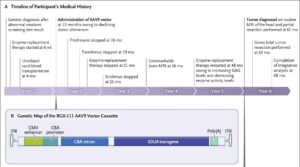
The story began with a 5-year-old boy with an inherited lysosomal disorder, severe MPS1 deficiency (Hurler subtype). The patient received enzyme replacement therapy at six weeks of age, followed by a cord blood stem cell transplant at age four months.

Investigators chose to perform gene therapy when the patient was 13 months old to deliver the iduronidase (IDUA) gene. The vector chosen was an AAV9 serotype, using a cytomegalovirus enhancer and a chicken beta-actin promoter driving the gene. The virus was administered into the boy’s cisterna magna in the base of the skull.

When the boy was five years old, a routine neurological scan revealed a large intraventricular mass that had not been observed two years earlier. Analysis of the tumor revealed it was a PLAG1-driven neuroepithelial tumor—indeed, PLAG1 expression was almost 300 times higher than in other central nervous system tumors studied at CHOP. (PLAG1 is usually only expressed during embryogenesis.)

Surgery to remove the tumor was successful. Eight months after surgery, there are no signs of tumor growth. The boy is also showing advanced neurocognitive function.


Tumor typing

George described RNA sequencing of the tumor, which revealed the fusion of a fragment of the AAV9 vector cassette to exon 5 of the PLAG1 gene on chromosome 8. The resulting transcript is predicted to encode a PLAG1 derivative containing five zinc-finger DNA-binding domains and a C-terminal transcriptional activation domain, which was previously reported to function as a transcriptional activator.

Adeno-associated virus
Credit: Dr_Microbe / iStock / Getty Images Plus

Curiously, the chimeric junction also included a segment of human chromosome 10, which George suspects originated during the vector manufacturing process. The integration event was present in about 40% of the total reads, suggesting integration into one of the two PLAG1 alleles.

George concluded her talk by noting that while the clinical outcome in this patient is so far encouraging, this is evidence that AAV integration can be associated with oncogenesis. The study underscores the need to monitor the most heavily transduced tissues after AAV gene therapy.

While the gene therapy community should be cautious in extrapolating this single case report across all AAV gene therapy programs, George said the study supports the use of the lowest feasible vector dose as well as tissue-specific promoters.

A) Timeline of the patient’s medical history; B) Diagram of AAV gene therapy cassette. [The New England Journal of Medicine ©2026]

George noted that detection of the integrated AAV vector DNA was challenging, in part because of rearrangements of vector DNA. The use of several complementary techniques—long-read DNA sequencing, targeted PCR amplification, and RNA sequencing—was required to confirm the integration.

George and coworkers closed their paper, noting that, “Our findings support the hypothesis that rare AAV integration can contribute to human oncogenesis, which emphasizes the need to optimize gene delivery methods and monitor transduced tissues after treatment.”

The post ASGCT 2026: Rare Instance of AAV Integration into Human Genome Linked to Brain Tumor appeared first on GEN – Genetic Engineering and Biotechnology News.