Scientists have identified a new molecular target for CAR T-cell immunotherapy to attack both glioblastoma cells and tumor-supporting macrophages at once. A study published today in Nature shows promising preclinical results that could allow this approach to overcome the limitations of previous attempts to target glioblastoma with CAR T cells.
“Our approach targets both the tumor and the environment that allows it to thrive,” said Sheila K. Singh, MD, PhD, professor of neuro-oncology and neurosurgery at King’s College London and McMaster University. “Instead of treating glioblastoma as only a mass of cancer cells, we need to think of it as a connected tumor-immune ecosystem. By going beyond the cancer cells alone, we are also targeting immune cells that help shield the tumor from treatment.”
Glioblastoma is an aggressive and lethal form of brain cancer where current treatments, including surgery, radiation and chemotherapy, only provide temporary benefits and are rarely able to prevent recurrence. Past attempts to develop CAR T therapies for glioblastoma have failed to produce sustained responses due to a number of challenges such as heterogeneous antigen expression, antigen loss, and microenvironmental barriers that treatments solely focusing on targeting the tumor cells have not been able to surmount.
In particular, tumor-associated macrophages have been shown to be key contributors to glioblastoma progression. While macrophages normally play an important role in the immune response against infections, glioblastoma can recruit and reprogram these immune cells to promote tumor growth, suppress the immune system, and resist treatment.
“CAR T therapy has been effective in some blood cancers, but translating that success to brain tumors has been difficult,” said Shan Grewal, an MD/PhD candidate at McMaster and co-lead author of the study. “Most approaches have focused on killing cancer cells alone. Our work suggests we may also need to dismantle the immune support system that helps glioblastoma survive.”
Using patient tumor samples, Singh’s team conducted multi-omic profiling studies that led to the identification of a promising target present both in glioblastoma cells and tumor-associated macrophages, called glycoprotein non-metastatic melanoma protein B (GPNMB). By engineering CAR T cells to target GPNMB, the researchers were able to attack glioblastoma tumors on two fronts and show potent antitumor activity in several preclinical models including patient-derived xenografts.
While more work will be needed before this strategy can be evaluated in clinical trials, the study introduces a new framework to identify immunotherapy targets that could potentially be applied to a wide range of solid tumors beyond glioblastoma.
Supporting this concept, a team at the University of Calgary has simultaneously published results in Nature Cancer from a first-in-human study using a similar approach in relapsed alveolar soft-part sarcoma (ASPS) and translocation renal cell carcinoma, two types of cancer that stably express GPNMB. In these patients, a CAR T-cell therapy directed against GPNMB was found to be safe and induced stable disease for up to three months, providing early clinical evidence supporting the feasibility of this therapeutic approach.
A highly sensitive blood test that detects traces of tumor DNA in patients with localized pancreatic cancer identified substantially more patients with residual disease than conventional liquid biopsy testing, according to a prospective study published in Clinical Cancer Research. The findings suggest that more sensitive detection of circulating tumor DNA (ctDNA) could improve risk stratification after chemotherapy and surgery and help identify patients who remain at high risk for recurrence despite reassuring imaging results.
Researchers at Northwestern Medicine evaluated digital droplet polymerase chain reaction (ddPCR), a liquid biopsy approach that detects specific KRAS mutations, against standard next-generation sequencing (NGS), which surveys hundreds of cancer-associated genes but with lower sensitivity. Because KRAS mutations drive more than 90% of pancreatic cancers, the investigators hypothesized that focusing on this single, biologically important target would allow detection of extremely low levels of circulating tumor DNA that broader sequencing approaches often miss.
“We’re able to detect very high sensitivity in the blood for pancreas cancer,” said senior author Akhil Chawla, MD, clinical associate professor of surgery at Northwestern University Feinberg School of Medicine and a complex surgical oncologist at Northwestern Medicine. “We’re looking for extremely low levels of the DNA in the plasma.”
The prospective study followed 106 patients with localized pancreatic cancer from diagnosis through chemotherapy and surgical resection. Blood samples were collected before treatment, after chemotherapy, and following surgery to determine whether changes in KRAS ctDNA reflected treatment response and predicted patient outcomes.
At diagnosis, ddPCR detected tumor-derived KRAS DNA in 65% of patients, compared with just 17% using conventional NGS. The differences became even more striking after treatment. Following chemotherapy, ddPCR detected ctDNA in 60% of patients, while NGS detected it in only 5%. After surgery, ddPCR remained positive in 56% of patients compared with 9% using standard sequencing.
“What this publication is going to show is that yes, we can detect it with both, but we are missing a significant number of patients with standard sequencing,” Chawla said.
According to the study, patients whose disease was detected only by ddPCR represented a previously hidden intermediate-risk group. These patients had a median overall survival of 27 months after diagnosis, compared with 41 months among patients who tested negative by both assays. The findings suggest that standard liquid biopsy testing may underestimate the presence of minimal residual disease in many patients who appear to have responded well to therapy.
“We’re missing up to 60% of patients,” Chawla said. “Even at the time of diagnosis, and after treatment—particularly where we think it looks like on a CT scan after a patient’s undergone chemotherapy and had their surgical resection—everything looks great, and even the blood test that looks at ctDNA looks great. In sixty percent of patients we were still able to detect low levels.”
He adds, “Our goal is to get rid of that disease forever. Unfortunately, even with the work that we’ve done, we’ve shown that 60% to 70% of patients have recurrence of that disease after chemotherapy and surgery.”
The study also demonstrated that ctDNA dynamics over the course of treatment carried important prognostic information. Rather than relying solely on whether ctDNA was present or absent, investigators found that changes in ctDNA levels reflected treatment response.
“We’ve been able to see it even with chemotherapy and surgery,” Chawla said. “Patients that have that significant decline in the marker—not just the presence or absence, but even if they go from a high level to a medium to low level—those patients actually are benefiting from that treatment.”
Conversely, patients whose ctDNA levels remained stable or increased during treatment experienced substantially worse outcomes.
Unlike broad NGS panels, which search for hundreds of genetic alterations simultaneously, ddPCR focuses on a limited number of mutations with far greater analytical sensitivity. Chawla emphasized that the innovation was not a new laboratory technology but rather a new application of an established one.
“DDPCR can detect a single mutation with 1,000 times more sensitivity,” he said. “When we do that deep dive in pancreas cancer, what we’re really trying to do is identify whether this biomarker can, number one, be detectable in a high percentage of patients; number two, is it prognostic… and number three, can it really tell us how well a treatment is working?”
Because the assay targets the same KRAS mutations that are the focus of emerging targeted therapies, Chawla believes the approach could become increasingly valuable as those therapies enter clinical practice.
“I think there’s a lot of value in this test, particularly as we enter the age of KRAS-targeted treatments,” he said. “Our biomarker actually targets the exact same gene.”
Currently, surveillance after surgery relies primarily on CT imaging performed every few months, leaving clinicians with limited tools for detecting microscopic residual disease before recurrence becomes radiographically apparent.
“What the standard of care today is, is we just get CT scans every three months to give us an idea of when this comes back—we’re just kind of sitting on our hands and waiting,” Chawla said. “This blood test gives us an opportunity to be more active in that surveillance, potentially be more adaptive in our treatment.”
A new blood test may help address one of the key challenges in prostate cancer detection—identifying aggressive forms of the disease early on. According to research led by a team at Karolinska Institutet, the Stockholm3 blood test detected more clinically significant cancer cases than the well-established, but problematic, Prostate Specific Antigen (PSA) screening test.
The study appears in the Annals of Internal Medicine. Swedish researchers collaborated with teams from Europe and the U.S. on this work.
Prostate cancer is one of the top cancers among men globally, with an estimated 1.5 million new cases and 397,000 deaths annually. PSA testing has long been used for early detection. But, although PSA is prostate-specific, it is not cancer-specific. Elevated PSA levels can be caused by benign conditions as well as cancer and up to 50% of diagnosed aggressive prostate cancers are in men with low PSA values—below today’s cutoffs of PSA 3 ng/ml or PSA 4 ng/ml.
“There are a number of tests in development to improve on PSA alone. A lot of them, like Stockholm3, are fairly ingenuous and do a good job,” Mark Pomerantz told Inside Precision Medicine. He is a medical oncologist at the Dana-Farber Cancer Institute in Boston. Until one of these newer tests emerges as a winner, though, MRI is the gold standard for evaluating men with high PSA. “With MRI we can see the prostate in some detail,” Pomerantz said, “But it is expensive.”
The Karolinska-led researchers analyzed data from 12,670 men aged 50–74 from the population-based STHLM3-MRI study, which compared MRI-targeted and standard biopsy in men with elevated PSAs. In this more recent Annals study, the men were tested first with both PSA and Stockholm3 and followed for two years via national cancer registries, which allowed researchers to also identify cancer cases missed during the initial screening.
Stockholm3 detected 90 percent of aggressive cancer cases, compared to 74 percent for PSA.
“The test incorporates plasma protein biomarkers, genetic risk information from a polygenic risk score, and clinical factors such as age, family history, and prior biopsy history,” the study’s lead author Thorgerdur Palsdottir, told Inside Precision Medicine. Palsdottir is a researcher at the Department of Medical Epidemiology and Biostatistics, Karolinska Institutet.
He added, “Together, these components provide a more comprehensive estimate of a risk of harboring clinically significant prostate cancer than PSA alone.”
The components, he explained, map onto distinct biological axes rather than a single one. The kallikreins (PSA, free PSA, hK2) reflect prostate epithelial and tumor secretory activity, and the free-to-total PSA relationship helps separate benign enlargement from cancer. The polygenic score and family history capture inherited susceptibility—a man’s baseline predisposition—rather than anything about a tumor. GDF-15 is a stress-response marker that has been associated with more aggressive disease across several cancers.
During the study follow-up, 443 men were diagnosed with clinically significant, i.e. aggressive, prostate cancer. Stockholm3 missed significantly fewer serious cancer cases than PSA, while the proportion of men incorrectly classified as high-risk was similar between the tests.
“These results point toward a potential change in how prostate cancer screening can be conducted. A more precise blood test could enable earlier detection of aggressive disease while reducing the number of unnecessary follow-up examinations and procedures,” said Palsdottir.
He adds that longer-term follow-up is needed to fully assess the effects on mortality and long-term outcomes. “The next important step is to evaluate longer-term outcomes, including disease progression, metastatic disease, and prostate cancer mortality.”
By now, you’ve probably heard of the term looksmaxxing. Think pieces about the trend have popped up all over the internet. And in a recent episode of Saturday Night Live, comedians poked fun at lookmaxxing influencers obsessed with having the perfect male physique.
While this new social media craze may seem silly, it’s impacting more boys than you might think. In a study conducted last year that surveyed over 3,000 young men (ages 16–25) from the United States, United Kingdom, and Australia, nearly two-thirds of participants were regularly engaging with masculinity influencers.
Teen boys are being encouraged to change the way they look in order to fit a certain standard of attraction. The growing amount of looksmaxxing content they see online can have real effects on their self-esteem and mental health.
What is looksmaxxing?
Looksmaxxing originated nearly a decade ago in incel forums where men blamed their lack of romantic partners on the belief that female sexual selection is primarily based on physical qualities. So men who aren’t born with traits desirable to women are doomed to fail romantically. While traditional incels wallow in this fate, looksmaxxers seek to enhance their appearance to become more attractive. Their community claims that there is a universal standard for what the ideal man (and woman) should look like.
This is determined by a rating system called the PSL scale — the name being an amalgamation of three prominent misogynistic incel forums of the 2010s. There are many factors that go into the scaling, such as eye shape, jaw size, nose angle, and body fat percentage. Along this scale, you can land in four categories: subhuman, normie, Chadlite, and Chad (the ultimate catch).
During the pandemic, looksmaxxing went mainstream, merging with “manosphere” content on social media platforms like TikTok and Instagram. The trend became less about the ability to attract women and more of a competition among boys and men as they engaged in mog-offs — online contests where people have their faces analyzed and compared by facial recognition software to determine who’s better looking.
Self-improvement practices have gained popularity among boys. Some are considered to be softmaxxing, like developing skincare routines or eating high-protein diets, and others to be hardmaxxing, like using growth hormones or getting cosmetic surgery.
Prominent young influencers like Clavicular represent the extreme side of looksmaxxing. He practices bonesmashing (using a hammer on facial bones to try to form more angular features), injects himself with testosterone, and takes meth to maintain a low body fat percentage while still having a muscular physique.
Looksmaxxing and new beauty standards
The rise of looksmaxxing seems to have a caused a ripple effect among teen boys. While the ideal look has centered on big muscles and washboard abs for decades, there’s now an added pressure on facial beauty that’s typically been reserved for girls.
“With some of the teen boys I work with, most of whom already have self-esteem issues, I think there is a lot more concern about how they look,” observes Alnardo Martinez, LMHC, director of the Pediatric OCD Intensive Program and a mental health counselor at the Child Mind Institute. “They want to have the strong jaw, really big muscles, clear skin, and a perfect haircut.”
However, Martinez notes that it sometimes take a while for boys to admit that they feel this pressure. They may insist that they don’t really care about that stuff. “But then, maybe a few months later, it comes out that there is a lot of comparison. They’re spending a lot of time in front of the mirror or in the bathroom trying to create this perfect image,” he observes.
What teen boys think about looksmaxxing and self-improvement
We talked to young men who were critical of Clavicular and the impact looksmaxxing can have on teens but were positive about engaging in some form of physical self-improvement.
Wyatt, now 19, remembers comparing his jawline to his peers’ when he was in 7th grade. “I just felt like they had really sharp jawlines. And I was just like, ‘Oh, I want to get closer to that.’” He would also come across TikToks advertising rubber chewing blocks and chin exercises meant to strengthen the jawline.
And so, Wyatt began to do jaw exercises he’d found online, reciting the alphabet while stretching out the muscles. “I would go through my Zoom classes throughout the day and then after that was done, I’d just go into the bathroom and go through the whole exercise. It would take like an hour sometimes,” he recalls. “It turned into more like a self-care, self-improvement session. I would do that every day after my classes. I didn’t feel like I was done with school until I finished my jawline routine.” He took photos to document his progress.
Wyatt feels like the routine had a positive effect, because he was able to see an improvement. “I felt more satisfied with myself, a little more confident.”
Lev, now 19, remembers wanting to have some control over his body when going through puberty in high school. “Puberty is not a straightforward process. It’s not all peaches and cream. Your body changes, and it can be uncomfortable,” he explains. “But with lifting and strength training, it was very exciting to see this, you know, man energy that came out of it. I wanted to harness that and really take it by the reins. Have some agency as a man.”
And while he rejects the extreme parts of looksmaxxing, Lev does regularly practice self-improvement through weight lifting, skin care routines, and taking GLP-1 weight loss medication.
How looksmaxxing can impact boys’ mental health
Since looksmaxxing places such a strong emphasis on achieving a very specific look, clinicians are concerned about its influence on teens. “Self-esteem is pretty fragile during puberty,” Martinez says. “There’s already a ton of comparison and perceived flaws that teens don’t love about themselves.”
These insecurities can be exacerbated by the type of content teens engage with online, Martinez explains. Along with ChatGPT bots specifically designed to judge aesthetics, Reddit threads such as r/Mewing and websites like Looksmaxxing Forum encourage boys to post pictures of their faces and bodies to get rated by their peers. Boys as young as 13 visit these forums, posting pictures and asking for tips on how to improve their looks.
“These are generally places where people are already pretty harsh and critical. These boys are receiving a lot more ‘confirmation’ around the perceived things that are wrong with them or that they need to change,” Martinez says. “And it just feeds into the already present negative self-image and self-talk.”
He explains that this type of social media engagement can also compound underlying mental health issues like depression and social anxiety. “They might be less likely to go out and talk to people because they’re thinking, ‘Everyone is going to see this one thing that everyone else has told me is wrong with me. So now I can’t go out,’”he says.
Martinez is also concerned that online content can negatively affect teens with body dysmorphic disorder (BDD). “If they think they have a big nose, for example, they might go on these Reddits and ask, ‘What does my nose look like? Is it too big?’ There are trolls out there. Someone is going to say yes and then that’s going to make the BDD symptoms even worse.”
When behaviors might be concerning
In some ways, teen boys taking part in more self-improvement practices could be seen as a good thing. They’re exercising, taking care of their skin, and eating more balanced diets. The issues begin when these types of practices turn into obsession. And given the underlying ideology of looksmaxxing and the nature of social media, things can become unhealthy.
According to Martinez, there are some changes in behavior to look out for that indicate you might want to step in.
One clear change, he says, is a noticeable shift in the amount of time they’re spending on grooming themselves. “Maybe they were someone who would typically just get up and run out the door without washing their face,” he says. “But now they’re spending a lot more time in the bathroom and asking a lot of questions about how they look.”
Another warning sign can be a big change in personality. “Irritability is a big one that we’ll see a lot,” he says. “They’re unhappy with how they look, so this increases a general level of irritation.”
These behaviors paired with an unusual uptick in time spent on social media, Martinez explains, can be a sign that something’s wrong and support is needed.
How to support your child
If you’re worried that your child might be engaging in looksmaxxing-related behaviors to an unhealthy degree, says Martinez, there are a few things you can do:
Open communication. Martinez suggests approaching your child with curiosity. “You could start the conversation by saying something like, ‘So have you heard about this? What do you think about it? Have you ever had any thoughts yourself about how you look or desires to change your body or face?’ And then give them some space to be open and vulnerable about it. Validate their experience.”
Find out where your child is getting their information. “Read it together, talk about it, and see what your child thinks about it,” Martinez advises. “And if it’s promoting something dangerous, then you can talk to them about how those practices can be harmful and what could actually happen if they do some of those things.”
Encourage male role models. “There’s a patient I work with now who doesn’t have a present dad,” Martinez explains. “His mom tries to talk to him about things like body image, but he feels like she doesn’t understand and can’t relate. So having someone that he can talk to and be open about this stuff with, especially someone who can also share their own struggles, can be really helpful.”
Seek help from a mental health professional. This is especially important if you find out that your child has been engaging in extreme forms of looksmaxxing such as bonesmashing or starvemaxxing. Martinez recommends looking for a clinician who specializes in body image or body dysmorphic disorder.
A lot of parenting comes down to open communication around what your kids are seeing and what they’re feeling. We all have things about our bodies that we might not like and wish we could change, says Martinez, and it can help to normalize those feelings. “And then you can discuss how they can make changes in healthy ways,” he suggests. “Go over what’s a realistic change and what’s a dangerous change.”
AI is often portrayed as either a technology that will revolutionize healthcare and cure disease or an overhyped force that could stifle science—but the reality is far more nuanced. While AI is already transforming biomedical research, meaningful advances in medicine require much more than powerful algorithms. That complexity is the focus of this conversation with Michael Antonov, co-founder of Oculus, who turned to biology and drug discovery after pioneering virtual reality.
To do so, he co-founded the computational drug discovery company Deep Origin. Rather than relying on AI alone, Antonov believes progress depends on integrating machine learning with physics-based molecular simulations, mechanistic models, and rigorous experimental validation. This philosophy has been fundamental for shaping Deep Origin’s AI-native platform to improve virtual drug screening, predict toxicity, and help researchers develop safer, more effective therapies.
In this episode of Behind the Breakthroughs, Anotonov examines how AI is changing drug discovery and the pharmaceutical industry’s opportunities and limitations, taking a pragmatic approach to claims that AI alone can improve human health from larger models and more computing power. This conversation offers a glimpse into biomedical innovation’s future for those interested in where AI is truly changing medicine and where human expertise and experimental science remain vital.
This interview has been edited for length and clarity.
IPM: Does virtual reality (VR) have a role in medicine and healthcare?
Antonov: VR is predominantly a visualization device, so it’s good for training and various other areas in terms of actual treatments. When VR has been used and is actually FDA approved, as far as I know, it presents modified images to each eye and kind of trains your brain to treat them both simultaneously. Similarly, it’s been used for PTSD treatments and some of the areas where you can maybe handle fears. I haven’t personally experimented with that.
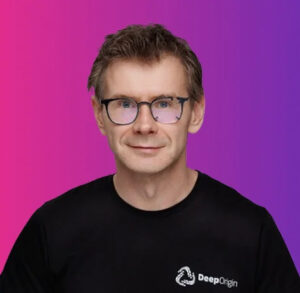
Michael Antonov, co-founder of Oculus and Deep Origin [Deep Origin]
On the visualization side, for displayed molecules, there’s a company that has done a great job of allowing you to look at the molecules, and this could be useful for research. That said, it just gives you more spatial perception. It doesn’t actually solve the problem for you.
On the training side, there are potentially huge benefits, even though you would then have to require investing a lot in software to make it actually perform well. Now, one good example is, I have invested in this company called Osso VR, which does training for knee replacement surgery, and they actually practiced it, and they did a study where their surgeons trained with their knee replacement and got 230% more proficiency.
Given the time and the accuracy of a procedure and the speed of how they learn. But to me, that felt actually very incredible that it’s actually being used. I think they also do nursing trade trainings and such. Those are probably the top areas that will probably be more brain-oriented cognitive things you could do. It would just take time to explore it.
IPM: What will AI’s impact be on medicine and healthcare?
Antonov: I think that there is still a lot of uncertainty. The system is overloaded. There’s a whole spectrum, and the challenge is that there are hundreds of different companies and projects with a whole different range of funding.
For pharma, it would be a big job to sift through what is actually good and what will help me take my target forward. That’s a challenge because there’s a lot more noise and there are some really good companies, but there are also many me-too, not-so-great ones. There are also certain fundamental areas that haven’t been solved yet, like toxicity and other issues, although there has been progress in some areas. There are like dozens of predictors, but they’re not necessarily super great, though they’re better than nothing. It’s hard to tell where it’s going. The biggest thing is to see what you actually prove in the lab.
The other thing is that there is a range of medicinal chemists and other knowledgeable people who haven’t been exposed to the breakthroughs or effects we might see on our side. AI may surprise us in certain biological parts of the name for certain problems. Now, more holistically at Deep Origin, our plan is to support the discovery process for small molecule drugs and have predictable outcomes.
IPM: How will AI drive the future of precision medicine?
Antonov: The super exciting way it could look in 20 years in that type of timeframe is that we are starting to get personalized medicine. You’re really combining the patient and the system model so that whenever you have a disease, if you have maybe a novel genomic mutation or if you have a new virus, you can literally put the data into the system.
Here is basically experimental data about whatever you collect from the virus. I don’t know if you get the structure of its protease from crystallography. I will even tell you here are the steps you need to take and which lab to run them in. But once you provide it, the system will be able to decompose the pathways and targets it’s affecting and then identify the specific concentrations you might need for these patients.
Essentially, you can provide a target in just a few months. You have good candidates, and these candidates have a much higher probability of not being toxic and having good admin properties. Let’s say we are moving from 90% failure rate to maybe 60%. That would be a huge job. That’s what the toxicity models enable, though they are hard because they need both experimental and data collection. But actually, even things like physics can help with counter screening, asking, what are all these things we should not bind to? Go and check them computationally. This whole stack basically gives you data on how to run your trial. That’s ten years. But then you level it up with populations and the individual.
This is a 2030 year outlook because then you’re pulling in the genomics data, maybe various things, and this is where the industry really becomes much more powerful and individualized. To do that, you really need these more detailed models.
IPM: Do you have a prediction about a current AI trend that will be around for a while?
Antonov: One of the hot topics right now is the idea of AI scientists. In our case, we have an AI discovery engine. We actually did this earlier, which is this area grant from the U.K. for picking up the disease, which can be fully drugged by AI.
We ran our AI scientist system to pick a target for endometriosis. It uses our tools to come up with a molecule. It’s currently in progress, and it did a very detailed breakdown and analysis of hundreds of targets based on very specific criteria, and I picked a particular one with all the reasons.
It’s interesting to make those kinds of tools and this whole pipeline available to almost everyday people because then, much like some genomics tools, an available AI system, which can support the full path of drug development, can in fact let a patient or an interest group just come in and take lots of steps in the direction of saying, “Here’s either maybe an RNA or a gene therapy or a drug that can serve.”
That would be a huge step toward democratizing it. It doesn’t mean that AI will do all the steps for us, but it doesn’t mean that it can do a lot of the known steps, which have been done many times and can help us along the way. Of course, the real scientist will still be very critical to all the parts.
For general accessibility, this automation that is happening and these kinds of simulation tools and large language models in general are incredible. They’ve got a little bit of a long-winded thing, but I wanted to reflect on what you said.
IPM: What are the pros and cons of building Deep Origin in the U.S. or China?
Antonov: Some of the more recent wisdom that I’ve heard is that if you want to survive in the U.S. or more expensive countries, you need to be taking bigger risks, and you need to be more innovative in how you approach the type of modalities and things. So that’s one line of thinking.
Another way is to be distributed. In our case, a big part of our AI/ML team is in Armenia. My co-founder is Armenian. We have 40 people there. I have just come from spending a week and a half with the team there for model building and science. There is an AI, and there are definitely people in all of the areas. Automated labs could also probably be in any country.
In terms of the actual trials, it depends on the situation. There are certain things that it’s probably wiser to do in China for this time being, but also maybe India will be up and coming, and if there are certain scenarios where there are more rare diseases, it’s probably okay to also not stay in the States.
There’s no perfect answer. We have a challenging environment. At the end of the day, you have to have something really valuable and novel to keep going forward. They have really great scientific research there too. We have to be careful and just really go at it hard.
IPM: Where does China stand out from the United States in terms of pharmaceutical research and development?
Antonov: If I were to pick one area, it’s the cost of clinical trials and the way we select just all the aspects of this. And to be honest, I’m not an expert in this. And clearly there’s a lot of progress in China right now. Everybody talks about how it’s much more cost-effective and quicker to do things there. There are a lot of “right to try” opportunities that are helping.
That said, I believe that we can have a lot better kinds of social programs around this to make it like easier for people to participate and maybe take more highly educated guesses and risks. There’s software infrastructure to simplify and reduce the cost. That would be amazing. In some of those areas, AI also can help, and the models actually can help.
IPM: If you could work on anything, what would it be?
Antonov: I would say focusing on aging as a disease. If you look at the funding, things could shake up the type of research that the NIH and the National Institute on Aging (NIA) do, which is really fundamental to our biology because it drives the majority of diseases and has 3% of the budget, whereas oncology and Alzheimer’s have huge budgets. There’s probably more impact in aging than probably some other well-funded areas if we look at the fundamental parts. That would be a big area where you can have a multiplier effect just from the research side.
To really build an ecosystem of better computational and AI models, maybe creating some way to actually incentivize people to contribute to them, because that’s the challenge right now. You can publish a research paper, or you can build your model to make your proprietary hidden drug. But we need scientists to share those in an integrated way. How do we do that?
Maybe it’ll take some big AI companies to jump into it and do something there. But it’s not going to be solved with just a model. It really needs to be a true experiment-grounded framework where researchers can contribute their part and have it be a part of a whole.
Bruxism is a multifactorial motor behavior of predominantly central origin, characterized by repetitive masticatory muscle activity and associated with dysregulation of dopaminergic, serotonergic, GABAergic, and glutamatergic pathways involved in motor control, emotional regulation, and stress responsivity. The endocannabinoid system (ECS) has emerged as a key homeostatic neuromodulator capable of integrating these neurotransmitter systems, thereby influencing pain processing, sleep–wake dynamics, and motor output. This article develops a neurobiological hypothesis based on a narrative integrative synthesis of clinical, experimental, and translational evidence regarding ECS involvement in the pathophysiology of bruxism. Findings from randomized clinical trials suggest that topical cannabidiol (CBD) may modulate motor neuron excitability and reduce pain-related outcomes, while case-based and experimental evidence supports the interaction between cannabinoid signaling and neural circuits implicated in motor control and behavioral regulation. Building on this evidence, we propose a hypothesis-driven translational model in which ECS-mediated neuromodulation may influence central mechanisms underlying bruxism, including motor pattern generation, stress responsivity, and nociceptive processing. Rather than providing prescriptive therapeutic recommendations, this model is intended as a hypothesis-generating construct that integrates current knowledge on ECS signaling within the broader neurobiology of motor control. Although heterogeneity in study design and outcome measures limits definitive conclusions, the available evidence supports the ECS as a plausible modulatory system in bruxism, with potential implications for future mechanistic and clinical research in centrally mediated motor disorders.
Diabetic retinopathy (DR) is a leading cause of blindness characterized by early neurovascular damage driven by hyperglycemia-induced mechanisms, including inflammation. The system composed of the urokinase-type plasminogen activator (uPA) and its receptor (uPAR) has previously emerged as a potential regulator of the pro-inflammatory events in DR, possibly through the interaction of uPAR with its lateral partners, such as formyl peptide receptors (FPRs). This study explored whether the inhibition of uPAR/FPR1 crosstalk may reduce early neurovascular alterations in DR by targeting inflammation. To this aim, the new FPR1 antagonist N-19004 was tested in a rat model of streptozotocin-induced diabetes. N-19004 was administered subcutaneously for 7 days at 1 month from diabetes onset. Immunofluorescence, RT-qPCR, Western blot and Evans blue perfusion were performed to evaluate the effects of N-19004 on inflammation, reactive gliosis, blood-retinal barrier (BRB) integrity and apoptosis. In addition, electroretinogram (ERG) was used to assess N-19004 efficacy on retinal function. N-19004 inhibited the activation of inflammation-related transcription factors, including nuclear factor kappa-light-chain-enhancer of activated B cells and signal transducer and activator of transcription 3, leading to reduced interleukin-1β and tumor necrosis factor-α expression. The attenuation of inflammatory processes resulted in reduced glial activation, as indicated by lower glial fibrillary acidic protein expression and Müller cell gliosis. The anti-inflammatory activity of N-19004 was accompanied by decreased BRB breakdown, as demonstrated by N-19004-mediated reduction of vascular endothelial growth factor, increased levels of tight junction components and diminished vessel leakage. The amelioration of BRB integrity was associated with reduced activation of caspase 3 and partial preservation of scotopic ERG a- and b-wave amplitudes, thereby improving retinal viability and function in N-19004-treated STZ rats. These results support the possible involvement of uPAR/FPR1 interactions in the regulation of DR-related inflammation and suggest a novel therapeutic target for the management of the early phases of disease.
BackgroundMetacognitive deficits are common in schizophrenia (SZ) and may worsen symptoms and impair insight. Oxidative stress (OS) abnormalities have also been reported, but findings are inconsistent, and no study has examined their associations with metacognition and psychopathology.MethodsThis case-control study included 89 SZ patients and 90 healthy controls (HC). OS markers, including superoxide dismutase (SOD), catalase (CAT), malondialdehyde (MDA), and glutathione peroxidase (GPX) were measured. The patient group and healthy control group underwent metacognition was assessed using the abbreviated Metacognitive Assessment Scale (MAS-A) and patients’ symptoms with the Positive and Negative Syndrome Scale (PANSS). Covariates included age, gender, education, BMI, and smoking, illness duration, onset age and medication.ResultsPatients showed significantly lower MAS-A total score and subscale scores (all p < 0.01) versus HC. Patients had lower SOD, CAT and GPX (130.69 vs 152.12 ng/L, 2.46 vs 6.62 ng/L, 158.09vs 197.75μmol/L) and higher MDA (9.22vs 7.34μmol/L) than controls (all p < 0.05). Partial correlation revealed that in patients: SOD was negatively correlated with positive/negative/PANSS total and MAS-A decentration scores; CAT was negatively correlated with general pathological/PANSS total scores, and positively correlated with MAS-A total score and its subscales (self-reflectivity, understanding the other’s mind, decentration, mastery), MDA was negatively correlated with negative symptom score and self-reflectivity score, and positively correlated with general pathological score; GPX was positively correlated with most clinical and metacognitive scores. Linear regression revealed SOD, CAT, and GPX significantly associated with the PANSS total score (β = -0.119, -6.169, -0.226; all p < 0.05), and with MAS-A total score (β = 0.021,2.879 0.049, all p < 0.001).ConclusionSchizophrenia patients exhibit OS abnormalities and metacognitive impairments. Greater OS severity correlates with worse metacognition and more severe psychopathology, suggesting OS as a key factor linking these domains.
Tested in large cohorts, a predictive model including 34 blood circular RNAs predicts progression to symptomatic AD, outperforming pTau217 and amyloid-PET.
Results from an individual participant data meta-analysis across 51 randomized trials challenge the assumption that the cardiovascular benefits from antihypertensive treatment compound over a prolonged duration of treatment.