

Background: Remote measurement technology (RMT) is increasingly used in health research to collect real-world data relevant to clinical states (eg, sleep, activity, and stress). Concerns exist about the impact of remote tracking via personal devices and wearables on individuals with or at risk of eating disorders (EDs) by promoting a focus on exercise, diet, and appearance. There is a lack of research applying RMT to EDs. Objective: This study aimed to explore how smartphone- and wearable-based RMTs influence eating-, exercise-, and weight-related experiences among individuals with a history of or at risk of EDs and to identify perceived benefits, harms, and recommendations for their use in this population. Methods: In total, 14 semistructured interviews were conducted with former participants of Remote Assessment of Disease and Relapse: Major Depressive Disorder, a 2-year digital health study tracking depression outcomes via RMTs. Participants were included in this follow-up if they had disclosed a history of a comorbid ED or were within the at-risk age range (18-30 years) for EDs during Remote Assessment of Disease and Relapse: Major Depressive Disorder and displayed subclinical ED symptoms (Eating Disorder Diagnostic Scale). Interviews explored the impact of app engagement and wearables (Fitbits) on food, activity, and weight-related behaviors and attitudes. Template analysis was adopted to capture themes guided by the focus on ED-relevant domains. Results: In total, 6 themes captured participants’ experiences with RMTs across clinical status and presentation. Participants broadly appreciated the convenience and reflective potential, while some described emotional strain linked to constant self-tracking. Health data impacted participants’ eating and exercise habits through a dynamic process from awareness to cognition to action, fostering healthy routines or obsessive patterns, depending on emotional state, ED presentation, and recovery stage. Self-tracking appeared to mirror illness stage, supporting ED recovery among those with greater distance from illness, but risking reinforcement of compulsive patterns among those with residual or emerging symptoms. Participants’ recommendations for future studies in EDs stressed balancing autonomy with safeguards for vulnerable individuals. Conclusions: These exploratory findings, drawn from individuals with lived ED experience and young people at subclinical risk, suggest that RMT use was shaped by recovery stage and contextual factors, rather than being inherently beneficial or harmful. While findings should not be interpreted as evidence of RMT safety or acceptability in ED cohorts broadly, they raise important questions about ethical RMT design, including the selection of wearables, access to data, and researcher communication with participants.
<img src="https://jmir-production.s3.us-east-2.amazonaws.com/thumbs/b169595d201412fcf0e45228d9bad465" />
Local field potentials for target localization in centromedian deep brain stimulation for epilepsy
ObjectiveTo evaluate whether local field potential (LFP) spectral profiles can serve as a candidate “spectral fingerprint” for physiological confirmation of centromedian-parafascicular (CM–Pf) targeting during thalamic deep brain stimulation (DBS) for drug resistant epilepsy (DRE).MethodsThis is a retrospective study of 10 patients (20 leads) who underwent CM-DBS implantation for DRE at a single tertiary center. Postoperative CT and preoperative MRI were co-registered, normalized to the Montreal Neurological Institute (MNI) space, and reconstructed using Lead-DBS software to anatomically localize contacts. BrainSense™ Survey recordings were obtained at least 3 weeks post-implant during routine programming. LFP frequency content was analyzed, and prominent peaks were identified and classified into canonical frequency bands (theta, alpha, beta). These spectral profiles were then mapped to MRI-based anatomical localizations, and statistical tests were applied to assess associations between peak patterns, contact localizations and thalamic subregions.ResultsContacts were distributed as follows: 50 in the CM, 16 in the Parafascicular (Pf), 15 in the Centrolateral, 8 in the Mediodorsal, and 7 in the Ventrolateral (VL) nuclei. Of the 10 representative spectral localizations confined to the CM/CM-Pf region, 8 (80%) displayed a distinct dual-peak spectral profile with peaks in the theta/low alpha (5.5–9 Hz) and high beta (20–30 Hz) bands (mean frequencies: 7.63 Hz and 21.02 Hz, Fisher’s exact test, p < 0.001). Single-peak profiles showed no significant association with specific nuclei (p = 0.871). Contacts overlapping other thalamic nuclei more frequently exhibited narrow 10–15 Hz peaks (p = 0.005) or triple-peak profiles (p = 0.02), suggesting mixed structural contributions.ConclusionA dual- band candidate spectral pattern consisting of theta/low alpha and high beta peaks was associated with the CM-Pf region in this cohort. This finding provides early evidence supporting the feasibility of incorporating passive LFP recordings as a physiologic marker of target engagement. Future work to prospectively compare bipolar survey-based localization with monopolar recording strategies could enable development of a state-based, physiologically informed spectral atlas to refine CM-Pf targeting in thalamic neuromodulation for DRE.
Impact of an Artificial Intelligence–Powered Clinical Decision Support System for Acute Kidney Injury Prevention in the Intensive Care Unit: Single-Center Uncontrolled Before-and-After Implementation Study
Background: Acute kidney injury (AKI) is a frequent and serious complication among hospitalized patients, particularly in critical care settings, where its incidence can exceed 50%. AKI is associated with increased mortality, prolonged hospitalization, dialysis dependence, and higher health care costs. Although the KDIGO (Kidney Disease: Improving Global Outcomes) guidelines emphasize supportive care, hemodynamic optimization, and avoidance of nephrotoxins, their implementation remains inconsistent, partly due to the lack of timely risk stratification. Recent advances in artificial intelligence have enhanced early prediction and detection of AKI, offering new opportunities to improve patient outcomes and intensive care unit (ICU) efficiency. The U-Care Renal Platform (UCRP; U-Care Medical S.r.l), a Conformité Européenne (CE)–marked artificial intelligence–powered medical device, integrates directly with the ICU electronic health record to continuously analyze patient data and predict the risk of moderate or severe AKI within 24 hours, providing actionable, guideline-based recommendations. While the predictive performance of UCRP has been validated previously, its real-world impact on clinical and operational outcomes in the ICU remains underexplored. Objective: This single-center uncontrolled before-and-after implementation study aims to evaluate the association between UCRP implementation and selected ICU clinical and operational outcomes in routine practice at SCIAS Hospital, Barcelona. Methods: This study was conducted as a retrospective service evaluation of a workflow-embedded clinical decision support system between March 2023 and March 2025. It included 202 postsurgical adult ICU patients. Outcomes of interest were assessed by comparing preimplementation and postimplementation periods. Months during which the UCRP was inactive were excluded from the analysis (total excluded duration: 10 months; 5 in the preimplementation period and 5 in the postimplementation period). The outcomes included the incidence of moderate-to-severe AKI (KDIGO stages 2 and 3), the use of nephrotoxic medications, the frequency of hypotensive episodes among patients with AKI, and the ICU length of stay. Results: During the postimplementation period, lower rates of moderate-to-severe AKI (9/99, 9.1% vs 12/103, 11.7%), nephrotoxic drug administration, and hypotensive episodes among patients with AKI were observed compared with the preimplementation period. Conclusions: Integration of the UCRP into ICU workflows was associated with differences in selected AKI-related process and intermediate clinical outcomes in this single-center uncontrolled before-and-after implementation study. However, given the study design, causal relationships cannot be established, and the findings should be interpreted as preliminary signals requiring confirmation in larger, controlled, and multicenter studies, including patient-centered outcomes.
<img src="https://jmir-production.s3.us-east-2.amazonaws.com/thumbs/71fcf65ca89d431d076172e7f4cece6c" />
Evaluating Wearable Devices for Remote Monitoring in Psychosis: Pilot Study Nested Within the CONNECT Cohort Study
Background: Digital remote monitoring technologies, including smartphones and wearables, offer promising avenues for early detection of psychosis relapse. However, selecting devices that are acceptable to participants and produce high-quality data remains challenging. Objective: The aim of this nested pilot study was to assess the acceptability and data quality of 3 commercially available wearable devices in people with psychosis recruited to the CONNECT cohort study. Methods: Participants recruited to the CONNECT study before July 31, 2024, were included in the pilot study and selected 1 of 3 wearable devices: a Fitbit Charge 5, Samsung Galaxy Watch 5, or Apple Watch SE. Baseline demographics were compared between device groups. Acceptability of devices to participants was assessed through a Wearable Device Satisfaction Questionnaire after 3 months of use, with the proportion of positive responses to each question calculated and compared. Data completeness was also assessed by calculating the number (and percentage) of valid days of step count, heart rate, and sleep data, and comparing between groups. Data quality was assessed through summarizing the amount of troubleshooting required, additional metrics available from the wearables, and continuity of data completeness by calculating the proportion of participants with at least 3 days of heart rate data per week for the first 20 weeks of follow-up. Predefined criteria were used to determine the next steps for the wider CONNECT study: if one device was superior, this would be selected; if none were found to be superior and the Fitbit was found to be noninferior, then Fitbit would be retained. Results: Of the first 107 participants recruited to CONNECT, 105 were included in the pilot study evaluation. The Samsung Galaxy Watch was selected most frequently by participants (46/105, 43.8%), followed by the Apple Watch (27/105, 25.7%), and Fitbit Charge (23/105, 21.9%). Differences in participant demographics were observed across device groups. Self-reported acceptability after use did not differ substantially between devices. However, in terms of data completeness, the median proportion of valid heart rate data days was significantly lower for Samsung Galaxy (median 31.2%, IQR 8.5%-46.0%) compared to Fitbit (median 80.1%, IQR 26.7%-95.0%; =.003) and Apple Watch (median 49.3%, IQR 21.5%-86.0%; =.02). There was no significant difference between Fitbit and Apple Watch. Similar patterns were observed for step count and sleep data. The Samsung Galaxy Watch required more frequent troubleshooting for data flow issues and lacked additional physiological metrics, available from the other devices. Conclusions: Due to comparatively lower data quality and technical performance, the Samsung Galaxy Watch was discontinued for use in the subsequent phase of the CONNECT study. The study highlights the importance of incorporating nested evaluations of devices in long-term research.
<img src="https://jmir-production.s3.us-east-2.amazonaws.com/thumbs/15a98cce4ebe0d50a261a2b9f900f482" />
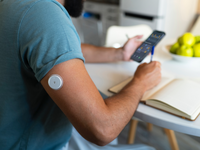
Perspectives on Continuous Glucose Monitoring Among Adults with Type 2 Diabetes in the United Kingdom: Cross-Sectional Survey
<strong>Background:</strong> Type 2 diabetes (T2D) is one of the most common noncommunicable diseases, requiring ongoing lifestyle changes and continuous glucose management through medication, diet, and physical activity. Traditional self-monitoring of blood glucose can be burdensome, especially with frequent finger pricks. As continuous glucose monitoring (CGM) becomes more affordable and accessible, it offers benefits such as increased glucose awareness, behavioral modifications, and reduced anxiety. However, challenges remain, including cost, discomfort, skin reactions, and privacy concerns. In the United Kingdom, perceptions of CGM among people with T2D, including both users and nonusers, are not well understood, limiting insight into factors influencing adoption and sustained use. <strong>Objective:</strong> This study aims to explore how adults with T2D perceive the benefits and challenges of using CGM, including both current users and nonusers. <strong>Methods:</strong> This study used a cross-sectional, online survey using YouGov’s nationally representative panel to explore experiences of CGM among adults with T2D in the United Kingdom. A total of 531 participants were recruited from November to December 2024. Thematic analysis of responses to 2 open-ended questions identified key perceived benefits and challenges associated with CGM use. <strong>Results:</strong> A total of 531 adults with T2D completed the YouGov online survey. Over half were male (297/531, 55.9%) and aged 65 years and older (281/531, 52.9%). Two-thirds (347/531, 65.3%) had lived with T2D for more than 5 years, and 9.6% (51/531) use or had previously used a CGM. Overall, 50.8% (270/531) responded to at least one free-text question, with 49% (260/531) commenting on benefits and 33.1% (176/531) on challenges. Thematic analysis identified five key benefit themes: (1) reduced monitoring burden, described as eliminating frequent finger prick testing and simplifying daily routines; (2) lifestyle feedback, enabling participants to better understand how diet and physical activity influence glucose levels; (3) greater control, by supporting more informed decision-making and increasing confidence in self-management; (4) feeling safer, through alerts for hypo- and hyperglycemia; and (5) sharing data with clinicians, which facilitated communication and more collaborative care. The main challenges were (1) access barriers, including restrictive eligibility criteria and the high cost of self-funding; (2) device issues, such as discomfort, inconvenience, and practical difficulties wearing the sensor; (3) technology reliance, with concerns about depending on devices rather than listening to bodily cues; (4) emotional strain, including anxiety, over-monitoring, and increased preoccupation with glucose levels; and (5) data concerns, particularly regarding accuracy, interpretation, and privacy. <strong>Conclusions:</strong> Adults with T2D, including both users and nonusers, described CGM as a practical and empowering tool that improves understanding, safety, and collaboration with health care providers. Nevertheless, access barriers, usability issues, and emotional and data-related burdens remain major obstacles to equitable adoption. Addressing these through improved affordability, digital literacy support, and customized clinical guidance may support ongoing and inclusive CGM use in routine care.
Virtual Reality Headset as an Alternative Tool for Reducing Dental Anxiety
Conditions: Neurodevelopmental Disorder (Diagnosis)
Interventions: Device: Virtual reality headset; Other: standard dental care
Sponsors: Semmelweis University
Enrolling by invitation
Interventions: Device: Virtual reality headset; Other: standard dental care
Sponsors: Semmelweis University
Enrolling by invitation
Smartphone-based Intervention for Young Adults With ADHD
Conditions: Attention Deficit/Hyperactivity Disorder(ADHD); Alcohol Use
Interventions: Device: Ecological Momentary Assessment for ADHD and Substance Use – Intervention Group; Device: Ecological Momentary Assessment for ADHD & Substance Use – Control Group
Sponsors: Traci Kennedy; National Institute on Alcohol Abuse and Alcoholism (NIAAA)
Recruiting
Interventions: Device: Ecological Momentary Assessment for ADHD and Substance Use – Intervention Group; Device: Ecological Momentary Assessment for ADHD & Substance Use – Control Group
Sponsors: Traci Kennedy; National Institute on Alcohol Abuse and Alcoholism (NIAAA)
Recruiting
Tracking the longitudinal course of physiologic and mental health functioning among individuals in substance use disorder treatment
IntroductionMental health monitoring is crucial to long-term recovery in substance use disorder (SUD) treatment; however, little is known about how changes in physiological indicators align with changes in self-reported mental health over time.MethodsWe examined longitudinal associations of resting heart rate (RHR) and heart rate variability (HRV) collected via a WHOOP® photoplethysmography device with self-reported stress, anxiety, and depressive symptoms among individuals in SUD treatment. Participants (N = 59) continuously wore the device and completed at least two mental health and stress assessments during the first month of residential treatment. ResultsLinear regression results indicated favorable changes in mental health and/or physiologic metrics, with notable heterogeneity in concurrent subject-level trends. Among participants with decreased RHR (better physiological functioning), 39% (N=23) also endorsed decreased stress, 42% (N=25) decreased anxiety, and 39% (N=23) improved depressive symptoms. Of those with increased HRV (greater stress adaptability), 39% (N=23) endorsed decreased stress, 39% (N=23) improved anxiety, and 41% (N=24) reduced depressive symptoms.DiscussionConcurrent changes in physiologic and mental health metrics during the first month of treatment varied across participants. These findings highlight the importance of integrating subjective mental health measures with physiological indicators to capture clinically relevant change during early SUD treatment.
Effects of Transcranial Magnetic Stimulation on Social Cognition, Cognitive Processing, and Functional Brain Architecture
Conditions: Psychopathy
Interventions: Device: continuous theta burst stimulation (cTBS); Device: Intermittent theta burst stimulation (iTBS); Device: Sham
Sponsors: University of Colorado, Denver; National Institute of Mental Health (NIMH)
Not yet recruiting
Interventions: Device: continuous theta burst stimulation (cTBS); Device: Intermittent theta burst stimulation (iTBS); Device: Sham
Sponsors: University of Colorado, Denver; National Institute of Mental Health (NIMH)
Not yet recruiting
Fronto-Parietal Transcranial Alternating Current Stimulation for ADHD in Children and Adolescents
Conditions: Attention-Deficit/Hyperactivity Disorder
Interventions: Device: Active transcranial alternating current stimulation; Device: Sham transcranial alternating current stimulation
Sponsors: Central South University
Recruiting
Interventions: Device: Active transcranial alternating current stimulation; Device: Sham transcranial alternating current stimulation
Sponsors: Central South University
Recruiting