

IntroductionWorry and rumination are two common forms of repetitive negative thinking encountered as core symptoms of anxiety and depression. They are difficult to treat and increase the risk of relapse for remitted depressive and anxiety disorders, especially in late-life. We propose that dysfunctional belief-updating is a fundamental cognitive mechanism underlying repetitive negative thinking and use a Bayesian model to test whether distinct components of belief updating are differentially associated with worry and rumination.MethodsWe recruited 83 older participants (age≥50) dimensionally for worry and rumination to perform a belief-updating task and undergo neuropsychological testing. We extracted three parameters from a Bayesian model of belief-updating: performance compared to the Bayesian optimal model, emphasis on initial information (prior weight), and relative weighting of new evidence compared to current beliefs (update strength). These parameters were tested for associations with worry and rumination severity, and four neuropsychological domains were tested as moderators (attention, visuospatial, working memory maintenance, and executive function).ResultsWorry severity was uniquely associated with lower prior weight, while rumination was associated with low update strength. Neither worry nor rumination were associated with performance. None of the neuropsychological domains moderated these relationships.ConclusionWorry and rumination are associated with unique alterations in belief-updating but not overall performance. Low prior weight in worry may inflate perceived uncertainty, while low update strength in rumination—specifically reflective pondering—is consistent with slower incorporation of new information. Both biases may contribute to the distinct phenomenological profiles of worry and rumination and inform specific therapeutic targets for these symptoms.
Protein Design’s AI Revolution: Inside David Baker’s “Communal Brain”
“I have this idea of a communal brain.” David Baker, PhD, told me as I sat in his office at the University of Washington (UW) surrounded by colorful and complex figurines of protein structures. It was the one-year anniversary of his Nobel Prize in Chemistry win.
Just outside his doors, a lab of more than 100 researchers was united by the shared ambition to design proteins from scratch (or de novo) for powerful applications across pharmaceuticals, vaccines, biosensors, and more. This “communal brain” housed at the UW Institute for Protein Design (IPD), where Baker led as director, was hard at work developing deep learning methods that could achieve atomic precision.
A small protein composed of 100 amino acids had an astronomical 20¹⁰⁰ possible sequences. Yet, only a vanishingly tiny fraction could fold into stable, functional structures. Misplacing a residue by an angstrom could mean the difference between a drug binding tightly to its target or complete failure.
For the antibody drug market worth hundreds of billions of dollars, Nathaniel Bennett, PhD, former postdoctoral researcher in the Baker lab, says AI-guided antibody design that bypasses the need for time-consuming experimental screens has long been a “holy grail” for a breadth of indications, including cancer and autoimmune disease.
Last November, Bennett and colleagues published a Nature paper demonstrating that full length de novo antibodies could bind user-specified epitopes. AI models could now construct antibody loops, the key region involved in binding that has been historically challenging to design due to its flexible nature.
Despite this technological leap, AI-designed proteins that were manufacturable, remained stable in the body, and avoided unwanted side effects, were still a step away. The gap fueled an industry debate over whether generating de novo medicines was even possible.
When I asked Baker to separate the hype from reality, he didn’t hesitate.
“The reality is that we can now design proteins on a computer,” Baker explained in our video interview. “The hype is that for therapeutics, there’s a lot more than the basic activity of a protein binding or catalyzing a reaction. Whether de novo proteins will revolutionize medicine will require improving our understanding of the biology.”
Nobel guests
Bennett is continuing molecular design research as a co-founder at Xaira Therapeutics. The AI-focused biotech launched in 2024 with over $1 billion in total funding and a star-studded leadership team, including Baker, as a scientific advisor, and Marc Tessier-Lavigne, PhD, former president of Stanford and CSO of Genentech, as CEO. Carolyn Bertozzi, PhD, Nobel laureate in chemistry, Scott Gottlieb, MD, former FDA head, and Alex Gorsky, former CEO of Johnson & Johnson, are among the board of directors.
Xaira is among a staggering list of biotech companies that Baker has co-founded over the past three decades.
“Science all becomes obsolete quickly because the field’s moving!” Baker told me. “The people that you mentor are more important than any science you do. They all go on and do great things.”
2024 Nobel Week was a testament to Baker’s scientific reach. Nearly 200 current and former members of his lab gathered in the Grand Hôtel in Stockholm to celebrate the newly named laureate, who was among a cohort of renowned AI experts who swept the awards ceremony.
Baker shared the Nobel Prize in Chemistry with Google DeepMind duo, CEO Demis Hassabis, PhD, and then-senior research scientist, John Jumper, PhD, whose AI model, AlphaFold, solved the protein structure prediction problem and has become one of the most widely adopted computational tools for drug discovery.
Meanwhile, the Nobel Prize in Physics was jointly awarded to Geoffrey Hinton, PhD, professor emeritus at University of Toronto, and John Hopfield, PhD, professor emeritus at Princeton University, for foundational discoveries that enabled machine learning with neural networks.
Together, the prizes represented a pivotal moment. AI was no longer confined to computer science but had become a transformative force across disciplines, earning recognition as a breakthrough deemed to confer the “greatest benefit to humankind.”
Back at the IPD, Baker’s research group spanned multiple floors. Yet, he knew everyone’s name, where they sat, and moved easily between conversations, bringing together researchers whose expertise might unlock a new direction. In the weeks after receiving the historic Nobel call, Baker chose to remain fully present for his team, implementing a strict “no travel rule,” despite the avalanche of invitations and media attention that accompanied the prize.
“David’s really good at forcing you to break the ice with people,” said Seth Woodbury, a graduate student who is designing metallohydrolases, enzymes that cleave some of the strongest bonds in biology for sustainability applications, including degrading pollutants. “Once you talk to your colleagues at happy hour, it’s not so scary to go ask them a question.”
Woody Ahern, graduate student and co-author of the metallohydrolase Nature paper, adds that Baker has a “very reasonable disdain for hierarchy.”
“Anyone can speak up in meetings. Anyone can question the work. It breeds this culture of staying focused on what matters in an interdisciplinary way,” said Ahern.
When Ria Sonigra was applying to graduate schools in the U.S., every option felt equally far from her home in India. She recalled sending Baker a cold email with questions about the lab. He quickly replied and offered to connect her with another international student who could help her navigate the application process. Today, Sonigra is an IPD graduate student, designing programmable nanopores for molecular sensing and sequencing.
“People outside the lab may think that David can’t pay attention to everyone, which is not true,” Sonigra said. “He knows your project and what he expects of you before the next meeting, even if he has a hundred trainees.”
At one point, Baker waved me over with a smile. “You’re missing chocolate hour!” he said, inviting me to one of many small weekly rituals that embodied the collaborative culture he had built.
Lowest energy search
At GEN’s inaugural virtual event, The State of AI in Drug Discovery, I asked Baker for his initial reactions to winning the Nobel.
“My group was not the first to do protein design,” he said humbly.
The field’s early innings trace back to 1988, when William DeGrado, PhD, demonstrated that sequences not found in nature could achieve stable 3D folds. The work challenged the long-held belief that functional proteins could only arise through evolution.
Steps toward computational design came a decade later, when for the first time, an in silico predicted protein was experimentally validated to adopt a target structure. The work was published in a Science study led by Steve Mayo, PhD.
Baker, alongside then-postdoctoral researcher, Brian Kuhlman, PhD, went a step further in 2003, expanding the design scope to include flexible backbones that represented entirely new folds, making it possible to not only modify natural proteins, but to create new ones from scratch.
“The prize was given because protein design has so much promise now, and that reflects the work of the whole community,” Baker continued.
Today, Degrado, Mayo, and Kuhlman are continuing to advance structural biology as prominent faculty members across University of California, San Francisco (UCSF), California Institute for Technology, and University of North Carolina (UNC) Chapel Hill, respectively.
![Top7 was the first protein created on a computer with a custom amino acid sequence that folds into a never-before-seen structure. When viewed at an angle, the transparent partition allows the two forms to become superimposed, illustrating the beauty of uniting sequence and structure. [UW Institute for Protein Design]](https://www.genengnews.com/wp-content/uploads/2026/07/3D-printed-proteins-IPD-04.jpg)
Decades before OpenAI co-founder, Andrej Karpathy, coined the term “vibe coding,” Baker’s team was writing a program in FORTRAN. Named Rosetta, the molecular modeling suite simulated proteins atom-by-atom based on biophysical properties, from hydrogen bonds to backbone torsion angles. By calculating free energy, Rosetta could estimate which sequences were most likely to achieve a desired structure: the lower the energy, the more stable the predicted fold.
Yet, a protein’s energy landscape is rugged, with countless local minima among an astronomical number of conformations. Success was rare. Researchers were searching for a single grain of sand across the desert.
Still, “Rosetta was impressive,” said Sierin Lim, PhD, an associate professor at Nanyang Technological University, who is among a group of researchers engineering self-assembling nanoscale containers, known as protein cages, for applications across drug discovery, imaging, and materials science. She recalled watching molecules move on her screen in Singapore in the early 2000s. At the time, Rosetta was the only program that could model proteins.
Over the next twenty years, Baker adamantly pushed Rosetta to be openly available, inviting collaborators to not only use the software, but to improve it.
PyRosetta, a user-friendly Python-based implementation developed by Johns Hopkins University researchers led by Jeffrey Gray, PhD, broadened Rosetta’s access for structural biologists without a strong computational background. Meanwhile, progress in generating high affinity and selective ligand binders and epitope scaffolds for vaccine development were bringing computational proteins closer to real-world medicines.
What started as a single lab project grew into the Rosetta Commons, an international collaboration spanning more than 100 laboratories.
“It was a great move making Rosetta open, seeing what it can do now,” Lim said.
CASP14
Then came a seminal 2017 report titled simply, “Attention Is All You Need.”
Researchers from Google introduced the transformer, a neural network architecture that enabled machines to analyze entire sequences at once. By using a “self-attention” mechanism, AI models could now uncover patterns across massive datasets at unprecedented scale. Soon, large language models (LLMs) trained on internet-scale text could not only understand, but converse in eloquent dialogue with humans.
The generative AI era had begun.
While the rest of the world was captivated by chatbots, structural biologists were sitting on a treasure trove of biological data pristine for machine learning.
For over fifty years, researchers had painstakingly deposited hundreds of thousands of experimentally determined structures in the Protein Data Bank (PDB) for public use. This molecular atlas now offered AI a window into the rules of biology.
In 2020, Baker received a phone call from one of the organizers of the Critical Assessment of protein Structure Prediction (CASP) competition, the biannual experiment that assesses the field’s latest state-of-the-art models.
“The first thing he said was, ’David somebody has done amazingly well this year, and it isn’t you!’” Baker recalled during his Nobel banquet speech. “That was how I first learned about the work of Demis and John.”
Instead of relying on human-defined biophysical rules, AlphaFold quickly learned decades of biochemistry from the PDB, uncovering the hidden instructions governing an amino acid sequence to fold into its 3D shape. At CASP14, the model remarkably predicted structures that were indistinguishable from real-world proteins. Months of laboratory work turned into a computational task completed in minutes.
Hassabis was quick to translate the breakthrough into medicine, taking the helm of DeepMind’s drug discovery spinout, Isomorphic Labs, as CEO a year later.
Today, the company’s IsoDD (Isomorphic Labs Drug Design Engine) platform, expands the druggable landscape by probing previously inaccessible biology, including predicting induced-fit interactions, where proteins change shape upon ligand binding, and identifying hidden binding pockets for drug targeting.
Isomorphic was betting, not on single therapeutic assets, but on a general discovery engine applicable across any disease area. That vision has since secured major pharma partnerships with Novartis, Eli Lilly, and Johnson & Johnson.
“I’ve always believed the No.1 application of AI should be to improve human health,” wrote Hassabis on LinkedIn when announcing Isomorphic’s whopping $2.1 billion funding raise in May.
Diffusion evolution
Concurrently, Baker’s team began applying deep learning to de novo design, drawing inspiration from AI’s emerging ability to generate realistic images. These diffusion models could operate on atomic coordinates and create entirely new protein backbones. Designs were conditioned for desired structural and functional constraints, opening the door to programmable biology.
When Baker’s team presented de novo design model, RFdiffusion (RoseTTAFold diffusion), in Nature in 2023, Mohammed AlQuraishi, PhD, assistant professor of systems biology at Columbia University, described the advance as “a really big deal.”
‘‘Prior to the ‘diffusion evolution’, the success rates were probably on the order of 1 to 10,000, if you’re lucky,’’ AlQuraishi told me shortly after RFdiffusion’s publication. ‘‘With diffusion models, the success rates are closer to the single percentages when you get into the laboratory. It’s a huge magnitude improvement of what it used to be.”
Donald Hilvert, PhD, professor emeritus at ETH Zurich, met Baker twenty years ago while working on enzyme design with Defense Advanced Research Projects Agency (DARPA). Traditional Rosetta methods would carve out binding pockets in existing proteins and install a new catalytic apparatus.
“But the activities were not very good,” Hilvert recalled. Designing catalysis, where success depended on precisely positioning chemical groups to stabilize fleeting transition states, proved far more difficult than engineering a stable protein fold. Rosetta struggled to achieve that level of accuracy, prompting much of the field, including Baker, to turn attention elsewhere.
“Two years ago, David called me and said, ‘Why don’t you come and visit? All these new AI-driven techniques are really changing the game!’” Hilvert told me.
Hilvert has spent the past two summers at the IPD, collaborating with Woodbury, Ahern, and IPD postdoctoral researcher, Donghyo Kim, PhD, to design metallohydrolases using RFdiffusion. He “hardly knew how to turn on a computer,” yet was reading Python scripts and generating his first computational designs within weeks. To his amazement, experiments quickly yielded five or six promising hits.
“There is this common purpose of people helping one another,” Hilvert said. “David sets the tone from the top.”
Application generalist
As I walked through the halls of the IPD, I saw the extraordinary reach of protein design applications firsthand. Desks were intermingled across fields. The proximity was deliberate for ideas to travel as far as possible.
Florence Hardy, PhD, is a postdoctoral researcher tackling a new enzyme design project for global health applications, including streamlining the manufacturing process for therapeutics.
“I always say that I can only think in a ten angstrom sphere at a time,” she chuckled. “That’s just as big as the active site.”
“Most medicines focus on inhibitors,” Xinru Wang, PhD, explained when describing her postdoctoral research developing insulin agonists, or binders that lead to activation, to address metabolic disease. In contrast to blocking activity, “turning on” a signaling complex required precise structural tuning that was a natural fit for the IPD’s expertise.
Last November, Wang and colleagues published a study in Molecular Cell, demonstrating that de novo designed insulin receptor (IR) agonists could extend glucose-lowering effects. The findings offered a therapeutic alternative to escalating insulin doses, which is a known contributor to resistance. Notably, these engineered agonists avoided triggering cancer proliferation that is often associated with excessive insulin activation. Wang is currently an assistant professor at Northeastern University.
Tabitha Tcheau designs DNA binding proteins inducible with small molecules that can recognize novel pathogens and trigger the plant immune system. The highlight of her project, she says, is the ability to span interdisciplinary subgroups, from conformational dynamics, small molecules, and nucleic acids.
“One thing that blew me away here is that people are extremely supportive,” Tcheau told me. “Everyone you ask is super eager to help.”
Enisha Sehgal is among a team of researchers designing sequence specific DNA binding proteins that can power programmable transcription factors, targeted gene regulation, and new genome engineering tools.
“Being in this lab allows you to be a specialist in protein design, but a generalist in all the applications,” Sehgal said. “You get answers faster. You can iterate faster. Science moves faster.”
Visiting researcher and machine learning scientist, Kieran Didi, reiterates how the IPD’s interdisciplinary team enables rapid experimental validation of models. “I’m not going to spend two months in this fantasy world of computational benchmarks,” he said. “In the next week, I know if the model is actually working. Someone will quickly put it to the reality test.”
Postdoctoral researcher and chemist, Declan Evans, PhD, concurs and sees himself as the Alpha tester.
“I can go straight to the developer and say, ‘this is not how computational chemists would use this software,’” Evans said. “You can see changes being made in real time.”
Back in Baker’s office, he told me about his regular weekend escape to the mountains, one of the benefits of living in Seattle. Skiing and hiking were activities he valued highly. When asked to contribute an item to the Nobel Prize Museum, Baker chose a broken ski pole as a symbol that progress often comes through overcoming setbacks.
“But I don’t think people get ideas on top of mountains,” Baker tempered. “If you’re going to be a [principal investigator], you have to really like mentoring. For me, it’s super fun!”
Baker’s most enduring creation may not be any single protein, but rather the network he built—the diverse, inviting, and interconnected communal brain.
The post Protein Design’s AI Revolution: Inside David Baker’s “Communal Brain” appeared first on GEN – Genetic Engineering and Biotechnology News.
Honoring the Innovators Driving AI’s Next Era in Life Sciences and Healthcare
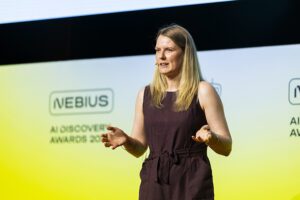
Nebius, an AI cloud company, sponsored its second “AI Discovery Awards” event and dinner earlier this month in London, where the winning companies were announced. The event highlighted leading startups in biopharma, genomics, medical devices, and digital health that are using AI to deliver advances in healthcare and life sciences.
![During the evening awards ceremony, event, artificial intelligence demonstrated that it is rapidly reshaping biomedical research. However, practitioners agree that AI’s success depends on more than advanced algorithms. [Nebius]](https://www.genengnews.com/wp-content/uploads/2026/07/Nebius_Highlights-28.jpg)
At a Nebius-hosted morning discussion before the awards dinner, several researchers highlighted the importance of powerful computing infrastructure, high-quality biological data, and laboratory validation.
Examples included AI models that predict osteoarthritis years before symptoms and an Alzheimer’s platform, which achieved 97% diagnostic accuracy when paired with protein biomarkers. A Stanford Medicine scientist described CRISPR-GPT, an AI assistant that helps design and troubleshoot gene editing.
The investigators also spotlighted AI-powered lab automation, multimodal datasets, and AlphaFold’s dramatic acceleration of protein structure prediction. Across every application, participants emphasized that collaboration among academia, healthcare, industry, and governments will be essential to advance preventive, personalized medicine and to translate AI discoveries into clinical practice.
Ilya Burkov, PhD, who has a background in clinical medicine, is now global head of healthcare and life science at Nebius. Burkov began his research career focusing on osteoarthritis, osteoporosis, hip and knee replacements, and trying to figure out how such diseases develop and progress.
“My goal was to work backward from the end stage of disease and determine whether we could predict who was at risk years before serious joint damage occurred,” he explained. “If we could identify those patients early enough, perhaps we could delay disease progression.”
Machine learning
Speaking with colleagues in a hospital, he was asked: “Have you looked at it from any machine learning perspective?” Burkov had no formal background in artificial intelligence, but he was intrigued by the idea of using emerging AI models and advanced algorithms to analyze long-term medical imaging data.

The concept was simple but powerful: if AI could identify patterns shared by patients who later developed osteoarthritis or osteoporosis, it might be able to detect subtle biomarkers long before the disease became clinically apparent.
“That idea became the focus of my PhD research. AI models were not a thing ten years ago when I was in the hospital. There were transformer models and algorithmic-based approaches.
“I developed techniques capable of predicting the early onset of osteoarthritis and osteoporosis with an accuracy of roughly 80% to 90%,” he pointed out. “The models identified imaging features that consistently appeared years before patients required joint replacement surgery.
“This made it possible to examine scans from otherwise healthy individuals and estimate their future risk. In some cases, we could tell patients that, without changes to certain lifestyle factors, they had a high probability of requiring a hip replacement within the next 10 to 15 years.”
For Burkov, that was transformative. AI made it possible to move beyond treating individual patients and instead create tools that could benefit entire healthcare systems. Rather than applying clinical expertise one patient at a time, scalable technologies could be created capable of helping clinicians identify high-risk patients earlier and intervening before irreversible damage occurred.
That realization ultimately convinced him to transition from clinical medicine into industry, where he saw the opportunity to build technologies that could have a much broader impact. Whether it’s a small academic lab with only a handful of researchers or a global pharmaceutical company operating at massive scale, every organization faces different computational challenges.
“At Nebius, our role is to provide the computing infrastructure and technology that enables researchers to train increasingly sophisticated AI models and accelerate scientific discovery to advance biomedical research and improve patient care,” he said.
Alzheimer’s disease
Artificial intelligence is rapidly reshaping drug discovery, but many researchers believe the greatest challenge is not designing drugs—it’s knowing what biological targets to pursue.
Prima Mente, a previous AI Discovery Award winner, is tackling that problem by building foundation AI models designed to uncover the molecular mechanisms behind Alzheimer’s disease and other neurodegenerative disorders. By combining blood-based biomarkers, multimodal biological data, and transformer-based AI, the London startup hopes to identify the molecular drivers of neurodegenerative disease—and ultimately accelerate the development of new therapies.
“If we can diagnose disease earlier, better stratify patients, and understand what’s actually driving Alzheimer’s, we can help create better treatments,” said co-founder Hannah Madan, PhD.
Based in London’s King’s Cross innovation district, Prima Mente has grown to approximately 35 employees across London, San Francisco, and the United Arab Emirates. Madan, whose academic background includes a master’s degree in pharmacology and a PhD investigating the relationship between bowel cancer and diabetes, has spent most of her career building biotechnology startups. Prima Mente is the fifth company she has helped launch.
The company’s mission addresses one of healthcare’s most pressing challenges. Dementia is the leading cause of death in the U.K. and the sixth highest in the U.S. Alzheimer’s disease remains the most common form of dementia worldwide.
Looking beyond traditional biomarkers
Prima Mente’s scientific strategy draws inspiration from advances in cancer diagnostics, particularly liquid biopsy technologies that detect circulating tumor DNA in blood samples. The company wondered whether a similar approach could work for neurodegenerative disease.
“When we started three years ago, many people thought we were a little crazy,” noted Madan. “The prevailing view was that very little DNA from dying brain cells entered the bloodstream.”
The team has since demonstrated that cell-free DNA originating from neurons, microglia, and astrocytes can be detected in blood. More importantly, those DNA fragments retain epigenetic information that may reveal the biological state of brain cells before they died.
Rather than focusing solely on DNA sequences, Prima Mente analyzes methylation patterns carried on cell-free DNA. Because methylation reflects how genes are regulated within specific cell types, these signals can provide insight into disease progression and cellular dysfunction.
“When cells die, they release fragmented DNA into the bloodstream,” Madan explained. “Those fragments preserve methylation signatures that tell us what state those brain cells were in.”
The biological strategy is paired with an equally ambitious computational one. Prima Mente believes that transformer architectures—the same AI technology underlying large language models such as ChatGPT—can learn the language of biology.
“If ChatGPT can understand human language, our hypothesis is that similar models can understand biological languages,” noted Madan.
Instead of converting sequencing data into simplified numerical counts, the company trains models directly on raw biological sequences, including DNA, methylation signals, RNA transcripts, and proteomic data. By preserving more of the underlying biological information, Prima Mente believes its models could uncover relationships that conventional bioinformatics pipelines often overlook.
The company’s first foundation model, known as Pleiades 1, demonstrated the potential of that approach. Initially trained to identify Alzheimer’s disease from blood-derived molecular data, the model successfully diagnosed a subset of patients. After protein biomarkers were incorporated, diagnostic accuracy increased to approximately 97% within the study dataset—exceeding the performance of current clinical standards, according to Madan.
AI tokens are the fundamental units of data processed by AI models during training and inference. They represent smaller components of text, audio, images, or other modalities, enabling models to understand, predict, and generate outputs effectively. Pleiades 1 was trained on 1.9 trillion tokens. Its successor, Pleiades 2, is being trained on 80 trillion tokens spanning five biological data modalities, with the long-term goal of building a 100-billion-parameter foundation model.
Prima Mente partnered with AI infrastructure provider Nebius, which supplied a dedicated 32-node computing cluster powered by NVIDIA GPUs. The additional computing capacity enabled the company to scale from a 1-billion-parameter model to a 10-billion-parameter model within weeks while increasing training throughput from roughly 8,000 tokens per second per device to more than 1.1 million tokens per second across a 16-node cluster.
Beyond model development, Prima Mente is collaborating with the U.K.’s National Health Service (NHS) through the Sandbox Study, which collects blood samples from patients with suspected neurological disease. The real-world data help researchers develop AI models aimed at detecting Alzheimer’s earlier, potentially enabling treatment before irreversible brain damage occurs.

Unlike AI companies that rely primarily on public datasets, Madan said Prima Mente is generating much of its own training data. The company collaborates with 20 NHS memory clinics throughout the U.K., collecting blood samples, speech recordings, clinical notes, and imaging data from patients at the earliest stages of cognitive decline. It also participates in the U.K.’s Sovereign AI initiative.
Lab validation is integrated into the company’s development process. Candidate discoveries generated by AI models are tested using stem cell systems, brain tissue, and additional blood-based experiments, creating a continuous feedback loop between computational prediction and experimental validation.
That combination of proprietary data generation, lab experimentation, and AI model development represents what the company views as a significant competitive advantage.
While AI has attracted enormous attention for accelerating drug discovery, Madan argues that identifying the right biological target remains the industry’s greatest bottleneck. She compares today’s AI revolution to the impact AlphaFold had on protein structure prediction. As computational tools become increasingly capable, designing drug candidates may become faster, cheaper, and more routine.
“But if you don’t know what biology actually matters,” she said, “there’s little value in having better tools to build drugs.”
For Prima Mente, Madan says the opportunity lies upstream of drug development—discovering the cellular pathways, biomarkers, and molecular mechanisms that should become tomorrow’s therapeutic targets.
That strategy recently received external validation when the company won the AI Insights Prize for Alzheimer’s from the Gates Foundation, receiving $1 million to expand research into microglial biology. The funding will support AI models designed to identify gene perturbations in specific brain cell types that could serve as the basis for future Alzheimer’s therapies.
As foundation models continue to expand beyond language into biology, Madan is betting that the next major AI breakthrough in medicine will not simply generate better drugs—it will reveal entirely new biology that makes those drugs possible.
CRISPR-GPT
CRISPR-GPT is a large language model developed by Stanford Medicine to automate key steps in CRISPR gene-editing research. Acting as an AI agent, it interprets scientific literature, designs guide RNAs, suggests experimental parameters, and integrates with lab automation systems to execute and refine experiments. By reducing manual planning and accelerating iterative testing, the system enables researchers to complete complex gene-editing workflows more efficiently and consistently, noted Stanford researchers.
CRISPR-GPT is also credited with lowering the barrier for scientists with limited CRISPR expertise, improving accessibility. The platform represents an emerging class of AI tools that can “reason” through complex scientific tasks, recommend next steps, and accelerate discovery. Potential applications include developing gene therapies, improving cancer research, engineering cell therapies, and expanding access to genome-editing technologies.
The goal, according to Le Cong, PhD, assistant professor of pathology and genetics is to help scientists produce life-saving drugs faster. “The hope is that CRISPR-GPT will help us develop new drugs in months instead of years,” he said.

Cong and team developed CRISPR-GPT using Nebius AI Cloud as its core infrastructure. The group leveraged Nebius’ GPU clusters to train their specialized CRISPR-Llama3 model, rapidly iterate on architectures, and scale from prototyping to full model training.
CHAT-GPT could also expand the pool of scientists who can effectively use gene editing technology—no experience required, pointed out Cong. “Trial and error is often the central theme of training in science, but what if it could just be trial and done?” he added. Cong is the senior author of a study “CRISPR-GPT for agentic automation of gene-editing experiments,” published July 2025, in Nature Biomedical Engineering.
AI Discovery Awards
At the AI Discovery Awards dinner in the evening, the sponsors announced that the 2026 program added medical devices and medical imaging to the existing biopharma, genomics, and digital health tracks to reflect the growing role of AI in connected medical equipment and diagnostic imaging.
“Our winners—and indeed all of the 647 submissions we reviewed—reflect how rapidly AI is changing the pace of healthcare research,” said Ilya Burkov during a short presentation. “Across all categories, startups are compressing timelines that once took years into months or even weeks, and bringing capabilities to clinical and laboratory settings that simply did not exist before.
![Margaret Hua, founding chief of staff at Phylo, accepts $100,000 in GPU credits for first prize in the biopharma category. The company is building AI research assistants that can independently help biomedical scientists think through problems, design experiments, analyze data, and suggest what to do next, with the aim of speeding up scientific and biomedical discovery. [Nebius]](https://www.genengnews.com/wp-content/uploads/2026/07/Nebius_Highlights-33-300x200.jpg)
“The AI Discovery Awards exist to accelerate that momentum, and to connect the most promising teams with the compute resources, investor networks, and mentorship they need to move from promising research to bringing products to market.”
Alongside the awards program, Nebius previewed its Nebius Scientific AI and Healthcare Platform, which is an AI infrastructure built to meet the specialist needs of healthcare and life sciences organizations, explained a Nebius official.
The 2026 AI Discovery Awards were open to companies from pre-seed through to Series D that put AI and machine learning at the core of their product. Category winners were selected from 647 applications from around the world by an independent panel of 28 judges representing leading pharmaceutical companies, academic institutions, and venture capital firms. Submissions were evaluated based on the use of AI within the product, use of compute, technical innovation, functionality and advantages, performance and efficiency, global impact, market potential, and business sustainability.
A full list of shortlisted companies, as well as qualification criteria and a jury list, can be found on Nebius’s website.
The post Honoring the Innovators Driving AI’s Next Era in Life Sciences and Healthcare appeared first on GEN – Genetic Engineering and Biotechnology News.
Modelling learning dynamics in autism therapy through explainable multimodal representation learning
BackgroundAutism Spectrum Disorder (ASD) presents with complex, temporally evolving motor and social behaviours that are difficult to quantify in ecologically valid clinical contexts. While recent computational methods offer diagnostic insights, many depend on fully supervised learning, high-resolution video, or artificial experimental constraints, limiting scalability, interpretability, and privacy compliance. Few approaches leverage unsupervised models to uncover dynamic behavioural structure from minimally invasive inputs.MethodsTo address these limitations, we propose a privacy-preserving, unsupervised representation learning framework that operates solely on skeletal pose and optical flow features. Using 255 multimodal windows from 15 therapy sessions in the MMASD corpus, a publicly available, privacy-safe dataset of child-clinician interactions, we train a denoising temporal autoencoder to derive compact latent embeddings of behaviour.ResultsThe model uncovers a low-dimensional behavioural manifold composed of six latent motor clusters. Transition graphs reveal structured topologies, including behavioural hubs and bottlenecks. Saliency analyses identify anatomically and socially relevant features, such as joint pairs (LWrist-LAnkle, Neck-Rear Head) and dynamic flow regions (e.g., index pair 7, 14). Temporal saliency, based on reconstruction error, highlights spontaneous gesture onsets and socially salient events. KL divergence between early and late session phases quantified intra-session adaptation (range: 0.06–17.7) and showed a strong negative correlation with joint attention duration (r = −0.96, p = 0.002), suggesting links between behavioural dynamics and social engagement.DiscussionThese findings offer preliminary evidence that interpretable behavioural structure can be extracted from low-resolution, privacy-compliant inputs. While based on a limited sample, the framework illustrates potential for modeling learning dynamics, identifying salient motor patterns, and supporting objective progress tracking in ASD therapy. Future work will involve clinical validation and application to larger, longitudinal datasets to assess generalizability and therapeutic utility.
Attention-deficit/hyperactivity disorder and chronic pain: a scoping review of epidemiology, clinical phenotypes, mechanisms, and treatment
IntroductionEmerging evidence suggests a potential association between attention-deficit/hyperactivity disorder (ADHD) and chronic pain; however, extant findings are dispersed across disciplines and have not yet been comprehensively synthesized. This scoping review aimed to systematically map the epidemiological evidence, clinical phenotypes, proposed neurobiological mechanisms, and reported therapeutic interventions related to comorbid ADHD and chronic pain.MethodsA comprehensive literature search was conducted in PubMed, PsycINFO, and the Cochrane Library from database inception to December 28, 2025. Human studies examining the association between ADHD (diagnosed or symptom-defined) and chronic or recurrent pain were also included. Fifty studies met the eligibility criteria, including observational studies (cross-sectional and longitudinal), case reports and series, and one interventional study.ResultsEpidemiological studies have consistently reported significant associations between ADHD symptoms or diagnoses and chronic pain in both the general population and clinical samples. Higher ADHD symptom burden was associated with greater pain severity and pain-related functional impairment. Comorbidity was observed not only in widespread pain syndromes, such as fibromyalgia, but also in site-specific conditions, including chronic low back pain, orofacial pain, and migraine. Proposed mechanisms involve dopaminergic and noradrenergic dysfunction affecting motor regulation, sensory processing, and descending pain modulation systems. Several case-based reports have described improvements in pain outcomes after ADHD-targeted pharmacotherapy. However, controlled trials remain scarce.DiscussionCurrent evidence suggests that ADHD traits may be relevant in a subset of individuals with chronic pain, particularly those with treatment-resistant presentations. Although causality and treatment efficacy remain unconfirmed, consideration of neurodevelopmental characteristics may enhance clinical assessments and inform future research on individualized mechanism-based treatment strategies.
StockWatch: Insilico Projects Profit, Revenue Leaps as AI-Developed Lead Candidate Moves to Phase III
Insilico Medicine (Hong Kong Exchange: 3696), an AI-based drug developer whose profile within biopharma has risen with its recent collaborations with industry giants, has offered investors an upbeat revenue and profit forecast for the first half of 2026, driven by its series of partnerships and a wide-ranging pipeline whose first program has reached late-stage development this past week.
Insilico said it expects to finish the first half of 2026 in the black, with “net profit” or net income ranging from approximately $33.5 million to $39.5 million, compared with its $19.2 million net loss in January–June 2025. Insilico also released adjusted non-International Financial Reporting Standards (IFRS) net profit forecasts in the range of approximately $45.5 million to $51.5 million for H1 2026. Non-IFRS metrics exclude one-time costs, such as restructuring charges and asset sales.
The company is additionally forecasting record first-half revenue ranging from approximately $102.5 million to $106.5 million, up approximately 272.7% to 287.3% from a year ago.
By contrast, Insilico finished all of 2025 with $56.239 million in revenue, down 34% from $85.834 million a year earlier, as a 69% slide in pipeline development revenue (to $23.885 million) outpaced the company’s nearly eight-fold increase in drug discovery revenue, to $24.952 million.
Notably, Insilico last year incurred a $352.5 million net loss, more than 20 times the company’s $17.1 million net loss in 2024, a jump the company attributed to the revenue drop as well as a $296.7 million loss from changes in the fair value of financial liabilities at fair value through profit or loss. That loss stemmed from Insilico converting the preferred shares issued in previous financings into ordinary shares when the company went public in December, raising HKD 2.277 billion (about $292.3 million at the time; now worth $283.9 million) on the Hong Kong Exchange.
Yet just as notably, Insilico’s cash and cash equivalents more than tripled last year, to $393.338 million.
“We look forward to achieving sustained profitability,” Alex Zhavoronkov, PhD, Insilico’s founder and CEO, said in a statement.
The forecasts continued the small but noticeable rise in Insilico’s stock price since Wednesday when the company announced that its lead candidate rentosertib, a drug designed to treat idiopathic pulmonary fibrosis (IPF), has advanced to a Phase III trial, the first drug within the company’s expansive 40+ program pipeline to reach that clinical milestone.
“Full arc of our mission”
“Rentosertib is a very important program for Insilico because it represents the full arc of our mission: using AI not only to move faster, but to originate new biology, new chemistry, and new therapeutic opportunities in aging and disease,” Zhavoronkov stated.
That news sparked a mini surge that sent Insilico’s shares climbing 19% over three days. Shares rose 2.7% from HKD$36.02 ($4.49) Tuesday to HKD$37 ($4.61) Wednesday, followed by a 7.7% gain Thursday as the stock rose to HKD$39.84 ($4.97)—then a 7.5% jump Friday, with Insilico closing the week at HKD42.82 ($5.34).
At least one investment firm started coverage of Insilico’s Hong Kong-traded stock with positive commentary: Cui Cui, an equity analyst with Jefferies, initiated the firm’s coverage with a “Buy” rating and 12-month price target of HK$100 ($12.47).
Jefferies’ endorsement capped a year in which Insilico escalated its partnership activity with pharma giants and smaller biotechs, adding roughly up to $7 billion to a potential haul that could exceed $10 billion.
The largest of these collaborations is its up-to-$2.75 billion collaboration ($115 million upfront) with Eli Lilly (NYSE: LLY), under which Insilico granted Lilly an exclusive global license to develop, manufacture, and commercialize “potentially best-in-class, novel oral therapeutics in preclinical development for certain indications,” according to an announcement that didn’t specify the therapeutic areas where the companies plan to partner. The alliance expanded from an “over $100 million” R&D partnership inked last November, which in turn grew from a 2023 licensing agreement allowing Lilly to access Insilico’s Pharma.AI software suite.
“Combining first-mover advantage, wet-lab validation, deep medical science, and in-house clinical expertise to train and refine AI, plus LLY’s endorsement, Insilico looks well positioned for scalable BD [business development] and LT [long-term] monetization,” Cui wrote in a research note.
“As AI-driven productivity cont[inues] to scale PCC [preclinical candidate] output, Insilico is positioned to expand its pool of proprietary assets, enhancing the likelihood of future out-licensing opp[ortunity] and strengthening LT monetization potential,” Cui added.
Zhavoronkov highlighted the research note on his LinkedIn feed, adding: “I think that in many ways the analysts know the industry and the company even better than some of the insiders. Definitely worth a read.”
Phase III plans
Cui’s comments followed Insilico announcing its Phase III plans for rentosertib (formerly ISM001-055), which is designed to treat IPF by targeting Traf2- and NCK-interacting kinase (TNIK), a serine/threonine kinase whose activation plays a crucial role in cellular processes that include signal transduction pathways essential for fibrosis development.
Insilico said its planned Phase III trial (NCT07687459) will be a randomized, double-blind, placebo-controlled, parallel-group study that is expected to enroll 320 participants across 47 centers in China. The trial’s primary endpoint will be the annual rate of decline in forced vital capacity (FVC) over 52 weeks, with a key secondary endpoint of time to first occurrence of any disease progression event.
The Phase III trial aims to assess whether rentosertib can provide clinically meaningful benefit in a larger patient population and over a longer treatment period than its two 12-week Phase IIa studies.
Rentosertib has completed a Phase IIa trial (NCT05938920) in China, published in Nature Medicine last year, and is in a separate Phase II trial (NCT05975983) in the United States. In the Chinese trial, rentosertib met its primary endpoint of safety and tolerability across all dose levels, as well as positive secondary endpoint data, namely dose-dependent FVC improvement with a mean FVC change of +98.4 mL at 12 weeks in patients dosed at 60 mg once daily, vs. -20.3 mL for placebo.
During the BIO International Convention in San Diego, Zhavoronkov hinted at the Phase III, highlighting a planned “next step” for the program “in the second half, but maybe closer to the earlier second half,” he told GEN.
At the convention, Zhavoronkov led Insilico in celebrating its latest big-money collaboration, an up-to-$2.5 billion partnership with SK Biopharmaceuticals to discover new AI-based drug candidates for disorders affecting the neuroimmune area of the central nervous system (CNS). Insilico agreed to apply its Pharma.AI platform, which addresses target validation, generative chemistry, and molecule optimization, along with its preclinical drug discovery expertise, to discover, design, and optimize candidates for neuroimmune indications against targets that will originate with SK.
SK is part of a privately held, family-owned chaebol or conglomerate whose parent holding company is public, SK Inc. (Korea Exchange: 034730). Another SK-owned company—SK Hynix (Nasdaq: SKHY), a supplier of high-bandwidth memory chips that power the AI processors of Nvidia and AMD—went public Friday, raising a staggering $26.5 billion by pricing its U.S. American depositary shares (ADS) at $149 each.
Potentially lucrative partnerships
In addition to SK and Lilly, Insilico also has potentially lucrative partnerships with Sanofi (Euronext Paris: SAN), with which Insilico plans to advance up to six targets (up to $1.2 billion); privately held Menarini Group, to which it has outlicensed Phase I cancer treatments targeting KAT6 and KIF18A (up to $1.05 billion in collaborations launched 2024 and 2025); privately held, French-based Servier, also cancer focused (up to $888 million); and Takeda Pharmaceutical (Tokyo Stock Exchange: 4502), drug discovery across its therapeutic areas (up to $600 million).
Also among Insilico’s collaboration partners: Exelixis (Nasdaq: EXEL), to which Insilico outlicensed in 2023 a Phase I BRCA-mutated cancer drug targeting USP1 (“close to” $1 billion plus royalties), Fosun Pharma (Shanghai Stock Exchange: 600196; Hong Kong Exchange: 02196), which is joining Insilico on R&D for four biological targets plus co-development of Insilico’s QPCTL program (up to $82 million, including $13 million upfront and a $15 million equity investment); Fosun-backed but privately held Hygtia Therapeutics, which is co-developing with Insilico ISM8969, a Phase I oral brain penetrant NLRP3 inhibitor, in CNS disorders (up to $66 million, including $10 million upfront and milestones); and Taipei-based TaiGen Biotechnology (Taipei Exchange: TWD), which holds Greater China rights to an oral PHD1/2 inhibitor in anemia of chronic kidney disease (milestones and royalties totaling “two-digit million dollars”).
Rounding out the list of Insilico’s disclosed collaboration partners are Chinese-based Qilu Pharmaceutical Group, which is partnering to jointly develop small molecule inhibitors for specific targets in cardiometabolic disease management (up to “near” $120 million, including milestones and single-digit royalties); China Medical System Holdings (CMS; Hong Kong Exchange: 867 and Singapore Exchange: 8A8), which is teaming up with Insilico on discovering drugs for central nervous system and autoimmune diseases (up to “tens of millions in Hong Kong dollars per project in R&D support”); and Tenacia Biotechnology, a Bain Capital-backed, privately held Sanghai-based drug developer which in March joined Insilico to expand a year-old R&D collaboration aimed at developing therapies for “underserved” neurological disorders (up to $94.75 million in near-term and milestone payments).
Insilico has out-licensed to undisclosed partners rights to a GLP-1R-targeting program designed to treat obesity and metabolic diseases; and Greater China rights to a Nav1.8-targeting program designed to treat pain.
Vaxart takes a double dose of good news
Settlement ends threat of proxy war; COVID-19 pill aces Phase IIb trial
This week’s annual shareholder meeting had threatened to be anything but routine for Vaxart (Nasdaq: VXRT) after its current executive team and three of its six nominees for board seats had been challenged by an activist shareholder through a proxy campaign.
Since last fall, shareholder Daniel P. Houle and allies have offered persistent criticism of Vaxart’s management—led by CEO Steven Lo and Sean Tucker, PhD, senior vice president and CSO—and the company’s board, whose operations and independent oversight are led by a lead independent director, W. Mark Watson, rather than a traditional chair.
But earlier this month, the threat of a proxy war over Vaxart’s direction ended when Houle and five allies signed a cooperation agreement with the company. Vaxart agreed to begin a search for an additional independent director to be conducted within 90 days of the conclusion of the 2026 annual meeting. Vaxart also agreed to work with Houle and allies to identify a “mutually agreeable” candidate for appointment to the board.
In return, the stockholder group consisting of Houle and his allies—Mark Silverberg, MD; Matthew M. Wallace, MD; Patrice Raffy; Marc Eustace Pereira; and Q3 Nominees Pty Ltd.—agreed to withdraw their board nominations for Houle, Silverberg, and Wallace.
The cooperation agreement also calls for:
- Creation of a Stockholder Engagement Committee and a Clinical and Regulatory Affairs Committee
- A revamp or “refreshment” of board committee chairs, including the selection of new chairs for the Nominating and Governance and Compensation Committees
- Adoption of director stock ownership and resignation policies
- Customary standstill, voting, engagement, and other provisions
“Vaxart is approaching a series of important value-inflection milestones, and these actions enable the company to move forward with a unified focus on executing its strategy,” Watson said in a statement. “We appreciate the constructive dialogue with the stockholder group toward our shared goal of creating value and are pleased to resolve our proxy contest so we can dedicate our full resources and attention to advancing our pipeline with stockholder interests in mind.”
Houle and allies insisted they believe “deeply” in the promise of Vaxart’s oral vaccine platform and resulting commercial opportunities—but took issue with the company’s declining stock price, capital raises that they said diluted the value of existing shareholders’ stock, and with what they termed insufficient oversight by the board.
In February, Houle launched his campaign to persuade shareholders to elect himself, Silverberg, and Wallace to Vaxart’s board. Silverberg is founder and CIO of Heatjac, a manufacturer of heated medical garments. Wallace is a double board-certified dermatologist and Mohs micrographic surgeon, and managing partner of a medical specialty practice focused on dermatology, dermatologic surgery, and oncology.
“We believe Vaxart possesses a unique technology platform with the potential to reshape vaccine delivery and transform global public health. Yet despite this promise, stockholder value has remained significantly compromised,” Houle and allies, calling themselves the Concerned Vaxart Shareholders, wrote in a June 9 letter to shareholders. “Despite these strengths, stockholders have endured years of disappointing performance, declining market value, and insufficient engagement from those entrusted to represent our interests.”
They also took issue with Vaxart’s two workforce reductions last year. The first was a 10% cut after Advanced Technology International, a nonprofit R&D collaboration manager acting on behalf of the U.S. Biomedical Advanced Research and Development Authority (BARDA), issued the first of two stop-work orders on the company’s Phase IIb trial assessing its government-funded COVID-19 oral pill vaccine. The second was a 21% cut in May–June 2025 intended to lower operating costs and better align Vaxart’s resources with higher-priority clinical programs.
“This election is not about creating conflict. It is about restoring confidence,” the Concerned Vaxart Shareholders added. “It is about restoring accountability, increasing transparency, and ensuring that stockholder interests are once again placed at the center of the company’s decision-making process.
Concerned Shareholders owned 1,515,343 shares of Vaxart stock—including 15,622 owned by Houle himself—as of a May 6 regulatory filing.
In an interview at the recent Biotechnology Innovation Organization (BIO) International Convention in San Diego, Lo and Tucker defended the company-endorsed board nominees as possessing greater biotech-related experience.
Lo defended the workforce cuts: “You want to be at the right size. You want to extend your runway. And we’re very careful with shareholder money. We don’t want to exhaust our funds. The reduction in the workforce was not only to extend our cash runway, but also make sure that this company had the right people to fulfill its mission.”
“Our case is, we have a very experienced management team. We have to stay the course,” Lo added. “We are in a great situation where we have good relationships with the U.S. government, as evidenced by being one of the only companies that has survived stop-work orders. We also have good relationships with pharma, as evidenced by our deal with Dynavax.”
Following a second stop-work order issued in August 2025, Vaxart and BARDA agreed to reduce funding for the Phase IIb trial to about $345 million from up to $453 million, but maintain the study at the estimated 5,485 patients recruited by Vaxart. In November 2025, Vaxart signed an up-to-$700 million global exclusive license for the oral COVID-19 vaccine with Dynavax Technologies, with Vaxart allowed to run the trial. Dynavax was acquired by Sanofi (Euronext Paris: SAN) for $2.2 billion, in a deal completed in February.
The cooperation agreement was one of two positive announcements Vaxart shared on July 6. The other was good clinical news: positive topline data from the approximately 400-participant sentinel safety cohort of its Phase IIb trial (NCT06672055) assessing the company’s oral pill COVID-19 vaccine candidate against an undisclosed approved mRNA vaccine comparator. Among key findings:
- No vaccine-related serious adverse events (SAEs) or sustained Grade 3 or higher AEs were reported in either the oral pill vaccine or mRNA arms of the trial.
- The most common AEs for oral vaccine patients were malaise/fatigue (20.9%), headache (18.9%), and anorexia (10.0%). Fewer than 10% of participants experienced any other AE.
- By contrast, the most common AEs in participants receiving the mRNA vaccine were injection site pain (60.3%), injection site tenderness (40.2%), malaise/fatigue (35.2%), myalgia/muscle pain (33.2%), and headache (28.6%). Arthralgia, chills, anorexia, nausea, diarrhea, and induration/swelling at the injection site were experienced by between 10–15% of participants. Fewer than 10% of participants experienced any other AE.
- Thirty-three participants in Vaxart’s oral pill vaccine arm and 30 in the mRNA vaccine arm had symptomatic COVID-19. Asymptomatic COVID-19 cases were reported in 12 participants in each of the trial arms.
“These topline safety data are encouraging and are consistent with the safety profile observed to date in other studies of our oral pill vaccine constructs,” stated James Cummings, MD, Vaxart’s chief medical officer.
Vaxart shares, which trade under $1, rose 16% from 55 cents on June 25 to 64 cents on July 2, the day of the filing disclosing the cooperation agreement. Since then, shares have given back the entire gain, sliding back to 55 cents at Friday’s close.
Leaders and laggards
- Chemomab Therapeutics (Nasdaq: CMMB) shares tumbled 29% from $2.77 to $1.97 Wednesday after the developer of therapeutics for immune-fibrotic diseases with high unmet need said it agreed to merge with precision medicine developer Scipher Medicine through an all-stock merger. The combined company plans to operate under the Scipher Medicine name and trade on Nasdaq under the ticker symbol SCIP. Upon completion of the merger, the combined company plans to focus initially on advancing nebokitug, a first-in-class clinical-stage anti-CCL24 antibody, into a Phase II trial for the treatment of rheumatoid arthritis, Chemomab said. The combined company is valued at $150 million before a concurrent $30 million private placement from a syndicate of current Scipher investors led by Northpond Ventures, with participation from Khosla Ventures, Blue Owl Healthcare Opportunities, funds managed by Neuberger, and other leading investors, and is expected to have cash runway into the second half of 2028.
- Forte Biosciences (Nasdaq: FBRX) shares rocketed 78% from $20.38 to $36.70 Thursday after the developer of treatments for autoimmune and autoimmune-related diseases announced positive results from the FB102 double-blind placebo-controlled Phase Ib study in vitiligo. FB102 achieved a 29.6% mean Facial Vitiligo Area Scoring Index (FVASI) improvement from baseline at week 24 (p-value = 0.020). Response to FB102 was seen early, Forte said, with statistically significant improvements observed by the day 64 visit (p=0.023), continuing through week 24, after completion of the 12-week treatment period. FB102 achieved 43.2% mean FVASI improvement from baseline at week 24 (p-value = 0.006) in subjects with greater disease involvement having baseline FVASI ≥0.75 (approximately one-quarter of face depigmented), including FVASI50 (58.8%) and FVASI75 (23.5%). Forte shares continued climbing Friday, rising another 20% to $43.92.
The post StockWatch: Insilico Projects Profit, Revenue Leaps as AI-Developed Lead Candidate Moves to Phase III appeared first on GEN – Genetic Engineering and Biotechnology News.
Digital Mental Health Research Priorities, Revisited for the AI and Large Language Model Era
Digital mental health has become an established part of mental health care, but the rapid arrival of large language models and other artificial intelligence tools has refocused attention on the evidence needed to guide the field. This editorial updates the research priorities articulated by JMIR Mental Health in 2023, while reaffirming their emphasis on equity, replicability, privacy, efficacy, and engagement. What has changed is not the importance of these priorities, but the urgency with which they must now be applied. As digital tools become more clinically consequential, research must move beyond demonstrating that a technology is feasible, usable, or novel. The field needs studies that clarify how these tools work, for whom they are beneficial, under what conditions they may cause harm, and how they can be responsibly integrated into care. We call for research that is transparent about the technologies being studied, grounded in meaningful clinical questions, attentive to safety and accountability, and designed to produce knowledge that remains useful as specific products and models change. The promise of digital mental health will depend less on the sophistication of emerging tools than on the quality of the evidence used to shape their role in care.
<img src="https://jmir-production.s3.us-east-2.amazonaws.com/thumbs/02abd9aca24d7b6d7ef54e0bc51e06a5" />
Predicting Drug Response with Lung Cancer Tumor Replica Platform
Precision oncology has transformed lung cancer care, but its reach remains uneven. Targeted therapies and immunotherapies have improved outcomes for selected patients, yet many people with lung cancer still receive systemic treatment without a reliable way to know whether their tumor will respond.
For most patients, treatment decisions are still guided by tumor type, stage, standard-of-care guidelines, and a limited set of biomarkers. That works for some, but not enough. Lung cancer is biologically heterogeneous, and tumors with similar clinical features can respond very differently to the same drug.
A new study in npj Precision Oncology describes a rapid ex vivo tumor platform designed to address that gap. Instead of relying only on genomic markers, the method tests drug response directly on patient-derived 3D lung tumor replicas generated from routine clinical samples.
Moving from genomic prediction to functional testing
Genomic profiling has become central to lung cancer treatment, especially for patients with actionable alterations such as EGFR mutations. But many tumors do not carry targetable drivers, and even when they do, genomic information does not always predict resistance, chemotherapy response, or sensitivity to combination regimens.
That is where functional precision oncology is gaining attention. The idea is straightforward: take a patient’s tumor cells, grow them in a clinically relevant model, expose them to candidate drugs, and measure whether the tumor responds.
The challenge is making this fast, reliable, and feasible from the small biopsies that are actually available in routine lung cancer care. Many patient-derived organoid approaches require surgical specimens, have low establishment rates, or take longer than the treatment decision window.
The authors frame the problem clearly: “Effective prediction models are needed” to enable more personalized lung cancer care.
Tumor replicas from routine biopsies
The new platform was developed in a prospective multicenter cohort of 129 treatment-naïve lung cancer patients. Researchers generated 3D lung tumor replicas from resection material as well as small diagnostic samples obtained through EUS-FNA and EBUS-TBNA biopsy procedures.
The overall establishment success rate was 65%. Success was highest from surgical resection material, at 100%, and remained strong for EUS-FNA biopsy material, at 82.7%. EBUS-TBNA samples had a lower but still clinically relevant success rate of 47.1%.
This is important because most patients who need systemic treatment do not undergo upfront surgery. A platform intended for real-world treatment selection must work from limited biopsy material, not only from large resection specimens.
The tumor replicas formed compact 3D clusters and retained key features of the original tumor. Histology and immunohistochemistry showed that replicas preserved subtype-specific characteristics of lung adenocarcinoma, lung squamous cell carcinoma, and small cell lung cancer. In selected samples, genetic features such as KRAS mutations were also retained.
Drug results within the treatment decision window
A central strength of the platform is speed. The researchers report that ex vivo drug response results were available within a median of 12 days from biopsy acquisition. In 80.4% of patients, results were generated within two weeks.
That timing matters. A functional drug test has limited clinical value if results arrive after treatment has already started. In this cohort, patients receiving standard systemic therapy began treatment after a median of 21 days, suggesting that the platform could produce results early enough to inform decision-making.
The researchers tested standard lung cancer therapies, including platinum-based chemotherapy backbones and other agents such as etoposide, pemetrexed, paclitaxel, afatinib, and sotorasib. The tumor replicas showed heterogeneous drug responses, mirroring the variability seen clinically.
In patient-derived xenograft models, ex vivo responses were consistent with in vivo treatment responses or expected mutation-drug relationships. For example, tumor replicas harboring EGFR L858R responded to the EGFR inhibitor afatinib, while KRAS G12C-mutant replicas showed sensitivity to sotorasib.
Early clinical validation shows promise
The study also compared ex vivo drug responses with patient outcomes. In stage 3 lung cancer patients treated with chemoradiation, ex vivo chemotherapy sensitivity was significantly associated with overall survival.
In another group of 20 patients treated with platinum-doublet chemotherapy, with or without immunotherapy, the platform showed a sensitivity of 73% and a positive predictive value of 92% for predicting treatment response in the biopsy lesion.
That high positive predictive value is clinically meaningful. It suggests that when the platform classified a tumor as sensitive, the patient was likely to experience clinical benefit. However, the negative predictive value was lower, meaning the test was less reliable at identifying tumors that would not respond.
This distinction matters for clinical use. At this stage, the platform may be better suited to helping identify promising treatment options than to ruling therapies out definitively.
Why this matters for precision lung cancer care
The study signals a broader shift in precision oncology. Molecular testing asks what alterations a tumor carries. Functional testing asks what the tumor actually does when exposed to therapy. Both approaches are valuable, but they answer different questions.
For lung cancer, this could be especially important because chemotherapy remains a backbone of treatment across multiple stages and subtypes. Yet chemotherapy selection is rarely personalized in the same way targeted therapy is. A rapid ex vivo assay could help distinguish patients likely to benefit from a specific chemotherapy combination from those who may need an alternative approach.
The authors describe the platform as following the same concept as an antibiogram: testing patient-specific tumor material to identify effective treatment options before therapy begins.
If validated in larger studies, this type of approach could reduce ineffective treatment, avoid unnecessary toxicity, and support more rational selection of systemic therapies.
Not yet ready for routine care
The results are promising, but still early. The clinical validation cohort was small, and the authors describe the patient-response data as proof-of-concept. Larger prospective trials will be needed to determine whether using the platform to guide treatment improves outcomes compared with standard care.
The system also has biological limitations. The current tumor replicas primarily capture intrinsic tumor cell drug sensitivity. They do not fully reproduce the tumor microenvironment, including immune cells, stromal cells, endothelial cells, or extracellular matrix components. That means the platform may be less suited, in its current form, to predicting responses to therapies where the immune microenvironment is central, such as immune checkpoint inhibitors.
The short-term 72-hour drug readout also cannot capture delayed effects, acquired resistance, or long-term tumor evolution. Future versions may need to incorporate immune co-cultures, repeated sampling at progression, or more complex microenvironmental features.
A step toward faster functional precision oncology
The promise of this platform lies in its practicality. It uses routine biopsy material, produces results quickly, and tests actual drug response rather than inferring sensitivity from biomarkers alone.
As the authors conclude, the platform enables upfront screening of anti-cancer drug responses “within a clinically relevant timeframe of two weeks.”
That is the key translational point. For functional precision oncology to become clinically useful, it must fit the pace and constraints of real cancer care. This study suggests that, at least for lung cancer, rapid patient-derived tumor replicas may bring that goal closer.
The post Predicting Drug Response with Lung Cancer Tumor Replica Platform appeared first on Inside Precision Medicine.
Evidence on Learning Style Preferences Among Clinical Students in Nigeria Using the Visual, Aural, Read/Write, and Kinesthetic Model: Cross-Sectional Study
Background: Understanding how medical students learn is critical for improving teaching strategies in clinical education. Despite the widespread use of learning style frameworks, such as visual, aural, read/write, and kinesthetic (VARK), evidence from sub-Saharan Africa remains limited, and the use of learning style approaches is debated in the literature. In clinical and health sciences education, aligning teaching with learners’ preferences can enhance knowledge retention, procedural competence, and ultimately the quality of patient care. Objective: This study aimed to determine the predominant learning style preferences of clinical students at a Nigerian medical school and to examine how demographic and academic factors influence these preferences, with explicit attention to implications for clinical pedagogy. Methods: A cross-sectional survey was conducted among 200 clinical students (400-600 level) at Niger Delta University between October 2021 and December 2021, using the validated VARK inventory (version 7.8). Descriptive statistics summarized distributions, and the Pearson chi-square tests or Fisher exact tests assessed bivariate associations with sex, age group, and year of study. A multivariable modeling strategy was prespecified but not performed due to the categorical structure of the primary outcomes, sparse cells for some modality categories, and the sample size limitations for multinomial modeling. Results: Of 200 participants (mean age 25.1, SD 3.9 y; n=107, 53.5% male), 105 (52.5%) preferred unimodal learning, and 95 (47.5%) preferred multimodal learning. Kinesthetic (n=121, 60.5%) and auditory (n=110, 55%) were the most common dominant preferences, followed by read/write (n=68, 34%) and visual (n=36, 18%). Visual preference was significantly higher among male participants (χ=4.49; =.03). Read/write preference varied by year of study (=8.29; =.02). No significant associations were found with age. The pedagogical implications for clinical teaching were discussed, including bedside instruction, skills laboratory, simulation, small-group teaching, and audio-visual learning resources. Conclusions: Clinical students in this Nigerian setting predominantly favored kinesthetic and auditory learning, with nearly half reporting multimodal preferences. Medical educators should adopt blended instructional designs that include hands-on, discussion-based, and audio-visual elements to better prepare students for clinical practice. These insights can inform faculty development, curriculum design, and national medical education policies to foster adaptive, learner-centered training that improves clinical competency and readiness for professional service.
<img src="https://jmir-production.s3.us-east-2.amazonaws.com/thumbs/1fb880df70401a61d1c6cbbe47a988c7" />
How diet therapy affects obesity-associated depressive symptoms: from mechanism to therapeutics
Obesity stands as a formidable 21st-century public health crisis, with its capacity to aggravate depressive symptoms gaining increasing clinical attention. Traditional treatment models often treat these two conditions separately. However, recent research evidence suggests a complex network linking obesity and depressive symptoms across metabolism, behavior, and mental health, with dietary patterns proposed as a key upstream modulator of both metabolic and psychological pathways. The specific mechanisms by which diet influences obesity and depressive symptoms remain unclear. Therefore, this narrative review focuses on analyzing molecular connections between diet, obesity, and depressive symptoms, including adipose tissue inflammation, the gut-brain axis, the hypothalamus-pituitary–adrenal axis, insulin and brain-derived neurotrophic factor levels, and neuroplasticity. We discuss the possible pathways and effects of different diet therapies in regulating metabolism and simultaneously impacting mental health, including calorie restriction diet, intermittent fasting, ketogenic diet, low glycemic index diet, plant-based diet, Mediterranean diet, Dietary Approaches to Stop Hypertension, among others. This review aims to provide a scientific basis for precision nutrition and personalized, sustainable diet therapies in clinical practice, promoting awareness and improving treatment strategies for depressive symptoms in obese patients.