Backgroundschool absenteeism is a common functional impairment among adolescents with mental disorders, yet its associated factors remain limited. This study aimed to identify key demographic, clinical, and social factors associated with school absenteeism in this population.MethodsA retrospective cohort study was conducted among 217 adolescents (12–18 years) with mental illness, categorized into school-attending (n=163) and school-suspended (n=54) groups. Baseline data on demographics, clinical characteristics, social support, and family factors were collected. Univariate analyses were used to compare group differences, followed by multivariate logistic regression and restricted cubic spline (RCS) analysis to identify independent predictors of school absenteeism.ResultsIn univariate analysis, school-suspended adolescents had significantly lower social support scores (36.2 ± 10.9 vs. 45.5 ± 12.2, p<0.001), higher rates of parental divorce (46.3% vs. 22.1%, p<0.001), and a higher proportion of pre-hospitalization school absenteeism (51.9% vs. 31.3%, p=0.006). Multivariate logistic regression revealed that parental divorce (OR = 3.04, 95%CI=1.59–5.83, p=0.001), pre-hospitalization school absenteeism (OR = 2.37, 95%CI=1.26–4.43, p=0.007), and longer disease course (OR = 1.02, 95%CI=1.00–1.04, p=0.022) were independent risk factors for school absenteeism. Conversely, higher social support was a strong protective factor: compared to the low social support group (score 17–34), the medium (35–51) and high (52–85) support groups had markedly lower odds of school absenteeism (OR = 0.24, 95%CI=0.08–0.74, p=0.013; OR = 0.05, 95%CI=0.01–0.24, p<0.001, respectively). RCS analysis confirmed a linear negative association (P for non-linearity=0.189), with higher social support scores correlating with progressively lower suspension risk.ConclusionsParental divorce, pre-hospitalization school absenteeism, and longer disease course are independent risk factors for school absenteeism in adolescents with mental illness, while higher social support acts as a robust protective factor. These findings highlight the need for targeted interventions addressing family stability, social support enhancement, and early intervention for pre-existing school impairment to reduce school absenteeism and promote functional recovery in this vulnerable population.Clinical trial registrationhttps://clinicaltrials.gov/, identifier ChiCTR2100046396.
Effect of transcranial alternating current stimulation (NET Device™) on psychostimulant withdrawal severity and time course: a real-world data analysis
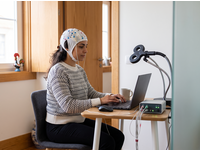
BackgroundPsychostimulant use disorder is a life-threatening condition with no FDA-approved treatment. Stimulant withdrawal symptoms impede treatment engagement and are unaddressed by standard of care. The NET Device, a non-invasive transcranial alternating current stimulator, is FDA-cleared for opioid withdrawal suppression. No studies have evaluated whether NET Device use attenuates psychostimulant withdrawal.MethodsElectronic health record and device utilization data were collected from 109 stimulant-only users and 112 stimulant/opioid co-users (N = 221 adults total; Mage=39.2, SDage=10.7; 119M) entering residential addiction treatment (n = 168) or detention centers (n = 53). The Amphetamine Cessation Symptom Assessment (ACSA) was administered at baseline and 1 hour (day 1), and twice daily on days 1–7. A linear mixed model (LMM) with random intercepts and slopes was used to analyze the trajectory of ACSA scores.ResultsACSA severity and time course were similar across settings (residential vs. detention). A two-phase LMM separated acute (baseline to 1 hour) and post-acute withdrawal symptom reductions. Relative to baseline ACSA scores, stimulant-only and co-user groups each reported significant reductions at 1 hour (46% and 33%), day 2 morning (59% and 42%), and decelerating log-time trajectory through day 4 (79 hours), the primary analysis window. Estimates beyond day 4 rest on 6.9% of observations and are reported as exploratory only.ConclusionNET Device monotherapy was associated with rapid reduction in psychostimulant withdrawal severity regardless of setting and opioid co-use. No device-related adverse events were reported. These real-world data support initiation of a sham-controlled randomized trial to evaluate NET Device efficacy for stimulant use disorder.
Beyond dopamine: KarXT and emerging mechanism-based therapies in schizophrenia
KarXT (marketed as Cobenfy™), a fixed-dose combination of xanomeline and trospium chloride, represents the first new mechanism of action of an antipsychotic used for adult schizophrenia approved by the US Food and Drug Administration (FDA) in over 30 years. While mainstream drugs (e.g. haloperidol, chlorpromazine, risperidone, olanzapine, quetiapine, aripiprazole) mainly antagonize dopamine D2 or serotonin 5-HT2A receptors, KarXT acts through transient activation of muscarinic M1 and M4 receptors. M4 stimulation influences the functioning of mesolimbic dopaminergic pathways, providing an indirect means of regulating dopamine release that bypasses D2 blockade. Trospium, a peripherally acting muscarinic receptor antagonist, was used to reduce anticholinergic adverse effects (AEs). It does not cross the blood–brain barrier and therefore minimizes central adverse events. In a series of randomized placebo-controlled phase 2 and 3 studies, the KarXT significantly and clinically meaningfully reduced Positive and Negative Syndrome Scale (PANSS) total scores. The effect sizes were moderate to large with few extrapyramidal symptoms (EPS), minimal metabolic disturbances and no significant prolactin level increases. In this narrative review, we discuss in detail the pharmacological mechanism, basis of preclinical development, and clinical outcomes of KarXT. We also contextualize this drug within the development of a new wave of non-D2 antipsychotics, highlighting cholinergic dysfunction as one important mechanistic pathway within the broader multidimensional neurobiology of schizophrenia.
Pilot evaluation of an educational and lived experience training program on ketogenic metabolic therapy in mental health care for health care professionals
BackgroundSerious mental illness imposes a substantial burden. Pharmacologic treatments remain only partially effective and are associated with significant side effects, highlighting the need for novel treatment approaches. Ketogenic metabolic therapy (KMT) is emerging as an intervention for serious mental illness, with a growing evidence base and strong patient interest. A critical barrier to KMT implementation is the lack of health care professional (HCP) competence and readiness to discuss KMT with patients with serious mental illness. Existing training does not adequately address HCP competence in presenting KMT as a treatment option. This study describes the pilot-testing of “Live It, Launch It” (LI-LI), the first KMT training program designed to build self-reported competence to discuss KMT in psychiatric care for HCPs.MethodsLI-LI combines a 4-hour asynchronous educational course on KMT with a 4-week experiential group KMT intervention during which participants adhered to a ketogenic diet. LI-LI aimed to improve self-reported competence to utilize KMT and perceived ability to engage in shared decision-making with patients about incorporating KMT into their treatment plan.ResultsForty HCPs participated in the education course: 10 psychiatrists, 10 psychiatric pharmacists, 8 psychologists/therapists, and 12 other HCPs (e.g., nurse practitioners, physician assistants). Twenty-five initiated the diet intervention. Baseline competence scores (visual analog scale 0-100) were low, M(SE) = 17.40 (2.68), increasing to M(SE) = 68.08 (2.47) after education (d = 2.88, p <0.0001), and to M(SE) = 86.62 (1.82) post-diet (d = 1.08), with a very large whole-study effect (d = 3.49, p < 0.0001). Shared decision-making scores at baseline were M(SE) = 53.64 (2.89), increasing to M(SE) = 83.35 (1.83) after the educational course (d = 1.74, p <0.0001), and to M(SE) = 91.23 (2.05) after the diet phase (d = 0.73, p = 0.009), with a very large whole-study effect (d = 2.53, p < 0.0001). Feedback indicated that lived experience with KMT was helpful for implementation-readiness.DiscussionThe educational course on KMT was associated with increased self-reported competence and perceived shared decision-making in HCPs, and this was enhanced with combined education and lived experience. Implementation of this approach could accelerate KMT into clinical care. Results should be interpreted with caution as this was a small uncontrolled study with self-reported main outcomes.Clinical trial registrationhttps://clinicaltrials.gov/study/NCT07116226, identifier NCT07116226.
Supporting the Primary Outcomes of the Mirai Trial for the Adjunctive Digital Therapeutic Rejoyn (CT-152) in the Treatment of Major Depressive Disorder: Meaningful Change Analysis in the Montgomery-Åsberg Depression Rating Scale
Background: Rejoyn (CT-152) is a prescription digital therapeutic (DTx) adjunct to antidepressive medication authorized for patients with major depressive disorder. To better understand the patient benefit of DTx and other treatment modalities, current regulatory standards support the use of modern psychometric methods to interpret the clinical meaningfulness of treatment effects for patients. In the primary analysis of Rejoyn from the pivotal phase 3 Mirai trial (NCT04770285), Rejoyn showed a broad risk-to-benefit profile as demonstrated on multiple clinician- and patient-rated scales, including the primary efficacy outcome measure, the Montgomery-Åsberg Depression Rating Scale (MADRS). These findings supported US Food and Drug Administration authorization of Rejoyn as a prescription DTx. However, the clinical relevance of these changes in the MADRS score is not immediately interpretable in clinical practice. Here, we present the results from several post hoc analyses of the Mirai trial data to support the interpretation of clinically meaningful treatment differences on clinician- and patient-reported change in depressive symptoms. Objective: This study had two main objectives: (1) establish threshold parameters that allow for clinically meaningful interpretation of the Mirai results in clinical practice, based on the clinical trial end points of change from baseline in depressive symptoms, and (2) apply this threshold in a responder and sensitivity analysis in the intent-to-treat (ITT) population (which is more frequently reported in pharmacological trials) to further support the interpretation of change in unblinded analysis of the Mirai results. Methods: For the Mirai meaningful within-patient change (MWPC) analysis, anchor-based methods were used to define an MWPC threshold by exploring the associations between the MADRS and the clinician-rated Clinical Global Impression-Severity Scale (CGI-S) and the patient-reported Patient Health Questionnaire 9-Item Scale (PHQ-9). Additional post hoc efficacy analyses (including that of responders) are reported for the ITT population. Results: Using the MWPC thresholds of 8 and 10 points (derived with the CGI-S and PHQ-9 as anchor measures, respectively), the distribution of MADRS responders favored the Rejoyn group over the sham group, and the Rejoyn group had 24%‐47% higher odds of meaningful improvement on the MADRS. Post hoc ITT analyses also favored the Rejoyn group over the sham group for response rates and PHQ-9 and CGI-S score change from baseline. Conclusions: Results are consistent with the primary findings of the Mirai trial, supporting the efficacy of Rejoyn as an adjunctive treatment to antidepressive medication monotherapy for adults with major depressive disorder. The MWPC analyses offered a measure of meaningful change on the MADRS, providing a framework of clinical meaningfulness for the Mirai trial findings.
<img src="https://jmir-production.s3.us-east-2.amazonaws.com/thumbs/d51ca46a884a5041ce95631d997608cf" />
Efficacy of a personalized, response-based transdiagnostic intervention for emotional disorders delivered via the Internet: a protocol for an adaptive randomized controlled trial
One of the main challenges in clinical psychotherapy is disseminating effective psychological treatments to the millions who need them but lack access. Transdiagnostic interventions, particularly those delivered online, can help bridge this treatment gap. However, these interventions, often provided as a “one-size-fits-all” approach, do not tailor to individual patient needs. Therefore, it is essential to identify which patients benefit from these treatments and who require more intensive interventions. This randomized controlled trial (RCT) aims to evaluate the effects of an Internet-based transdiagnostic intervention (UJI Online Transdiagnostic Protocol/Transversal) for emotional disorders, adapted to patients’ response. Three hundred sixty-six adults with clinically significant symptoms of anxiety and depression (ODSIS ≥ 7 and/or OASIS ≥ 8) and without suicidal ideation or a severe mental disorder participated. After having completed the first three modules, patients will be randomized based on their symptomatic response. Early responders will either continue with the original intervention—12 self-administered modules—or discontinue treatment. Non-early responders will receive a blended format—including two therapist-led videoconference sessions—or continue with the original intervention. Multilevel models will be used to analyze the data. The primary expected result is that the blended format will improve treatment outcomes for non-early responders compared to the self-applied format. Moreover, it is expected that discontinuing treatment for early responders will be as effective as continuing it until completion. The findings are expected to inform clinical practice by highlighting the importance of assessing symptomatic response throughout treatment, especially in its early phases, to better tailor interventions to the needs of different patient groups.Clinical trial registrationhttp://www.chictr.org.cn, identifier NCT07051148.
A Smartphone-Based Acoustic Machine Learning Pipeline for Detecting Suicidal Ideation: Case-Control Model Development and Validation Study
Background: Suicidal ideation (SI) among university students is a growing public health concern. Self-report screening can be limited by concealment and delayed disclosure. We evaluated a leakage-resistant, proof-of-concept pipeline to detect SI from standardized smartphone-recorded speech. Objective: This study aimed to extract acoustic markers from brief smartphone-based reading tasks and develop machine learning models for suicide risk prediction in university students, enabling low-cost, scalable early screening to support campus mental health services. Methods: Questionnaire data and speech recordings were collected via a WeChat mini program. After screening and clinical confirmation, 96 participants (n=48, 50% with SI; n=48, 50% controls) were included. Age and sex were evaluated as potential confounders. Each participant read 16 standardized sentences. Acoustic features were extracted using openSMILE (version 3.0.2), yielding a 570D feature vector per utterance. To prevent leakage from multiple recordings per speaker, we used participant-level 5-fold cross-validation, assigning all recordings from each participant to a single fold. Seven machine learning algorithms were evaluated using area under the curve (AUC), accuracy, and -score. Results: Acoustic-based models discriminated participants with SI from control participants. The SI group was significantly older than the control group (=.001). Random forest achieved an AUC of 0.813 (accuracy=0.748), and naive Bayes achieved an AUC of 0.806 (accuracy=0.757). Feature families related to pitch, mel-frequency cepstral coefficients, and harmonicity contributed to model performance. Conclusions: Standardized read speech captured via smartphones shows preliminary feasibility for SI discrimination under a leakage-aware evaluation design. External validation and testing with more naturalistic speech are warranted. Trial Registration: Chinese Clinical Trial Registry ChiCTR2500106625; https://www.chictr.org.cn/showproj.html?proj=276927
<img src="https://jmir-production.s3.us-east-2.amazonaws.com/thumbs/05f2f6629e638ab44c30ea684f6d9937" />
Improving family functioning and wellbeing among families of children with disabilities in Rwanda: an application of the SAFE child protection model
BackgroundFamilies of children with disabilities in low-resource settings face heightened challenges to family functioning and wellbeing. Improving a child and caregiver’s environment in these settings requires a broader understanding of the family ecosystem. This study aims to investigate factors that should be considered to enhance family functioning and inform family-centered interventions.MethodologyWe conducted 34 in-depth interviews with 30 caregivers of children with disabilities aged 6–8 years enrolled in a larger cluster randomized trial of the Sugira Muryango parenting intervention. Additionally, six focus group discussions were conducted with 36 community workers, and 6 Early Childhood Developmental (ECD) advocates participants. Guided by the SAFE Model for child protection, content analysis was used to understand threats to child protection and caregivers’ well-being among caregivers of children with disabilities enrolled in Sugira Muryango.ResultsConsistent with the domains outlined in the SAFE Model, our analysis revealed the following threats to child safety: 1) Safety/Freedom from harm, including father’s mental health and substance abuse, abandonment and stigma related to a child’s disability; 2) Access to basic physiological needs and healthcare, including lack of basic necessities (food, utilities and housing), additional needs related to caring for a child with disabilities, caregiver mental health needs, limited access to health insurance and mother illness; 3) Family and connection to others, including the single-parent dilemma, lack of support from family and community, and father abandonment; and 4) Education and economic security, including additional expenses due to the child’s disability and financial stress related to health care costs.ConclusionImproving family functioning and wellbeing among caregivers of children with disabilities in limited resources requires a deep understanding of socioecological forces operating on the family system. These findings provide further evidence of how the threats to child safety highlighted by the SAFE Model can inform how researchers, and policy makers design and implement family-centered interventions tailored to children with disabilities in low-resource settings.
Ketogenic therapy as a potential novel treatment approach for PTSD: an integrative review and proposed mechanistic model
BackgroundBrain and body metabolic disruptions have been suggested in several studies as a mechanism underlying posttraumatic stress disorder (PTSD). Therapies targeting metabolic pathways might provide new treatment options. This review explores the potential of ketogenic therapies, such as the ketogenic diet and ketone supplementation, as novel metabolic treatments for PTSD.MethodsAn integrative review was conducted. We searched PubMed, Scopus, PsycINFO, PsycArticles, PSYNDEX, MEDLINE, ClinicalTrials.gov, International Clinical Trials Registry Platform, and EU Clinical Trials Register for clinical, preclinical, observational, mechanistic, and review studies that reported outcomes or mechanisms on the intersection of ketogenic therapy and PTSD. Methodological quality of included studies was assessed independently by two reviewers based on predefined criteria.ResultsSixteen articles (9 human, 4 animal studies, 3 reviews) were eligible and included in the present review. Several metabolic and signaling pathways through which ketogenic therapies could impact PTSD pathophysiology were identified. Preclinical data suggestive of potential efficacy were identified, while only minimal reliable information is available from human studies.DiscussionImportantly, the absence of larger clinical trials and the reliance on low-level evidence substantially limit current interpretations. High-quality randomized and adequately powered clinical trials are required to examine the potential role of ketogenic therapies in treating PTSD.
Remotely Supervised, Home-Based Transcranial Direct Current Stimulation for Major Depressive Disorder: Systematic Review and Meta-Analysis
Background: Major depressive disorder affects over 280 million people worldwide, and access to effective treatment remains limited. Transcranial direct current stimulation (tDCS) is a noninvasive option, and portable devices now allow for home-based delivery under varying degrees of remote supervision. Objective: This study aimed to systematically review and meta-analyze the efficacy, safety, feasibility, and acceptability of home-based and remotely supervised tDCS for depressive disorders. Methods: Following the PRISMA (Preferred Reporting Items for Systematic Reviews and Meta-Analyses) 2020 and PRISMA-S (Preferred Reporting Items for Systematic Reviews and Meta-Analyses literature search extension) guidelines, we searched MEDLINE, Embase, Web of Science, the Cochrane databases, ClinicalTrials.gov, and the World Health Organization International Clinical Trials Registry Platform up to July 2025, with backward and forward citation searching. Two reviewers independently screened records, extracted data, and assessed risk of bias (version 2 of the Cochrane risk-of-bias tool for randomized trials, Newcastle-Ottawa Scale for observational studies, and Critical Appraisal Skills Programme for qualitative studies) and certainty of evidence (Grading of Recommendations Assessment, Development, and Evaluation; GRADE). Results: This review included 12 distinct studies (16 reports), of which 6 (50%) were randomized sham-controlled trials forming the meta-analytic pool. Active home-based tDCS produced a small, statistically significant improvement over sham (pooled Hedges =0.36, 95% CI 0.06-0.66; =.03; =34.3%). The effect was not robust to removal of the single largest positive trial (omitting the one study from 2025: =0.39, 95% CI −0.12 to 0.91), and trial-level results were mixed: the 2 largest trials (one unsupervised [n=210] and one self-administered [n=141]) were negative on their primary depression outcomes, whereas the largest real-time supervised trial (n=174) was positive (between-group 95% CI 0.51‐4.01; =.01). This estimate was concordant in direction with an independent peer-reviewed meta-analysis of overlapping trials, which reported a pooled Montgomery-Åsberg Depression Rating Scale reduction (weighted mean difference −2.74, 95% CI −4.19 to −1.29) and Hamilton Depression Rating Scale reduction (weighted mean difference −2.24, 95% CI −4.16 to −1.49), attenuating to nonsignificance (>.05) in major depressive disorder without comorbid cognitive impairment. The pooled effect fell at or near the minimal clinically important difference. GRADE certainty was moderate. Adverse events were predominantly mild: one pilot study was terminated early for skin lesions, and one nonfatal suicide attempt occurred in an unsupervised trial. Conclusions: Home-based and remotely supervised tDCS produces a small, statistically significant but clinically modest antidepressant effect that is sensitive to the inclusion of the largest positive trial, with the 2 largest trials being negative. The available controlled evidence does not establish supervision intensity as a determinant of efficacy. Current data are insufficient to recommend routine clinical adoption; adequately powered trials with standardized supervision and longer follow-up are needed. Trial Registration: PROSPERO registration number CRD420251109275; https://www.crd.york.ac.uk/PROSPERO/view/CRD420251109275