

Tics and OCD: Why Treatments Differ and Ways to Support Your Kids

by Dr. Christine Conelea and Dr. Adrienne Manbeck

Tics, compulsions, and obsessions are part of many people’s everyday lives. As clinicians and researchers at the University of Minnesota Tic and Compulsivity Lab (MnTiC), we see people living with different, unique combinations of these symptoms that can feel interconnected. There are some broad differences between tics, obsessions, and compulsions, but it’s important to note that they do overlap and that a person can have all of these things at the same time. Still, disentangling symptoms in order to provide effective treatment can sometimes be challenging. 

Tics and compulsions are similar in that they both involve movements that are repetitive and difficult for the person to control. Research has shown that overlapping genetic, neurological, and psychological factors contribute to both experiences. Because of this, some researchers and clinicians consider both tics and compulsions to be on the “obsessive-compulsive spectrum.” However, there are important differences in treatment and in how loved ones can provide support.

Behaviors

Tics are sudden, repetitive, involuntary movements or sounds that are usually very brief.   Common tics include rapid or hard eye blinking, facial scrunching, throat clearing or sniffing. In our studies, we have found that people with tics have an average of 8 tics per minute. 

Many individuals with tics experience an urge right before they tic. This urge can feel like tension, an itch or pressure that typically goes away after the tic occurs. Tics tend to   wax and wane over time. Compulsions are often more rule bound or rigid and are driven by a thought. Common compulsions include checking, counting, washing and reordering. They tend to be longer, smooth movements or sequences of movements. They’re linked to very specific situations, triggers, or thoughts to prevent something bad from happening or to relieve anxiety. Compulsions can also be done in one’s head–like reviewing a memory or providing yourself reassurance.

Why Treatments Differ

Although tic disorders and OCD sometimes look similar on the surface (repetitive movements can occur in both), they are different disorders. Subjectively speaking, tics can feel like a “body itch” while compulsions might feel like a “brain itch.” Though they may be very connected for some people, what works for one won’t necessarily work for the other. 

In general, we often take a less interventionist approach to tic disorders because tics may not be inherently harmful. On the other hand, because compulsions work to reinforce obsessive thoughts and provide escape from non-harmful but unpleasant feelings, we often intervene with OCD as soon as possible. As clinicians working with children and teens, we want to help kids learn to be brave, learn that they can tolerate distress associated with anxiety, and learn that OCD doesn’t get to make their decisions for them. 

Watchful Waiting

In general, OCD will not get better on its own. If a parent notices symptoms associated with distress or impairment, taking action of some kind is often the best approach. If tics aren’t causing problems for a child, it might be best to monitor. If tics become painful, start to bother your child, or in some other way cause harm, that might be the time to pursue treatment. The American Academy of Neurology refers to this as “watchful waiting” and sees it as an appropriate treatment, in some cases, for tics.

Tips for Providing Support

People with tic disorders face high stigma and discrimination compared to the general population. Tics are often hyper-visible and poorly understood. For OCD, stigma is more likely to emerge from public messaging rather than hypervisibility. The general public talks about OCD in a highly stereotyped way that misses a lot of people’s actual experiences with OCD and can trivialize symptoms. 

For both OCD and tic disorders, parents can help support their child by collaboratively developing a reward structure for hard work in therapy.

For tic disorders, research has shown that situational factors have an important role in influencing tics, including what a person is doing, who is around them, and how they are feeling. Most people can identify situational factors that make their tics better or worse. Some factors frequently associated with tic exacerbation are fatigue, social events, and starting school in the fall. Stress, frustration, or anxiety-provoking events can make it harder for the brain to inhibit tics. Events frequently reported to coincide with tic reductions include social interactions with familiar people, situations in which the individual is a passive participant or deeply focused on a task, and leisure activities. 

Because tics are so reactive to situational factors, one of the best ways to provide support is to create tic-neutral environments. This means eliminating intended or unintended consequences related to the tics, such as minimizing reactions to tics or changes to activities because of tics. We frame this as, “focusing on the person instead of the tics.” Tic neutrality can also help children feel better about tics since they can’t control them. 

For OCD, minimizing parent accommodation, or the things that parents do to help their kids avoid feeling anxious, can be helpful. Parents can help their kids by reducing accommodation and encouraging their children to be brave and face their fears in manageable, developmentally-appropriate ways.


About the Authors:
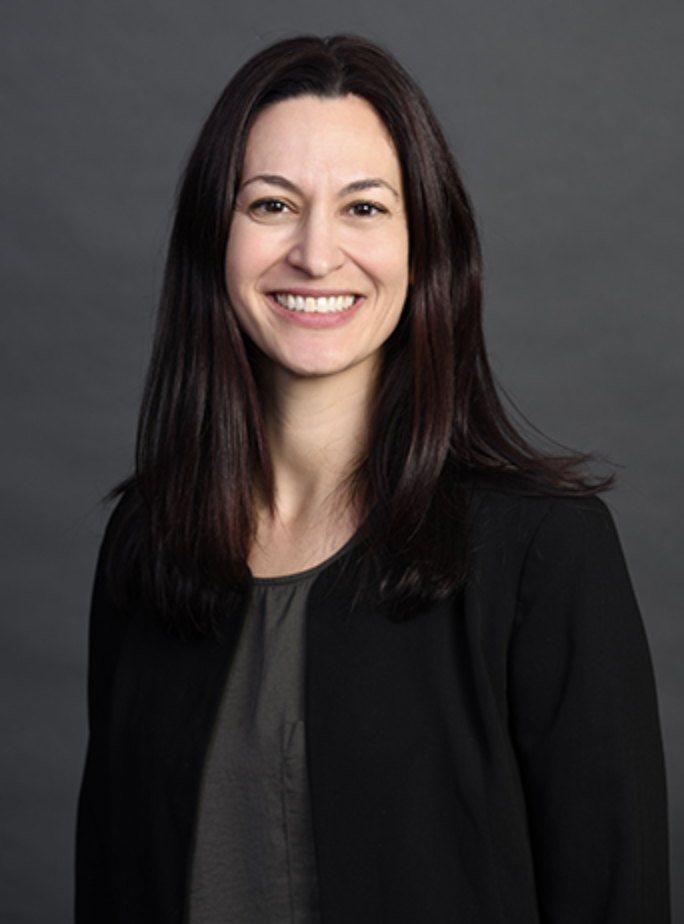
Christine Conelea, PhD is an Associate Professor in the Department of Psychiatry & Behavioral Sciences at the University of Minnesota, a licensed clinical psychologist, and the director of the MnTiC Lab. Dr. Conelea’s research interests include Tourette Syndrome/tic disorders, obsessive-compulsive disorder (OCD), and anxiety disorders. She is particularly interested in understanding how the brain, environment, and psychosocial factors interact to impact symptoms and treatment outcomes.
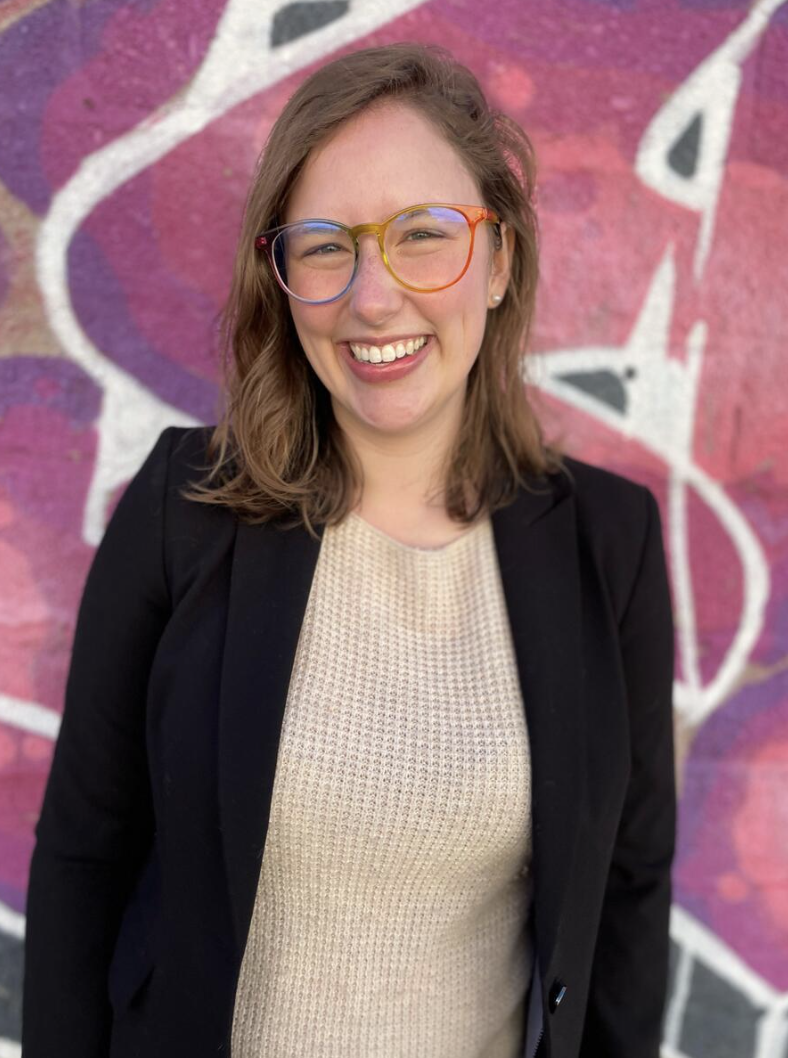
Adrienne Manbeck, PhD, is a postdoctoral fellow in the MnTiC Lab. Dr. Manbeck earned her doctorate in clinical psychology at the University of Minnesota and completed her pre-doctoral internship at Allegheny General Hospital in Pittsburgh, PA. Dr. Manbeck’s research aims to better understand the development, maintenance, and treatment of OCD and anxiety disorders across the lifespan, with a particular emphasis on the impact of societal stressors on these disorders, including the ways in which societal stressors impact symptom severity, access to high-quality treatment, and impact of treatment on symptoms.


More Reading:

Micali, N., Heyman, I., Perez, M., Hilton, K., Nakatani, E., Turner, C., & Mataix-Cols, D. (2010). Long-term outcomes of obsessive–compulsive disorder: Follow-up of 142 children and adolescents. British Journal of Psychiatry, 197(2), 128–134. 

Conelea, C.A., Woods, D.W., Zinner, S.H. et al. The Impact of Tourette Syndrome in Adults: Results from the Tourette Syndrome Impact Survey. Community Ment Health J 49, 110–120 (2013).

Tourette Association of America Tourette Awareness Month resources

MnTiC Lab
Check out our research
Stay in touch! Subscribe to our newsletter

The post Tics and OCD: Why Treatments Differ and Ways to Support Your Kids appeared first on International OCD Foundation.

Mental Health Fitness Through a Youth Perspective 

Insights on building and advancing mental health care solutions through collaboration — from the Global Youth Advisory Council at the SNF Global Center for Child and Adolescent Mental Health at the Child Mind Institute


Mai El Shoush, Partnerships Campaign Manager, Stavros Niarchos Foundation (SNF) Global Center for Child and Adolescent Mental Health at the Child Mind Institute

Tatiana P. Claridad, MBA, Director of Board Affairs and Institutional Strategy, Stavros Niarchos Foundation (SNF) Global Center for Child and Adolescent Mental Health at the Child Mind Institute


Mental health fitness is shaped by lived experience, context, and the systems of care that surround us. During Mental Health Awareness Month, we invited young leaders from the Global Youth Advisory Council (GYAC) at the Stavros Niarchos Foundation (SNF) Global Center at the Child Mind Institute — from Brazil, South Africa, and Greece — to share their unique perspectives.

Their reflections offer insight into how young people define, build, and experience mental fitness globally, highlighting the influence of their environments, communities and everyday realities. Their views are essential to shaping more relevant and effective support for young people everywhere.

From left to right: Delice Lumbu, Mariana Rodrigues Chaves, Spyros Chronis, Faidra Kamperidi, Kayla Coetzer, Denny Oliveira Curini, Jennifer Matibi

From daily habits to systemic change, here’s how young people are reimagining mental health care as mental health fitness:

“By cultivating a practice of self-awareness — through understanding myself and my internal needs better, I’m able to show up for myself in the ways that I need in those moments of struggle.”

Kayla Coetzer, 24, South Africa

“In this fast-paced world, it’s important to take a step back, disconnect from the digital world, and engage with friends…try helping others and don’t be afraid to ask for help if needed.”

Spyros Chronis, 20, Greece

“I honor my journey by normalizing help‑seeking and reminding myself that mental health is an ongoing process that requires care, patience, and the courage to choose growth, even in environments where it is not always encouraged.”

Jennifer Matibi, 24, South Africa

“For me, keeping my mental health fit is about understanding and embracing my talents and weaknesses, and dedicating time to spaces that value my uniqueness.”

Mariana Rodrigues Chaves, 18, Brazil

“I try to find ways to ground myself and do things that people my age typically do. Making mistakes is acceptable and often necessary for personal growth.”

Faidra Kamperidi, 19, Greece

“Young people can build mental health fitness in their everyday lives through self-care, doing things that energize and restore them, practicing self-compassion, and surrounding themselves with supportive people. It’s about creating small, consistent habits that allow you to show up for yourself, even on hard days.”

Delice Lumbu, 20, Director of Youth Engagement, SNF Global Center

These reflections raise a broader question — how can global collaboration strengthen mental health support for children and adolescents?

“Global collaboration in youth mental health means real change to me. When countries unite around one shared goal — safeguarding young people’s mental health — they’re investing in their own future.”

Denny Oliveira Curini, 17, Brazil

“Mental health challenges are deeply influenced by social, economic, and cultural conditions, and real growth happens when solutions are shaped within those contexts. Global collaboration creates opportunities to share lived experiences, exchange practical knowledge, and adapt tools that are both relevant and accessible. It allows us to learn from one another across borders while empowering communities with skills, resources, and frameworks that support mental growth. From my experience, collaboration is not about imposing solutions, but about co‑creating safe, healthy spaces that enable young people to build resilience, develop agency, and flourish even in environments where those opportunities are often limited.”

Jennifer Matibi, 24, South Africa

“To me, global collaboration in youth mental health represents a shift from pockets of innovation to a ‘culture of quality’ that doesn’t stop at a country’s border. It’s the recognition that while mental health struggles are a rising universal problem, the solutions are often trapped in local silos or limited by a country’s wealth. Therefore, global partnership is the bridge that allows solutions to be shaped, shared, adapted, and standardized to ensure that no one is left behind.”

Spyros Chronis, 20, Greece

“Global collaboration in youth mental health means bringing different regions’ perspectives [together] to debate and understand our similarities and differences, to then work on solutions that cross borders and change lives.”

Mariana Rodrigues Chaves, 18, Brazil

“Nowadays, young people tend to feel overwhelmed by the excessive pace of technological evolution. The constant stimuli and the pervasive flow of information put us in a position where we constantly compare ourselves to others, feeling that our efforts are never enough compared to what we see online. Together, let’s set a human example: Progress can be gradual, and it is perfectly okay to feel like you are falling behind.”

Faidra Kamperidi, 19, Greece

“Global collaboration in youth mental health means looking at shared challenges and pooling resources to tackle them together, while keeping cultural uniqueness at the forefront of country-specific solutions and care.”

Kayla Coetzer, 24, South Africa

While these insights from the GYAC members highlight the importance of collaboration, they also reflect a new paradigm of youth leadership.

What continues to inspire you as a young leader about the ideas and perspectives shared through the Global Youth Advisory Council, and what does it say about the future of mental health care?

“What continues to inspire me most is the diversity of perspectives across different countries, yet the shared commitment to improving youth mental health. There is something powerful about young people coming together across contexts, bridging gaps through a global lens while staying rooted in their lived experiences. It reminds me that the future of mental health care will be more inclusive, shaped by real voices, and focused on breaking stigma in ways that feel authentic and meaningful.”

Delice Lumbu, 20, Director of Youth Engagement, SNF Global Center

Contributors: Delice Lumbu, Director of Youth Engagement, Stavros Niarchos Foundation (SNF) Global Center for Child and Adolescent Mental Health at the Child Mind Institute

The post Mental Health Fitness Through a Youth Perspective  appeared first on Child Mind Institute.

Negative Online Experiences Are Common but Often Go Unreported Among Youth With Mental Health and Neurodevelopmental Concerns

New Child Mind Institute study finds more than one in four youth experienced a negative online experience in the past year, yet only one in five reported the incident through platform tools.

New York, NY — A new study from researchers at the Child Mind Institute finds that negative online experiences are common among children and adolescents with mental health and neurodevelopmental conditions, and that most incidents are not reported through platform reporting tools.

Published in JAACAP Open, the study examined negative online experiences among 1,009 youth ages 9 to 15 with a history of mental health or neurodevelopmental concerns, all of whom were current or previous participants in the Child Mind Institute’s Healthy Brain Network. More than one in four reported at least one negative online experience in the past year. Among those who had such an experience, nearly 69% reported multiple incidents, yet only 20% reported the incident through platform reporting tools.

The study defined “negative online experience” as any unwanted or uncomfortable experience while online, including cyberbullying, cyberstalking, doxxing, impersonation, sexual harassment, and related forms of digital harm. The research used a mixed-methods design, combining a quantitative survey with an in-depth qualitative follow-up involving a three-day moderated online bulletin board with a subset of participants.

“These findings point to a large and often hidden problem,” said Michael P. Milham, MD, PhD, Chief Science Officer at the Child Mind Institute and senior author of the study. “Many young people are encountering harmful or uncomfortable experiences online, but the systems designed to help them often do not receive a report. That creates a major gap for parents, educators, clinicians, and platforms trying to keep children safer online.”

The research team identified three major categories of barriers that prevent youth from reporting negative online experiences: reporting process barriers, such as not knowing how to make a report; reporting policy barriers, including uncertainty about what qualifies for reporting or how platform rules apply; and emotional barriers, such as embarrassment, fear, and worry about consequences.

The study also found that reporting decisions were often shaped by how young people interpreted the incident itself. In the qualitative follow-up, youth considered whether the harmful behavior seemed intentional, how malicious it appeared, and how severe or repeated the harassment was. When those cues were ambiguous, youth were less certain about whether reporting was appropriate.

“Reporting is not simply a matter of telling young people to speak up,” said Mirelle Kass, lead author of the study. “Youth are making complicated judgments about intent, severity, platform rules, and the possible consequences of disclosure. If we want young people to report harmful experiences, the tools and systems around them need to be clearer, safer, and easier to use.”

The findings suggest that online safety efforts should be tailored to the needs of youth who may already be managing mental health, developmental, or social challenges. Social aptitude, mental health symptoms, and parenting style were associated with youths’ likelihood of encountering negative online experiences and with the barriers they faced when deciding whether to report them.

Participants also expressed a clear desire for better tools and guidance. Most youth wanted platforms to provide more information about how to protect themselves online, how to use safety features such as blocking and reporting, and how to access support during and after the reporting process.

“Families, educators, clinicians, policymakers, and technology developers all have a role to play,” said Dr. Milham. “We need reporting systems that children can understand, policies that are transparent, and trusted adults who can respond without blame or overreaction. Safer digital spaces will require more than awareness. They will require systems designed around how young people actually experience online harm.”

The study underscores the importance of developmentally appropriate safety tools, clearer platform policies, and stronger support systems for youth navigating digital spaces. For children and adolescents with mental health and neurodevelopmental conditions, improving reporting pathways may be an important step toward reducing hidden online harms and building safer online environments.

This research was supported by funding from Google LLC’s User Safety team to the Child Mind Institute for work led by Michael P. Milham, MD, PhD.


About the Healthy Brain Network

The Healthy Brain Network is a community-centered research initiative from the Child Mind Institute that collects clinical, cognitive, behavioral, and neurobiological data from children and adolescents in the New York City area. Families who participate receive feedback and diagnostic consultation while contributing to open science research aimed at improving understanding of child and adolescent mental health.

About the Child Mind Institute

The Child Mind Institute is an independent nonprofit organization dedicated to transforming the lives of children and families struggling with mental health and learning disorders. Through cutting-edge research, evidence-based clinical care, and public education, the Child Mind Institute builds open science platforms and digital tools to accelerate discovery and improve youth mental health worldwide.

For press questions, contact cmiscience@ssmandl.com or mediaoffice@childmind.org.

The post Negative Online Experiences Are Common but Often Go Unreported Among Youth With Mental Health and Neurodevelopmental Concerns appeared first on Child Mind Institute.

Centering People, Centering Stories: Folklore as an Unlikely Ally in the OCD Misdiagnosis Crisis

By: Rebecca Bernstein, MA Folklore

The International OCD Foundation’s (IOCDF) recent landmark white paper reveals more than 80% of OCD cases in America remain undiagnosed (International OCD Foundation, 2025). Considering the size of this clinical challenge, it might seem odd to suggest that a small, humanities-based field like folklore— yes, folklore — has any role to play in the solution. As someone who studies OCD personal narratives (stories people tell about their lived experiences), my research suggests otherwise. In a situation that invokes the feeling of all-hands-on-deck, the tools and perspectives of this field may offer more benefit than we might initially give it credit for.

Folklore is the study of informal, creative communication. Dr. Lynn McNeill describes it as anything people “say, do, make, or believe” (McNeill, 2013). Folklore includes everything you’d think of (quilts, traditional music, fairy tales) and a lot of things you wouldn’t (occupational culture, gossip, internet memes.) We find examples of folklore everywhere. It’s in our holidays and our hobbies, our food and our fads, our jokes and our grieving. Folklorists study the infinite ways people express themselves in daily life. This, in turn, helps us better understand the cultural realities in which they live. And because what we “say, do, make, or believe” describes most of human behavior, the folkloric lens can be an indispensable one with which to investigate the world.

The benefit of studying how people express themselves is obvious when we recognize that in mental health, conversation and narrative are the primary tools we use to give and receive care. OCD isn’t just a diagnosis. It’s also a fundamentally creative experience. (Creative things don’t necessarily have to be beautiful, pleasing, or even wanted. They just have to be new and meaningful.) (Dictionary.com, 2023). Although ego-dystonic, extraordinary beliefs and elaborate rituals are hallmark features of OCD. When sufferers discuss their experiences, they are naturally inclined to do so through their own personal and cultural lenses. Therefore, descriptions of OCD vary infinitely. If the issue is our failure to recognize OCD when it presents itself, an approach designed to make sense of something as messy as human expression may offer insights that quantitative research methods still struggle to obtain.

How Folklorists Research

Just like in biomedical research, the research methods folklorists use matter. Our goal is to better understand people and their communities. That means we strategically build relationships, listen deeply, and intentionally embrace the complexity of those we talk to.

When I started researching OCD narratives, I wanted to know: What were the internal realities like for people who lived with this illness? What made their stories distinct? And how might those stories be connected? One of the biggest challenges I faced in my fieldwork was the potential for my participants to self-censor. As someone who also lives with OCD, I knew all too well the role shame and fear could play in the choice to fully share one’s reality with others. Using both field-tested approaches and my own lived knowledge, I conducted interviews with people with OCD, approaching them in a way I hoped would ease interviewees into difficult conversations:

  • I provided anonymity. I held all interviews on Zoom, where participants were free to keep their cameras off. I also assigned each one an alphanumeric signifier (A1, B2, etc.) in my writing.
  • I emphasized the importance of story. Although I asked specific questions, I also allowed participants to go off topic and engage in two-way conversation. The story was the point.
  • I used the “kitchen table” interview method. Based on the work of Carl Lindahl, this method tries to recreate the intimacy of two individuals talking around a kitchen table. It discourages framing the interviewer as an objective party, recognizes storytellers as experts in their own experiences, and suggests that interviewers only ask questions they themselves would be willing to answer (Lindahl, 2012).
  • I disclosed. My choice to openly discuss my own OCD diagnosis with interviewees allowed conversations to proceed with a certain warmth and vulnerability.
  • I emphasized participants’ humanity. I treated each participant as a full individual rather than just a source of information. This meant I worked on a model of enthusiastic consent. It also meant I asked them for feedback on my writing to ensure I portrayed their experiences accurately.
  • I compensated participants well. Each received a $100 gift card.

The Results

The universal theme I discovered during these interviews was a profound concern with social isolation. Every single participant mentioned this issue. Interviewees shared how OCD made it difficult for them to maintain relationships and how challenging it was to hide their illness from others. They also recalled their joy and gratitude when discussing moments in which they felt understood.

Their narratives also contained four other common themes:

1.) Logic and patterns of personal concern. Participants often discussed their particular obsessions and compulsions, and the influence those specific thoughts and behaviors had on their daily lives.

2.) Issues of negotiation. People talked about navigating certain types of conflicts as a result of their illness. These conflicts generally fell into two categories: self-negotiation and existential negotiation. In the first, people struggled with the desire to take their thoughts and urges seriously despite knowing they didn’t make sense. In the second, they wrestled with their relationships to the divine.

3.) Positive approaches to the illness. Many interviewees made a point to mention the silver linings they saw in being sick. They noted how OCD made them safer, more empathetic, or provided them with particular skills. Others discussed productive choices they’d made despite living with such a debilitating condition.

4.) Interactions with medical systems. Participants talked about their experiences as patients. For some, dealing with doctors, therapists, and other health professionals helped them understand their experience or relieved their suffering. For others, these encounters were confusing, unhelpful, or even traumatizing.

It’s important to note these themes represent a truly broad range of content. Not every story included every theme, and within those themes, the specific details I heard varied as much as the individuals themselves.

Implications

Say you were to hear four stories: one about someone’s preferred cleaning routine, one about someone’s waning belief in God, one about a good decision made in a difficult circumstance, and one about a doctor’s visit. It’s unlikely you’d consider these stories connected. And yet the data shows they are. The fact that stories with dramatically different content can reflect the same illness highlights the way OCD can remain elusive and camouflaged.

The problem with recognizing these stories as OCD stories isn’t just the variation in content. It’s also in how others hear them. In folklore, we don’t just study cultural expressions. We also study how they move from person to person. “Tellable narratives” travel easily. Both speakers and listeners understand what a certain type of story should sound like and the meaning it’s supposed to convey. If I tell you a tale about a persecuted young woman who escapes a bad home life and marries a prince, you can probably guess you’ve heard Cinderella. If we’re both excited that she went from rags to riches, we share an understanding that her journey is a positive one. In contrast, an “untellable narrative” hits some kind of barrier. If you’ve never heard Cinderella before or think the stepmother is actually the hero, my meaning in telling you the story gets lost. Untellable narratives can be misinterpreted.

This misalignment between the stories people tell and the ones listeners expect to hear happens all the time. We’ve all said things misunderstood by others. Sometimes this process is harmless; other times it results in difficult consequences. Dr. Kristiana Willsey writes about veterans who censor themselves in front of civilian audiences. Because civilians usually only expect to hear tales of “war heroes” or “PTSD survivors,” veterans often choose not to tell the full and complicated stories of their service experiences (Willsey, 2015). Dr. Amy Shuman and Carol Bohmer discuss the case of rejected asylum seekers. If asylum applicants don’t tell their stories of oppression and escape in a way that fits immigration officials’ expectations of what a traumatic asylum story should look like, their applications get denied (Shuman & Bohmer, 2016). If we consider just how different any two OCD stories can be and add the public assumption that OCD is an illness of specific doings (hand washing, checking locks) rather than tellings, it highlights just how difficult it is for most of these narratives to get heard, and heard correctly.

Patient/practitioner interactions can be particularly vulnerable to this type of miscommunication. The problem with considering OCD as just a medical issue is that most people don’t think of their lives as medical events. Practitioners enter the room ready to make sense of problems in clinical terms. Patients enter with stories. They share their concerns in a way that cannot be easily separated from their personal frames of reference or cultural understandings of life. Practitioners are often taught to mistrust the details that emerge from these narratives, to kindly but efficiently work around them in order to do their jobs. But for patients, these details are how they make meaning. If misdiagnoses also occur during these interactions, it’s worth taking a closer look at what’s being lost in translation.

Folklore ultimately offers the promise of new solutions to old problems. It allows us to reconsider how we listen to patients, collect data, and address communication issues— all clear benefits in the fight for better diagnostic care. It is also equipped to help us make sense out of the lived reality of OCD— perhaps uniquely so. I see folklore as an exciting potential ally to traditional research and clinical spaces. My hope is that this partnership can help us work more effectively toward our common goals: a better understanding of OCD, and quicker ease for its sufferers.

Works Cited

Dictionary.com. (2023). Creativity. In Random House Unabridged Dictionary. Random House, Inc. https://www.dictionary.com/browse/creativity.

International OCD Foundation. (2025). America’s OCD care crisis: National findings on the failure of effective OCD treatment to research patients. International OCD Foundation. https://iocdf.org/wp-content/uploads/2025/12/Full-Report-Americas-OCD-Care-Crisis-12-9-2025.pdf.

Lindahl, C. (2012). Legends of Hurricane Katrina: The right to be wrong, survivor-to- survivor storytelling, and healing. The Journal of American Folklore, 125 (496), 139–176. https://doi.org/10.5406/jamerfolk.125.496.0139.

McNeill, L. (2013). Folklore rules: A fun, quick, and useful introduction to the field of academic folklore studies. Utah State University Press. https://muse.jhu.edu/book/27822.

Shuman, A. & Bohmer, C. (2016). The stigmatized vernacular: Political asylum and the politics of visibility/recognition. In D. Goldstein & A. Shuman (Eds.), The stigmatized vernacular: Where reflexivity meets untellability. Indiana University Press.

Willsey, K. (2015). Falling out of performance: Pragmatic breakdown in veterans’ storytelling. In T.J. Blank & A. Kitta (Eds.), Diagnosing folklore: Perspectives on disability, health and trauma. University Press of Mississippi.

The post Centering People, Centering Stories: Folklore as an Unlikely Ally in the OCD Misdiagnosis Crisis appeared first on International OCD Foundation.

What to expect from Google this week

This story originally appeared in The Algorithm, our weekly newsletter on AI. To get stories like this in your inbox first, sign up here.

When Google opens its doors tomorrow for its annual developer conference, I/O, it will do so as a clear third place in the foundation model race. A year ago, at Google I/O 2025, the situation looked very different: The company was still riding high from the launch of Gemini 2.5 Pro that March, and distinguishing among the top-tier large language models often felt like a subjective splitting of hairs. 

But a foundation model’s reputation these days rests largely on its coding capabilities, and for months Google’s coding tools have been outgunned by Anthropic’s Claude Code and OpenAI’s Codex. Those systems are so dramatically superior to Google’s own offerings that the company has reportedly had to allow some engineers at DeepMind, its AI division, to use Claude for their work—lest they fall farther behind.

So when I arrive at the conference in Mountain View, California tomorrow, I’ll certainly be on the lookout for any efforts Google is making to claw its way back into frontrunner position. But I’m also eager to see new developments in areas where Google shapes the cutting edge, such as AI for science. The company’s moves there might receive less attention, but they will be no less consequential. 

Here are three things I’ll be paying particular attention to over the next two days.

An attempted coding comeback

Google is taking its AI coding crisis seriously. According to reporting from The Information, there’s a new AI coding team at DeepMind. And the Los Angeles Times has reported that John Jumper, who shared a 2024 Nobel Prize in chemistry with DeepMind CEO Demis Hassabis for their work on the protein structure prediction software AlphaFold, is lending his talents to the efforts. I would be surprised if we don’t see a major new coding release at I/O, perhaps in the form of an update to the company’s Antigravity agentic coding platform.

That said, we shouldn’t expect anything transformative here. Googlers have access to models and products that are substantially ahead of those released to the public, yet they were still reportedly fighting over who got access to Claude Code last month. Unless the company has made astonishing progress since then, Google probably won’t make it back to the coding frontier in the next two days.

Science and health

Coding might be Google DeepMind’s weakness, but science is its conspicuous strength. It is the only frontier AI company to have earned a Nobel Prize. And as LLMs have come to dominate the AI-for-science landscape, Google has only solidified its lead. Last year, the company released multiple scientific AI tools, including the AI co-scientist, which formulates hypotheses and research plans in response to user questions and has been described as an “oracle” by one Stanford scientist, and AlphaEvolve, a system that iteratively discovers new solutions for mathematical and computational problems. If any new scientific tools are announced at I/O, they’ll be worth noting.

I’ll also be paying close attention to any moves Google makes in health and medicine. Google is doing some of the best research out there on LLM-based health tools, but OpenAI has defined the health AI conversation since the release of ChatGPT Health in January. Google has announced that it will be making its AI-powered Health Coach publicly available tomorrow, but promotional material suggests that the tool is geared more toward providing advice on topics such as fitness and diet than to addressing users’ medical concerns. Is this another area where Google has fallen behind, or is the company exercising appropriate caution in a high-stakes domain? 

The drama

While Google fans congregate down in Mountain View, roughly 30 miles north in Oakland the Elon Musk v. Sam Altman trial will be wrapping up. The past few months have seen more than their fair share of AI CEO drama—before the trial, the animosity between Altman and Anthropic CEO Dario Amodei took center stage as Anthropic and OpenAI worked to negotiate deals with the US Department of Defense. But DeepMind’s Hassabis has, for the most part, steered clear of such drama. He effectively presents himself as a Nobel Prize-winning nerd, and if he has written screeds about any of his peers, they haven’t been leaked to the press or appeared in legal discovery.

That’s not to say that Google is controversy free. Last month, a group of 600 employees, many of whom work for DeepMind, sent a letter to CEO Sundar Pichai protesting an impending DoD deal. Google signed that deal the next day. Hassabis, Pichai, and all the other big names will surely do their best to skirt these and other touchy subjects while on stage, but controversies will worm their way in regardless. It will be interesting to see whether Google can maintain its veneer of neutrality.

The Download: Musk v. Altman week 3, and Trump’s tech trading

This is today’s edition of The Download, our weekday newsletter that provides a daily dose of what’s going on in the world of technology.

Musk v. Altman week 3: Musk and Altman traded blows over each other’s credibility. Now the jury will pick a side.

In the final week of the Musk v. Altman trial, lawyers attacked the credibility of the two tech leaders. Sam Altman was accused of lying and self-dealing, while Elon Musk was portrayed as a power-seeker trying to control artificial general intelligence.

The case unearthed new details about the two arch-rivals and OpenAI’s contested nonprofit status, as well as a golden trophy of a donkey’s ass awarded to an employee who challenged Musk.

Read the full story on the explosive final week of the trial.

—Michelle Kim

Michelle Kim, who’s also a lawyer, has been in court throughout the Musk v. Altman trial. Read her coverage of week 1 and week 2, plus a Q&A on what it was like in the room

The must-reads

I’ve combed the internet to find you today’s most fun/important/scary/fascinating stories about technology.

1 Trump traded hundreds of millions in tech stocks before favorable policy moves
He bought shares in Nvidia, AMD, and Arm ahead of policy boosts. (Quartz)
+ And touted Palantir on Truth Social after buying its stock. (CNBC)
+ His crypto venture and Iran’s top exchange tapped the same networks. (Reuters $)

2 SpaceX plans to list on the Nasdaq stock exchange as soon as June 12
It wants to raise up to $75 billion at a $1.75 trillion valuation. (Reuters $)
+ BlackRock may invest up to $10 billion in the offering. (The Information $)
+ Cerebras’ blockbuster IPO has boosted hopes for the listing. (CNBC)
+ Which is set to dwarf many of the biggest IPOs on ⁠record. (Reuters)

3 Chinese AI groups have pulled ahead of US rivals in video generation
ByteDance and Kuaishou’s models lead in realism and scale. (FT $)
+ AI is fueling China’s short-drama boom. (MIT Technology Review)
+ While its AI labs are betting big on open source. (MIT Technology Review)

4 Iran says it will charge Big Tech for using undersea internet cables
The cables beneath the Strait of Hormuz carry vast digital traffic. (CNN)
+ Tech bosses met at Uber HQ on Saturday to discuss Iran’s future. (404 Media)

5 Samsung has a “last chance” to stop a massive strike over AI
Over 45,000 employees could walk out for 18 days this week. (CNBC
+ They want a bigger share of the AI boom. (FT $)
+ Samsung and its largest labor union will resume talks on Tuesday. (Reuters $)

6 Old oil and gas wells could become a new source of clean energy
US states plan to convert them into geothermal energy assets. (Wired $)
+ A balcony solar boom is coming to the US. (MIT Technology Review)

7 The ChatGPT era has triggered a 30% surge in grades at a top university
Grades inflated in text-heavy courses but remained flat in others. (Axios)
+ Princeton has changed its honor code because of AI cheating. (WSJ $)
+ And real cheating rates may be far higher. (The Times $)

8 Ex-Google CEO Eric Schmidt was fiercely booed during an AI speech
His graduation speech praising AI agents sparked uproar. (The Verge)
+ A populist backlash is building against AI. (MIT Technology Review)

9 Arm faces a US antitrust probe over its chip tech licenses
Regulators are investigating whether it has an illegal monopoly. (Bloomberg $)
+ Qualcomm has accused Arm of anticompetitive conduct. (Reuters $)

10 ArXiv will ban researchers who submit AI slop
Offending authors face year-long bans from the pre-print server. (TechCrunch)

Quote of the day

“When someone offers you a seat on the rocket ship, you do not ask which seat. You just get on.” 

—Ex-Google CEO Eric Schmidt extolls the virtues of AI agents in a graduation speech at the University of Arizona, prompting a chorus of boos.

One More Thing

a gloved hand holding up a microfluidic chip

WYSS INSTITUTE AT HARVARD UNIVERSITY


Is this the end of animal testing?

In a clean room in his lab, Sean Moore peers through a microscope at a bit of human intestinal tissue growing on a plastic chip. It’s one of 24 so-called “organs-on-chips” his team bought three years ago. The technology is designed to mimic human biology—and could reduce the need for animal testing.

The appeal is not only ethical. Around 95% of drugs developed through animal research ultimately fail in people, and early studies suggest organ-on-a-chip systems may offer more accurate insights into how diseases behave and how drugs work. But the field still faces major technical and cost challenges before it can replace animal research.

Find out how organ-on-chip technology could reshape drug testing.

—Harriet Brown

We can still have nice things

A place for comfort, fun, and distraction to brighten up your day. (Got any ideas? Drop me a line.)

+ Listen to the captivating first recordings of whale songs from 1949.
+ Meet the feline guardians of New York’s corner stores in this photo collection.
+ A newly discovered floor plan allowed historians to pinpoint the location of Shakespeare’s only property in London.
+ A music fan spent decades secretly recording 10,000 local shows. Now the entire collection is available online.

Musk v. Altman week 3: Musk and Altman traded blows over each other’s credibility. Now the jury will pick a side.

In the final week of the Musk v. Altman trial, lawyers traded blows over Elon Musk’s and OpenAI CEO Sam Altman’s credibility. Altman was grilled on his alleged history of lying and self-dealing involving companies that do business with OpenAI. But he fired back, painting Musk as a power-seeker who wanted to control the development of artificial general intelligence (AGI)—powerful AI that can compete with humans on most cognitive tasks. 

As evidence of their commitment to AI safety, OpenAI brought out a golden trophy of a donkey’s ass that was gifted to an employee after he was called a “jackass” for standing up to Musk’s plans to race toward AGI. 

Lawyers for both sides also presented their closing arguments, floating unflattering mugshot-style photos of Musk and Altman next to each other on a giant screen. Musk’s lawyer Steven Molo argued that Altman and OpenAI president Greg Brockman broke their promise to use money Musk donated to maintain OpenAI as a nonprofit that develops AI for the benefit of humanity. Instead, they created a for-profit subsidiary that made them extraordinarily wealthy.

OpenAI’s lawyer Sarah Eddy argued that Altman and Brockman never promised to keep OpenAI a nonprofit. She added that even though it’s been restructured, OpenAI remains a nonprofit dedicated to developing AI safely.

She claimed that Musk sued too late—and that his real motive is to sabotage a competitor to his own AI company, xAI, which he launched in 2023. 

Musk is asking the court to unwind the 2025 restructuring that converted OpenAI’s for-profit subsidiary into a public benefit corporation and to remove Altman and Brockman from their roles. He is also seeking as much as $134 billion in damages from OpenAI and Microsoft, to be awarded to OpenAI’s nonprofit. 

The jury will begin deliberating on Monday and deliver an advisory verdict as soon as next week. The jury verdict is not binding on the judge, who will decide the case.

If the judge rules in Musk’s favor, it could upend OpenAI’s race toward an IPO at a valuation approaching $1 trillion. Meanwhile, xAI is expected to go public as a part of Musk’s rocket company SpaceX as early as June, at a target valuation of $1.75 trillion.

Musk the power-seeker, Altman the liar.

In the first week of the trial, Musk said he was suing to save OpenAI’s mission to build AI safely for the benefit of humanity. This week, Altman denied Musk was a paladin of AI safety and painted him as a power-seeker who wanted to control OpenAI. 

Altman told the jury that in 2017, when Musk and other cofounders were discussing creating a for-profit arm, they asked Musk what would happen to his control over such an entity if he died. “Maybe the control of OpenAI should pass to my children,” Musk said, according to Altman.

Musk’s lawyer shot back, grilling Altman on his alleged history of lying. He pointed out that OpenAI’s former executives Ilya Sutskever and Mira Murati, and former board members Helen Toner and Tasha McCauley, all testified that Altman had lied to them. In 2023, Altman was briefly fired as CEO over the alleged behavior.

Molo also pressed Altman about his personal investments in startups that do business with OpenAI. Altman testified that he tried to steer OpenAI to buying power from the nuclear energy company Helion Energy, a third of which he owns.

(Last Friday, the US House oversight committee launched an investigation into Altman’s potential conflicts of interest. Attorneys general from more than a half-dozen states called for the Securities and Exchange Commission to review them.)

During his closing statement, Molo put Altman’s credibility on the stand again. “Imagine that you’re on a hike, and you come upon one of those wooden bridges that you see on a trail, and it’s over a gorge,” he said. “A woman standing by the entry to the bridge says, ‘Don’t worry—the bridge is built on Sam Altman’s version of the truth.’ Would you walk across that bridge?”

Altman, who sat behind his lawyers, looked up uneasily every time his name was mentioned. 

During her closing argument, Eddy fired back. Musk “never cared about the nonprofit structure,” she said. “What he cared about was winning.” 

Musk, though, was absent. Despite the judge’s order that he remain available, he flew to China with President Trump.

Did Altman promise to keep OpenAI a nonprofit?

During her closing argument, Eddy argued that no testimony or evidence showed any conditions on Musk’s donations, or any promises made by Altman and Brockman to keep the company a nonprofit. “No commitments or promises were made. No restrictions were placed on Mr. Musk’s donations,” she said.

Eddy added that it was evident Musk wasn’t truly committed to keeping OpenAI a nonprofit. She noted that in 2017, he tried to create a for-profit subsidiary and fought a bitter battle with Altman and Brockman to have control over it.

“I was not opposed to there being a small for-profit that provides funding to the nonprofit,” Musk told the jury earlier in the trial, “as long as the tail didn’t wag the dog.” 

Eddy then argued that Musk sued too late, filing in 2024 after the statutes of limitations on his claims ran out. In 2019, OpenAI created a for-profit subsidiary, under which employees and investors received a capped return on their investment. 

But Musk testified that he discovered OpenAI had abandoned its nonprofit mission only in 2022, when Microsoft was preparing to invest $10 billion in OpenAI—a deal that closed in 2023. “I was disturbed to see OpenAI with a $20B valuation,” he texted Altman after reading the news. “This is a bait and switch.”

Musk told the jury that the $20 billion valuation made him realize “the for-profit is the tail wagging the dog.” 

“The 2023 deal was different,” Molo hammered home during his closing argument.

Is OpenAI still a nonprofit committed to its mission?

A central question raised in the last week of trial was whether OpenAI remains a nonprofit committed to developing AGI safely for the benefit of humanity. Eddy, the OpenAI lawyer, argued that the nonprofit still controls the for-profit and seeks to “help AGI turn out well for humanity.” “The OpenAI nonprofit is the best-resourced nonprofit in the world,” thanks to the for-profit, she added.

Molo countered that while the OpenAI’s nonprofit nominally controls the company, it does not do so in practice. OpenAI’s nonprofit and for-profit are controlled by the same people—seven of the nonprofit’s eight board members are on the for-profit’s board. The nonprofit hired employees only a month before the trial started and does work only in grant-making rather than AI research. 

Molo played a video interview of Altman saying that the nonprofit board’s failure to fire him in 2023 was “its own kind of governance failure.”

“We’re left with this nonprofit that doesn’t have any voice,” Jill Horwitz, a law professor at Northwestern University who studies nonprofits, told MIT Technology Review. “It doesn’t have much money, and OpenAI doesn’t think it has any obligation to fund it. It barely has a staff,” she says. “It’s unclear how on earth the nonprofit is supposed to exercise its duties and control the entire company.” 

Civil society groups and policymakers have spoken out against OpenAI’s restructuring over the years. So has Musk, although his own stake in the AI race makes him a dubious champion for the public interest. 

“The public interest in the nonprofit loses, no matter who wins or loses this trial,” says Horwitz.

Jackass for AI safety

Despite US District Judge Yvonne Gonzalez Rogers’s warning during the first week that this trial was not about AI safety, the issue stole the show again. Throughout the trial, the lawyers from both sides traded barbs over the safety track records of ChatGPT (which has allegedly caused teen suicides) and Grok (which has flooded X with porn).  

On the last day of testimony, OpenAI’s lawyer Bradley Wilson handed the judge a small golden trophy of a donkey’s ass, inscribed: “Never stop being a jackass for safety.” 

The trophy belonged to Joshua Achiam, OpenAI’s chief futurist. He testified that he’d warned, when Musk announced in 2018 that he was leaving OpenAI to race toward building AGI, that speed could compromise safety. Musk snapped and called him a “jackass,” said Achiam. His colleagues, including Dario Amodei, now CEO of Anthropic, gave him the trophy to enshrine the diss.

“I don’t want it,” said the judge.
The shenanigans spilled out into the street too. In front of the Oakland courthouse, a protester paraded around wearing a costume of Musk holding a bag of ketamine and driving a Cybertruck. Another held a photo of Sam Altman and a poster reading, “Stop AGI or we’re all gonna die.”

The Download: China’s AI drama factory and the WHO’s missing health targets

This is today’s edition of The Download, our weekday newsletter that provides a daily dose of what’s going on in the world of technology.

How Chinese short dramas became AI content machines

China’s short drama industry is fueled by bite-sized, melodramatic, and smutty shows built for smartphone scrolling. Now, many are being made entirely with AI: no actors, camera operators, cinematographers, or CGI specialists required.

An average of 470 AI-generated short dramas were released every day in January. Production timelines have shrunk from months to weeks, while costs have dropped by up to 90%. Storytelling is also increasingly driven by performance data.

The format is rapidly expanding overseas while reshaping the work of writers and production crews. Read the full story on AI’s dramatic impact on China’s short drama industry.

—Caiwei Chen

The world is on track to miss its health targets

The World Health Organization’s latest global statistics report reads less like a progress update than a warning sign. Progress on some of the world’s biggest health threats is stalling, and in some cases reversing altogether.

There were 1.3 million new HIV cases in 2024, malaria is resurging, vaccination rates are slipping in the Americas, and 42.8 million children are suffering from severe malnutrition. The world is now far off track from meeting many of the UN’s major health goals by 2030.

Here’s what the numbers reveal about the state of global health.

—Jessica Hamzelou

This story is from The Checkup, our weekly newsletter giving you the inside track on all things biotech. Sign up to receive it in your inbox every Thursday.

The must-reads

I’ve combed the internet to find you today’s most fun/important/scary/fascinating stories about technology.

1 As their trial goes to the jury, Musk and Altman face lying accusations
Lawyers hammered the rivals’ credibility in their closing arguments. (WSJ $) 
+ Musk was accused of “selective amnesia.” (Reuters $) 
+ The pair are in court over OpenAI’s future. (MIT Technology Review)
+ And their trial has made everyone look bad. (Wired $) 
 
2 AI data centers are straining America’s power grid
Nevada is redirecting electricity from Lake Tahoe to AI. (Ars Technica)
+ Utah is getting a giant data center despite water shortage fears. (Guardian)
+ No one wants a data center in their backyard. (MIT Technology Review)
 
3 OpenAI is mulling legal action against Apple over its ChatGPT integration
It hasn’t got the expected benefits from its deal with Apple. (Bloomberg $)
+ OpenAI is frustrated by the promotion of the ChatGPT integration. (NYT $)

4 Anthropic has agreed terms for a $30 billion funding deal
At a $900 billion valuation, which leapfrogs OpenAI’s. (The Information $)
+ Dragoneer, Greenoaks, Sequoia, and Altimeter are leading the round. (FT $)

6 Washington and Beijing will hold formal talks on AI safety
They’ll discuss guardrails on AI. (CNBC)
+ And a protocol to stop nonstate actors getting powerful models. (NYT $)

5 Alphabet and Amazon are using “unprecedented” borrowing to fund AI
They’re tapping the foreign debt market at new levels. (FT $)
+ People can’t agree on what the AI bubble is. (MIT Technology Review)
 
7 Big Tech has turned to Sesame Street to deflect scrutiny of screen use
Sparking accusations of encouraging children’s tech dependence. (Reuters $)
 
8 Anthropic’s feud with the White House threatens other businesses
Figma and Tenable say it will harm their ability to sell software. (Bloomberg $)
 
9 Autonomous agents staged a digital crime spree during a safety test
The “AI Bonnie and Clyde” then deleted themselves. (Guardian)

10 A poop app analysis app offered to sell photos of users’ stools
The images were used for AI training. (404 Media)

Quote of the day

“It’s like we don’t exist.” 

—Danielle Hughes, North Lake Tahoe resident and CEO of Tahoe Spark, tells Fortune that residents are being sidelined as their energy supplier prioritizes data centers.

One More Thing

LIZ ISLES/ALL TECH IS HUMAN


The rise of the tech ethics congregation

Just before Christmas, a pastor preached a gospel of morals over money to several hundred members of his flock. But the preacher wasn’t religious, and his congregation wasn’t a church. It was All Tech Is Human, a nonprofit devoted to ethics and responsibility in tech.

Founded in 2018, the organization has built a fast-expanding community for people who believe technology should focus less on profits and more on the public interest. It’s also drawing people searching for meaning and connection in a digital world.

Find out why thousands of people are turning to tech ethics communities for guidance and connection.

—Greg M. Epstein

We can still have nice things

A place for comfort, fun, and distraction to brighten up your day. (Got any ideas? Drop me a line.)

+ Go behind the scenes of the new Lucas Museum of Narrative Art.
+ Marvel at this robot folding and launching paper planes as quickly as possible.
+ Watch the moving moments rescued animals reunite with the humans who saved them.
+ Peer into the heart of a barred spiral galaxy in this stunning new capture from the James Webb Space Telescope.