A Shared Vision for Children and Young People: Advancing Partnership and Impact at SNF Nostos 2026

As the Stavros Niarchos Foundation (SNF) celebrates 30 years of visionary philanthropy, leaders from across sectors and around the world will gather at SNF Nostos 2026 (June 21–28) at the Stavros Niarchos Foundation Cultural Center (SNFCC) in Athens, Greece. There, they will explore bold ideas and practical solutions for building a better future. The Child Mind Institute is honored to participate in this milestone anniversary celebration, grateful for SNF’s longstanding partnership and commitment to advancing child and adolescent mental health globally.

Throughout the SNF Nostos 2026 week, the Child Mind Institute and the SNF Global Center for Child and Adolescent Mental Health will contribute to conversations examining how youth mental health intersects with some of today’s most pressing challenges, including education, technology, equity, and workforce development. These discussions will bring together diverse perspectives united by a shared belief that meaningful progress requires collaboration across disciplines, sectors, and borders.

During the panel, “SNF’s Global Health Initiative (GHI): Focus on Mental Health”, SNF co-president Andreas Dracopoulos will join founding president and medical director of the Child Mind Institute, Harold S. Koplewicz, MD, senior vice president of Global Programs Giovanni Abrahão Salum, MD, PhD, and other international experts to explore how sustainable support for mental health can strengthen communities and improve outcomes for children and young people worldwide. The discussion will highlight approaches that are locally led, evidence-based, and designed to meet the unique needs of diverse communities.

In addition, the SNF Global Center and its Global Youth Advisory Council (GYAC) will come together, in-person, for the first time to lead two conversations focused on advancing collaborative and community-driven approaches to mental health:

  • Strengthening Mental Health Systems through Cross-Country Partnerships: Case Studies from Greece, South Africa, Brazil, and Mozambique
  • Youth Voices Driving Digital Innovation in Mental Health Interventions

These conversations aim to highlight how countries and communities are building stronger systems of support through local leadership, meaningful youth participation, and innovative approaches to care.

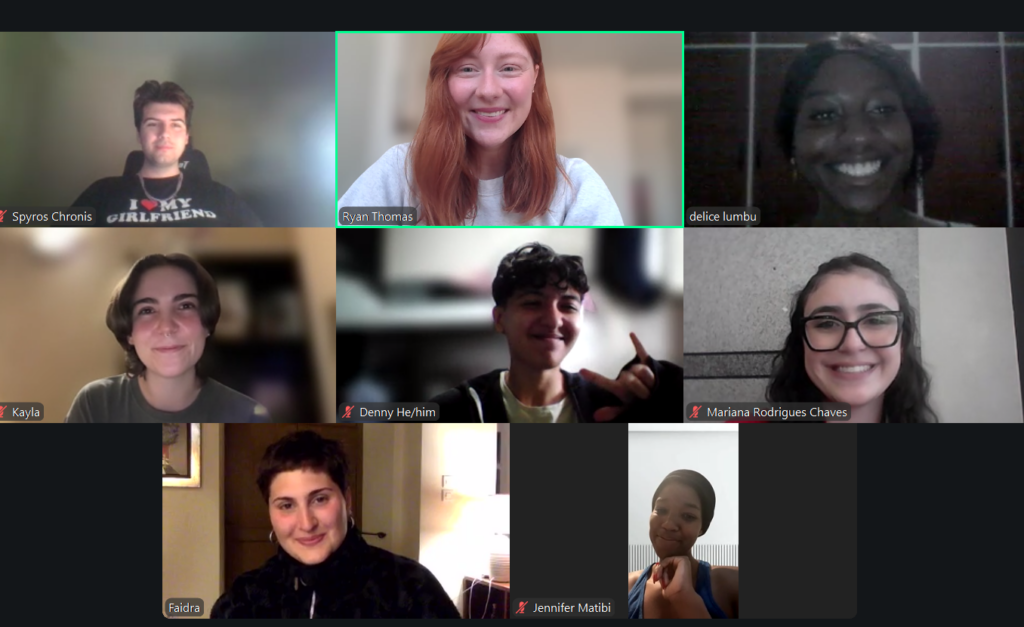
Members of the SNF Global Center at the Child Mind Institute’s Global Youth Advisory Council (GYAC)

Building on the momentum of the SNF Global Center’s inaugural Global Summit on Youth Mental Health in 2025 and the ongoing work of the GYAC, SNF Nostos 2026 will also spotlight the critical role young people play in shaping the future of mental health. Across the week, youth leaders will share perspectives on how lived experience, community engagement, and innovation can help create more responsive and effective systems of support.

Additionally, a landmark Evidence-to-Policy Review examining what it means to navigate adolescence in an increasingly digital world will be presented.  Developed through the Child and Adolescent Mental Health Initiative (CAMHI) in Greece, the youth-led report brings together the latest evidence, youth perspectives, and a roadmap for how governments, institutions, and communities can better support young people in Greece and beyond.  Having started in Greece, CAMHI has since expanded into additional core hubs in South Africa and Brazil, as well as partnerships across multiple low- and middle-income countries.  We look forward to seeing the positive impacts this expansion will make on youth mental health globally.

Finally, as a special part of the celebration, the Child Mind Institute is proud to share a video reflecting on our transformative partnership with SNF, and the exceptional changes made possible through the SNF Global Center for Child and Adolescent Mental Health. Over the past six years, we have worked together to expand access to care, strengthen mental health systems, support local leaders, and elevate youth voices across communities around the world.

“What we share with the Stavros Niarchos Foundation, is that we both believe that every child, everywhere, deserves mental health.”

Dr. Harold S. Koplewicz

SNF Nostos 2026 is a celebration of what becomes possible when people unite around a shared purpose. With humanity at the core, SNF Nostos 2026 will serve as a reminder that sustained progress begins with people — especially youth, families, communities, and the leaders committed to supporting them. Together, we can build a world where every child counts.

The post A Shared Vision for Children and Young People: Advancing Partnership and Impact at SNF Nostos 2026 appeared first on Child Mind Institute.

Introducing the 2026 IOCDF Award Winners of the 31st Annual OCD Conference

The mission of the International OCD Foundation — to ensure that no one affected by OCD or related disorders suffers alone — requires the collaboration and dedication of countless individuals and professionals around the world. Each year, the IOCDF is honored to recognize a few of these contributors who have gone above and beyond to inspire hope, build community, and move us closer to a world where everyone has access to effective support and care.

These awards will be presented at the 31st Annual OCD Conference, sponsored by OCD Institute Texas, on Saturday, July 11, 2026.

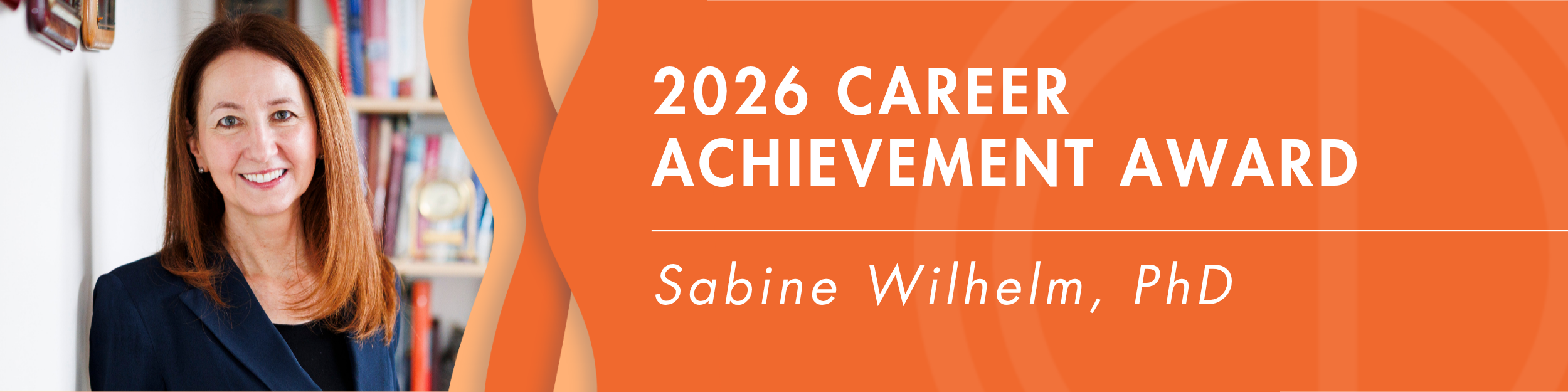
2026 Career Achievement Award Winner: Sabine Wilhelm, PhD

Highlighting the significant and notable contributions of a professional in the field of OCD and related disorders.

Sabine Wilhelm, PhD, is the Donovan-Chien Family Endowed Professor at Harvard Medical School and Chief of Psychology at Mass General Brigham. She directs both the Center for OCD and Related Disorders and the Center for Digital Mental Health at Massachusetts General Hospital. Dr. Wilhelm’s work leverages AI and technology to improve mental health care globally, focusing on developing personalized, scalable digital treatments. She has authored 375 publications and nine books. She has received major awards, including the NAMI Scientific Research Award and the Peter Ranney Innovation Award from the World Medical Innovation Forum. Dr. Wilhelm is the outgoing Chair of the IOCDF Scientific & Clinical Advisory Council after serving since 2023, and she has served on numerous committees to support the Foundation’s work to advance research and resources for OCD and related disorders.

2026 Patricia Perkins Service Award Winner: Aureen Wagner, PhD

Honors any professional or IOCDF member who has stood out as a long-time (10+ years) and active contributor to the IOCDF in multiple ways. This award is named after Patricia Perkins, IOCDF co-founder, past president of the Board of Directors, and previous executive director.

Winner Bio: Aureen Pinto Wagner, Ph.D., joined the IOCDF in 1992 as a newly-minted clinical psychologist. She presented a workshop for parents at her first conference in 2000, and has been a regular presenter at most conferences since then. Dr. Wagner has contributed to several IOCDF livestreams and presented at the annual Online OCD Camp for youth and parents since its inception in 2021. She serves on the Scientific and Clinical Advisory Board of the IOCDF and has been on the faculty of the Behavior Therapy Training Institute since 2001.

Dr. Wagner is dedicated to bringing hope and help to families experiencing OCD via evidence-based, developmentally-tailored treatment, and to increasing access to treatment by training clinicians to treat OCD. With the goal of disseminating evidence-based treatment, Dr. Wagner provides workshops and consultation to clinicians and has published a treatment manual focused on child-friendly treatment titled, “Treatment of OCD in Children and Adolescents: A Professional’s Kit.”

At The Anxiety Wellness Center in Cary, North Carolina, Dr. Wagner provides in-person and telehealth treatment for youth and adults with OCD, anxiety and related conditions, as well as parenting support for families. In keeping with her mission of empowering youth and families, Dr. Wagner wrote the award-winning books “Up and Down the Worry Hill: A Children’s Book about Obsessive-Compulsive Disorder and its Treatment,” “What to do when your Child has Obsessive-Compulsive Disorder: Strategies and Solutions” and “Worried No More: Help and Hope for Anxious Children.”

2026 Hero Award Winner: Stephen Smith

Recognizes any individual that has stood out as a particularly effective advocate for OCD and related disorders or who helped raise awareness of these disorders. 

Stephen Smith is the Co-founder and Chief Executive Officer of NOCD, the world’s largest OCD-specialty treatment provider for both adults and children. After emerging from a personal struggle with undiagnosed OCD and experiencing the success of Exposure & Response Prevention (ERP) therapy first-hand, Stephen made it his mission to transform the behavioral health treatment system for people with OCD and related conditions. Under his leadership, NOCD has done that. NOCD drives OCD awareness campaigns that reach millions of people each year, cares for hundreds of thousands of people with OCD, and is contracted to serve more than 140 million commercial lives nationally.

2026 Youth Hero Award Winner: Gabriella Lee

Recognizes any youth (under 18) that has stood out as a particularly effective advocate for OCD and related disorders or who helped raise awareness of these disorders. This award is presented by UNSTUCK: an OCD kids movie.

Gabriella Chaeyoon Lee is a junior at Great Oak High School in California who is dedicated to promoting mental health awareness, particularly surrounding OCD. Inspired by her personal connection to OCD through her mother’s diagnosis, she actively works to reduce stigma and support others through her school club and independent initiatives. She is passionate about creating safe and inclusive spaces where individuals feel understood and supported. She hopes to continue her advocacy and contribute to meaningful change in mental health communities.

2026 Illumination Award Winner: Tiffany Jenkins

Honors media personalities who have represented OCD or related disorders in a respectful, accurate, and appropriate way, or who have challenged stereotypes and helped to fight stigma around mental health issues.

Tiffany Jenkins is a comedian, New York Times bestselling author, speaker, and podcast host with a combined social media following of over 9 million and more than one billion video views worldwide.

While widely recognized for her relatable and candid comedy, Tiffany is deeply committed to raising awareness around mental health and addiction. Drawing from her own lived experience in recovery, she travels across the United States speaking at high schools, correctional facilities, treatment centers, and conferences, where she delivers impactful, honest conversations that resonate with diverse audiences.

Above all, Tiffany is a devoted mother, bringing authenticity, resilience, and humor into both her work and her everyday life.

The post Introducing the 2026 IOCDF Award Winners of the 31st Annual OCD Conference appeared first on International OCD Foundation.

Turning Rejection Into a Roadmap: Advice for the Next Generation of Mental Health Leaders

A Conversation with Tom Osborn, Founder of Africa’s Largest Mental Health Provider Shamiri Institute

Aaliyah Nadirah Madyun, program director at the Stavros Niarchos Foundation (SNF) Global Center for Child and Adolescent Mental Health at the Child Mind Institute, recently sat down with Tom Osborn, founder of the Shamiri Institute and an International Advisory Board member at the SNF Global Center. They discussed Osborn’s remarkable journey as a young entrepreneur.

At just 18, while studying at Harvard University, Osborn founded the Shamiri Institute, which has since grown into Africa’s largest youth mental health provider — now reaching over 100,000 young people annually and having trained and employed more than 3,000 providers. In this candid conversation, Osborn shares hard-won lessons on resilience, mentorship, and well-being. He offers advice to the SNF Global Center’s Youth Council members — many of whom are launching their own mental health initiatives in communities across Greece, Brazil, South Africa, and beyond.

AM: You founded Shamiri when you were just 18. Many members of our SNF Global Center Youth Councils are now launching their own mental health organizations. What advice would you give them?

TO: I think these past three to five years post-COVID have been quite good for mental health. There’s just more dialogue, more conversation. It’s maybe one of the best times to start working in mental health. There is a big space for young people to be leaders. On the other hand, it’s also very difficult.

AM: What kind of difficulties can young people expect to encounter?

TO: It’s very difficult for a few reasons. We normally start this work because we have a lot of passion, enthusiasm, and commitment to the cause. But that is not the day-to-day of being a social entrepreneur. It’s convincing people to partner with you, to fund you, etc., which is a completely different skill set to learn. And the second part is getting a level of comfort with failure. Because the reality is, on average, nine out of ten doors that you try to open will not open; especially when you are starting. For example, if you’re in Brazil and there are 100 other young people trying to start something, there is a finite pool of opportunities and resources. So, when you are starting, part of the initial process requires you to develop resilience and a growth mindset.

AM: Could you speak about the role mentorship has played in your journey, and how young entrepreneurs can leverage mentorship to navigate the challenges of building something from the ground up?

TO: Mentorship is really crucial. Finding folks — researchers, practitioners, or just folks in the community — who can help provide guidance as you build the skills you need to be an effective entrepreneur.

AM: How would you recommend young people go about finding a mentor? It seems like that ability, identifying and cultivating a mentoring relationship, might be a skill set in itself.

TO: In my experience, there are three pathways. In many countries we have what we call accelerators, which look for young people who literally have an idea and enthusiasm, and then take them through 10–16 weeks of bootcamp where they can learn the skills to develop their idea. So, that’s one pathway. The second pathway, which really worked for me but may sound intimidating, is direct outreach to folks who have done something similar. So, you can do some research. It doesn’t have to even be related to mental health. It can be education or some broader thing. But find someone who has built something that you admire. You will be surprised how many people are willing to support and pay it forward, because we all have benefited from the help of someone else. I created an Excel spreadsheet with a list of people who I looked up to, and I reached out to them on LinkedIn. Sometimes you can even find their email. Some people said “no”, but if you reach out to 10 or 20 people, some people will talk to you. And the third pathway is . . . increasingly we have a lot of resources like the SNF Global Center Youth Councils and international organizations that deal with mental health. You can join these organizations to expand your network.

AM: Could you share your story with us and tell us how you got started?

TO: I started when I was in University as part of a research project I was doing when I was studying psychology. I needed to do something for my thesis and in the process of doing that I applied to an accelerator. I also went to my professor and asked him, ‘Do you know anyone who could connect me with?’ In fact, he helped me write my first grant and gave me the opportunity to learn those entrepreneurial skills.

AM: Starting at such a young age, one can imagine that you must have encountered many challenges and setbacks. What were the key lessons you took away from that growth period?

TO: The reality of this work, and not to discourage people but to give a factual picture, is that there are more setbacks than there are wins. Part of the process is that you learn from the setbacks. I can give you an example of some of my own setbacks. In my first year of doing this, we tried to raise money. We applied for grants, sent out proposals, etc.; but we couldn’t raise any money. So, what I did after getting the rejection is I would email and ask, “Do you have any feedback for us about why we didn’t get the funding?” or “Can we jump on a call so you can explain what we can do better?” What I learned from that was the way I was communicating what we were doing made sense in my mind, but I wasn’t putting myself in the shoes of the person who was reviewing the proposal. I only have five to ten minutes of someone’s time. So, how can I really simplify my message? For example, my first proposal was, “Shamiri does task-shifting mental health interventions for adolescent depression, anxiety, etc.” If you are in the field, you maybe get it. But if you are somebody who is just reading grants on mental health education, you don’t really get it. Now we say, “Shamiri means thrive and we enable young people to thrive.” So that invites people to ask how we’re helping people to thrive.

AM: What is another setback that surprised you?

A second example of a failure is getting buy-in from the beneficiaries that we were trying to work with. I thought, “We have this great idea, we’ve done this research, and it works. We’re going to go to schools and they’re going to be like, ‘This is great! Come work with us.’ Teachers are going to want to work with us.” But actually, in our first three years we were trying to work with 25,000 students and we ended up working with only 1,000 students. We really struggled with getting people to sign up. The lesson from that was we were thinking more from the idea this was our product, rather than thinking, “What is the problem that I am trying to solve for this person?” To give a concrete example, there are three people we need to get buy-in from: young people in schools, teachers, and parents. Just having a great product does not mean that people are going to use it. You need to figure out what the problem is. How can I solve it? How do I communicate this to users?

AM: I can imagine that dealing with failures and setbacks is extremely hard, especially for a young person. What would you say to a young person who is currently experiencing this?

TO: Finding ways to stay grounded and healthy from a well-being perspective is really crucial. Identify what matters to you and connect with those things. And ideally if you can find a way to build a routine around that, it could help. Doing this work takes a big toll. If you don’t find ways to ground yourself and get the energy to continue with this, you may burn out.

AM: Do you have some final words for our Youth Council members and other young people reading this?

TO: Those closest to the problem are those closest to the solution. I am from Kenya, which is a really young country. The median age is 19 and 70 percent of the population is under 30. If we are to solve some of these pressing problems, including mental health, those solutions are going to have to come from young people.

The post Turning Rejection Into a Roadmap: Advice for the Next Generation of Mental Health Leaders appeared first on Child Mind Institute.

Learning Gain and User Experience of AI Avatar–Based and Human-Presented Explainer Videos: Prospective Randomized Crossover Feasibility Study

<strong>Background:</strong> Explainer videos are widely used in higher education. With the increasing availability of artificial intelligence (AI)–generated avatars, it remains unclear whether the presentation format—human presenter vs AI avatar—affects learning outcomes and user experience, especially in technologically complex fields. <strong>Objective:</strong> This study aimed to assess the feasibility of a randomized crossover design to investigate learning gain and user experience associated with content-identical explainer videos delivered by either an AI-generated avatar or a human presenter. Exploratory analyses examined the potential differences between the presentation formats. <strong>Methods:</strong> An observer-blinded, prospective randomized crossover feasibility study was conducted with 13 undergraduate engineering students. Participants viewed 2 content-identical explainer videos on fuel cell technology presented by either an AI-generated avatar or a human presenter in a randomized sequence. Learning gains were recorded using a 7-item knowledge test administered at baseline and after the first and second video presentations. User experience was assessed after each video by using the AttrakDiff2 questionnaire. Because there was no washout period and the instructional material was identical in both videos, the second learning phase was vulnerable to carryover and test-retest effects. Consequently, analyses of learning outcomes focused on the initial phase, whereas user experience was examined through pooled comparisons across both conditions. <strong>Results:</strong> Both presentation formats were associated with substantial short-term learning gains. The difference in the learning gain between the AI avatar and human presenter videos was not statistically significant (median newly correct items 5, IQR 3-5.5 vs 4.5, IQR 2.5-5; <i>P</i>=.51; <i>Z</i>=0.66; <i>r</i>=0.183). In contrast, user experience ratings were consistently higher for the human-presented video across all AttrakDiff2 dimensions, with small to medium effect sizes. The AI avatar presentation was generally perceived as neutral. <strong>Conclusions:</strong> This study shows that investigating AI-based explainer videos vs those using a human presenter in classroom settings is feasible and highlights methodological challenges, particularly those related to crossover designs involving content-identical materials. In this small exploratory sample, no significant differences in short-term learning gains were detected between different presentation formats. Nonetheless, participants clearly preferred human presenters in terms of user experience. These results should not be seen as proof of equivalence but rather as a foundation for future research with larger sample sizes, improved study designs, and more sensitive outcome measures.

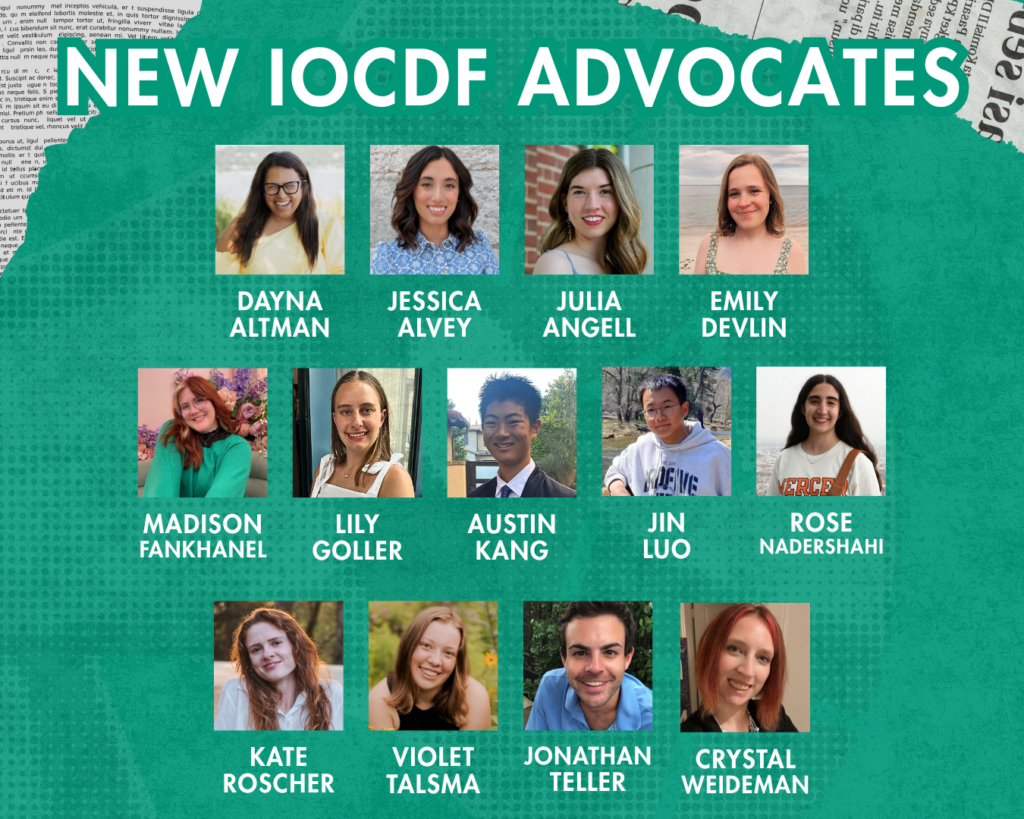
Welcome to Our New IOCDF Advocates

The IOCDF is thrilled to announce our newest cohort of Advocate volunteers! We’re welcoming 13 incredible new Advocates to our program, bringing our total to 64 dedicated volunteers working together to create meaningful change for the OCD and related disorders community.

These passionate individuals join us from bustling cities and quiet rural towns across the United States and around the world. From California to Massachusetts, and from countries including Canada and Ireland, this mix of local and global perspectives ensures we can reach and represent diverse communities everywhere.

The Power of Diverse Voices

Our newest cohort has a wide range of experiences and interests. They are passionate about addressing critical topics including:

  • Access to treatment
  • Diversity, multicultural issues, and LGBTQIA+ inclusion
  • Family issues and family accommodation
  • Young adult mental health and academic challenges
  • Public policy
  • Research advancement
  • Suicide prevention
  • Nutrition, fitness, and anxiety in athletes

This diversity of focus areas ensures that we can better represent and serve the full spectrum of our community’s needs.

Meet the Spring 2026 Advocates:

  • Dayna Altman 
  • Jessica Alvey 
  • Julia Angell 
  • Emily Devlin 
  • Madison Fankhanel 
  • Lily Goller 
  • Austin Kang 
  • Jin Luo 
  • Rose Nadershahi 
  • Kate Roscher 
  • Violet Talsma 
  • Jonathan Teller 
  • Crystal Weideman

You can see the full list of IOCDF advocates at iocdf.org/advocate-program

Your Voice Matters Too

Inspired by our Advocates? You can make a difference! Here are ways to start advocating today:

Fuel Our Mission Through Fundraising

Turn your passion into action by launching a personal fundraiser. Whether for a birthday, a race, or a creative project, you can rally your friends and family to raise critical funds. Every dollar helps build a world where everyone affected by OCD can thrive. Start your fundraiser here or explore all ways to give back here.

Advocate for policy change

Your voice can shape laws that improve access to care and insurance coverage. The IOCDF Public Policy Action Center makes it simple to find the latest bills and contact your elected officials with just a few clicks. True change starts here.

Join an IOCDF Special Interest Group

Connect with people who share your experiences or professional interests. IOCDF Special Interest Groups (SIGs) provide a platform for deeper discussion.

Whether you advocate on the national stage, share your story to fight stigma, or fundraise your way, every action creates a ripple effect of hope and understanding. Your journey, your voice, and your commitment are powerful tools.

Start today and help us build a world where everyone affected by OCD feels supported, seen, and empowered. Join a dedicated community committed to raising awareness.

Welcome again to our new IOCDF Advocates, we’re grateful to have you joining our mission!

The post Welcome to Our New IOCDF Advocates appeared first on International OCD Foundation.

The Intersectionality of OCD and the Shame Surrounding Sexuality 

By Mike Vatter

Obsessive-Compulsive Disorder (OCD) is often misunderstood as a condition involving excessive cleanliness, organization, or ritualistic behavior. In reality, OCD is a complex mental health disorder characterized by intrusive thoughts, unwanted images, fears, and compulsive behaviors intended to reduce anxiety. One of the least understood and most painful aspects of OCD occurs when intrusive thoughts intersect with sexuality, creating a profound sense of shame, confusion, and isolation. 

Sexuality is already a deeply personal aspect of human identity. Many people grow up receiving messages, whether from family, religion, culture, or society, that certain thoughts, desires, or identities are inappropriate or unacceptable. When OCD enters this landscape, it can weaponize these fears and vulnerabilities. Intrusive thoughts often target what a person values most or fears most. As a result, individuals with OCD may experience unwanted sexual thoughts that feel completely inconsistent with their values, identity, or desires.

Someone with OCD may become trapped in relentless questioning: “What if I am attracted to someone I shouldn’t be attracted to?” “What if these thoughts mean something about who I really am?” “What if I am secretly a bad person?” These questions are not driven by genuine desire but by overwhelming anxiety and uncertainty. Nevertheless, the individual often feels compelled to seek reassurance, analyze their reactions, or avoid situations that trigger distress. 

The shame surrounding sexuality intensifies this struggle. Society frequently treats sexual thoughts as reflections of character rather than recognizing that thoughts can occur without intent, desire, or meaning. For people with OCD, this misunderstanding can be devastating. Many become terrified that simply having an intrusive thought makes them immoral, dangerous, or fundamentally flawed. As a result, they often suffer in silence, afraid that disclosing their thoughts will lead to judgment or rejection. 

The intersection of OCD and sexuality can affect people of all sexual orientations and gender identities. Some individuals experience obsessions centered on questioning their sexual orientation, regardless of whether they identify as heterosexual, gay, bisexual, or otherwise. Others experience intrusive thoughts involving taboo or unwanted sexual scenarios. In each case, the distress comes not from the thoughts themselves but from the meaning the individual fears those thoughts represent. 

This experience is particularly challenging because shame thrives in secrecy. The more a person attempts to suppress, analyze, or eliminate intrusive thoughts, the stronger and more persistent those thoughts often become. OCD feeds on certainty-seeking, convincing individuals that if they can just think hard enough or find enough reassurance, they will finally feel safe. Unfortunately, the cycle rarely ends that way. 

Recovery begins when individuals learn to separate intrusive thoughts from identity and intention. Evidence-based treatments such as Exposure and Response Prevention (ERP) help people tolerate uncertainty and reduce compulsive responses. Through treatment, many discover that thoughts are not actions, urges are not intentions, and anxiety is not evidence. They learn that having an intrusive thought says far less about their character than the courage it takes to face that thought without engaging in compulsions. 

Understanding the intersectionality of OCD and sexual shame requires compassion, education, and nuance. It demands that we challenge cultural assumptions about thoughts and morality while recognizing the unique suffering OCD can create. When people understand that intrusive thoughts are a symptom of a disorder rather than a reflection of character, shame begins to lose its power. 

Ultimately, healing occurs not when every intrusive thought disappears, but when individuals no longer measure their worth by the thoughts that enter their minds. By replacing shame with understanding and fear with self-compassion, people living with OCD can reclaim both their mental health and their sense of identity.

The post The Intersectionality of OCD and the Shame Surrounding Sexuality  appeared first on International OCD Foundation.
The Download: whole-body rejuvenation drugs and five things to know about AI

This is today’s edition of The Download, our weekday newsletter that provides a daily dose of what’s going on in the world of technology.

David Sinclair plans to test whole-body rejuvenation drugs in the XPrize competition

The outspoken longevity scientist David Sinclair has predicted that, one day, you’ll go to the doctor and get a prescription that will make you 10 years younger. MIT Technology Review has learned of his latest step toward this: human tests of a “reprogramming” drug.

Sinclair, a biologist at Harvard Medical School, plans to launch the tests in a $101 million competition organized by the XPrize Foundation. The winners will “restore” a person to an earlier apparent age, as measured by improvements in immune, cognitive, and muscle function.

The grand prize goes to any team able to show a 10-year (or greater) relative improvement after one year of treatment. 

Sinclair says he plans to give an oral drug mixture to volunteers, in a bid to seek “evidence for age restoration in humans.” Find out how he hopes to reverse ageing through chemical reprogramming.

—Antonio Regalado

Five things you need to know about AI

—Will Douglas Heaven

At SXSW London last week, I gave a talk called “Five things you need to know about AI,” in which I shared what I think are the biggest themes in AI right now.

I pulled a few things from our first AI10 list, an annual guide to the top trends in this buzzy world, but I also veered off on several tangents. In my half-hour slot, I tried to cover the key talking points that I think help to make sense of what’s going on in tech—and thus the economy—today.  

Five key thoughts emerged: AI is everywhere all at once, it’s getting scary, a backlash is growing, it’s becoming a big deal for science—and I didn’t even need to show up at the talk. Read the full story for all the details.

The must-reads

I’ve combed the internet to find you today’s most fun/important/scary/fascinating stories about technology.

1 OpenAI has confidentially filed for a US IPO
The listing could come as early as September. (Reuters $)
+ OpenAI is targeting a valuation of up to $1 trillion. (Financial Times $)
+ The IPO will test investor appetite for AI companies. (WSJ $)
+ The move follows IPO filings from Anthropic and SpaceX. (CNN)

2 The US claims BYD, Baidu, Alibaba, and others are aiding China’s military
The Pentagon added them to a list of military-linked companies. (WSJ $)
+ The designations limit their operations in the US. (BBC)
+ The new additions also include humanoid firm Unitree. (TechCrunch)
+ The Pentagon is adapting to China’s tech rise. (MIT Technology Review)

3 Apple’s long-awaited AI overhaul of Siri is finally here
Siri AI” promises to be a more conversational assistant. (NYT $)
+ It includes a standalone app and screen-reading features. (Reuters $)
+ And arrives after two years of repeated delays. (Axios)

4 The White House and Congress are working to limit state AI laws
A new deal would curb state rules for federal legislation. (Axios)
+ AI regulation has divided US politicians. (MIT Technology Review)

5  Meta is launching a “workforce academy” for building data centers
The five-week program is free of charge and guarantees a job. (WSJ $)
+ It arrives shortly after Meta laid off 8,000 employees. (NPR)

6 Taiwan is mulling curbs on AI chip exports to China

The new controls would further align with US restrictions. (Bloomberg $)
+ Future AI chips could be built on glass. (MIT Technology Review)

7 Meta has quietly removed face-recognition code from its smart glasses app
The code identified by investigators has disappeared. (Wired $)

8 Humanoid robots are edging towards the battlefield
American and Chinese militaries are pursuing the tech. (BBC)

9 The world’s first wind-powered underwater data center has launched
It uses less power and water than land-based equivalents. (Guardian)

10 You could get some benefits of sleep without having to nod off
If new brain stimulation works as well on humans as on mice, that is. (New Scientist $)

Quote of the day

“You’re on the train, but you know that there’s no destination.”

—Clara Shih, a former top AI executive at Salesforce and Meta, tells the New York Times that AI training can’t keep up with the field’s advances.

One More Thing

biomilq concept illo

ILLUSTRATIONS BY AMRITA MARINO


Inside the race to make human sex cells in the lab

An embryo forms when sperm meets egg. But what if we could start with other cells—if a blood sample or skin biopsy could be transformed into “artificial” sperm and eggs? What if those were all you needed to make a baby?

That’s the promise of a radical approach to reproduction. Scientists have already created artificial eggs and sperm from mouse cells and used them to create mouse pups. Artificial human sex cells are next.

The advances could herald the end of infertility, but they raise major scientific and ethical challenges. 

Read the full story on the new recipes for sperm and eggs.

—Jessica Hamzelou

We can still have nice things

A place for comfort, fun, and distraction to brighten up your day. (Got any ideas? Drop me a line.)

+ These chefs turn Pop-Tarts into the desserts that inspired them.
+ A choir has beautifully transformed System of a Down’s “Chop Suey!”
+ Scientists finally traced crabs’ sideways walk in this fascinating study of evolution.
+ This nostalgic essay on the family computer is a touching throwback to early internet life.

Top image credit: Stephanie Arnett/MIT Technology Review | Getty Images

Please send Pop-Tarts to hi@technologyreview.com

You can follow me on LinkedIn. Thanks for reading!

—Thomas

David Sinclair plans to test whole-body rejuvenation drugs in the XPrize competition

The outspoken longevity scientist David Sinclair has been predicting that one day, you’ll go to the doctor and get a prescription that will make you 10 years younger.

Now MIT Technology Review has learned that he has plans to launch human tests of an oral “reprogramming” drug as part of a $101 million competition organized by the XPrize Foundation. 

The foundation is offering cash awards to teams able to “restore” a person to an earlier apparent age, as measured by improvements in immune, cognitive, and muscle function. 

The grand prize goes to any team able to show a 10-year (or greater) relative improvement after one year of treatment. 

Reached by phone, Sinclair, a biologist at Harvard Medical School, confirmed that he plans to give an oral drug mixture to volunteers in a bid to seek “evidence for age restoration in humans.”

The trial, if it goes forward, will be a significant new development in the race to harness so-called epigenetic reprogramming. That technology is based on the discovery, 20 years ago, of powerful genes able to turn an adult cell into a stem cell similar to those found in embryos.

The age-reversal effect is believed to occur via a resetting of molecular controls on DNA known as epigenetic marks, which help determine a cell’s overall metabolism and identity.

Companies are now racing to use that phenomenon for a new form of rejuvenation medicine. Only this January, one of Sinclair’s companies, Life Biosciences, made news by winning approval to launch an initial human trial using a set of powerful reprogramming genes. The company announced today it had treated its first patient. 

But that test involves a complex gene therapy and is limited to patients’ eyes, where it could treat conditions like glaucoma. 

Sinclair’s new plan is bolder: a reprogramming drug you’d swallow in order to promote such effects across the body. 

“What we’re aiming to do is to epigenetically restore the animal and eventually the person,” he says. “It is true that we’ve been doing extensive animal studies with the oral agent and are looking to compete in the XPrize.”

This alternative method, chemical reprogramming, uses drugs to mimic the effects of the embryonic genes. That is significant because drug compounds can travel through the bloodstream, reaching most or all cells in a person’s body. 

Some experts expressed caution, saying the chemical process, at least as used in labs, is extremely harsh and not even particularly effective. “Who doesn’t dream of whole-body rejuvenation? I think it’s a great goal,” says Sergiy Velychko, founder of Soxogen, a stealth reprogramming company in Boston. “But these chemicals are used in very, very high concentrations for cell reprogramming.”

Sinclair declined to describe the exact makeup of the drug candidate, code-named SL-100, calling its contents “highly, highly confidential.”

However, he has previously published lab studies of what he called “epigenetic age-reversal cocktails,” which mixed powerful chemicals with known supplements and commercially available medicines. 

It’s those latter components that would be easiest to test on people, since doctors are free to prescribe them, even for unusual objectives like age reversal. James Clement, head of Betterhumans, an organization that specializes in life-extension studies using existing drugs, said in a message that he is “running clinical trials” of an oral reprogramming cocktail for Sinclair’s XPrize team.

Sinclair’s team is competing in the XPrize Healthspan Competition, launched in 2023. It follows several previous competitions that focused on commercial spaceflight, lunar landings, and other goals. The XPrize Foundation is led by executive chairman Peter Diamandis, also an active promoter of longevity research.

“If two teams are equivalent, they would split the award,” says Jamie Justice, a doctor and executive director for the contest, which was bankrolled by Saudi Arabia’s Hevolution Foundation, “But it will be incredibly hard to even get to one winner.”

Justice says a judging panel is now in the process of picking 10 finalists from 65 teams that have been exploring health foods, lifestyle interventions, digital trackers, and drug compounds. 

Sinclair’s team, Justice says, was a late entrant to the contest, but like all teams, it would be required to move into wider human tests starting this year. “You have to be ready and in trials,” she says.

The race to harness the reprogramming phenomenon and apply it to living people is heating up, even outside the XPrize competition. On June 2, a startup called NewLimit, founded by the crypto billionaire Brian Armstrong, said it had raised a further $435 million, from investors including Peter Thiel’s Founders Fund, to support what it calls “age reprogramming.” 

The company says it is working toward delivering genetic reprogramming instructions to the liver, to treat diseases of that organ.

But Sinclair has been saying that whole-body rejuvenation is a possibility too. And for that, chemicals, rather than gene therapy, could be the most practical strategy. 

Sinclair says his lab has been searching for such compounds and is starting to use AI “to improve the oral agents that we’re testing.”

Chemical reprogramming cocktails, as used in labs, typically involve a mix of vitamins, approved drugs, and experimental molecules. For instance, one recipe Sinclair filed a patent on includes the supplement forskolin,  the antidepressant tranylcypromine, and an experimental chemical, laduviglusib, which has been tested against Alzheimer’s, among other ingredients.

“In those days it was a six-factor cocktail,” Sinclair says of his earlier research. “But we’ve come a long way. I can’t disclose what’s in it, but it’s an improvement and an advance on that, and we’ve done a number of animal studies. They are not published, but we’ve been doing them for a long time, and we want to make sure that we’ve done a full investigation of safety and efficacy before we release any of the data.”

While Sinclair’s results aren’t published, other teams say attempts to reverse the age of entire animals using chemical drugs haven’t worked yet. Last year, the lab of Vadim Gladyshev, another Harvard biologist and a member of a different XPrize team, reported on its attempt to rejuvenate mice by installing pumps in their bodies that released controlled doses of seven compounds.

Gladyshev says the procedure proved to be toxic. “The idea was to see if we could rejuvenate whole animals. Unfortunately, we have not found [the right] conditions,” he says. “At low concentrations there was no effect, and high concentrations were toxic.”

Gladyshev says he doesn’t know what is in Sinclair’s cocktail, but says that “trying to improve the combinations makes sense.”

Sinclair, who is the author of several books on aging and has a large social media following, has frequently been criticized by other scientists for making unproven rejuvenation claims. 

In 2024, he resigned as president of the Academy for Health and Lifespan Research after claiming that a supplement developed by a company his brother runs had “reversed” the age of dogs, a claim for which there was so little evidence that one scientist called it a “lie.”

Part of the problem is that scientists still disagree on how to measure aging. And they don’t have a reliable way to measure age reversal, either, should it ever be achieved.

Justice, the XPRIZE director, says a primary purpose of the competition is to solve that problem by encouraging the development of standardized measures of aging. That is so that anti-aging drugs can be assessed reliably, and, one-day, approved by regulators if they work.

 “We as a scientific field have been forced to ask, ‘If a medicine improves how we age, how would we know?” Justice said during a public meeting with FDA officials in May. “If something worked, what would convince us as scientists, what’s meaningful to the general public?”

Finalists in the Healthspan competition will be announced in August.

Awakening from the Trance

This blog was originally posted by the TLC Foundation for BFRBs

Trichotillomania touches on all levels of human experience, from the neurological to the spiritual. It represents the interactions of brain chemistry, but also habituated physiological responses, sensory processing, behavior patterns, characteristic emotional states, perceptual styles and beliefs, and the sense of interconnectedness with others and the experience of faith. It is more than just a behavior, although it is most apparent when it manifests itself in that way.

Trichotillomania can be treated at all of these levels through different treatment approaches: medication, relaxation and response prevention, behavior modification, hypnotherapy, psychotherapy, cognitive therapy and visualization, group therapy and spiritual practices. The most effective approach will depend on the specific needs and circumstances of each individual at specific times, as well as on the compatibility of the personalities of the treatment provider and patient/participant.

In this article I will present my own view of treatment with a particular focus on how to understand and address the aspect of trance.

“Trance” is not a clinical term, but it is one which most pullers seem to recognize immediately as a significant part of the hair pulling experience: particularly when reading or watching TV. However, I believe that any time one is pulling, one has entered a trance state and that trance states occur with great frequency even at other times. To look at how to make use of this concept I will first describe what I think treatment needs to address.

Trichotillomania as a symptom: My approach is to look at what the behavior of pulling means to a particular person, and what it means about them. I view pulling as a symptom which indicates something about what is going on in that person’s life and can be best understood if we look at the context in which it occurs – both over time (how did it evolve), and ecologically (how does it fit into the network of the person’s relationships, commitments, self-perceptions, experiences of their own body and emotional states, etc.).

Symptoms are an indication of the existence of some other process. Just as a fever may reflect a viral infection, a repetitive behavior reflects an underlying mental activity. The symptom develops in response to the activity and one of its functions is to achieve some control over the consequences of that mental activity. I believe that trichotillomania indicates an attempted solution to a psychological challenge (or opportunity) one is facing in one’s life. However, it is an ineffective solution for two reasons. Firstly, it doesn’t alter the situation which has become challenging, and so the underlying causes remain unchanged. Secondly, by drawing attention onto itself it obscures those underlying causes. It distracts attention from them.

But the behavior, none the less, does have some purpose and utility. It relieves the anxiety of becoming too aware that there are challenges and opportunities which one feels unprepared to confront.

The role of emotions:

The mechanism which could be drawing one’s attention to these challenges and opportunities is the experience of emotional reaction. Emotions serve to amplify our perceptions of situations by making the good seem better and the bad seem worse. In that way, they lead us to focus on what is important to us so that we will take action. Being able to notice and interpret our emotions is something we learn as we grow up. Emotions represent a kind of language for helping us make meaningful choices as we engage with life.

But if these emotions were felt to be too overwhelming – if what they indicated felt too bad to be tolerated because we did not learn how to resolve the situations they drew attention to – then we eliminated them from our emotional vocabulary and we restricted our awareness of them. Now, when those situations reoccur, rather than notice our feelings of hopelessness and helplessness, we may turn to other mechanisms, more basic ones rooted in physical sensations, to occupy ourselves and restore some sense of order to the world.

So, in this model, the behavior of hair pulling is not an indicator of psychological inadequacy, but rather a lack of awareness. It reflects a split between awareness/thoughts and sensations/feelings. It is the result of an unknown mental process, something one has not been able to assimilate into one’s conscious thought, for which no words or language have been developed.

If this could be understood then I believe there would be less justification for feelings of shame connected with Trichotillomania, because Trichotillomania represents an underlying process outside of personal awareness, and thus is not something voluntarily chosen. (It would also answer the following disturbing statement frequently made to hair pullers: “You could stop if you really wanted to.”)

I have so far described how emotional activity and unconscious thoughts affect us in ways which we do not recognize. Despite this lack of recognition, we still need to adjust to them and regulate or organize ourselves. A good example of this is the way in which a fussy baby, if not picked up or fed when it wants to be, learns to get its thumb into its mouth and suck on it. It is finding a way to organize its reactions to its world by retreating into an attitude of self-sufficiency. In this way it solves the problems of the conflict it experiences between the emotions it feels and the lack of a way to take effective action about them in the outside world. It restores order by returning to a sensation-based activity which it has control over. It has learned to retreat into a trance.

The similarities between this example and the experience of hair pulling are striking. So how is Trichotillomania like a trance, exactly?

Trance:

The (Oxford) dictionary defines “trance” in these ways: a suspension of consciousness; a state of mental abstraction from external things; absorption, exaltation, rapture, ecstasy. Going into a trance is turning away from the world, suspending engagement with it, and entering a twilight zone of self-enchantment. The experience is one of being in between states: neither in one’s own mind, nor aware of one’s body. One has turned away, both from the rest of the world and from the rest of oneself.

It is a state in which one doesn’t think about what one feels, and doesn’t act on what one feels. One has turned away from the parts of the self which are concerned with action and purposefulness. In the trance state, a part of the personality takes over which doesn’t care about anything (except the act of pulling) and ignores the existence of time or consequences to one’s actions. It is the opposite of the perfectionist attitude so common to many hair pullers. Becoming entranced in the act of reading, for example, one detaches from the here and now, and allows this part of the personality to “come out”: while the cat’s away, the mouse plays. It is a secure, dependable, magical place in which one can avoid dealing with the stimulation of one’s spontaneous emotional responses to life.

If we look again at the role of emotions as amplifiers of perceptions, we see that what is happening in this state is that one is neither thinking about, nor acting on, what the emotions could be indicating. And as they indicate what is important so that action can be taken, the trance state eliminates the possibility of taking the action required.

How does this detaching process become chronic?

I believe it is the result of repeated experiences of failing to take effective action on what one’s emotions tell one is important. This failure can have many causes, but the result is that these important situations become perceived as challenging and threatening because they are felt as over stimulating. To protect oneself from discomfort, one disassociates from the situation. The part of oneself which perceives or feels what is going on is split off from consciousness. What remains conscious is the part which doesn’t feel and which preserves a sense of order and calm. Gradually, a gap develops between this external presentation of the self – as coherent, caring, positive – and an inner state of feeling confused, frustrated, and overwhelmed.

A false self develops, a self which appears to be more in control than is actually felt, and which one tries to believe in. The fear of having this façade penetrated adds greatly to the level of stress felt by hair pullers. Because this false self cannot be dropped when one’s gut reactions tell one to, one becomes trapped in a vicious circle that leaves one over stimulated (including the times when one merely seems to be bored), detaching from one’s body, and trying to regain control. A strong need is felt to reconnect to the body and feel grounded.‍

Trichotillomania as a return to the body:

The route to feeling in one’s body again is through becoming hyperaware and hypersensitive to sensation. This is a more basic and elementary experience of oneself: one cannot think or feel what is happening, so one uses a physical behavior to establish a link between unconscious inner experience and being in the real, physical world. This provides a solution to the twilight state of feeling detached. The sensation-focused behavior provides a substitute sense of being connected, and its ritualistic aspect creates a sense of soothing order rather than chaos.

So, looked at in this way, the act of pulling a hair actually represents the second stage of entering into a trance. The trance is triggered by the habitual reaction of disassociating rather than facing a situation which one perceives as overwhelming. But while an attitude of order and calm is being adopted (a state of “mental abstraction”), the experience of being detached from the feelings in the body becomes disorienting and the urgent need is felt to focus on the sensation of touching, playing with, and pulling hair. This provides the experience of concreteness and connectedness which allows the trance to continue.

Awakening:

What is needed is a process for regaining consciousness and turning back to engaging with life. How does one wake up? How can one build a sort of observational platform from which to watch the process of entering into a trance; one which can be separate from the process itself? I would suggest that rather than start with the ultimate goal of avoiding trance states altogether (which may be unreachable), a more pragmatic approach would be to learn how to wake up once one starts.

When we drive long distances on freeways and our attention wanders, we sometimes find ourselves drifting over into the next lane. If there were raised lane markers on the road, they would then alert us by causing a noise and a vibration as the car drove over them. That is the kind of alarm system we are looking for. It doesn’t prevent our minds from wandering, but it brings us back to the here-and-now experience before we get into trouble.

Such a system does exist: it is the sensation of a hair being pulled out. Once one hair is pulled, the opportunity exists to break the trance. That hair can be a signal to come back to the here and now rather than getting into the trouble of starting a pulling binge. (The goal of stopping at one hair pulled would also very likely include the benefit of making it much easier to commit to a realistic process of bringing the behavior within tolerable limits.)

How can one learn to stop at just one? Setting such a goal becomes much more possible if one understands one’s reasons for avoiding the goal until now. I have discussed in this article how Trichotillomania is a process which provides an attempted solution to an underlying tension. There is an inevitable anxiety about relinquishing a familiar, dependable behavior. A part of oneself therefore resists changing it and depends on the benefits it brings. This part has no intention of allowing any changes to occur unless one is prepared for the emotional experiences that follow, and it protects one from them.

A way to understand this resistance to change would be to think of the patterns of our behavior as a balanced mobile hanging from the ceiling. All its parts are interconnected and form a stable pattern. If we remove one of the parts, all of the others start to swing wildly until they settle into a new, substantially different formation. The intermediate stage of unbalanced, indeterminate movement could be likened to the feeling of overstimulation from one’s emotions when the ritualistic trance is denied.

To prepare for this change, an expanded awareness of emotional experience and what it teaches is indispensable. The remainder of this article offers some suggestions for work that can be done alone to expand this ability. This task is made much easier and more effective, however, when it is done in the context of a healing dialogue: either in individual or group therapy, or in a support group. This option deserves serious consideration because the act of communicating to another person helps bring one’s inner experiences into focus. Additionally, when there is the trust that the other person is willing not only to listen but to actively attempt to grasp what the speaker means from the speaker’s own point of view, the feeling of validation and recognition received makes awareness of the emotional states more bearable.

Reading the signals:

Part of the personal preparation which can be done is to establish intent to learn from what is found when one tries to read the signals. This would require a willingness to recognize that there are good reasons for what one feels rather than prejudging emotions as wrong, inappropriate, or proof of all the “bad” things one has come to believe about oneself. It also requires a willingness to feel discomfort, hurt, and vulnerability so that there can be a return to wholeness and the sense of being fully alive.

1. The most direct step is simply to ask yourself questions such as: What am I feeling? What is on my mind? Is something bothering me? What do I want right now? Is there something I should be doing? Special attention should be paid to the first answer that comes to mind, even if it very quickly disappears or seems insignificant. You should have an open mind and be prepared to be surprised. Before asking yourself these questions, stop the activity you are doing, if possible. If answers do not emerge the following techniques can be tried.

2. Let your body speak. Allow yourself to become aware of where you feel tension or discomfort. Imagine that that part of you has a voice and can answer the questions in Step One. Try asking follow-up questions to learn more.

3. Try exaggerating the physical state that you are in. That is, whatever movement your body is making or would like to make, take it to an extreme as if you were a very melodramatic actor or dancer who had no inhibitions. Again, think about how your body is expressing answers to the questions in Step One.

4. Visualize yourself as a child of about five and ask the questions of her or him. The answers should seem to be in the language of a 5-year-old. It might help to hold an object such as a cushion or stuffed animal to you as you try to make contact with yourself in this way. It also might help to combine this with some exaggeration of body expression. Additional questions you might ask could be: What do you need from me? Is somebody upsetting you? (See Reference 1.)

5. Write a question to the child, then switch your pen to your other hand and write the answer with that hand. You should write very quickly and with no attempt to make the writing more legible. Then switch your pen back to your original hand for a further question. Continue the dialogue, and the switching of hands, until no further clarification is necessary. The purpose of this technique is to facilitate the spontaneous flow of ideas. (See Reference 2.)

6. Write out the questions as complete sentences to be completed and complete the same question five times as quickly as possible. The questions would be rewritten as follows: Right now, I want….; or: I am upset because…. Allow any response to come forward. Often, a few unrevealing responses will be followed by one unexpected and more valuable one. (See Reference 3.)

7. Hold the hair which has just been pulled out and ask yourself: What did this hair give itself up for? A significant reason for the failure to stop hair pulling is the frequent presence of trance states, which enable one to deny the consequences of the behavior. Additionally, the experience of trance encourages one to focus on physical sensations such as the feeling of a hair being pulled, so as to achieve a greater sense of being connected to reality.

I have described how one enters a trance when certain situations trigger a habituated expectation of becoming overwhelmed. In self-defense one suspends consciousness of the challenge and retreats into a state of emotional detachment. The alternative to the trance, then, is to identify and assimilate the emotional cues about the situation so that appropriate action can be taken. The sensation of the first hair being pulled can serve as an alarm to awaken one from the trance and begin this process of self-evaluation and a return to an alert engagement with life.

Reference 1: Margaret Paul. Inner Bonding. San Francisco: Harper Collins, 1990.Reference 2: Lucia Cappachione. The Power of Your Other Hand. North Hollywood, CA: Newcastle Publishing, 1988.Reference 3: Nathaniel Branden. How to Raise Your Self-Esteem. New York: Bantam, 1987.

The post Awakening from the Trance appeared first on International OCD Foundation.