Companies are taking control of their own data to tailor AI for their needs. The challenge lies in balancing ownership with the safe, trusted flow of high‑quality data needed to power reliable insights. This conversation from MIT Technology Review’s EmTech AI conference examines how AI factories unlock new levels of scale, sustainability, and governance—positioning data control as a strategic imperative for governments and enterprises.
About the speakers
Chris Davidson, Vice President, HPC & AI Customer Solutions, HPE
Chris Davidson is Vice President of HPC & AI Customer Solutions at Hewlett Packard Enterprise. He leads HPE’s global strategy for AI Factory solutions and Sovereign AI, working with governments, enterprises, and research institutions to build secure, scalable national- and enterprise-grade AI capabilities.
He also directs Product Management and Performance Engineering across HPE’s HPC and AI portfolio, including large-model training platforms and Cray exascale systems. His teams define product strategy, performance architecture, and deployment models that position HPE at the forefront of high-performance and AI computing.
During his nine years at HPE, Chris has led key initiatives across Performance Engineering, AI Cloud, and Professional Services, shaping how HPE delivers optimized, cloud-native, and globally deployed high-performance systems. He previously held technical and leadership roles in the biotech and medical diagnostics sectors.
Chris holds an M.B.A. in Entrepreneurship and Finance and a B.S. in Biology from Loyola University Chicago.
Arjun Shankar, Division Director, National Center for Computational Science, Oak Ridge National Laboratory
Mallikarjun (Arjun) Shankar is the Division Director for the National Center for Computational Science at the Oak Ridge National Laboratory. His research focuses on the interdisciplinary bridge between computer science and large-scale scientific discovery campaigns that rely on scalable computing and data science. He is a joint faculty appointee at the University of Tennessee’s Bredesen Center, a senior member of the IEEE and a senior member of the ACM.
This is today’s edition of The Download, our weekday newsletter that provides a daily dose of what’s going on in the world of technology.
A new US phone network for Christians aims to block porn and gender-related content
A new US-wide cell phone network marketed to Christians is set to launch next week. It blocks porn using network-level controls that can’t be turned off—even by adult account owners.
It’s also rolling out a filter on sexual content aimed at blocking material related to gender and trans issues, optional but turned on by default across all plans.
The trouble is, many websites don’t fit neatly into one category. That leaves its maverick founder with broad, subjective control over what is allowed or banned. Read the full story.
—James O’Donnell
This startup’s new mechanistic interpretability tool lets you debug LLMs
The San Francisco–based startup Goodfire has released a new tool, Silico, that lets researchers peer inside an AI model and adjust its parameters during training. It could give users more control over how this technology is built than was once thought possible.
The goal is to make building AI models less like alchemy and more like a science. Using a technique called mechanistic interpretability, Silico maps the neurons and pathways inside a model and lets developers tweak them to reduce unwanted behaviors or steer outputs.
By exposing the “knobs and dials,” Goodfire hopes to bring AI training closer to traditional software engineering. Read the full story.
—Will Douglas Heaven
With mass firing, Trump deals a fresh blow to American science
This past week delivered another gut punch for science in the US. This time, the target was the National Science Foundation—a federal agency that funds major research projects to the tune of around $9 billion. On Friday, the 22 scientists overseeing those efforts were all fired.
Since 2025, the NSF has faced budget cuts, grant terminations, and mass firings, with staff numbers down sharply and many ambitious projects grinding to a halt. The result is a major shift in how American science is funded and governed. Discover what it means, and what’s next.
—Jessica Hamzelou
This article first appeared in The Checkup, MIT Technology Review’s weekly biotech newsletter. To receive it in your inbox every Thursday, and read articles like this first, sign up here.
China’s open-source bet: 10 Things That Matter in AI Right Now
Silicon Valley AI companies follow a familiar playbook: keep the models behind an API and charge for access. China’s leading AI labs are playing a different game, releasing “open-weight” models that developers can download, adapt, and run on their own hardware.
That approach went mainstream after DeepSeek open-sourced its R1 model, which matched top US systems at a fraction of the cost. It also won something subtler: goodwill with developers. A growing cohort of Chinese labs is now following the same blueprint.
As AI shifts from hype to deployment, open-source models are making the future of AI more multipolar than Silicon Valley expected. Read the full story.
—Caiwei Chen
China’s open-source bet is one of the 10 Things That Matter in AI Right Now, our list of the biggest ideas, trends, and advances in AI today. We’re unpacking one item from the list each day here in The Download, so stay tuned.
The must-reads
I’ve combed the internet to find you today’s most fun/important/scary/fascinating stories about technology.
1 Elon Musk has admitted that xAI trained Grok on OpenAI models “Distillation” is standard practice in AI, despite being legally dubious. (Wired $) + The White House has accused Chinese firms using distillation of theft. (BBC) + American labs are widely assumed to use similar techniques. (TechCrunch)
2A “de-extinction” startup wants to resurrect a long-lost antelope Colossal Biosciences wants to bring back the bluebuck. (Axios) + The company is using genomic editing to revive the animal. (Gizmodo) + It previously claimed to have cloned red wolves. (MIT Technology Review)
3 An OpenAI model outperformed ER doctors at diagnosing patients By analyzing health records data and information provided to physicians. (NPR) + But it still must be proven in real-world clinical trials. (Vox)
4Scientists are trying to power AI data centers with tiny nuclear reactors They could provide a new way to meet AI’s energy demands. (Gizmodo) + We did the math on AI’s energy footprint. (MIT Technology Review)
5Spotify has started verifying human artists A new badge will distinguish them from AI. (The Guardian) + Spotify has faced criticism for its handling of AI. (BBC)
6The US is backing a Congolese railway to break China’s grip on critical minerals The old railroad is key to the race for critical metals in Africa. (Rest of World) + The US is also searching for alternative sources. (MIT Technology Review)
7Huawei is set to overtake Nvidia in China’s AI chip market It’s expected to capture the largest market share this year. (FT $)
8Japan is building cardboard drones for the battlefield The flatpack designs are cheap, disposable, and built at scale. (404 Media)
9 The more young people use AI, the more they hate it Research shows that Gen Z doesn’t trust GenAI. (The Verge)
10 A new organoid can menstruate—and show how tissue repairs itself It’s revealing how the uterus can shed without scarring. (Nature)
Quote of the day
“I suspect that there are a number of people who do not want to put the future of humanity in Mr Musk’s hands.But we’re not going to get into that.”
—Judge Gonzalez Rogers rebukes attempts by Elon Musk’s lawyer to focus on AI’s existential risks as part of his lawsuit against OpenAI, the New York Times reports.
One More Thing
TMY350 VIA WIKIMEDIA COMMONS
This rare earth metal shows us the future of our planet’s resources
The materials we need to power our world are shifting from fossil fuels to energy sources that don’t produce greenhouse gas emissions.
Take neodymium, a rare earth metal used in powerful magnets that power everything from smartphones to wind turbines. Its story reveals many of the challenges we’ll likely face across the supply chain in the coming century and beyond.
Cell and gene therapy encompasses a broad range of therapeutic interventions for diseases that have proved refractory to treatment with conventional pharmaceutical approaches. Perhaps the most familiar FDA-approved modality in the cell and gene therapy field is chimeric antigen receptor (CAR) T-cell therapy, which involves genetic modification of a patient’s own T cells to identify and eliminate malignant cell lineages in acute lymphoblastic leukemia, non-Hodgkin lymphoma, and multiple myeloma.
Although only 20 or so cell or gene therapies have been FDA-approved, the area holds considerable promise for investment. The global market was valued at nearly $9 billion in 2025, and growth has been projected at over 15% per year from 2026 to 2035. As with any pharmaceutical product, however, the potential of cell and gene therapy relies in large part upon minimizing risks to patient health from adverse effects. Numerous companies, from both prominent names in the field to smaller startups, are developing solutions to mitigate the deleterious consequences of cell and gene therapy.
Reducing cytokine release syndrome
Cytokines are a broad family of small proteins and peptides that cell lineages of the innate and adaptive immune systems employ to communicate with each other and coordinate timely and appropriately scaled responses to foreign antigen-containing cells. Cytokine release syndrome (CRS) occurs when hyperactivation of one or more immune lineages results in the release of excessive quantities of cytokines into the circulation.
“As a scientific community, we’ve been researching CAR T-cell therapy for over 30 years and have grown together in our understanding of the body’s immune response to treatment, from both a safety and efficacy perspective,” says Rosanna Ricafort, MD, vice president and global program lead of hematology and cell therapy at Bristol Myers Squibb. “We have evolved our ability to characterize, stage, and manage potential side effects, allowing for timely and thoughtful interventions of the most commonly associated side effects like CRS.”
Ricafort cited clinical data presented at the 2025 American Society for Clinical Oncology (ASCO) meeting in Chicago demonstrating that over 95% of instances of CRS and other adverse events arising from BMS’s CD19-directed CAR T-cell therapy (BreyanziR) occurred in the first two weeks after onset of therapy. “These and other studies have helped establish the largely predictable safety profile of CAR T-cell therapy to date,” Ricafort pointed out.
Minimizing side effects
The NF-κB and prostaglandin E2 pathways are prominent regulators of the activation and differentiation of pro-inflammatory T cell lineages. Excessive signaling through these pathways results in cytokine amplification, which contributes to CRS and immune effector cell-associated neurotoxicity syndrome (ICANS), a complication of some types of CAR T-cell therapy.
CytoAgents, a clinical-stage biotech company, is developing CTO1681, an orally administered prostaglandin signaling inhibitor that has been shown to offset CRS and ICANS toxicities associated with CAR T-cell therapy of lymphoma patients. At the 2025 European Society for Medical Oncology (ESMO) Immuno-Oncology Congress in London, CytoAgents presented non-clinical data showing that CTO1681 treatment reduced secretion of TNF-α, IL6, and other key CRS-associated cytokines with no impairment of CAR T-cell mediated cytotoxicity on lymphoma cells.
“These data suggest CTO1681 could enable safer CAR T-cell therapy administration, support outpatient treatment paradigms, and broaden patient access without compromising anti-tumor efficacy,” said Teresa Whalen, CEO at CytoAgents. CTO1681 is currently in Phase Ib/IIa trials for cancer patients undergoing CAR T-cell therapy, with potential expansion into additional therapeutic spaces including asthma and chronic obstructive pulmonary disease.
Adding immunosuppressants
A potential side effect of adeno-associated virus (AAV)-based gene transfer approaches is acute liver injury resulting in part from CRS in patients receiving AAV therapy. Duchenne muscular dystrophy (DMD) is a progressive, degenerative muscular disorder caused by mutations or changes in the DMD gene, resulting in reduced levels of the protein dystrophin.
Credit: Kateryna Con / Getty Images / Science Photo Library
Elevidys, developed by Sarepta Therapeutics, is an AAV-based therapy approved for the treatment of DMD that stimulates targeted production of a truncated form of dystrophin in skeletal muscle. “Individuals with non-ambulatory Duchenne face profound unmet need and fewer treatment options,” says Louise Rodino-Klapac, PhD, president of R&D and development and technical operations at Sarepta. Topline data released earlier this year showed that Elevidys treatment resulted in significant improvement in key clinical ambulatory metrics in patients.
As part of its ENDEAVOR clinical trial, Sarepta Therapeutics is evaluating the potential of supplementing Elevidys with sirolimus to reduce potential acute liver injury (ALI) complications. Sirolimus is a mammalian target of rapamycin (mTOR) kinase inhibitor that suppresses responses of T and B cells to interleukin 2, which functions to stimulate proliferation of helper, cytotoxic, and regulatory T cells.
Developing non-integrating therapies
As an alternative approach to supplementing cell and gene therapy modalities with existing immunosuppressants, other companies are modifying CAR T-cell therapy to reduce the risk of CRS and other side effects. Myasthenia gravis, a chronic fatigue-inducing autoimmune disorder in which signals between nerves and muscles are compromised, results in part from the secretion of autoantibodies from B-cell maturation antigen (BCMA)-expressing B plasma cells.
Conventional BCMA-directed CAR T-cell approaches rely on the integration of lentiviral or gamma-retroviral vectors to encode the CAR and typically involve lymphodepletion chemotherapy that can be accompanied by acute and delayed toxicity. In contrast, non-integrating (i.e., mRNA-based) BCMA-directed CAR T-cell therapies may circumvent this toxicity due to the lack of requirement for chemotherapy.
Cartesian Therapeutics is developing an mRNA-based BCMA-targeted CAR T-cell therapy for myasthenia gravis, Descartes-08. At the 2025 American Academy of Neurology (AAN) Annual Meeting in San Diego, results were reported of a Phase IIb clinical trial of Descartes-08 in myasthenia gravis. In the trial, adverse event rates were similar between groups receiving Descartes-08 and the placebo group, and were predominantly mild to moderate in nature, with no cases of CRS or ICANS reported.
“The impressive strength and duration of response shown in the data reinforce our confidence in the potential of Descartes-08 to transform the current treatment landscape in MG, offering patients a safe, flexible, and durable treatment option,” said Carsten Brunn, PhD, president and CEO of Cartesian.
Engineering chimeric receptors
Modifications of CAR T-cell therapy to improve clinical efficacy and reduce side effects can also encompass modification of the molecular structure of the chimeric receptor itself. D domains are highly selective targeting domains incorporated into newer generations of CARs that enhance targeting of pathological cell types and reduce immunogenic responses in patients that give rise to unwanted side effects.
One example of such next-generation CAR T-cell therapies, anito-cell, has been co-developed by Arcellx, Kite Pharma, and Gilead. Anito-cel is an autologous anti-BCMA CAR T-cell therapy for the treatment of relapsed/refractory multiple myeloma patients.
Phase II trial results in multiple myeloma presented at the 2025 American Society of Hematology (ASH) meeting in Orlando showed an overall response rate of 97% and a complete response rate of 68%. Importantly, in the context of side effects, there were no delayed neurological symptoms, and for most patients, only low-grade CRS was observed, which was resolved within a few days.
“The anito-cel D-domain BCMA binder could be important to our work in in vivo cell therapy, further strengthening our potential in oncology and inflammation,” said Daniel O’Day, chairman and CEO of Gilead. “Anito-cel could become a foundational treatment for multiple myeloma over time, including earlier lines of therapy.”
The groundbreaking partnership that successfully treated a rare metabolic disorder in KJ Muldoon, or “Baby KJ,” with personalized CRISPR therapy last year has led therapy developers, researchers, and regulators, including the FDA, to craft a pathway for expanding the universe of gene therapies to advance the development of N-of-1 gene-editing therapies.
In February, the FDA unveiled its Plausible Mechanism Pathway draft guidance, a series of initiatives designed to increase regulatory flexibility and spur the development of bespoke gene-editing therapies for rare and ultra-rare disorders, which collectively total about 30 million individuals in the United States.
“The Agency anticipates that substantial evidence of effectiveness for individualized therapies could be established based on a single adequate and well-controlled clinical investigation with confirmatory evidence,” the draft guidance stated.
Last June, at a historic roundtable of cell and gene therapy researchers and clinicians hosted by the FDA, base editing pioneer David Liu, PhD, of Harvard University and the Broad Institute of MIT and Harvard, stated: “With sufficient organization and federal support and partnership with the FDA, I believe it will be possible by 2030 to treat at least 1,000 patients with personalized genetic treatments.”
Meanwhile, conventional gene therapy development continued in 2025. Last year saw four U.S. gene therapy approvals, bringing the number of FDA-approved gene and cell therapies up to 26, according to the American Society of Gene and Cell Therapies (ASGCT)—more than half of the 40 tallied by the organization as being approved worldwide.
Of those 26, 18 were gene therapies, of which 10 had disclosed sales high enough to be included on this A-List, which ranks top-selling gene therapies based on sales and net product revenue figures furnished by the companies in regulatory filings, annual reports, and/or press releases. Each gene therapy is listed with its sponsor(s), type, indication, and initial FDA approval date.
Not included are gene therapies with sales below the top 10, a category that includes two gene therapies approved in 2025: Precigen’s Papzimeos (zopapogene imadenovec-drba), which generated $3.4 million in net product revenue last year after becoming the first-and-only FDA-approved treatment for adults with recurrent respiratory papillomatosis (RRP) in August; and Abeona Therapeutics’ Zevaskyn® (prademagene zamikeracel), an autologous cell sheet-based gene therapy approved to treat wounds in adults and children with recessive dystrophic epidermolysis bullosa (RDEB).
Three gene therapies did not have disclosed sales in 2025, including:
Encelto (revakinagene taroretcel-lwey), an allogeneic encapsulated cell-based gene therapy marketed by Neurotech Pharmaceuticals and indicated for the treatment of adults with idiopathic macular telangiectasia type 2 (MacTel).
Imlygic® (talimogene laherparepvec), a genetically modified oncolytic viral therapy marketed by BioVex (Amgen) and indicated for local treatment of unresectable cutaneous, subcutaneous, and nodal lesions in patients with melanoma recurrent after initial surgery.
Waskyra (etuvetidigene autotemcel), a cell-based gene therapy and the first FDA-approved treatment for Wiskott-Aldrich syndrome (WAS). Developer Fondazione Telethon is the first non-profit organization to have successfully led full development of an ex vivo gene therapy from lab research (at Milan’s San Raffaele Telethon Institute for Gene Therapy or SR-Tiget) to regulatory approval.
Also not included this year are sales of three gene therapies that had been marketed by Bluebird Bio: Beta thalassemia treatment Zynteglo (betibeglogene autotemcel), sickle cell disease treatment Lyfgenia® (lovotibeglogene autotemcel), and cerebral adrenoleukodystrophy (CALD) treatment Skysona® (elivaldogene autotemcel).
Last year, Bluebird Bio went private after being acquired by funds managed by Carlyle and SK Capital Partners, then rebranded in September as Genetix Biotherapeutics. Genetix does not disclose sales but did announce on March 2 that more than 100 patients received infusions of the three gene therapies during 2025.
Also last year, Pfizer halted development and commercialization of Beqvez (fidanacogene elaparvovec-dzkt), which had been co-marketed with Roche-owned Spark Therapeutics, after it generated no sales in 2024. Last August, Pfizer terminated its license agreement with Spark for Beqvez, an adeno-associated virus (AAV) vector-based gene therapy indicated for forms of moderate to severe hemophilia B in adults.
Top 10 Best Selling Gene Therapies
1. Zolgensma®(onasemnogene abeparvovec-xioi)
2025 Sales:$1.232 billion1
Sponsor(s): Novartis2
Type: AAV vector-based gene therapy
Indication(s): Treatment of pediatric patients less than two years of age with spinal muscular atrophy (SMA) with biallelic mutations in the survival motor neuron 1 (SMN1) gene.
Initial FDA Approval Date: May 24, 2019
2. Elevidys® (delandistrogene moxeparvovec-rokl)
2025 Sales:$898.7 million
Sponsor(s): Sarepta Therapeutics
Type: AAV vector-based gene therapy
Indication(s): Treatment of ambulatory pediatric patients aged four through five years with Duchenne muscular dystrophy (DMD) with a confirmed mutation in the DMD gene.3
Initial FDA Approval Date: June 22, 2023 (Accelerated Approval)
3. Vyjuvek® (beremagene geperpavec-svdt)
2025 Sales:$389.13 million
Sponsor(s): Krystal Biotech
Type: Herpes-simplex virus type 1 (HSV-1) vector-based gene therapy
Indication(s): Treatment of wounds in patients six months of age and older with dystrophic epidermolysis bullosa with mutation(s) in the collagen type VII alpha 1 chain (COL7A1) gene.
Indication(s): Treatment of adults with high-risk Bacillus Calmette-Guérin (BCG)-unresponsive non-muscle invasive bladder cancer (NMIBC) with carcinoma in situ (CIS) with or without papillary tumors.
Initial FDA Approval Date: December 16, 2022
5. Casgevy® (exagamglogene autotemcel; “exa-cel”)
2025 Sales:$115.8 million
Sponsor(s): Vertex Pharmaceuticals and CRISPR Therapeutics
Indication(s): Treatment of patients aged 12 years and older with sickle cell disease with recurrent vaso-occlusive crises (VOCs), or transfusion-dependent β-thalassemia (TDT).
Initial FDA Approval Date: December 8, 2023
6. Hemgenix®(etranacogene dezaparvovec-drlb)
2025 Sales:A$92 million ($64.9 million)4
Sponsor(s): CSL Behring
Type: AAV vector-based gene therapy
Indication(s): Treatment of adults with Hemophilia B (congenital Factor IX deficiency) who currently use Factor IX prophylaxis therapy, or have current or historical life-threatening hemorrhage, or have repeated, serious spontaneous bleeding episodes.
Indication(s): Treatment of patients with confirmed biallelic RPE65 mutation-associated retinal dystrophy. Patients must have viable retinal cells as determined by the treating physician(s).
Initial FDA Approval Date: December 18, 2017
9. Lenmeldy / Libmeldy(atidarsagene autotemcel)6
2025 Sales:¥6.4 billion ($40.2 million)
Sponsor(s): Orchard Therapeutics (a wholly owned subsidiary of Kyowa Kirin)
Indication(s): Treatment for children with pre-symptomatic late infantile (PSLI), pre-symptomatic early juvenile (PSEJ), or early symptomatic early juvenile (ESEJ) metachromatic leukodystrophy (MLD).
Indication(s): Treatment of adults with severe hemophilia A (congenital factor VIII deficiency with factor VIII activity < 1 IU/dL) without pre-existing antibodies to AAV serotype 5 detected by an FDA-approved test.
Initial FDA Approval Date: June 30, 2023
References
Includes sales of ITVISMA® (onasemnogene abeparvovec-brve), approved by the FDA in November 2025 to treat SMA in adult and pediatric patients two years of age and older with a confirmed mutation in the SMN1 gene. ITVISMA has the same active ingredient as Zolgensma but is administered via a single intrathecal injection, while Zolgensma is administered intravenously.
Novartis is the successor to AveXis, which successfully completed the development of Zolgensma in 2019 by receiving FDA approval for the therapy. In 2014, AveXis licensed from REGENXBIO the AAV9 vector used in the Phase I SMA clinical trial at Nationwide Children’s Hospital. REGENXBIO licensed exclusive rights to key intellectual property covering novel recombinant AAV vectors discovered at the University of Pennsylvania in the lab of James M. Wilson, MD, PhD.
Following the deaths of two DMD patients receiving Elevidys last year, Sarepta halted shipments of Elevidys for non-ambulatory patients and paused the Phase III ENVISION trial (NCT05881408). The study remained paused at deadline. Following a third death, that of an eight-year-old Brazilian boy, the FDA demanded Sarepta pause shipments of Elevidys to ambulant patients. Sarepta initially refused before agreeing in July 2025. A few days later, after an FDA reversal, Sarepta resumed Elevidys shipments to ambulant patients, after Brazilian authorities ruled out treatment with the gene therapy as a factor in the boy’s death.
Sales figure is for the fiscal year ending June 30, 2025. CSL Behring has since disclosed sales of $57 million ($40.2 million) for July–December 2025 but has only furnished a comparison to the year-ago period in terms of constant currency without disclosing a specific sales figure.
Eladocagene exuparvovec-tneq is marketed as Kebilidi in the U.S. and as Upstaza outside the U.S.
Atidarsagene autotemcel is marketed as Lenmeldy in the U.S. and as Libmeldy within the European Union.
Kunwoo Ryan Lee, PhD, knew as early as 2012 that solving the delivery problem would be crucial in fulfilling the promise of the newly discovered CRISPR-Cas9 gene editing technology. He felt strongly that gene editing had potential to transform medicine by curing genetic disorders, but the viral and non-viral vectors available at the time had significant drawbacks. With the support of CRISPR pioneers Jennifer Doudna and Stanley Qi, Lee completed his doctoral thesis on a gold nanoparticle delivery system for Cas9 ribonucleoprotein. He went on to co-found BreezeBio, formerly GenEdit, in 2016 with the aim of creating the next generation of gene editing-based therapeutics. To realize that goal, Lee and his team looked beyond traditional viral gene delivery systems and instead invented a new technology from the ground up.
Most clinical gene therapy trials use viral vectors, including retroviruses, lentiviruses, adenoviruses, and adeno-associated viruses. However, viral vectors are limited in the size of the gene they can deliver. They also tend to trigger strong immune reactions and usually can’t be dosed more than once due to acquired immunity.
Non-viral vectors are an alternative technology that offer greater gene loading capacity, more straightforward preparation, and less likelihood of triggering problematic immune reactions. BreezeBio and other biotechnology companies are reimagining gene delivery through non-viral approaches like targeted LNPs, transposons, and novel chemistry.
Flow cytometry analysis of immune cells in BreezeBio’s laboratory. [BreezeBio]
BreezeBio’s hydrophilic nanoparticle (HNP) platform, NanoGalaxy, hearkens back to Lee’s doctoral work. Lee said he and his cofounders realized that a hydrophobic molecule was needed to deliver a gene payload into cells, because the cell membrane is a lipid bilayer. Lee also noted that the best molecule for targeting different cell types is an antibody, a hydrophilic molecule. Pairing these two elements introduced a complex manufacturing challenge that the company solved by using a polyamide as a backbone structure and conjugating a hydrophobic small molecule to that backbone for targeting, resulting in the hydrophilic HNP. The company then used artificial intelligence to optimize HNPs for different tissue types.
“Using the platform, we have demonstrated that we can deliver to the spleen, immune system, heart, and lung,” Lee said. The firm also developed a set of nanoparticles targeted to the central nervous system.
Based on those targeted delivery profiles, the Brisbane, California-based BreezeBio has worked with multiple partners to provide delivery solutions for their products, including a multiyear collaboration with Genentech, a member of the Roche Group, signed in 2024. Meanwhile, the company is also advancing its own pipeline of therapeutics built on the NanoGalaxy platform, including a lead candidate for type 1 diabetes, as well as investigational therapies for autoimmune disease and cancer.
Lee said a key advantage of the NanoGalaxy platform for their pipeline, which heavily leans toward autoimmune disease, is that, unlike a viral vector, the company’s studies have shown it does not activate the innate immune system. “That enabled us to use our technology for autoimmune applications and in more targeted oncology applications, as well,” Lee said.
Snug as a bug in a rug
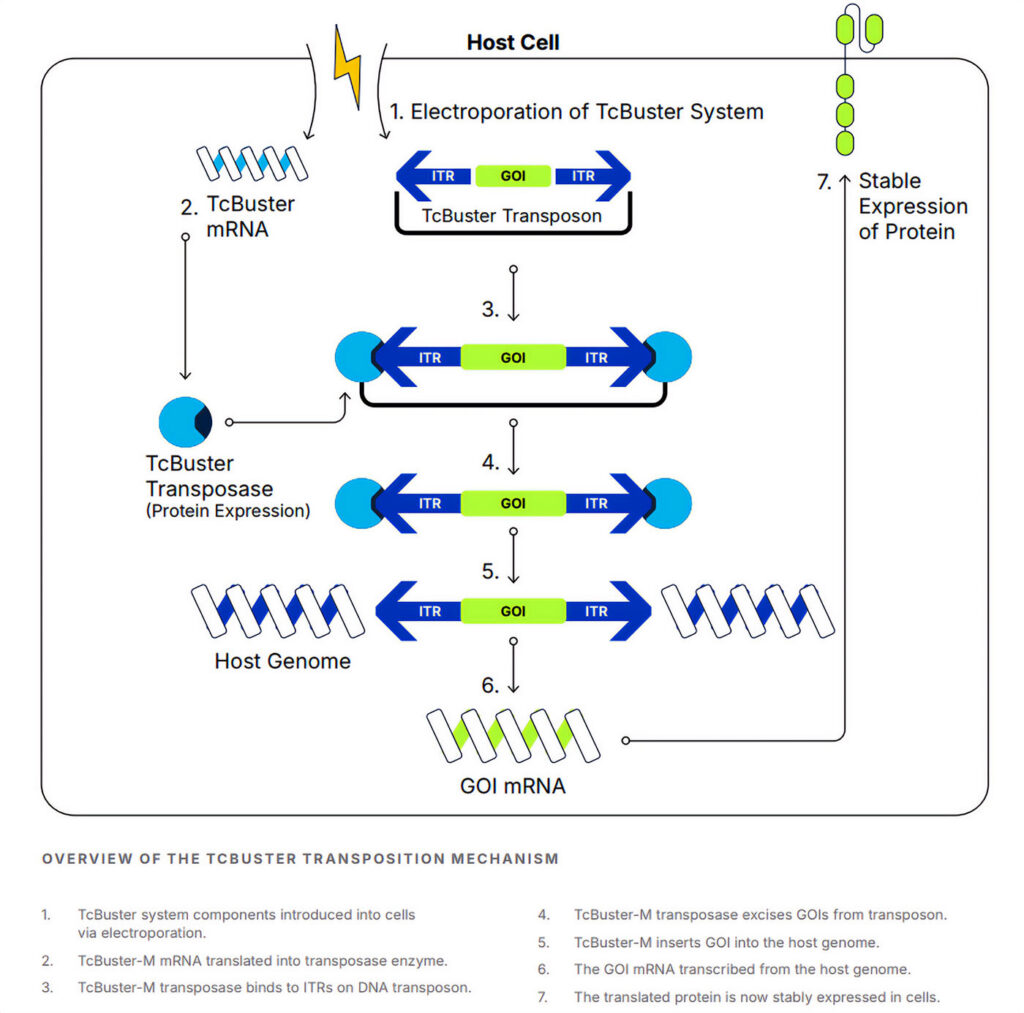
The red flour beetle, a notorious scourge of grain and cereal stores, is the surprising source of Bio-Techne’s transposon-based, non-viral gene delivery system. The system, dubbed TcBuster for the beetle’s scientific name, Tribolium castaneum, was invented by B-MoGen, a spin-out of the University of Minnesota, which was acquired in 2019 by Minneapolis-based Bio-Techne. Researchers at B-MoGen and Bio-Techne developed a hyperactive version of the natural TcBuster transposon by creating a library of three million unique genetic variants and screening each in mammalian cells. In a proof-of-concept study, CAR NK cells engineered using TcBuster demonstrated in vitro functionality and improved survival in a preclinical model of Burkitt lymphoma with a single dose.1
“The reason you want a hyperactive version is that wild-type transposon systems are fairly low activity,” said Miles Smith, PhD, a product manager for cell and gene therapy at Bio-Techne. “For generating a cell therapy, you want something that’s going to be comparable to the state of the field, and that’s lentivirus.”
The TcBuster system is electroporated into cells where its components are translated, and TcBuster transposes and excises genes of interest and inserts DNA cargo into the host cell genome. [Bio-Techne]
Smith said the TcBuster system, which comprises an mRNA encoding transposase and a DNA transposon, can be produced faster than a lentiviral vector. The system is also more scalable, more cost-effective, and has increased gene cargo capacity, according to Smith. TcBuster can deliver multiple genes in a single vector, and it can be multiplexed with other gene therapy tools. “If you wanted to use base editors or CRISPR-based knockout gene editing in conjunction with TcBuster, you could do that in one step, compared to multiple steps with a viral system,” Smith said.
Unlike other commercial transposon systems for gene delivery, like Sleeping Beauty and PiggyBac, Smith said TcBuster is not restricted by exclusive licensing. “The turnaround time for GMP material is just a couple of months,” Smith said. “Versus something that might take a lot longer if you have to go through licensing or create a viral batch.”
Gene therapy SORTed
ReCode Therapeutics is developing a pipeline of genetic medicines based on its selective organ targeting (SORT) LNP platform, which adds an additional lipid to the standard LNP formulation, allowing it to zero in on specific organs. Conventional LNPs comprise four lipids—cholesterol, a helper phospholipid, a PEGylated lipid, and an ionizable lipid—that encapsulate a therapeutic gene cassette. These traditional LNPs are primarily taken up by the liver after intravenous administration, limiting their usefulness for other organs and systems. ReCode engineered its SORT LNPs with a biochemically distinct fifth lipid that enables the body to direct the particle to the targeted organ, such as the lung or spleen, bypassing the liver, if necessary.
“Because mRNA in a cell has a relatively short half-life, maybe a day or so, in order to have constant protein production, you need to administer it relatively frequently,” Vladimir Kharitonov, PhD, senior vice president of CMC and pharmaceutical sciences at ReCode, said. “With viral delivery, you can’t really administer it repeatedly.”
Scientists conducting qualification of the semi-automated filling and stoppering machines at ReCode’s laboratory in Menlo Park. [ReCode]
The Menlo Park, California-based firm’s two clinical-stage therapies are given by inhalation using a nebulizer. SORT lipids enable targeting specific cell types in the lung epithelium.
In 2024, ReCode presented preclinical data from its cystic fibrosis program showing its mRNA-based therapeutic RCT2100 significantly restored CFTR function in human bronchial epithelial cells derived from patients with cystic fibrosis. In vivo studies using a ferret model demonstrated improvement in mucociliary clearance. ReCode launched the first clinical trial of RCT2100 later that year. The LNP for RCT2100 contains SORT lipids to fine-tune its delivery to the airway epithelial cell types that have a defective or mutated CFTR protein, causing cystic fibrosis. The company is also developing a second mRNA therapy delivered via SORT LNP, RCT1100, for primary ciliary dyskinesia, which targets different cell types in the lung epithelium.
From idea to therapy faster
Gene delivery is just one of many services offered by GenScript to support research from discovery through clinical testing, including gene synthesis, CRISPR reagents, antibodies, and more.
“Gene editing is entering a new era, and the focus has shifted from discovery to translation,” said Jianpeng Wang, PhD, senior director of nucleic acid and peptide R&D at GenScript. “Our goal at GenScript is to help scientists move from idea to therapy faster.”
When it comes to non-viral vectors, the firm offers off-the-shelf and bespoke solutions to fit the customer’s need for delivery of DNA, RNA, siRNA, peptides, and other molecules. Through its targeted LNP service, GenScript offers LNPs designed to enhance precision in directing genetic material to cells. GenScript’s ReadyEdit LNP solutions include Cas9 knock-in and knock-out, Cas12 knock-out, and base or prime editing tailored for the customer’s needs.
“In our ecosystem, we include all of the materials needed,” Wang said. “This integration can help scientists evaluate gene editing efficiency early, both ex vivo and in vivo.”
Wang said the choice of a vector is heavily dependent on the specific therapeutic program. “There isn’t a universally effective or better way to deliver a therapy, either viral or non-viral,” Wang said. He noted, for example, that viral vectors remain a good choice when long-term gene expression is desired. And for viral vectors, the manufacturing process might be more mature, easing transfer to a contract development and manufacturing organization.
However, Wang cautioned that viral vectors still present certain safety concerns. “In recent years, an increasing number of scientists and the FDA have recognized these risks,” he said, “leading to a surge in interest for non-viral delivery methods—particularly for in vivo CAR T therapy and gene editing.”
GenScript has provided LNP services to several customers globally. The most advanced of those is using GenScript’s GMP CRISPR materials (gRNA, HDR templates, and nuclease) alongside a customized LNP encapsulation recipe and is preparing an investigational new drug application.
Foundational LNP science
Vancouver-based Genevant traces its scientific lineage through a string of predecessor companies dating back to the early 2000s and controls foundational intellectual property for the field. Based on its scientists’ work at Protiva Biotherapeutics, the intellectual property comes to Genevant via Arbutus Biopharma, which acquired Protiva in 2015 and partnered with Roivant in 2018 to establish Genevant.
Unlike many companies developing nucleic acid delivery platforms that focus on a single payload modality, Genevant has applied its LNP to many payloads, including mRNA, siRNA, and gene editors in fields spanning antiviral, oncology, and metabolic disorders. The firm’s LNP platform is part of the first RNA-LNP product to achieve regulatory approval, Alnylam Pharmaceuticals’ Onpattro (patisiran), a treatment for polyneuropathy in people with hereditary transthyretin-mediated amyloidosis. Genevant’s LNP technology is also behind Moderna’s COVID-19 vaccines, which were confirmed earlier this month with the resolution of a longstanding patent dispute. An infringement case against Pfizer and BioNTech is pending. Genevant collaborated with Chula Vaccine Research Center and the University of Pennsylvania to develop a COVID vaccine for low- and middle-income countries in Southeast Asia during the pandemic. The program had success, demonstrating non-inferiority to Pfizer and BioNTech’s Comirnaty in clinical trials.
Some key differentiators for Genevant’s LNPs include strategies for optimized delivery in non-human primates instead of mice,2 which has resulted in improved gene editing in the liver, and novel chemistries for biodegradable LNPs that prevent accumulation in tissue.3 The company has recently disclosed data showing targeted delivery to T cells for in vivo CAR T therapy, as well as hematopoietic stem and progenitor cells (HSPC) and hepatic stellate cells.
References
Skeate JG, Pomeroy EJ, Slipek NJ, et al. Evolution of the clinical-stage hyperactive TcBuster transposase as a platform for robust non-viral production of adoptive cellular therapies. Mol Ther. 2024;32(6):1817-1834. doi:10.1016/j.ymthe.2024.04.024
Lam K, Schreiner P, Leung A, et al. Optimizing lipid nanoparticles for delivery in primates. Adv Mater. Published online March 27, 2023. doi: 10.1002/adma.202211420
The next evolution of CAR T therapy isn’t happening in a cleanroom—it’s happening inside the patient. For years, ex vivo CAR T has defined the field: extract T cells, engineer them, reinfuse them. This is effective, but complex, time-intensive, and logistically demanding. Each step introduces variability, from cell handling to expansion efficiency, while requiring specialized infrastructure that can limit scalability. In contrast, in vivo CAR T is gaining traction as a more streamlined alternative, especially by using lentiviral vectors (LVVs) to deliver genetic instructions directly into the body.
“By being able to produce CAR T cells directly in the body, you mitigate a lot of the room for error,” explains Annie Huang, senior manager of content marketing at GenScript ProBio. “Without dealing with cell culture and all the associated handling, you reduce variability and complexity.”
CAR T therapy works by equipping T cells with engineered receptors that recognize and attack disease. Traditionally, that engineering happens outside the body through a multi-step workflow that can take weeks. In vivo approaches eliminate those steps by delivering genetic material directly to T cells, enabling them to be reprogrammed in place.
This shift is not just about efficiency. By reducing reliance on external processing, in vivo CAR T has the potential to improve consistency and expand access for patients who might not be able to wait for or access complex manufacturing pipelines. Expanding the development and testing of in vivo CAR T therapies, though, depends on giving
researchers and companies easy access to the tools they need.
Why ProBio’s tLVV platform stands out
ProBio is advancing the field with a purpose-built LVV platform designed specifically for in vivo CAR T applications, “known as tLVV—a T cell binder present on the LVV envelope, which serves as a ‘T cell specifically targeting LVVs’ or ‘T cell re-targeting LVVs’.” says Huang. “Our tLVV platform optimizes membrane fusion capability, which leads to higher functional titers and maximized transduction efficacy.” The system integrates a proprietary transfer plasmid backbone with customer-provided binders and fusogens. The binder acts as a targeting mechanism, directing where the viral particle attaches, while the fusogen enables entry into the desired cell. This modular approach allows developers to tailor targeting strategies while leveraging ProBio’s optimized backbone and supporting plasmid systems.
Importantly, ProBio’s platform is engineered to address a key concern in in vivo delivery: off-target effects. By incorporating a proprietary backbone designed to silence unintended CAR expression, the system helps reduce the risk of incorrect binding and antigen masking—issues that can compromise efficacy or lead to resistance. This design focus supports more controlled and efficient transduction in vivo.
LVVs also offer a significant advantage in terms of acceptance by regulators. “From a regulatory perspective, LVV is more mature,” says Jingyuan Zhang, PhD, content marketing specialist at ProBio. “So, there’s less barrier when applying it to in vivo approaches.”
Because LVVs are already widely used in ex vivo CAR T therapies, they come with an established safety and manufacturing track record. This familiarity can help streamline regulatory pathways, allowing developers to focus innovation on delivery and targeting rather than introducing entirely new vector systems.
From design to scaled delivery
Once administered, the LVV delivers CAR genes directly into T cells, initiating an immune response against disease targets. However, achieving reliable performance in vivo requires overcoming challenges such as envelope protein variability, vector aggregation, and binding inefficiencies.
ProBio addresses these issues through optimized plasmid design, refined manufacturing workflows, and integrated development services that support consistency from early-stage research through clinical production. The company’s new facility in Hopewell, New Jersey, further strengthens this capability, providing scalable viral-vector manufacturing tailored to in vivo CAR T and gene therapy applications. This facility can also manufacture non-viral versions of gene therapy.
Combined with end-to-end support—from construct design to CMC and GMP production—ProBio’s tLVV platform positions developers to move more efficiently from concept to clinic. As in vivo CAR T continues to evolve, such integrated solutions may play a crucial role in translating promise into practical, accessible therapies.
bioMérieux has introduced the BIOFIRE® SPOTFIRE® system for rapid mycoplasma testing in pharmaceutical manufacturing. The instrument provides automated sample processing and delivers molecular results in under one hour, helping quality control teams detect mycoplasma contamination during biologics, vaccine, and cell and gene therapy production. The system includes touchscreen operation, integrated barcode scanning, and stackable modules for scalable capacity, and it is compatible with the existing BIOFIRE Mycoplasma panel used in bioprocessing environments.
Alfa Laval has introduced the EnSaLine agitator platform for mixing in hygienic production environments such as pharmaceutical manufacturing. The system incorporates a cartridge based seal and bearing assembly designed for easier maintenance and uses EnSaFoil impellers to support efficient mixing and gentle product handling. The agitators are built for clean in place operation, include options for side and bottom mounted configurations, and are equipped with sensors that enable condition monitoring for predictive maintenance workflows.





 (zopapogene imadenovec-drba), which generated $3.4 million in net product revenue last year after becoming the first-and-only FDA-approved treatment for adults with recurrent respiratory papillomatosis (RRP) in August; and Abeona Therapeutics’ Zevaskyn® (prademagene zamikeracel), an autologous cell sheet-based gene therapy approved to treat wounds in adults and children with recessive dystrophic epidermolysis bullosa (RDEB).