Three things to watch amid Anthropic’s latest feud with the government

This story originally appeared in The Algorithm, our weekly newsletter on AI. To get stories like this in your inbox first, sign up here.

For those of you enjoying your summer unaware of Anthropic’s latest feud with the US government, here’s a recap: In April the company said it had built an AI model called Mythos that was so good at working with code it could pose a global cybersecurity threat. Anthropic gave access to a small group of cybersecurity experts so they could see what they were up against. Then it released a modified version called Fable which it said was safer to the public on Tuesday, June 9. That Friday, the federal government told the company it was a threat to national security and placed export controls on the new release. Anthropic revoked access to both models hours later.

People worried about catastrophic effects of AI—broadly labeled “doomers”—have said for years that the technology poses a threat to humanity and published proposals for how the government should intervene in its development. The doomers just got their government intervention—not over a bioweapon or rogue AI, but in response to an AI model that’s basically just really good at coding. And the result so far looks less like a safety plan than like a superficial reaction.

There’s plenty to dissect about what happened in those few days that led to such drastic action from the government, and it’s notable that Amazon CEO Andy Jassy was the one who told government officials that Fable would be dangerous (Amazon is both invested in Anthropic and building its own competing AI models). It’s also possible this will be a short-lived ban from the government that doesn’t survive legal scrutiny (it’s not clear that Anthropic’s offering access to Fable really counts as “exporting” it, for example). 

But there are ripple effects happening already. 

For one, this is making a whole lot of people not want to rely on American AI companies. TheFrench politician Bruno Retailleau described it as a “wake-up call” that should motivate Europe to build more AI. But any vision of turning Paris into Silicon Valley—touted by many other European leaders following the shutdown of Anthropic’s models—is complicated by one big thing: China. 

Open-source models from China are very capable and incredibly cheap, and they can be downloaded to run on anyone’s servers with no rules or guardrails. (This makes them attractive to companies that don’t want access turned off on the basis of a decision from the White House—but equally attractive to cybercriminals, the type that Anthropic hoped to fend off by building safety guardrails into its models.) 

It’s possible that companies, including those in the US and Europe, will decide that working with Chinese models is just easier, as the skyrocketing of shares in the Chinese startup Zhipu suggests. Playing this forward, is it possible the government’s next drastic decision will be to say that US companies using models from China pose a threat to national security? I wouldn’t write it off. 

Second, it’s possible that shutting off access to Anthropic’s models will leave the country morevulnerable to cybersecurity attacks, not less. Leading cybersecurity experts have said as much in an open letter to the government, writing that access to Anthropic’s models was helping researchers prepare defenses, and that the company’s models are no more dangerous than other leading models that are widely available. Such is the risk of applying the concept of nonproliferation to software—trying to control and restrict dangerous AI models in the manner of the uranium used for nuclear weapons. 

The third thing worth watching is how US lawmakers will react. Remember that following Anthropic’s last feud with the government over how the Pentagon could or could not use its models, a slate of new bills was introduced that would define the limits of military AI.

Right now, the biggest players shaping how AI gets used are the companies and the White House. There’s been much talk about more federal AI regulation, and polling suggests most Americans want it. Lawmakers are still figuring out whether to form rules on how kids use chatbots and are far from a clear answer on the extent to which the government should vet the safety of AI models. But with every drastic action from the White House, the pressure for regulations rises.

To state the obvious, predictions are hard when the administration’s attitudes toward AI  change with the wind. When President Trump took office, he threw out the restrictive rulebook for how to make AI safe and promised to get out of the way of tech companies. The White House has now called the most valuable AI startup a risk to national security once in the spring, and again in summer. What will fall bring?

Brain-Infiltrating T Cells Linked to Social Deficits in Autism Mouse Model

The prevalence of autism spectrum disorder (ASD) is roughly one in 36 people, with a male-to-female ratio of 4:1. The disorder is known to be influenced by multiple factors, both genetic (gene mutations and copy number variations) and environmental, such as infections during pregnancy. However, the role of immunity in genetic ASD remains unclear.

One area of interest lies in lymphocytes—cells that are known to shape neurodevelopment and behavior. But their roles in neurodevelopmental disorders are not well defined.

Now, new research shows that a subset of T cells—γδ T cells—can infiltrate the brain and contribute to changes in social behavior in a genetic mouse model that mimics behavioral features of ASD. Depleting these cells from the brain increased sociability, suggesting that targeting abnormal immune function during neurodevelopment may offer interventions for ASD.

This work is published in Science Immunology in the paper, “CXCL16-mediated recruitment of γδ T cells to the brain reduces sociability in mice.”

Infections during pregnancy can induce the release of interleukin-17A (IL-17A) from T helper 17 cells and γδ T cells. Prior research has linked this type of maternal immune activation to neurodevelopmental disorders, but there is a lack of evidence connecting IL-17A and social behaviors in genetic mouse models.

To investigate this further, a team of researchers from the Division of Allergy and Immunology in the Medical Institute of Bioregulation at Kyushu University, in Fukuoka, Japan, studied 15q11-13 duplication (15q dup) mice—a mouse model that mimics a chromosome duplication found in some humans with ASD. These mice also demonstrate reduced social interactions, behavioral inflexibility, and increased anxiety-like behaviors.

The team analyzed immune cell populations in the brains of the 15q dup mice. Their findings suggest an increase in γδ T cells in the developing brains when compared with wild-type mice.

Using single-cell RNA sequencing (scRNA-seq), the team uncovered that this was most likely due to microglia in the brain expressing the chemokine CXCL16, which promotes immune cell migration. CXCL16 was highly expressed in the brains of 15q dup mice and contributed to increased infiltration of γδ T cells.

In addition, experiments revealed that deleting IL-17A–producing γδ T cells or blocking them with antibodies after birth increased sociability and reduced anxiety-like behaviors in the 15q dup mice.

Taken together, the authors note that these findings suggest that “immune dysregulation contributes to social behavior deficits in 15q dup mice, consistent with observations in maternal immune activation models, and may represent a potential target for interventions for ASD-associated differences in social behavior.”

The post Brain-Infiltrating T Cells Linked to Social Deficits in Autism Mouse Model appeared first on GEN – Genetic Engineering and Biotechnology News.

Breast Milk Fatty Acid Shapes Immune Development in Mice

In a new study published in Science titled, “Maternal trans-vaccenic acid shapes neonatal T cell development and early-life immune imprinting,” researchers from the University of Chicago have found that trans-vaccenic acid (TVA), the most abundant trans fatty acid in human breast milk, helps boost immune system development in mice. 

Nursing female mice that were fed a diet enriched with TVA passed the nutrient to their pups, leading to increased production of immune cells during early development. Genetic analyses showed that TVA exposure during breastfeeding reprogrammed immune cells to improve responses to pathogens. Mice that were nursed on TVA-enriched milk responded faster to infections with viruses or common bacteria, even into adulthood. 

“It’s common knowledge that breastfeeding is important for neonatal immune development and overall health, but breast milk is so complex that it seems almost impossible that one single molecule would be sufficient to change a baby’s immune development,” said Jing Chen, PhD, professor of medicine at UChicago and co-corresponding author on the study. “So, it was very surprising to see that during this crucial stage of development, one nutrient derived from the mother’s diet and delivered through breastfeeding has such a tremendous effect.” 

TVA is a long-chain fatty acid found in meat and dairy products from grazing animals such as cows and sheep. The human and mouse body must obtain TVA through diet.  

Pups who were nursed by mothers with a diet enriched with TVA demonstrated a broader and more effective immune cell population, particularly CD4+ T cells that are important for adaptive immunity. Mice raised on TVA-enriched breast milk responded more quickly and had higher survival rates when exposed to the flu virus or Salmonella. 

“We saw that only postnatal exposure to TVA through breastfeeding is important to train the neonatal T cells, and this can have long-lasting imprinting effects,” Chen said. “Even in adulthood, when we challenged the mice with influenza, the ones that were exposed to higher TVA levels during breastfeeding responded better when battling the infection.” 

The team also analyzed TVA levels in breast milk and blood samples from human nursing mothers and infants. They found that higher TVA levels in breast milk were closely linked to higher TVA levels in infants’ blood. In preterm infants, levels of circulating TVA correlated with similar shifts in immune responses seen in mice.

Higher TVA levels in human breast milk were also associated with reduced risk of bronchopulmonary dysplasia, a chronic inflammatory lung disease that affects premature infants with underdeveloped lungs and increased susceptibility to respiratory infection. 

Chen hopes for more research on the possibilities for supplementing diets with TVA during pregnancy and breastfeeding, or infant formula. The team will also investigate additional fatty acids and nutrients found in breast milk to understand their benefits. 

“There are close to 40 fatty acids in total in breast milk, along with hundreds of other components,” Chen said. “So, I think it’s safe for us to say that we believe there could be additional fatty acids and nutrients that can do something similar.” 

The post Breast Milk Fatty Acid Shapes Immune Development in Mice appeared first on GEN – Genetic Engineering and Biotechnology News.

STAT+: Another big deal, another sign biotech M&A is back

Want to stay on top of the science and politics driving biotech today? Sign up to get our biotech newsletter in your inbox.

Good morning! Pharma companies are on a biotech buying spree, an LSD pill just delivered unusually strong late-stage depression data, and the FDA reverses course of Regenxbio’s treatment.

Also: Today, thousands of industry players (and me!) are gathering in San Diego for BIO to talk deals, science, and whatever comes next. Check out the last item for a jaunt down memory lane about the conference.

Continue to STAT+ to read the full story…

Affordable centimeter-scale 3D microscopy with submicrometer resolution

Nature Biotechnology, Published online: 22 June 2026; doi:10.1038/s41587-026-03209-x

Submicrometer-resolution three-dimensional (3D) imaging of large samples has been constrained by the short working distance, high cost and inflexible design of immersion objectives. We developed hybrid solid–liquid optics (HySIL) — a refractive framework with index-matched components — for submicrometer-resolution 3D imaging of centimeter-scale samples in various immersion media using inexpensive air objectives.

The Download: AI bottleneck debates, and BCI trials take off

This is today’s edition of The Download, our weekday newsletter that provides a daily dose of what’s going on in the world of technology.

A startup claims it broke through a bottleneck that’s holding back LLMs

AI startup Subquadratic came out of stealth last month with a huge claim: it had solved a mathematical bottleneck that had held back large language models for almost a decade.

The purported breakthrough comes from slashing the number of computations transformers need to carry out to generate answers. The result is a faster and cheaper LLM that uses far less energy than any other model on the market.

Many experts remained skeptical—but Subquadratic has started to share the receipts. They suggest that their approach might be worth paying attention to.

Here’s how the system works—and why some researchers still aren’t convinced.

—Will Douglas Heaven

Brain-computer interface trials are taking off

—Jessica Hamzelou

This week, I covered the story of Casey Harrell—a man with ALS who is “the first power user” of a brain implant. The device has enabled him to maintain an income, reconnect with friends and family, and read to his daughter. He told me that it’s “nothing short of revolutionary.” 

Over the past couple of years, the number of BCI trial volunteers has soared. This year, China became the first country to approve a BCI for medical use. Advances in technology are allowing engineers to provide more features than ever. BCI research is properly taking off.

Find out how the technology is edging from the lab towards the market.

This story is from The Checkup, our weekly newsletter giving you the inside track on all things biotech. Sign up to receive it in your inbox every Thursday.

The must-reads

I’ve combed the internet to find you today’s most fun/important/scary/fascinating stories about technology.

1 Amazon workers who backed data center limits may face termination
The engineers say they’re under investigation by the company. (NYT $)
+ And could face discipline, including potential termination. (The Verge)
+They had testified at meetings about pausing data centers. (CNBC)
+ They’ve filed a joint complaint to Seattle’s Office for Civil Rights. (Wired $)

2 A new fossil discovery has rewritten 150 years of evolutionary theory
It suggests early land vertebrates skipped the tadpole stage. (New Scientist $)
+ And raises questions about how vertebrates adapted to land. (404 Media)
+ Sponges may have been the first animals. (MIT Technology Review)
 
3 Bernie Sanders plans to give the public direct ownership of AI firms
He’s unveiled new legislation to create an AI sovereign wealth fund. (AP News)
+ It would be funded through a one-time tax on AI companies’ stock. (Quartz)
+ And make annual payments directly to Americans. (Washington Post $) 
 
4 Investors in China secretly acquired stakes in SpaceX before its IPO
One had ties to Chinese military contractors. (ProPublica)
+ The US fears China has got one of ASML’s top machines. (Reuters $)
 
5 Researchers have figured out Russia’s nuclear-powered missile
They call it “a terrible idea”—but not an impossible one. (NPR)
+ NASA is building a nuclear reactor-powered spacecraft. (MIT Technology Review)
 
6 Longevity medicine faces a do-or-die moment in a landmark trial
It will test whether cellular aging can be safely reversed in humans. (Axios)
+ The next step is “chemical reprogramming.” (MIT Technology Review)
 
7 Studies suggest AI may already be deskilling professionals
Over-reliance appears to weaken doctors’ and engineers’ abilities. (Nature)
 
8 Tech workers who maxed out their AI use are now trying to minimize it
Spiralling costs mean “tokenminning” has replaced “tokenmaxxing.” (NYT $)
 
9 Scientists say the human genome’s structure may confound AI models
Which would constrain AI-based models of biology and disease. (Quanta)

10 A new robotic self-driving toilet brings the bathroom to you
The Xiaoban also cleans up and empties itself all on its own. (The Verge)

Quote of the day

“They hated me. They were doing everything they could to knock me down. And look at them now.” 

—Donald Trump mocks Mark Zuckerberg and Jeff Bezos in a conversation with Elon Musk that’s recounted in a new book, Wired reports

One More Thing

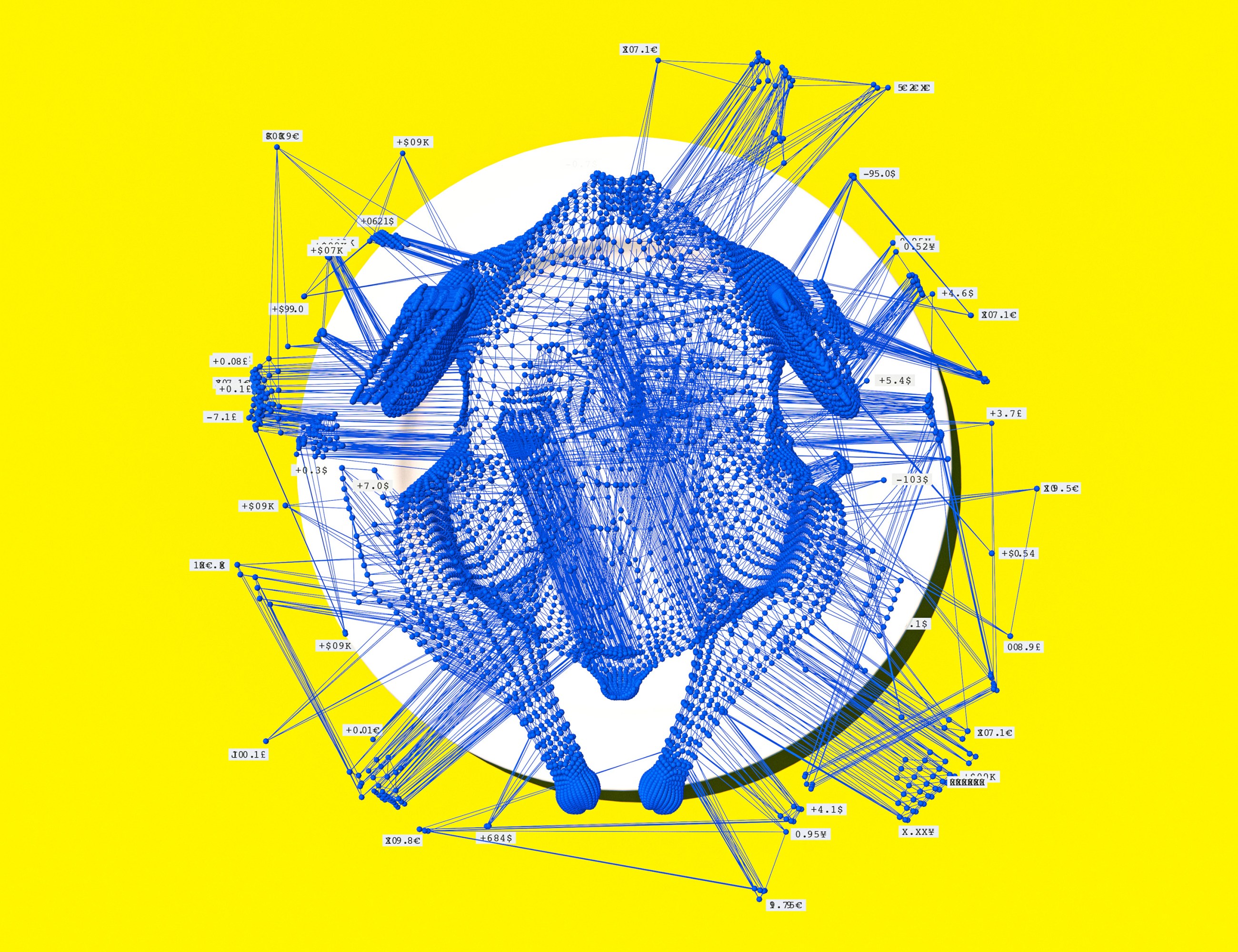
chicken network

PABLO DELCAN


Technology can help us feed the world, if we look beyond profit

The pandemic exposed the weak spots in our interconnected food system. They’re the result of decades’ worth of technological advances, from globe-spanning shipping to refrigeration networks. But technology is not inherently opposed to sustainable and resilient food systems.

Powerful technologies like genetic modification can create stronger local agriculture and a healthier food system—but they normally aren’t. The challenge is ensuring they serve food security and human well-being, rather than simply maximizing profits.

Dive into our food system’s problems and the solutions that technology can provide.

—Fabio Parasecoli

We can still have nice things

A place for comfort, fun, and distraction to brighten up your day. (Got any ideas? Drop me a line.)

+ This intriguing video tracks the covert reality of Japan’s shinobi.
+ Dive into this admirably obsessive archive covering over 100 different ways to tie your shoes.
+ One of the world’s largest digital collections of plants and fungi is now available for free to everyone.
+ A grand orchestra has beautifully covered Michael Jackson’s “Human Nature” at Abbey Road Studios.

A startup claims it broke through a bottleneck that’s holding back LLMs

The Miami-based AI startup Subquadratic came out of stealth mode last month with a huge claim. It announced that it had solved a mathematical bottleneck that had been holding back large language models for almost a decade.

The details were thin, and many people were unconvinced. But Subquadratic has started to bring the receipts, sharing the results of an independent evaluation of its new tech. The results suggest that the company’s claims might be worth paying attention to.

According to Subquadratic, it has developed a new kind of LLM, called SubQ, that is faster and cheaper and uses a lot less energy than any other model on the market. The company also claims that SubQ is able to process up to 12 times as much text at once as most other models, allowing it to carry out a range of data-heavy tasks, such as analyzing hundreds of documents or entire code bases.

What’s more, Subquadratic says, SubQ does this while more or less matching the performance of the best models put out by Google DeepMind, OpenAI, and Anthropic on key tasks like coding.

The problem was that the company at first provided little evidence for its claims beyond a handful of self-published test scores. And it has yet to make SubQ widely available for people to try out themselves.

So it’s no surprise that Subquadratic’s claims were met with skepticism. Dan McAteer, an artificial-intelligence engineer, captured the overall response on X: “SubQ is either the biggest breakthrough since the Transformer … or it’s AI Theranos.”

A month on, the company has published more information about its model, including the results of additional independent tests run by the third-party firm Appen.

“We expected healthy skepticism,” says Subquadratic cofounder and chief technology officer Alex Whedon. “In hindsight, releasing the third-party benchmarks alongside the initial announcement would have preempted much of the skepticism, which is why we’re taking the time to make sure any future results are fully verified before putting them out.”

Subquadratic asked Appen, which evaluates other companies’ models, to run its tests on SubQ. The results seem to back up a lot of Subquadratic’s claims. “That was really exciting to me, it validated their architecture,” says Jeanine Sinanan-Singh, Appen’s director of generative AI research.

“I was like, ‘Wow, this could be a game changer,’ because models struggle with speed and inefficiency,” she adds. “But when you have kind of shocking results, it’s really not as credible when you say it yourself.”

SubQ won’t replace existing top models across the board, but it could offer huge increases in speed at a fraction of the typical cost for certain tasks. Subquadratic insists that in the long run, though, its breakthrough could change how LLMs are built. “We hope we’re kicking off a new age of efficiency,” says Justin Dangel, the firm’s cofounder and CEO. “We don’t think anybody will be building on transformers in a few years.”

Attention!

To understand why Subquadratic’s claims are a big deal, let’s dig into how most LLMs work. The key mechanism inside an LLM is a type of neural network called a transformer, which runs a process known as dense attention. Today’s LLMs typically chain together multiple transformers. (The foundational paper of the LLM era, published by researchers at Google in 2017, was titled “Attention Is All You Need.”)

Dense attention works like this: When a transformer processes a chunk of text, it first encodes each word (or part of a word, known as a token) with a number. To capture the meaning of the full text, it then multiplies each of those numbers with every other number for that text. For example, a piece of text 10,000 words long would kick off almost 50 million individual multiplications. That’s a lot of computation and the main reason that LLMs are notorious power hogs.

“If you want to summarize The Great Gatsby, you have to look at the first word and the last word together, and then you have to look at every other combination,” says Dangel.

As the length of the text increases, the number of computations skyrockets. That’s because each additional number must be multiplied by all other previous numbers. Double the number of words, and you roughly quadruple the number of computations, a rate of increase known as a quadratic expansion.

(You can picture this yourself: Draw a circle and mark dots around its edge. Each dot is a token. Then draw lines between pairs of dots to represent the multiplication of those two tokens. A circle with five dots will have 10 lines crossing it. Make it 10 dots and you will have 45 lines, 20 dots and you will have 190 lines, and so on.)

Slashing costs

Subquadratic’s solution is to ditch dense attention, the core operation of a transformer, in favor of what’s known as sparse attention, which slashes the number of computations needed. Instead of multiplying the number assigned to each token by every other number, sparse attention selects just some of the numbers to multiply. The idea is that not all relationships between words in a piece of text matter.

“Sparse attention says not all of those relationships are important, because they’re not,” says Whedon. “If you’re reading a book, you’re not going to look at the first and second words, first and third—that’s insane.”

It’s a simple approach, and Subquadratic is not the first to try it. “Pretty much everything under the sun has been attempted,” says Will Depue, an independent AI researcher who previously worked at OpenAI. “It’s not impossible, but it’s akin to running a four-minute mile.”

Previous techniques for selecting which numbers to multiply and which to ignore have not produced a mechanism that can capture the meaning of a document as well as dense attention can.

Subquadratic claims to have cracked the problem at last. It pitches SubQ as the first sparse-attention LLM that rivals mainstream dense-attention models in performance.

“Historically, most mechanisms have used fixed patterns, like always comparing the first word to the fifth,” says Whedon. “That’s pretty limiting. Language is too sophisticated for that. And so, one of the things that makes our mechanism unique is that we dynamically select which ones are important.”

The firm won’t say exactly how SubQ chooses which words to focus on, but the selection is calculated on the fly and differs for each piece of text the model is given. “That’s kind of where the secret sauce is,” says Whedon.

Testing, testing

The upshot is that for certain tasks, SubQ may be faster and cheaper to run than most other models. Appen evaluated SubQ on a handful of standard tests. In a straight-up speed test, which sets a baseline for how fast a model can operate in theory rather than assessing what a model can actually do, Appen found that SubQ was 56 times faster than models using FlashAttention, a previous sparse-attention technique. 

On LiveCodeBench, a test that looks at how well models perform on competitive coding problems taken from real contests, SubQ scored 89.7%, putting it in the same ballpark as other top coding models. “This model continues to provide frontier-level performance in coding,” says Appen’s Sinanan-Singh.

Subquadratic’s claims about cost are harder to verify because SubQ is not yet widely available. According to Dangel, it costs $2,600 to run Anthropic’s LLM Opus 4.6 through RULER 128, a test developed by Nvidia to assess a model’s ability to retrieve information from large data sets. And SubQ? “It cost us eight dollars,” he says.

SubQ does seem to be able to handle a lot of text at once. The model has a context window (roughly akin to a working memory) up to 12 million tokens long. Most top models today have context windows one million tokens long. In a demo that Whedon ran for me, he asked SubQ to perform a task that required it to reason about information contained in 400 documents. It responded in seconds. When he gave Perplexity—a popular LLM-powered search engine—the same task, it failed to load all 400 documents. 

Appen put SubQ through the Needle-in-a-Haystack test, which, like RULER, assesses how well a model retrieves specific information buried in a large data set. In its report, Appen states that Subquadratic’s model scored 98% with context windows six million and 12 million tokens long, “sustaining near-perfect long-context retrieval at scales few models are tested at.”

Too good to be true?

Despite the high scores, benchmarks paint an incomplete picture of what a model can and cannot do. Testing under very specific conditions is not a substitute for running a model on a wide range of real tasks.

Subquadratic is offering SubQ as a model tailored to coding and to searching very large data sets. It says that tens of thousands of potential users have already signed up for early access, including more than 500 enterprise customers. But there’s a long waitlist, and the firm has given very few people access so far. Subquadratic’s response is that it is a new, small company with limited resources and cannot serve too many people at once.

Until more people get their hands on the model and try it out for themselves, some skepticism is justified. One nagging issue is that Subquadratic reused the weights (values set within a model during training that determine how it will behave) from a version of the Chinese open-source model Qwen to bootstrap SubQ, rather than training it from scratch. That’s a common approach for model makers to take, but it cuts across Subquadratic’s claim that it has fully reinvented how LLMs work.  

“They may have built something real and useful,” says Depue. “But the public evidence does not yet justify the stronger claim that they have solved the quadratic attention bottleneck.”

In the meantime, Subquadratic cofounder Whedon insists that making something different was his only option. If you want to build a competitive model, you have to have new ideas, he says: “We’re more up against it than OpenAI is.”


Historic Biotech IPO, Merck, Protillion’s AI Deal, Testing a Lassa–Rabies Vaccine

We are still talking about big pharma deals and biotech fundraising in this episode. The big news this week was Parabilis Medicines’s history-making IPO. We dive into the drug developer’s plans for the eye-popping $770.5 million that it raised. Next, we discuss the details of a collaboration between Merck and Protillion Biosciences to use artificial intelligence to discover multiple therapeutic candidates. Turning to some newly published research, we discuss the early results of a first-in-human clinical trial that is testing a dual vaccine against Lassa fever and rabies, a CRISPR system engineered to selectively trigger cancer cell death by chromatin shredding, and a novel mRNA delivery platform for delivering gene therapies starting with Duchenne muscular dystrophy.


Listed below are links to the GEN stories referenced in this episode of Touching Base:

StockWatch: Parabilis Medicines Makes Wall Street History with $770.5M IPO
By Alex Philippidis, GEN Edge, June 14, 2026

Merck, Protillion Launch AI Drug Discovery Collaboration with Up-to-$510M in Milestone Payments
By Alex Philippidis, GEN Edge, June 16, 2026

First-in-Human Trial Reports Promising Dual Lassa–Rabies Vaccine Data
GEN, June 9, 2026

CRISPR Shreds Undruggable Cancer Cells with Precision
By Fay Lin, PhD, GEN Edge, June 8, 2026

New mRNA Delivery Platform Restores Muscle Function in DMD Models
GEN, June 11, 2026

Touching Base Podcast
Hosted by Corinna Singleman, PhD

Behind the Breakthroughs
Hosted by Jonathan D. Grinstein, PhD

The post Historic Biotech IPO, Merck, Protillion’s AI Deal, Testing a Lassa–Rabies Vaccine appeared first on GEN – Genetic Engineering and Biotechnology News.