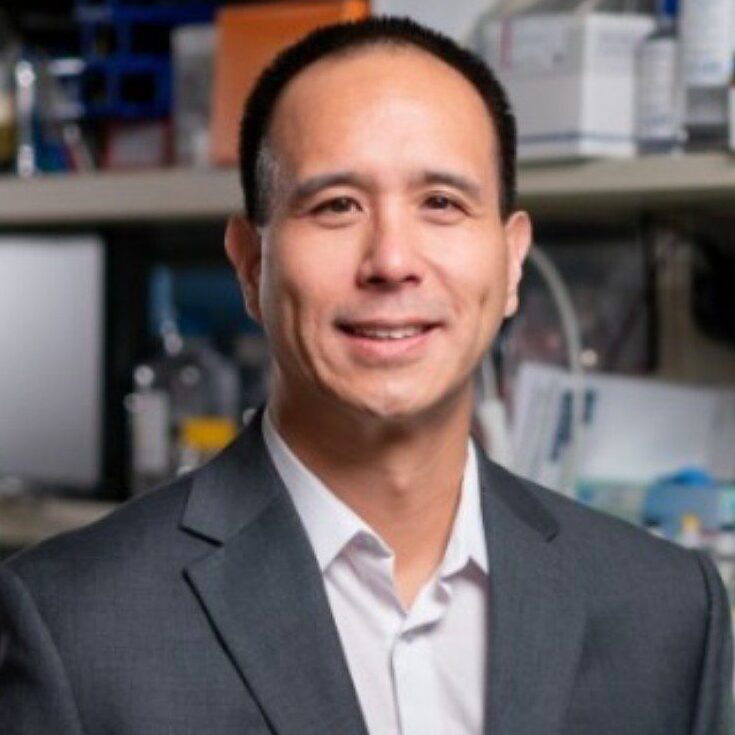
STAT+: Moderna co-founder Kenneth Chien on the future of mRNA — and Moderna 

Among all the awards and mementos Moderna co-founder Kenneth Chien has accumulated over a 50-year career in science, one stands out for its sheer luxe: an Hermes belt.

It was a 2013 gift from Moderna CEO Stéphane Bancel, one of biotech’s more dapper CEOs, after Chien helped secure a large partnership between the then-tiny mRNA startup and the Swedish-British pharmaceutical giant AstraZeneca. 

The deal accelerated Moderna’s ascent, helping bring billions in funding and of course the life-saving mRNA Covid vaccines. But the actual medicines AstraZeneca planned to build through those deals — up to 40 mRNA-based drugs for cancer and cardiovascular disease — never materialized. 

Continue to STAT+ to read the full story…

Backed by $165M, Bionyra Pharma Launches to Advance Inflammatory Disease Biologics

Though he is trained as a gastroenterologist and scientist, Frédéric Marrache, MD, PhD, has always had something of an entrepreneurial itch. Following his post-doctoral program and a stint in management consulting, he made his way to Sanofi where he would work on early- to mid-stage drug development programs focused on immune-mediated diseases.

“This was right around the time when Sanofi, together with Regeneron, was finalizing the development of Dupixent,” a prescription biologic injection used to treat multiple inflammatory conditions, he told GEN. Those experiences gave him “meaningful insights” into patient care as well as about “how to develop therapies in this space.”

One of those insights was the scale of the unmet medical need in the immune-driven inflammatory disease space. Though some large pharma companies have developed products for the space already, “I had a few insights about what could be differentiated,” he said. That led him to engage with a team at Sofinnova Partners in early 2025. “I came in with my insights about patient needs, immunology, and target selection, and [my] view on right and wrong assets,” he said. “They came with experience in building companies” and “we mapped out the entire asset space specifically on the target and pathway of interest.” 

Those discussions led to the launch of Bionyra Pharma, a clinical-stage biopharmaceutical company that is developing next-generation biologics for severe immunological and inflammatory diseases. The company emerged from stealth this week after raising $165 million in an oversubscribed Series A. The round was co-led by Jeito Capital and Sofinnova Partners with participation from Arkin Bio, Sanofi Ventures, Sixty Degree Capital, Vives Partners and Apollo Health Ventures. 

Marrache serves as the co-founder and CEO of the company. In addition to the financing, Mehdi Ainouche, partner at Jeito Capital; Anta Gkelou, partner at Sofinnova Partners; Avital Adler, principal at Arkin Bio; and Laia Crespo, partner at Sanofi Ventures, will join Bionyra’s board of directors.

“When we co-founded Bionyra with Frédéric, our conviction in both the company and his leadership was grounded in his deep expertise in immune and inflammatory diseases,” said Sofinnova’s Gkelou. “Looking ahead, we are focused on advancing these programs with the aim of bringing meaningful new treatment options to patients.” 

Specifically, the funds will support Bionyra’s efforts to advance mono and multispecific antibodies for various inflammatory conditions including atopic dermatitis and inflammatory bowel disease (IBD). 

Right out of the gate, Bionyra is launching a pipeline of three clinical and near-clinical anti-inflammatory therapies, some of which are already in clinical trials. The company’s first asset, BYN-002 is a TL1A monoclonal antibody with the potential to treat IBD and other TL1A-relevant indications. This therapy is currently in a fully-enrolled Phase I study in healthy people. Its next candidate, BYN-003, is a TL1A*IL-23p19 bispecific antibody that is also in Phase I testing. Both assets have been improved with half-life extension (HLE) engineering to maximize efficacy and patient benefit.

Generally speaking, “TL1A is a game changer target right now in [immunology and inflammation] with great results in inflammatory disease,” he said. However, it is likely that this target will be relevant across multiple indications. To that end, Bionyra is keeping its options open in terms of what it will target with its TL1A assets. “Whether it’s going to be in the inflammatory bowel disease space, whether we go for another indication space or whether we decide to develop it in combination in any of these indications, that’s an option,” he said. 

For now, the focus is on validating the safety and efficacy of both therapies in healthy volunteers. “That’s especially a question around the bispecific antibody” because there will likely be questions around the immunogenicity, he noted. “Our advantage here is that our bispecific is built on the backbone of our monospecific, so at least we have some level of early validation here, and we hope to present some results soon.”  

A third candidate, BYN-001, is an IL-25 monoclonal antibody that has also benefited from HLE technology. It is currently in the IND-stage for atopic dermatitis and type 2 inflammation. While there are several assets in development that aim to target type 2 inflammation, once all of the me-too drugs are excluded, the field becomes narrower, Marrache said while explaining the rationale for choosing this particular drug candidate for Bionyra’s portfolio. “IL-25 has been known to be a strong driver of type 2 inflammation for some time,” he said.

Furthermore, some recently published early clinical data from a competitor, who are developing their own asset for IL-25, “clearly validated the pathway and suggested potential for differentiation.” At the time, Bionyra was already exploring the same target space so “we were able to move very quickly” and find what, Marrache believes, is the “most potent IL-25 antibody out there” with the “longest half life.” 

Two of the assets BYN-002 and BYN-003 were licensed from TrueLab Biopharmaceutical. Under the terms of the agreement Bionyra was granted exclusive worldwide rights, excluding Greater China, to research, develop, manufacture and commercialize both therapies. TrueLab is eligible to receive up to $985 million in total consideration related to both assets, including the upfront payment as well as development, regulatory, and commercial milestone payments. The agreement also includes tiered royalties on future net sales. In addition, TrueLab has a single-digit equity stake in Bionyra Pharma following completion of its Series A financing. 

For its part, BYN-001 was licensed from NovaRock Biotherapeutics. Bionyra is also progressing additional preclinical assets including some from TrueLab. It will support these efforts with some of the funds from the Series A.

The post Backed by $165M, Bionyra Pharma Launches to Advance Inflammatory Disease Biologics appeared first on GEN – Genetic Engineering and Biotechnology News.


BIO 2026: AI, federal policy impacts, and general vibes

This was my first year attending BIO. JPM is called the “Super Bowl of biotech,” so with delegations from dozens of countries in attendance, you might say BIO is the World Cup. The big question I had going in, like with any other industry event, was “what are the vibes going to be like?” After witnessing some, frankly, bad overall moods at other major events last year, I was struck by how different things felt at BIO 2026

Joining me in San Diego were STAT biotech correspondent Meghana Keshavan, health tech reporter Brittany Trang, and Washington correspondent Daniel Payne. In this week’s STATus Report, you’ll get vibe checks from some industry executives and my three aforementioned colleagues and hear what difference a year can make.

Genome Editing at the Turning Point—Bringing CRISPR to Clinical Reality


Image of Laura Sepp-Lorenzino, PhD

Laura Sepp-Lorenzino, PhD

Former CSO
Intellia Therapeutics

Panelist

Image of Laura Sepp-Lorenzino, PhD

Laura Sepp-Lorenzino, PhD

Laura Sepp-Lorenzino, PhD, is scientific advisor and former chief scientific officer at Intellia Therapeutics, a clinical-stage genome editing company developing potential curative CRISPR-based medicines. Previously, she was vice president and head of Nucleic Acid Therapies at Vertex Pharmaceuticals and part of External Innovation. She also held roles at Alnylam Pharmaceuticals and Merck & Co. In addition, she currently serves as the director of the American Society of Gene and Cell Therapy (ASGCT).


Image of Shengdar Tsai, PhD

Shengdar Tsai, PhD

Associate Member,
Department of Hematology
St. Jude Children’s Research Hospital

Panelist

Image of Shengdar Tsai, PhD

Shengdar Tsai, PhD

Shengdar Tsai, PhD, is an associate member in the Department of Hematology at St. Jude Children’s Research Hospital. His lab’s research focuses on developing genome editing technologies for therapeutics, with a special interest in editing human HSCs for treatment of hemoglobinopathies such as sickle cell disease and T cells for cancer immunotherapy. In 2020, he was chosen as one of the American Society for Gene and Cell Therapy (ASGCT) Outstanding New Investigators.


Broadcast Date: 

  • Time: 

Complex biologics such as bifunctional antibodies are opening new therapeutic possibilities in oncology, but these molecules present CRISPR is now a household term. Stories of genome editing therapies like Casgevy and Baby KJ have been headlines in our inboxes for years. Despite those cases, and the optimism they bring, genome editing has had significant challenges moving into the clinic.

This GEN Live show will bring together a panel of leading experts to break down the latest advances, innovations, and challenges shaping genome editing. The discussion will cover a lot of bases: CRISPR breakthroughs, emerging gene editing platforms, clinical trial milestones, regulatory shifts, access, off-target effects and safety considerations, and the growing role of large-scale population genomics in guiding precision therapies. Please join us to learn more and—because we plan to take questions from the audience—please bring your questions for our panelists, too!

Produced with support from:

seqWell logo

The post Genome Editing at the Turning Point—Bringing CRISPR to Clinical Reality appeared first on GEN – Genetic Engineering and Biotechnology News.

Nipah and Hendra Viruses: Antibody Cocktail Provides Complete Protection in Hamster Model

Nipah virus—and the closely related Hendra virus—are zoonotic pathogens causing severe respiratory and neurological disease with high mortality rates. Outbreaks are rare but often devastating, with mortality rates ranging from 40 to 75 percent. There are no approved human vaccines or therapeutics for people infected with these viruses.

Now, an international research team led by investigators at the Icahn School of Medicine at Mount Sinai has developed the first fully human monoclonal antibody cocktail shown to provide complete protection against Nipah and Hendra virus infection—even when treatment was given after infection had begun. The findings represent an important step toward developing the first antibody-based therapy for Nipah virus and establish a promising strategy for combating emerging infectious diseases.

This work is published in Science Translational Medicine, in the paper, “A cocktail of human mAbs targeting the henipavirus fusion and receptor binding proteins provides cross-species neutralization.”

“One of the biggest challenges in developing treatments for henipaviruses is that human survivor samples are extremely rare,” said Axel Guzman-Solis, a graduate student in the Department of Microbiology at the Icahn School of Medicine. “We wanted to determine whether we could create fully human antibodies that target the virus in multiple ways at once, making it much more difficult for the virus to evolve resistance.”

The researchers used vaccinated humanized mice with the fusion protein (F) and receptor binding protein (RBP) of Nipah virus with the goal of isolating monoclonal antibodies. The investigators discovered two antibodies, 8G3 and 2A1, which targeted the RBP and F proteins, respectively, and together, could neutralize the virus and limit the potential for immune escape. Because the antibodies work through independent mechanisms, they create multiple barriers to infection and make it more difficult for the virus to develop resistance.

Using cryo-EM, the researchers discovered that the 2A1 antibody neutralizes the virus by stabilizing a sugar-containing structure on the viral fusion protein rather than displacing it, as scientists had anticipated. This previously unrecognized strategy may help explain the antibody’s potency and resilience against viral escape.

“We were surprised to find that the antibody essentially embraces a structure on the virus that many antibodies try to move out of the way,” said Benhur Lee, MD, chair in microbiology at the Icahn School of Medicine. “The finding suggests that stabilizing a viral protein can sometimes be just as effective—or even more effective—than disrupting it.”

When administered together, the antibody cocktail completely protected hamsters from lethal Nipah virus infection. The treatment remained effective even after infection was established, an encouraging result for a disease that progresses rapidly and carries a high fatality rate.

The findings may have broader implications for pandemic preparedness. Because many viruses rely on multiple proteins to infect cells, the researchers believe this dual-targeting strategy could be adapted for other high-priority pathogens.

“This work provides a blueprint for developing antibody therapies that are more resistant to viral evolution,” said Lee. “Rather than relying on a single target, we can attack a virus at multiple vulnerable points simultaneously.”

Next steps include studies in nonhuman primates, evaluation of long-term safety, and efforts to optimize the antibodies for clinical use. The team is also exploring next-generation antibody formats, including single molecules capable of targeting multiple viral proteins simultaneously, as well as approaches that could broaden protection against additional members of the henipavirus family.

“As zoonotic outbreaks continue to emerge around the world, there is an urgent need for therapies that can be deployed quickly against high-consequence pathogens,” said Lee. “Our long-term goal is to translate these discoveries into practical tools that help protect people during future outbreaks.”

The post Nipah and Hendra Viruses: Antibody Cocktail Provides Complete Protection in Hamster Model appeared first on GEN – Genetic Engineering and Biotechnology News.
Circio’s circVec and Tcelltech’s nanoSMAR Technologies Combined to Generate Nextgen In vivo CAR-T and TCR-T Cells

Norway-based Circio and Tcelltech, based in Germany, will collaborate using the double-stranded, non-integrating nanoSMAR vector platform for the development of next generation engineered T-cell therapies.

Engineered T-cell therapies such as CAR-T have transformed the treatment of certain cancers. However, ex vivo manufacturing remains complex, and the shift towards in vivo approaches currently relies on viral vectors that have significant safety concerns, according to Richard Harbottle, PhD, head of vector technology and manufacturing at Tcelltech. By integrating the technologies developed by Circio and Tcelltech, the parties aim to engineer T-cells with enhanced and sustained CAR/TCR expression, without the need for viral vectors, he adds.

“The combination of Tcelltech’s non-viral, episomal nanoSMAR DNA vector platform with Circio’s circVec expression technology holds great promise for the development of in vivo gene delivery systems that are non-disruptive to target cells, maintain high expression levels, and enable straightforward, cost-effective manufacturing,” says Harbottle. “Furthermore, the exceptionally large cargo capacity of nanoSMAR vectors—beyond what is achievable with viral approaches—enables the design of complex, and sophisticated constructs incorporating multiple payload genes and regulatory elements.”

Circio and Tcelltech will combine Circio’s circVec circular RNA expression technology with Tcelltech’s non-viral, high-cargo capacity nanoSMAR vector platform and evaluate the combination in engineered T cells through a staged research program. An initial proof-of-concept phase will compare how strongly and how durably the different technology combinations drive gene expression in primary human T cells, followed by a functional phase in which CD19-directed CAR T cells are generated and tested for their ability to kill tumor cells.

In vivo T-cell therapy is one of the most exciting frontiers for our circVec technology and is a rapidly advancing approach that could make these therapies more scalable and accessible,” adds Victor Levitsky, PhD, CSO of Circio. “Tcelltech´s universal nanoSMAR platform is a promising and differentiated delivery technology for T-cells, which we expect will act synergistically with circVec-enhanced payload expression.

“This collaboration fits into Circio’s broad business development strategy of testing circVec across multiple modalities and delivery systems to identify the optimal technology combination and identify the most promising therapeutic avenues.”


The post Circio’s circVec and Tcelltech’s nanoSMAR Technologies Combined to Generate Nextgen <i>In vivo</i> CAR-T and TCR-T Cells appeared first on GEN – Genetic Engineering and Biotechnology News.

The Download: brain-melting heatwaves and unprecedented OpenAI restrictions

This is today’s edition of The Download, our weekday newsletter that provides a daily dose of what’s going on in the world of technology.

Heat waves mess with your brain. Scientists are trying to figure out why.

—Jessica Hamzelou

It’s been hot in London this week. Really hot. A dangerous heat wave has hit Western Europe. On Wednesday, the UK recorded its highest ever June temperature at 36.1 °C (about 97 °F). But as the weather app on my phone confirmed, it felt like 39 °C.

Much of Western Europe is suffering, bringing awful consequences for agriculture, infrastructure, and the health system. But heat can also affect the brain.

Studies have confirmed that as temperatures rise, people seem to get more irritable and more violent. And they have shown that firefighters find it harder to focus immediately after heat exposure. Rising temperatures can also have particularly disastrous outcomes for children and people with mental health disorders.

Research on lab animals suggests that excessive heat can alter the function of chemical signals in our brains. But we still need a better understanding of the mechanisms behind these effects.

Here’s what scientists are learning about extreme heat’s impact on the brain.

This story is from The Checkup, our weekly biotech newsletter. Sign up to receive it in your inbox every Thursday.

For more on Europe’s heat wave, read our stories on why soaring temperatures are shutting down power plants and what they mean for the grid.

The must-reads

I’ve combed the internet to find you today’s most fun/important/scary/fascinating stories about technology.

1 The Trump administration has asked OpenAI to limit its next model release
It wants to vet the first GPT 5.6 users before a wider launch. (Bloomberg $)
+ OpenAI said each of the initial partners will be government-approved. (FT $)
+ It’s the first US firm to be told to restrict an AI model before release. (Axios)
+ Anthropic is also still feuding with Washington. (MIT Technology Review)

2 Apple and Xbox have hiked prices, blaming AI-driven chip costs
Some MacBooks, iPads, and Xboxes are going up in price by over 20%. (BBC)
+ Apple’s shares plummeted after the announcement. (NBC)
+ AI data center demand has pushed up memory and storage prices. (WSJ $)
+ The shortages have been dubbed “RAMaggedon.” (The Verge)
 
3 Colossal and the US are building an endangered species “biovault”
It aims to cryptopreserve over 2,300 plant and animal samples. (Wired $)
+ It comes amid growing threats to endangered species protections. (NYT $)
+ Colossal is also growing chickens in artificial eggshells. (MIT Technology Review)
 
4 The US has banned Polestar from selling its EVs due to anti-China rules
The Sweden-based company is majority-owned by China’s Geely. (CNN)
+ The ban is because its connected-vehicle tech is linked to China. (Reuters $)
+ What happened to China’s overseas EV factory boom? (Rest of World)
 
5 China is betting on humanoids to beat its demographic decline
It wants the robots to narrow the labour gap. (FT $)
+ Gig workers are training humanoids at home. (MIT Technology Review)
 
6 The “fingerprints” of a black hole’s event horizon have been detected
The discovery was made by studying ripples in space-time. (AFP)
 
7 OpenAI is now expected to delay its IPO until next year
It’s been spooked by choppy global markets and SpaceX’s slump. (NYT $)
 
8 Data centers have moved to the forefront of environmental lawsuits 
The litigation is linked to energy sources, water consumption, and air pollution. (Guardian)

9 A master gene that turns on human development has been uncovered
It results in cells forming a human body. (New Scientist $)

10 Grok’s most popular feature? Smut
It accounts for “well over half” of the chatbot’s traffic. (The Information $)

Quote of the day

“The most advanced AI is built by a handful of American companies, on American soil, under American law, and what the rest of us are permitted to do with it can change on a Friday afternoon.”

—Nathan Benaich, AI investor at London-based venture firm Air Street Capital, tells the Financial Times about the geopolitical reality of US AI dominance.

One More Thing

data archaeology concept

MAX-O-MATIC


How technology helped archaeologists dig deeper

In 1991, construction workers in Manhattan unearthed hundreds of coffins. Further investigation revealed that the remains were between 200 and 300 years old, and they were all African and African American.

This discovery came at an inflection point in scientific history. Breakthroughs in chemical and genetic analysis allowed researchers to figure out where many of these people were born, the physical challenges they faced, and even the routes they took from Africa to North America.

Today, archaeologists are using techniques they could only dream of then: lasers, 3D photography, lidar, satellite imagery, and more. These tools are revealing where people came from, how ancient cities were built, and the lives of those who built them.

Read the full story on how archaeology is changing our understanding of the past.

—Annalee Newitz

We can still have nice things

A place for comfort, fun, and distraction to brighten up your day. (Got any ideas? Drop me a line.)

+ Tantalise your taste buds with this culinary tour of the planet’s rarest fruits.
+ This Daft Punk and Justice mashup is the French EDM collab that fans never got.
+ Daredevils have delightfully transformed playground equipment into a series of terrifying oversized rides.
+ The gadget department of your childhood dreams comes to life in this rocket-powered pen disguised as a spy weapon.

Top image credit: Sarah Rogers/MITTR | Photos Getty

Please send your childhood dreams to hi@technologyreview.com

You can follow me on LinkedIn. Thanks for reading!

—Thomas

Mapping the spatial landscape of extracellular vesicles in tissues with Spatial-EV-seq

Nature Biotechnology, Published online: 26 June 2026; doi:10.1038/s41587-026-03206-0

Spatial-EV-seq is a method for spatially resolved profiling of extracellular vesicles (EVs) in tissues while preserving EVs’ native distribution. By integrating EV mapping with spatial transcriptomics, Spatial-EV-seq enables location-specific analysis of EVs and their communication networks within the tissue microenvironment, establishing a new paradigm in the field of spatial EV biology.