Peptistar Began Operation of the Asahi Kasei FO-MD System at Manufacturing Scale

Japanese CDMO Peptistar reports that it has integrated Asahi Kasei’s forward osmosis–membrane distillation (FO–MD) system into its facility for trial production of active pharmaceutical ingredients (APIs).

Asahi Kasei announced in 2018 the development of a system that dehydrates and concentrates liquids without the application of heat or pressure. This reduces the number of freeze-drying batches and the amount of time required for freeze-drying, thereby shortening API manufacturing time. Peptistar has begun operation of the system at manufacturing scale as part of its evaluation toward GMP production.

FOMD-system-for-concentration-without-heating-or-pressurization-installed-at-Peptistars-peptide-and-oligonucleotide-API-manufacturing-facility [Asahi Kasei]
FOMD system for concentration without heating or pressurization installed at Peptistar’s peptide and oligonucleotide API manufacturing facility. [Asahi Kasei]

Recently, demand for APIs has shifted from traditional, high-volume small molecules to a broader need across biologics, peptides, oligonucleotides, viral vectors, and more, according to officials at both companies. API needs are becoming increasingly complex due to their high specificity and growing role in next-generation therapeutics.

Some of the next-generation APIs such as peptides and oligonucleotides are heat sensitive. Their manufacturing processes have thus relied on the costly, time-consuming, and energy-intensive freeze-drying method, which can remove solvents without heating, to obtain APIs with high quality explains an Asahi spokesperson.

Although the freeze-drying process can be shortened by concentrating the raw material solution to reduce the volume of liquid feed prior to the freeze-drying step, conventional concentration technologies such as vacuum distillation carry the risk of quality degradation due to heating, and the formation of precipitates caused by changes in solvent composition during the concentration step, adds the spokesperson.

Overview-of-the-FOMD-system-for-concentration-without-heating-or-pressurization. [Asahi Kasei]
Overview of the FOMD system for concentration without heating or pressurization. [Asahi Kasei]

Asahi Kasei’s system for forward osmosis (FO) and membrane distillation (MD) addresses such manufacturing challenges by concentrating the raw material solution for pharmaceutical applications without applying heat or pressure, notes another Asahi official, explaining that FO utilizes an osmotic pressure difference across a membrane to remove water from liquids, achieving highly concentrated API solutions under mild conditions. MD leverages a vapor pressure difference across a membrane to remove volatile components such as acetonitrile, alcohol, or ammonia, at or below room temperature.

Asahi Kasei says it looks forward to studying the prospects for future commercialization of the FO–MD system.


The post Peptistar Began Operation of the Asahi Kasei FO-MD System at Manufacturing Scale appeared first on GEN – Genetic Engineering and Biotechnology News.

First 3D Structure of Malaria’s “Moving Junction” Solves Infection Mystery

For nearly half a century, scientists have known that malaria parasites force their way into human red blood cells (RBCs) through a ring-shaped structure called the moving junction (MJ). What no one could work out was what it actually does. The structure assembles, does its job, and dissipates in the space of 60 seconds—gone before anyone can get a close look.

A team at Columbia University has now finally caught the moving junction in the act. By freezing parasites at the onset of invasion and lifting the intact complex straight out of the cell, the researchers obtained the first high-resolution view of its three-dimensional structure. What they saw overturned a decades-old assumption about how the parasite gets in. Rather than a passive doorway, the moving junction turns out to be a molecular machine that actively remodels the host cell’s membrane to help the parasite force its way inside.

The findings detail how the team obtained the structure and then used it as a blueprint to design a mini-protein, from scratch, that blocks invasion—a proof of concept for a new kind of antimalarial drug.

“We’ve known for decades that this structure is essential for the parasite to get into a cell, but not how it actually works,” said Chi-Min Ho, PhD, an assistant professor in the Department of Microbiology and Immunology at Columbia University Vagelos College of Physicians and Surgeons and the study’s senior author. “Pulling it directly out of the parasite intact let us finally ask that question directly.”

Ho is senior author of the team’s published paper in Cell, titled “Structural basis for host membrane binding and remodeling by invading malaria parasites.” In their paper, the team stated in summary, “This work represents a major step toward resolving the decades-long mystery surrounding the structure and function of the malarial MJ, underscoring the power of pursuing native structures and laying the foundation for structure-guided design of next-generation antimalarials.”

Malaria still kills roughly 600,000 people a year, the overwhelming majority of them young children in sub-Saharan Africa, and the parasite is steadily becoming resistant to frontline drugs. “Malaria morbidity and mortality are directly linked to the invasion and replication of the malaria parasite Plasmodium falciparum in human red blood cells (RBCs),” the authors wrote. The malaria parasite life cycle involves two hosts, humans and Anopheles mosquitoes, and infecting human RBCs and hepatocytes, as well as mosquito salivary glands.

The disease starts with a single event: a parasite breaking into a red blood cell. “Parasites establish infection by invading host cells in a rapid and precisely choreographed process …” the team continued. In an infected person, trillions of parasites are released and invade every 48 hours in synchronized waves. This rhythmic cycle of rupture and reinvasion drives the periodic fevers malaria is known for. “After gliding, reorientation, and initial attachment, parasite internalization is initiated by the formation of a ring-shaped ultrastructure called the moving junction (MJ), which anchors the parasite to the host cell,” the researchers explained.

The same moving junction machinery is used across every species and every stage of the parasite’s life cycle, which has made it one of the most sought-after targets in malaria research. For antimalarial drug and vaccine development, block it, and you stop infection at its source.

The moving junction has been a puzzle since 1978, when scientists first observed in electron microscopy images a mysterious thickening of the membrane where parasite meets cell. Researchers eventually identified the four parasite proteins—AMA1, RON2, RON4, and RON5—that assemble into the junction’s basic building block, and confirmed that all were essential for invasion. But what the structure actually did remained unknown, because it survives for a minute or so and refuses to reassemble in a test tube. “Efforts to address this critical gap in understanding have been thwarted by the short-lived (60–90s) nature of the complex, as well as by the difficulty of recapitulating it in heterologous systems for detailed biochemical and structural study,” the researchers stated.

The Columbia team got around this by stopping invasion mid-stride. Using a compound that halts the parasite’s internal motor without preventing the junction from forming, they stalled parasites partway into red blood cells, then extracted the fully assembled AMA1-RON complex—the building block from which the whole junction is constructed—and imaged it with cryo-electron microscopy (cryo-EM), a technique where molecules are flash-frozen and imaged with an electron beam at extremely high magnifications to reveal their shape in atomic detail. The result was a sharp, three-dimensional view of that building block. The researchers noted that it was quite strikingly shaped like a sailboat, with the AMA1 protein forming a “sail” above the cell surface and the three RON proteins forming a broad “hull” pressed against the membrane below.

The biggest surprise was in the hull, where the team found clues that finally hinted at the moving junction’s role in invasion. The face of the structure pressed against the host membrane is blanketed with positively charged anchors, and the surface is studded with short helices that drive deep into the membrane like wedges. “These short helices insert asymmetrically into one leaflet of the membrane, displacing lipid headgroups and applying lateral pressure to generate local membrane deformations.”

Both features are widely recognized hallmarks of a well-known family of cellular machines that bend and reshape membranes. Their structural findings, they noted in their report, reveal “a highly unusual molecular staple that exhibits the hallmarks of a powerful membrane-remodelling machine.”

To test whether the structure could indeed deform a membrane, the researchers synthesized the parasite’s wedge-like helices and added them to artificial membrane bubbles. The membranes thinned and punctured. Meanwhile, weakened versions of the helices left the bubbles intact. The team concluded that the moving junction appears to pull the host membrane into shape, likely working in concert with the parasite’s motor to lever the parasite inside.

“It had been pictured as a kind of series of staples or spot-welds, making up a passive ring the parasite hauls itself through,” said Meseret Haile, the study’s first author and a PhD candidate in Ho’s lab. “What we see instead is a machine built to reshape the host cell’s own membrane. That changes how we think about the whole event.” In their paper, the team added, “Our work reveals that, although visually suggestive of canonical tight junctions, the MJ differs fundamentally in function, serving as a dynamic portal that orchestrates parasite internalization, rather than a static adhesion molecule.”

Beyond finally revealing how the moving junction allows the parasite to invade, the structure also gave the team a precise map of where and how AMA1 grips its partner protein, the contact that holds the entire junction together. Using a machine learning-powered protein-design tool together with their structural information, the researchers designed a mini-protein to break that grip. Their best candidate blocked parasites from invading red blood cells in a dose-dependent way and left already-infected cells unaffected, confirming that it works specifically by stopping entry rather than through general toxicity.

The designed mini-protein is a first proof of concept, not a drug, and will need considerable refinement before it could be tested in people. But it demonstrates an exciting new strategy: using near-native structures to design invasion-blocking mini-proteins against a target that has long frustrated conventional approaches. The same structure also clarifies how several leading anti-malaria antibodies work, information that could feed back into vaccine design. “Our successful proof of principle demonstrates the potential power of context-driven binder design for challenging systems, offering a previously unexplored avenue for therapeutic intervention,” they wrote. “In addition to their therapeutic potential, these binders may also serve as powerful tools for probing the functional relevance of specific protein interactions.”

Daphne Kaxiras, an MD-PhD student in Ho’s lab who led the inhibitor design, said, “Once we could see the target in its real setting, designing something to block it became a tractable problem. That’s the part we’re most eager to build on.”

The team’s approach, imaging fragile complexes captured directly from the organism and using them to guide design, may apply to many other parasites and pathogens that are notoriously difficult to study.

The post First 3D Structure of Malaria’s “Moving Junction” Solves Infection Mystery appeared first on GEN – Genetic Engineering and Biotechnology News.

In Huntington’s Mouse, Optogenetic Activation of VIP Neurons Restores Brain Function

Huntington’s disease is a devastating brain disorder in which damage to nerve cells leads to progressively worsening cognitive and movement abilities. While the genetic mutation responsible for the condition is well known, the details of how the disease disrupts brain circuits have not been clearly understood. Now, researchers have identified and tracked neurons involved in Huntington’s disease progression and used optogenetics to selectively activate these neurons and improve the debilitating deficits of the condition.

The study is published in Nature in the paper, “Restoring cortical disinhibition improves Huntington’s disease phenotypes.”

“This work shows that correcting specific imbalances in brain circuits can restore function, even in a complex neurodegenerative condition, and highlights the potential of targeting defined cell types to promote recovery,” said Takaki Komiyama, PhD, professor in the UC San Diego Departments of Neurobiology (School of Biological Sciences) and Neurosciences (School of Medicine).

Huntington’s disease is caused by a trinucleotide repeat mutation in the Huntingtin (HTT) gene. While the mutation is well known, the neural networks connected with the disease progression have been more elusive.

This work aimed to map the neural circuits that expose the networks involved at the onset and spread of the disease’s debilitating symptoms. In transgenic mice carrying the same mutation as human patients, the researchers evaluated how different types of brain cells in the motor cortex are affected in Huntington’s disease. Advanced imaging techniques allowed the researchers to track the activity of these cortical neurons as the disorder progressed.

The researchers found that the disease disrupts the balance of activity across different cell types, including cortical inhibitory neurons.

“Cortical inhibitory cells have received little attention in Huntington’s disease, as for a long time they were considered to be spared from neurodegeneration,” said Irina Dudanova, PhD, previously based at the Max Planck Institute for Biological Intelligence, now at the University of Würzburg in Germany. “Surprisingly, we detected profound changes in their activity, with some cell types being overactive and some nearly silent.”

Huntington's
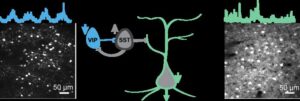
The activity of neuron types in the brain is imbalanced in mice with Huntington’s disease. The image depicts an example field-of-view from inhibitory (left) VIP (vasoactive intestinal peptide) neurons and excitatory (right) neurons recorded during behavior. Activity traces from a selected neuron for each type are shown above the images. [Sonja Blumenstock, Komiyama Lab, UC San Diego]

In particular, a class of inhibitory neurons known as vasoactive intestinal peptide (VIP) neurons, exhibited significantly reduced activity. VIP neuron activity is essential for normal learning, as these cells enable the brain to adapt and refine brain circuits during learning.

Reduced VIP neuron activity, the researchers reasoned, could be impairing the brain’s ability to function and learn properly. They sought to activate these cells to re-engage brain states that support learning. They tested this idea using optogenetics to stimulate VIP neurons.

“By activating the VIP inhibitory cell type, we gradually restored more normal activity patterns, and, very importantly, we also saw an improvement in the ability of the mouse to learn a motor task,” said Sonja Blumenstock, PhD, assistant project scientist at UC San Diego.

The results confirm VIP neurons as a key point of vulnerability in Huntington’s disease as well as a promising target for therapy. As to how this process works, the results suggest that modulating VIP neurons opens a “gate” that enables learning-related brain plasticity.

“This intervention restored more normal patterns of activity in the brain and improved movement in affected mice,” said Komiyama. “Importantly, the improvements persisted for days after stimulation ended, suggesting that the treatment triggered lasting beneficial changes in brain circuits rather than only temporary effects.”

The study provides important indications of where research could focus to normalize human brain function and facilitate brain recovery. Komiyama envisions a future scenario in which scientists could non-invasively activate the brain from outside the skull using novel approaches.

“Our study shows that despite the genetic defect, a precise intervention into the brain circuitry can lead to significant improvements in motor symptoms,” said Dudanova. “If we know which cells to target, we can retune the brain’s abnormal activity patterns. This gives hope for future therapies.”

The research also shows that corrections to specific brain circuit imbalances can restore function in a highly complex neurodegenerative condition, with similar potential in other disorders.

“We have come up with a way to allow the diseased brain to learn better,” said Komiyama. “The approach can improve behavior in diseased mice, and our hope is that a related approach will help people with impairment in their learning abilities.”

The post In Huntington’s Mouse, Optogenetic Activation of VIP Neurons Restores Brain Function appeared first on GEN – Genetic Engineering and Biotechnology News.

Biological Order Emerges from Tissue Boundaries, Drives Embryo Development

In a new study in Nature Materials titled, “Boundary geometry controls a topological defect transition that determines lumen nucleation in embryonic development,” researchers from European Molecular Biology Laboratory (EMBL) describe how interactions between tissue geometry impact development. 

In an early-stage mouse embryo, cells of the epiblast are polarized and give rise to all major tissues. The team investigated the fundamental principles governing the behavior of polarized cells that are present in bulk and the impact of physical constraints at tissue borders. By focusing on how cellular orientations influence each other and their environment, the researchers built a minimal model that predicts how organization changes when interactions are altered.

“For me, as a physicist, I may know why something works, but it’s still kind of magic to see that it’s all true in messy biological systems,” said Pamela Guruciaga, PhD, postdoctoral researcher at EMBL and co-first author of the study. “It was also super interesting coming from a pure physics perspective to come up with a common language to work with biologists.” 

In the cup-shaped epiblast, results showed different boundaries led to varying orientations for epiblast cells. When the boundary was lined with the extracellular matrix, the cells oriented perpendicularly. In contrast, when the epiblast was in direct contact with a neighboring tissue without a matrix, the cells aligned parallel to the boundary. The researchers found that the combination of these two orientations result in the appearance of structures, known as “topological defects.” 

“These are points in space where it is undefined in which direction an object should point,” explained Guruciaga. “For example, if a set of arrows is arranged in a starburst pattern, the center is a point where all directions are equivalent. These points are super relevant because they are very robust; you cannot easily destroy them.” 

To directly test whether the boundary shape controls the number of defects, the authors  altered the geometry of the epiblast. Perturbing embryo shape induced the formation of additional lumina at the predicted positions.  

“What I find most exciting is that these results identify a very general physical principle,” said Anna Erzberger, PhD, group leader at EMBL and co-corresponding author of the study. “We show that geometry alone can determine orientation patterns in three dimensions, independent of the microscopic details of the system. That means shape itself can act as a robust control parameter—not just in embryos, but across a wide range of biological and physical systems.” 

The post Biological Order Emerges from Tissue Boundaries, Drives Embryo Development appeared first on GEN – Genetic Engineering and Biotechnology News.

Digitize or Fall Behind

Bioprocessing companies risk slowing scientific progress unless they embrace digital-data capture and greater collaboration, according to Alexander Seyf, CEO of Autolomous, a company developing digital manufacturing solutions for cell and gene therapies.

Speaking about the industry’s biggest challenges, Seyf describes poor data management as the “elephant in the room,” arguing that too much crucial information remains trapped in paper records, spreadsheets, and isolated systems.

“Everybody wants to have AI,” Seyf says. “But where do you have your data? If it’s in binders, there’s not much you can do.”

According to Seyf, the path toward more efficient manufacturing, stronger clinical outcomes, and meaningful AI applications begins with digitizing information from the earliest stages of research. He believes many organizations make the mistake of waiting until their science is mature before investing in digital infrastructure. “The sooner you start, the better it is,” he says. “Pen and paper do not prevail, and pen and paper do not transfer.”

Seyf argues that the consequences extend far beyond operational inefficiencies. When data remain inaccessible or fragmented, researchers lose opportunities to learn from past experiments, identify patterns, and accelerate scientific discovery. He stresses that the industry must become more willing to share non-commercially sensitive knowledge, particularly in areas such as rare diseases and advanced therapies, where patient populations are limited. “We are all here to serve patients,” he says. “Protect your intellectual property, but also share the learnings.”

One of his strongest criticisms is directed at the scientific community’s tendency to focus almost exclusively on successful outcomes. Seyf believes failed studies and unsuccessful trials often contain lessons that could prevent others from repeating the same mistakes. “A lot of publications want to publicize only the good news,” he says. “That’s fundamentally wrong. We need to learn from failures.”

To illustrate his point, Seyf compares the biotechnology sector with the aviation industry. Modern airlines routinely share information about incidents and technical problems to prevent future accidents, creating a culture of collective learning and safety. “If something goes wrong, everybody in the world knows about it and knows how it was managed,” he says. “We are also dealing with people’s lives. The only way for us to improve is to share.”

Seyf also highlights the growing role of AI in healthcare. Although consumer AI systems have benefited from vast amounts of publicly available information, healthcare still operates with a relatively small pool of accessible data, he says. Expanding that foundation, he argues, could unlock major advances in diagnosis, drug development, and personalized medicine. “Imagine what we could do,” he says. “The progression of science is unlimited.”

For commercial bioprocessors, his recommendation is straightforward: digitize from day one. Capturing research, development, manufacturing, and clinical data in digital formats not only improves collaboration but also preserves institutional knowledge when employees move on. “Every time a scientist leaves, the knowledge goes with them,” Seyf says. “But when it is digital, the knowledge stays with the company.”

As cell and gene therapies continue to evolve, Seyf believes the industry faces a choice. It can continue operating in silos, or it can embrace transparency, digitalization, and collaboration to speed innovation and deliver better outcomes for patients. “The reason humanity has progressed,” he says, “is because we shared.”

The post Digitize or Fall Behind appeared first on GEN – Genetic Engineering and Biotechnology News.

Standardizing Personalized CRISPR Gene-Editing Therapies

The revolutionary success of Baby KJ, the first patient to be treated with a personalized CRISPR gene-editing therapy, is spurring the industry to develop platforms for standardizing the manufacturing of future individualized therapies.

That’s the topic of a talk by Kok-Seong Lim, PhD, a pharmaceutical leader in CMC development, at the Bioprocessing Summit in Boston.

“Baby KJ was the first proof that individualized gene editing therapy was doable, and, at the same time, in the background, there are manufacturing platforms now being set up that maybe we’re not hearing so much about in the media,” he says.

According to Lim, manufacturers seeking to develop standardized platforms for personalized CRISPR gene-editing therapies using liquid nanoparticles (LNP), the same technology used for Baby KJ, will need to “lock in” their lipid formulation they’re going to use for future manufacturing, which may vary depending on the target organ and therapeutic indication.

After selecting their raw materials, they will also need to lock in their manufacturing process parameters, such as the microfluidic mixing conditions and lipid compositions. Likewise, he says, although the target gene may need to be customized for different patients, certain core components, such as the mRNA encoding the CRISPR-Cas enzyme, could remain unchanged across multiple patients.

This type of standardization may help establish a more scalable and reproducible manufacturing platform for personalized gene-editing therapies, he believes.

Going forward, Lim says, eventually companies may need to look at standardizing their regulatory CMC data package for regulatory filing, such as determining the appropriate extent of their impurity profiling and the overall scope of stability studies.

“Impurity profiling may not need to be as extensive for individualized and personalized treatments because they’re manufactured for a single patient only and the stability requirements may only need to support the timeframe needed for the patient’s treatment,” he says.

Lim adds that the Innovative Genomics Institute (IGI), Penn Medicine, and their collaborators, who treated Baby KJ, are currently working toward clinical trials to treat the next group of patients, but details of the specific LNP configurations for each future patient have not been disclosed.

As well as talking about LNPs, Lim will also discuss AAV technology for personalized CRISPR gene-editing therapies. The technology, he explains, is less popular within the industry than LNPs, due to concerns about potential toxicity, side effects, and manufacturing complexity, but it still merits consideration as a platform technology when it delivers patient benefits.

The post Standardizing Personalized CRISPR Gene-Editing Therapies appeared first on GEN – Genetic Engineering and Biotechnology News.

Blueprint to Fill the Manufacturing Talent Gap

As biopharmaceutical companies expand facilities and reshore some manufacturing operations, the industry faces a shortfall of trained workers for its manufacturing facilities. While the Bureau of Labor Statistics recently predicted some 19,000 jobs would be created, PhRMA last year predicted the creation of 100,000 new jobs. Both predictions leave a gap between those jobs and the trained workforce.

To close the gap, Manus, a next-gen industrial biotechnology company, and BioMADE have developed an apprenticeship program that can become a blueprint for other companies to develop their own training. “The program can be scaled so development for other [companies] can be faster, down the road,” says Maren Wehrs, PhD, program manager at BioMADE.

“We are trying to build a fairly comprehensive training program that spans fermentation operations as well as downstream purification,” Christine Santos, PhD, CTO, Manus, tells GEN.

Focus: Hands-on learning

“It’s focused on hands-on experiential learning,” Santos continues, “with an extensive curriculum that will include deep dives on the practical aspects of running the equipment, such as so sterilization, safety, contamination control, process monitoring, and analytics. It will also delve into some of the technical aspects, like scale-up principles, as well as decision-making, problem-solving, teamwork, and communications.”

The work occurs at a Manus pilot facility in Augusta, GA. The first cohort starts in July and completes at year’s end, with another cohort beginning in January. After 18 months, “We hope to have a blueprint for an apprenticeship program that could be deployed at any other facility,” Santos says, including new BioMADE pilot facilities or those of other companies.

“We would offer access to the curriculum and the blueprint for [others] to deploy. We’ve spent the past few months formalizing the curriculum,” Santos says. It was developed with input from the University of Georgia, but apprentices needn’t be enrolled in a university program to participate.

Manus’ interest in apprenticeships stems from its 2018 acquisition of a decommissioned NutraSweet manufacturing facility in Augusta for its cell factories and bioprocesses.

“We had the task of recommissioning the facility and rebuilding the workforce to operate it,” Santos recounts. “We were able to rehire some of the NutraSweet employees [and regain their institutional knowledge], but to build out further, we had a huge challenge finding workers who were trained for biomanufacturing operations. We had to invest in a lot of hands-on training.”

This program is one of a few offered directly by a biomanufacturer. More commonly, companies participate in workforce training consortia to develop potential manufacturing workers.

The post Blueprint to Fill the Manufacturing Talent Gap appeared first on GEN – Genetic Engineering and Biotechnology News.

Trait Combining Key to More Effective Vector Production Hosts

HEK293 cells may be the most common host used in viral vector production, but they are far from ideal, says the author of a new study, who argues that gene therapy firms will need more effective alternatives to support commercial growth.

The study, by a team at University College Dublin and services firm APC, examined the manufacturing systems used to make the recombinant adeno-associated viruses (rAAVs) on which many gene therapies rely.

And the key finding is that not one of the eight commercial cell lines used to date—including the most widely-used line, HEK293—is ideal.

Lead author, James Conheady, from APC, tells GEN, “Current rAAV production methods using existing cell lines struggle to meet clinical demands, contributing to the expensive price-tag associated with rAAV-based gene therapies.

“Novel cell lines may be able to produce rAAVs at higher yields and/or with improved quality, which ultimately could help make these therapies more accessible to the people who need them.”

Shortcomings

To date, eight different host cell systems have been used to produce rAAVs, with each having strengths and weaknesses.

For example, some cell lines generate rAAV capsids that do not contain the desired genetic material. These empty vectors are a problem because they generate an immune response without providing a therapeutic effect.

Other cell lines struggle to make enough capsids. For example, the recommended dose for systemically delivered gene therapies is upwards of 1 × 1014 vg/kg of a patient’s bodyweight. The yield per production run for HEK293 cells is only around 1010.

Cost is another issue.

According to Conheady and co-authors, the GMP-grade plasmids and transfection reagents used to modify cell lines such that the vectors they produce contain the genes of interest account for a significant proportion of the price of the resulting therapies.

Alternative systems

Given these shortcomings, it is no surprise that the search for more effective alternative hosts is already underway.

Conheady says, “At the end of the day, rAAV manufacturers are all looking for the same things from their upstream process—high titers, improved full/empty ratios, and transduction rates.”

Current cell line development efforts are focused on combining desirable traits, Conheady adds, with characteristics such as resistance to apoptosis, diminished antiviral immune response, and secretion profiles being among the most sought after.

“Many of the traits identified in this review are aligned with modifications that have been shown to be beneficial in the context of rAAV production in HEK293 cells. For example, secretion of vector particles from the cell into the production medium can greatly simplify downstream operations and can be influenced by knocking out genes involved in endosomal trafficking.

“The ideal cell line should also be resistant to transfection and virus-induced apoptosis, to produce significant vector quantities. Knockout of the pro-apoptotic BAX and BAK1 genes has been shown to improve vector yields,” he says.

Whether industry will ever see these efforts pay off and agree on the “ideal” cell line remains to be seen, according to Conheady.

“Manufacturers will require significant grounds to agree on a standardized approach, a novel cell line may need to vastly outperform all others in relation to yield and quality characteristics—as the saying goes, ‘you stick with what you have until you have better’.”

The post Trait Combining Key to More Effective Vector Production Hosts appeared first on GEN – Genetic Engineering and Biotechnology News.

LLMs are stuck in a groupthink groove. This startup is trying to get them out.

Let’s start with a game. Open up your chatbot of choice—Claude, ChatGPT, Gemini—and type “Give me a random number between 1 and 10.” You’re going to get 7. Almost always. Now type “Another” and you’ll get 3 or 4. Type “Another” again and you’ll get 8 or 9.

That won’t work every time—but if it did for you, you may wonder if I have superpowers. I don’t.

The truth is that most large language models are stuck in a rut. They are far more predictable and far less creative in their responses than you might expect. That’s fine for tasks like coding or research, but groupthink is a problem when you’re brainstorming or planning your next vacation.

The Australian startup Springboards has a solution. It built an LLM called Flint, which has been trained to come up with a wider variety of responses than mainstream LLMs to open-ended questions such as “Where should I go in Europe?”

“Most language models are fighting hallucinations,” says Springboards cofounder and CEO Pip Bingemann. “We welcome them.”

Bingemann introduced me to the random number game when he first showed me his company’s new model. It felt like watching an illusionist with a deck of cards. “This is our sales trick, and it works every single time,” he says.

After ChatGPT and Claude both gave their 7s, Bingemann turned to Flint. It too came back with 7: “Aha, of course that was going to happen, but it’s okay—7 is a legitimate answer.” He restarted the session and prompted again: ChatGPT gave 7, Claude gave 7, Flint gave 3.7916.

Run your way

It’s not just numbers. When Bingemann asked ChatGPT and Claude to name a type of car, he predicted that it would be a Toyota or a Honda—and he was right. Flint came up with a Ford F-150. “There’s all this lost information that doesn’t get served up in these models,” he says. “They’re just as capable of saying a Buick or a Tesla. They just don’t—they’re biased.”

Bingemann sent one last prompt to each of the three models: “Give me a tagline for a campaign for New Balance running shoes. Just the tagline.” Claude: “Run your way.” ChatGPT: “Run your way.” Flint: “Built to last, run to win.” It won’t win any awards, but at least it’s different.

This weird limitation of LLMs is starting to get more attention. In November a team of researchers put out a paper, titled “Artificial Hivemind: The Open-Ended Homogeneity of Language Models (and Beyond),” that exposed a remarkable degree of repetition not only in the answers from individual LLMs but between them as well. They found that different LLMs converged on very similar answers when prompted with open-ended questions.

It’s not clear exactly why this happens, but the researchers speculate it’s because most LLMs today are trained in similar ways on similar data to do similar tasks. The team won the best paper award at NeurIPS, a major AI conference.

When the researchers asked 25 different LLMs (including models from the top US firms as well as open-source models from China and elsewhere) 50 times each to write a metaphor about time, most of the 1,250 responses were a version of “Time is a river” or “Time is a weaver.”

(I asked some of my colleagues the same question and six people gave me six different answers. My highlight: “Time is a favorite sweatshirt, shaped by a lifetime of wear.”)

When you look for it, you see repetition everywhere, says Kieran Browne, cofounder and CTO at Springboards. “The way that most chat interfaces are designed, it makes it feel like you’re having a personal conversation,” he says. “I think most people don’t really realize the extent to which they are getting the same stuff as everybody else.”

Take another example: “What should I name my band?” Most models will say something involving “glass,” “neon,” “velvet,” or “static,” says Browne.  

When I tried it, ChatGPT spat out a list of 56 band names. At the top was “Glass Harbor.” Skimming through, I found “Static Empire,” “Neon Hearts,” and “Velvet Echo.” I asked Gemini; it gave me 15 suggestions, including “Static Horizon.”

Some of the suggestions looked pretty cool, though. ChatGPT’s “Sofa Astronauts” caught my eye, so I googled it—and found that a band called Sofa Astronauts already exists. 

(OpenAI says that training models to give reliable and coherent answers can lead them to converge around familiar, high-probability responses and that pushing harder for novelty can lead to weaker or less reliable responses. It also notes that the “Artificial Hivemind” paper studied models from 2024 that have since been updated.)

Creative catapult

Springboards has developed a tool backed by a selection of LLMs, including ChatGPT and Claude, that creative professionals in advertising or marketing can use to brainstorm ideas. The tool lets you drag around text produced by different models, picking the bits that you like and combining them into something new—in theory. Springboards is pitching Flint as an alternative model that users of its tool can select when looking for more variety.

Zoe Scaman, founder of the business strategy startup Bodacious and chief strategy officer at 77X, a direct-to-fan marketing platform set up by Luka Dončić of the LA Lakers, has been trying it out. “I find it really useful for throwing me in completely different directions,” she says. “I use it if I want to catapult myself all over the place.”

In one test, Scaman pitted Flint against Claude, Gemini, and ChatGPT by giving each of the models a classic MBA case study: How would you reinvent a finance company for today’s youth? The three mainstream models all went down the same path, she says: “You know, we need to teach financial literacy in a fun and funky way—well, that’s nothing new.”

But Flint came up with something different, suggesting that the whole concept of wealth accumulation should get a rebrand. “That was really interesting,” says Scaman.

She notes that Flint is still a prototype and doesn’t work all the time. “It sometimes falls over when you start pushing it too far,” she says. “But I think that the premise behind it is really powerful.”

Taking the temperature

Springboards built Flint on top of Qwen 3, an open-source model from the Chinese tech giant Alibaba. “We’re a small team,” says Browne. “Training a foundation model is not on the table for us. It’s just too expensive.”

Most LLMs have settings that let you adjust the level of randomness in their output. The most common is called temperature. “Obviously, that was one of the first things we explored, because that’s what people tell you: If you want more creativity, you turn up the temperature,” says Browne.

But changing those settings can also make models incoherent. Dialing up the temperature on one of OpenAI’s models to its maximum setting made it produce responses that switched from English into code halfway through a sentence, says Browne.

Springboards realized that parameters were blunt instruments for what it wanted to do. It does not make sense to dial up the randomness across the board; you only want to boost it at specific points in its output, he says.

For example, when you ask a chatbot “Where should I go in Europe?” the model only needs to tweak the randomness just before it names a destination, not for every word in its response.

To make Flint do this, Springboards trained its version of Qwen 3 to identify the points in its output where more variety was possible and fill those spots with words or phrases that were a little more random.

“Flint’s programmed to throw an oddball in. It’s more of an invitation to think wider,” says Maximilian Weigl, cofounder and chief strategy officer at Uncommon, a marketing firm. “That’s super interesting.”

Weigl’s team uses Flint alongside ChatGPT, Claude, and Gemini. “You can’t really create something boundary-breaking with tools that pull you back to the average,” he says. 

And yet Weigl notes that nine times out of 10 the average is fine. You don’t always need to reach for extremes with something like Flint, he says: “Most people are fine with good enough. They want to see mass-market familiar things.”

Weigl also cautions against using any LLM too much. “I have a big problem when people rely on the output from any AI, including Flint,” he says. “If I saw people on my team copy-pasting something from AI, I’d be like, ‘That’s not your job! Think, talk to other people, use your own voice.’”

For now, Flint is aimed at advertisers and marketers because those are Springboards’s customers. But Bingemann and Browne insist that a lack of variety is a problem for anyone using chatbots.

The idea is to give people the choice and leave it to them to decide if the result is good or not, says Bingemann. “Variety is great when you’re trying to spark ideas,” he says. “Let’s go down this route instead of letting the machines do it all and ending up in a gray, boring world.”


The Download: Anthropic launches Claude Science, and California’s carbon manure math

This is today’s edition of The Download, our weekday newsletter that provides a daily dose of what’s going on in the world of technology.

Claude Science is Anthropic’s newest flagship product

At an event for pharmaceutical executives, biotech founders, and researchers yesterday, Anthropic announced Claude Science, a major new product intended to support scientific research like Claude Code supports software engineering.

Like Claude Code, Claude Science can autonomously carry out meaningful work from concise, high-level instructions, with tools for computational biology and drug development. The launch signals that Anthropic is doubling down on AI for science, and the company will also use the product in its own research into drugs for rare, neglected diseases.

Discover why Anthropic is betting big on AI for scientific research.

—Grace Huckins

Why California’s carbon manure math doesn’t add up

Something stinks in California’s climate policies. 

Years ago, the state set up a system that pays cattle farmers to turn the methane emitted from cattle manure into natural gas. It’s become wildly popular because the subsidies are extremely lucrative. But research suggests the program exposes the shortcomings of carbon offsetting and trading schemes.

Instead of forcing industries to directly cut their pollution or pay for it as a cost of doing business, legislators have opted for incentives that swap climate responsibilities between parties and regions. The system could ultimately lock in more warming.

Read the full story on California’s dubious carbon calculations.

—James Temple

This story is from The Spark, our weekly climate tech newsletter. Sign up to receive it in your inbox every Wednesday.

Watch now: longevity’s next frontier—“reprogramming” your body

Billions of dollars are pouring into efforts to reverse aging as scientists investigate ways to return cells to a younger state. But how close are these experimental treatments? And are they likely to work? 

At a recent virtual Roundtables event, MIT Technology Review explored the answers with science editor Mary Beth Griggs and senior biotechnology reporter Jessica Hamzelou. Subscribers can now watch the full recording of the fascinating discussion.

MIT Technology Review Narrated: the search for dark matter has been blown wide open

For decades, physicists have hunted for weakly interacting massive particles (WIMPs), a leading candidate for dark matter. But their search has run into a new problem: neutrinos. 

These tiny particles from the sun and other stars can create a “neutrino fog” that drowns out any signal of dark matter. Hitting the neutrino fog does not, however, mean an end to the search. Researchers just have to shift the focus of their hunt.

They’re now casting a much wider net. New proposals include quantum sensors, liquid-helium detectors, and even searches in Jupiter’s atmosphere.

—Dan Garisto


This is our latest
story to be turned into an MIT Technology Review Narrated podcast, which we publish each week on Spotify and Apple Podcasts. Just navigate to MIT Technology Review Narrated on either platform, and follow us to get all our new content as it’s released.

The must-reads

I’ve combed the internet to find you today’s most fun/important/scary/fascinating stories about technology.

1 The US has lifted restrictions on Anthropic’s Mythos and Fable models
Anthropic said it would begin restoring access today. (NYT $)
+ The US had imposed controls over security concerns. (Bloomberg $)
+ It lifted the restrictions after lengthy talks with Anthropic. (BBC)
+ But the crackdown has already opened doors for Chinese AI rivals. (CNBC)

2 The most detailed survey of the universe ever is now underway
It’s using the largest digital camera on Earth. (New Scientist $) 
+ The project is based at the Vera C. Rubin Observatory in Chile. (NYT $)
+ It aims to transform our view of the cosmos. (MIT Technology Review)
 
3 Tech talent is fleeing the US due to H1-B visa chaos
They’re eyeing relocation to Canada, the UK, or the Gulf. (Rest of World)
+ While China is poaching AI talent from the US. (CNBC)
+ Visa rules are also affecting young scientists. (MIT Technology Review)
 
4 Trump raked in more than $1 billion from crypto businesses in 2025
He reported $635 million in royalties from a Trump meme coin. (BBC)
+ The rest largely came from his World Liberty Financial venture. (The Hill)
 
5 The UN warns that the rapid spread of AI may worsen global inequality
It’s proposed a shared framework for responsible AI development. (Guardian)

6 Companies are making LLMs talk like a caveman to curb AI spending
A senior OpenAI employee contributed to the “caveman” project. (404 Media)
 
7 Babies are born with the neural foundations for math
Brain recordings have identified the mechanisms. (New Scientist $)

8 An independent studio has bought the OpenAI movie Amazon dropped
Neon has purchased “Artificial,” which focuses on Sam Altman. (NYT $)
+ Amazon had dumped it after investing in OpenAI. (Gizmodo)
+ The depiction of Altman is reportedly unsympathetic. (Variety)

9 AI has re-created Gene Wilder’s voice for a new “Willy Wonka” series
Wilder’s wife said his estate is “delighted” with the new show. (NBC News)
+ Netflix partnered with AI company ElevenLabs on the project. (The Verge)

10 NASA aims to send a spare Mars rover—and soccer ball—to the moon
The nuclear-powered “Promise” may help establish a lunar base. (NYT $)

Quote of the day

“Caveman save you token, save you money.” 

—The GitHub repository for the “caveman” plugin explains how the project curbs AI spending by turning verbose LLM outputs into concise text.

One More Thing

white pill tablet with a meter etched onto the surface

SELMAN DESIGN


AI is dreaming up drugs that no one has ever seen. Now we’ve got to see if they work.

On average, it takes more than 10 years and billions of dollars to develop a new drug. A growing number of startups are betting that AI can make the process faster and cheaper. 

By predicting how potential drugs might behave in the body and discarding dead-end compounds before they leave the computer, machine-learning models can cut down on the need for painstaking lab work. 

Yet it is still early days for AI drug discovery. A lot of AI companies are making claims they can’t back up—and the technology is not a panacea. But the technology is beginning to move from promise to practice.

Find out how AI is speeding up drug discovery.

—Will Douglas Heaven

We can still have nice things

A place for comfort, fun, and distraction to brighten up your day. (Got any ideas? Drop me a line.)

+ Explore the surprisingly diverse world of regional dartboards from across the UK.
+ Judge a book’s beauty by its cover with this collection of the best designs of the last decade.
+ This John Wick parody with almost no dialogue understands what audiences really came for.
+ Focus your mind or unwind with over 80 custom albums of ambient instrumental electronic music on Caught In Joy.