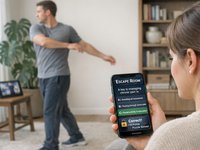
Background: The widespread prevalence of chronic pain (CP) significantly impacts daily functioning worldwide. In mainland China, maintaining engagement in biopsychosocial interventions remains challenging. Gamification, designed based on self-determination theory, can enhance motivation, while machine learning (ML) algorithms can assist clinicians in dynamically optimizing pain management. Objective: This study aimed to (1) evaluate the preliminary effectiveness of a gamified pain management (GPM) program on CP and psychological outcomes and (2) identify key factors of significant pain improvements through the application of ML to guide intervention adjustments. Methods: A single-arm, pre-post study was conducted with 16 participants with CP in mainland China, recruited via social media using convenience sampling. Participants engaged in a 10-week web-based GPM intervention consisting of education, physical activities, and gamified elements, including points, avatars, and feedback. Primary outcomes were pain intensity and interference measured by the Brief Pain Inventory. Secondary outcomes included anxiety, depression, and quality of life. Analysis included paired tests, and ML models were trained to predict clinically meaningful pain reductions. Shapley additive explanations, least absolute shrinkage and selection operator regression, association rule mining, and Kaplan-Meier survival analysis were used to identify key predictors and optimal sessions and intervention durations across subgroups. Results: A total of 16 participants were engaged, with a mean age of 27.63 (SD 9.584) years. Results from paired tests reported significant improvements in pain intensity (decreased by 27.3%, 95% CI 1.061 to 3.064; =.001), pain interference (decreased by 27.3%, 95% CI 8.159-17.216; <.001), and psychological distress, including anxiety (=3.538, 95% CI 0.969 to 3.906; =.003) and depression (=4.559, 95% CI 2.230 to 6.145; <.001). The gradient boosting model demonstrated the highest predictive accuracy (area under the curve=0.89 and accuracy=0.82). Least absolute shrinkage and selection operator regression identified session 3 (β=−0.45, 95% CI −0.68 to −0.22; <.001) and session 5 (β=−0.32, 95% CI −0.59 to −0.05; =.02) as most predictive of clinical success, while association rule mining revealed effective session combinations for different patient subgroups. Time-to-event analyses indicated that individuals with low back pain and higher baseline severity required longer intervention durations for improvement (5 wk; =.03). Conclusions: This pilot study presents an innovative method that combines ML with dynamic engagement data from a GPM program during interventions, rather than relying on static baseline data in prior studies. The results show preliminary efficacy and identify specific optimal session combinations and personalized treatment durations for different pain subgroups. These exploratory findings contribute to the field by providing a data-driven method for adaptive, personalized digital health interventions that move beyond one-size-fits-all strategies, potentially enabling clinicians to modify content and dosage to improve engagement and outcomes if validated in larger sample trials. Trial Registration: Chinese Clinical Trial Registry ChiCTR2400094247; https://www.chictr.org.cn/showprojEN.html?proj=245138
A Conversation with Tatum Redmond and Amanda van der Vyver-Anderson from Community Keepers, South Africa
By Mai El Shoush, Partnerships Campaign Manager, Stavros Niarchos Foundation (SNF) Global Center for Child and Adolescent Mental Health at the Child Mind Institute
Community Keepers is an award-winning organization based in Stellenbosch, South Africa, which works to improve the social and emotional well-being of learners and their caregivers. The SNF Global Center at the Child Mind Institute works with the organization to further advance the comprehensive mission of transforming schools into safe spaces where student well-being is prioritized alongside academic achievement. This includes strengthening the workforce to expand evidence-based support and brief interventions through low-intensity psychological therapy approaches.
While addressing the workforce gaps, the partnership has yielded valuable insight into the essential competencies front line workers require to effectively support young people experiencing mental health challenges. Together with other NGOs, Community Keepers has also been instrumental in strengthening the process of developing context-sensitive and culturally appropriate training materials scheduled for pilot implementation in South Africa later this year – representing an important step towards strengthening mental health care systems for underserved communities. The partnership also extends beyond training development, as the SNF Global Center at the Child Mind Institute continues to collaborate closely with Community Keepers on an upcoming randomized control trial (RCT). The scientific evaluation will assess both the feasibility of establishing a virtual clinic for young people and the effectiveness of remotely delivered cognitive behavioral therapy (CBT) interventions via video consultations. The research is intended to expand access to equitable and quality mental health care for young people across South Africa. Tatum Redmond has been a care facilitator in one of the Community Keepers’ high school-based offices, while Amanda van der Vyver-Anderson is an educational psychologist and heads the training and development of Mental Health First Aiders for internal and external staff.
Amanda van der Vyver-Anderson
How important is it to approach issues such as academic pressure within the wider conversation around youth mental health in South Africa, and beyond?
It is critical to integrate discussions of exam stress into the broader dialogue surrounding youth mental health, both here in South Africa and internationally. We see countless students under immense pressure to not only pass, but also secure their future prospects and meet family expectations. This is unfortunately often dismissed as “just school” or a “normal” experience. However, it impacts a substantial number of young people, often more severely than we acknowledge. And the level of support available is not equitable across the board. Addressing this is crucial because of the detrimental effects on core cognitive functions — and ultimately, academic performance — as well as the significant toll on mental health. This can manifest as anxiety, burnout, and even depression.
In what ways can exam-related stress connect to broader mental health challenges?
While a certain level of stress can serve as a beneficial motivator, severe distress can lead to cognitive shutdown. This specifically impacts the executive functions — planning, organizing, prioritizing, working memory, focus, and concentration — that are fundamental to preparing for exams. This shutdown can then create a detrimental, ongoing cycle of heightened stress about exams or the future, coupled with a decline in the ability to take effective action.
It’s vital to recognize that exam stress does not merely stay in the exam room — it can be a gateway to larger mental health challenges. Constant stress regarding school performance, marks, or the fear of failure can escalate into conditions like anxiety, chronic overwhelm, or depression. Students may experience sleep disruption, poor nutrition, and feelings of inadequacy. And these symptoms often persist long after the test is over. Compounding this is the reluctance of most students to seek help because they believe their feelings are normal or fear appearing weak. Yet, if left unaddressed, sustained pressure along with these symptoms can profoundly affect their psychological well-being.
Tatum Redmond
What role do community-focused organizations such as Community Keepers play in linking academic stress to systematic youth mental health support and improvement?
Organizations like Community Keepers play a truly pivotal role — not merely as emergency responders but as an integrated support system within educational institutions as well. Crucially, they move beyond immediate crisis response by collaborating with schools to develop long-term support and to provide safe spaces to engage in dialogue. They offer genuine attention and care when learners are struggling with school demands, exams, and family pressures.
The approach is not just “addressing stress today” but asking, “How can we create an enduring environment where young people feel safe, supported, and connected?” Doing this requires collaboration with the learners themselves, educators and school staff, as well as parents, caregivers, and community leaders.
What factors make schools uniquely positioned to be safe and supportive spaces? Schools are exceptionally well-positioned to serve as safe and supportive spaces for students for several key reasons:
Learners spend a substantial portion of their day at school, making it a primary setting where adults can observe signs of distress, anxiety, or coping difficulties.
Schools have the opportunity to house critical personnel — teachers, counselors, and external partners like Community Keepers — who are on hand to offer support or a listening ear.
The curriculum can extend beyond academic skills and learning. It can include mental health and emotional literacy, stress management, and peer support.
When a school actively fosters an environment of safety, respect, and validation, it fundamentally alters how learners navigate pressure, stress, or complex personal problems. Having a guaranteed safe space at school is deeply stabilizing for the mind.
How can the goal of securing mental health support as a pillar of education be reached? Achieving the goal of establishing mental health support as a solid, non-negotiable pillar of education requires several strategic commitments:
Schools must actively allocate resources for it, ensuring adequate numbers of support staff, rather than relying on minimal provision. Teachers need training to recognize signs of distress and respond helpfully and appropriately.
Mental health literacy must be integrated into the curriculum. Instead of only focusing on academic subjects, topics like stress management, emotional intelligence, and maintaining healthy relationships should be covered.
The government must demonstrate a serious commitment, including mental health support in education budgets, developing clear policies, and ensuring rigorous follow-through.
How have your practices and initiatives in promoting and supporting schools as safe spaces made meaningful change? We’ve observed tangible change in the learners’ attitudes; those who feel comfortable expressing their emotions are generally happier and more resilient because they have established a safe, non-judgmental space where trust is built.
What role can teachers and school leadership play as partners in creating an evidence-based supportive learning environment? Where are the gaps in building capacity and how can they be better supported? Educators and school leadership are essential partners in establishing an environment that successfully supports learner mental health and cultivates a culture of well-being. They can do so by:
Prioritizing both the physical space and curriculum time necessary for learners to engage with support services.
Serving as role models who embody and encourage emotional regulation and actively normalize help-seeking behaviour.
Remaining deeply cognisant of factors that contribute to learner distress so as to not inadvertently exacerbate it.
Investing in staff wellness and support, capacity building, and policy reform is not merely beneficial, but a foundational requirement to capacitate educators effectively. This allows them to sustainably support the mental health of their entire school community.
The SNF Global Center’s work in South Africa is carried out through the Child and Adolescent Mental Health Initiative (CAMHI South Africa). We are proud to expand the partnership with Community Keepers and value their collaboration towards co-creating scalable, school-centered mental health approaches that authentically respond to the diverse lived-experiences of young people.
I remember the day my white high top Puma sneakers my parents gifted me for Christmas became the exact opposite of the color they came boxed in. It was a post rainy day in middle school, on a mulch covered, semi grassy area we considered our soccer field with two benches representing goals. After enjoying an intense match, what I did not enjoy but assumingly brushed off was the fact of how dirty my shoes were. Fast forward to later that day, I spent hours cleaning the shoes, trying to restore them to their original look.
Something felt different than other times I cleaned.
Every speck had to be clean. The more time I spent, the more visible other “not as clean” areas of the shoes became, requiring their own dedicated time of cleaning. Slowly, this cascaded into many other aspects of life such as my bedroom and closet needing to be organized a certain way, a tornado of relentless doubts concerning my relationships, with this dark monster in my head controlling what I can do, think, and feel. It felt like an eternity but at the same time as if no time passed from when I first touched to clean those shoes to when I could not sleep in my own bedroom and instead slept downstairs due to not wanting to mess the space up and not being able to enter and exit my closet as easily, so needing to rewear clothes days on end. I thought that doing what the monster or voice or whatever it was wanted would lead me to peace, as the relief from the sky high anxiety and gloom that came from performing what I know now as compulsions came only to have what I learned were obsessions come back, if not stronger, reinforcing this vicious cycle. My parents noticed my change in behavior, from avoiding my room at most costs to being late to dinner by up to an hour or two at times. I had only vaguely heard of obsessive compulsive disorder, OCD, and brought the idea up to my parents. The landscape we were dealing with was completely new and I felt even more alone due to this in addition to the isolation the condition induces you to be in. But we began to look for therapists, where I started talk therapy, with the therapist trying their best but the therapy modality was not the right one for me. Next up was a hypnotherapist, which also did not work for me. I needed some action to be okay with the high emotion filled state I was in when the bouts came on, in other words, exposure and response prevention therapy. After doing some research, I landed upon NOCD, an OCD teletherapy and advocacy organization.
I could not believe what I was hearing through the basement, not my room, laptop screen about actually going into my room, and that was not even the worst part. I just had to open my closet, take clothes out, move items in my room, and not do anything. “Maybe it is, maybe it is not” was a phrase that my therapist told me throughout therapy. With the significant support of my family, therapist, and friends, I was able to be okay with not being okay. Exposure and response prevention therapy makes you face the monster, making you enter the state in which you experience high anxiety. The therapy makes you look the monster in the face and realize it was not that big, not talking or engaging with you, making you sit in the discomfort and not do anything you so desperately want to do. With this methodology and rigor, I was able to coexist with the beast, and slowly it shrank, still existing though. But that is okay. That happens.
OCD belongs to a category of disorders called Obsessive Compulsive and Related Disorders within the Diagnostic and Statistical Manual for Mental Disorders, Fifth Edition, a manual that influences not only how patients receive care but also research funding and medical training. Although not officially recognized in the manual, there are many discussed subtypes of OCD depending on the obsessions and or compulsions one experiences. Some people, like me, had symptoms that ebbed and flowed in terms of severity and percolated from subtype to subtype. My symptoms throughout my experience with the condition range from having to keep most of the items in my room a certain way, doubting whether I want to be with my partner, questioning my morals, wondering whether something happened in the past pertaining to people in my life even though it did not, and more. Throughout typing this, thoughts flood my head, similar to ones I experienced, say, six years ago.
I hope to be able to perform research in the condition as well as treat people who were and are in my shoes. With up to 242 million people worldwide meeting clinical diagnostic criteria for OCD, about 40 to 60 percent experiencing treatment resistant OCD, more than two thirds of the general public not being able to accurately identify OCD, and mental health still being stigmatized today, there is more needed to be done from all fronts. When one type of online treatment is sought, about two thirds of patients achieve a clinically significant outcome, but on average, it takes greater than seven years for someone to receive a diagnosis of OCD and it can take up to seventeen years for an individual diagnosed with OCD to receive treatment. This is a multifaceted problem that requires a multifaceted approach which requires a banding of people worldwide to come together to promote awareness of the condition and a safe space for people throughout who have OCD.
Today, as I am typing this, I still am experiencing many of the symptoms I have before. The condition does not just go away, but it does become more manageable. If you are struggling, there is hope, there is a way, no matter how impossible it feels. I felt as if there was none, no light at the end of the tunnel, spending many hours crying out asking why to a source I was not even aware of, answered only by my own repetitive thoughts. But as someone who has been there, you will be okay. Even if multiple therapeutic modalities do not work, you feel like you want to give up because a current exposure seems impossible to do, you feel more anxiety at times, you feel like you are letting people down if you do not improve, you feel like the monster you were once fighting off keeps going, keep going. Seek help in many ways, rely on your community, and for those who have a hard time finding one, we are here for you, the International OCD Foundation community, and I most certainly am as well. Thank you for reading this and I am sending you hope and luck wherever you are. You are never alone.
Trauma can contribute to lasting psychological, behavioral, and physiological effects that extend across generations. Intergenerational trauma refers to trauma-related effects observed in children of exposed parents, while transgenerational trauma describes effects observed in later generations without direct exposure. Proposed mechanisms involve interacting biological and psychosocial processes, including stress-responsive regulatory systems, epigenetic variation, and caregiving environments. This review synthesizes evidence on epigenetic changes associated with acute, chronic, and complex traumatic exposures and their relevance to multi-generational outcomes. Studies published between 1990 and 2025 were identified through PubMed and Google Scholar and evaluated for reported epigenetic findings, caregiving patterns, and offspring health outcomes. Across trauma contexts, reported epigenetic variation most consistently involves pathways related to stress-response regulation, immune-inflammatory signaling, neurodevelopment, metabolic processes, and developmental programming. Patterns across exposure types suggest that acute events are most often associated with stress-related and inflammatory signaling that may influence developmental programming, whereas chronic and complex trauma reflect cumulative physiological adaptation involving broader alterations in stress-regulatory, metabolic, and neurodevelopmental systems. Offspring outcomes most consistently include increased vulnerability to anxiety, depressive symptoms, stress-related disorders, and certain chronic medical conditions, often described alongside shifts in caregiving behaviors and psychosocial environments that may shape developmental vulnerability. Interpretation of the current literature is limited by small sample sizes, varying definitions of trauma, and limited multi-generational cohorts. Overall, current evidence supports a model in which trauma-related outcomes across generations reflect interacting biological and caregiving processes, highlighting the importance of integrated molecular and psychosocial frameworks for prevention and intervention.
As someone who has worked in countries affected by conflict and humanitarian crises, I’ve learned that physical displacement is only part of the story. The mental and emotional toll defines the other half of that experience, and often for much longer.
This World Mental Health Day focuses on mental health in humanitarian emergencies. It asks us to consider not just the scale of the challenge, but the strength of the response possible when communities lead the way.
There is no single solution to the mental health impacts of humanitarian crises. But what I’ve witnessed, both internationally and here on Turtle Island, is that the most meaningful support often comes from within affected communities themselves.
Whether it’s refugees organizing healing circles in displacement camps, neighbours checking in on one another after a wildfire, or volunteers trained to provide peer support—these acts of care are not just helpful. They are essential. They save lives.
Right now, the world feels heavy. The growing phenomenon of eco-anxiety, combined with escalating crises of famine, war, and displacement, can make hope feel out of reach. We see the numbers—123 million people forcibly displaced worldwide—and it can be overwhelming.
But I’ve also seen what happens when we share that weight by leaning on one another. This is equally true for humanitarian aid workers, who are responding to unprecedented numbers of conflicts and urgencies at home and around the globe.
As the World Health Organization reminds us, “Humanitarian workers face extreme stress and are often directly affected by the crisis they respond to.”
As a member of this community, I know that sustaining an effective humanitarian response means meeting the needs of those providing comfort and care, whether through peer support, workplace health programs, or Mental Health First Aid. Here at home, programs like The Working Mind – First Responder are helping to create a culture of care for those we call on in crisis.
The way we heal—whether we’re first responders or community workers, volunteers or refugees—is through community. It’s in the everyday ways we show up for one another: listening without judgment, making space for grief and fear, and recognizing that asking for help is an act of courage.
On this World Mental Health Day, let’s all find the courage to lean on each other.
Lili-Anna Pereša C.Q. President & CEO Mental Health Commission of Canada
<strong>Background:</strong> Anecdotal evidence suggests that an increasing number of people are turning to generative artificial intelligence (GenAI) tools or artificial intelligence (AI)-assisted chatbots to discuss and manage mental health concerns. However, systematic data on the use and perception of such tools remain scarce. <strong>Objective:</strong> This study aimed to examine how young and middle-aged adults in the United States use GenAI and AI-assisted mental health chatbots as mental health resources and assess their preferences for these tools relative to human mental health professionals. <strong>Methods:</strong> An anonymous online survey was conducted in October 2025 among US adults in a commercial online panel sample of US adults aged 18-49 years (N=1805). Respondents were asked about the sources they typically turn to when facing mental health concerns, their frequency of using GenAI tools or chatbots for mental health support, and whether the frequency of seeing human mental health professionals had changed since they started using AI tools for mental health support. Attitudes toward AI-based mental health support were assessed and compared with attitudes toward human mental health professionals. <strong>Results:</strong> In this sample, of the 1805 respondents, 638 (35.2%) reported using AI tools at least once a week in a typical week for mental health support, and 99 (5.5%) were classified as “heavy users” who reported regularly spending hours discussing their mental health concerns through AI. However, nearly 60% of respondents reported that they would turn first to family (1078/1805) and friends (1046/1805) when facing mental health concerns. Respondents who screened positive for moderate to severe depressive or anxiety symptoms were more likely to use AI-based mental health support compared to those without these symptoms (adjusted odds ratio 1.71, 95% CI 1.36-2.15) and those with suicidal ideation were more likely to be heavy AI users (adjusted odds ratio 2.42, 95% CI 1.49-3.95). Among those who had ever seen a human mental health professional (n=511), 28.4% (145/511) reported a perceived decline in visit frequency to human mental health professionals since they started using AI tools for the same purpose. Participants expressed more favorable attitudes toward human mental health professionals than toward AI-based tools. However, among heavy AI users, perceptions of AI-based mental health support and human counseling were nearly equivalent in positivity. <strong>Conclusions:</strong> AI appears to be an important component of the mental health help-seeking landscape among respondents in this sample. Although most respondents still preferred human professionals, a subset reported relying on AI tools for comparable support. Ongoing monitoring and ethical guidelines are needed to ensure that AI technologies expand access to care while being safely and effectively integrated into the broader continuum of mental health services.
This paragraph serves as an introduction to your blog post. Begin by discussing the primary theme or topic that you plan to cover, ensuring it captures the reader’s interest from the very first sentence. Share a brief overview that highlights why this topic is important and how it can provide value. Use this space to set the tone for the rest of the article, preparing readers for the journey ahead. Keep your language approachable, yet informative, to create a strong connection. Bipolar, ADHA and autism may all sometimes feel dissociated, and our new therapy has been shown in a clinical trial with mushroom extracts to reduce stress and anxiety.