

ObjectiveThe importance of multiple gene-environment interaction (G × E) has been highlighted in understanding the etiology of negative emotions. This study examines the impact of oxytocin (OXT) polymorphisms (rs2740210, rs6133010, and rs2740209) in combination with alcohol dependence on anxiety and depression symptoms during acute alcohol withdrawal under different social and environmental contexts.MethodA total of 414 Chinese Han male adults undergoing acute alcohol withdrawal were recruited. Participants provided blood samples for genotyping, self-reported measures of depression and anxiety, assessments of alcohol dependence severity, and demographic information regarding social and environmental contexts.ResultsResults revealed a positive correlation between severity of alcohol dependence and symptoms of depression and anxiety, while oxytocin polymorphism did not have a direct effect on depressive and anxiety symptoms. A significant interaction between OXT polymorphism (rs2740210 and rs2740209) and alcohol dependence in relation to anxiety symptoms solely among adults living with family and/or those who were married was observed. Further analyses indicate that the GG and CC genotypes are risk genotypes, while the T allele (rs2740210) and G allele (rs2740209) are non-risk alleles in the interaction between OXT genotypes (rs2740210, rs2740209) and alcohol dependence on anxiety among the aforementioned participants.ConclusionsThese findings provide evidence for distinct G × E interaction effects on anxiety and depression symptoms during acute alcohol withdrawal, supporting the weak diathesis-stress model. Furthermore, the study highlights the importance of considering environmental factors when investigating the role of oxytocin as a biological substrate underlying social bonding and the regulation of negative emotions.
Validation of a criterion-based screening and triage pathway for adult ADHD: a prospective observational study of safety and operational efficiency
BackgroundThe increasing demand for adult attention-deficit hyperactivity disorder (ADHD) assessments has required the development of efficient triage pathways. This study provides a formal assessment of a criterion-based screening model designed to prioritise patient safety and operational efficiency within a National Health Service (NHS) specialist secondary care setting.MethodsA prospective observational validation design was employed, involving 49 consecutive adults referred for ADHD assessment none of whom had a previous ADHD diagnosis. The Comprehensive ADHD Screening Questionnaire (CASQ), a clinician-administered instrument based on DSM-5 criteria, was utilised by four trained Physician Assistants. To ensure an assessment of triage safety, a universal assessment model was adopted: all participants received a blinded, gold-standard diagnostic assessment (NICE-compliant) regardless of the initial triage recommendation thereby eliminating verification bias. The primary outcome measure was the Number Needed to Harm (NNH), defined as the number of people screened before a single false-negative result occurs.ResultsOf the 48 participants who completed the diagnostic process, six (12.5%) received an ADHD diagnosis. The triage pathway correctly identified all six cases, resulting in a sensitivity of 100.0% (95% CI: 61.0%–100.0%) and an infinite NNH. Specificity was 45.2% (95% CI: 31.2%–59.9%), with a positive predictive value of 20.7%. The pathway permitted 39.6% (n = 19) of referrals to be triaged to alternative pathways rather than full ADHD assessment, potentially saving significant specialist clinician time. Exploratory analyses indicated that score magnitude did not reliably distinguish between true and false positives within the group triaged as appropriate for further assessment.ConclusionsThese preliminary findings suggest that criterion-based screening conducted by appropriately trained non-specialist clinicians can achieve high levels of safety whilst improving service efficiency. The findings support the feasibility of task-shifting models in adult ADHD services, provided that triage thresholds are calibrated to prioritise sensitivity. These results require replication in adequately powered multi-site studies before firm conclusions regarding pathway safety can be drawn. Further research is required to establish inter-rater reliability and cost-effectiveness across diverse clinical settings.
Parsing autism spectrum heterogeneity through fMRI
Nature Neuroscience, Published online: 15 May 2026; doi:10.1038/s41593-026-02269-1
Autism is remarkably heterogeneous, posing a long-standing challenge for linking genetics to brain dynamics. A cross-species study identifies two principal dysconnectivity signatures across 20 mouse models of autism risk, each associated with distinct molecular pathways, and shows analogous connectivity patterns in autistic humans. These results establish a translational framework for biologically grounded fMRI phenotyping.
Family psychoeducation to support patients with psychotic illness: two-year outcomes from a pre–post longitudinal pilot study
BackgroundPsychoeducation for families of young adults with psychosis is an evidence-based intervention that alleviates carer burden. The implementation of programming is limited, leaving family carers shouldering a heavy burden without appropriate support.ObjectiveThis pre-post longitudinal pilot study evaluated the preliminary outcomes of a psychoeducational group intervention for family carers of young adults with psychosis, aimed at building skills and reducing carer burden to support recovery in their loved ones.MethodsThe intervention, co-developed and co-facilitated by healthcare professionals and individuals with family lived experience, was delivered in Edmonton, Canada. Participants (n= 13) completed the Family Burden Interview Schedule (FBIS) at pre-intervention, post-intervention, and at 6, 12, and 24-month follow-up. Linear mixed models assessed burden scores over time.ResultsThe overall model of total burden did not reach statistical significance. Exploratory post-hoc comparisons indicated a significant total burden reduction from pre-intervention to 6-months (p = 0.032), with no other significant changes. The overall family interaction burden subscale model showed no significant effect of time. Exploratory post-hoc analyses indicated a decrease in family interaction burden from pre- to post-intervention (p = 0.026) and to 6- months (p = 0.032), with no other significant changes.ConclusionThis pilot study provides preliminary and hypothesis-generating findings suggesting a co-produced, skills- and knowledge-based psychoeducational intervention may be associated with reductions in carer burden, particularly in the domain of family relations. Given the small sample size, further research with sufficient statistical power is warranted to evaluate the long-term impact and accessibility of the intervention and inform its integration into early psychosis care.
[Comment] From policy to practice: implementing China’s measures to strengthen student mental health
In October 2025, China’s Ministry of Education issued ten national measures to strengthen mental health work in primary and secondary schools.1 These measures target major school-linked stressors such as academic pressure, physical activity, sleep, and internet use, and they call for whole-staff responsibility and cross-department collaboration. The policy signals a shift from episodic crisis response towards a public mental health agenda spanning prevention, early identification, supportive school environments, and referral pathways.
AI in Healthcare: Symposium Insights
For years, artificial intelligence (AI) has been growing behind the scenes of our lives. Starting off as modifications of not‑so‑simple algorithms, early large language models could barely string a few words together, much like early vision systems that struggled to distinguish a lamppost from a cat in digital images. More recently AI has not just grown but proliferated—like Darwin’s finches in the Galapagos—into nearly every niche available in the digital world.
AI has infiltrated into daily life personally and professionally for many, and while modern healthcare has historically been hesitant to adapt to new technologies, Raghav Mani, director of Digital Health at Nvidia, pointed out that healthcare is adopting AI at three times the rate of other industries. Clearly, there is a lot to discuss, which is why The New York Academy of Sciences and the Windreich Department of Artificial Intelligence and Human Health at the Icahn School of Medicine at Mount Sinai co-hosted the 3rd annual “New Wave of AI in Healthcare,” a two-day symposium on May 12 and 13 with the goal of opening discourse between researchers, clinicians, industry leaders and other interested parties on all topics related to AI and healthcare.
Day one
The first day opened with a lightning round of welcome remarks from organizers expressing their personal experience with AI in healthcare research and practice. While some, like Nicholas Dirks, PhD, president and CEO of The New York Academy of Sciences shared concerns about how to maintain human involvement in AI use, he also expressed awe stating that “The pace of progress is breathtaking.”
Others were more practical in their assessments. Lisa Stump, chief digital information officer at Mount Sinai Health System asserted, “The future is not something we enter, it’s something we create.” Similarly, Brendan G. Carr, MD, CEO, Mount Sinai Health System, described AI as a “new partner” to aid clinicians in synthesizing the vast and growing clinical data. Girish N. Nadkarni, MD, a nephrologist and practicing clinician at Icahn School of Medicine at Mount Sinai summarized the whole event before the first talk even began: “The real question is not IF AI will transform healthcare, but HOW.”
The keynote presentation leading day one’s discussions endeavored to answer that very question. With his talk entitled, “Harnessing the power of Platform Thinking to Transform Healthcare,” John Halamka, MD, president of the Mayo Clinic Platform, spent 30 minutes exploring the power of data while questioning how AI is and should be used to analyze the varied data currently available, but cautioned that this is no simple task when considering the sources of data and potential restrictions on data use. He spoke about practical applications of AI data analysis that have and can be done, including in drug discovery. He also pointed out that AI can fill gaps in the healthcare workforce.
The day continued with four talks exploring different aspects of AI model use in healthcare. Marina Sirota, PhD, professor at the University of California, San Francisco spoke about how clinical data can be used for predictive medicine. Others, including Mani and Jonathan Carlson, PhD, vice president and managing director of Microsoft Heath Futures, discussed how AI agents and models can be used as part of hospital and clinician toolkits at multiple levels—not just as data analysis engines, but also to aid in synthesizing patient data and diagnostic support. Rounding out the discussion, Azra Bihorac, MD, senior associate dean for research at the University of Florida described how AI models need to be validated just like any other tool. She also pointed out that while AI is continuously improving in its ability to assess problems and suggest the next best course of action, human input is vital for collaborative success.
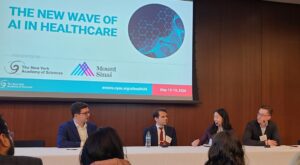
The final talks for day one focused on how AI can be used directly with patient care situations. Following their individual talks on how AI can be integrated into electronic health records (EHR), combining models to develop new insights, or reimagining diagnosis ability to improve diagnostic equity, the final three speakers engaged in a dynamic, and sometimes heated panel discussion. Karen Wong, MD, a physician at Epic, Alexander Fedotov, PhD, director of AI digital precision health at AstraZeneca and Pierre Elias, MD, assistant professor at Columbia University Irving Medical Center each shared their thoughts on how AI will be used in the near future. While they were all in agreement that AI cannot replace clinicians, they also recognized that AI will be a disruptive force, but it’s up to clinicians to take responsibility to use the technology as appropriate but to rely on their intuition and judgement as trained professionals. When opining on the future of AI use in healthcare five years from now, Fedotov stated, “I would still want to see humans at the helm of all the decision maker processes.”
Day two
While the first day laid the foundations for AI use in healthcare spanning bench to bedside, the second day of the symposium included more discussion and criticism of AI on the logistic level.
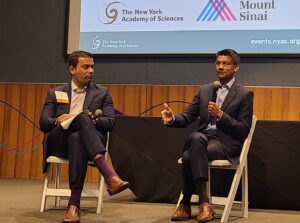
The day began with a keynote fireside chat between Nadkarni and Dave A. Chokshi, MD, a physician and professor at City University of New York, and former NYC health commissioner. He spoke about his leadership experiences, sharing many anecdotes of his time as a public health advocate and communicator during the COVID-19 pandemic. When questioned on the importance of communication considering the state of healthcare and declining trust of the public—especially with the increased use of AI, which has the potential of adding layers of feelings of abandonment, surveillance, and impersonalization—Chokshi pointed out that “It makes relationships even more important that we know then are.” He stressed that a his job, as a clinician, is to build trust with patients, and make sure that they return for care. While he envisions AI being transformative to healthcare in the next few years, he cautioned that listening and integrating feedback from front line users, clinical staff and patients, will be vital.
The morning continued with talks exploring AI’s use in research and learning in healthcare. Joshua C. Denny, MD, CEO of NIH All of Us Research, delivered a detailed summary of the progress and of the All of Us project. Despite recent funding concerns and cuts, the project scope remains on track, and researchers world-wide are utilizing the data derived from this project and how the project leads are working to establish parameters and modules for researchers to more easily implement AI in their data analysis. Andrew Gruen, PhD, standards lead at MLCommons, then spoke animatedly about the importance of establishing standards and benchmarks for AI use in researcher and healthcare settings. He spoke candidly on the need to not just train AI but to have external evaluation and validation of AI models.
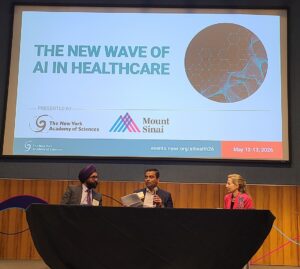
The symposium concluded with multiple discussions on the interactions between AI and humans—not just as a tool, but by viewing the use of AI in the broader scale. Karandeep Singh, MD, executive director for health innovation at the University of California, San Diego explored various opinions of clincians and patients on the use of AI, while pointing out that the use of AI in healthcare settings should be thoughtfully considered before implantation. Meanwhile, Vardit Ravitsky, PhD, president and CEO of The Hastings Center for Bioethics, discussed the ethics behind AI use as a direct to patient setting, specifically as a patient-used chatbot. In a debate following their respective talks, the two delved deeply into the risks associated with AI use, both on the patient side with chatbots and with scribe technologies used by clinicians and patients. They often agreed on the need for transparency in AI usage, but specific AI applications, like uses of AI robots in the home to combat loneliness in the elderly resulted in disagreements.
The final talk presented by Tanzeem Choudhury, PhD, chief of health innovation at Cornell Tech, brought many previously discussed topics together. Her research explores how AI can be used in treatment of mental health, describing how AI can be used in multiple aspects of mental health therapy from recording physiological symptoms with wearables to using chatbots for various functions. She cautioned that while these tools may eventually be transformative, the current state of AI use in mental health is still growing.
The closing remarks by Alexander Charney, MD, PhD, professor at Icahn School of Medicine at Mount Sinai summarized the event well. He shared that throughout the symposium he imagined what clinicians and researchers from 100 years ago and from 100 years in the future would think about the current state of healthcare and about the challenges being faced now with how to incorporate AI. He said, “We aren’t the first group of human beings to deal with powerful technology and figuring out how we’re going to use it to change society.” He hopes that the people from the past would see that we understand and respect the past and learn from it being rigorous in our research and testing, while the people from the future will look on us with pride at our fearless and tenacity in the face of new technology. He hopes that both groups would see that we “tried to do the right thing.” He ended saying that he does see all of that here along with passion and coming together of everyone at the meeting.
The post AI in Healthcare: Symposium Insights appeared first on Inside Precision Medicine.
Cross-Dataset Evaluation of an Automated Video-Based Model for Detecting Tardive Dyskinesia Using the Clinician’s Tardive Inventory: Validation Study
<strong>Background:</strong> Tardive dyskinesia (TD) is a common, often underrecognized movement disorder resulting from long-term antipsychotic use, yet its detection in routine mental health care remains inconsistent despite the availability of structured rating scales. <strong>Objective:</strong> This study evaluated the performance of an artificial intelligence–powered, video-based model for detecting abnormal movements associated with TD using the Clinician’s Tardive Inventory (CTI) dataset. We compare automated assessments of videos from the CTI dataset with previously completed clinician-rated Abnormal Involuntary Movement Scale (AIMS) and CTI scores for the dataset’s videos to determine the model’s reliability and the accuracy of its assessment conclusions relative to expert raters. <strong>Methods:</strong> In total, 69 videos with corresponding AIMS and CTI ratings were analyzed using the visual transformer algorithm model called TDtect reported previously. The dataset included single-video assessments per participant, with varied instructions and movement types. The relationship between automated predictions and clinician ratings was assessed using Pearson correlation, and predictive accuracy was evaluated using area under the curve (AUC) metrics. <strong>Results:</strong> The model showed a strong correlation with AIMS total scores (<i>r</i>=0.717) and high diagnostic accuracy (AUC 0.854), which improved further at an optimized threshold (AUC 0.900). Performance differed across anatomical regions, with the tongue, lips, and jaw displaying the highest predictive reliability. Functional CTI components had weaker correlations (<i>r</i>=0.27-0.63), as expected due to the subjective nature of these measures. <strong>Conclusions:</strong> These findings provide preliminary evidence that an artificial intelligence–driven TD detection model can generalize across video protocols, suggesting potential for broader clinical applicability, although further validation is needed. Future refinements and fine-tuning are expected to enhance accuracy, particularly in predicting functional impact.
Adoption of Digital Mental Health Interventions in National Health Service England, Scotland, and Wales: Freedom of Information Questionnaire Study
<strong>Background:</strong> Digital mental health interventions (DMHIs) have been widely promoted to improve access to mental health care within the UK National Health Service (NHS), particularly following the COVID-19 pandemic. In 2015, a total of 48 technologies were reportedly used in NHS services in England, but over the past decade, substantial changes to regulatory requirements, evidence standards, and procurement processes have reshaped the digital mental health landscape. There is limited clarity regarding which DMHIs are currently being formally procured and funded by NHS mental health services across the United Kingdom. <strong>Objective:</strong> This study aimed to identify and describe the DMHIs currently procured, contracted, or paid for by NHS mental health service providers in England, Scotland, and Wales for adult common mental health problems and to compare current procurement practices with findings reported in 2015. <strong>Methods:</strong> Freedom of Information requests were submitted to all NHS mental health trusts in England and all health boards in Scotland and Wales. Responses were collated and screened to provide an updated and extended record of which technologies are reportedly procured or paid for by services. <strong>Results:</strong> In total, 19 different DMHIs were identified as being procured across mental health service providers for adult common mental health problems at the time of data collection. This demonstrates a substantial reduction in the number of technologies being adopted into practice compared to the 48 reported in England in 2015. The findings reveal several key insights, including that only 2 technologies have remained in use for a decade, and they shed light on the types of technologies being selected and the variations in procurement practices among the 3 national health services. <strong>Conclusions:</strong> Despite the expansion of the digital mental health marketplace, the number of DMHIs formally procured by NHS mental health services has markedly decreased over the past decade. This consolidation may reflect increased selectivity and the adoption of higher-quality products, driven by strengthened regulatory oversight, evidence standards, and national guidance. Although these developments may enhance safety and quality assurance, they also raise important questions about innovation, market sustainability, and equitable access to digital mental health care. Ongoing monitoring of procurement practices is needed to inform policy, service design, and the future development of DMHIs.

Contact Lenses Show Promise for Depression
Using specialized contact lenses to stimulate the brain could offer a novel route to treating depression, preclinical research suggests.
The research, in mice, demonstrates how wearable neuromodulation devices can provide a versatile platform for mood and other brain disorders.
It brings eye-based neurotherapies a step closer towards clinical reality and reveals the feasibility of using contact lenses as a bioelectronic strategy for the treatment of depression.
The findings appear in the latest issue of Cell Reports Physical Science.
“Our work opens up an entirely new frontier of treating brain disorders through the eye,” said lead author Jang-Ung Park, PhD, from Yonsei University.
“We believe this wearable, drug-free approach holds tremendous promise for transforming how depression and other brain conditions are treated, including anxiety, drug addiction, and cognitive decline.”
Depression is increasingly recognized as a disorder involving structural and functional abnormalities in brain networks.
Conventional treatments—such as pharmacological therapy, electroconvulsive therapy, and deep brain stimulation—target these abnormalities but can be invasive and are often limited in their efficacy or tolerability.
Park and team note that the eye provides a compelling gateway for indirect brain modulation due to its embryological derivation from the brain and extensive connectivity.
Studies also suggest that visual impairment with higher prevalence of depression, further recognizing the importance of the eye-brain axis.
To investigate this avenue further, the researchers developed a contact lens that uses transcorneal electrical stimulation (TES) based on temporal interference (TI) to stimulate the brain. This delivers two electrical signals to the retina, which only become active where they intersect, allowing specific areas of the brain to be targeted.
The platform circumvents the invasiveness and limited tolerability of conventional brain stimulation therapies by using the retina as a precise interface for the eye-brain axis.
Electrodes made from ultrathin layers of gallium oxide and platinum allow the lens to be flexible and transparent, conforming to the cornea and preserving natural vision.
The researchers examined the efficacy of the lenses in a stress-induced mouse model that recapitulated key behavioral and biological features associated with depression.
Depressed mice received either no intervention, temporal interference, or the SSRI fluoxetine and were compared with control mice that were not depressed before and after treatment. Machine learning was applied for comprehensive efficacy evaluation.
The team reported that the lenses restored behavioral, neural, and biological deficits in depression.
TI-TES enhanced behavioral resilience, restored prefrontal-hippocampal oscillatory synchrony, and normalized depression-related biomarkers.
When machine-learning integration was used to integrate behavior, brain activity, and biomarkers, it consistently grouped the mice with lenses with the non-depressed control mice rather than the untreated depressed mice.
The researchers acknowledge their research is in its early stages, and that the current study employed a wired configuration to ensure precise waveform control and stimulation stability during proof-of-concept validation.
“Like any new medical technology, our contact lenses will need to go through rigorous clinical evaluation in patients before reaching the market,” said Park.
“Next, we plan to make the lens fully wireless, test it for long-term safety in larger animals, and personalize the stimulation for each user before advancing into clinical trials in patients.”
The post Contact Lenses Show Promise for Depression appeared first on Inside Precision Medicine.
Large-scale meta- and cross-trait analyses uncover shared genetic risk factors for IBS and psychiatric disorders
IntroductionIrritable bowel syndrome (IBS) is a common gut-brain axis disorder characterized by abdominal pain and altered bowel habits, and it shows high comorbidity with psychiatric disorders. However, the shared genetic mechanisms underlying these associations remain incompletely understood.MethodsWe performed a large-scale meta-analysis of IBS in individuals of European ancestry by integrating genome-wide association study (GWAS) summary statistics from the UK Biobank, Bellygenes, and the Million Veteran Program (MVP), thereby increasing statistical power to detect novel IBS loci. We further conducted global genetic correlation analyses with psychiatric traits, followed by multi-trait analysis of GWAS (MTAG) and conditional false discovery rate (condFDR) analyses to identify pleiotropic loci. Transcriptomic, methylomic, and expression quantitative trait locus (eQTL) data were integrated to explore potential regulatory mechanisms.ResultsThe meta-analysis identified up to ten previously unreported IBS loci, several of which were supported by colonic and brain eQTL effects. Global genetic correlation analyses confirmed substantial genetic overlap between IBS and psychiatric traits, particularly major depressive disorder and neuroticism. MTAG and condFDR analyses uncovered more than 100 pleiotropic loci, including signals at SORCS1, SLC35D1, COA1, and TLE1. Integrative analyses of transcriptome- and methylome-wide data highlighted regulatory mechanisms spanning colonic, immune, and neuronal tissues, supporting neuro-immune crosstalk and mitochondrial involvement.DiscussionOur findings provide a comprehensive genetic characterization of IBS, refine its heritable basis, reveal pleiotropic links with psychiatric disorders, and implicate molecular pathways across the gut-brain axis. These results advance mechanistic understanding of IBS and may inform future therapeutic development for IBS and its psychiatric comorbidities.