

Turning Rejection Into a Roadmap: Advice for the Next Generation of Mental Health Leaders

A Conversation with Tom Osborn, Founder of Africa’s Largest Mental Health Provider Shamiri Institute

Aaliyah Nadirah Madyun, program director at the Stavros Niarchos Foundation (SNF) Global Center for Child and Adolescent Mental Health at the Child Mind Institute, recently sat down with Tom Osborn, founder of the Shamiri Institute and an International Advisory Board member at the SNF Global Center. They discussed Osborn’s remarkable journey as a young entrepreneur.

At just 18, while studying at Harvard University, Osborn founded the Shamiri Institute, which has since grown into Africa’s largest youth mental health provider — now reaching over 100,000 young people annually and having trained and employed more than 3,000 providers. In this candid conversation, Osborn shares hard-won lessons on resilience, mentorship, and well-being. He offers advice to the SNF Global Center’s Youth Council members — many of whom are launching their own mental health initiatives in communities across Greece, Brazil, South Africa, and beyond.

AM: You founded Shamiri when you were just 18. Many members of our SNF Global Center Youth Councils are now launching their own mental health organizations. What advice would you give them?

TO: I think these past three to five years post-COVID have been quite good for mental health. There’s just more dialogue, more conversation. It’s maybe one of the best times to start working in mental health. There is a big space for young people to be leaders. On the other hand, it’s also very difficult.

AM: What kind of difficulties can young people expect to encounter?

TO: It’s very difficult for a few reasons. We normally start this work because we have a lot of passion, enthusiasm, and commitment to the cause. But that is not the day-to-day of being a social entrepreneur. It’s convincing people to partner with you, to fund you, etc., which is a completely different skill set to learn. And the second part is getting a level of comfort with failure. Because the reality is, on average, nine out of ten doors that you try to open will not open; especially when you are starting. For example, if you’re in Brazil and there are 100 other young people trying to start something, there is a finite pool of opportunities and resources. So, when you are starting, part of the initial process requires you to develop resilience and a growth mindset.

AM: Could you speak about the role mentorship has played in your journey, and how young entrepreneurs can leverage mentorship to navigate the challenges of building something from the ground up?

TO: Mentorship is really crucial. Finding folks — researchers, practitioners, or just folks in the community — who can help provide guidance as you build the skills you need to be an effective entrepreneur.

AM: How would you recommend young people go about finding a mentor? It seems like that ability, identifying and cultivating a mentoring relationship, might be a skill set in itself.

TO: In my experience, there are three pathways. In many countries we have what we call accelerators, which look for young people who literally have an idea and enthusiasm, and then take them through 10–16 weeks of bootcamp where they can learn the skills to develop their idea. So, that’s one pathway. The second pathway, which really worked for me but may sound intimidating, is direct outreach to folks who have done something similar. So, you can do some research. It doesn’t have to even be related to mental health. It can be education or some broader thing. But find someone who has built something that you admire. You will be surprised how many people are willing to support and pay it forward, because we all have benefited from the help of someone else. I created an Excel spreadsheet with a list of people who I looked up to, and I reached out to them on LinkedIn. Sometimes you can even find their email. Some people said “no”, but if you reach out to 10 or 20 people, some people will talk to you. And the third pathway is . . . increasingly we have a lot of resources like the SNF Global Center Youth Councils and international organizations that deal with mental health. You can join these organizations to expand your network.

AM: Could you share your story with us and tell us how you got started?

TO: I started when I was in University as part of a research project I was doing when I was studying psychology. I needed to do something for my thesis and in the process of doing that I applied to an accelerator. I also went to my professor and asked him, ‘Do you know anyone who could connect me with?’ In fact, he helped me write my first grant and gave me the opportunity to learn those entrepreneurial skills.

AM: Starting at such a young age, one can imagine that you must have encountered many challenges and setbacks. What were the key lessons you took away from that growth period?

TO: The reality of this work, and not to discourage people but to give a factual picture, is that there are more setbacks than there are wins. Part of the process is that you learn from the setbacks. I can give you an example of some of my own setbacks. In my first year of doing this, we tried to raise money. We applied for grants, sent out proposals, etc.; but we couldn’t raise any money. So, what I did after getting the rejection is I would email and ask, “Do you have any feedback for us about why we didn’t get the funding?” or “Can we jump on a call so you can explain what we can do better?” What I learned from that was the way I was communicating what we were doing made sense in my mind, but I wasn’t putting myself in the shoes of the person who was reviewing the proposal. I only have five to ten minutes of someone’s time. So, how can I really simplify my message? For example, my first proposal was, “Shamiri does task-shifting mental health interventions for adolescent depression, anxiety, etc.” If you are in the field, you maybe get it. But if you are somebody who is just reading grants on mental health education, you don’t really get it. Now we say, “Shamiri means thrive and we enable young people to thrive.” So that invites people to ask how we’re helping people to thrive.

AM: What is another setback that surprised you?

A second example of a failure is getting buy-in from the beneficiaries that we were trying to work with. I thought, “We have this great idea, we’ve done this research, and it works. We’re going to go to schools and they’re going to be like, ‘This is great! Come work with us.’ Teachers are going to want to work with us.” But actually, in our first three years we were trying to work with 25,000 students and we ended up working with only 1,000 students. We really struggled with getting people to sign up. The lesson from that was we were thinking more from the idea this was our product, rather than thinking, “What is the problem that I am trying to solve for this person?” To give a concrete example, there are three people we need to get buy-in from: young people in schools, teachers, and parents. Just having a great product does not mean that people are going to use it. You need to figure out what the problem is. How can I solve it? How do I communicate this to users?

AM: I can imagine that dealing with failures and setbacks is extremely hard, especially for a young person. What would you say to a young person who is currently experiencing this?

TO: Finding ways to stay grounded and healthy from a well-being perspective is really crucial. Identify what matters to you and connect with those things. And ideally if you can find a way to build a routine around that, it could help. Doing this work takes a big toll. If you don’t find ways to ground yourself and get the energy to continue with this, you may burn out.

AM: Do you have some final words for our Youth Council members and other young people reading this?

TO: Those closest to the problem are those closest to the solution. I am from Kenya, which is a really young country. The median age is 19 and 70 percent of the population is under 30. If we are to solve some of these pressing problems, including mental health, those solutions are going to have to come from young people.

The post Turning Rejection Into a Roadmap: Advice for the Next Generation of Mental Health Leaders appeared first on Child Mind Institute.

Using AI to Detect Psychosis Relapse: Scoping Review

Background: Psychotic disorder represents a leading cause of disability worldwide, and relapse in psychosis is common. Artificial intelligence (AI) is increasingly recognized as a method that could aid clinical monitoring for individuals experiencing psychosis. Objective: This review aims to map the existing literature on AI-based approaches—including machine learning, deep learning, and natural language processing—used to detect relapse in individuals with psychotic disorders. Methods: A systematic search strategy was conducted on PubMed, PsycINFO, and Embase up to January 7, 2026. Observational studies, randomized controlled trials, and quasi-experimental studies that used AI methods to detect relapse in psychosis were eligible for inclusion. Screening and data extraction procedures were conducted by at least 2 reviewers working independently. Findings were extracted, charted, and described using narrative synthesis based on data extraction and consensus meetings with the research team. The scoping review was prospectively registered with the Open Science Framework. Results: Relevant studies identified (N=10) included the use of digital tools such as smartphone- and smartwatch-based monitoring, ecological momentary assessment tools, social media activity, and internet searches. Digital phenotyping via smartphones and wearables emerged as the most common method for data collection. The efficacy of AI models varied with sensitivity (or recall) ranging from 0.25 to 0.77 and specificity (or precision) ranging from 0.06 to 0.88. The reported area under the receiver operating characteristic curve for models ranged from 0.63 to 0.78. AI models were heterogeneous across studies, and most study findings were not replicated. Conclusions: This scoping review highlights both the promise and the current limitations of AI in psychosis relapse detection. Passive digital phenotyping research in the detection of psychosis relapse has progressed, and personalized approaches with individual-level modeling show promise; however, further studies need to include larger numbers of participants and should incorporate methods such as large language models. Future studies will require large collaborations aimed at delivering AI methods for use in real-world clinical practice.
<img src="https://jmir-production.s3.us-east-2.amazonaws.com/thumbs/56322bc1f7dff8563d736e70b885fd6c" />

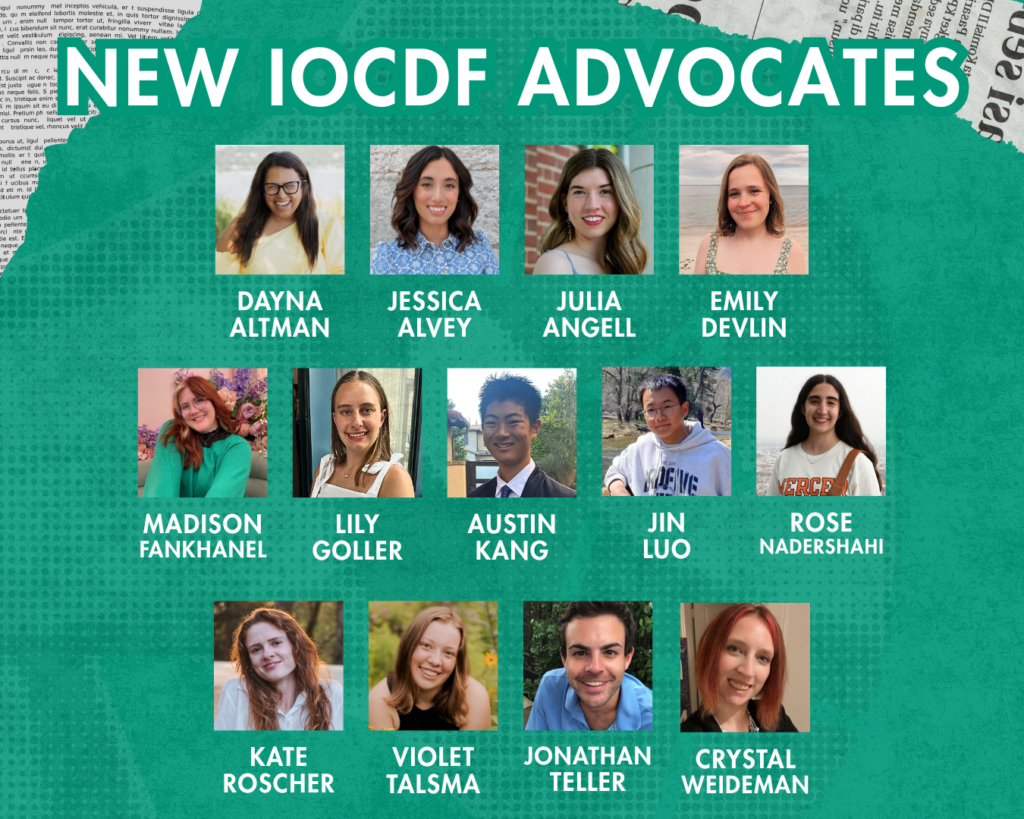
Welcome to Our New IOCDF Advocates

The IOCDF is thrilled to announce our newest cohort of Advocate volunteers! We’re welcoming 13 incredible new Advocates to our program, bringing our total to 64 dedicated volunteers working together to create meaningful change for the OCD and related disorders community.

These passionate individuals join us from bustling cities and quiet rural towns across the United States and around the world. From California to Massachusetts, and from countries including Canada and Ireland, this mix of local and global perspectives ensures we can reach and represent diverse communities everywhere.

The Power of Diverse Voices

Our newest cohort has a wide range of experiences and interests. They are passionate about addressing critical topics including:

  • Access to treatment
  • Diversity, multicultural issues, and LGBTQIA+ inclusion
  • Family issues and family accommodation
  • Young adult mental health and academic challenges
  • Public policy
  • Research advancement
  • Suicide prevention
  • Nutrition, fitness, and anxiety in athletes

This diversity of focus areas ensures that we can better represent and serve the full spectrum of our community’s needs.

Meet the Spring 2026 Advocates:

  • Dayna Altman 
  • Jessica Alvey 
  • Julia Angell 
  • Emily Devlin 
  • Madison Fankhanel 
  • Lily Goller 
  • Austin Kang 
  • Jin Luo 
  • Rose Nadershahi 
  • Kate Roscher 
  • Violet Talsma 
  • Jonathan Teller 
  • Crystal Weideman

You can see the full list of IOCDF advocates at iocdf.org/advocate-program

Your Voice Matters Too

Inspired by our Advocates? You can make a difference! Here are ways to start advocating today:

Fuel Our Mission Through Fundraising

Turn your passion into action by launching a personal fundraiser. Whether for a birthday, a race, or a creative project, you can rally your friends and family to raise critical funds. Every dollar helps build a world where everyone affected by OCD can thrive. Start your fundraiser here or explore all ways to give back here.

Advocate for policy change

Your voice can shape laws that improve access to care and insurance coverage. The IOCDF Public Policy Action Center makes it simple to find the latest bills and contact your elected officials with just a few clicks. True change starts here.

Join an IOCDF Special Interest Group

Connect with people who share your experiences or professional interests. IOCDF Special Interest Groups (SIGs) provide a platform for deeper discussion.

Whether you advocate on the national stage, share your story to fight stigma, or fundraise your way, every action creates a ripple effect of hope and understanding. Your journey, your voice, and your commitment are powerful tools.

Start today and help us build a world where everyone affected by OCD feels supported, seen, and empowered. Join a dedicated community committed to raising awareness.

Welcome again to our new IOCDF Advocates, we’re grateful to have you joining our mission!

The post Welcome to Our New IOCDF Advocates appeared first on International OCD Foundation.

Prevalence and Predictors of Self-Reported Adverse Experiences in Digital Meditation Training: 2 Randomized Controlled Trials

Background: Digital meditation-based interventions (MBIs) reach vast global audiences with millions of active users, yet concerns persist about the frequency and nature of adverse experiences (ie, AExs) occurring during meditation training. Some researchers have argued that AExs are substantially underdetected and reflect iatrogenic harm caused by meditation (ie, adverse effects [AEfs]). Others contend that these experiences largely reflect common stressors that would be experienced without meditation. These competing perspectives underscore the need for further research, particularly in the context of digital MBIs, the most widely used form of meditation training. Objective: This study examined the prevalence, predictors, and subjective evaluations of AExs during a digital MBI and tested whether reported experiences may be caused by meditation practice via comparisons between meditation-exposed and nonexposed participants. Methods: Data were drawn from 2 trials of the Healthy Minds Program. Exploratory study 1 (n=315) consisted of a sample of distressed US undergraduate students to estimate the prevalence of AExs and identify baseline predictors. Preregistered confirmatory study 2 (n=594) sampled distressed US adults from all 50 states to replicate findings from study 1 and to examine participants’ subjective evaluations of AExs. Study 2 additionally compared AEx rates between participants who did and did not complete guided meditations to assess whether AExs could be caused by meditation exposure. Study 3 (n=87) used qualitative methods to analyze study 1 participants’ responses to an open-ended question regarding their strategies for coping with AExs. Results: In studies 1 and 2, 27.9% (88/315) and 10.1% (40/396) of participants, respectively, reported at least one AEx during the study period, with 6.7% (21/315) and 3% (12/396) reporting functional impairment, largely aligning with previous research. Critically, in study 2, rates of AExs did not significantly differ between participants who did and did not complete guided meditations, suggesting that these experiences were not caused by meditation practice. Higher baseline depression, anxiety, loneliness, experiential avoidance, and perceived barriers to meditation predicted more frequent AExs. In studies 1 and 2, 89.8% (79/88) and 90% (36/40) of participants who reported AExs, respectively, indicated that they were glad to have learned to meditate. Qualitative analyses showed that participants used diverse coping strategies, often using skills learned through the Healthy Minds Program. Conclusions: AExs were relatively common but occurred at comparable rates among participants who did and did not meditate, challenging claims that such experiences were caused by meditation practice in distressed individuals. Although a small subset of participants reported some degree of functional impairment, most evaluated their AExs as tolerable and described their overall MBI experience as positive. Together, these findings highlight the importance of distinguishing AExs that likely reflect epiphenomena of preexisting distress or symptoms from iatrogenic harm attributable to MBIs. Trial Registration: Study 1: ClinicalTrials.gov NCT04741529; https://clinicaltrials.gov/study/NCT04741529; Study 2: ClinicalTrials.gov NCT06282523; https://clinicaltrials.gov/study/NCT06282523
<img src="https://jmir-production.s3.us-east-2.amazonaws.com/thumbs/09106e6bad7f3f15798304e0c00626ec" />

Examining the Social and Mental Health Benefits of Virtual and In-Person Physical Activity Intervention Among Postsecondary Students: Quasi-Experimental Study

Background: Physical activity (PA) is a promising prevention approach for supporting mental health and enhancing social inclusion among postsecondary students. However, it is unclear whether similar outcomes are realized when PA programming is delivered in-person versus virtually. Objective: Using data from a multiphase research project, the purpose of the study was to examine the influence of on-campus PA programming (virtual and in-person delivery) on mental ill health symptoms (ie, anxiety and depression), social inclusion indices (ie, social connectedness, emotional ties, and social relationship quality), and well-being. Three objectives were addressed: (1) to assess pre-post change in symptoms, social inclusion indices, and well-being for virtual and in-person delivery; (2) to evaluate whether outcome change over time differed by delivery mode; and (3) to examine whether change in symptoms and social inclusion indices predicted change in well-being for both delivery modes. Methods: Physically inactive postsecondary students experiencing mental ill health participated in a 6-week structured and supervised PA program. Pre-post intervention data were collected across 3 phases, and the analytical samples included: 1. In-person delivery (n=87; 82%, 69/84 young adults; 86%, 74/86 women; 38%, 33/86 White; 20%, 17/86 Chinese; 86%, 75/87 with mental illness; 2. Virtual delivery (n=62; 69%, 42/61 young adults; 95%, 59/62 women; 34%, 21/62 White; 21%, 13/62 South Asian; 55%, 34/62 with mental illness), and 3. Data from students who received in-person or virtual delivery: (n=92; 67%, 61/91 young adults; 90%, 83/92 women; 32%, 29/92 White; 20%, 18/92 South Asian; 59%, 54/92 with mental illness). Data were analyzed using 2-tailed paired samples tests to address objective 1, a 2 (delivery mode) × 2 (time: pre-post) repeated-measures ANOVA to address objective 2, and hierarchical regression analyses to address objective 3. Results: Both virtual and in-person PA delivery were effective for symptom reduction and social inclusion improvements across all outcomes (<.001), with moderate-to-large effects. There was no significant time × delivery mode (=0.72, ²=0.04, =.60) interaction effect. Change in social inclusion indices explained unique variance in well-being, beyond covariates (gender, mental illness, and ethno-racial identity), and symptom reduction for virtual ( = 0.75, 008001) and in-person ( = 0.72, =0.16, <.001) PA delivery. Conclusions: Online distance learning is increasing across postsecondary settings worldwide, underscoring the need for accessible, technology-enabled mental health prevention interventions. The results provide support for the effectiveness of virtual and in-person PA programming for reducing symptoms of anxiety and depression, while also enhancing social inclusion indices and overall well-being. Social inclusion indices were also a key contributor to improved well-being, emphasizing the relevance of social factors in both virtual and in-person PA-based mental health prevention strategies for postsecondary students.

Between Help and Harm: An Evaluation Study of Mental Health Crisis Handling by Large Language Models

Background: The use of large language models (LLMs)–powered chatbots has reshaped how people seek information and advice, including for emotional and mental health support. While LLMs can offer scalable support, their ability to safely detect and respond to acute mental health crises—including suicidal ideation, self-harm, and violent thoughts—remains poorly understood. Progress is hampered by the absence of unified mental health crisis taxonomies, annotated benchmarks, and empirical evaluations grounded in clinical best practices. Objective: We addressed these gaps by introducing (1) a unified taxonomy of 6 clinically informed mental health crisis categories; (2) an evaluation dataset of over 2000 user inputs drawn from 12 publicly available conversational mental health datasets, classified into crisis categories; and (3) an expert-designed protocol for assessing response appropriateness. We also used LLMs to automatically identify crisis-indicative inputs and conducted an auditing study of 5 LLMs to evaluate the safety and appropriateness of their responses. Methods: We developed a taxonomy of mental health crisis categories informed by clinical experts and established literature. From over 239,000 mental health–related user inputs collected from 12 Hugging Face datasets, we curated 2252 examples (206 for validation, 2046 for testing) covering all taxonomy categories. We evaluated 3 LLMs on their ability to classify inputs into crisis categories, selecting the model with the strongest agreement with human annotators as the judge to label the test set. We then audited 5 LLMs on their ability to generate safe and appropriate responses to the 2046 test examples. Response quality was measured using a clinically informed 5-point Likert scale (1=harmful and 5=fully appropriate), relying on an LLM-as-a-judge validated against human expert feedback. Results: Several LLMs exhibited high consistency and generally reliable behavior when responding to explicit crisis disclosures, but significant risks remain. A nonnegligible proportion of responses was rated as inappropriate or harmful, particularly in the self-harm and suicidal ideation categories. Substantial performance differences were observed across models: gpt-5-nano and deepseek-v3.2-exp achieved very low harmful response rates, whereas gpt-4o-mini, Llama-4-Scout-17B-16E-Instruct, and grok-4-fast-non-reasoning generated markedly higher rates of unsafe outputs. All models exhibited systemic weaknesses, including poor handling of indirect or ambiguous risk signals, reliance on formulaic responses, and frequent misalignment with user context. Conclusions: These findings underscore the urgent need for enhanced safeguards, improved crisis detection, and context-aware interventions in LLM deployments and highlight the central role of alignment and safety engineering—beyond model scale or openness—in determining crisis response reliability. Our taxonomy, dataset, and evaluation framework lay the groundwork for ongoing research in artificial intelligence–driven mental health support, helping to minimize harm and protect vulnerable users.
<img src="https://jmir-production.s3.us-east-2.amazonaws.com/thumbs/6d38d493c2ebfaa303202d21ad5c3a7d" />

Association between plasma proBDNF levels and cognitive impairment in patients with alcohol dependence: a case–control and longitudinal study

BackgroundAlcohol dependence is frequently accompanied by cognitive impairment. Brain-derived neurotrophic factor (BDNF) signaling plays a critical role in synaptic plasticity, while the precursor form, proBDNF, has been increasingly implicated in neurodegenerative and psychiatric disorders. However, the association between plasma proBDNF levels and cognitive impairment in alcohol dependence remains unclear.MethodsEighty male patients with alcohol dependence and forty-two matched healthy controls were enrolled. Plasma proBDNF levels were measured via enzyme-linked immunosorbent assay (ELISA). Cognitive function was assessed using the Mini-Mental State Examination (MMSE), the Modified Wisconsin Card Sorting Test (M-WCST), and the Verbal Fluency Test (VFT). Forty-one patients were reassessed after four weeks of abstinence. Group comparisons and correlation analyses were performed.ResultsPatients with alcohol dependence exhibited significantly elevated plasma proBDNF levels and impaired cognitive performance compared with controls. Plasma proBDNF levels were positively correlated with alcohol consumption severity, and linked to global cognitive deficits alongside nuanced executive performance variations. After four weeks of abstinence, plasma proBDNF levels decreased and cognitive performance improved; however, changes in proBDNF were weakly associated with cognitive recovery.ConclusionsElevated plasma proBDNF levels are associated with alcohol dependence severity and cognitive impairment, suggesting that proBDNF may serve as a peripheral biomarker reflecting the dynamic neurocognitive status in alcohol dependence.

SleepPathfinder: A Socratic Questioning and Self-Decision–Based Chatbot to Support User Engagement in Digital CBT-I: Usability and Feasibility Study

Background: Chronic insomnia is a highly prevalent sleep disorder that adversely affects quality of life and mental health. Cognitive behavioral therapy for insomnia (CBT-I) is internationally recommended as the first-line treatment, and digital CBT-I (dCBT-I) has been developed to improve accessibility and scalability. While existing dCBT-I systems effectively support structured behavioral training through standardized protocols, they provide relatively limited support for users’ cognitive exploration and meaning-making processes, particularly in helping users reflect on and internalize the rationale behind CBT-I practices in daily life. These limitations may contribute to challenges in sustained engagement and long-term adherence. Objective: This study aimed to examine the usability and feasibility of SleepPathfinder, a conversational CBT-I support chatbot that integrates Socratic questioning and a self-decision mechanism to support users’ understanding of and engagement with CBT-I practices. Methods: SleepPathfinder was designed around a 4-stage conversational flow: education on CBT-I techniques, Socratic cognitive exploration, self-decision, and advice provision. We conducted (1) a single-session pilot usability study (n=45) to assess system stability and user experience and (2) a 5-day condition-based comparative experiment (n=30) consisting of daily sessions, comparing an exploratory dialogue condition with a directive, protocol-guided dialogue condition. Quantitative measures assessed usability, cognitive appraisals related to sleep problems, autonomy-related experiences, and behavioral readiness, while qualitative feedback and conversational log analyses were used to examine interaction patterns and engagement characteristics. Results: In the comparative experiment, the exploratory dialogue condition showed a tendency toward reduced perceived threat and severity appraisal of sleep problems compared with the directive condition, accompanied by moderate effect sizes in cognitive perception measures. Autonomy-related experiences, including perceived choice and engagement, demonstrated suggestive upward trends in the exploratory condition. Behavioral intention changes were comparable across conditions, while overall readiness for change increased across participants. Conversational log analyses indicated that greater depth and volume of user self-narrative were associated with larger shifts in cognitive appraisals, whereas the frequency of chatbot questions alone was not. The pilot usability study indicated generally positive evaluations of system usability and content credibility, while identifying areas for improvement in emotional responsiveness and conversational naturalness. Conclusions: These findings suggest that a Socratic questioning–based and self-decision–based conversational structure is usable and feasible as a supportive interaction layer within dCBT-I systems. Rather than altering the directive behavioral structure of CBT-I, such an approach may complement existing protocols by facilitating cognitive exploration and supporting user-perceived autonomy. This study provides design-oriented evidence to inform the refinement of dialogue-supported digital CBT-I systems aimed at enhancing user engagement with CBT-I practices.
<img src="https://jmir-production.s3.us-east-2.amazonaws.com/thumbs/53b6f3cffbd734291f43739e09584341" />