ObjectiveThis study was conducted to assess the relationship between the severity of obstructive sleep apnea (OSA) and the total burden score of cerebral small vessel disease (CSVD), global cerebral blood flow (CBF), and cognitive function. Moreover, the internal pathway through which OSA induces cognitive impairment by affecting cerebral perfusion, and overall cerebral small vessel lesions was determined in this study.MethodsIn total, 94 patients who received polysomnography (PSG) at the Mental Health Center of Inner Mongolia Autonomous Region from October 2024 to February 2026 were included in this study. Based on the apnea-hypopnea index (AHI), all individuals were classified into the control and the mild group (AHI < 15 times/h, n = 26), the moderate OSA group (15 ≤ AHI < 30 times/h, n = 27), and the severe OSA group (AHI ≥ 30 times/h, n = 41). Demographic information was collected from all patients, and their cognitive performance was evaluated using the Mini-Mental State Examination (MMSE), Trail Making Test (TMT), Choice Reaction Time task (CRT), Digit Symbol Substitution Task (DSST), and the Trails test with a paradigm similar to Part B of the Trail Making Test. Each patient underwent 3.0T magnetic resonance imaging, including conventional sequences, susceptibility weighted imaging (SWI), and arterial spin labeling (ASL). Finally, the total CSVD burden score was assessed.ResultsThe total CSVD burden and perivascular space (PVS) score in the severe OSA group were significantly higher than those in the moderate group and the control group (P < 0.05). The total CSVD burden was significantly positively correlated with the mean global CBF (P < 0.05). After the BMI was adjusted, the severity of OSA remained independently associated with the mean global CBF (P < 0.05). Total CSVD burden, PVS, lacunes, and global CBF were significantly associated with cognitive function domains (P < 0.05), which indicated that CSVD and global CBF abnormalities may jointly participate in OSA-related cognitive function.ConclusionThe severity of OSA might be related to the CSVD burden score. Neuroimaging characteristics strongly related to cognitive function in patients suffering from OSA, and abnormal global CBF may serve as a non-invasive imaging marker for evaluating neurocognitive damage.
Correction: Locomotor and endocrine alterations link to metabolic dysfunction induced by pathopharmacological interaction between neurodevelopmental disorders and antipsychotics: evidence from clinical and animal study
Follow-up attendance and documented reasons for non-attendance in child and adolescent mental health care: a retrospective analysis
BackgroundFailure to continue scheduled follow-up is a common challenge in child and adolescent mental health services and may reduce treatment effectiveness.ObjectiveThe present retrospective study aimed to examine demographic, clinical, and treatment-related characteristics associated with attendance at the last scheduled follow-up appointment among children and adolescents receiving outpatient psychiatric care and to identify characteristics associated with the documented reasons for non-attendance among patients who missed their last scheduled follow-up appointment.MethodsA retrospective study was conducted using medical records of 841 patients aged 1–18 years who attended a tertiary child and adolescent psychiatry outpatient clinic between 2015 and 2026. Demographic, clinical, and treatment-related characteristics were summarized descriptively. Associations between categorical variables were examined using Pearson’s chi-square test, and effect sizes were reported using Cramér’s V.ResultsOf the 841 patients, 142 had no scheduled follow-up appointment and were excluded from the attendance analysis. Among the remaining 699 patients, 56.8% attended their last scheduled follow-up appointment. No significant associations were observed between attendance and the demographic, clinical, or treatment-related characteristics examined. Among the 302 non-attendees, unspecified reasons (36.8%) and scheduling conflicts (17.5%) were most frequent. Documented reasons for non-attendance were significantly associated with medication prescription status (χ² = 9.749, p = 0.008, Cramér’s V = 0.181) and drug class (χ² = 10.202, p = 0.037, Cramér’s V = 0.130).ConclusionsLast scheduled follow-up attendance was not significantly associated with the demographic, clinical, or treatment-related characteristics examined. Among non-attendees, documented reasons for non-attendance were associated with medication prescription status and drug class. Systematic documentation of non-attendance reasons may help identify barriers to continuity of care and inform targeted follow-up strategies.
A Pragmatic SMART Study of Medication and CBT Sequencing in Pediatric Anxiety Disorders: A Randomized Clinical Trial
American Journal of Psychiatry, Volume 183, Issue 9, Page 668-681, September 01, 2026.
Dynamic Relationships Between Estrogen Fluctuations, Sleep, and Psychiatric Complexity Among Adolescent Females With ADHD: A Pilot Study
Conditions: ADHD
Sponsors: Duke University
Not yet recruiting
Sponsors: Duke University
Not yet recruiting
This Study Will Evaluate Cardiorespiratory and Muscular Fitness to Examine Associations With Anthropometric Characteristics and Other Indicators of Cardiometabolic Risk Among Patients With or Without Autism Spectrum Disorder
Conditions: Autism Spectrum Disorder (ASD); Cardiometabolic Health Indicators; Cardiometabolic Risk Factors; Metabolic Syndrome; Prediabetes
Sponsors: University of Virginia
Recruiting
Sponsors: University of Virginia
Recruiting
Remotely Supervised, Home-Based Transcranial Direct Current Stimulation for Major Depressive Disorder: Systematic Review and Meta-Analysis
Background: Major depressive disorder affects over 280 million people worldwide, and access to effective treatment remains limited. Transcranial direct current stimulation (tDCS) is a noninvasive option, and portable devices now allow for home-based delivery under varying degrees of remote supervision. Objective: This study aimed to systematically review and meta-analyze the efficacy, safety, feasibility, and acceptability of home-based and remotely supervised tDCS for depressive disorders. Methods: Following the PRISMA (Preferred Reporting Items for Systematic Reviews and Meta-Analyses) 2020 and PRISMA-S (Preferred Reporting Items for Systematic Reviews and Meta-Analyses literature search extension) guidelines, we searched MEDLINE, Embase, Web of Science, the Cochrane databases, ClinicalTrials.gov, and the World Health Organization International Clinical Trials Registry Platform up to July 2025, with backward and forward citation searching. Two reviewers independently screened records, extracted data, and assessed risk of bias (version 2 of the Cochrane risk-of-bias tool for randomized trials, Newcastle-Ottawa Scale for observational studies, and Critical Appraisal Skills Programme for qualitative studies) and certainty of evidence (Grading of Recommendations Assessment, Development, and Evaluation; GRADE). Results: This review included 12 distinct studies (16 reports), of which 6 (50%) were randomized sham-controlled trials forming the meta-analytic pool. Active home-based tDCS produced a small, statistically significant improvement over sham (pooled Hedges =0.36, 95% CI 0.06-0.66; =.03; =34.3%). The effect was not robust to removal of the single largest positive trial (omitting the one study from 2025: =0.39, 95% CI −0.12 to 0.91), and trial-level results were mixed: the 2 largest trials (one unsupervised [n=210] and one self-administered [n=141]) were negative on their primary depression outcomes, whereas the largest real-time supervised trial (n=174) was positive (between-group 95% CI 0.51‐4.01; =.01). This estimate was concordant in direction with an independent peer-reviewed meta-analysis of overlapping trials, which reported a pooled Montgomery-Åsberg Depression Rating Scale reduction (weighted mean difference −2.74, 95% CI −4.19 to −1.29) and Hamilton Depression Rating Scale reduction (weighted mean difference −2.24, 95% CI −4.16 to −1.49), attenuating to nonsignificance (>.05) in major depressive disorder without comorbid cognitive impairment. The pooled effect fell at or near the minimal clinically important difference. GRADE certainty was moderate. Adverse events were predominantly mild: one pilot study was terminated early for skin lesions, and one nonfatal suicide attempt occurred in an unsupervised trial. Conclusions: Home-based and remotely supervised tDCS produces a small, statistically significant but clinically modest antidepressant effect that is sensitive to the inclusion of the largest positive trial, with the 2 largest trials being negative. The available controlled evidence does not establish supervision intensity as a determinant of efficacy. Current data are insufficient to recommend routine clinical adoption; adequately powered trials with standardized supervision and longer follow-up are needed. Trial Registration: PROSPERO registration number CRD420251109275; https://www.crd.york.ac.uk/PROSPERO/view/CRD420251109275
Adult ADHD Symptoms, Depression, Anxiety, and Academic Performance in Medical Students
Conditions: Attention Deficit Hyperactivity Disorder; Depression; Anxiety; Academic Performance
Sponsors: Assiut University
Not yet recruiting
Sponsors: Assiut University
Not yet recruiting
From Preparation to Purpose: Reflections on the Global Youth Advisory Council at SNF Nostos 2026
By Delice Lumbu, Director of Youth Engagement, SNF Global Center for Child and Adolescent Mental Health, Child Mind Institute
There are moments in youth engagement that remind you why the work matters. As we look ahead to the second “Global Summit on Youth Mental Health” at the Child Mind Institute’s headquarters in New York this September, I’m reflecting on the recent SNF Nostos 2026 celebration in Greece. The sense of leadership, collaboration, and possibility was palpable.
The event marked 30 years of the Stavros Niarchos Foundation (SNF)’s global impact and was centered on Humanity at the Core. Throughout the week, the SNF Global Center at the Child Mind Institute participated in important conversations across three panels — exploring topics like cross-country collaborations, digital innovation, and community-led approaches.
The SNF Global Center also introduced Growing Up Digital: An Evidence-to-Policy Synthesis, a landmark report developed through the Child and Adolescent Mental Health Initiative (CAMHI) in Greece — focusing on risks and solutions associated with adolescent mental health in a digital world, and incorporating the perspectives of the initiative’s Youth Advisory Groups from across Greece. And as part of a panel on SNF’s Global Health Initiative (GHI), Founding President and Medical Director of the Child Mind Institute Harold S. Koplewicz, MD, and Senior Vice President of Global Programs at the Child Mind Institute Giovanni Salum, MD, PhD, explored actionable solutions in shaping stronger systems of care during a conversation moderated by SNF Co-President Andreas Dracopoulos.
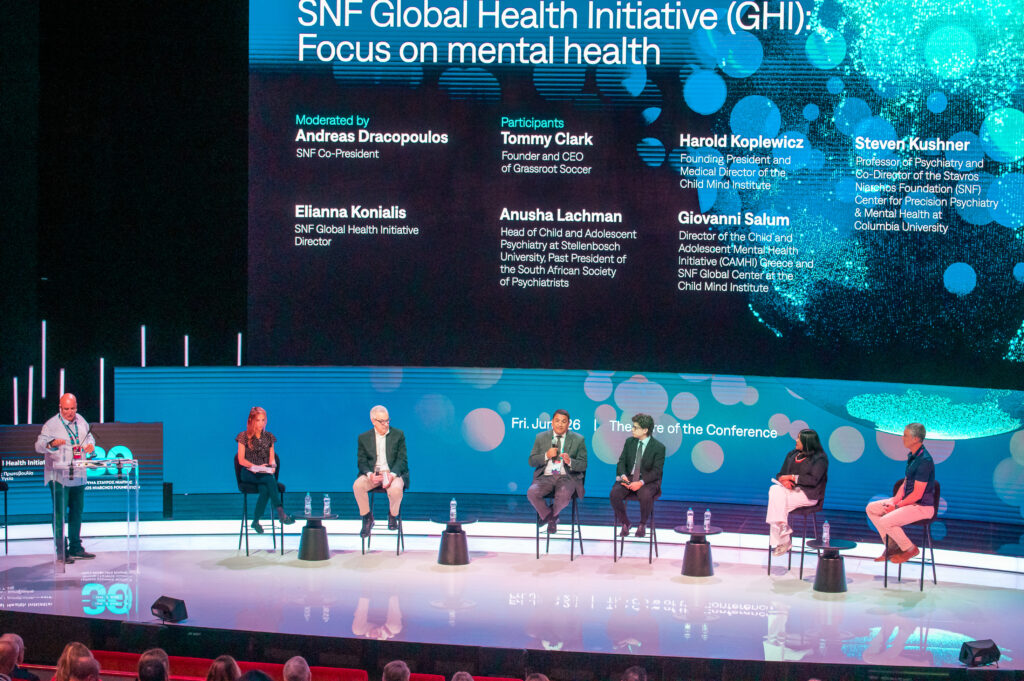
“The next frontier will be focused on ensuring evidence informs policy and practice at scale. SNF Nostos 2026 demonstrated what’s possible when philanthropy, research, and youth leadership come together with a shared commitment to action. That is how lasting progress is built,” says Dr. Salum.
As Director of Youth Engagement, I had the privilege of working closely with members of the SNF Global Center’s Global Youth Advisory Council (GYAC) from South Africa, Brazil, and Greece. At SNF Nostos 2026, they took center stage.
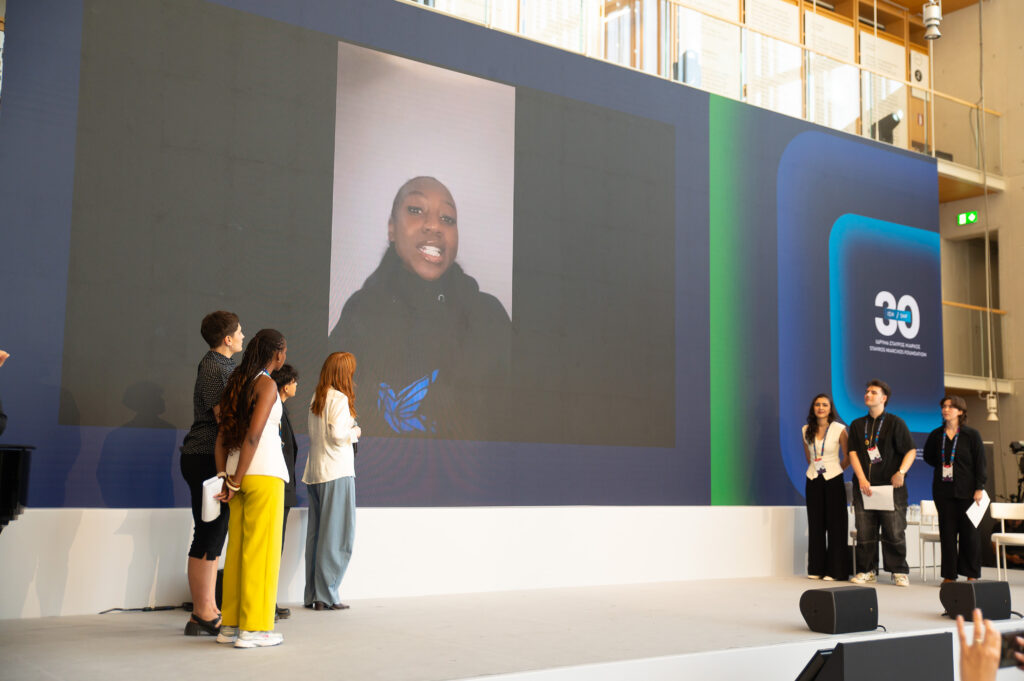
Throughout the months leading up to the conference, I watched ideas evolve into plans, uncertainty turn into confidence, and six young people grow into a team that trusted one another enough to challenge ideas, embrace different perspectives, and speak with one collective purpose. The GYAC’s debate explored the complex relationship between technology, education, and youth mental health — moving through a series of interconnected perspectives rather than presenting technology as simply “good” or “bad.”
The conversation opened by examining the potential negative impacts of technology when introduced into schools without sufficient guidance, before exploring the broader mental health implications for children and adolescents. From there, the discussion challenged the idea that simply banning technology is the answer. Instead, members of the council considered the role of parents, families, schools, and communities in helping young people navigate digital spaces safely — and how they can be better supported. The GYAC also explored the generational cycle of digital habits, recognizing that young people often learn how to engage with technology from the adults around them. The debate concluded with a call for stronger digital literacy in schools. Members of the council also voiced the need for a collective approach that equips young people with the knowledge and skills to navigate technology in ways that support, rather than undermine, their mental health.
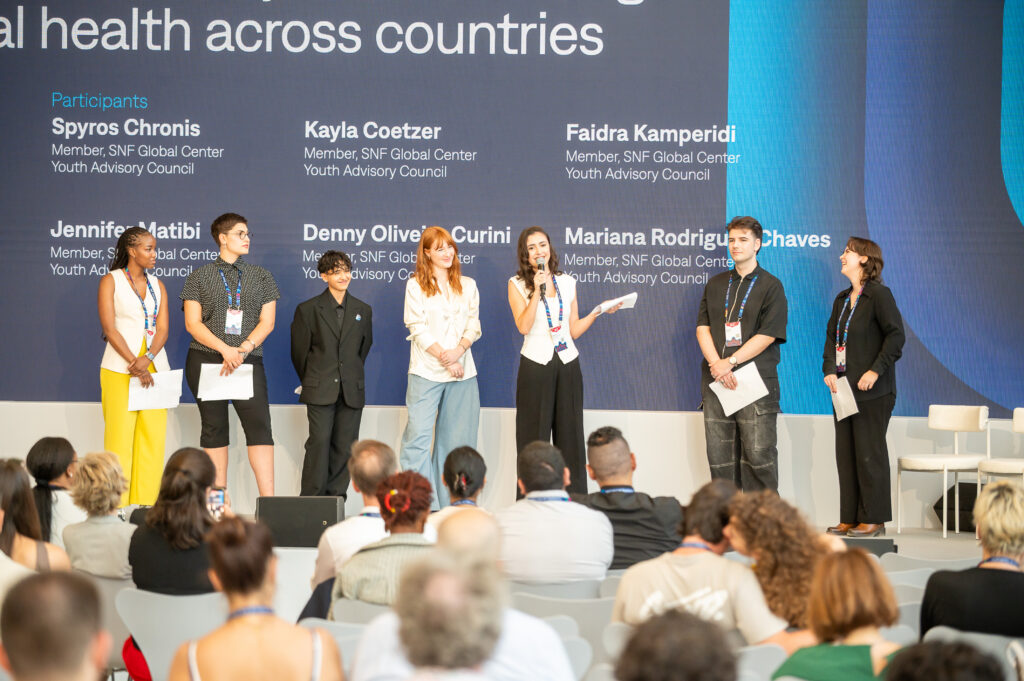
Additionally, the conference featured a cross-country panel exploring how evidence and partnerships can come together to strengthen child and adolescent mental health systems. Moderated by South African GYAC member Kayla Coetzer, the conversation brought together perspectives from Greece, Brazil, South Africa, and Mozambique — highlighting how different countries are working to translate research and evidence into meaningful action. The discussion emphasized that sustainable systems of change require collaboration between researchers, governments, practitioners, communities, and young people. Panelists shared real examples of how partnerships can help move evidence beyond research and into scalable interventions that respond to local needs and contexts.
In front of an international audience of experts and leaders in child and adolescent mental health, the six young members of the GYAC brought perspectives that were thoughtful, challenging, and grounded in lived experience. The council also created a space for the audience to think differently about the relationship between technology and mental health. Through debate and discussion, they challenged assumptions and demonstrated the value of giving young people genuine ownership of the issues that affect them.
That is the power of bringing young people together across borders.
We asked members of the GYAC to reflect on their time at SNF Nostos 2026
Q: Looking back on your experience at SNF Nostos 2026, what is one moment that will stay with you, and why?
SPYROS:
Of all the memories from SNF Nostos 2026, one stands out above the rest: the second our feet hit the stage. In an instant, the background anxiety transformed into pure presence as we shared our work, our ideas, and our honest fears with the audience. Standing next to my colleagues made all the hard work worth it. It was a collective victory that I’ll carry with me for a long time.
KAYLA:
What stays with me is the incredible feedback following our group debate. After months of planning and in-person rehearsals, to then finally getting to present it and having that hard work be recognized felt amazing. To have people say they will be using our structure with their own youth engagements was truly incredible and felt like what we brought to the table was being seen and then used to spark a different kind of youth engagement that we created and presented.
Denny:
The moment we shared our seeds and thorns after the session, everyone in the Lighthouse came together and connected.
MARIANNA:
The panel because I felt like the audience was really interested in our discussion. Also, I felt like I made a real impact in some people’s lives after receiving positive feedback.
JENNIFER:
The one moment that will stay with me is seeing youth representation woven throughout every part of SNF Nostos 2026. Young people were present in every space — leading conversations, working behind the scenes, and showcasing the impactful work they’re doing in their own countries. It was inspiring to see that youth were not included simply to fill seats or meet a quota, but were genuinely empowered to shape discussions, contribute their perspectives, and drive meaningful change in the mental health space.
FAIDRA:
One of the things that really stayed with me from my experience at SNF Nostos 2026, particularly during our session, was how interested the audience was in hearing young people’s perspectives on the issues and concerns we are facing today. Overall, my experience was truly positive and enjoyable.
Q: What did being part of the Global Youth Advisory Council at SNF Nostos 2026 teach you about youth leadership, collaboration, or meaningful youth engagement?
SPRYOS:
Being part of the GYAC taught me that meaningful youth leadership goes far beyond tokenized representation. Meeting and working with people across the globe and seeing how similar we all are and what we want to achieve. Geography and structural differences are what separates us and changes our journey towards the same goals. All together we can get along, co-create and work towards what we believe. Youth engagement is only authentic when institutions move past using young people as decoration and instead give them direct agency to challenge systems, shape strategy, and advocate for real, structural change.
KAYLA:
It showed me the power of collaboration beyond age, culture, gender, and language. The power of feeling at home amongst difference. I got to see how youth leadership looks outside of just South Africa and celebrate all its forms with my GYAC cohort.
DENNY:
It taught me that youth can actively change and impact spaces with their experiences and ideas.
FAIDRA:
As a young person, I had the opportunity to be surrounded by incredibly talented and knowledgeable people, and I was fortunate enough to listen to their experiences and learn from them. It opened up new perspectives for me and made me see things in ways I hadn’t before. I would absolutely love to have the opportunity to experience something like this again.
MARIANNA:
Being part of GYAC at SNF Nostos 2026 taught me that finding people with similar values is one of the greatest things we can do for ourselves. During the process of preparing for the panel, having people around me who were open to feedback and to true collaboration rather than competition made the experience unforgettable.
JENNIFER:
It taught me the importance of valuing everyone’s contribution in bringing a bigger vision to life. It also showed me the power of breaking down complex concepts so that everyone can understand them deeply and, most importantly, how to collaborate effectively as a diverse team with different backgrounds, perspectives, and lived experiences.
As we continue preparing for the second annual Global Youth Summit on Youth Mental Health and the next chapter of the Global Youth Advisory Council’s work, I carry this experience with me as a reminder of what becomes possible when young people are trusted with leadership.
Not only are they the leaders of tomorrow, but they are already leading today.
Learn more about our work with youth.
The post From Preparation to Purpose: Reflections on the Global Youth Advisory Council at SNF Nostos 2026 appeared first on Child Mind Institute.
Medication Dispensing Patterns Among Individuals With Serious Mental Illness Using a Remote Medication Dispensing and Adherence Monitoring Platform: Cohort Study
Background: Medication adherence is poor among individuals with serious mental illness (SMI). Few studies have demonstrated the effectiveness of remote medication dispensing and adherence monitoring interventions among individuals with SMI. Objective: This study aimed to understand medication dispensing rates for users of a remote medication dispensing and adherence monitoring device and to identify associated demographic and clinical characteristics. Methods: In this cohort study, individuals’ characteristics were measured at baseline, and dispensing records were followed from their enrollment and subsequent device installation as early as January 2019 until June 2023. Individuals were eligible to participate if they had an SMI diagnosis, were aged 18 to 64 years, were currently being prescribed psychiatric medications, and were receiving mental health services from a participating community mental health agency. Participants were recruited through a combination of self-selection and referrals from agency staff. Our intervention involved using a remote medication dispensing and adherence monitoring device to measure participants’ daily medication dispensing. Results: The final sample consisted of 99 participants. The mean age of the participants was 49 (SD 12.08) years; 64% (n=63) of the participants identified as men and 41% (n=41) as Black or African American. The overall dispensing rate was 92.9%, with 90 (91%) individuals having dispensing rates >80%. The results of the hierarchical Bayesian logistic regression model showed that participants adhered better to evening doses than morning doses (incidence rate ratio [IRR] 1.11, 95% credible interval [CrI] 1.06-1.16). Dispensing adherence was poorer on weekends than on weekdays (IRR 0.87, 95% CrI 0.83-0.91). For every additional year of using the device, the rate of adherence increased by 1% (IRR 1.01, 95% CrI 1.00-1.01). The rate of dispensing dropped by 22% after the onset of the COVID-19 pandemic (IRR 0.78, 95% CrI 0.71-0.86), and African American participants had a 29% lower rate of dispensing than White participants (IRR 0.71, 95% CrI 0.55-0.90). The rate of dispensing did not differ by age; sex; educational attainment; or the level of sadness, emotional and behavioral dyscontrol, cognitive function, or psychotic symptoms at baseline. Conclusions: The high adherence rate observed, regardless of baseline psychopathology levels, highlights the potential of remote medication dispensing and adherence monitoring devices to address adherence challenges in people with SMI. Observed variation in dispensing behavior by dose timing and contextual factors suggests opportunities for intervention, including aligning dosing schedules with patient routines, providing additional support during periods of disruption (eg, weekends or major life events), and tailoring strategies to address disparities across patient groups. These findings highlight the role of targeted, context-aware approaches to improve adherence in community-based SMI care. These findings support the integration of digital adherence monitoring within mental health services, especially in settings where traditional adherence support may be challenging. Clinical Trial: ClinicalTrials.gov NCT03775044; https://clinicaltrials.gov/study/NCT03775044