

Science, Volume 392, Issue 6802, June 2026.
Severe obesity in human HFpEF alters contractile protein function and organization
Science, Volume 392, Issue 6802, June 2026.
Competition enables rapid adaptation to a warming range edge in a model plant community
Science, Volume 392, Issue 6802, June 2026.
A provocative view of evolution turns 50
Science, Volume 392, Issue 6802, Page 1027-1027, June 2026.
Patently imperfect
Science, Volume 392, Issue 6802, Page 1028-1028, June 2026.
Evaluating Effects of Group-based CBT for Emotion Regulation in Adult ADHD
Conditions: Attention Deficit Disorder With or Without Hyperactivity (ADHD)
Interventions: Other: Group Therapy for Improving Emotional Acceptance and Regulatory Skills in Adults with ADHD (GEARS)
Sponsors: Karolinska Institutet
Recruiting
Interventions: Other: Group Therapy for Improving Emotional Acceptance and Regulatory Skills in Adults with ADHD (GEARS)
Sponsors: Karolinska Institutet
Recruiting
Logoneurosis. Complete Remission. Clinical Document No. 001. Family System CITADEL 2060: METHODOLOGY “VOICE OF SLEEP MAMABEE 2026-2085”
Conditions: Logoneurosis
Interventions: Behavioral: Voice of Sleep MamaBee 2026-2085 Training Modules: Systemic work with brain neurons through training modules at the border of sleep. Restoration of the nervous system core in real time.
Sponsors: Pisareva Citadel Group LLC
Completed
Interventions: Behavioral: Voice of Sleep MamaBee 2026-2085 Training Modules: Systemic work with brain neurons through training modules at the border of sleep. Restoration of the nervous system core in real time.
Sponsors: Pisareva Citadel Group LLC
Completed
Researchers say microrobots can deliver stem cells to treat spinal cord injuries
Researchers in Zurich say they have developed a method to use microrobots delivering stem cell therapies to treat spinal cord injuries. According to ETH Zurich and the University of Zurich (UZH), modern therapies for spinal cord injuries attempt to influence implanted stem cells using electrical stimulation, promoting the growth of new nerve cells. However, researchers…
The post Researchers say microrobots can deliver stem cells to treat spinal cord injuries appeared first on Medical Design and Outsourcing.
User Acceptance of Remote Care Assist, a Telecare System for Home Care Among Care and Nursing Staff: Cross-Sectional Pilot Study
Background: Demographic and epidemiological changes are increasing pressure on health and long-term care systems, underscoring the need for digital innovations. Remote Care Assist is a digital system that enables home care staff to connect with care experts for exchange and support via real-time video calls. Although technology acceptance is crucial for successful implementation, little is known about how care staff’s expected benefits for care recipients influence acceptance in professional home care. Objective: This study examined predictors of user acceptance of the Remote Care Assist among home care staff, with a particular focus on the role of staff’s expectations of benefits for home care service users. Methods: Technology acceptance data were collected from staff in home care organizations in Austria and Luxembourg. Among 337 survey respondents, 139 participants who reported using Remote Care Assist at least once per month over a period of 5-6.5 months were included in the acceptance analysis (45 care experts and 94 on-site care staff). Partial least squares structural equation modeling was used to test a contextualized technology acceptance model. Results: Technology acceptance was measured by “Behavioral Intention to Use” the Remote Care Assist. “Behavioral Intention to Use” was positively associated with “Expected Benefit for Home Care Service Users” (EBC; =0.506, 95% CI 0.364 to 0.658; <.001), “Perceived Usefulness (PU)” for care staff (=0.314, 95% CI 0.151 to 0.460; <.001), and “Perceived Ease of Use” (PEOU; =0.130, 95% CI 0.038 to 0.231; =.01). “EBC” (=0.415, 95% CI 0.276 to 0.537; <.001), “Perceived Efficiency” (=0.396, 95% CI 0.267 to 0.531; <.001), and “PEOU” (=0.170, 95% CI 0.083 to 0.266; =.001) were positively associated with “PU” for care staff. “PU” also positively mediated the associations of “EBC” (=0.130, 95% CI 0.061 to 0.194; =.001) and “PEOU” (=0.053, 95% CI 0.017 to 0.101; =.02) with “Behavioral Intention to Use.” “Reliable Functionality” was not significantly associated with “PU.” Conclusions: This study suggests that the technology acceptance of a digital system for enhancing professional exchange between different staff groups in home care is shaped not only by established predictors of acceptance, such as PU and PEOU, but also by a currently neglected predictor, namely care staff’s expectations that the technology will benefit home care service users, which plays an important role in technology acceptance. In addition to usability and workflow support, successful implementation strategies for digital technologies should clearly communicate the technology’s potential benefits for care staff, care service users, and the broader care ecosystem.
Tics and OCD: Why Treatments Differ and Ways to Support Your Kids
by Dr. Christine Conelea and Dr. Adrienne Manbeck
Tics, compulsions, and obsessions are part of many people’s everyday lives. As clinicians and researchers at the University of Minnesota Tic and Compulsivity Lab (MnTiC), we see people living with different, unique combinations of these symptoms that can feel interconnected. There are some broad differences between tics, obsessions, and compulsions, but it’s important to note that they do overlap and that a person can have all of these things at the same time. Still, disentangling symptoms in order to provide effective treatment can sometimes be challenging.
Tics and compulsions are similar in that they both involve movements that are repetitive and difficult for the person to control. Research has shown that overlapping genetic, neurological, and psychological factors contribute to both experiences. Because of this, some researchers and clinicians consider both tics and compulsions to be on the “obsessive-compulsive spectrum.” However, there are important differences in treatment and in how loved ones can provide support.
Behaviors
Tics are sudden, repetitive, involuntary movements or sounds that are usually very brief. Common tics include rapid or hard eye blinking, facial scrunching, throat clearing or sniffing. In our studies, we have found that people with tics have an average of 8 tics per minute.
Many individuals with tics experience an urge right before they tic. This urge can feel like tension, an itch or pressure that typically goes away after the tic occurs. Tics tend to wax and wane over time. Compulsions are often more rule bound or rigid and are driven by a thought. Common compulsions include checking, counting, washing and reordering. They tend to be longer, smooth movements or sequences of movements. They’re linked to very specific situations, triggers, or thoughts to prevent something bad from happening or to relieve anxiety. Compulsions can also be done in one’s head–like reviewing a memory or providing yourself reassurance.
Why Treatments Differ
Although tic disorders and OCD sometimes look similar on the surface (repetitive movements can occur in both), they are different disorders. Subjectively speaking, tics can feel like a “body itch” while compulsions might feel like a “brain itch.” Though they may be very connected for some people, what works for one won’t necessarily work for the other.
In general, we often take a less interventionist approach to tic disorders because tics may not be inherently harmful. On the other hand, because compulsions work to reinforce obsessive thoughts and provide escape from non-harmful but unpleasant feelings, we often intervene with OCD as soon as possible. As clinicians working with children and teens, we want to help kids learn to be brave, learn that they can tolerate distress associated with anxiety, and learn that OCD doesn’t get to make their decisions for them.
Watchful Waiting
In general, OCD will not get better on its own. If a parent notices symptoms associated with distress or impairment, taking action of some kind is often the best approach. If tics aren’t causing problems for a child, it might be best to monitor. If tics become painful, start to bother your child, or in some other way cause harm, that might be the time to pursue treatment. The American Academy of Neurology refers to this as “watchful waiting” and sees it as an appropriate treatment, in some cases, for tics.
Tips for Providing Support
People with tic disorders face high stigma and discrimination compared to the general population. Tics are often hyper-visible and poorly understood. For OCD, stigma is more likely to emerge from public messaging rather than hypervisibility. The general public talks about OCD in a highly stereotyped way that misses a lot of people’s actual experiences with OCD and can trivialize symptoms.
For both OCD and tic disorders, parents can help support their child by collaboratively developing a reward structure for hard work in therapy.
For tic disorders, research has shown that situational factors have an important role in influencing tics, including what a person is doing, who is around them, and how they are feeling. Most people can identify situational factors that make their tics better or worse. Some factors frequently associated with tic exacerbation are fatigue, social events, and starting school in the fall. Stress, frustration, or anxiety-provoking events can make it harder for the brain to inhibit tics. Events frequently reported to coincide with tic reductions include social interactions with familiar people, situations in which the individual is a passive participant or deeply focused on a task, and leisure activities.
Because tics are so reactive to situational factors, one of the best ways to provide support is to create tic-neutral environments. This means eliminating intended or unintended consequences related to the tics, such as minimizing reactions to tics or changes to activities because of tics. We frame this as, “focusing on the person instead of the tics.” Tic neutrality can also help children feel better about tics since they can’t control them.
For OCD, minimizing parent accommodation, or the things that parents do to help their kids avoid feeling anxious, can be helpful. Parents can help their kids by reducing accommodation and encouraging their children to be brave and face their fears in manageable, developmentally-appropriate ways.
About the Authors:
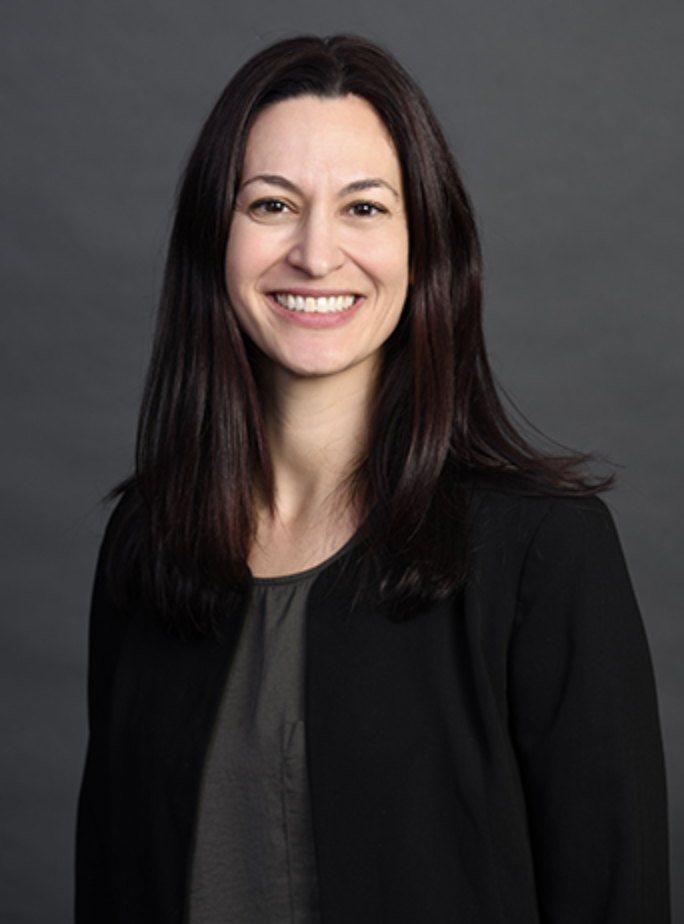
Christine Conelea, PhD is an Associate Professor in the Department of Psychiatry & Behavioral Sciences at the University of Minnesota, a licensed clinical psychologist, and the director of the MnTiC Lab. Dr. Conelea’s research interests include Tourette Syndrome/tic disorders, obsessive-compulsive disorder (OCD), and anxiety disorders. She is particularly interested in understanding how the brain, environment, and psychosocial factors interact to impact symptoms and treatment outcomes.

Adrienne Manbeck, PhD, is a postdoctoral fellow in the MnTiC Lab. Dr. Manbeck earned her doctorate in clinical psychology at the University of Minnesota and completed her pre-doctoral internship at Allegheny General Hospital in Pittsburgh, PA. Dr. Manbeck’s research aims to better understand the development, maintenance, and treatment of OCD and anxiety disorders across the lifespan, with a particular emphasis on the impact of societal stressors on these disorders, including the ways in which societal stressors impact symptom severity, access to high-quality treatment, and impact of treatment on symptoms.
More Reading:
Micali, N., Heyman, I., Perez, M., Hilton, K., Nakatani, E., Turner, C., & Mataix-Cols, D. (2010). Long-term outcomes of obsessive–compulsive disorder: Follow-up of 142 children and adolescents. British Journal of Psychiatry, 197(2), 128–134.
Conelea, C.A., Woods, D.W., Zinner, S.H. et al. The Impact of Tourette Syndrome in Adults: Results from the Tourette Syndrome Impact Survey. Community Ment Health J 49, 110–120 (2013).
Tourette Association of America Tourette Awareness Month resources
MnTiC Lab
Check out our research
Stay in touch! Subscribe to our newsletter
The post Tics and OCD: Why Treatments Differ and Ways to Support Your Kids appeared first on International OCD Foundation.