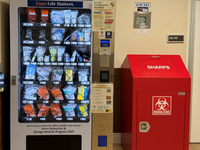
<strong>Background:</strong> Veterans face stigma, privacy concerns, and access barriers to HIV screening. For studies that use at-home HIV self-testing (HIVST) kits distributed through vending machines (VMs), recruitment and educational materials must communicate study purpose and participation options clearly, minimize confusion and stigma, and provide actionable next steps for participants who test outside of clinical settings. <strong>Objective:</strong> This study aimed to elicit structured feedback from a small group of veteran advocates living with HIV on recruitment flyers and education, survey, and interview materials for a Veterans Health Administration pilot evaluation of VM-dispensed HIVST kits and to document how this feedback informed prelaunch revisions. <strong>Methods:</strong> Using participatory action research, we recruited veteran advocates with lived and living expertise with HIV (August 2025). Veteran advocates completed structured written reviews of study materials and returned written feedback forms; feedback was also discussed during a 1-hour virtual focus group in September 2025. We analyzed written feedback and the focus group transcript using a rapid, team-based consensus thematic approach. Two study team members independently reviewed each feedback source and documented key recommendations and candidate feedback domains using analytic notes; the team then met to cluster feedback into domains and reach consensus on final domain labels and definitions. To ensure findings directly informed material improvement, we created a revision matrix mapping each feedback domain to the relevant study material or materials, a summary of feedback, and the resulting changes made. This matrix served as an audit trail linking feedback to the “feedback and revisions” tables presented in the Results section. <strong>Results:</strong> Four veteran advocates provided structured written feedback on study materials, and 3 participated in the 1-hour focus group. Across study materials, veteran advocates desired (1) clearer, plain-language descriptions of study purpose, eligibility, and participation pathways; (2) reduced potential for confusion between research recruitment, VM access, and HIVST kit promotion; (3) reduced text density and participant burden; and (4) more actionable “next steps,” including human support and linkage-to-care resources appropriate for at-home self-testing. Revisions included a streamlined recruitment flyer with simplified calls to action and clearer survey versus interview pathways; a more cohesive and condensed education packet oriented around self-testing steps, results interpretation, and support resources; questionnaire updates to reduce redundancy and improve usability; and an interview guide with improved flow, more participant-centered framing, and optional questions on emotional reactions and support needs. <strong>Conclusions:</strong> In this small formative review, veteran advocate feedback was systematically mapped to prelaunch revisions across multiple study materials. Transparently documenting stakeholder input and material adaptations may support future refinement of veteran-facing HIV screening and self-testing materials in Veterans Affairs and similar settings.