Conditions: Asperger’s Disorder; Asperger Disorder; Autism Disorder; Autism; ADHD – Attention Deficit Disorder With Hyperactivity; ADHD; ASD; Alcohol Abuse/Dependence; Alcohol Addiction; Alcohol and Other Drug Use Disorders; Alcohol and Other Substance Use Prevention; Gambling Addiction; Gambling Disorder; Sex Abuse; Sex Behavior; Sex Crimes; Sex Disorder; Sex Disorders; Gender Dysphoria, Adult; Eating Behavior Disorders; Narcotic-Related Disorders; Narcotic Addiction; Narcissism; Psychiatric Disorder; Psychedelic Effects in Healthy Volunteers; Psychedelic Experiences; Psychedelic Drug Dependence; Marijuana Use Disorder; Marijuana Abuse and Dependence; Smoking (Tobacco) Addiction; Smoking Among Youth; Smoking Abstinence; Abstinence, Sex; Opiate Substitution Treatment; Opioid Abuse (Disorder); Opioid Abuse and Addiction; Cocaine Abuse; MDMA (‘Ecstasy’); Addiction Disorders; Homeless and Low Incomes People, Refugees; Homelessness; Reliability and Validity; Anger Problems; Child Abuse, Sexual
Interventions: Behavioral: AI City Hall Project (AIhealth4u – Public Health Central); Behavioral: AI City Hall Project (QAIAx Microcity A – AI Public Health Central)
Sponsors: Veterans Recovery Network Inc.; U.S. Special Operations Command; Central Virginia VA Health Care System; AI-119 Vulcan Project Research & Educational Technology Company (fka Henry Nanpei Academy Project)
<strong>Background:</strong> Long COVID is a clinical condition that significantly influences quality of life, productivity, and morbidity in the individuals affected. Much of the research to date has examined medical comorbidities and their associations with long COVID, but there remains a substantial need to understand the social and behavioral factors associated with long COVID. <strong>Objective:</strong> The objective of this study was to investigate the prevalence and associations of Medical Expenditure Panel Survey (MEPS)–defined long COVID among adults in the United States through the application of the Andersen behavioral model. <strong>Methods:</strong> This cross-sectional database study used the 2022 MEPS dataset. Variables in this analysis were organized according to the Andersen behavioral model. The appropriate weighting variable was used to obtain weighted population-based estimates. Between-group differences (ie, those with MEPS-defined long COVID vs those without) were assessed using chi-square tests, and a multivariable binomial logistic regression model was developed to assess the association between each variable and having MEPS-defined long COVID. <strong>Results:</strong> A total of 11,266 individuals were eligible for inclusion in this study. This represented a weighted population of 256,500,584 American adults. Of these 11,266 individuals, 790 (7%; weighted population=18,397,214) had MEPS-defined long COVID, whereas 10,476 (93%; weighted population=238,103,371) did not. Variables identified that were statistically associated with having MEPS-defined long COVID among American adults included 3 predisposing variables (age, sex, and Asian race), 2 enabling variables (marital status and employment status), 3 need variables (number of chronic conditions, health status, and instrumental activity of daily living limitations), 1 personal health practices variable (ever receiving the COVID-19 vaccine), and 1 external environmental variable (south region). <strong>Conclusions:</strong> The prevalence and factors associated with having MEPS-defined long COVID among American adults in this study offer insights to expand our limited understanding of the complex environmental and social factors associated with MEPS-defined long COVID. Further research is required among the long COVID population to better understand and differentiate the causes and consequences of this condition.
A second positive Phase III data readout in two months is a major reason why Intellia Therapeutics (Nasdaq: NTLA) shares have soared more than 76% over the past six months—including a 29% surge this past week that followed the CRISPR gene editing therapy developer’s lead pipeline candidate lonvoguran ziclumeran (lonvo-z) meeting three key secondary endpoints in a pivotal study in patients with hereditary angioedema (HAE).
Lonvo-z met the Phase III HAELO trial’s (NCT06634420) primary endpoint, Intellia announced back in April, by showing an 87% reduction (p<0.0001) in mean monthly attacks in the lonvo-z arm vs. the placebo arm during the efficacy evaluation period (weeks 5-28). Lonvo-z also aced the trial’s key secondary endpoint by showing that 62% of the 52 patients in the lonvo-z arm were entirely attack-free and therapy-free for the six-month efficacy evaluation period, vs. just 11% of the 28 patients in the placebo arm (p<0.0001).
On June 13, Intellia presented and published additional data showing lonvo-z to have achieved positive results on three other key secondary endpoints:
Monthly rate of attacks requiring on-demand treatment, Weeks 5–28, mean (0.19 vs. 1.79, 95% CI).
Monthly rate of moderate/severe attacks, Weeks 5–28, mean (0.11 vs. 1.23, 95% CI).
Change from baseline to Week 28 in AE-QoL total score, mean ( — 23.51 vs. — 6.47, 95% CI).
Intellia presented the data at the European Academy of Allergy & Clinical Immunology (EAACI) Annual Congress 2026 in Istanbul, Türkiye, and published the results in TheNew England Journal of Medicine.
The data was strong enough for Intellia to continue the rolling Biologics License Application (BLA) submission that it began in April. The company expects to complete the BLA filing by year’s end and hopes to gain FDA approval and launch lonvo-z in the first half of 2027.
“Super pleased”
“We were super pleased with the results that we saw,” John Leonard, MD, Intellia’s president and CEO, told GEN. “We’re essentially replicating what we’ve seen throughout the program, where most of the patients reached a status of no attacks, no therapies over the course of this extended observation period. For those patients who didn’t, they appeared to be on their way to reaching that kind of a state. And critically important was that every single patient who got the drug was off long-term prophylaxis.”
“Across the board, and across all subgroups, the drug performed extremely well. So, we think it speaks to physicians, it’s going to speak to payers in terms of how they think about the drug and its ultimate, excellent utility,” Leonard said.
Investors and analysts appeared to share that enthusiasm this past week, as Intellia’s stock price rose over three of the four trading sessions following the release of data on the secondary endpoints. Intellia shares jumped 23% on June 15, the first trading day since the news, rising from $12.11 to $14.92. After a day of profit-taking that saw shares dip 2.5%, to $14.55, Intellia’s stock resumed its upward trajectory, rising nearly 4.5% to $15.20 on Wednesday, then another 3% Thursday, closing the week at $15.67. Markets were closed on Friday for the Juneteenth holiday.
Since December 18, 2025, when Intellia shares closed at $8.88, the stock has soared nearly 76.5%, accounting for most of its one-year gain of 62%. Lonvo-z accounted for three of Intellia’s four stock price peaks in 2026: The dosing of the first patient in HAELO, announced January 22, led the stock to climb 13%, from $14.03 to $15.90.
Shares surged 12% March 2, from $13.78 to $15.44, when the FDA lifted a clinical hold on the company’s Phase III MAGNITUDE trial (NCT06128629) assessing nexiguran ziclumeran (nex-z) in transthyretin amyloidosis with cardiomyopathy (ATTR-CM). The FDA imposed the hold after an elderly patient died during a study of Nex-z, an in vivo CRISPR-based therapy developed in partnership with Regeneron Pharmaceuticals (Nasdaq: REGN) to treat ATTR-CM by inactivating the TTR gene.
The third peak, an 8% gain from $15.31 to $16.57 on April 22, followed Intellia reporting positive data for lonvo-z, showing that it met HAELO’s primary endpoint, while the fourth peak followed the secondary endpoint announcement.
Misperceived market
“Hereditary angioedema has, in the last 10 to 15 years, had a variety of therapies arrive that are better than the ones that were there 20 years ago. Twenty years ago, circumstances were pretty grim for patients with HAE,” Leonard recalled. “I think some investors have looked at this incorrectly as a satisfied market, only because there are other therapies available.”
Among those therapies are three that won FDA approval last year. Last August, the agency approved Dawnzera® (donidalorsen), a prekallikrein-directed antisense oligonucleotide designed to prevent HAE attacks in patients ages 12+, marketed by Ionis Pharmaceuticals (Nasdaq: IONS). A month earlier, the FDA authorized Ekterly® (sebetralstat), a plasma kallikrein inhibitor indicated for the treatment of acute attacks of HAE in patients ages 12+, marketed in the United States by KalVista Pharmaceuticals (Nasdaq: KALV).
And in June 2025, the FDA approved Andembry® (garadacimab-gxii), an activated Factor XII (FXIIa) inhibitor (monoclonal antibody) and the first long-term prophylactic HAE treatment designed to target Factor XIIa, administered as a once-monthly subcutaneous injection for patients ages 12+, marketed by CSL Behring, the largest business unit of Australian-owned CSL (ASX: CSL).
“What we’re showing is that a lot of efficacy and a lot of utility has been left on the table, and that it’s possible for patients to get pretty close to something resembling a normal person who does not have HAE and all of the things, benefits that come with that,” Leonard said. “As people have looked at the data more completely, I think they’re seeing more and more that that’s the case, and maybe some of those original premises that they had are not quite correct.”
In research notes, three analysts said Intellia’s latest data strengthened the company’s future case to regulators for pursuing approval of lonvo-z as a one-time HAE treatment.
“We view these data as furthering Intellia’s case for regulatory approval following its expected completion of a rolling BLA,” Myles R. Minter, PhD, a partner and biotechnology analyst with William Blair, wrote June 15.
A day earlier, Jefferies equity analyst Maury Raycroft, PhD, commented that Intellia’s latest data will help lonvo-z gain more than a foothold in the HAE market.
“Positive implications”
“Big picture, we believe total HAE data have positive implications for commercial positioning” of lonvo-z, Raycroft wrote. “Editing is expected to be durable (we have seen longer term ph.I/II data out to 3-yrs); therefore, NTLA’s approach could eliminate need for lifelong chronic tx [therapy], justifying the value proposition of a 1X tx, despite competition in a crowded HAE space.”
Raycroft cited market research from Intellia showing that 64% of surveyed patients on LTPs [long-term prophylaxis drugs] are extremely likely to transition to a one-time therapy, while 54% surveyed docs expressed intent to prescribe such a treatment.
Mani Foroohar, MD, senior managing director, genetic medicines, and a senior research analyst with Leerink Partners, said Intellia’s latest results “again demonstrate lonvo-z’s clean safety and best-in-class efficacy and convenience.”
Writing in NEJM, the team of HAELO investigators reported no serious adverse events in patients treated with lonvo-z: “The most common adverse reactions were infusion-related reactions, which were generally transient and resolved without intervention. Elevated levels of serum aspartate aminotransferase and alanine aminotransferase, which occurred in approximately 10 to 15% of patients treated with lonvo-z, were transient, asymptomatic, and resolved without intervention.”
Foroohar sided with optimistic investors over their pessimistic counterparts in arguing that patients will warm up to a one-time treatment, though it will likely be costlier than current therapies.
Bears and bulls
“Bears argue limited patient demand to move up the innovation curve in a market with several approved treatments. We take the other side of this and see onetime therapy (vs lifetime chronic dosing) and patient desire to be attack-free as potent tailwinds to adoption,” Foroohar wrote. “Longer follow-up and crossover data (caveat – small n [number of patients studied]) provide an early glimpse at the improving profile of lonvo-z over time. We look to more data ahead of 1H27 launch to further educate physicians/patients.
“Subgroup analyses demonstrate clear benefit across all patient populations (prior LTP use, historical attack severity/frequency, etc.), supporting broad uptake as SoC [standard of care] across HAE—recognizing this will take time to play out as physicians gain comfort with this (likely) first approved in vivo gene editing therapy,” Foroohar added.
Intellia has not set a price for lonvo-z.
“We have said publicly we’re not going to set any new records beyond prices that have been precedented,” Leonard said.
HAE patients, he continued, “are some of the most costly patients that payers have. They’re small in number, but high in cost, with the therapies they take and their healthcare resource utilization exceeding $1 million a year.
“When you consider that these are patients that are oftentimes treated, or first diagnosed in adolescence or young adulthood, the lifetime costs are frighteningly high,” Leonard explained. “We are confident that, and we have this as an intended outcome, that we will save lifetime health, resources in very, very substantial terms, in a way that payers see and can recognize. We want to make it easy for patients to get onto the therapy, and we want to make it very competitive, cost-competitive for physicians taking care of them.”
Leaders and laggards
Elicio Therapeutics (Nasdaq: ELTX) shares plunged 72.5%from $14.85 to $4.08 on June 15 after the developer of immunotherapies to treat high-prevalence cancers said it was evaluating multiple strategic financing and partnership opportunities to advance its planned Phase III adjuvant pancreatic cancer immunotherapies program and broader AMP platform. The action came after ELI-002 7P, a 7-peptide formulation of its lead candidate ELI-002, failed the Phase II AMPLIFY-7P trial (NCT05726864) in patients with mKRAS-driven pancreatic ductal adenocarcinoma (PDAC). ELI-002 7P missed the pre-specified primary endpoint of disease-free survival (DFS) in the intent-to-treat population. Elicio said the ELI-002 7P arm had a higher proportion of R1 resected (higher residual disease) patients vs. the observation arm (19% vs. 10%), and that post-hoc analyses showed significant DFS improvement (R0: HR 0.65, p=0.048) in the 121 lower residual disease (R0 completely resected) patients, a subgroup representing approximately 84% of enrolled patients. Elicio said the trial results will shape a Phase III strategy focused on a defined R0 resected population and additional ELI-002 7P dosing.
Neumora Therapeutics (Nasdaq: NMRA) shares plummeted 49% from $1.78 to 91 cents on June 15 after the brain disease drug developer said it was chopping its workforce by approximately 35% or about 34 jobs, ending development of its major depressive disorder (MDD) candidate navacaprant, and refocusing on advancing the rest of its pipeline. The actions came after navacaprant missed statistical significance on the primary and key secondary endpoints of the Phase III KOASTAL-2 trial (NCT06058013) and KOASTAL-3 trial (NCT06058039) in MDD. The primary endpoint was the change from baseline to week 6 on the Montgomery-Åsberg Depression Rating Scale (MADRS). Neumora projected the job cuts would save it approximately $10 million annually, to be partially offset this year by approximately $2 million in one-time restructuring costs. Neumora said current cash and cash equivalents are expected to provide runway into Q3 2027, including multiple expected key clinical milestones. Neumora’s pipeline includes NMRA-511 in Alzheimer’s disease agitation, NMRA-898 in schizophrenia, and NMRA-215 in cardiometabolic disease.
uniQure (Nasdaq: QURE) shares zoomed 78% from $26.99 to $48.16 Wednesday after the gene therapy developer announced the FDA’s revised position that a three-year analysis from its two-trial, Phase I/II study (United States, NCT04120493, and Europe (NCT05243017) of AMT-130 in Huntington’s disease was now acceptable as the primary basis of a Biologics License Application (BLA) for accelerated approval of the gene therapy. Researchers hailed “game-changing” data last year showing significant slowing of Huntington’s disease (HD) progression, but the FDA disagreed while its Center for Biologics Evaluation and Research (CBER) was headed by Vinayak (Vinay) Prasad, MD, who resigned in April. uniQure said the FDA seeks to align on the confirmatory study design prior to the BLA submission, including considering allowing concurrent control on standard-of-care therapy instead of a sham procedure. “FDA communicated that they would work as expeditiously as possible with uniQure on this effort. The company is committed to conducting the confirmatory study without delay and expects to further align with the FDA on the details of such a study prior to BLA submission,” uniQure stated.
There are plenty of useful things a metric can reveal. There are even more it can obscure or corrupt. It took me well over a decade of tracking my own life in ever greater detail to fully appreciate this duality, which probably reveals something about both me and the nature of measurement.
Like a lot of people bitten by the self-quantifying bug, I initially started gathering personal data to pursue a nebulous collection of goals and desires. As a sedentary technology journalist, I wanted to feel better physically and emotionally, to get outside more, and—where possible—to bring order to some of the messiness and uncertainty of my daily existence. These all seemed to be things that could be improved with the cool clarity of numbers.
Self-quantifiers often get stereotyped as obsessive self-optimizers (and many of them are), but my reasons for producing and collecting personal data were less about life-maxxing and more about life meaning—at least at first. As most people who know me will attest, I do not have now, nor have I ever possessed, a “productivity mindset.” I’m also not all that interested in life hacks, shortcuts, or new ways to compare myself with other people. Instead, what I wanted out of metrics—what I hoped I could divine from a never-ending stream of numbers about my health, work, and social life—was something more elusive: self-knowledge. This was my first mistake.
The idea that the more we know, the better is so profoundly embedded in our culture that it feels weird to even point it out. Since at least as far back as the Enlightenment, the primary way we’ve all agreed to go about knowing more has been through measurement and quantification. After all, more knowledge—more data—leads to better decisions, which leads to happier, more fulfilled people. Or so we’re told, and with increasing frequency in the era of AI.
When two Wired magazine editors, Gary Wolf and Kevin Kelly, coined the term “quantified self” in 2007 and helped launch the movement we are all now helplessly a part of, they were essentially selling this very idea. “Unless something can be measured, it cannot be improved,” wrote Kelly in an early blog post, doing his best impression of Lord Kelvin. “So we are on a quest to collect as many personal tools that will assist us in quantifiable measurement of ourselves.” Almost 20 years later, that quest is easier than ever thanks to a flood of devices, apps, and websites all designed to help us build our self-knowledge through numbers.
My first tool was a small, plastic clip-on Fitbit I started using in 2011. It did one thing: count the number of steps I took in a day. As a lifelong video game player, I was already well acquainted with the motivational power of simple scoring systems, and I hoped my new gadget would offer the gentle numerical nudge I thought I needed to step away from my Twitter feed and, if not touch grass, at least walk next to some. Walking also seemed to be one of the few times I had what could charitably be called intelligent ideas, which seemed like another promising by-product of doing more of it.
Alas, that was short-lived. I can’t tell you precisely when “getting out into nature more” or “thinking smarter thoughts” stopped mattering to me as goals, but I suspect it took no more than a few weeks. What I can say with certainty is that my initial goal of 6,000 daily steps quickly turned into 10,000, which then jumped to 15,000 and eventually settled at 20,000 for years. Stories about becoming a “steps guy” are clichéd at this point, and they’ve earned that status for a reason.
It didn’t take long for me to trade in pedometers for heart-rate monitors (I also started running), smartwatches, sleep-tracking rings, and an embarrassing number of macronutrient-tabulating apps. Outside the health and fitness realm, my early career as a journalist also happened to coincide with the rise of social media and web analytics tools like Chartbeat, which promised to further quantify difficult-to-measure aspects of my life, like “job success” and “impact,” by tracking things like page views, followers, retweets, likes, and all sorts of other attentional metrics that now carry great weight.
Metrics inevitably redefine your core sense of what’s important, whether you’re aware of the trap or not.
Ultimately, during the 10-plus years I diligently tracked my heart rate, steps, active calories, sleep, story engagement time, stress levels, and other metrics, I gained virtually nothing in terms of greater self-knowledge. (I suppose I did learn that I liked to make numbers go up and down, but who doesn’t?) The swirl of data that followed me everywhere did not lend additional meaning or insight to the way I relate to myself, my work, or the important people in my life. In fact, the more I used numerical proxies, the worse I felt about pretty much everything.
What I did learn were two important lessons about what happens when you try to quantify the minutiae of your life. First and foremost, whatever the amount of data you’re currently collecting about yourself, it will never feel sufficient. There’s always a new metric around the corner, a better way for a tracker to remix its readings and more accurately measure what’s “important”: heart rate variability, daily stress, exercise “readiness,” cardiovascular or “fitness” ages. Measurement begets more measurement. You can count on it.
The Score: How to Stop Playing Somebody Else’s Game C. Thi Nguyen
PENGUIN PRESS, 2026
The second lesson was less obvious but no less significant. The more personal or nuanced your goals are when you set off on your self-quantifying journey, the more likely it is you will ultimately replace them with some simplified metric or ranking. Want to become a better journalist? Why not use page views and leaderboards as a proxy for success? Enjoy cooking and want to improve? Foodie metrics dictate that more complicated recipes with longer ingredient lists are the answer. Even when we know that the value of good journalism isn’t reflected in how many people read a given story or that the joys of cooking are as much about improvisation and experimentation as about successfully following some complex recipe, it’s hard to resist the allure of a simple score or stat. Metrics inevitably redefine your core sense of what’s important, whether you’re aware of the trap or not.
Over the years, people have invented various terms to describe this phenomenon. In his recent book The Score: How to Stop Playing Somebody Else’s Game, the philosopher C. Thi Nguyen calls it “value capture.” Value capture happens, he says, when you adopt external sources of measurement and then let them rule you without adapting them to suit your life. “In value capture, you’re essentially outsourcing your values,” Nguyen writes. “You’re letting an external metric or ranking set what’s important for you.” Crucially, you’re also outsourcing the process of figuring out your own sense of meaning. It’s why my walks quickly shifted from feeling meditative to prioritizing miles.
Individuals, institutions, and indeed entire societies can fall prey to value capture. In fact, once you start noticing it, you start seeing it everywhere—in journalism, education, and business, but also in our food, our hobbies, and, yes, the way we measure our health and happiness. Here’s how Nguyen puts it:
Value capture happens when a restaurant stops caring about making good food and starts caring about maximizing its Yelp ratings. It happens when students stop caring about education and start caring about their GPA. It happens when scientists stop caring about finding truth and start caring about getting the biggest grants. It even happens in religion. A pastor recently told me that his church had become completely obsessed with baptism rates. The higher-ups had established an internal leaderboard in which the pastors competed on monthly baptism rates, and it was starting to dominate everybody’s attention. He’d found himself caring less about the long-term spiritual development of his flock and focusing more on trying to deliver popular sermons that would up his baptism rates and move him up that leaderboard.
At its core, The Score is trying to untangle a mystery that Nguyen, a specialist in the philosophy of games at the University of Utah, has been thinking about for a long time: Why is it that numbers and scoring systems in games can be the source of so much joy and fluidity and play, but public measures and institutional metrics (i.e., scores that apply to the real world) seem to drain the life out of everything and thrust us all into a bleak mindset of grinding optimization?
Porter, a historian of science who specializes in the social power of numbers, has spent his career looking at why quantification has become so dominant, not just in political and bureaucratic life but everywhere. One of his key insights about the inherent attractiveness of quantification, which he calls “a technology of distance,” is that it “minimizes the need for intimate knowledge and personal trust.” Put another way, metrics travel extremely well between different contexts and are easy to grasp and aggregate.
Whether it’s a student’s GPA or a country’s GDP, these measures are understood by pretty much everyone. But that understanding comes at a price, Porter reminds us: To arrive at a clear metric, you inevitably need to simplify what you’re attempting to measure, often jettisoning heaps of nuanced, qualitative, or open-ended information so that others can find the resulting number legible.
No one (hopefully) believes that a GPA captures in any meaningful way a student’s entire educational experience or aptitude for learning, but we’ve agreed to use it because more qualitative assessments are onerous to wade through and require expertise to decipher and compare. Ditto for the economic metric of GDP, which politicians and societies are now compelled to drive higher and higher because a group of economists once concluded that this figure correlates with general economic well-being.
This is the essential tension at the heart of all data, argues Nguyen. Any institutional quantification, he says, requires that the evaluation procedure and its product be comprehensible across contexts. That profoundly limits what the metric can actually measure. “In value capture, you’re ultimately taking that decontextualized nugget and internalizing it,” he writes. “You’re guiding your life using an evaluative technology that has been engineered to travel between contexts, by stripping it of nuance.”
Every so often I’ll find myself in friendly debate with a “numbers person”—a statistician, an economist, or a friend who’s still a committed self-quantifier. After patiently listening to my measurement-gone-awry examples—the disastrous attempt to quantify pain as “the fifth vital sign” in the mid-1990s (which exacerbated the opioid epidemic), or any of the countless examples of the McNamara fallacy, where decisions in academia, medicine, and politics are based solely on what’s easily measured—many will insist that I’m misunderstanding or misinterpreting the whole point of measuring. Metrics, they’ll say, are simply a means, and the important questions concern the ends for which they are used. In other words, these unfortunate outcomes amount to user error, not something inherently dangerous or misleading about the nature of measurement.
At some point during these conversations, Goodhart’s Law will invariably come up, usually as an explanation the metrics-minded deploy for why the ends get all mucked up. The principle, which is attributed to the British economist Charles Goodhart, is often expressed as the following: “When a measure becomes a target, it ceases to be a good measure.” I have a profound dislike for Goodhart’s Law, not because I think it’s untrue, but rather for the way it gets interpreted.
As Nguyen notes, Goodhart’s Law says very little about why metrics fail to capture what’s important—or what to do about it. Find better measures, some will conclude. Don’t let metrics become targets, others will insist. These are not helpful takeaways. All measurements, I would argue, are in fact targets, whether you intend them to be or not. Metrics inevitably present one direction or option as better, Nguyen writes in The Score—“longer lifespans, faster student graduation rates, more page views, higher customer satisfaction scores.” What people are talking about when they bring up Goodhart’s Law isn’t human error; it’s actually a fundamental problem with measurement itself.
I want to be clear here: Measurement can and does serve a number of vital functions. It has in a very literal sense made the modern world possible, with all its life-saving, suffering-reducing, and awe- inspiring scientific breakthroughs. When used with care and diligence, metrics can make our progress (or lack of it) clearer and more transparent. Are we decreasing carbon dioxide emissions or not? They can also introduce accountability into formerly opaque systems, such as by measuring whether a company is complying with state and federal regulations. They can even make us more objective, reduce biases, and galvanize us to act.
But as Nguyen points out throughout The Score, the fundamental weakness of metrics comes when we use them to pursue subtler, more personal goals. What I think many of us miss—what I know I certainly missed—is that there are always trade-offs when you try to distill something important down to a data point. When we turn to metrics to understand ourselves, our social world, and culture as a whole, they will never come close to capturing what matters. Even worse, they’ll often actively obscure it.
Today, I find that numbers have very little to offer when it comes to my daily work, my physical or mental fitness, my relationships, or any other part of my life I consider important. Granted, I’m lucky enough to be in relatively good health at the moment. I don’t have to track my glucose levels or monitor my blood pressure. As a freelance writer, I also have the luxury of not having numbers foisted on me in the form of key performance indicators (KPIs), objectives and key results (OKRs), or any of the endless quantitative evaluations that come baked into pretty much every corporate and gig economy job.
Still, in a very real sense, there is no escaping metrics or, especially, the logic that accompanies them. Knowing has become numeric, and we all live in a world that increasingly sees us as a collection of numbers—as “data subjects.” The first and most urgent challenge, I’d suggest, is finding a way to keep us from seeing ourselves and each other that way.
This won’t be easy. As Porter, Nguyen, and countless other philosophers, anthropologists, and historians have already observed, the language of numbers is largely how we ascribe value today—as well as how we digest and metabolize our relationships to ourselves, to others, and to the world around us. Indeed, many of us have accepted not only that metrics have a natural existence in human affairs but that there are in fact no aspects of human life that cannot be somehow translated into data.
Knowing has become numeric, and we all live in a world that increasingly sees us as a collection of numbers— as “data subjects.”
So how do we push back? Nguyen’s book offers a useful first step. As he notes again and again in The Score, believing that numbers say something real or useful about human needs and desires gives them power. We can, at the very least, start to seriously question that belief, to ask what meaning and pleasure we might be giving up in pursuit of a metric.
Doing so will hopefully lead to another realization: that playing the numbers game is ultimately a losing proposition for humans. If we insist on expressing our worth through attentional metrics and productivity scores, if we continue to turn intelligence and creativity into a series of benchmarks for AI to surpass, we’ve already lost. Of course machines will surpass us in a world built around metrics. That is literally what we create them to do. The answer is not to turn ourselves into machines too.
If there’s one thing that keeps me up at night, it is that we’ve become so accustomed to seeing and understanding the larger world and ourselves through numbers that it has deprived us of the language to express what’s fundamental and valuable about our own humanity. We need this ability now more than ever, especially if we’re going to adequately answer two of the most important questions of our era: What are humans for? And what is AI for?
As part of my own attempts to disentangle myself from a life of numbers—efforts that started shortly before covid—I’ve abandoned most of the tools of measurement I spent a decade collecting. I’ve largely given up on social media. I stopped using apps to track my health and well-being. The watch I currently wear tells me the time and the date and nothing else.
In fact, the only holdover from my days of obsessive self-quantification is a dogmatic devotion to walking—without all the step counting, of course. These days, I walk when I’m feeling disillusioned or overwhelmed; I walk when I can’t figure out how to finish an essay; I also walk because I enjoy spending time outdoors with my dog and catching up on the details of my neighbors’ lives. The benefits of pursuing this daily activity are as clear and obvious to me as anything could be in life. I just can’t express them in a number.
Bryan Gardiner is a writer based in Oakland, California.
<strong>Background:</strong> Use of in-home video telehealth rapidly expanded in response to the COVID-19 pandemic, including at Veterans Affairs (VA), a forerunner in telehealth. Despite this uptick, differences in use by patient age and rurality created a digital divide that persists to this day. While clinicians frequently cite patients’ older age and lack of technical skills as barriers to in-home video telehealth, it remains unclear how clinicians decide whether to offer video visits to patients and to what extent these beliefs may hinder offering video visits to older adults. Gathering perspectives from clinician users of in-home video telehealth may illuminate opportunities to ensure continued access to care through solutions such as telehealth. <strong>Objective:</strong> This study aimed to examine clinician decision-making around the offer of in-home video telehealth to understand how interprofessional clinicians determine to whom they offer in-home video telehealth and what factors (organizational, personal, or attitudinal) influence their decision. <strong>Methods:</strong> We conducted a qualitative study by using semistructured interviews. Participants were interprofessional clinicians (N=16) employed by 11 different VA hospitals and included 1 clinical pharmacist, 6 medical doctors, 2 nurse practitioners, 1 occupational therapist, 3 psychologists, 1 physical therapist, 1 speech-language pathologist, and 1 social worker. All the participants had at least some experience using in-home video telehealth from locations across VA (the largest integrated health care system in the United States) and were interviewed over a 6-month period. Interviews focused on clinicians’ use of video telehealth and the decision-making process involved in offering in-home video telehealth. We used directed content analysis with a rapid analytic approach, given the time-pressured nature of our project. <strong>Results:</strong> This study revealed that clinician decision-making around offering in-home video visits is complex and influenced by several domains, namely, (1) clinician factors, including experience with video and perceived benefits of video; (2) appointment factors, including the visit’s clinical goal; (3) clinician-reported patient factors, including age and willingness to try video; (4) patient social context, including caregiver availability; (5) geographical factors, such as availability of reliable high-speed internet and patient distance from the medical center; and (6) health system factors, including technical support and clinician ability to work from home. Access to in-home video telehealth may be facilitated by clinician familiarity and confidence with telehealth technology, strategies to improve patients’ technical skills, and support for caregivers. Infrastructure also plays an important role, including device availability, broadband reliability, and clear protocols for matching services to video visits. <strong>Conclusions:</strong> Findings highlight the importance of clinician competency in telehealth, patient and caregiver digital readiness, and a supportive technology infrastructure to equitable in-home video care. In addition, improved guidance for specific clinical services and awareness of potential biases may enable consistent, accessible telehealth delivery for older adults and medically complex populations. <strong>Trial Registration:</strong>
Cretex Medical says it has purchased select assets and capabilities of Holland Molds Inc. in Wadena, Minnesota. The deal closed June 10, Cretex Medical said. Cretex Medical is a subsidiary of Elk River, Minnesota-based Cretex Cos., providing medical device contract manufacturing and engineering services through Brooklyn Park, Minnesota-based Cretex Medical Component & Device Technologies (CDT).…
The mission of the International OCD Foundation — to ensure that no one affected by OCD or related disorders suffers alone — requires the collaboration and dedication of countless individuals and professionals around the world. Each year, the IOCDF is honored to recognize a few of these contributors who have gone above and beyond to inspire hope, build community, and move us closer to a world where everyone has access to effective support and care.
These awards will be presented at the 31st Annual OCD Conference, sponsored by OCD Institute Texas, on Saturday, July 11, 2026.
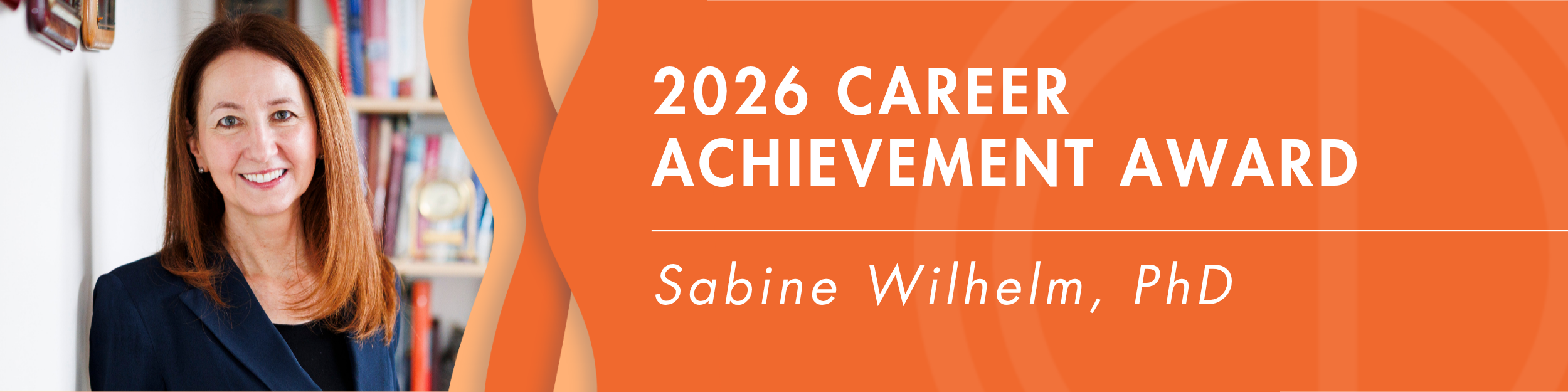
2026 Career Achievement Award Winner: Sabine Wilhelm, PhD
Highlighting the significant and notable contributions of a professional in the field of OCD and related disorders.
Sabine Wilhelm, PhD, is the Donovan-Chien Family Endowed Professor at Harvard Medical School and Chief of Psychology at Mass General Brigham. She directs both the Center for OCD and Related Disorders and the Center for Digital Mental Health at Massachusetts General Hospital. Dr. Wilhelm’s work leverages AI and technology to improve mental health care globally, focusing on developing personalized, scalable digital treatments. She has authored 375 publications and nine books. She has received major awards, including the NAMI Scientific Research Award and the Peter Ranney Innovation Award from the World Medical Innovation Forum. Dr. Wilhelm is the outgoing Chair of the IOCDF Scientific & Clinical Advisory Council after serving since 2023, and she has served on numerous committees to support the Foundation’s work to advance research and resources for OCD and related disorders.
2026 Patricia Perkins Service Award Winner: Aureen Wagner, PhD
Honors any professional or IOCDF member who has stood out as a long-time (10+ years) and active contributor to the IOCDF in multiple ways. This award is named after Patricia Perkins, IOCDF co-founder, past president of the Board of Directors, and previous executive director.
Winner Bio: Aureen Pinto Wagner, Ph.D., joined the IOCDF in 1992 as a newly-minted clinical psychologist. She presented a workshop for parents at her first conference in 2000, and has been a regular presenter at most conferences since then. Dr. Wagner has contributed to several IOCDF livestreams and presented at the annual Online OCD Camp for youth and parents since its inception in 2021. She serves on the Scientific and Clinical Advisory Board of the IOCDF and has been on the faculty of the Behavior Therapy Training Institute since 2001.
Dr. Wagner is dedicated to bringing hope and help to families experiencing OCD via evidence-based, developmentally-tailored treatment, and to increasing access to treatment by training clinicians to treat OCD. With the goal of disseminating evidence-based treatment, Dr. Wagner provides workshops and consultation to clinicians and has published a treatment manual focused on child-friendly treatment titled, “Treatment of OCD in Children and Adolescents: A Professional’s Kit.”
At The Anxiety Wellness Center in Cary, North Carolina, Dr. Wagner provides in-person and telehealth treatment for youth and adults with OCD, anxiety and related conditions, as well as parenting support for families. In keeping with her mission of empowering youth and families, Dr. Wagner wrote the award-winning books “Up and Down the Worry Hill: A Children’s Book about Obsessive-Compulsive Disorder and its Treatment,” “What to do when your Child has Obsessive-Compulsive Disorder: Strategies and Solutions” and “Worried No More: Help and Hope for Anxious Children.”
2026 Hero Award Winner: Stephen Smith
Recognizes any individual that has stood out as a particularly effective advocate for OCD and related disorders or who helped raise awareness of these disorders.
Stephen Smith is the Co-founder and Chief Executive Officer of NOCD, the world’s largest OCD-specialty treatment provider for both adults and children. After emerging from a personal struggle with undiagnosed OCD and experiencing the success of Exposure & Response Prevention (ERP) therapy first-hand, Stephen made it his mission to transform the behavioral health treatment system for people with OCD and related conditions. Under his leadership, NOCD has done that. NOCD drives OCD awareness campaigns that reach millions of people each year, cares for hundreds of thousands of people with OCD, and is contracted to serve more than 140 million commercial lives nationally.
2026 Youth Hero Award Winner: Gabriella Lee
Recognizes any youth (under 18) that has stood out as a particularly effective advocate for OCD and related disorders or who helped raise awareness of these disorders. This award is presented by UNSTUCK: an OCD kids movie.
Gabriella Chaeyoon Lee is a junior at Great Oak High School in California who is dedicated to promoting mental health awareness, particularly surrounding OCD. Inspired by her personal connection to OCD through her mother’s diagnosis, she actively works to reduce stigma and support others through her school club and independent initiatives. She is passionate about creating safe and inclusive spaces where individuals feel understood and supported. She hopes to continue her advocacy and contribute to meaningful change in mental health communities.
2026 Illumination Award Winner: Tiffany Jenkins
Honors media personalities who have represented OCD or related disorders in a respectful, accurate, and appropriate way, or who have challenged stereotypes and helped to fight stigma around mental health issues.
Tiffany Jenkins is a comedian, New York Times bestselling author, speaker, and podcast host with a combined social media following of over 9 million and more than one billion video views worldwide.
While widely recognized for her relatable and candid comedy, Tiffany is deeply committed to raising awareness around mental health and addiction. Drawing from her own lived experience in recovery, she travels across the United States speaking at high schools, correctional facilities, treatment centers, and conferences, where she delivers impactful, honest conversations that resonate with diverse audiences.
Above all, Tiffany is a devoted mother, bringing authenticity, resilience, and humor into both her work and her everyday life.
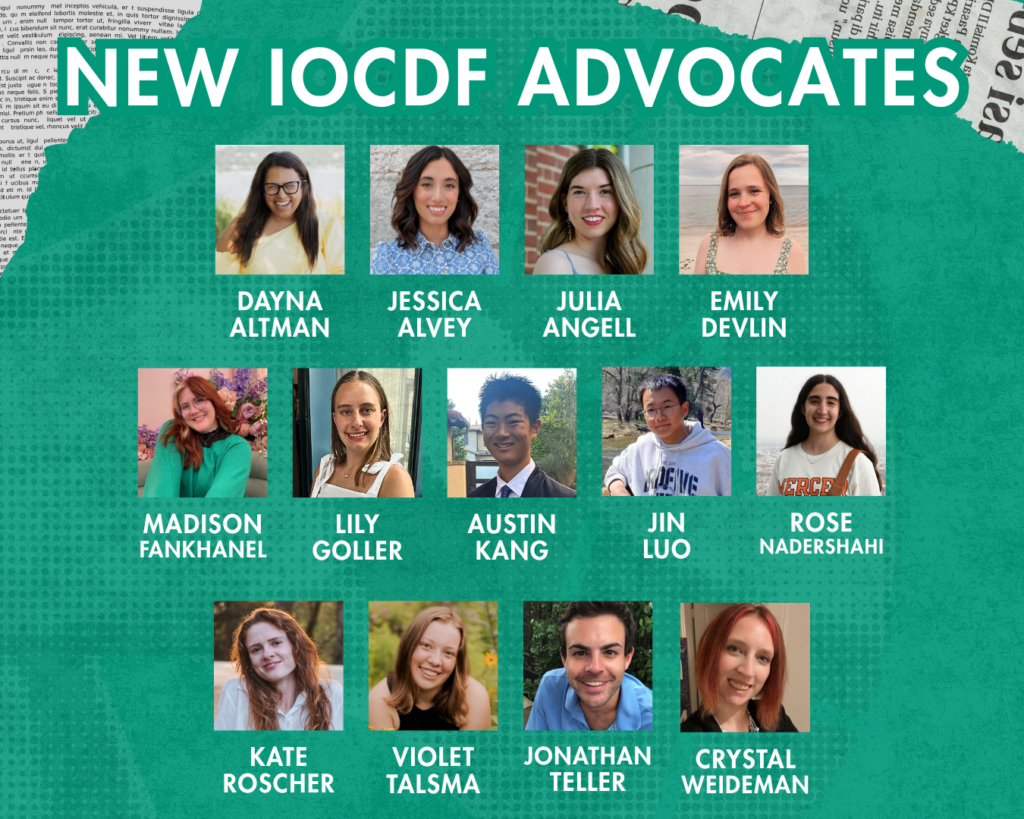
The IOCDF is thrilled to announce our newest cohort of Advocate volunteers! We’re welcoming 13 incredible new Advocates to our program, bringing our total to 64 dedicated volunteers working together to create meaningful change for the OCD and related disorders community.
These passionate individuals join us from bustling cities and quiet rural towns across the United States and around the world. From California to Massachusetts, and from countries including Canada and Ireland, this mix of local and global perspectives ensures we can reach and represent diverse communities everywhere.
The Power of Diverse Voices
Our newest cohort has a wide range of experiences and interests. They are passionate about addressing critical topics including:
Access to treatment
Diversity, multicultural issues, and LGBTQIA+ inclusion
Family issues and family accommodation
Young adult mental health and academic challenges
Public policy
Research advancement
Suicide prevention
Nutrition, fitness, and anxiety in athletes
This diversity of focus areas ensures that we can better represent and serve the full spectrum of our community’s needs.
Inspired by our Advocates? You can make a difference! Here are ways to start advocating today:
Fuel Our Mission Through Fundraising
Turn your passion into action by launching a personal fundraiser. Whether for a birthday, a race, or a creative project, you can rally your friends and family to raise critical funds. Every dollar helps build a world where everyone affected by OCD can thrive. Start your fundraiser here or explore all ways to give back here.
Advocate for policy change
Your voice can shape laws that improve access to care and insurance coverage. The IOCDF Public Policy Action Center makes it simple to find the latest bills and contact your elected officials with just a few clicks. True change starts here.
Join an IOCDF Special Interest Group
Connect with people who share your experiences or professional interests. IOCDF Special Interest Groups (SIGs) provide a platform for deeper discussion.
Whether you advocate on the national stage, share your story to fight stigma, or fundraise your way, every action creates a ripple effect of hope and understanding. Your journey, your voice, and your commitment are powerful tools.
Start today and help us build a world where everyone affected by OCD feels supported, seen, and empowered. Join a dedicated community committed to raising awareness.
Welcome again to our new IOCDF Advocates, we’re grateful to have you joining our mission!
Testosterone. Methenolone. Nandrolone. Human growth hormone and EPO. Meldonium, modafinil, and mixed amphetamine salts. Clomiphene, anastrozole, levothyroxine, and liothyronine. Patches and capsules, creams and pills. A whole galaxy of steroids, metabolic modulators, and synthetic hormones coursing through the blood of a few dozen swimmers, sprinters, and weightlifters. And millions of dollars up for grabs for athletes who could break world records and usher in the age of superhumanity.
On Sunday, May 24, at a $50 million arena built in a casino parking lot in Las Vegas, I witnessed a libertarian thought experiment come to life. The inaugural Enhanced Games were the first sporting competition where participants were encouraged to take performance-enhancing drugs. The founders say they’re challenging dated sporting norms and helping to build a world where we can all live better, longer lives. Critics say the event is an embarrassment, that it glamorizes the use of dangerous substances and puts lives at risk.
The open-air venue was compact and decked out in bright blue, with a six-lane, 100-meter track down one side, a four-lane Olympic-length swimming pool down the other, and a weightlifting platform and stage at the front. You could see the golden façade of the Trump Hotel looming in the background. The scene had all the trappings of an NFL game, with the too-loud music and crowd work on the big screen—a “flex cam” gave the well-muscled an excuse to unveil their biceps. Between events, adverts flashed up for the line of performance products sold by Enhanced, the company behind the event: injectable peptides that supposedly support cellular energy and skin elasticity, daily supplement powders with names like “Stronger” and “Longer.”
SAEED RAHBARAN
SAEED RAHBARAN
Australian swimmer James Magnussen was the first athlete to sign up with Enhanced but hasn’t broken any world records. He finished last in his two events in Las Vegas.
The day started with the weightlifters, under the blazing sun. But by 4 p.m., only one of them had even attempted a world-record lift. Two had pulled out injured. Some athletes were competing without taking drugs because of the money on offer, and as the competition went on, they had the better of their enhanced peers: Hunter Amstrong, a 25-year-old American swimmer and triple Olympic medalist, won the backstroke by more than a second. In the men’s 100-meter sprint, the non-enhanced US athlete Fred Kerley romped to an easy victory. “Man, they gotta do better than that,” he said of his doped opponents in his post-race interview. “They need to train a little harder, get on that shit a little bit more.”
At the bar, bodybuilders swapped before-and-after pictures and talked about their stacks, and VCs and finance bros traded LinkedIn details. Lukas Lakutsin, a 6-foot-10, 354-pound Russian bodybuilder who was milling around the entrance to the VIP suites, initially told me he didn’t use any performance-enhancing drugs. Except testosterone replacement therapy, of course. But he didn’t think that really counted. “I’m almost 34 years old,” he said. “I need to do this to stay strong.”
The “protocol” for Enhanced athletes only includes FDA-approved drugs. While Enhanced’s team might make recommendations, individuals have the final say on what they want to take, if anything.
SAEED RAHBARAN
Jeremy Sigal, an influencer and author, wore a USA tank top that showed off hugely muscled arms adorned with prison tattoos. He told me he was proudly natural, in both his health and his personal life. “I’ve got an exceptional credit score,” he said. He has written 12 books on marketing and leadership. Later, I looked up his most recent book online. It’s called Simp to Pimp: 10 Steps to Fix Why She’s Not Banging You and lists AI as a coauthor.
What I saw in Las Vegas probably wasn’t the future of sport. But it was a perfect encapsulation of our present moment, as Silicon Valley biohackers, alt-right looksmaxxers, Make America Healthy Again boosters, and longevity-obsessed scientists all vie to remake reality in their own image. For them, the Enhanced Games offered a glimpse of a future where medical advances push the human race to new heights, and where they never have to get old.
I’ve tracked Enhanced’s journey from a crazy idea scribbled on a napkin to a public company valued at $1.2 billion. Behind the scenes, there have been power struggles, life-changing victories, and moments of total farce. As I recently, finally, watched the games unfold, two questions bounced around my head: Were they right? And what does that mean for the rest of us?
In December 2022, the Australian entrepreneur Aron D’Souza flew to Miami to spend New Year’s Eve with his friend and mentor Peter Thiel. A decade earlier, D’Souza had helped Thiel orchestrate the lawsuit that bankrupted Gawker—a stunning revenge against the gossipy New York media blog that had outed him as gay. Now he was armed with a disruptive idea that he thought Thiel, the billionaire cofounder of PayPal and Palantir, would love. It was inspired by the buff bodies he’d been seeing at the gym, highlighting a disconnect between a workout culture where the use of steroids was an open secret and a sporting establishment where it was, at least on paper, an inviolable taboo.
His initial pitch was provocative and confrontational: a grand sporting event to rival the Olympic Games, where competitors could take any substance they wanted—their body, their choice. The first time I met D’Souza, in the spring of 2024, he had founded the company and attracted some initial investment but seemed obsessed with taking on the fat cats at the International Olympic Committee and reinventing sports (even though he didn’t seem to be a huge sports fan himself). On Enhanced’s Discord server, I found a folder full of memes with names like IOC Clowns.jpg. The whole thing felt very unserious.
That would change.
D’Souza told me that Thiel had previously introduced him to Christian Angermayer, a German biotech billionaire, who would come onboard at Enhanced. He’s funded clinical trials of psychedelics through his company Atai Life Sciences and is helping bring them into the medical mainstream as a treatment for depression and anxiety. Angermayer says he spotted an opportunity to do the same thing for steroids. What he really wants is to redefine medicine, he told me. Its focus has already changed from treating disease to trying to prevent it; actively enhancing people’s health, he says, is just the next logical step.
By early 2024, Angermayer had brought his own people into key roles. The team included Michael Sagner, an anti-aging expert and private doctor who works with many of Hollywood’s leading men, and Max Martin, who has the jawline and cheekbones of an Instagram looksmaxxing influencer and the boundless enthusiasm of a puppy. (He started his own enhancement program a few years ago, when he was just 27.) Sagner would head up Enhanced’s medical commission, making sure the games were safe for the athletes. It was Martin’s job to make sure they actually happened.
In early May, Enhanced began trading on the New York Stock Exchange with an initial value of $1.2 billion. Christian Angermayer stands far right with Max Martin to his left (front row), and Aron D’Souza next to him.
LEV RADIN/ZUMA PRESS WIRE VIA ALAMY
Tensions sparked as D’Souza’s freewheeling style clashed with the more sensible image that Sagner and others were now keen to present. “It was not just his personality and his abrasive way of talking,” Sagner told me recently. “Even when he was briefed on a scientific fact, he would just completely ignore it and say something outrageous.”
But the more outrageous D’Souza got, the more attention his idea received. In February 2024, James Magnussen, a retired Australian swimmer, became the organization’s first official athlete, and Enhanced promised to pay a million dollars to him, or anyone else, who could break the world record in the 50-meter freestyle.
The notion of a “steroid olympics,” as many have dubbed the Enhanced Games, had been kicking around for decades—for instance, in a Wiredarticle from the early 2000s and an SNLsketch from the 1980s. Two things helped finally make the Enhanced Games a reality. First, in November 2024, Donald Trump was again elected president of the United States. The Biden administration had been actively hostile to the games, but the founders saw a more receptive political environment in Trump world. Not long after the election, Enhanced announced a new tranche of funding led by 1789 Capital, a venture capital firm whose partners include Donald Trump Jr.
And second, in February 2025, an enhanced swimmer finished the 50-meter freestyle faster than anyone in human history. It wasn’t Magnussen, though. He had been injecting himself with testosterone to grow muscle, plus a cocktail of peptides that aimed to speed up recovery—but his journey hadn’t quite worked the way he’d planned.
A combination of reputational issues (no pools wanted to host his training) and physical complications (the regimen did help him get stronger, but he packed on so much muscle that it slowed him down in the water) meant he watched from the sidelines as the Bulgarian-Greek swimmer Kristian Gkolomeev—who had finished fifth at the Paris Olympics in 2024—came in two-hundredths of a second under the record and won a million-dollar payout from Enhanced. The idea has always been that breaking records would effectively prove the legitimacy of this enhancement project: Look what we can do now.
Enhanced swimmers like Magnussen (right) wore supersuits to compete, though they’ve been banned by World Aquatics since 2010.
SAEED RAHBARAN
SAEED RAHBARAN
Gkolomeev, though, had a different motivation for participating: “One successful year in the Enhanced Games and I could make as much as I would in almost 10 careers,” he told me not long after setting the new record (notably, wearing a kind of “supersuit” that’s been banned by World Aquatics since 2010). Enhanced was paying its athletes a regular salary, on top of any potential bonus. And he had a young family to support and feared that the four-year stretch to the next Olympics would be long and precarious.
In May 2025, with a world record in the bag and a friendly administration in the White House, Enhanced was ready to announce its first games: They’d take place in May 2026 at Resorts World in Las Vegas.
At the same time, D’Souza made another big reveal: Enhanced Performance Products, a line of supplements available for a monthly subscription. The Enhanced Games now seemed less like a sporting event and more like a loss leader for selling testosterone injections, GLP-1s, or a range of peptides that are claimed, with little scientific evidence, to improve sleep or skin elasticity. Perhaps it was all a brilliantly executed marketing stunt.
“The games themselves now seem almost secondary to what appears to be an online marketplace for hormones, peptides, and other performance-enhancing compounds,” says Astrid Kristine Bjørnebekk, a steroids expert at Oslo University Hospital. “From my perspective, this significantly changes the nature of the project. It is one thing to organize a closed sporting event built around controversial principles, but openly marketing and commercializing substances such as testosterone, hGH, GLP-1 drugs, peptides, and other pharmacological compounds is something else entirely.”
As the games approached, more athletes joined. Some were genuinely elite. The US sprinter Kerley—who is serving a two-year ban for missing three drug tests—had won silver in the 100 meters in the Tokyo Olympics and a bronze in Paris. Ben Proud, a British swimmer, had won silver at the Paris Olympics and dozens of medals at world and European championships and the Commonwealth Games. He had been mulling over joining the Enhanced Games ever since the idea first emerged, but the tipping point seemed to come when Gkolomeev’s record was announced.
Some participants, like Magnussen and another swimmer, Megan Romano, had been tempted out of retirement. Romano hadn’t swum competitively for almost a decade. Others were at the start of their careers but ready to cash in their chips and bid goodbye to Olympic dreams for a potential six-figure payday. The $1 million payouts were reserved for records in the two flagship events—the 50-meter freestyle and the 100-meter sprint—but winning any other event would mean a prize of $250,000, with an additional $250,000 bonus for setting a world record.
Athletes would get paid even if they just showed up and finished last—as much as $50,000. This is all on top of the salaries that stretched into six figures in some cases, making the payout from the games more than many athletes make in a year.
Sport’s governing bodies reacted to each new athlete announcement with fury. World Aquatics threatened to ban for life any athlete who participated in the games, even if they didn’t take any drugs. Enhanced responded with an $800 million antitrust lawsuit against the global swimming organization, the World Anti-Doping Agency, and USA Swimming, alleging misuse of monopoly power.
American Fred Kerley (right) won the 100-meter sprint without performance enhancing drugs.
SAEED RAHBARAN
In November 2025, a court in New York dismissed the case. Three days later, D’Souza, the mind behind the entire project, was out. A notice on Enhanced’s website said he had “transitioned out of the company’s day-to-day operations.” Martin would take over as CEO. “The investors basically said we need someone a bit more serious,” Sagner told me. In conversations, execs at Enhanced played down any suggestion of a feud—D’Souza was simply the ideas man, with little interest in the day-to-day dreariness of actually running a company. (Enhanced spokesperson Chris Jones wrote in a statement that “there is no tension between Aron and Enhanced that I’m aware of.” D’Souza did not respond to a request for comment.)
I got the sense that Enhanced, in its new iteration as a pharmaceutical subscription company, was almost embarrassed by the games. When I visited enhanced.com a couple of months before the event, they had been relegated to a sub-heading on the home page. D’Souza’s showmanship had helped get attention for what was becoming a run-of-the-mill telehealth business like Hims & Hers—albeit one well timed to take advantage of a shifting regulatory landscape around peptides, which Robert F. Kennedy Jr., the US secretary of health and human services, has been pushing the FDA to approve despite a lack of evidence that they’re actually effective.
Sagner is still loosely involved with Enhanced, but he says the medical commission was not consulted before it launched its line of performance products. (Jones did not respond to a question regarding this claim.) Sagner is scathing about what he sees as the “hype” around peptides. “I can tell you already, peptides do nothing,” he says—with the exception of human growth hormone and GLP-1. “The peptides that people use, black-market peptides that they buy online—they do nothing. We have tested them; 80% of them contain nothing. It’s saline solution, salt water, and some of them are contaminated.”
At the end of January 2026, a group of around 40 swimmers, weightlifters, and sprinters arrived in Abu Dhabi to start their individualized enhancement “protocol,” as Enhanced calls it. Officially, they would be taking part in a clinical trial, pending approval by the Abu Dhabi government and overseen by Guido Pieles, a Qatar-based cardiologist who has taken over the reins of Enhanced’s medical commission from Sagner.
The day started with the weightlifters, but by late afternoon, only one of them had even attempted a world-record lift.
SAEED RAHBARAN
They would be allowed to choose only from a menu of specific FDA-approved drugs. Pieles broke them down into five categories: testosterone variants and growth hormones, which can both boost muscle mass; metabolic modulators that can tweak how the body burns fat; stimulants like Adderall to improve focus; and EPO, which can increase the amount of oxygen the blood is able to carry. While Enhanced’s team might recommend particular things, the athletes would have the final say on what they wanted to take, if anything. (As Oslo University’s Bjørnebekk points out, FDA approval “does not mean the substances are inherently safe, particularly not when used for enhancement purposes.”)
There would be regular blood tests, heart scans, and brain scans and access to the best training facilities money could buy. Pieles and others say the clinical trial will help inform the line of supplements Enhanced is offering consumers, but there’s actually very little overlap between the drugs the athletes were taking and the substances the company is currently selling.
Not long after they arrived in the Middle East, the athletes were awakened by the sound of explosions at a military base near their hotel. The US and Israel had struck Iran, and the Iranian regime was responding by peppering the region with missiles. “It wasn’t a pleasant situation,” says Andrii Govorov, the world record holder in the 50-meter butterfly, who a year earlier had become one of the first swimmers to join Enhanced. Govorov had some experience in these matters—back in Ukraine, he’d had a business selling cars that helped fund his swimming career, but he’d lost it after the Russian invasion.
SAEED RAHBARAN
SAEED RAHBARAN
SAEED RAHBARAN
Swimming, sprinting, and weightlifting were the focus of the first Enhanced Games but in many ways the sports were the sideshow.
The conflict exacerbated delays in getting approval for the clinical trial and sourcing the drugs, and as a result, what was supposed to be a 12-week enhancement protocol got cut down to eight weeks. The athletes didn’t actually start taking the drugs until toward the end of March. For those who had always been clean, that represented the irreversible crossing of a line. “The first injection was very emotional, very tricky to navigate,” says Proud. “For me, that was the day I went from the Ben Proud that I always knew to a new person.”
Proud was joined in the enhancement program by his girlfriend, Emily Barclay, who had swum at college level without ever appearing at a major international event; she was working as a swimming teacher at a school in England. After that first injection, they left Abu Dhabi and spent a few days in Dubai as they reckoned with what they had done. “I just couldn’t be around the team,” Proud says. “I wanted to be by myself and feel those feelings, because it is a big deal to make that step, and I felt it.”
Those feelings were soon forgotten, though, as the drugs kicked in. Proud says he had incredible energy, and a drive to train that he hadn’t experienced before. Shania Collins, an American sprinter, says she had “increased strength, increased recovery, and increased mental clarity at practice.” Sagner and several athletes admitted there were some side effects: acne and some swelling around the joints; unwanted hair growth for the women, unwanted hair loss for the men.
Like Kerley, sprinter Tristan Evelyn from Barbados competed without taking any drugs. She too won big in Vegas, besting her Enhanced peers in two events.
SAEED RAHBARAN
One thing the athletes wouldn’t talk about, though, is what drugs they were actually taking. They all had the same reason: not wanting to encourage copycats who might take enhancements without a doctor on hand to tailor programs to their needs.
The one exception was Thor Björnsson (testosterone, deca-durabolin, anastrozole, halotestin), a hulking Icelandic deadlifter and former World’s Strongest Man who played The Mountain on Game of Thrones. Björnsson first heard about the games on Joe Rogan’s podcast and was immediately interested. The rules for strongman competitions are somewhat less stringent than those for Olympic sports, though, and he actually had to reduce the number of substances he was taking to meet Enhanced’s FDA requirements.
Icelandic strongman Thor Björnsson actually had to reduce the number of substances he was taking to meet Enhanced’s FDA requirements.
SAEED RAHBARAN
There is some debate over how much doping some of the athletes were actually doing. In a conversation last year, Gkolomeev told me he’d only really been “microdosing,” and he confirmed that his 2026 enhancement program was largely the same. Sagner says the doses the athletes were taking were a fraction of the amounts some Olympic athletes had been caught using in the past. I heard that a few athletes had decided not to take steroids or growth hormones and were only using modafinil, a narcolepsy medication that’s thought to improve focus.
The day before the games, I asked Angermayer what it would mean if clean athletes like Kerley and Armstrong won their events—what impact it would have on Enhanced’s business model of using sports as a showcase for its line of performance products if the people using those products didn’t actually win anything. “I know what you mean, but mostly our business model is headlines to drive attention,” he said. “Any debate is good for us.”
In early May, Enhanced began trading on the New York Stock Exchange with an initial value of $1.2 billion.
That same week, it was finally go time. The athletes and coaches left Abu Dhabi and flew to Las Vegas, where they were put up in five-star luxury at the Conrad hotel inside Resorts World while they made their final preparations.
When I got there a few weeks later, toward the end of May, I found it jarring to see these hulking presences walking around the casino in their Enhanced sportswear, weaving their way through packs of half-drunk tourists, with slot machines flashing in the background and cigarette smoke hanging in the air. I had expected the games to be a bigger deal within the city itself, but they were just one of a thousand things happening in Vegas that weekend—drowned out by a series of BTS shows at the football stadium, by the Golden Knights in the NHL playoffs, by No Doubt’s residency at the Sphere.
If this was a sporting earthquake, it was one whose tremors were mainly being felt online, where bodybuilding influencers livestreamed to their followers on Kick and Twitch, and where thousands watched on YouTube and Rumble. (D’Souza once told me he’d had “every major sports broadcaster” vying for the rights; in the end, Enhanced struck an exclusive streaming deal with Roku in the US.)
No tickets were sold, so the crowd was a mix of invited guests, investors, and influencers, some of whom had reportedly been flown in on a chartered jet.
SAEED RAHBARAN
On the morning of the games, Enhanced held a medical symposium that was supposed to provide a taste of the company’s long-term objectives. The first speaker was Bryan Johnson, the longevity-obsessed entrepreneur famous for plowing his personal fortune into wild attempts to reverse his aging: receiving transfusions of his teenage son’s plasma, measuring his nighttime erections, taking more than 100 supplement pills a day. He spends $2 million per year on all this, but he looked pale and vampiric as he delivered the slightly off-brand message that, really, the most important thing was getting a good night’s sleep: “You don’t need to chase IV infusions; you don’t need to chase crystals. You don’t really need to do much of anything.”
At 2 p.m., I took two escalators from the conference room down to the arena, where spectators were filtering in. Though it had cost $50 million, it had been constructed in just three and a half weeks, and it showed; on the media tour the previous day, there were still loose screws on the floor of the bleachers.
There were a few thousand seats in an open grandstand down one side, and two rows of VIP suites on the other. No tickets were sold, so it was a strange mix of invited guests, investors, and influencers, some of whom had reportedly been flown in from Los Angeles on a chartered jet. The rapper Tyga was the biggest name to grace the “blue carpet,” although I did also spot Fabio James, a Michael Jackson look-alike who has had surgery to make the resemblance even stronger. Rumors swirled that Peter Thiel might show up; they proved unfounded.
In attendance was Fabio James, a Michael Jackson look-alike who has had surgery to make the resemblance even stronger.
SAEED RAHBARAN
A few hours before the doors opened, journalists got a stern message from the organizers trying to bar us from interviewing guests. Still, I talked to a Cambridge professor who wanted to use Enhanced as a case study in innovation for his MBA students, a retired Brazilian swimmer with the Olympic rings tattooed on his forearm, and a biotech investor wearing an Enron hat. Proud’s family and friends were sheltered from the blazing sun in the shadow of the big screen.
D’Souza was nowhere to be seen. Nor was he really mentioned at all—not during the introductory press conference, where Martin was introduced as the “founder of the Enhanced Games,” nor during the event itself, where the athletes showered praise on Angermayer and Martin. But the tens of millions D’Souza had banked from the stock listing likely softened any blow. Plus, he’s already moved on to his next provocative venture: an AI-powered arbitration platform designed to scrutinize the work of journalists on behalf of the rich and powerful.
As the sun set behind the hills, casting the arena in soft gold light, there were still no world records. That and the wins for clean athletes seemed to put the whole Enhanced project in jeopardy—the knives were already being sharpened online. I asked the organizers whether this threatened the legitimacy of the project.
German swimmer Marius Kusch was among the dozen or so athletes who hit personal bests in Vegas.
SAEED RAHBARAN
“Our response is that enhancements help athletes improve and, in some cases, break records. And yes, some non-enhanced athletes also won—because talent and ability also matter,” Enhanced’s Jones emailed last week. “Breaking world records is incredibly hard as the margin is infinitesimal, as we witnessed. Ignoring that 13 athletes some of whom 10 years later broke personal bests is disingenuous and selective reporting.”
Megan Romano was one of them, swimming faster in the 50-meter freestyle at 35 than she had at 22. And Emily Barclay knocked two seconds off her fastest time in the 100-meter freestyle, coming in second in that event and winning the 50-meter freestyle; she went home with a check for $375,000. “No one’s ever heard of this girl,” said Enhanced swim coach Brett Hawke afterwards. “She’s retired; she’s a nobody. She comes out tonight and swims a time that would have got a bronze medal in Paris.” For all the talk of “superhumanity” and pushing the boundaries of performance, making a 35-year-old feel 22 again is probably the perfect marketing message for the products Enhanced wants to sell.
Angermayer cheers on swimmer Megan Romano, who swam faster in the 50-meter freestyle at 35 than she did at 22.
SAEED RAHBARAN
Enhanced’s executives say people should take enhancements only with medical supervision, but price could be a barrier to heeding that advice. The battery of health tests the company was giving its athletes in the run-up to the games cost $25,000 per athlete per month. The drugs themselves start at $75 a month and go up toward $200. While Jones says the products “are in line with industry price points,” there were almost certainly people watching who saw the drug-altered physiques of athletes like Gkolomeev or Magnussen and decided to find cheaper, less safe alternatives on unlicensed websites.
“Many of these substances require medical supervision and prescriptions, and several are associated with potentially serious long-term health consequences,” says Bjørnebekk. “Presenting them in this lifestyle-oriented and commercial format risks normalizing use while downplaying the medical risks and uncertainties.”
Although his world record-breaking time won’t stand as the official record, swimmer Kristian Gkolomeev will walk away from the Enhanced Games with a million dollar prize in the 50-meter freestyle.
SAEED RAHBARAN
Before the night was over, Gkolomeev again had the chance to right the Enhanced ship. The final event of the night was the men’s 50-meter freestyle swim. His 2025 time had been surpassed by the Australian swimmer Cam McEvoy (without a supersuit) at the China Swimming Open a couple of months before, so he needed to lose another two-hundredths of a second to beat the new record of 20.88 seconds.
Gkolomeev was wearing the same supersuit he’d used the previous year, and he’d shaved off his mustache for a little extra streamlining. But he messed up his start—doing four kicks instead of five—and was trailing Proud at the halfway mark. His long arms levered him forward, though, and he reached the wall in 20.81. The spectators were on their feet as “WORLD RECORD” flashed red on the big screen. Martin vaulted over the glass partition from the VIP suites, beaming, to embrace Gkolomeev. They had their record.
Or did they? Online, people shared screenshots from the video feed, purporting to show that the clock had stopped before Gkolomeev’s hand touched the pressure sensor at the end of the pool. An Enhanced spokesperson gave a statement to the Guardian dismissing this as “completely unfounded internet drivel.” But hey—live by the sword, die by the sword. It’s quite possible Gkolomeev didn’t care. He had another million in the bank.
It remains to be seen if it’ll work out so well for the other athletes. Enhanced organizers recently announced a prize of $10 million for anyone who can break Usain Bolt’s 100-meter world record in 2027. They are adamant that the games will happen again next year. If they don’t, dozens of sporting careers will be over, and the athletes will join the long list of victims of VC-backed disruption.
My personal prediction is that Enhanced will pivot away from the risk and uncertainty of a flagship event—the company’s valuation plunged by almost $800 million when markets opened after what was perceived as an underwhelming set of results in Vegas. I expect you’ll see individual stunts and challenges, tightly controlled and filmed for virality and probably featuring your favorite YouTubers—think Björnsson bench-pressing Jake Paul.
D’Souza’s initial idea has served its purpose by capturing the world’s attention. But that won’t necessarily translate into success either. Though the company has had plenty of hype over the last 12 months, SEC filings published as part of its stock exchange listing reveal that it generated only $2,755 in revenue from its enhancements business in the first three months of 2026. Would what happened in Vegas be enough to juice sales?
Martin, Enhanced’s CEO, cheers on athletes from the stands. Company leadership insists the competition will take place again next year.
SAEED RAHBARAN
As the athletes gathered on the stage to receive their prizes, Martin took the microphone and addressed the crowd. “Enhanced is culture,” he said. “We are at the pulse of where the world is going.” On this, at least, he’s probably right. Testosterone replacement therapy is rapidly moving into the mainstream, and while the science may still not be there on peptides, they have certainly exploded in popularity in the two years since Enhanced launched. And there are undoubtedly more substances yet to be discovered that will promise to improve people’s lives, or at least hold their appearance in stasis. The enhanced age is upon us, whether we want it or not.
As the fireworks went off and the Killersclosed out the event with “When You Were Young” (“Congratulations to … whoever deserves it,” said frontman Brandon Flowers), I wondered what that might mean for us mere mortals. Invoking Hunter S. Thompson’s Fear and Loathing in Las Vegas in a story about drugs and Las Vegas may be a cliché, but it struck me that fear played a big part in all of this. Fear of missing out. Fear of getting old. Fear of never making a dime on your life’s pursuit. Fear of waking up one morning and seeing your flabby, sunken face in the mirror while everyone around you shines and grins and thrives with white-toothed, alien smiles.
Before joining Enhanced, Romano had not swum competitively in almost a decade.
SAEED RAHBARAN
But the big problem with Enhanced’s vision of superhumanity is the question of who gets to join in. “People will be able to enhance themselves if they have enough money,” Sagner had told me the night before the games. The rest of us, I fear, will just have to function as normal human beings.
Amit Katwala is a journalist and author covering science, culture, and where they collide. His latest book is Tremors in the Blood: Murder, Obsession and the Birth of the Lie Detector. He is based in London.