A journey that has lasted more than 30 years for Sangamo Therapeutics, a pioneering gene editing biotech company in the Bay Area, has reached an unwanted milestone as the company filed for Chapter 11 bankruptcy protection.
Concurrent with its starting voluntary Chapter 11 proceedings in the U.S. Bankruptcy Court for the District of Delaware, Sangamo simultaneously entered into two separate asset sale agreements: Eli Lillyhas agreed toacquire Sangamo’s capsid delivery platform, zinc finger nuclease (ZFN) platform, modular integrase (MINT) platform, and prion disease program, ST-506. Astellas Pharma has agreed to take over Sangamo’s Fabry disease program, isaralgagenecivaparvovec(ST-920).
To clinch the deals, Lilly and Astellas have agreed to be “stalking horse” bidders when Sangamo’s assets are sold in a future bankruptcy court auction. The stalking horse bids do not include the clinical-stage ST-503 program to treat chronic neuropathic pain, the giroctocogene fitelparvovec program to treat hemophilia A, and Sangamo’s cell therapy and regulatory T cell (Treg) assets. Sangamo said these are expected to remain available to interested bidders at the auction.
“We believe this process provides a clear framework to pursue value-maximizing transactions,” said Sandy Macrae, Sangamo’s CEO. “Our priority is to execute a disciplined and efficient saleprocess while supporting all ofour stakeholders. We are also pleased to have signed agreements with two large pharmaceutical companies to serve as stalking horse bidders in the process, underscoring the strategic interest in our assets.”
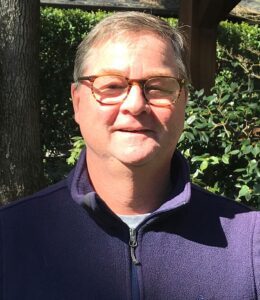
Ed Lanphier, founder, Sangamo Therapeutics
Founded by Ed Lanphier in 1995, Sangamo became an early developer of zinc-finger nucleases (ZFNs), one of the first established gene editing platforms. In 2005, Sangamo scientists led by Fyodor Urnov, PhD, Phil Gregory, PhD, and Mike Holmes, PhD, demonstrated the use of ZFNs to engineer a base substitution in human DNA. The term “genome editing” was born around that report. Sangamo’s technology became the first gene editing platform to enter the clinic, initially for patients with human immunodeficiency virus (HIV), followed by a series of rare genetic diseases.
More recently, the biotech branded itself as a “genomic medicine” company. In 2023, Sangamo trumpeted promising clinical data from its first-in-human Phase I/II STAAR trial (NCT04046224) in Fabry disease. All 25 patients dosed in the STAAR study have continued to show sustained, elevated α-Gal A levels, up to three years for the longest-treated patient. However, later that year, Sangamo deferred additional spending on planning a future Phase III program for ST-920, absent a collaboration partner or additional external funding.
Sangamo made the move as part of a restructuring that included a similar deferral of spending on chimeric antigen receptor-modified regulatory T-cell (CAR-Treg) therapies, the elimination of 40% of its U.S. workforce, and the narrowing of its pipeline. Sangamo said it was refocusing its spending on developing epigenetic regulation therapies treating neurological diseases, as well as novel adeno-associated virus (AAV) capsid delivery technologies.
In 2024, Sangamo shares surged 69% after it reached alignment with the FDA on a regulatory pathway to Accelerated Approval for ST-920 in advance of submitting a biologics license application (pre-BLA). However, Dennis Ding, an equity analyst with Jefferies, argued that the news posed little threat to the developer of the sole marketed drug for the rare disorder, Galafold® (migalastat), marketed by Amicus Therapeutics.
Last month, Sangamo said it remained in the process of completing a rolling BLA submission to the FDA for Accelerated Approval of ST-920 based on the mean annualized estimated glomerular filtration rate (eGFR) slope at 52-weeks across all dosed patients in the study. Two-year eGFR data may serve as confirmatory evidence for traditional approval, Sangamo said the FDA affirmed.
Sangamo was also advancing the Chemistry, Manufacturing and Controls (CMC) module, ahead of completion of the rolling BLA submission for ST-920, which the company said it expected this summer (subject to the ability to secure adequate additional funding), while it was continuing to commercialize the Fabry gene therapy.
In reporting first-quarter results, Sangamo said that it had submitted preclinical and clinical modules for review, while also submitting its antibody assay companion diagnostic, designed to screen patients for eligibility with ST-920, to the FDA’s Center for Devices and Radiological Health (CDRH).
Sangamo reported a $31-million net loss on revenue that plunged 78% year over year to $1.4 million from $6.4 million. Sangamo said $5 million of that decrease reflected Pfizer’s termination early last year of its collaboration with Sangamo to develop a hemophilia A gene therapy, giroctocogene fitelparvovec.
Speaking several years ago with The CRISPR Journal, a peer-reviewed journal and sister publication of GEN, Sangamo founder Edward Lanphier reflected on the company’s bright beginnings. In 1994–95, he recalled, he became aware of research being done by Jeremy Berg, PhD, and Srinivasan Chandrasegaran, PhD, on engineering zinc finger proteins (ZFPs).
A watt-hour meter, an electric usage measuring device designed and patented by the great-grandfather of Sangamo Therapeutics founder Ed Lanphier
“While it was certainly unclear what making novel DNA-binding proteins might do, novel DNA sequences represented the other half of this equation—an agnostic vector plus a platform for developing novel transgenes. I became quite interested in that, and thus in starting Sangamo,” Lanphier remembered.
After founding Sangamo in 1995, Lanphier joined the company full-time two years later. Sangamo’s name was derived from some fascinating family history—Lanphier’s great-grandfather, a Yale-educated electrical engineer, founded a company in Sangamon County, IL, during the 1890s.
He designed and patented “the watt hour meter—the thing that sits on the side of buildings and goes around and around recording electricity,” Lanphier recalled. The Sangamo Electric Company manufactured various electronic components before being sold in the 1970s to Schlumberger.
Lanphier remembered “this incredibly cool logo from Sangamo Electric. I asked my dad, ‘‘What do you think?’’ He said, ‘‘That would be great!’’ And so, I started Sangamo Biosciences.”
While ZFNs showed immense promise as a commercial gene editing platform, they were difficult and expensive to manufacture. The dramatic arrival of CRISPR in 2012–13 quickly pushed ZFNs onto the fringes of the clinical gene editing space.
“When the [gene editing] movie is written, I know it is going to focus exclusively on the Broad and Berkeley and Charpentier and their work. But it is completely unfair—not to me but to Fyodor and Ed [Rebar] and Philip and Mike Holmes and Jeff Miller and the dozens of people who did create this field.”
Lanphier was asked why Sangamo never joined the CRISPR revolution a decade ago. “My perspective was always that [CRISPR] is bacterial—it is nonspecific, it is immunogenic. It’s a great research tool. It’s going to give a lot of visibility to genome editing. When people actually want to use it therapeutically, that’s when they will end up talking to us.”
Alas for Sangamo, that eventuality did not materialize.
The national conversation about the value of education is currently dominated by speculation about the risks and positive potential of AI.
Whatever your own perspective on that debate, I hope you’ll be glad to know that MIT is also working on a deeply important but comparatively old-fashioned challenge: American high school students’ startlingly uneven access to calculus. According to the National Survey of Science and Mathematics Education, which covers the nation’s more than 13,000 school districts, in almost half of US high schools calculus isn’t even offered.
As our graduates know better than anyone, preparation in calculus is effectively an admissions requirement at a place like MIT—which means that students in schools with no calculus classes are in practice locked out of an essential route to STEM careers.
Recognizing this glaring need, we set out to find a solution. With support and inspiration from the Siegel Family Foundation, in the fall of 2025 the Institute launched the MIT4America Calculus Project. Developed by the MIT Scheller Teacher Education Program (STEP) Lab, the Calculus Project recruits and trains MIT undergraduates and alumni to provide weekly long-distance calculus tutoring for students in underresourced high schools across the country.
Reflecting the Institute’s longstanding commitment to national service, the MIT4America Calculus Project supplies an innovative answer to a hard practical problem, and it taps the uncommon skill of MIT’s people to create opportunity for others and spread the educational impact of the Institute beyond our walls.
The project is in its early phases, so far engaging 30 MIT undergraduates and seven alumni tutors. From its initial work with 14 school districts across the country, it’s on track to collaborate with about 20 this summer.
The demand is clear—and the response from the students we’re reaching makes it all worthwhile. This spring, the first Calculus Project students were prepared for their AP exams, thanks to their own persistence, diligence, and curiosity—and to the generosity, care, and patience of a dedicated group of people from MIT.
It’s somewhat surprising that he can choose just one. He’s the person spellers rely on to confirm pronunciations and answer questions about the roots of the words they’re given at the Scripps National Spelling Bee—arguably the world’s most prestigious competition of its kind. The story of how the word earned the top spot on his personal list may well mark the beginning of his unique career path as both a linguist and a Greek Orthodox priest.
In third grade, Sietsema ventured to a garage sale at a friend’s house with 50 cents in his pocket and picked out three books that struck his fancy. Although they were priced at 50 cents each, his friend’s mother said the books he’d chosen were on special and sent him home with all three, including a collection of Edgar Allan Poe stories called Masterpieces of Mystery. Knowing it contained macabre tales like “The Tell-Tale Heart,” his own mother told him he’d need to wait a few years before reading it. Naturally, he started it right away.
As he read “The Unparalleled Adventure of One Hans Pfaall,” Sietsema was baffled by the main character’s description of arriving at the moon in a balloon. Pfaall reported tumbling into a crowd of people who were “eyeing me and my balloon askant, with their arms set a-kimbo.” Sietsema had never encountered the word akimbo (with or without a hyphen) and asked his parents what it meant. They didn’t know, and it wasn’t in the family’s dictionary. The question also stumped his teachers, and the dictionaries in his classroom and the school library were no help either. “For years, I didn’t know what this word meant,” Sietsema says. It stuck in his mind that there was a word out there that he, his parents, and his teachers didn’t know. He thinks it wasn’t till he got to college that he finally found a dictionary with the answer: The moon dwellers in Poe’s story had been standing with their hands on their hips, elbows turned outward.
“I credit that puzzle with getting me into dictionaries and being curious about etymology,” he says. It kindled a fascination with words—and an abundance of curiosity—that would shape his life’s trajectory and work.
Growing up in Grand Rapids, Michigan, Sietsema attended a Dutch Reformed Christian school and recalls taking part in only one spelling bee, in second grade. It was in the 1970s, when everyone was hooked on phonics—so he overthought the sounding-it-out implications when asked to spell of. “I spelled it U-V, and of course, I was wrong,” he says.
At the time, he thought he probably wanted to work in the church—when he painted himself as an adult for a class project, he dressed his grown-up self in a cassock. But after taking a class in nuclear chemistry at the local junior college in high school, he decided his backup plan was to become a nuclear engineer. So when he went to the University of Michigan, he enrolled in the school of engineering. While he did well and liked his courses, though, he soon realized he felt called to a career in the church after all.
Sietsema (a.k.a. Father Mark) presides at the 2025 Holy Friday evening service at Holy Trinity Greek Orthodox Church in Lansing, Michigan. As part of that service, he sprinkles the congregation with rose-scented water, which delights the children. “It’s like a one-sided water fight in church,” he says. This service culminates with a procession in which a symbolic tomb is carried around the outside of the church. Everyone who attends takes part and leaves with a flower.
COURTESY OF BRIAN SIETSEMA
Switching to the college of literature, science, and the arts, he chose the studies in religion major, taking advantage of the interdisciplinary freedom it offered to take classes in literature, art, and more. He also tucked in courses that would fulfill seminary prerequisites such as knowledge of the biblical languages, studying ancient Hebrew and ancient Greek as well as modern languages that might come in handy for theological scholarship (Dutch, Swedish, and modern Hebrew).
Being in Ann Arbor gave Sietsema “a different understanding of the wideness of the Christian world,” as he puts it, and he gradually became less sure about which church he wanted to work in. As he neared the end of his fourth year at Michigan, he still needed a few more pre-seminary courses—and it dawned on him that he’d taken an “awful lot” of languages and thoroughly enjoyed them. So he stayed on for a fifth year to study linguistics as well as German, ancient Aramaic, and modern Arabic. One of his professors encouraged him to go to grad school and insisted that he apply to MIT, which was considered the top linguistics program in the country. To his surprise, he got in.
Sietsema calls his four years at MIT a great adventure: “If I could relive them, I would empty out my bank accounts to do so.”
At MIT he worked with Morris Halle, one of the leaders in generative grammar, which Sietsema describes as a working model of the “chemistry” of language—the parts and processes that form the building blocks of verbal communication. Halle and others had developed counting procedures (akin to measured time in music) that help explain stress patterns (that is, which syllables might receive emphasis by varying such things as stress or pitch). Building on that work, Sietsema’s dissertation proposed that the division of words and phrases into metrical units similar to musical measures can be used to predict where high and low tones fall, which he demonstrated in the tonal patterns of four Bantu languages spoken in Tanzania. At the time, research in this area was seen to have implications for creating natural-sounding machine- generated speech.
Sietsema calls Halle “a wonderful mentor,” and the two played well off one another. As he was sweltering in his Central Square apartment while printing the final version of his dissertation, Halle called and asked him to stop by. Knowing that Sietsema read Hebrew, Halle, a Latvian-born Jew who’d learned English as his sixth language, wanted to show him a syllable-counting analysis of the 23rd Psalm he’d just completed; Sietsema answered with his own structural analysis of Psalm 90. “I could tell he was delighted to have this young Gentile boy from Grand Rapids, Michigan, who had the same fascination for biblical Hebrew as he did,” Sietsema says.
Today, he calls his four horizon-expanding years at MIT a great adventure: “If I could relive them, I would empty out my bank accounts to do so.” Beyond embracing the intellectual stimulation of the Institute, he took advantage of Cambridge’s many cultural opportunities and cross-registered at Harvard to study French and Ugaritic. All told, he says, he’s now studied about a dozen languages, including the Latin he took in high school and the modern Greek he would add to his repertoire several years after earning his doctorate. (“I always feel like I’m leaving one out,” he says.)
When Sietsema graduated from MIT in 1989, the job market for linguists was “not great.” As fate would have it, though, Matt Alexander, PhD ’92, his best friend at MIT, had already been hired at the University of Michigan, where a one-year position as a visiting assistant professor of phonology opened up that spring. Alexander recommended Sietsema, who handed in his dissertation and got the job, earning an award for excellence in teaching based on student reviews in his first semester.
Shortly after his one-year gig at Michigan ended, he returned to Massachusetts and landed a job as pronunciation editor at Merriam-Webster in Springfield. Although the work was very different from the theoretical linguistics he’d focused on in grad school, “as the guy who had studied a whole bunch of language back in undergrad, it was kind of coming home to old-school philology,” he says. His main job was to ensure that pronunciations—which can change—were up to date. Fluoride, for example, shifted from floo-o-ride in the early 1900s to flor-ide in the second half of the century.
At Merriam-Webster, he made the call on which pronunciations would go into the 10th edition of Merriam-Webster’s Collegiate Dictionary—and in what order of preference. The dictionary, he explains, takes a descriptivist approach that reflects common word usage, so he kept a radio and a TV on in the background as he worked. He’d listen for interesting pronunciations and record them on index cards, noting how each such word was said, who said it, where the person was from, and what the context was. These went into Merriam-Webster’s “huge files” of index cards containing citations of words in actual usage.
Sietsema also had a hand in identifying new words and usages that appeared in the 10th edition, which was initially released in 1993—and he was responsible for the inclusion of definitions for interjectional uses of like. He recognized three informal uses: to introduce a quotation (“So she was like, ‘Let’s go eat’”); to give an approximation (“There were like 10 people in line”); and to emphasize (“He was, like, gorgeous”) or convey something apologetically or vaguely (“I need to, like, borrow some money”). While not a fan of such usages, he recognized them as real linguistic phenomena that had earned a place in the dictionary.
During his tenure as pronunciation editor, he introduced the use of the International Phonetic Alphabet (a standard phonetic notation for all languages) into Merriam-Webster publications long before it became widely used in American mass-market dictionaries. He also oversaw the recording of pronunciations for digital versions of the dictionary and flew out to a San Diego recording studio to supervise the voice actors. When the actors refused to record certain words that offended them, Sietsema had to step into the breach and do it himself. If you go to www.merriam-webster.com and search for a choice two-part expletive the actor Samuel L. Jackson is famous for delivering, it will be his voice that you hear when you click on the icon of the speaker—offering a decidedly less memorable rendition.
Working at Merriam-Webster gave Sietsema access to what he describes as its “fantastic library of old books on every subject imaginable.” He seized the opportunity to delve into historical questions about the development of Christianity—something he’d been curious about. It struck him that Orthodox Christianity was the most original form of the faith that was still around. Having met Katherine Chapekis, a young linguist raised in the Greek Orthodox tradition, during his year teaching in Ann Arbor also nudged him in the direction of Orthodoxy. In 1991, he converted and they married, and she began working at Merriam-Webster the following year as a definer and researcher who tracked down first usages of English words.
After 15 years of answering etymological queries, when the bee was expanded in 2018 Sietsema began serving as a pronouncer for some of the earlier rounds as well.
AP PHOTO/CAROLYN KASTER
At the Greek Orthodox church in Springfield, Sietsema’s facility for languages proved useful when he served as a volunteer chanter, helping the priest lead services in Greek. “I do a good job with the liturgical Greek because I have the phonological knowledge to know how to make my mouth do the things that it needs to do to sound like authentic Greek speech as opposed to an American just rattling off Greek letters,” he says.
He began taking evening classes in Byzantine chant, and before long the bishop was encouraging him to attend seminary. Merriam-Webster allowed him to work four 10-hour days so he could commute to Brookline to study at the Holy Cross Greek Orthodox School of Theology. And after four years, he earned a master of divinity degree.
Sietsema fully intended to go back to being a lexicographer, perhaps eventually getting ordained so he could serve as a substitute priest on weekends. But he’d made what he jokingly calls “a terrible mistake” at the seminary: He’d embraced his studies so enthusiastically that he became the valedictorian and had to give the commencement speech. The archbishop of America—the head of the Greek Orthodox church in the US—came up from New York to attend the ceremony, and he happened to be in need of a deacon who could also serve as a speechwriter. “A few weeks later, I got a call from the archdiocese saying ‘We want you to be ordained, and we want you to come to New York, and we want you to write for the archbishop,’” Sietsema recalls.
In short order, he and his wife moved to the Upper East Side of Manhattan so he could begin his new post as Father Mark (he used his middle name because Orthodox priests must be ordained with a saint’s name, and there are no Orthodox Saint Brians). As deacon to the archbishop and then to his successor, he wrote their speeches and encyclicals on top of many other duties—including chauffeuring them through New York City traffic—and traveled with them around the country and to Greece, meeting President Clinton, ambassadors, members of Congress, Elie Wiesel, and South Africa’s Anglican Archbishop Desmond Tutu along the way. But after two years, as the father of a newborn, he was eager to move on from a job that required putting in as many as 14 hours six or seven days a week. So in 2000, he returned to Michigan to become pastor of the Holy Trinity Greek Orthodox Church in Lansing.
“The World Series can be a four-game sweep and the Super Bowl can be a blowout, but the National Spelling Bee always comes down to one last word.”
Not long after settling into parish life, Sietsema got an unexpected call from the Scripps Spelling Bee. His wife had served on the event’s word panel from 1997 to 2000, and he had traveled with her to one of the members’ off-site gatherings in 1998. He’d tagged along to dinner one night, and they were pleased to meet the person who was responsible for pronunciations in the bee’s official dictionary. But now, just a few weeks before the 2003 event, there was a crisis: The longtime pronouncer had suddenly died. The veteran associate pronouncer would step into his role and take on the job of giving spellers their words, but a new associate pronouncer would be needed to answer spellers’ questions about word roots, monitor pronunciations, and be prepared to serve as the pronouncer if needed. Could he do it? Honored to be asked, Sietsema got the okay from his bishop and said yes.
Little did he know it would become a permanent gig. After 15 years of answering root-word queries, when the bee expanded in 2018 he began serving as a pronouncer for some of the earlier rounds as well—though never for the finals. Now he’s the head of a team of associate pronouncers. “It’s just wonderful to see these young people blossom right in front of you, asking their questions and analyzing the word on the spot and figuring out how it all goes together,” he says. He dismisses the idea that the kids have photographic memories, saying they’re “really just good little word detectives.”
As a member of the bee’s word panel, Sietsema attends multiple daylong meetings to create and fine-tune each year’s list by mining the 500,000 or so words in Merriam-Webster’s unabridged dictionary. “For an introductory round, you want something that’s an interesting word, a useful word, but something that’s gettable,” he says. “For the later rounds, you really want to find something that’s going to challenge the speller. And it’s nice to have a word that’s analyzable.” “Rooty” words—those with obvious roots—are ideal.
The advent of unabridged online dictionaries has streamlined how students prepare for the bee, which once required wading through the dictionary manually to compile word lists. Today, it’s easy to generate lists of words derived from a particular language to study their roots, for example. Meanwhile, the competition has become increasingly fierce, and once-verboten terms like geographical names are considered fair game. For some of the words in the hardest rounds, “it looks like you’re just taking a spoonful of alphabet soup,” he says. “And that’s for the spellers who really, really are committed to learning just about every word they can in the dictionary.”
When it gets down to the last spellers in the final round, there’s an electric feeling in the room. “It’s always a close competition,” he says. “The World Series can be a four-game sweep and the Super Bowl can be a blowout, but the National Spelling Bee always comes down to one last word, and that’s what makes it exciting each and every time.”
The philosopher Friedrich Nietzsche famously wrote that a characteristic of theologians is their “unfitness for philology,” meaning they can’t be trusted to interpret texts with objective accuracy. He also maintained that a sense of restraint characterizes a good linguist. Sietsema says he’s right on both counts. When linguists analyze texts, “we know what we don’t know, and that’s important because you don’t find meaning where it’s not in the original,” he says. He thinks the well-trained linguist has a mission to the world of theology: to help clarify what is an appropriate interpretation of a sacred text and what is going too far.
He’s put his unique blend of skills into practice. In the early days of the covid pandemic, for instance, a Greek Orthodox scholar defended the practice of continuing to use a single spoon to administer communion. The scholar argued that holy things cannot cause harm and that abandoning them for fear of an earthly disease was far more dangerous than the disease itself, citing a passage from a homily of an archbishop of Constantinople in the fourth century CE saying “nothing is worse than to relegate spiritual things to human reasoning.” Sietsema responded with a thoughtful defense of reason, pointing out that the scholar’s argument relied on a mistranslation of logismoi, which he explained refers not to the faculty of reason but to negative mental habits, such as flawed reckonings, intrusive thoughts, or vain rationalizations. He countered that the church very much values reason and advocated “the exercise of good sense, good science, and compassion,” arguing that “those who pit faith against the faculty of reason end up losing one or the other or both.”
Sietsema’s time at MIT, he says, taught him to pay attention not only to what’s in data sets but also to what’s not there that could be. “That particular muscle gets used in both linguistic analysis and lexicography, as well as in pastoral care,” he says. “When you’re listening to people pour out their hearts, it’s important to notice what they’re saying and what they’re not saying.”
During his time as a deacon at the Archdiocese in New York City, Sietsema stands alongside Archbishop Iakovos, the head of the Greek Orthodox church in the US, at a water blessing service attended by former President George H.W. Bush.
COURTESY OF BRIAN SIETSEMA
As both a priest and a linguist, he’s called on to notice and remember. Attention to detail matters whether he’s gearing up for the celebration of Pascha, or Easter, at Holy Trinity or preparing for the National Spelling Bee, which he calls “the holy week of spelling.”
This spring, before heading to Washington for his 24th National Spelling Bee in May, Sietsema reflected on what words he might add to his list of favorites. A top candidate was one given to Evelyn Blacklock, a speller in his first bee as associate pronouncer in 2003: clepsydra, meaning an old-style water clock. “She didn’t know it, but through a series of questions to me about the Greek roots of the word—from kleptein (to steal) and hydōr (water)—she was able to divine the English spelling,” he recalls. “It was so satisfying to watch this feat of word sleuthing happen in real time, and it gave me a good insight into the importance of my role at the bee.”
It seems unlikely, however, that akimbo will ever lose top billing on his list. It’s easy to imagine Sietsema facing the future with his own hands on hips, elbows out, embracing linguistics, theology, and scientific reason as he shares his joy for life and the words we use to describe it.
Here’s a problem you probably didn’t solve in school: You’re an ambitious young plumber from Brooklyn in a world inhabited by violent human-size mushrooms called Goombas. The love of your life has been kidnapped, so you embark on a quest to rescue her, venturing through stretches of pipe-filled and monster-ridden terrain where your only means of protection are your powers of jumping and stomping.
It’s a journey so arduous that no computer—real or hypothetical—is powerful enough to figure out if you can reach her. And according to research published by the MIT Hardness Group, determining whether your quest is possible at all is at least as complicated as decoding the encryption behind financial transactions. But if this problem could talk, the first thing it would say is “Hello, it’s a-me, Mario!”
For the love of the game
Though it does have a YouTube channel, the MIT Hardness Group isn’t an official research group. Instead, it’s a placeholder name for theoretical computer science projects—including several related to Super Mario—from Erik Demaine’s class Algorithmic Lower Bounds: Fun with Hardness Proofs.
Demaine, a professor of computer science, received a MacArthur fellowship (also known as a “genius” grant) for his work in computational geometry on protein folding and origami. But he also researches complexity theory, which focuses on organizing problems into categories based on how much time and memory space it takes for computers to solve them.
He happens to be an avid Super Mario fan as well. “I grew up playing NES [Nintendo Entertainment System] games,” Demaine says. “I poured many hours into playing as a kid, so it’s fun to come back to it these many years later and tie it into my research.”
Erik Demaine researches complexity theory, which examines the amount of time and memory that computers need to solve problems. He’s also an avid Super Mario fan.
DONNA COVENEY/MIT
Super Mario takes place on a horizontally scrolling universe of platforms, pipes, and other obstacles. The object of the game is to rescue Princess Peach, the monarch of the Mushroom Kingdom, by racing through this terrain while sidestepping or dueling monsters like Goombas and deadly porcupines called Spinies. The game takes place over several levels; in the original version, each level ends with a flagpole that sends Mario on to the next part of his mission.
Over the last 14 years, Demaine and his collaborators have proved many things about Super Mario, such as that it’s even harder than the infamous traveling-salesman problem (which seeks the most efficient route between many different locations) or the problem of factoring large numbers. But the result that surprised Demaine the most came from four of his students: Hayashi Ani ’21, MEng ’23; Holden Hall ’26; Ricardo Ruiz ’24, MEng ’25; and Naveen Venkat ’23, MEng ’24. For their final project in that 2023 class, the team used a combination of fan-made Super Mario level editors and a platform called Super Mario Maker to create levels so hard that they are undecidable. In other words, it’s impossible to write a computer program that always correctly predicts whether, in those levels, Mario can reach the castle.
Previously, Demaine had believed that Super Mario belonged in the PSPACE complexity class, which contains problems that are solvable but whose solutions become impractically complex as the problem gets bigger. At the time, he had even said that PSPACE was Mario’s “permanent home.” But the new findings pushed Super Mariointo RE-Complete, the class of undecidable problems. “It’s the hardest complexity class we could imagine for these sorts of games,” Demaine says.
What computers can’t solve
In 1936, Alan Turing, the father of modern computer science,created a puzzle now known as the Halting Problem to prove it’s not possible to construct a computer that can solve everything.
At the core of the Halting Problem lies a paradox, and it goes like this: Suppose you have a fancy computer, called the Oracle, that looks at any program and correctly determines whether a computer following it will ever come to a stop. For example, if it sees the program “Take 1 and add 3,” the Oracle will say the program halts, but if the program says “Take 1 and add 1 to it until it becomes 0,” the Oracle will say it runs forever.
Now suppose you have another computer, the Contrarian, and you put the Oracle inside it. When you give the Contrarian a program, it passes it to the Oracle and then does the opposite of whatever the Oracle says the program will do. So if the Oracle assesses the Contrarian’s program and thinks it will halt, the Contrarian will run forever. If the Oracle thinks the program will run forever, the Contrarian will halt. Either way, the Oracle’s assessment is wrong, so the classification problem is undecidable.
The proofs that Super Mario is undecidable rely on a more complex version of this idea. The team’s argument breaks down the video game using a technique called a reduction, in which mathematicians convert a problem they’re trying to solve into a problem they already know something about. “The classic example I remember in a math class is: How do you make a pot of boiling water?” Demaine recalls. “Well, I fill up the pot with water from the sink, and then I put it on the stove, and then it eventually boils. Okay, now I’ll give you a pot of water that’s already filled. How do you make a pot of boiling water? Well, I empty out the pot first and reduce to the previous problem.”
In their particular world of platforms and porcupines, the team broke down their Super Mariolevel into localized parts of Mario’s path called gadgets, which they could use to prove that the level was undecidable.
“A gadget in our sense is anything in your environment that decides whether or not you can go through one pattern [within a level],” explains Jayson Lynch ’12, MEng ’15, PhD ’20, a CSAIL research scientist and head of algorithms at MIT FutureTech. For example, in one gadget Mario might need to jump on a platform to avoid a monster as he makes his way across the screen. As a PhD student mentored by Demaine, Lynch spearheaded the formalization of gadget theory and worked on some of the earlier Super Mario papers but did not study the game’s undecidability.
One of Lynch’s favorite Super Mario gadgets is the door gadget, which works like a door that Mario can open, traverse, and close. The door in question is always either open (when the Spiny is on the right) or closed (when the Spiny is on the left). So if a Spiny is pacing back and forth on the left of the door, Mario has to navigate beneath the moving Spiny and jump up to hit a brick block just as the Spiny reaches it. This bumps the Spiny to the right side, which opens the door and allows Mario to travel across the traverse path and get to the spot where he can close the door. Once there, he must time another jump beneath the pacing Spiny to send it back to the left side of the gadget, closing the door behind him.
Mario opens the door by bumping the Spiny from the left to the right.With the Spiny out of the way, Mario can go through the open door and follow the traverse path to the other side. Once there, he’ll be able to bump the Spiny back to the left and close the door.
Since a door is always open or closed, its state can be used to simulate a true or false statement, with open being true and closed being false. Earlier Super Mario papers had strung together multiple door gadgets to simulate a true-or-false problem that complexity researchers already knew to be hard. But to show undecidability, the team used Super Mario level editors to put together another device, called a counter gadget, that tallies the game’s monsters and obstacles.
If you can build a machine with even just a few of those counters, Demaine says, you can simulate an arbitrary computer—one that could essentially do anything a non-quantum computer could do, given enough time and memory. And with no limit on the number of monsters, such a machine could have infinitely expandable memory, even though the level size stays the same, which he calls “pretty wild.” In other words, any theoretical computer can be built in a Super Mario level. “You could use it to solve anything you can use a computer to do,” says Demaine. “You could have it do your taxes, or compile your code, or run an LLM, or optimize your class schedule.” You might even build Super Mario levels that could excel at sudoku, construct optimal chess strategies, or prove any provable mathematical theorem.
The MIT mathematician Marvin Minsky invented counter machines in 1961 to figure out how simple a computer could be while still being “universal” (as powerful as any other computer, given enough time). These theoretical computers each store two numbers and can change them by adding 1, subtracting 1, or doing something special if a number hits a set value.
In the counter gadgets the students designed for Super Mario, the numbers reflect how many Goombas the levels contain. A number increases when a pipe spits out a Goomba and decreases when Mario stomps on one. Mario dies if he collides with a Goomba without stomping on it, so he can continue along the path only when the counter is at 0.
The MIT Hardness group designed this counter gadget in Super Mario Maker 1 to prove undecidability.
Minsky had already proved that counter machines are undecidable because they can run undecidable problems. Since the researchers proved that counter gadgets simulate counter machines, then any level of Super Mario containing a counter gadget will also be unsolvable. “In the future, if someone wants to show a game is undecidable,” explains Holden Hall, one of the students behind the project, “they just have to make one of these gadgets.”
The existence of undecidable problems like the Halting Problem implies that it’s possible to construct an undecidable Super Mario level. Just as the singular undecidable program for the Halting Problem meant thatit’s impossible to figure out if a computer program will run forever, the team’s undecidable level means that it is impossible to determine whether an arbitrary Mario level can be beaten.
Putting the “super” in Super Mario
More than two years after Demaine’s class on hardness proofs, some of his students continue to meet weekly to discuss their Super Marioresearch.
“From the point of view of complexity theory, studying video games is interesting mostly for didactical reasons,” Fabrizio Grandoni, a research professor at the University of Applied Sciences and Arts of Southern Switzerland, told MIT News in 2016. “It’s a simple, natural way to attract students to study this specific topic.”
Hall, who had very little exposure to the ideas of complexity theory before taking Demaine’s class, is a case in point, noting: “I took the class because a bunch of people I knew were taking it. But since I took it, I really enjoyed the class, and so I’ve taken a lot more classes in that realm.”
The applications of the MIT Hardness Group’s work go way beyond stomping on mushrooms and collecting coins. For example, researchers at the University of Texas Rio Grande Valley (including Timothy Gomez, now a PhD student at MIT) have used the gadget theory developed for analyzing games like Super Marioto study the complexity of problems relating to planning robotic motion and modeling chemical reaction networks.
“[Gadget theory] can be used in the negative way to say ‘Oh, well, we should stop searching for algorithms because we know this problem is too hard’—or it can be used in this positive way, because usually, to prove something hard, you’re showing that you can build a computer of a certain type,” Demaine says.
Though there’s no way of knowing what mark Super Mariowill leave on the future of math and computer science, one thing’s for sure: No matter how many princesses he does or doesn’t save, the legacy of this little plumber is set to extend far beyond video screens.
For many years, generic drugs have accounted for roughly 90% of the prescriptions doled out to Americans thanks to their lower cost. Yet reliable supplies have been an issue due to inconsistent quality — more than 60% of the generic shortages have been attributed to quality concerns, according to the Food and Drug Administration. Numerous manufacturers, many based in India, have been cited for violating manufacturing protocols that led to product recalls and, sometimes, bans on sending drugs to the U.S.
But Kevin Schulman, a professor and deputy director of the Clinical Excellence Research Center at the Stanford University School of Medicine, believes a solution is within reach. Schulman — who has also worked with an independent lab called Valisure that found impurities in some widely used medicines — argues the FDA should encourage testing by independent, accredited laboratories.
We recently spoke with him about the subject. This is an edited version of our conversation.
Background: The quality of online information regarding the risks associated with meat consumption could play a crucial role in shaping consumers’ behavior. Objective: This study aimed to investigate the quality of Italian, British, and American websites addressing this topic. Methods: A cross-sectional assessment of the top 100 British, Italian, and American web pages on the risks attributable to meat consumption was performed using the JAMA benchmarks tool, evaluating authorship by certified professionals and the inclusion of information on recommended meat consumption, potential meat substitutes, and coverage of issues such as diet sustainability and cancer, cardiovascular, and chronic disease prevention. Websites were then classified according to their stance toward meat consumption (neutral, promoting, or demonizing). Results: American and British websites were classified as high quality in 61% (61/100) and 78.1% (75/96) of cases, respectively, while only 22.3% (21/94) of Italian websites were classified as high quality. Multinomial regression showed that web pages with a demonizing stance toward meat consumption and those authored by certified health professionals were less likely to be Italian than American. Similarly, web pages discussing environmental risks and chronic diseases associated with excessive meat consumption were less likely to be Italian. Compared with American web pages, those promoting meat consumption and those authored by qualified professionals were less likely to be British. Web pages discussing chronic disease risks were also less likely to be British, whereas those mentioning cancer risks were more likely to be British. Conclusions: The widespread prevalence of poor online information quality, especially in certain countries, demands action. Promoting user education in assessing the reliability of websites and involving health professionals in this educational effort may represent viable strategies.
<img src="https://jmir-production.s3.us-east-2.amazonaws.com/thumbs/2bac4d7e6e24532a0dbf79b936f8f403" />
WASHINGTON — The Justice Department on Tuesday announced criminal charges against 455 people as part of a two-week health care fraud crackdown that officials say involved more than $6.5 billion in false claims submitted to insurers.
Among those charged is a nurse practitioner accused in Texas of billing Medicaid for medically unnecessary wound-care procedures and using the proceeds for fancy jewelry and luxury cars; a mental health company owner who prosecutors say exploited the homeless by billing for crisis stabilization services they did not need; and a hospice owner alleged to have paid kickbacks to a funeral home employee for information about Medicare beneficiaries.
In a landmark advance for cellular immunotherapy, CARsgen Therapeutics has received regulatory approval in China for satricabtagene autoleucel (satri-cel; CT041), the first CAR-T cell therapy globally approved for the treatment of a solid tumor.
The National Medical Products Administration (NMPA) of China approved satri-cel for Claudin18.2 (CLDN18.2)-positive, HER2-negative advanced gastric or gastroesophageal junction adenocarcinoma (G/GEJA) patients who have progressed after two prior lines of therapy. The decision is a turning point for the CAR-T field, which has improved hematologic malignancies but has struggled to overcome solid tumor biological barriers.
The approval addresses a major unmet need in gastric cancer, the fifth most commonly diagnosed cancer and the fifth leading cause of cancer-related death worldwide, with more than one million new cases and over 750,000 deaths annually. East Asia, particularly China, accounts for 40% of global cases due to risk factors like Helicobacter pylori infection, dietary exposures, and an aging population.
Despite advances in chemotherapy, targeted therapy, and immune checkpoint inhibitors, advanced gastric cancer patients have poor outcomes, especially after multiple treatment lines fail. CAR-T therapy first entered clinical testing for solid tumors in the late 1990s and early 2000s, with pioneering studies targeting ovarian cancer and later neuroblastoma and colorectal cancer, laying the groundwork for today’s next-generation cell therapies.
Satri-cel is an autologous CAR-T therapy that targets CLDN18.2, a stomach-specific tight-junction protein that is highly expressed in gastric and pancreatic cancers but has limited expression in normal tissues. The therapy uses a humanized anti-CLDN18.2 CAR construct that is linked to CD28 and CD3ζ signaling domains, which allows for targeted elimination of tumor cells.
The program’s CARsgen preconditioning strategy boosts CAR-T activity in the immunosuppressive solid tumor microenvironment. Patients receive low-dose nab-paclitaxel to increase CAR-T cell infiltration and antitumor efficacy in addition to cyclophosphamide and fludarabine lymphodepletion.
Clinical evidence supporting approval comes from a randomized confirmatory study published in The Lancet in 2025. In heavily pretreated patients with advanced G/GEJA, satri-cel demonstrated clinically meaningful efficacy and a manageable safety profile compared with available treatment options. The results provide one of the strongest demonstrations to date that CAR-T therapy can generate meaningful clinical benefit in solid tumors.
Importantly, CARsgen is already aggressively pursuing a development strategy beyond late-line gastric cancer. Currently, there are Phase Ib studies in advanced gastric, gastroesophageal junction, and pancreatic cancers, a confirmatory Phase II study in advanced G/GEJA, a Phase Ib study evaluating satri-cel as adjuvant therapy in pancreatic cancer, and investigator-initiated studies evaluating adjuvant and first-line sequential therapy. Satri-cel is being tested in a Phase Ib/II trial for advanced gastric and pancreatic adenocarcinoma outside China, demonstrating its global development goals.
The program has also been the subject of considerable regulatory attention. The FDA has designated satri-cel for CLDN18.2-positive gastric and gastroesophageal junction cancers as an RMAT and Orphan Drug. In Europe, the therapy has been awarded Orphan Medicinal Product designation and PRIME status by the European Medicines Agency. In China, the NMPA designated this product a Breakthrough Therapy for advanced gastric or gastroesophageal junction cancer patients who had failed at least two lines of treatment.
Satri-cel may be the first CAR-T therapy to clear the regulatory finish line in solid tumors, but the competition is heating up. Several companies are developing CLDN18.2-targeted CAR-T, T-cell engager, and antibody programs. AstraZeneca’s zolbetuximab franchise validated CLDN18.2 as a gastric cancer therapeutic target, and Chinese and U.S. biotech companies are developing cell therapy programs to replicate or improve on satri-cel’s results.
For cancer specialists and cell therapy specialists, satri-cel’s approval is not just a new treatment option but a proof-of-concept that engineered cellular therapies can successfully address the challenges of solid tumors. Whether this breakthrough can be applied to other tumor types remains to be seen, but the field has crossed a milestone that has eluded oncology for decades.
To address gaps in universal, diversity-focused eating disorders prevention with early adolescents, our team co-created an evidence-informed body image intervention through a community-engaged, participatory research process. The Body Justice intervention and associated research were co-created by a team of middle school students and staff and undergraduate students and faculty in the Pacific Northwest United States. The intervention includes eight brief lessons (six hours total) with culturally-tailored content rooted in cognitive dissonance and media literacy (e.g., cultural appearance ideals, diversity representation within media, food culture). The intervention was delivered with 7th grade students over three years (N = 333; 49% students of color; 53% cisgender boys, 36% cisgender girls, 12% gender diverse; 27% sexually diverse) using college student leaders (near peers) and middle school student co-leaders. Student satisfaction immediately after the intervention was moderate overall and higher for students of color, sexually diverse students, and cisgender girls and gender diverse students compared to their peers with majority identities. Across the sample, there was a significant reduction in unhealthy weight control behaviors from baseline to two-month follow-up with similar improvement among subgroups except for students of color, who had smaller reductions over time compared to their white peers. Across the sample, there was a significant reduction in internalized appearance norms from pre to post-intervention and through follow-up. These reductions were similar across gender, but the change was significant only for white students and straight students. There was no overall improvement in perceived appearance pressure from social media over time, but subgroup analyses revealed that students of color experienced improvement over time unlike other subgroups. In general, subgroup analyses should be interpreted cautiously due to concerns about adequate power. These results suggest that the Body Justice curriculum was delivered effectively and was well-liked by middle school students with marginalized identities. While aspects of the intervention were beneficial (e.g., a reduction in unhealthy weight control behaviors over time), findings suggest potentially differential results across identity subgroups. This has implications for collaborative school-based research, body image and eating disorders prevention, and community-engaged methods to foster equity.
Sometime before the end of June, the Supreme Court is expected to deliver its opinion in Trump v. Barbara, the case challenging President Trump’s executive order seeking to end birthright citizenship in the United States. At stake is the long-standing interpretation of the Citizenship Clause of the 14th Amendment, which for more than a century has been understood and affirmed to mean that any child born in the United States, regardless of their parents’ citizenship status, is a U.S. citizen (with a remarkably narrow exception carved out for the children of diplomats).
Ending the guarantee of birthright citizenship would dramatically increase the size of the undocumented population in the U.S. and could invite a future executive to nullify the citizenship of countless American-born children of immigrants. It would also have stark consequences at the intersection of bioethics and public health.