<strong>Background:</strong> The COVID-19 pandemic disrupted mobility globally, but its mental health implications remain difficult to characterize because most studies relied on lockdown status, population-level mobility indicators, or self-reported mobility. These approaches may miss individual differences in actual movement patterns and cannot fully examine bidirectional relationships between mobility and mental health. Individual-level smartphone geolocation data may provide a more objective and temporally aligned measure of mobility during periods of societal disruption. <strong>Objective:</strong> This study aimed to use individual-level Google location history (GLH) data and population-level Google community mobility reports (GCMRs) to examine concurrent and longitudinal relationships between pandemic-era mobility patterns and mental health symptoms in Hong Kong. <strong>Methods:</strong> This study analyzed data from the CU-COVID19 cohort study, an online longitudinal survey study of the psychological impact of the pandemic in Hong Kong. Mental health symptoms over the previous 14 days were assessed at baseline, 6 months, and 12 months using the 9-item Patient Health Questionnaire, the 7-item Generalized Anxiety Disorder scale, and the 4-item PTSD Checklist for DSM-5. Participants provided retrospective GLH data reflecting their mobility during the corresponding 14-day survey periods. The analytic sample included 145 participants with baseline GLH data, of whom 110 had 6-month follow-up data and 49 had data available at all 3 assessment waves. GLH data were used to derive mobility factors representing journey diversity, immobility, and remoteness. Population-level mobility during the same 14-day periods was measured using Hong Kong GCMR residential stay data. Concurrent mediation models examined whether individual mobility mediated associations between population-level residential stay and mental health symptoms. Longitudinal models examined bidirectional associations between changes in individual mobility and mental health across 6-month intervals. <strong>Results:</strong> Population-level residential stay was not directly associated with mental health. In concurrent mediation models, higher population-level residential stay was associated with lower individual journey diversity (β=–0.36; <i>P</i><.001), and lower journey diversity was associated with higher depression (β=–0.29; <i>P</i>=.02) and posttraumatic stress disorder (PTSD) (β=–0.35; <i>P</i>=.002). Bootstrapped indirect effects suggested mediation through journey diversity for depressive symptoms (β=0.11, 95% CI 0.02-0.25) and PTSD symptoms (β=0.13, 95% CI 0.05-0.27), although the depression-related indirect effect became less robust after adjustment for local and individual COVID-19 infection indicators. Longitudinally, higher baseline depressive symptoms predicted subsequent reductions in journey diversity (β=–0.15; <i>P</i>=.02), and reductions in journey diversity predicted higher subsequent depressive symptoms (β=–0.43; <i>P</i>=.008). <strong>Conclusions:</strong> Individual-level mobility patterns, particularly lower journey diversity, showed more consistent associations with mental health symptoms than population-level residential stay. Findings suggest bidirectional relationships between mobility and mental health and demonstrate the potential of smartphone geolocation data for digital phenotyping. However, the modest and self-selected sample, limited GCMR availability, and observational design require cautious interpretation.
Posted on
<![CDATA[New analysis shows COMP360 psilocybin sessions for PTSD stay mostly silent, with nondirective support boosting safety and autonomy.]]>
ObjectiveTo analyze the multidimensional factors associated with postpartum post-traumatic stress disorder (PP-PTSD) in primiparas based on the Integrated Framework for Population Health Risk Management (IFPHRM), multiple machine learning-based predictive models were constructed and externally validated to identify high-risk individuals and to provide a robust evidence base for targeted preventive interventions.MethodsThis cross-sectional study consecutively enrolled 1, 135 primiparous women from the Department of Obstetrics at Hefei Maternal and Child Health Hospital between June 2024 and May 2025. Participants were divided chronologically into a training cohort and an independent temporal validation cohort. Women recruited from June 2024 to January 2025 were included in the training cohort (n = 794), whereas those recruited from February 2025 to May 2025 were included in the temporal validation cohort (n = 341). At six weeks postpartum, PP-PTSD symptoms were assessed using the Post-traumatic Stress Disorder Checklist-Civilian Version (PCL-C), with a score ≥38 indicating probable PP-PTSD. Multidimensional variables, including physiological and psychological factors, environmental and family-related factors, and social-behavioral factors, were collected. Candidate predictors were first screened using univariate analysis and then selected using least absolute shrinkage and selection operator (LASSO) regression. Multivariable logistic regression was used to identify independent associated factors. Seven machine learning models, including Logistic Regression, Naive Bayes, Support Vector Machine, Decision Tree, Gradient Boosting, AdaBoost, and Linear Discriminant Analysis, were constructed. Model performance was evaluated in the independent temporal validation cohort using receiver operating characteristic curves, calibration curves, decision curve analysis, and the DeLong test. SHAP analysis was used to interpret the optimal model.ResultsAmong the 794 participants in the training cohort, the incidence of PP-PTSD was 25.18%. Five key predictors were selected by LASSO regression: social support, depression, neonatal caregiving style, husband’s participation, and sleep quality. Multivariable logistic regression showed that depression and poor sleep quality were associated with an increased risk of PP-PTSD, whereas higher social support, greater husband’s participation, and parental assistance in neonatal care were associated with a reduced risk. Among the seven models, the Gradient Boosting model achieved the best overall performance in the temporal validation cohort, with an AUC of 0.939, F1 score of 0.700, specificity of 0.943, sensitivity of 0.651, and Youden index of 0.595. The DeLong test showed that Gradient Boosting performed significantly better than Logistic Regression. SHAP analysis further indicated that social support, husband’s participation, sleep quality, and depression were the major contributors to model prediction.ConclusionPostpartum PTSD (PP-PTSD) exhibits a higher incidence among primiparous women and exerts substantial adverse effects on maternal mental health, the mother–infant relationship, and overall family functioning. Guided by the Integrated Framework of Perinatal Health Risk Management (IFPHRM), this study elucidated the multidimensional mechanisms underlying PP-PTSD, encompassing physiological and psychological factors (e.g., sleep quality and depression), environmental and occupational factors (e.g., social support, paternal involvement, and infant caregiving practices), and social behavioral factors. The Gradient Boosting prediction model demonstrated robust performance and high predictive accuracy upon independent external validation, highlighting its potential utility for risk stratification and future clinical translation. Nevertheless, multicentre validation and the development of clinically implementable tools are warranted. Collectively, this study offers a theoretical foundation and methodological framework for the early identification, targeted intervention, and long-term health management of PP-PTSD in primiparous women.
BackgroundWorldwide, there are relatively few specialized inpatient units dedicated to women with histories of childhood sexual abuse (CSA) and comorbid psychiatric disorders. This pilot study examined dissociation and PTSD among women admitted to such a specialized integrative inpatient unit in Israel. We conduct an in-depth analysis of the role of dissociation in these women’s clinical picture, as well as in their treatment response.MethodsThe study included two phases. Phase 1 used a cross-sectional design to assess the complex inter-relationships between PTSD and various facets of dissociation in women with CSA histories admitted to a specialized inpatient unit (N = 108). Phase 2 focused on a sub-sample of participants (N = 28) who completed the inpatient program and completed admission and discharge assessments. Measures included the PTSD Checklist for DSM-5 (PCL-5) and the Dissociative Experiences Scale (DES-II).ResultsIn Phase 1, dissociative symptoms were positively correlated with overall PTSD severity and all PTSD symptom clusters, with the dissociative sub-measure of Absorption showing the strongest associations. In Phase 2, PTSD symptoms significantly decreased following treatment. In line with phase 1, reductions in Absorption were associated with improvements in overall PTSD severity and specifically in Hyperarousal symptoms.ConclusionsFindings from this pilot study indicate the therapeutic potential of a specialized integrated inpatient unit for women with CSA histories. Importantly, our results indicate that dissociation should be regarded as a major therapeutic target, most notably patients’ tendency for maladaptive absorption. These preliminary results should be expanded upon in larger, controlled clinical trials, further elucidating the role of dissociation and other mechanisms of change in similar units.
Posted on
<![CDATA[Explore how major holidays like July 4 can trigger PTSD, loneliness, and grief—and why psychiatrists can help patients prepare for emotional fallout.]]>
AI is often portrayed as either a technology that will revolutionize healthcare and cure disease or an overhyped force that could stifle science—but the reality is far more nuanced. While AI is already transforming biomedical research, meaningful advances in medicine require much more than powerful algorithms. That complexity is the focus of this conversation with Michael Antonov, co-founder of Oculus, who turned to biology and drug discovery after pioneering virtual reality.
To do so, he co-founded the computational drug discovery company Deep Origin. Rather than relying on AI alone, Antonov believes progress depends on integrating machine learning with physics-based molecular simulations, mechanistic models, and rigorous experimental validation. This philosophy has been fundamental for shaping Deep Origin’s AI-native platform to improve virtual drug screening, predict toxicity, and help researchers develop safer, more effective therapies.
In this episode of Behind the Breakthroughs, Anotonov examines how AI is changing drug discovery and the pharmaceutical industry’s opportunities and limitations, taking a pragmatic approach to claims that AI alone can improve human health from larger models and more computing power. This conversation offers a glimpse into biomedical innovation’s future for those interested in where AI is truly changing medicine and where human expertise and experimental science remain vital.
This interview has been edited for length and clarity.
IPM: Does virtual reality (VR) have a role in medicine and healthcare?
Antonov: VR is predominantly a visualization device, so it’s good for training and various other areas in terms of actual treatments. When VR has been used and is actually FDA approved, as far as I know, it presents modified images to each eye and kind of trains your brain to treat them both simultaneously. Similarly, it’s been used for PTSD treatments and some of the areas where you can maybe handle fears. I haven’t personally experimented with that.
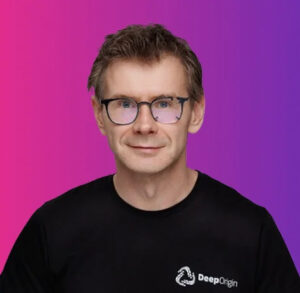
Michael Antonov, co-founder of Oculus and Deep Origin [Deep Origin]
On the visualization side, for displayed molecules, there’s a company that has done a great job of allowing you to look at the molecules, and this could be useful for research. That said, it just gives you more spatial perception. It doesn’t actually solve the problem for you.
On the training side, there are potentially huge benefits, even though you would then have to require investing a lot in software to make it actually perform well. Now, one good example is, I have invested in this company called Osso VR, which does training for knee replacement surgery, and they actually practiced it, and they did a study where their surgeons trained with their knee replacement and got 230% more proficiency.
Given the time and the accuracy of a procedure and the speed of how they learn. But to me, that felt actually very incredible that it’s actually being used. I think they also do nursing trade trainings and such. Those are probably the top areas that will probably be more brain-oriented cognitive things you could do. It would just take time to explore it.
IPM: What will AI’s impact be on medicine and healthcare?
Antonov: I think that there is still a lot of uncertainty. The system is overloaded. There’s a whole spectrum, and the challenge is that there are hundreds of different companies and projects with a whole different range of funding.
For pharma, it would be a big job to sift through what is actually good and what will help me take my target forward. That’s a challenge because there’s a lot more noise and there are some really good companies, but there are also many me-too, not-so-great ones. There are also certain fundamental areas that haven’t been solved yet, like toxicity and other issues, although there has been progress in some areas. There are like dozens of predictors, but they’re not necessarily super great, though they’re better than nothing. It’s hard to tell where it’s going. The biggest thing is to see what you actually prove in the lab.
The other thing is that there is a range of medicinal chemists and other knowledgeable people who haven’t been exposed to the breakthroughs or effects we might see on our side. AI may surprise us in certain biological parts of the name for certain problems. Now, more holistically at Deep Origin, our plan is to support the discovery process for small molecule drugs and have predictable outcomes.
IPM: How will AI drive the future of precision medicine?
Antonov: The super exciting way it could look in 20 years in that type of timeframe is that we are starting to get personalized medicine. You’re really combining the patient and the system model so that whenever you have a disease, if you have maybe a novel genomic mutation or if you have a new virus, you can literally put the data into the system.
Here is basically experimental data about whatever you collect from the virus. I don’t know if you get the structure of its protease from crystallography. I will even tell you here are the steps you need to take and which lab to run them in. But once you provide it, the system will be able to decompose the pathways and targets it’s affecting and then identify the specific concentrations you might need for these patients.
Essentially, you can provide a target in just a few months. You have good candidates, and these candidates have a much higher probability of not being toxic and having good admin properties. Let’s say we are moving from 90% failure rate to maybe 60%. That would be a huge job. That’s what the toxicity models enable, though they are hard because they need both experimental and data collection. But actually, even things like physics can help with counter screening, asking, what are all these things we should not bind to? Go and check them computationally. This whole stack basically gives you data on how to run your trial. That’s ten years. But then you level it up with populations and the individual.
This is a 2030 year outlook because then you’re pulling in the genomics data, maybe various things, and this is where the industry really becomes much more powerful and individualized. To do that, you really need these more detailed models.
IPM: Do you have a prediction about a current AI trend that will be around for a while?
Antonov: One of the hot topics right now is the idea of AI scientists. In our case, we have an AI discovery engine. We actually did this earlier, which is this area grant from the U.K. for picking up the disease, which can be fully drugged by AI.
We ran our AI scientist system to pick a target for endometriosis. It uses our tools to come up with a molecule. It’s currently in progress, and it did a very detailed breakdown and analysis of hundreds of targets based on very specific criteria, and I picked a particular one with all the reasons.
It’s interesting to make those kinds of tools and this whole pipeline available to almost everyday people because then, much like some genomics tools, an available AI system, which can support the full path of drug development, can in fact let a patient or an interest group just come in and take lots of steps in the direction of saying, “Here’s either maybe an RNA or a gene therapy or a drug that can serve.”
That would be a huge step toward democratizing it. It doesn’t mean that AI will do all the steps for us, but it doesn’t mean that it can do a lot of the known steps, which have been done many times and can help us along the way. Of course, the real scientist will still be very critical to all the parts.
For general accessibility, this automation that is happening and these kinds of simulation tools and large language models in general are incredible. They’ve got a little bit of a long-winded thing, but I wanted to reflect on what you said.
IPM: What are the pros and cons of building Deep Origin in the U.S. or China?
Antonov: Some of the more recent wisdom that I’ve heard is that if you want to survive in the U.S. or more expensive countries, you need to be taking bigger risks, and you need to be more innovative in how you approach the type of modalities and things. So that’s one line of thinking.
Another way is to be distributed. In our case, a big part of our AI/ML team is in Armenia. My co-founder is Armenian. We have 40 people there. I have just come from spending a week and a half with the team there for model building and science. There is an AI, and there are definitely people in all of the areas. Automated labs could also probably be in any country.
In terms of the actual trials, it depends on the situation. There are certain things that it’s probably wiser to do in China for this time being, but also maybe India will be up and coming, and if there are certain scenarios where there are more rare diseases, it’s probably okay to also not stay in the States.
There’s no perfect answer. We have a challenging environment. At the end of the day, you have to have something really valuable and novel to keep going forward. They have really great scientific research there too. We have to be careful and just really go at it hard.
IPM: Where does China stand out from the United States in terms of pharmaceutical research and development?
Antonov: If I were to pick one area, it’s the cost of clinical trials and the way we select just all the aspects of this. And to be honest, I’m not an expert in this. And clearly there’s a lot of progress in China right now. Everybody talks about how it’s much more cost-effective and quicker to do things there. There are a lot of “right to try” opportunities that are helping.
That said, I believe that we can have a lot better kinds of social programs around this to make it like easier for people to participate and maybe take more highly educated guesses and risks. There’s software infrastructure to simplify and reduce the cost. That would be amazing. In some of those areas, AI also can help, and the models actually can help.
IPM: If you could work on anything, what would it be?
Antonov: I would say focusing on aging as a disease. If you look at the funding, things could shake up the type of research that the NIH and the National Institute on Aging (NIA) do, which is really fundamental to our biology because it drives the majority of diseases and has 3% of the budget, whereas oncology and Alzheimer’s have huge budgets. There’s probably more impact in aging than probably some other well-funded areas if we look at the fundamental parts. That would be a big area where you can have a multiplier effect just from the research side.
To really build an ecosystem of better computational and AI models, maybe creating some way to actually incentivize people to contribute to them, because that’s the challenge right now. You can publish a research paper, or you can build your model to make your proprietary hidden drug. But we need scientists to share those in an integrated way. How do we do that?
Maybe it’ll take some big AI companies to jump into it and do something there. But it’s not going to be solved with just a model. It really needs to be a true experiment-grounded framework where researchers can contribute their part and have it be a part of a whole.
<![CDATA[Track latest neuropsychiatry breakthroughs: phase 3 narcolepsy study launches, new depression and PTSD therapies advance, and FDA approvals reshape care.]]>
Posted on
<![CDATA[Largest real-world analysis shows Deep TMS cuts PTSD and depression symptoms in comorbid patients; promising but not FDA-cleared yet.]]>