

Playing the Long Game for Youth Mental Health: A conversation with Grassroot Soccer on the power of sport and partnership


By Mai El Shoush, Partnership Campaign Manager, SNF Global Center for Child and Adolescent Mental Health at the Child Mind Institute


Few events unite the world quite like the FIFA World Cup, demonstrating soccer’s unique ability to connect people across cultures and communities. As millions tune in, the moment offers a timely reminder on how sports can reach young people far beyond the field. This belief underpins the work of Grassroot Soccer, a valued partner of the SNF Global Center for Child and Adolescent Mental Health at the Child Mind Institute. They utilize the power of soccer to advance youth mental health — and have reached more than 25 million young people around the world through this approach.

The partnership incorporates three interconnected areas:

  • Building capacity for frontline workers
  • Generating evidence
  • Contributing to thought leadership on child and adolescent mental health in low-resource settings

The 2026 Men’s World Cup in North America and the upcoming 2027 Women’s World Cup in Brazil present an important opportunity for the organization to take its mental health programming from sub-Saharan Africa and adapt it to the U.S. context.

We spoke with Grassroot Soccer’s Mental Health Specialist Charmaine Nyakonda about the organization’s approach, the impact of their collaboration with SNF, and the growing role of sports in improving the mental health of young people and communities globally.

Playing the Long Game for Youth Mental Health: A conversation with Grassroot Soccer on the power of sport and partnership
Grassroot Soccer’s Mental Health Specialist, Charmaine Nyakonda

As international attention increasingly turns towards soccer’s global reach with the 2026 FIFA Men’s World Cup, what role can sports play in advancing youth mental health care across diverse communities?

Soccer is the most popular and accessible sport in the world. From the largest global stages like the World Cup to the most remote rural villages, it’s played everywhere on the planet. As the World Cup shows, soccer has the power to captivate across geographies, cultures, and time zones.

Soccer (and sport in general) is a powerful tool that teaches youth important life skills and character-building lessons like resiliency, hard work, courage, trust, and teamwork. On top of this, soccer’s universal appeal across diverse communities means using the language of the game can also be an effective way to break through the stigma around sensitive but pressing topics like mental health. This is why Grassroot Soccer uses soccer as a teaching tool for mental health.

Grassroot Soccer has successfully touched the lives of millions of young people across settings worldwide. What has the team learned about the universal role that sports can play in supporting mental health, resilience, and social connection?

Across our programs, soccer serves as a universal entry point that hooks young people and meets them where they are. From there, our play-based activities use soccer games and metaphors to make learning about mental health fun and engaging. They break down stigma and create safe spaces where young people can feel comfortable opening up and being vulnerable. This drives exceptional participation and completion rates.

Importantly, our signature soccer-based mental health promotion and prevention program, called MindSKILLZ, is guided by core mental health design principles. This includes grassroots co-creation, trauma-informed practice, relationship-centered delivery, and strengths-based learning — which ensures that programs are ethical, culturally grounded, and safe for adolescents in both stable and crisis-affected settings.

“Soccer (and sport in general) is a powerful tool that teaches youth important life skills and character-building lessons like resiliency, hard work, courage, trust, and teamwork.”

What elements of Grassroot Soccer’s approach do you believe could serve as a transferable blueprint for other organizations seeking to improve outcomes for young people in different sectors and communities?

Our commitment to co-design with young people: We believe that young people are the experts on their lives and needs, so we intentionally apply the principle of “Nothing about us without us” to our work. We put this into practice by engaging young people at every point in the program life cycle to ensure our work meets their needs, from design to implementation to evaluation.

In 2023, Grassroot Soccer officially launched a Youth Advisory Committee (YAC) composed of young leaders that serves as an internal advisory and advocacy body for the organization. The Committee consists of SKILLZ Coaches, Master Coaches, and trainers between the ages of 18 to 30 from the communities we serve.

Mental health integration: Mental health promotion and prevention must be woven into every service that young people access. Mental health is both a driver and an outcome of young people’s overall well-being. Unaddressed mental health challenges undermine progress in HIV, sexual and reproductive health, education, and other youth development areas. And those same factors profoundly shape young people’s mental health in return.

What has made the partnership with the SNF Global Center particularly valuable, and what role do cross-sector and multidisciplinary partnerships play in expanding support and opportunities for young people?

The diverse cultural perspectives from Greece, Brazil, the United States, and South Africa — and especially youth voices — have enriched our understanding of the barriers young people face, the values that motivate them, and the creative solutions they come up with when it comes to mental health.

We’ve also benefited tremendously from the scientific and clinical expertise at the SNF Global Center. We were able to co-develop an open-access, near-peer emotional support online training that aims to enhance the capacity of frontline workers to identify, refer, and support common mental health problems among children and adolescents. This is especially important in low-resource settings.

Additionally, through thought leadership and advocacy collaboration, this partnership has been valuable in contributing to an important shift in the global conversation to framing low-resource settings (the Global South) as sources of innovation that can positively impact the Global North.

Playing the Long Game for Youth Mental Health: A conversation with Grassroot Soccer on the power of sport and partnership

Over the years, what has most reinforced your belief in the power of soccer to support youth mental health, and what examples best bring that impact to life?

We’ve seen a few powerful stories of impact in humanitarian settings, where the need for mental health care is at its greatest but resources are at its most limited.

For example, in 2024, relentless downpours following a tropical cyclone caused rivers in Malawi’s Nkhotakota and Karonga districts to overflow, leading to widespread flooding impacting over 150,000 people and forcing many displaced residents to seek refuge in makeshift internally displaced person (IDP) camps.

In the camps, people had no access to mental health and psychological support services or safe spaces, and youth were not attending school. The Malawi Ministry of Health identified a major gap in mental health support for adolescents and young people and called on Grassroot Soccer to deliver MindSKILLZ to respond to this need.

Grassroot Soccer’s response team focused heavily on play, coping skills development, and trauma-informed support, creating critical psychological and physical safe spaces for youth within the camp environment.

Looking ahead, how would you like to see the conversation evolve at the intersection of sports, youth well-being, and mental health?

Firstly, we would like to see the conversation move beyond asking whether adolescent girls and young women like to play sports and instead asking, “What can we unlock when they do?”

For too long, sports (and soccer in particular) have been understood as primarily a significant part of adolescent boys’ and young men’s lives only. That assumption has shaped who gets access, who feels welcome, and whose well-being is centered. Grassroot Soccer’s own programming challenges this directly — we have reached more adolescent girls than boys, and in doing so have created space for girls to reconstruct gendered ideas about soccer. The conversation on sports, youth, and mental health needs to evolve to view sports games like soccer as universal tools that can transcend gender norms, age, and socio-economic background to support young people.

At the same time, we want to see the conversation take adolescent boys’ mental health more seriously, not less. Qualitative insights from Grassroot Soccer show that rigid masculine norms remain a profound barrier for boys.

More broadly, we ultimately want to see the conversation shift from individual resilience to multi-systemic access and inclusive enabling environments. Young people need culturally grounded, safe environments that work for them — and include them in design and delivery to help them develop into healthy adults who carry that capacity forward.

Playing the Long Game for Youth Mental Health: A conversation with Grassroot Soccer on the power of sport and partnership

What do you see as the greatest opportunities for the next generation of young people, and what must we do collectively to help make that future possible?

With the largest generation of adolescents coming of age, their ability to live healthy and productive lives will have a profound impact on not just their own life trajectories, but also on the world. Tackling critical global issues from poverty to climate change will require a generation of young people who are strong, healthy, and empowered — and their mental health is central to all this.

At Grassroot Soccer, we are committed to investing in youth mental health to realize a world where mental health challenges have been normalized. We want young people to understand their own mental health, have practical coping skills to deal with frustration and aggression, and recognize the value in seeking support from others. This will help develop a population with reduced symptoms of depression and anxiety, as well as overall improved mental well-being. Then we can collectively realize our vision for a better future.

Through the SNF Global Center, the Child Mind Institute partners with organizations around the world to strengthen child and adolescent mental health systems by combining scientific expertise, local leadership, evidence-based innovation and youth voices. Grassroot Soccer is one example of how cross-sector partnerships can expand access to mental health support in communities where young people already learn, connect, and thrive.

The post Playing the Long Game for Youth Mental Health: A conversation with Grassroot Soccer on the power of sport and partnership appeared first on Child Mind Institute.
Altered tryptophan metabolism as a contributor to cognitive impairment in chronic kidney disease: a narrative review

Approximately 40% of patients with chronic kidney disease (CKD) experience cognitive impairment (CI), which is strongly associated with increased mortality. CI is driven by multiple factors, including vascular injury, accumulation of uremic toxins, disruption of the blood–brain barrier, and chronic inflammation. Recent evidence suggests that kidney disease and neurocognitive decline are mechanistically linked through dysregulated tryptophan metabolism. Tryptophan is metabolised through three main pathways: the kynurenine, indole, and serotonin pathways, each producing bioactive metabolites with distinct neurophysiological effects. The hallmarks of CKD include chronic inflammation, gut microbial dysbiosis, and impaired renal clearance, all of which alter tryptophan metabolism. Inflammation drives tryptophan metabolism towards the kynurenine pathway, increasing the formation of neurotoxic compounds that promote oxidative stress, excitotoxicity, and neuronal injury. However, reduced availability of tryptophan for serotonin synthesis impairs serotonergic signalling and neurotransmission, as well as melatonin biosynthesis, thereby contributing to circadian rhythm disturbances and impaired glymphatic clearance. Concurrently, gut dysbiosis and reduced renal clearance promote the accumulation of indole-derived uremic toxins, leading to endothelial dysfunction, neuroinflammation, and disruption of the blood–brain barrier. This review highlights the current evidence of dysregulated tryptophan metabolism in CKD and its impact on the pathogenesis of neurocognitive complications. The review also discusses potential biomarkers and therapeutic strategies, including kynurenine pathway inhibitors, gut microbiota modulation, uremic toxin adsorption, melatonin supplementation and personalised medicine to mitigate cognitive impairment in CKD.

Physical education performance as a protective pathway: breaking the cycle between learning burnout and gaming disorder in Chinese adolescents

Background and AimsGaming disorder (GD) and learning burnout (LB) are critical issues impacting adolescents, with GD recognized by the World Health Organization as a behavioral addiction and LB contributing to academic disengagement. While prior research has examined bivariate relationships, such as GD’s negative correlation with academic performance and physical education performance, or LB’s association with poor grades, no study has integrated all four variables into one model to explore their dynamic interactions longitudinally.MethodsA cross-lagged panel network (CLPN) model was applied to longitudinal data from 811 Chinese middle school students collected at two time points.ResultsGD and LB showed minimal direct effects on academic performance or physical education performance. Instead, academic performance and physical education performance acted as protective factors, significantly alleviating LB, particularly among boys. These two protective factors were mutually reinforcing. Cognitive exhaustion (a core component of LB) and GD functioned as reciprocal risk factors.ConclusionInterventions for adolescent maladjustment should prioritize addressing learning burnout through academic and physical avenues rather than overemphasizing gaming disorder, with tailored strategies for different genders.

Pharmacotherapy, acupoint stimulation, and psychotherapy for perimenopausal women with anxiety, depression, and panic disorder: a systematic review and network meta-analysis of randomized controlled trials

BackgroundPerimenopausal women frequently experience physiological and psychological symptoms, including anxiety, depression, and panic disorders, mainly due to declining ovarian function and hormonal changes. Current options include pharmacotherapy, acupoint stimulation (AcuStim), and psychotherapy (psych), but their comparative efficacy and safety remain controversial.ObjectiveThis network meta-analysis (NMA) systematically compared pharmacotherapy, AcuStim, and psychotherapy for perimenopausal anxiety, depression, and panic disorder, assessing clinical efficacy, adverse events (AEs), and changes in the Hamilton Depression Rating Scale (HAMD), Hamilton Anxiety Rating Scale (HAMA), Kupperman Index (KI), Self-rating Depression Scale (SDS), Self-rating Anxiety Scale (SAS), Pittsburgh Sleep Quality Index (PSQI), and serum hormone levels.MethodsWe searched PubMed, Embase, Cochrane Library, Web of Science, CNKI, Wanfang, VIP, and SinoMed from inception to June 14, 2026, for randomized controlled trials (RCTs). A Bayesian NMA was performed, and the Surface Under the Cumulative Ranking Curve (SUCRA) was calculated.ResultsThe study included 131 RCTs, encompassing 11457 perimenopausal women diagnosed with emotional disorders. These trials evaluated three distinct treatment strategies. The NMA showed that the highest SUCRA probabilities were observed for drug_psych across HAMD (SUCRA = 92.4%), KI (SUCRA = 97.9%), SDS (SUCRA = 94.5%), PSQI (SUCRA = 98.1%), and follicle-stimulating hormone (FSH) (SUCRA = 96.1%) reduction and estradiol (E2) (SUCRA = 0.1%) elevation; for AcuStim_psych (SUCRA = 93.7%) in HAMA reduction; for psych (SUCRA = 98.9%) in SAS reduction; for drug_AcuStim in clinical efficacy (SUCRA = 9.0%) and luteinizing hormone (LH) reduction (SUCRA = 100%); and for control (SUCRA = 65.5%) in safety outcomes. In pharmacotherapy subgroup analyses, antidepressants (ADs)_Traditional Chinese medicine (TCM) ranked highest for HAMD (SUCRA = 87.2%) and safety (SUCRA = 82%), ADs_antipsychotics (AP) (SUCRA = 97.5%) for HAMA, and ADs_hormone replacement therapy (HRT) (SUCRA = 10.2%) for clinical efficacy.ConclusionPharmacological, acupoint stimulation, and psychological interventions each demonstrated therapeutic benefits for perimenopausal women with emotional disorders. Combination therapies generally showed more favorable efficacy across multiple psychological and endocrine outcomes than single-modality interventions, while no single treatment strategy was consistently superior across all outcomes. These findings may provide evidence to support individualized treatment selection according to patients’ clinical characteristics and therapeutic goals.Systematic review registrationhttps://www.crd.york.ac.uk/PROSPERO/, identifier CRD420261340530.

CD163+ perivascular macrophages in schizophrenia: a research framework for testing macrophage-related mechanisms

Elevated densities of CD163+ perivascular macrophages have been reported in schizophrenia post-mortem brain tissue, particularly in regions involved in neurodevelopment, dopaminergic signaling, and blood–brain barrier (BBB) regulation. However, the biological significance and developmental lineage of these findings remain unclear. While CD163 is linked to regulatory and scavenging functions, macrophage activation states form a continuum and cannot be inferred from any single marker. This Perspective outlines a structured, testable research framework to determine whether this accumulation reflects altered responsiveness to persistent intracellular, inflammatory, systemic, or treatment-related signals. To test this, we propose sequential methodological aims, including defining CD163+ cell localization and phenotypes in predefined brain regions, and assessing viral and non-viral molecular signals using spatial transcriptomic and cell-specific methods. This framework also involves comparing macrophage activation states across schizophrenia and other psychiatric and non-psychiatric control groups, using single-cell and single-nucleus sequencing. By not presuming a specific infectious aetiology, this approach will provide a general methodology to investigate macrophage-related mechanisms across diverse potential triggers. Within this model, HSV-1 is evaluated strictly as an illustrative proof-of-concept candidate for testing intracellular pathogen responses, rather than an exclusive cause, as epidemiological associations have been inconsistent and localization of viral materials within these cells has not been demonstrated. Similarly, Bacille Calmette–Guérin (BCG)-associated trained immunity is introduced strictly as a preliminary, ex vivo/in vitro approach to probe macrophage reprogramming and plasticity. Ultimately, this framework provides a systematic approach for investigating macrophage-related mechanisms and their potential drivers in schizophrenia without presupposing a specific underlying aetiology.

Opinion: MAHA is rewriting the vocabulary of American mental health care

At a May MAHA Institute summit organized around the theme of “overmedicalization,” the health secretary announced an action plan to promote psychiatric deprescribing. At first look, it seemed innocuous. The Substance Abuse and Mental Health Services Administration (SAMHSA) would study prescribing trends and publish fact sheets. Medicare would clarify how clinicians can be paid for the attentive work of tapering a patient off of a medication (which is already a part of routine clinical care). Webinars would teach prevention and “holistic” care. A technical expert panel would convene over the summer to make further recommendations. 

In reality, this announcement, and the steady stream of actions over the past 18 months, mark a quiet rewriting of the vocabulary of American mental health care — a massive rhetorical shift enacted while programs and protections that would actually solve the problem are dismantled.

Read the rest…

See, Blind Mice: Consortium’s Drugs Restore Sight

A consortium led by scientists at the Institute for Bioengineering of Catalonia (IBEC) has developed a series of light-activated small molecule drugs that in preclinicial tests restored sight in blind mice. The team’s approach is based on photopharmacology, a technique for reversibly control drug activity using light.

The newly developed compounds, called prosthe6, mimic the function of light sensing photoreceptor cells, which degenerate in blinding diseases such as age-related macular degeneration (AMD) and retinitis pigmentosa (RP).

The prosthe6 compounds target ON-bipolar neurons and in tests were found to successfully restore saccadic eye movements (optokinetic reflex) in blinded zebrafish larvae, a widely used model for studying visual acuity. Even more strikingly, the researchers demonstrated recovery of innate light-avoidance behavior in mouse models of age-related macular degeneration and retinitis pigmentosa.

Test results suggest that the prosthe6 compounds may be administered by injecting them in the eye, or administered as eye drops. In animal studies the photoswitchable molecules also showed promising preliminary safety profiles, pointing to the development of potential drug candidates for restoring vision in patients with degenerative retinal diseases, without the need for genetic manipulation or implanted devices. Importantly, these compounds are designed to work under normal lighting conditions and do not require light-enhancing devices as optogenetics. They are small, water-soluble molecules that respond to ordinary visible or white light, such as indoor lighting or daylight, without requiring intense or specialized light sources.

“These molecules do not cure blindness, because they do not address the cause of photoreceptor degeneration,” said study co-lead Pau Gorostiza, PhD, ICREA Research Professor at IBEC, leader of the Nanoprobes and Nanoswitches group, member of CIBER-BBN. “But they are remarkably effective at restoring sight, and they do so using a very simple and potentially patient-friendly approach.”

Rosalba Sortino, former PhD student at the University de Barcelona, and currently post-doctoral researcher at Gorostiza’s group at IBEC, added, “Our goal was to restore vision using a molecular mechanism that is as close as possible to how the healthy retina works … Instead of bypassing retinal processing, we aimed to reactivate it right at the same level of the retinal circuit than the lost photoreceptor cells.”

Sortino is co-first author of the team’s published paper in Journal of the American Chemical Society, titled “Restoration of saccadic eye movements and visually guided behavior in ambient white light with photoswitchable small molecules.”

Diseases such as age-related macular degeneration and retinitis pigmentosa affect 200 million people worldwide and are the leading causes of visual impairment and blindness. Beyond the personal impact on quality of life and independence, vision loss places a global economic burden estimated at over US$400 billion per year in healthcare costs and lost productivity.

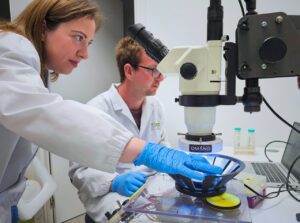
Researchers Rosalba Sortino (left) and Joaquin Martinez Tambella (right) working in the laboratories of the Institute for Bioengineering of Catalonia (IBEC). Sortino is a post-doctoral researcher at the Nanoprobes and Nanoswitches group at IBEC and co-first author of the study. Martinez is a PhD student at the Nanoprobes and Nanoswitches group at IBEC and co-first author of the study. [Institute for Bioengineering of Catalonia (IBEC).]
Researchers Rosalba Sortino (left) and Joaquin Martinez Tambella (right) working in the laboratories of the Institute for Bioengineering of Catalonia (IBEC). Sortino is a post-doctoral researcher at the Nanoprobes and Nanoswitches group at IBEC and co-first author of the study. Martinez is a PhD student at the Nanoprobes and Nanoswitches group at IBEC and co-first author of the study. [Institute for Bioengineering of Catalonia (IBEC)]

In many of these conditions, photoreceptor (PhR) cells—the retina’s light detectors—progressively degenerate and die. Although the downstream retinal neuronal circuitry remains largely intact and functionally viable, it no longer receives the light signals needed to drive visual processing towards the brain. This opportunity has fueled intense research efforts to develop treatments capable of restoring light sensitivity to the eye. Current strategies include gene therapy—effective only for a very small subset of patients with specific mutations—and electronic retinal prostheses, which are invasive, expensive, and require extensive training for effective use.

More recently, optogenetics and light-responsive drugs have entered clinical testing, the latter with encouraging safety results. “Photopharmacology can develop photoswitchable small molecules to restore vision impairment by conferring light sensitivity to ion channels that are widely expressed in the remaining inner retinal neurons, and a first-in-human clinical trial is ongoing,” the team noted. However, achieving high-quality vision at ambient illumination levels remains a major challenge.

The (IBEC)-led consortium has now developed a new class of photoswitchable small-molecule drugs that are capable of restoring key visual functions in animal models of blindness. The team’s photopharmacology-based technique involves modifying a drug’s chemical structure by adding a light-activated molecular switch, enabling control of the pharmacological action using light. “Unlike (opto)genetic manipulation and surgically implanted retinal electronic prostheses, pharmacotherapy is noninvasive, readily reversible, and can be upgraded when new drugs are approved,” the authors noted. “Medicines are preferred by patients, clinicians, and public healthcare systems, they  can be developed and manufactured at lower costs than other approaches and assessed by conventional regulatory procedures and clinical assays.”

The reported work builds on more than a decade of research and was carried out in collaboration with the team co-led by Pedro de la Villa at the University of Alcalá (UAH), as well as researchers from the Institut de Química Avançada de Catalunya (IQAC-CSIC), the University of Barcelona (UB), the Institute Ramón y Cajal of Health Research (IRYCIS), the Autonomous University of Barcelona (UAB), and the Fundació Eduard Soler.

Researcher Joaquin Martinez Tambella working in the laboratories of the Institute for Bioengineering of Catalonia (IBEC). Martinez is a PhD student at the Nanoprobes and Nanoswitches group at IBEC and co-first author of the study. [Institute for Bioengineering of Catalonia (IBEC).]
Researcher Joaquin Martinez Tambella working in the laboratories of the Institute for Bioengineering of Catalonia (IBEC). Martinez is a PhD student at the Nanoprobes and Nanoswitches group at IBEC and co-first author of the study. [Institute for Bioengineering of Catalonia (IBEC)]

The prosthe6 compounds work by acting on a specific type of retinal cells called ON bipolar cells, which normally receive signals from the photoreceptors. “In healthy vision, ON bipolar cells play a key role in passing on information about the presence of light to the rest of the visual circuit,” explained study co-lead de la Villa. “In degenerative eye diseases, although the photoreceptors are lost, much of this underlying circuitry remains intact but inactive. This creates a major therapeutic opportunity.”

By targeting a protein (mGlu6) in this preserved part of the retina, prosthe6 compounds can take over the role of the missing photoreceptors. “… we have targeted metabotropic glutamate 6 (mGlu6) receptors, which are exclusively expressed in ON bipolar cells (OBCs) and localized postsynaptic to PhR cells, thereby leveraging a privileged position to drive physiological visual circuit,” the investigators explained. When light enters the eye, the molecules respond by changing their shape, triggering signals inside the retina in a way that closely resembles natural vision. In this way, the drugs effectively act as “molecular prostheses,” helping the eye process light again without the need for implants or genetic modifications.

Healthy mice naturally prefer to remain in dark environments and instinctively avoid brightly lit areas, a behavior that relies entirely on a functional visual system. Blind mice, by contrast, lose this preference and move indistinctly between light and dark spaces, as they are unable to perceive light. The team showed that after treatment with prosthe6, blind mice once again showed a clear and spontaneous preference for dark areas, indicating that they could perceive light and use this information to guide their behavior.

This recovery occurred without any training and under light levels comparable to those found indoors or on an overcast day, demonstrating that the treatment restores functional light perception capable of driving natural, visually guided behavior.

Two lead compounds, prosthe6-12 and prosthe6-15, showed particularly promising results. The restored behaviors were observed not only after intraocular injection, but also after topical administration as eye drops. “… at least two compounds (prosthe6-12 and -15) appear to be devoid of adverse effects and restore sight by topical administration, which is linked to higher overall clinical success rate than systemic routes for neurological drugs, and to stronger patient adherence,” the investigators pointed out.

The prosthe6 technology is protected by patent and the researchers are now evaluating its safety and formulation to extend the duration of visual rehabilitation. The team is working with Eyelumina, a spin-off company in formation to secure investments that support translational development and future clinical trials.

“Turning this into a therapy is a long and laborious process,” says Gorostiza. “But the results show that there is a realistic possibility of restoring high-quality vision with drugs, non-invasively, reversibly and with a mechanism that is independent of the specific retinal disorder or genetic mutation to reach a majority of patients.”

If successful in humans, the drug-based approach would offer a widely accessible and affordable alternative to existing vision restoration technologies, especially relevant for patients with advanced retinal degeneration for whom no effective treatments currently exist.

In their paper the team further stated, “From a fundamental perspective, prosthe6 constitute new tools for ophthalmology to study the physiopathology of mGlu6 receptors and retinal circuits in vitro and in vivo and contribute to the medicinal chemistry of allosteric modulators. They also achieve the prediction that upstream targeted photopharmacology can deliver nearly native output signals, taking full advantage of the retinal circuit for high-quality vision restoration.”

The post See, Blind Mice: Consortium’s Drugs Restore Sight appeared first on GEN – Genetic Engineering and Biotechnology News.

A study on the relationship between research stress, research anxiety, research performance, and job satisfaction among Chinese healthcare professionals and its influencing mechanisms: a national multi-center survey

BackgroundChinese healthcare professionals face dual pressures from clinical duties and research activities, which may increase research-related anxiety and reduce job satisfaction. While occupational stress has been well studied, the mechanisms linking research stress to job satisfaction are unclear. Research performance may also play a key role, but its impact remains uncertain. This study explores the relationships between research stress, research anxiety, research performance, and job satisfaction, and identifies the pathways connecting these variables.MethodsA cross-sectional survey was conducted among healthcare professionals (nurses, physicians, and pharmacists) from eastern, central, and western regions of China to assess research-related conditions and job satisfaction (JS). Job satisfaction was measured using a modified validated scale. Research stress (RS), research anxiety (RA), and research performance (RP) were assessed using self-developed instruments. Structural equation modeling (SEM) was employed to perform path analysis and mediation analysis.ResultsA total of 924 healthcare professionals were included in the study. Over 85% reported working more than 40 hours per week, and 66.5% rated their health status as fair or poor. Regarding the types of research conducted by healthcare professionals, clinical research accounted for the highest proportion (63.2%), followed by basic science research (9.8%), while health services research and community-based research were relatively less common. The mean scores of JS, RS, RA, and RP were 3.40 ± 0.88, 2.56 ± 0.70, 2.34 ± 0.87, and 3.55 ± 0.82, respectively. Path analysis revealed that research stress was positively associated with research anxiety and negatively associated with both research performance and job satisfaction. Research anxiety was also negatively associated with research performance and job satisfaction, whereas research performance was positively associated with job satisfaction. Mediation analysis indicated that research stress was associated with job satisfaction both directly and indirectly through research anxiety and research performance.ConclusionsResearch stress is negatively associated with job satisfaction among healthcare professionals through increased research anxiety, whereas higher research performance is positively associated with job satisfaction. Hospitals and healthcare institutions should optimize the research environment, strengthen psychological support, and enhance research resource allocation to reduce research stress, improve research performance, and ultimately increase job satisfaction.

ADHD as a disorder of operational capacity: a buffered-state framework for sustained engagement instability

Attention-deficit/hyperactivity disorder (ADHD) is commonly conceptualized as a disorder of executive dysfunction or impaired motivation. In clinical practice, however, many individuals with ADHD describe a different core difficulty: they can initiate tasks appropriately, understand goals, and exert effort, yet struggle to remain engaged as time-on-task and internal strain accumulate. These failures are often abrupt, ego-dystonic, and strongly context-dependent, posing challenges for models based solely on static deficits or gradual depletion. Building on this phenomenology, we propose a constraint-level framework that conceptualizes ADHD as a disorder of operational capacity—the finite tolerance for sustaining stable mental engagement under cumulative cognitive and emotional demand. Within this framework, sustained engagement is modeled as a buffered state that remains stable while cumulative load is within tolerance but becomes increasingly fragile near saturation and may undergo nonlinear collapse into disengagement. We formalize this governing constraint as Operational Economy (OE)—a regulatory, not energetic, constraint principle—and describe a pre-volitional Global Switching Framework (GSF) that mediates rapid state transitions once engagement stability is exceeded. This formulation integrates and extends cognitive-energetic and state-regulation accounts while explicitly differentiating the OE/GSF framework from these predecessors by its emphasis on threshold-dependent dynamics, bounded tolerance, and asymmetric re-engagement. This framework offers a coherent account of clinical features such as intact initial performance with late-stage disengagement, pronounced time-on-task effects, and context-dependent hyperfocus. The framework generates falsifiable predictions regarding sensitivity to cumulative demand, stress-related acceleration of disengagement, pharmacological effects that preferentially extend engagement endurance rather than normalize peak executive performance, and individual differences across ADHD subtypes and comorbid presentations. These predictions are consistent with existing empirical findings on time-dependent variability in ADHD and provide a basis for future experimental validation.