Contact Lenses Show Promise for Depression

Using specialized contact lenses to stimulate the brain could offer a novel route to treating depression, preclinical research suggests.

The research, in mice, demonstrates how wearable neuromodulation devices can provide a versatile platform for mood and other brain disorders.

It brings eye-based neurotherapies a step closer towards clinical reality and reveals the feasibility of using contact lenses as a bioelectronic strategy for the treatment of depression.

The findings appear in the latest issue of Cell Reports Physical Science.

“Our work opens up an entirely new frontier of treating brain disorders through the eye,” said lead author Jang-Ung Park, PhD, from Yonsei University.

“We believe this wearable, drug-free approach holds tremendous promise for transforming how depression and other brain conditions are treated, including anxiety, drug addiction, and cognitive decline.”

Depression is increasingly recognized as a disorder involving structural and functional abnormalities in brain networks.

Conventional treatments—such as pharmacological therapy, electroconvulsive therapy, and deep brain stimulation—target these abnormalities but can be invasive and are often limited in their efficacy or tolerability.

Park and team note that the eye provides a compelling gateway for indirect brain modulation due to its embryological derivation from the brain and extensive connectivity.

Studies also suggest that visual impairment with higher prevalence of depression, further recognizing the importance of the eye-brain axis.

To investigate this avenue further, the researchers developed a contact lens that uses transcorneal electrical stimulation (TES) based on temporal interference (TI) to stimulate the brain. This delivers two electrical signals to the retina, which only become active where they intersect, allowing specific areas of the brain to be targeted.

The platform circumvents the invasiveness and limited tolerability of conventional brain stimulation therapies by using the retina as a precise interface for the eye-brain axis.

Electrodes made from ultrathin layers of gallium oxide and platinum allow the lens to be flexible and transparent, conforming to the cornea and preserving natural vision.

The researchers examined the efficacy of the lenses in a stress-induced mouse model that recapitulated key behavioral and biological features associated with depression.

Depressed mice received either no intervention, temporal interference, or the SSRI fluoxetine and were compared with control mice that were not depressed before and after treatment. Machine learning was applied for comprehensive efficacy evaluation.

The team reported that the lenses restored behavioral, neural, and biological deficits in depression.

TI-TES enhanced behavioral resilience, restored prefrontal-hippocampal oscillatory synchrony, and normalized depression-related biomarkers.

When machine-learning integration was used to integrate behavior, brain activity, and biomarkers, it consistently grouped the mice with lenses with the non-depressed control mice rather than the untreated depressed mice.

The researchers acknowledge their research is in its early stages, and that the current study employed a wired configuration to ensure precise waveform control and stimulation stability during proof-of-concept validation.

“Like any new medical technology, our contact lenses will need to go through rigorous clinical evaluation in patients before reaching the market,” said Park.

“Next, we plan to make the lens fully wireless, test it for long-term safety in larger animals, and personalize the stimulation for each user before advancing into clinical trials in patients.”

The post Contact Lenses Show Promise for Depression appeared first on Inside Precision Medicine.

Recognizing anxiety and depression in cancer patients based on speech and facial expressions

PurposeTo address the anxiety and depression experienced by cancer patients due to the stress of diagnosis and treatment, as well as the limitations of traditional assessment methods characterized by high subjectivity and low efficiency, this study aims to develop a multimodal fusion approach for the simultaneous and precise evaluation of these two psychological states.Patients and methodsA speech-video dataset of clinically diagnosed cancer patients was used. This study proposes a multimodal fusion approach: for depression recognition, We employ the HuBERT pre-training architecture based on Transformers, integrating specific acoustic features of depression with textual content to achieve accurate classification of depression through a voice-text modality. For anxiety recognition, a multi-task convolutional neural network is designed to infer anxiety status from the facial expressions.ResultsExperiments conducted on a speech-video dataset of clinically diagnosed cancer patients demonstrates that the multimodal fusion model achieves a depression recognition F1 value of 0.85 and an anxiety recognition F1 value of 0.74, significantly outperforming the unimodal model.ConclusionThe results of the two modalities are fused by decision-level weighted averaging to realize the simultaneous assessment of anxiety and depression in cancer patients. The study may provide technical support for rapid, noninvasive screening of psychological status in cancer patients.

Cortical high-threshold and low-activation characteristics in adolescent depression: a cross-age differential analysis

BackgroundAdolescent depression exhibits distinct neurophysiological features, with marked age heterogeneity particularly in the resting motor threshold (RMT) measured during repetitive transcranial magnetic stimulation (rTMS), and substantial variability in clinical therapeutic efficacy. Functional near-infrared spectroscopy (fNIRS) enables the assessment of cortical excitability levels; however, research investigating the association between RMT and cortical activation in adolescent patients with depression remains limited. This study aims to elucidate the underlying neural mechanisms from the perspective of cortical hemodynamics, which is crucial for further optimizing neuromodulation strategies in patients with depression.MethodsWe collected data from 85 treatment-naive patients with depression who underwent rTMS therapy. All patients completed RMT measurement, fNIRS examination, and Hamilton Depression Rating Scale (HAMD) assessment prior to rTMS treatment. Participants were divided into three groups according to age: the adolescents group (n=31), the young adult group (n=26), and the middle-aged group (n=28). We compared the differences in RMT among the three groups and explored the relationships between RMT, cortical activation (reflected by prefrontal oxyhemoglobin level changes during the verbal fluency task via fNIRS), and depression severity (assessed by HAMD scores).ResultsThe results demonstrated that the adolescents group had a significantly higher RMT than the other age groups (58.00 ± 11.14, P < 0.001), accompanied by the lowest prefrontal Oxy-Hb activation level (0.095 ± 0.06, P < 0.001). A strong negative correlation was observed between RMT and cortical activation (Spearman’s rs= -0.929, P < 0.001), while a strong positive correlation was found between RMT and depression severity (Spearman’s rs = 0.837, P < 0.001). The distinct coupling phenomenon of high threshold-low activation-severe symptoms was most prominently manifested in this age group, which may theoretically reflect an underlying dysregulation in broader emotional networks, though the current direct findings strictly indicate localized alterations in prefrontal activation and motor cortical excitability.ConclusionsThe characteristics of high RMT and low cortical activation in adolescent depression serve as important neurobiological markers for depression severity. This finding provides a novel direction for developing individualized, developmentally tailored neuromodulation strategies (e.g., optimization of rTMS targets and dosages), indicating that interventions for adolescent depression should prioritize promoting the healthy integration of emotional circuits and the functional coordination between the cortex and subcortex.

Targeted Ultrasound Could Offer Alternative to Chronic Pain Medication

A new study has shown that targeting ultrasound stimulation to brain regions involved in processing pain can induce long-lasting changes in brain activity, significantly reducing pain perception. Published in Nature Communications, these findings point at a novel non-invasive strategy to treat chronic pain. 

“Our study represents an important first step in understanding how this technology can non-invasively stimulate deep brain regions involved in pain processing,” said Sam Hughes, PhD, senior lecturer in pain neuroscience at the University of Exeter. “We found that targeting a specific brain region involved in pain processing can alter how pain is perceived and change how this area communicates with other parts of the brain’s pain network. The next stage of our research will be to test whether this approach can help people living with chronic pain.”

Hughes and colleagues used transcranial ultrasound stimulation (TUS), a low-intensity neuromodulation technique, to target the dorsal anterior cingulate cortex (dACC), a brain region implicated in chronic pain. The study recruited a total of 32 healthy volunteers, who were treated either with TUS or a sham while putting their right hand in a cold gel to trigger pain due to the low temperature. All participants were asked to rate the severity of the pain they were feeling and underwent MRI and MRS scans to monitor the physiological changes caused by the treatment. 

Results showed that, while TUS had no immediate effect on pain intensity, participants reported a significant reduction in pain from 28 to 55 minutes after the stimulation, suggesting it can trigger a delayed analgesic effect. At the physiological level, TUS was found to disrupt the relationship between temperature and pain intensity, increasing the connectivity between the dACC and other brain regions involved in pain modulation and changing the concentration of the GABA neurotransmitter within the dCC. 

“The study aimed to characterize how transcranial ultrasound stimulation interacts with—and potentially also alters—the brain’s processing of pain,” said Sophie Clarke, PhD, postdoctoral research fellow at the University of Plymouth and lead author of the study. “Understanding these mechanisms will be very important to support the next steps in understanding whether the stimulation can be effective in helping patients with chronic pain.”

Previous research at the University of Plymouth had shown the potential benefits of TUS for psychiatric conditions including anxiety, depression, and addiction. This study shows these benefits could extend beyond neurological disorders and one day offer a non-invasive treatment option for those experiencing chronic pain due to conditions such as fibromyalgia, back pain, and arthritis, or recovering after cancer treatment.  

“Having shown the use of ultrasound can yield positive results for people with a variety of neurological conditions, we wanted to explore what it could mean for those living with chronic pain,” said Elsa Fouragnan, PhD, director of the University of Plymouth’s Brain Research and Imaging Centre (BRIC) and Centre for Therapeutic Ultrasound (CENTUS). “Most of us know someone experiencing chronic pain, and there are very few treatments that deliver any form of long-term benefit. The findings of this new work are really promising, and we are already building on it to assess whether TUS could be a beneficial and non-invasive therapeutic treatment.”

The post Targeted Ultrasound Could Offer Alternative to Chronic Pain Medication appeared first on Inside Precision Medicine.

iCARE Self-Guided Digital Intervention for Postpartum Depression in Danish Mothers: Formative Research Using User-Centered Design

<strong>Background:</strong> Postpartum depression (PPD) is a major public health concern. Despite advancements in treatment, many barriers to accessing care remain. There has been a growing interest in digital interventions for the prevention and treatment of PPD. However, for mothers with mild and moderate symptoms of depression, there is a limited offer of self-guided internet-based interventions developed with user input and with considerations on how to integrate the intervention into stepped care models for PPD. <strong>Objective:</strong> The aim of this study was (1) to describe the process of the design and development of iCARE, a self-guided digital psychological intervention for mothers with mild and moderate symptoms of PPD in Denmark, (2) present the program’s theory illustrated by a logic model, and (3) explore its initial usability and prospective acceptability. <strong>Methods:</strong> Applying user-centered design methods, the intervention development followed six steps: (1) a literature review to identify evidence‑based therapeutic components of self‑guided interventions for PPD, (2) interviews with women with lived experience of PPD and group discussions with mental health experts and home‑visiting providers to identify user needs, (3) iterative design and content development with stakeholder feedback in collaboration with the Department of Digital Psychiatry, (4) prototype testing using think‑aloud usability sessions and interviews with 5 mothers, (5) a group cognitive walkthrough with mental health experts, and (6) final refinement and implementation of the iCARE program with developers and designers. <strong>Results:</strong> Initial interviews with mothers and maternal health care providers emphasized the importance of a digital intervention offering timely psychoeducation, coping strategies, and pathways to in-person care while addressing the diversity of expressions of PPD symptoms. Stakeholders recommended a flexible program, multimodal content, and integration into maternal care systems with community health nurses supporting engagement and participation. The prototype was designed to be user-centered, engaging, and with multiple interactive features. It included components on psychoeducation, cognitive exercises grounded in cognitive behavioral therapy, acceptance and commitment principles, and mood-monitoring. The prototype was designed to be user-centered and engaging, with interactive features and components on psychoeducation, cognitive exercises grounded in cognitive behavioral and acceptance and commitment principles, and mood-monitoring. Prototype testing indicated high prospective acceptability and led to refinements across 6 themes: appropriateness of content; motivation and engagement; inclusivity and gender representation; clarity of instructions and data use; understanding of therapeutic method; and usability, layout, and navigation. <strong>Conclusions:</strong> iCARE is a self-guided internet-based psychological intervention for mothers with mild and moderate symptoms of PPD in Denmark. It was developed with user input by using qualitative methods, user-centered design, and psychological theory. Further research is needed to evaluate the feasibility and effectiveness of the program in a randomized controlled trial and its integration into maternal health care models such as universal PPD screening and home-visiting.

Roles of NRXN1 in neuropsychiatric disorders: from genetic lesion to molecular mechanism

Numerous neuropsychiatric disorders frequently exhibit overlapping genetic risk factors, implying the molecular basis for their comorbidity. Nevertheless, the pathogenesis of these disorders remains elusive, particularly regarding how genetic variations impair the physiological function of risk genes and contribute to disease phenotypes. Neurexin 1 protein, encoded by NRXN1 gene, belongs to the neurexin family of presynaptic adhesion molecules. And neurexin 1 is involved in synaptogenesis and the maintenance of synaptic action. Genetic variations of NRXN1 have been demonstrated to be associated with a spectrum of neuropsychiatric disorders. Herein, this review focuses on the most recent and relevant literature concerning the genetic and molecular mechanisms through which NRXN1 variants contribute to the pathogenesis of neuropsychiatric disorders, particularly schizophrenia and autism spectrum disorder. Among them, we propose the isoform-dependent excitation-inhibition imbalance hypothesis of NRXN1 in autism spectrum disorder. And this hypothesis may account for both the elevated and decreased excitation-inhibition ratios observed in diverse individuals with autism spectrum disorder. Moreover, both schizophrenia and autism spectrum disorder involve deletions and alternative splicing of NRXN1, offering molecular evidence for their comorbidity. Then, we analyzed and summarized the current research status of NRXN1 in other neuropsychiatric disorders, including attention-deficit hyperactivity disorder, insomnia, epilepsy, suicide, and depression. Additionally, available limited researches on NRXN1-targeted therapeutic strategies and associated pharmacological studies are also incorporated. Finally, we discussed existing challenges in NRXN1 research within the context of neuropsychiatric disorders and proposed potential avenues to overcome these obstacles.

From cats to cortex: T. gondii and psychosis, depression, and anxiety

This review examines whether cat ownership, via exposure to the neurotropic parasite T. gondii, contributes to vulnerability for psychotic, depressive, and anxiety symptoms. T. gondii establishes lifelong latent infection in the brain and muscle, where it can modulate dopaminergic signaling, neuroinflammation, and tryptophan–kynurenine metabolism, providing a biologically plausible pathway to altered cognition, mood, and behavior. Epidemiological and meta-analytic data indicate small-to-moderate associations between T. gondii seropositivity and schizophrenia, with more variable but suggestive links to depression and anxiety. Evidence for cat ownership as an independent risk factor is inconsistent: some cohorts and recent meta-analyses report elevated odds of schizophrenia-related outcomes in those exposed to cats, whereas rigorously controlled studies frequently find attenuated or null effects. Methodological limitations, alternative explanations, and cultural implications are discussed, and priorities for mechanism-informed, longitudinal and interventional research are outlined.

Brain Histamine Map Links Genetic Factors to Mental Health and Psychiatric Disorders

A study headed by researchers at King’s College London and the University of Porto has mapped the histamine system in the brain. Histamine, a molecule more commonly associated with allergies, plays a separate but poorly understood role in brain function. The new study addresses this gap, building the first multiscale map of the histamine system which spans from genetics to behavior and related mental health conditions.

The findings provide a new framework for understanding how this often-overlooked chemical system contributes to brain function and could point towards new treatment strategies for histamine-related conditions such as depression, ADHD, and schizophrenia. The study was funded by the National institute for Health and Care Research (NIHR) Maudsley Biomedical Research Centre.

Daniel Martins, MD, PhD, visiting senior research fellow at the Institute of Psychiatry, Psychology & Neuroscience (IoPPN) King’s College London, said, “This work provides a crucial foundation for future research. By integrating molecular biology, brain imaging, and computational analysis, it offers a new perspective on how neurotransmitter systems are organized across the human brain. As neuroscience moves toward more integrated and personalized models of mental health, understanding systems like histamine may prove essential for unlocking new approaches to diagnosis and treatment.”

Martins is first and corresponding author of the team’s published paper in Nature Mental Health, which is titled “Mapping histamine pathway networks in the human brain across cognition and psychiatric disorders.” In their paper the team concluded, “This study provides an integrated characterization of the histaminergic system in the human brain, leveraging transcriptomic, neuroimaging, and functional datasets to delineate its molecular organization and relevance to brain function underlying cognition and psychiatric disorders.”

Histamine is a neurotransmitter, a molecule crucial for neurons to communicate with one another, the authors explained. “Neuronal histamine plays a crucial role in the regulation of brain function, serving as a neuromodulator with widespread influence across multiple neurotransmitter systems.” However, neuroscience research has classically focused on understanding other neurotransmitter systems such as dopamine and serotonin.

As the investigators noted, the organization of histamine in the human brain remains incompletely characterized. However, they explained, dysregulation of the histaminergic system has been implicated in a number of neuropsychiatric conditions, including anxiety, depression, schizophrenia, and autism spectrum disorder (ASD), as well as neurodegenerative diseases including Alzheimer’s, Parkinson’s, and Huntington’s diseases. “Therefore, targeting the brain histamine system has garnered significant attention as a potential new therapeutic strategy for treating these disorders, with pharmacological interventions aimed at modulating histamine receptor activity showing promise in preclinical models.”

Histamine acts through four known histamine receptors, which are responsible for how the signal will influence receiver neurons. Each of these histamine receptors, (histamine receptor H1 (encoded by HRH1), H2 (HRH2), H3  (HRH3) and H4 (HRH4)), mediates distinct functions. For their newly reported study, Martins and colleagues carried out what they described as multimodal analysis, integrating transcriptomic, neuroimaging, developmental and functional datasets to map the architecture of the histaminergic system.

To build a comprehensive map of how histamine acts in the brain, researchers first combined genetic and molecular data with physical maps of the brain.

This revealed which brain regions receive more input from the brain’s histamine system, and which parts show greater capacity to respond to histamine. These molecular data were then linked with positron emission tomography imaging of histamine receptors in living individuals, as well as functional neuroimaging databases that map brain regions to specific cognitive processes and mental health conditions. This type of scan shows how different parts of the brain are working by tracking a tiny amount of radioactive tracer in real time.

Their results found that different histamine receptors were found on brain cells that either turn activity up (excitation) or turn it down (inhibition). “The findings reveal that histaminergic genes exhibit distinct cellular and regional expression profiles, closely aligning with known histaminergic neuroanatomy and function,” they wrote. “At the single-cell level, histamine receptor H1 and histamine receptor H2 were enriched in excitatory neurons, whereas histamine receptor H3 showed preferential expression in inhibitory populations.” This suggests histamine may be important in maintaining the balance between excitation and inhibition, a fundamental property of healthy brain function.

Brain regions with higher histamine-related gene expression were consistently associated with processes such as emotional regulation, stress and fear responses, decision-making, impulsivity, reward, sleep, and memory.

The parts of the brain where histamine-related genes were most active also overlapped significantly with brain regions known to be affected in several psychiatric conditions, including attention-deficit/hyperactivity disorder, major depressive disorder, schizophrenia, and anorexia nervosa. This is in keeping with previous hypotheses linking histamine to these disorders. “By linking histaminergic gene expression to brain-cell types, neurotransmitter systems, cognitive domains and psychiatric disorders, these correlational findings generate several hypotheses concerning histamine’s critical role in brain organization, neurodevelopment and mental health, which further experimental mechanistic work should prioritize and build onto investigate causal relationships,” the investigators concluded.

Martins said, “Current psychiatric treatments largely target neurotransmitters such as serotonin and dopamine, yet histamine interacts closely with these systems and influences their activity. By providing a detailed map of histamine-related pathways, this work suggests new opportunities for developing treatments that target this system more directly, particularly for symptoms such as cognitive dysfunction, fatigue, and impaired motivation.

While these findings do not establish a direct causal role, they suggest that histamine signalling may contribute to regional vulnerability in these disorders. This aligns with a growing view in psychiatry that mental health conditions arise from disruptions across interacting brain systems rather than a single chemical imbalance.”

This new map paints a neural picture of a previously lesser-studied molecule. It opens up future avenues of research into exactly what histamine is doing in various cell types and parts of the brain.

“We want to emphasise that these findings are hypothesis-generating and based on large-scale datasets that capture patterns rather than direct mechanisms,” commented senior author Steve Williams, PhD, professor of neuroimaging at IoPPN King’s College London. Future studies will focus on testing how histamine signaling changes in living individuals, for example through pharmacological interventions or longitudinal imaging approaches.

Co-author Daniel Van Wamelen, PhD, clinical senior lecturer in neuroscience at IoPPN, King’s College London and one of the authors on the paper said: “This kind of work is already taking place at King’s College London, for example in the iMarkHD project. In this project we use Positron Emission Tomography scans to study a specific histamine receptor (called H3) in people with Huntington’s disease, an inherited condition that affects the brain. The goal is to see how histamine activity changes in different parts of the brain over time, and how these changes relate to symptoms such as apathy, depression, and anxiety.”

The post Brain Histamine Map Links Genetic Factors to Mental Health and Psychiatric Disorders appeared first on GEN – Genetic Engineering and Biotechnology News.


Finding Answers When Your Child Is Struggling: Introducing Ask Kai 

Every day, parents reach out to the Child Mind Institute with questions that keep them up at night: Why does my daughter have such strong emotions? Why can’t my son sit still in class? Is this normal anxiety or something more?.

These questions are urgent, but finding answers isn’t easy. The wait time to see a children’s mental health professional can be months or even years. Many families don’t know where to start, what’s normal for their child’s age, or whether their concerns warrant professional help. And with nearly 1 in 5 children experiencing a mental health challenge within the U.S. alone, too many families are navigating this uncertainty on their own.

That’s why we built Ask Kai — a free, evidence-based symptom checker designed specifically for children’s mental health, available in both English and Spanish.

Meet Ask Kai

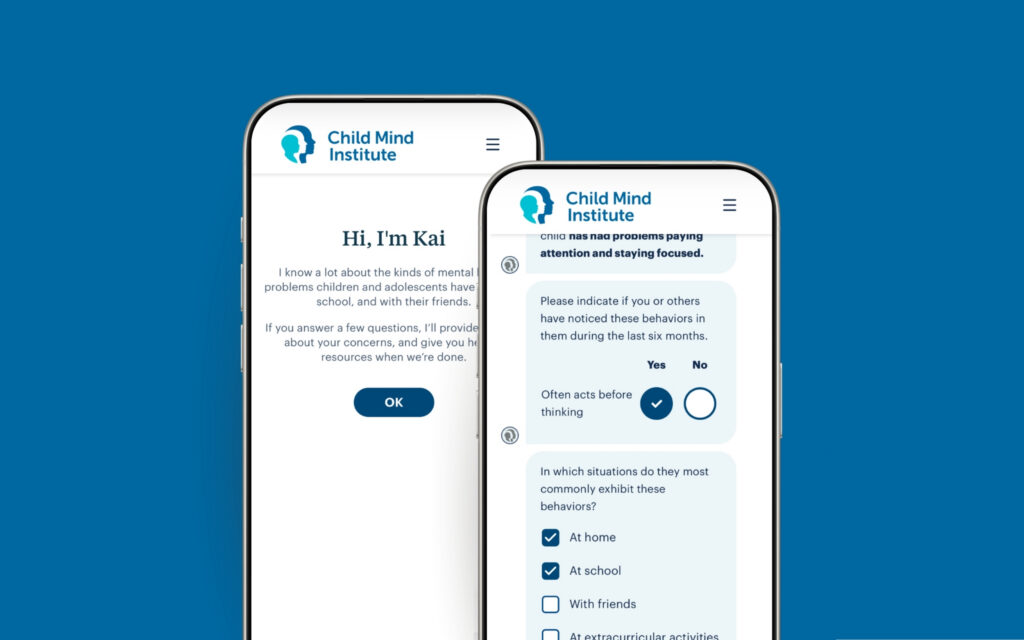
Ask Kai is a conversational symptom checker that helps parents and caregivers understand their child’s behavior and points them to appropriate resources. Through a streamlined series of questions and prompts, Ask Kai gathers information about your child’s challenges and provides personalized recommendations in minutes.

Ask Kai doesn’t diagnose your child. Instead, it helps you:

  • Understand whether your concerns align with common mental health challenges
  • Learn what to look for and what questions to ask
  • Find evidence-based resources specific to your child’s needs
  • Know how to find additional support if needed

Think of Ask Kai as a knowledgeable guide who helps you make sense of what you’re seeing and points you toward your next best step.

How Ask Kai works

If you’ve ever used a symptom checker for physical health, you know the challenge: enter “headache,” and you might walk away convinced you have everything from a sinus infection to a brain tumor. Mental health symptom checkers face even greater challenges. Because every child is different, what looks like defiance in one child could look like anxiety in another, and a behavior that’s appropriate at age five might be cause for concern at age ten. On top of that, mental health conditions often overlap.

So how did we build a tool that captures this complexity without overwhelming families? We focused on expertise and evidence:

  • Clinicians and data lead the way: Ask Kai was built using thousands of child mental health evaluations — open datasets spanning different ages, backgrounds, and conditions — and developed in close collaboration with child psychologists and psychiatrists.
  • Evidence-based question selection: Rather than asking hundreds of questions, we used machine learning to identify which combinations of questions provide the most meaningful information without burdening families.
  • Comprehensive resource library: Every recommendation Ask Kai makes is matched to our extensive collection of guides, articles, expert perspectives, and pathways to professional help.

Here’s what happens when you use Ask Kai

Step 1: Initial Screening

You’ll answer a brief set of questions about your child’s behavior, emotions, and how these challenges affect daily life. You’ll also have the chance to describe in your own words what brought you to Ask Kai. These questions cover the areas where we see the most common concerns.

Step 2: Personalized Deep Dive

Based on your responses, Ask Kai selects targeted follow-up questions that dig deeper into the areas you flagged, whether that’s attention and focus, social anxiety, learning, or other behavioral challenges.

Step 3: Matching You to Resources

Ask Kai analyzes your complete response pattern, including the severity and impact of the behaviors you described, and provides a report with recommendations relevant to your child’s age, challenges, and needs.

What Ask Kai can assess

We designed Ask Kai to explore the areas where we can provide the most help to the most families. Ask Kai offers comprehensive screening and resources for:

ADHD (Attention-Deficit/Hyperactivity Disorder)

Attention-deficit/hyperactivity disorder (ADHD) is a neurodevelopmental disorder that is characterized by difficulties with attention, organization, and impulsive behaviors. Symptoms are usually divided into inattentive behaviors or hyperactive and impulsive behaviors. Inattentive symptoms may include making careless mistakes, being easily distracted, difficulty listening to instructions, trouble with organization, and forgetfulness. Hyperactive/impulsive symptoms may include fidgeting or squirming, trouble playing quietly, extreme impatience, as well as constant talking and interrupting.

Autism Spectrum Disorder

Autism spectrum disorder (ASD) is a neurodevelopmental disorder that begins in utero, but children may not get diagnosed until they’re in preschool or even older, when symptoms become more apparent. The disorder is characterized by deficits in social communication skills as well as restrictive or repetitive behaviors. Symptoms include a wide range of impaired cognitive abilities, language skills, and behaviors. These symptoms have been thought of as a set of disorders but are now being considered one disorder that presents along a spectrum.

Depression

Depression is a mood disorder that can cause children and teenagers to feel very sad and hopeless. Kids with depression have trouble enjoying things they used to love. They may also seem listless and easily annoyed.

Generalized Anxiety Disorder

Generalized anxiety disorder is characterized by excessive, persistent, and unreasonable worries about everyday things, like doing well in school or sports. In general, kids with this disorder worry a lot about being perfect.

Oppositional Defiance Disorder

Oppositional defiance disorder is a disruptive behavior disorder characterized by ongoing persistent, age-inappropriate disobedience and resistance to authority. To be diagnosed with this disorder, children would have had to display extreme behavior issues for at least six months. Diagnosis occurs around early elementary school ages and stops around adolescence.

Social Anxiety Disorder

Social anxiety disorder is a type of anxiety characterized by such intense self-consciousness and fear of embarrassment in social situations that the individual avoids social events; also known as social phobia. While some kids with this disorder are specifically afraid of performance engagements like public speaking or sporting events, others are scared of general social situations.

Specific Phobia

Specific phobia is an anxiety disorder characterized by an excessive and irrational fear of an object, situation, or place. Common specific phobias include dogs, clowns, bugs, the dark, and loud noises.

Elimination Disorders (Enuresis & Encopresis)

For young children, bathroom troubles are often a normal part of growing up. But once kids pass potty-training age, peeing or pooping in places other than the toilet might be a sign of an underlying issue. If it involves urine, it’s called “enuresis.” If it involves feces, it’s called “encopresis.”

Nonverbal Learning Disorder (NVLD)

Nonverbal learning disorder (NVLD) is a condition characterized by difficulty processing visual-spatial information — which involves the brain’s ability to interpret and respond to visual input, including where things are in space. These skills are used to do things like putting together a puzzle or reading a diagram.

Specific Learning Disorder (Dyslexia, Dyscalculia, & Dysgraphia)

Specific  learning disorder is a condition that causes children to have difficulty with reading, writing, and/or math. If they have trouble with reading, the disorder is called dyslexia. If they have trouble with writing, it’s called dysgraphia. If they have trouble with math, it’s called dyscalculia. Symptoms are typically first noticed when the child is in preschool or early elementary school.

These ten areas represent some of the most common mental health concerns in childhood. They’re also areas where we have robust data, validated assessments, and comprehensive resources.

What if your concerns aren’t on this list?

Ask Kai can still help. When you describe your situation in your own words, Ask Kai analyzes your response to identify additional concerns and match you to appropriate resources. Your child’s challenges don’t need to fit neatly into one of these categories for Ask Kai to provide value.

However, we will only make recommendations when we’re confident in the evidence behind them. If a particular concern isn’t well represented in our data, we won’t try to provide guidance in that area. Regardless of the results, everyone receives a core set of resources that we believe are helpful for all families navigating children’s mental health.

Your privacy matters

We take data privacy seriously:

  • Your responses are confidential and secure
  • Free-text responses are analyzed using secure AI systems
  • We don’t share your individual information with third parties
  • In addition to providing you with resources, your data will only be used to improve Ask Kai

Try Ask Kai Today

If you’re wondering whether your child’s behavior is typical or cause for concern, Ask Kai can help. In just 10 to 15 minutes, you’ll get personalized insights and resources to guide your next steps.

Start Your Assessment

You don’t have to figure this out alone. We’re here to help.

If your child is in crisis, expressing thoughts of self-harm, experiencing severe symptoms, or in immediate danger, please seek emergency help right away. Call 988 (Suicide and Crisis Lifeline), text “HELLO” to 741741 (Crisis Text Line), or go to your nearest emergency room.

Frequently Asked Questions

How long does it take?

Most families complete Ask Kai in 10–15 minutes.

Who should use this tool?

Parents, caregivers, and professionals working with children ages 4–18.

Will I get a diagnosis?

No. Ask Kai provides screening information and resources, but only a qualified clinician can provide a diagnosis.

What if I need immediate help?

If your child is in crisis, please call 988, text “HELLO” to 741741, or visit your nearest emergency room.

What makes this different from other symptom checkers?

Ask Kai was built specifically for children’s mental health, uses evidence-based assessments, provides personalized follow-up questions, and was developed in close collaboration with child mental health professionals.

The post Finding Answers When Your Child Is Struggling: Introducing Ask Kai  appeared first on Child Mind Institute.

<![CDATA[Anti-inflammatory drugs ease anhedonia and depressive symptoms in high-CRP depression, spotlighting CRP-guided treatment and lifestyle strategies while calling for stronger RCTs.]]>