

BackgroundDepression is a common mental disorder, and current suicidal ideation (SI) is a clinically important symptom. Sleep disturbance is common in depression, but the relationship between objective sleep architecture and current SI remains unclear. This study examined associations between objective sleep structure and current SI and explored whether sleep-clinical clustering could support exploratory SI stratification.Methods287 patients meeting DSM-5 criteria for depressive disorder underwent clinical assessment and overnight polysomnography (PSG). Current SI was assessed using item 3 of the HAMD-17. Binary logistic regression evaluated factors associated with current SI. K-Means clustering (K = 3) was performed using standardized HAMD score, PSQI score, AHI, total awakenings, N3%, R%, and sleep efficiency. Quantitative cluster validation, sensitivity analyses excluding HAMD from clustering, and ROC-based performance metrics were additionally conducted.ResultsCurrent SI was present in 50.52% (145/287) of patients. In the individual-variable regression model, only HAMD total score was independently associated with current SI (OR = 1.683, p < 0.001). Cluster analysis identified three subgroups with distinct current SI rates: Cluster 1 (deep-sleep dominant, 37.04%), Cluster 2 (high-arousal-apnea, 70.37%), and Cluster 3 (low-arousal-subjective insomnia, 60.80%). The K = 3 solution showed WSS = 1450.71, mean silhouette = 0.204, and Davies-Bouldin index = 1.679. In the demographic-adjusted model, membership in Clusters 2 + 3 was associated with current SI (OR = 3.152, 95% CI: 1.883-5.274, p < 0.001; AUC = 0.700, 95% CI: 0.639-0.760). When HAMD was excluded from clustering, the association remained (OR = 2.669, 95% CI: 1.598-4.458, p < 0.001), whereas additional adjustment for HAMD total score attenuated the primary cluster association (OR = 0.842, 95% CI: 0.411-1.725, p = 0.639).ConclusionsDepression severity was the primary factor associated with current SI. PSG-derived sleep-clinical clusters may help characterize heterogeneous presentations of current SI, but their incremental value beyond depressive severity should be interpreted as exploratory and validated in larger longitudinal samples.
Rhythm-Based Video Games: Exploring the Cognitive and Learning Potential
By Florencia Assaneo, PhD, Research Fellow, Stavros Niarchos Foundation (SNF) Global Center for Child and Adolescent Mental Health at the Child Mind Institute
Educational challenges for Latin American children
Primary education in Latin America has faced a steady decline over recent decades, contributing to what many organizations now describe as an educational crisis. International institutions such as the Economic Commission for Latin America and the Caribbean (ECLAC), the United Nations Educational, Scientific and Cultural Organization (UNESCO), as well as the World Bank Group have all called for urgent action to address worsening learning outcomes across the region. The situation is particularly concerning in Mexico. Results from the 2022 Programme for International Student Assessment showed that Mexico scored well below the Organization for Economic Co-operation and Development (OECD) average in reading, mathematics, and science — placing the country among the lower-performing educational systems evaluated globally.
The consequences of this crisis extend far beyond the classroom. Educational difficulties during childhood are closely linked to long-term social and mental health outcomes. Research has shown that additional years of basic education are associated with lower rates of depression and anxiety (Kondirolli & Sunder, 2022), as well as higher levels of resilience and perceived control over one’s life (Niemeyer et al. 2019). In this sense, poor academic performance in primary school can have lasting effects that continue into adulthood, limiting employment opportunities, increasing vulnerability, and negatively affecting overall well-being.
Can rhythm-based video games improve learning?
Open-access interventions that strengthen children’s cognitive and academic abilities could have enormous value in low- and middle-income countries, where educational resources are often limited. Our work explores whether the ability to coordinate movements with rhythmic sounds — such as clapping, tapping, or dancing to music — can be leveraged to support children’s learning and cognitive development through engaging digital tools.
Over the last decade, multiple studies have shown that children who are better at synchronizing their movements to rhythm also tend to perform better on a wide range of cognitive and language-related tasks. These include reading, phonological awareness, processing speed, rapid naming, and other foundational abilities linked to academic success. Researchers have assessed these rhythmic coordination skills in multiple ways, from walking to the beat of music to tapping along with a steady rhythm or coordinating movements while playing musical instruments. Across these different approaches, one result consistently emerges: children who are better at aligning movement with sound also tend to show stronger cognitive performance.
Building on these study findings, my current fellowship project, supported by the Stavros Niarchos Foundation (SNF) Global Center for Child and Adolescent Mental Health at the Child Mind Institute, seeks to better understand how these rhythm synchronization abilities develop during childhood and whether they could eventually be strengthened through interactive digital interventions. Specifically, we are studying the developmental stage at which these abilities become established in children, and whether individuals with stronger rhythmic coordination also show advantages in attention and language-related skills. Understanding when these abilities emerge is particularly important because it may help identify the developmental window during which they are most malleable and therefore most responsive to training or intervention.

In parallel, we are using functional magnetic resonance imaging (fMRI) — a non-invasive brain imaging technique that allows us to observe which brain regions become active during different tasks — to explore the relationship between rhythmic synchronization and the brain’s reward system. Importantly, these same reward-related regions are also strongly engaged during video game play. If the pathways within this reward system are similarly activated during rhythmic coordination, this could mean that children who initially struggle to synchronize movements with sound may be able to strengthen these abilities through a carefully designed video game experience. One possible future application could involve an open-access mobile game in which children synchronize taps or hand movements to musical rhythms while progressing through increasingly challenging levels and unlocking rewards or visual customizations.
Overall, the current project seeks to generate the scientific evidence necessary to determine whether rhythm-based digital interventions could become a viable tool for supporting children’s cognitive development. This work has the potential to contribute to the future development of accessible and scalable tools that can strengthen foundational cognitive skills linked to academic performance in children. These tools can be applied to children in Mexico and, more broadly, across low- and middle-income countries (LMICs), expanding access to education resources and interventions.
The power of collaboration between the SNF Global Center and UNAM
Our laboratory at Universidad Nacional Autónoma de México (UNAM) is primarily dedicated to basic neuroscience research. Based at UNAM’s campus in Querétaro, our team brings together researchers and students from different disciplines — including neuroscience, psychology, physics, engineering, and data analysis — united by a shared interest in understanding how rhythm and brain dynamics shape human cognition and behavior. Here, we have access to excellent infrastructure for fundamental research, including neuroimaging facilities and high-performance computational resources. However, translating basic scientific discoveries into interventions capable of improving people’s daily lives is often much more challenging and requires strong cross-sector collaboration.
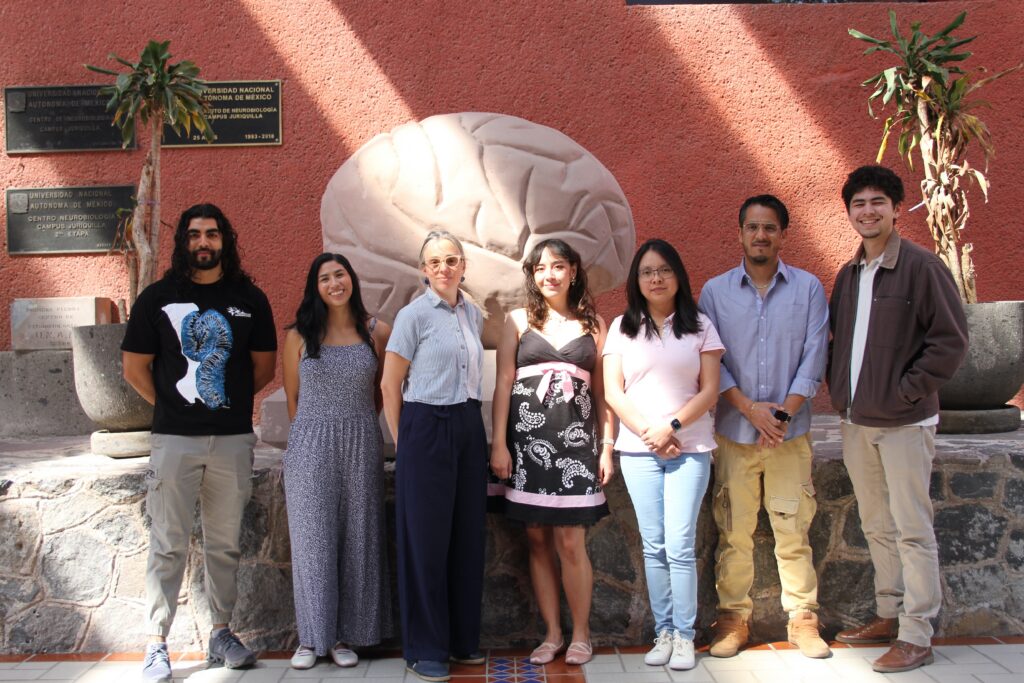
The work I’m conducting as part of the SNF Global Center Research Fellowship has encouraged us to begin thinking beyond the laboratory. This current fellowship has given us the opportunity to test the core scientific assumptions behind our proposed open-access intervention. If the pilot project proves successful, the next stages of the work will become considerably more ambitious, involving both the technological development of the intervention and its large-scale implementation and evaluation in school settings. Advancing toward those goals will likely require the support of larger international organizations and cross-sector collaborations. In this context, the opportunities provided by the SNF Global Center at the Child Mind Institute to share, disseminate, and give visibility to our work are extremely valuable, helping create the connections and momentum necessary to move from foundational research toward real-world impact.
More broadly, this kind of collaboration highlights the importance of building bridges between global institutions and local research communities. By combining international support with local expertise and close engagement with schools and communities, it becomes possible to develop solutions that are both scientifically rigorous and genuinely connected to the realities of the populations they aim to serve.
Learn more about the Research Fellowship
The post Rhythm-Based Video Games: Exploring the Cognitive and Learning Potential appeared first on Child Mind Institute.
Elevated NHHR at admission is independently associated with elevated post-stroke depressive symptoms
BackgroundElevated post-stroke depressive symptoms are common among acute ischemic stroke (AIS) survivors and are associated with poor functional recovery. However, readily available biomarkers reflecting lipid–inflammation status remain limited. The ratio of non–high-density lipoprotein cholesterol to high-density lipoprotein cholesterol (NHHR) may integrate atherogenic burden and inflammatory status and thus be associated with depressive symptom burden after stroke.MethodsWe retrospectively analyzed a cohort of 518 Chinese AIS patients. Admission NHHR was calculated from routine lipid panels. Depressive symptoms at 90 days were assessed using the Hamilton Depression Rating Scale (HAMD), and elevated post-stroke depressive symptoms were defined according to the prespecified HAMD threshold. Multivariable logistic regression, restricted cubic spline (RCS) analysis, and subgroup analyses were conducted to examine the association between NHHR and elevated depressive symptoms.ResultsAmong the 518 patients, 179 exhibited elevated post-stroke depressive symptoms at 90 days. Higher NHHR levels were independently associated with increased odds of elevated depressive symptoms after adjustment for demographics, stroke severity, cognitive function, inflammatory markers, and coagulation parameters (OR = 1.35, P = 0.029). Dose–response trends were observed, and RCS analysis suggested a linear relationship without significant nonlinearity. No significant interactions were found across sex, smoking, alcohol use, hypertension, or diabetes subgroups.ConclusionsElevated NHHR at admission was independently associated with elevated post-stroke depressive symptoms at 90 days in Chinese AIS patients. As a simple, cost-effective, and readily obtainable biomarker, NHHR may facilitate early risk stratification and guide individualized interventions.
Conditioned accumbal dopamine transients forecast individual preference for drug versus natural rewards and compulsive behavior
Nature Neuroscience, Published online: 26 June 2026; doi:10.1038/s41593-026-02331-y
Pascoli et al. show that nucleus accumbens dopamine transients evoked by reward-predictive cues encode subjective reward value in mice, predicting individual preference for drugs over natural rewards and forecasting vulnerability to compulsive drug-seeking behavior.
Young Adults’ Perspectives on an Ecological Momentary Intervention for Drinking to Cope: Qualitative Study
<strong>Background:</strong> Young adults have high rates of mental health problems, such as mood or anxiety symptoms, and high rates of problematic drinking. Many young adults who undergo psychiatric hospitalization to address depression and anxiety symptoms also engage in risky drinking and tend to drink to cope with negative emotions. However, in many cases, treatment programs focusing on mood and anxiety symptoms often fail to adequately address problematic alcohol use in young adults. <strong>Objective:</strong> This study aimed to address this treatment gap by investigating patient perspectives on a potential ecological momentary intervention mobile app. Researchers used qualitative methods to gather perspectives of young adults hospitalized for psychiatric care on their use of drinking to cope with negative emotions and their feedback for a prospective app designed to suggest healthy coping strategies when participants report low mood and cravings to drink. <strong>Methods:</strong> We recruited a total of 12 young adults admitted to a partial hospitalization program to participate in a qualitative interview. To be eligible, participants needed to be aged 18-25 years and report drinking at least once weekly, binge drinking at least once monthly, drinking to cope with negative emotions, and depression and/or anxiety symptoms. <strong>Results:</strong> Qualitative analysis of our data resulted in 4 major themes. These included (1) motivations to use substances, (2) healthy coping, (3) general reactions to the proposed app, and (4) suggestions for the app. Participants generally had insight about their use of alcohol to cope and were able to identify several motivations for drinking; the most frequent motivations were to alleviate anxiety and depression, although many participants noted drinking to cope with other emotions, such as guilt or loneliness. Participants overall had positive responses to the prospective intervention and reported that they would appreciate the portability of a digital intervention in helping them “step down” from higher levels of psychiatric care. Participants also made several valuable suggestions about content, features, and usability, such as suggesting ways to “gamify” the app to increase use. <strong>Conclusions:</strong> This feedback will be crucial in designing and testing an ecological momentary intervention designed to reduce drinking to cope in young adults hospitalized for psychiatric care.

<![CDATA[Phase 3 data show adjunctive seltorexant eases depression and insomnia with lessened weight gain and somnolence.]]>
Evaluating the Effectiveness of the Common Elements Treatment Approach (CETA) in Peru: Mechanisms of Individual and Intergenerational Change
Conditions: Violence; Parenting; Poverty; Depression; Mental Health; Posttraumatic Stress; Economic Factors; Child Psychology
Interventions: Behavioral: Common Elements Treatment Approach; Behavioral: Enhanced Case Managment
Sponsors: University of Notre Dame; Eunice Kennedy Shriver National Institute of Child Health and Human Development (NICHD)
Recruiting
Interventions: Behavioral: Common Elements Treatment Approach; Behavioral: Enhanced Case Managment
Sponsors: University of Notre Dame; Eunice Kennedy Shriver National Institute of Child Health and Human Development (NICHD)
Recruiting
Supporting Student Mental Health With the Safespace Generative AI Chatbot: Mixed Methods Feasibility Study
Background: Generative artificial intelligence (GenAI) chatbots have the potential to provide personalized mental health support to individuals at scale. Objective: This study evaluates the feasibility and usage patterns of the Safespace GenAI chatbot, an artificial intelligence (AI)–driven smartphone app that offers a large language model–powered interactive chatbot to support mental health. Methods: Using a mixed methods approach, we explored baseline attitudes toward GenAI chatbots and chatbot usage patterns, conducted a qualitative content analysis of participants’ experiences, and descriptively assessed patterns related to preintervention depressive symptoms. The study included an initial sample of 42 university students, 20 of whom actively used the chatbot over 2 to 4 weeks, generating 286 user-chatbot interactions. Results: Preintervention surveys indicated that the majority of participants anticipated that the chatbot would be helpful (27/42, 64%) and that they trusted its privacy safeguards (39/42, 93%). Usage patterns suggested that the highest levels of interaction occurred early in the morning and late at night, when peer and professional support may be inaccessible. The qualitative analysis indicated that participants appreciated using the chatbot for reflection as a blended-care tool between their counseling sessions, while also naming technical barriers and specific design needs required to sustain engagement. In addition, our exploratory analyses descriptively showed that participants with elevated depression scores engaged in emotional disclosure during 99% (38 sessions with 8 participants) of their sessions, compared to 84% (26 sessions of 12 participants) of those with low symptoms. Due to the small sample size, future adequately powered studies are needed to inferentially examine these observed patterns. Conclusions: These findings provide initial insights into the usage and engagement dynamics of the Safespace GenAI chatbot and highlight directions for future research to optimize GenAI-driven mental health interventions. Trial Registration: AEA Registry AEARCTR-0013291; https://doi.org/10.1257/rct.13291-1.0
<img src="https://jmir-production.s3.us-east-2.amazonaws.com/thumbs/8ea8d6d9a0e05f3fdb856f007cfd4549" />
First-in-Human Stem Cell Therapy Trial for Huntington’s Disease Begins at UCI Health
The world’s first in-human embryonic stem cell-derived clinical trial for Huntington’s disease has launched at UCI Health, the clinical arm of the University of California, Irvine. The Phase Ib/IIa trial will evaluate the safety of hNSC-01 neural stem cells derived from embryonic stem cells delivered to the brain by a specialized neurological mapping and targeting stereotactic system.
Huntington’s disease is a fatal, progressive genetic disorder that gradually destroys brain cells. It usually begins between the ages of 35 and 50 with symptoms that include involuntary movements, difficulty thinking and planning daily tasks, and mood changes such as depression. If successful, this therapy could prolong independent living and significantly reduce long-term care costs.
“This clinical trial highlights the important role that an interdisciplinary academic and clinical team together with the HD families, plays in advancing medicine,” said Leslie M. Thompson, PhD, professor of psychiatry and human behavior at UC Irvine. “We are grateful to our patients and their incredible families for their bravery to provide hope for others with very few options.”
The first patient received the intervention at UCI Health Irvine (home to Orange County’s first adult bone marrow/stem cell transplant and cellular therapy program) in May. A second patient is scheduled to receive the intervention in July.
“The first patient intervention went very well. To date, they haven’t reported any serious adverse events,” said Ravi Rajmohan, MD, UCI Health neurologist. “This trial may help us move one step closer to a future with available treatments that could potentially slow the progression of Huntington’s disease.”
The therapy, hNSC-01, uses pluripotent neural stem cells derived from embryonic stem cells, which were manufactured through the UC Davis GMP facility. In animal studies, the cells have been shown to protect existing brain cells, replace lost cells, rebuild impaired brain circuits, release helpful proteins, such as brain-derived neurotrophic factor (BDNF), and reduce harmful protein accumulations that damage brain cells. The stem cells were also shown to be safe over long periods in mice.
The clinical trial will enroll 21 people ages 18 to 65 with early-stage Huntington’s disease. Twelve participants will be enrolled into a Phase Ib dose-escalation group and nine in a Phase IIa expansion group.
The stem cells are implanted during a roughly six-hour surgical procedure done under general anesthesia. While lying face down in an MRI scanner, the patient receives stem cells implanted directly into the striatum deep in the brain, using a purchased proprietary therapy-enabling platform for navigation and surgical delivery. Damage to the striatum, which is responsible for motor control, decision-making, motivation and more, causes Huntington’s disease symptoms. Subjects will be closely monitored for safety as well as preliminary signs of potential benefit.
The clinical trial is made possible by a $12 million grant from the California Institute of Regenerative Medicine (CIRM), and the trial is coordinated through the UC Irvine Alpha Clinic.
The post First-in-Human Stem Cell Therapy Trial for Huntington’s Disease Begins at UCI Health appeared first on GEN – Genetic Engineering and Biotechnology News.
Hedgehog signaling enhances the Schwann-like and nerve repair-supportive properties of ectomesenchymal stem cells
IntroductionPeripheral nerve injury (PNI) is characterized by limited regenerative capacity and incomplete functional recovery. Schwann cells (SCs) are essential for nerve repair, but their clinical application is constrained by limited availability. Ectomesenchymal stem cells (EMSCs), derived from neural crest lineage, represent a promising alternative; however, their inefficient differentiation into SC-like cells remains a key limitation. This study investigated whether activation of Hedgehog signaling via Sonic hedgehog (Shh) could enhance SC-like differentiation and improve nerve regeneration.MethodsEMSCs were isolated from rat nasal mucosa and transduced with adenoviral vectors to overexpress Shh. SC-like differentiation was assessed using RT-qPCR, Western blot, immunofluorescence, and ELISA. Transcriptomic analysis compared EMSCs with primary SCs. A short-gap rat sciatic nerve defect model was established as an initial proof-of-concept in vivo model, and animals received vehicle, EMSCs, Shh-EMSCs, or autograft treatment. Functional recovery, electrophysiology, histology, and ultrastructural analyses were performed.ResultsTranscriptomic analysis revealed that EMSCs possess a partial SC-related transcriptional profile but lack sufficient Hedgehog activation. Shh overexpression activated canonical Hedgehog signaling, evidenced by increased Gli1/2 expression and nuclear translocation. Shh-EMSCs showed enhanced expression of SCs markers (P75, GFAP, MBP, S100β), increased secretion of neurotrophic factors (BDNF, NT-3), and reduced inflammatory cytokines. In vivo, Shh-EMSCs significantly improved functional recovery, nerve conduction velocity, and gait performance compared with EMSCs alone. Histological and ultrastructural analyses demonstrated increased axonal regeneration, improved organization, and enhanced myelination compared with unmodified EMSCs, although autograft repair remained superior or more complete in several outcome measures.ConclusionHedgehog signaling contributes to SC-like differentiation of EMSCs. Shh-mediated activation promotes a pro-regenerative phenotype and enhances nerve repair-related outcomes in a short-gap sciatic nerve defect model, suggesting that Shh-EMSCs may serve as a potential cell-based strategy for peripheral nerve repair.