A machine learning model can improve genetic prediction of type 1 diabetes by as much as 10%, show results from a University of California, San Diego study.
The researchers used the machine‑learning model T1GRS to improve on a gold standard polygenic genetic risk score used to predict who is likely to develop the condition called GRS2.
Type 1 diabetes is an autoimmune condition that impacts around 2 million people in the U.S. While it is a multifactorial condition, genetics plays a big role and around 50% of a person’s susceptibility comes from genetics.
“The natural history of type 1 diabetes suggests that the disease occurs in genetically susceptible individuals exposed to environmental triggers, leading to the development of islet-specific autoantibodies and autoreactive T cells and progressive loss of insulin secretory function, although the underlying etiology is not fully understood,” write lead author Kyle Gaulton, PhD, associate professor of pediatrics at UC San Diego School of Medicine, and colleagues in Nature Genetics.
The GRS2 polygenic risk score has been widely tested and can be used to predict newborns who are at high risk of developing type 1 diabetes. While early prediction can’t necessarily stop the disease it can help to prevent emergencies like diabetic ketoacidosis at diagnosis, allow families time to prepare and could allow use of therapies to delay onset of the condition.
In this study, Gaulton and colleagues carried out a genome‑wide association study in 20,355 people with type 1 diabetes and 797,363 non‑diabetic Europeans, as well as a further analysis around the MHC region in 10,107 diabetic and 19,639 nondiabetic individuals.
“The MHC has ‘blocks’ of co-inherited genetic information that are very highly enriched in individuals with type 1 diabetes,” said co-first author Emily Griffin, PhD, a postdoctoral fellow in Gaulton’s lab. “If you have them, it doesn’t mean that you’re going to get diabetes, but if you don’t have them, it means you have a very low chance of getting diabetes.”
Overall 160 risk signals were identified, and the team trained their T1GRS model to predict who was likely to develop type 1 diabetes based on their genetics. The model was able to improve on the GRS2 model predictions by up to 10% in both populations of European and African American ancestry.
Overall the new score correctly flagged about 89 of 100 people with type 1 diabetes while correctly reassuring about 84 of 100 people without the disease.
“Our results highlight the value of combining the results of genetic association studies with machine learning methods to improve the prediction of complex diseases,” conclude the authors.
Researchers at UTHealth Houston have developed a patient-derived “tumor-on-a-chip” model designed to more precisely study pancreatic ductal adenocarcinoma (PDAC). The study, published in Advanced Science, details how the investigators designed the chip to integrate three-dimensional tumor organoids with components of the tumor microenvironment inside a microfluidic system to recreate interactions between cancer cells, stromal tissue, blood vessels, and immune cells.
“Our goal was to build a model that looks and behaves much more like a real pancreatic tumor than traditional lab models,” said Faraz Bishehsari, MD, PhD, professor and director of the Gastroenterology Research Center at McGovern Medical School at UTHealth Houston. “By recreating the tumor’s environment, we can better understand the disease and test treatments in a patient-specific way.”
Pancreatic cancer is difficult to treat because tumors exist within a dense and complex microenvironment that influences both tumor growth and drug response. Current in vitro methods to study the disease, such as two-dimensional cell cultures, as well as pancreatic cancer organoids, often fail to replicate these dynamics.
“Ex vivo models that replicate the tumor and its microenvironment can advance precision medicine in PDAC,” the researchers wrote, but noted that organoids alone “fall short in replicating the tumor microenvironment (TME), which includes various stromal and immune cells influencing tumor growth and chemoresistance.”
To address this, the UTHealth team combined patient-derived organoids with fibroblasts, endothelial cells, and immune cells in a microfluidic chip. The model was created using tumor and blood samples donated by consenting patients, which were used to grow organoids that retained the functional features of the original tumor. The organoids were then incorporated into a chip containing microfluidic channels that mimic blood flow and circulation to create a more dynamic interaction between cells types than current models.
The significance this new lab-on-a-chip lies in its ability to more closely replicate the tumor microenvironment as it would exist in humans more accurately than existing approaches. The design of the chip allows researchers to observe how tumors evolve over time, how stromal and immune components influence cancer behavior, and, perhaps most importantly, how potential drugs and therapies perform under conditions that more closely resemble human disease.
The researchers wrote that their chip “successfully recapitulated the in vivo cancer-stroma interaction of PDAC.” This included the formation of desmoplastic stroma, a dense, scar-like tissue known to limit drug effectiveness. This feature is difficult to reproduce in current PDAC models, but is known to be a major contributor to treatment resistance.
The chip allowed the team to test both chemotherapy and immunotherapies targeting PDAC. They showed that when stromal components were targeted in the model, the effectiveness of standard chemotherapy increased. For immune response, the team studied the effects of pembrolizumab to see how immune cells interacted with the tumor and showed that the drug enhanced T cell infiltration and tumor cell kill. Their observations that lower doses were less effective mirror patterns that have emerged in other clinical studies.
Based on these findings, the researchers noted that chip could serve as a tool for testing new drugs, studying mechanisms of resistance, and evaluating combination therapies tailored to individual patients. Because of its ability to closely recreate the way a tumor would react in vivo, the chip could serve as an important tool to identify the preclinical candidates most likely to effectively treat PDAC.
The implications for developing more precise PDAC therapies are significant. By incorporating organoids and tissues collected directly from individual patients, the chip could allow testing of individualized treatments to account for tumor heterogeneity. Further, it could help find ways to overcome drug resistance driven by stromal interactions and immune suppression.
Next steps for the research include improving the platform’s scalability and reproducibility to support broader use. Future work will also focus on incorporating additional immune components and refining the model to better reflect patient-specific tumor biology.
“This study shows that we can faithfully recreate key features of human pancreatic tumors, including interactions with stromal and immune cells,” Bishehsari said. “The next step is making these systems more practical so they can be widely used in research and drug development.”
Researchers have found a novel therapeutic target to enhance the effects of cancer immunotherapy. A study published today in Science Immunology reveals how a metabolite known as citraconate can reduce T cell exhaustion and enhance the ability of these immune cells to live longer, multiply, and effectively fight tumors.
Despite the widespread success of checkpoint inhibitor immunotherapies, a substantial proportion of patients still do not respond to these treatments. One contributing factor is metabolic dysregulation within the tumor microenvironment (TME), which compromises the antitumor activity of tumor-infiltrating T cells and limits their proliferation, reducing the efficacy of immunotherapy.
“Emerging evidence highlights the TME as a formidable metabolic barrier to immune cell function, attributable, in part, to the accumulation of immunosuppressive metabolites, which collectively promote T cell exhaustion and resistance to immunotherapy,” writes Lianjun Zhang, PhD, professor at the Suzhou Institute of Systems Medicine and senior author of the study. “Although tumor-derived metabolites are increasingly recognized as key modulators of T cell dysfunction and antitumor immunity, the critical metabolic circuits and specific metabolites that shape and sustain T cell phenotypes remain incompletely characterized.”
Citraconate is known to have antioxidative and antiviral properties, as well as being involved in T cell exhaustion. However, the exact signaling pathways it activates and immunological functions it plays in the context of cancer still remain poorly understood.
Zhang’s team uncovered a previously unreported role for this metabolite in antitumor immunity, by reducing T cell exhaustion and preserving their ability to replicate. In tumor tissue samples from patients, the researchers found that citraconate was depleted within exhausted T cells. In cultured human cells and mouse models, supplementation with citraconate increased the activation of tumor-infiltrating T cells, promoted their division, and reduced exhaustion, boosting their antitumor activity.
Further examination revealed that citraconate triggers these effects by increasing intracellular levels of cAMP, which in turn represses the ALOX5 enzyme involved in the oxidation of fatty acids such as arachidonic acid. This signaling cascade reduces the vulnerability of T cells to ferroptosis, a form of cell death driven by the accumulation of oxidized lipids on the cell membrane.
Genetic and pharmacologic inhibition of ALOX5 enhanced antitumor immunity mediated by T cells, confirming these findings. In mouse models of cancer, supplementation with citraconate was shown to boost the effects of immune checkpoint therapy
Taken together, these findings unveil a critical metabolic checkpoint regulating the performance of tumor-infiltrating T cells, presenting a clinically actionable target to enhance the efficacy of immune checkpoint inhibitors. Going forward, the team plans to dive deeper into the signaling pathways that citraconate employs to modulate T cell activity, its role in metabolic regulation, and the potential contributions of epigenetics to the whole process.
Exercise promotes neurogenesis and enhances memory consolidation while reducing the retention of aversive memories and anxiety-like behaviors. While our previous work found that acute exercise alters neurotransmitter concentrations, including dopamine and serotonin, in a time-of-day-dependent manner, the long-term effects of chronically timed exercise on neurotransmitter dynamics and behavioral phenotypes remain unclear. To examine whether the daily timing of a chronic exercise intervention modulates its impact on neurotransmitter profiles and fear responses, male rats were conditioned using a Pavlovian contextual fear approach, then assigned to a 4-week treadmill exercise intervention performed during the early (ZT14) or late (ZT22) active phase or a time-matched sham-exercise control group. One day after completing training, rats underwent a context retrieval test in the middle of active phase (ZT18), and hippocampal neurotransmitters were quantified using UPLC–MRM/MS. Rats subjected to sham-exercise at ZT22 exhibited higher freezing than sham-exercised rats at ZT14, whereas exercise interventions at ZT22 selectively attenuated freezing. Histamine, acetylcholine, and GABA exhibited significant exercise × time interactions. Direct neurotransmitter–freezing correlations were weak after false discovery rate control, consistent with a network-level reorganization rather than a single transmitter driver. These findings suggest that vulnerability to aversive memory expression can be buffered by exercise, if timed appropriately, and that exercise reshapes hippocampal neuromodulatory tone in a circadian–phase–dependent manner, supporting the potential of exercise timing as a chronotherapeutic strategy to enhance stress resilience and mental wellbeing.
Integrating clinical data with simple physiological measures or biomarkers improves triage of febrile children and could reshape frontline care in resource-limited settings.
The groundbreaking partnership that successfully treated a rare metabolic disorder in KJ Muldoon, or “Baby KJ,” with personalized CRISPR therapy last year has led therapy developers, researchers, and regulators, including the FDA, to craft a pathway for expanding the universe of gene therapies to advance the development of N-of-1 gene-editing therapies.
In February, the FDA unveiled its Plausible Mechanism Pathway draft guidance, a series of initiatives designed to increase regulatory flexibility and spur the development of bespoke gene-editing therapies for rare and ultra-rare disorders, which collectively total about 30 million individuals in the United States.
“The Agency anticipates that substantial evidence of effectiveness for individualized therapies could be established based on a single adequate and well-controlled clinical investigation with confirmatory evidence,” the draft guidance stated.
Last June, at a historic roundtable of cell and gene therapy researchers and clinicians hosted by the FDA, base editing pioneer David Liu, PhD, of Harvard University and the Broad Institute of MIT and Harvard, stated: “With sufficient organization and federal support and partnership with the FDA, I believe it will be possible by 2030 to treat at least 1,000 patients with personalized genetic treatments.”
Meanwhile, conventional gene therapy development continued in 2025. Last year saw four U.S. gene therapy approvals, bringing the number of FDA-approved gene and cell therapies up to 26, according to the American Society of Gene and Cell Therapies (ASGCT)—more than half of the 40 tallied by the organization as being approved worldwide.
Of those 26, 18 were gene therapies, of which 10 had disclosed sales high enough to be included on this A-List, which ranks top-selling gene therapies based on sales and net product revenue figures furnished by the companies in regulatory filings, annual reports, and/or press releases. Each gene therapy is listed with its sponsor(s), type, indication, and initial FDA approval date.
Not included are gene therapies with sales below the top 10, a category that includes two gene therapies approved in 2025: Precigen’s Papzimeos (zopapogene imadenovec-drba), which generated $3.4 million in net product revenue last year after becoming the first-and-only FDA-approved treatment for adults with recurrent respiratory papillomatosis (RRP) in August; and Abeona Therapeutics’ Zevaskyn® (prademagene zamikeracel), an autologous cell sheet-based gene therapy approved to treat wounds in adults and children with recessive dystrophic epidermolysis bullosa (RDEB).
Three gene therapies did not have disclosed sales in 2025, including:
Encelto (revakinagene taroretcel-lwey), an allogeneic encapsulated cell-based gene therapy marketed by Neurotech Pharmaceuticals and indicated for the treatment of adults with idiopathic macular telangiectasia type 2 (MacTel).
Imlygic® (talimogene laherparepvec), a genetically modified oncolytic viral therapy marketed by BioVex (Amgen) and indicated for local treatment of unresectable cutaneous, subcutaneous, and nodal lesions in patients with melanoma recurrent after initial surgery.
Waskyra (etuvetidigene autotemcel), a cell-based gene therapy and the first FDA-approved treatment for Wiskott-Aldrich syndrome (WAS). Developer Fondazione Telethon is the first non-profit organization to have successfully led full development of an ex vivo gene therapy from lab research (at Milan’s San Raffaele Telethon Institute for Gene Therapy or SR-Tiget) to regulatory approval.
Also not included this year are sales of three gene therapies that had been marketed by Bluebird Bio: Beta thalassemia treatment Zynteglo (betibeglogene autotemcel), sickle cell disease treatment Lyfgenia® (lovotibeglogene autotemcel), and cerebral adrenoleukodystrophy (CALD) treatment Skysona® (elivaldogene autotemcel).
Last year, Bluebird Bio went private after being acquired by funds managed by Carlyle and SK Capital Partners, then rebranded in September as Genetix Biotherapeutics. Genetix does not disclose sales but did announce on March 2 that more than 100 patients received infusions of the three gene therapies during 2025.
Also last year, Pfizer halted development and commercialization of Beqvez (fidanacogene elaparvovec-dzkt), which had been co-marketed with Roche-owned Spark Therapeutics, after it generated no sales in 2024. Last August, Pfizer terminated its license agreement with Spark for Beqvez, an adeno-associated virus (AAV) vector-based gene therapy indicated for forms of moderate to severe hemophilia B in adults.
Top 10 Best Selling Gene Therapies
1. Zolgensma®(onasemnogene abeparvovec-xioi)
2025 Sales:$1.232 billion1
Sponsor(s): Novartis2
Type: AAV vector-based gene therapy
Indication(s): Treatment of pediatric patients less than two years of age with spinal muscular atrophy (SMA) with biallelic mutations in the survival motor neuron 1 (SMN1) gene.
Initial FDA Approval Date: May 24, 2019
2. Elevidys® (delandistrogene moxeparvovec-rokl)
2025 Sales:$898.7 million
Sponsor(s): Sarepta Therapeutics
Type: AAV vector-based gene therapy
Indication(s): Treatment of ambulatory pediatric patients aged four through five years with Duchenne muscular dystrophy (DMD) with a confirmed mutation in the DMD gene.3
Initial FDA Approval Date: June 22, 2023 (Accelerated Approval)
3. Vyjuvek® (beremagene geperpavec-svdt)
2025 Sales:$389.13 million
Sponsor(s): Krystal Biotech
Type: Herpes-simplex virus type 1 (HSV-1) vector-based gene therapy
Indication(s): Treatment of wounds in patients six months of age and older with dystrophic epidermolysis bullosa with mutation(s) in the collagen type VII alpha 1 chain (COL7A1) gene.
Indication(s): Treatment of adults with high-risk Bacillus Calmette-Guérin (BCG)-unresponsive non-muscle invasive bladder cancer (NMIBC) with carcinoma in situ (CIS) with or without papillary tumors.
Initial FDA Approval Date: December 16, 2022
5. Casgevy® (exagamglogene autotemcel; “exa-cel”)
2025 Sales:$115.8 million
Sponsor(s): Vertex Pharmaceuticals and CRISPR Therapeutics
Indication(s): Treatment of patients aged 12 years and older with sickle cell disease with recurrent vaso-occlusive crises (VOCs), or transfusion-dependent β-thalassemia (TDT).
Initial FDA Approval Date: December 8, 2023
6. Hemgenix®(etranacogene dezaparvovec-drlb)
2025 Sales:A$92 million ($64.9 million)4
Sponsor(s): CSL Behring
Type: AAV vector-based gene therapy
Indication(s): Treatment of adults with Hemophilia B (congenital Factor IX deficiency) who currently use Factor IX prophylaxis therapy, or have current or historical life-threatening hemorrhage, or have repeated, serious spontaneous bleeding episodes.
Indication(s): Treatment of patients with confirmed biallelic RPE65 mutation-associated retinal dystrophy. Patients must have viable retinal cells as determined by the treating physician(s).
Initial FDA Approval Date: December 18, 2017
9. Lenmeldy / Libmeldy(atidarsagene autotemcel)6
2025 Sales:¥6.4 billion ($40.2 million)
Sponsor(s): Orchard Therapeutics (a wholly owned subsidiary of Kyowa Kirin)
Indication(s): Treatment for children with pre-symptomatic late infantile (PSLI), pre-symptomatic early juvenile (PSEJ), or early symptomatic early juvenile (ESEJ) metachromatic leukodystrophy (MLD).
Indication(s): Treatment of adults with severe hemophilia A (congenital factor VIII deficiency with factor VIII activity < 1 IU/dL) without pre-existing antibodies to AAV serotype 5 detected by an FDA-approved test.
Initial FDA Approval Date: June 30, 2023
References
Includes sales of ITVISMA® (onasemnogene abeparvovec-brve), approved by the FDA in November 2025 to treat SMA in adult and pediatric patients two years of age and older with a confirmed mutation in the SMN1 gene. ITVISMA has the same active ingredient as Zolgensma but is administered via a single intrathecal injection, while Zolgensma is administered intravenously.
Novartis is the successor to AveXis, which successfully completed the development of Zolgensma in 2019 by receiving FDA approval for the therapy. In 2014, AveXis licensed from REGENXBIO the AAV9 vector used in the Phase I SMA clinical trial at Nationwide Children’s Hospital. REGENXBIO licensed exclusive rights to key intellectual property covering novel recombinant AAV vectors discovered at the University of Pennsylvania in the lab of James M. Wilson, MD, PhD.
Following the deaths of two DMD patients receiving Elevidys last year, Sarepta halted shipments of Elevidys for non-ambulatory patients and paused the Phase III ENVISION trial (NCT05881408). The study remained paused at deadline. Following a third death, that of an eight-year-old Brazilian boy, the FDA demanded Sarepta pause shipments of Elevidys to ambulant patients. Sarepta initially refused before agreeing in July 2025. A few days later, after an FDA reversal, Sarepta resumed Elevidys shipments to ambulant patients, after Brazilian authorities ruled out treatment with the gene therapy as a factor in the boy’s death.
Sales figure is for the fiscal year ending June 30, 2025. CSL Behring has since disclosed sales of $57 million ($40.2 million) for July–December 2025 but has only furnished a comparison to the year-ago period in terms of constant currency without disclosing a specific sales figure.
Eladocagene exuparvovec-tneq is marketed as Kebilidi in the U.S. and as Upstaza outside the U.S.
Atidarsagene autotemcel is marketed as Lenmeldy in the U.S. and as Libmeldy within the European Union.
According to the American Brain Foundation, over one in three people around the world are affected by neurological conditions, the leading cause of illness and disability worldwide. This silent epidemic is not country-specific. Neurological conditions such as lysosomal storage disorders, rare enzyme deficiencies, and Alzheimer’s and Parkinson’s disease take their victims, regardless of age, race, or location.
For decades, scientists have struggled to deliver therapeutics to the brain, only to be thwarted by the highly protective blood-brain barrier (BBB). First-generation approaches demonstrated proof of principle but still require advancements to improve the ability to reach specific areas of the brain, or specific cell types, safely, and with sufficient dosage to enable meaningful therapeutic effects.
Although much remains unknown generally about brain biology and its defensive mechanisms, novel therapies for devastating neurological diseases are progressing into clinical trials. There is no magic bullet—no promises, no cures—but a gleaming light can be seen in this particular long and dark tunnel.
Dedicated scientists continue to work on gene therapies for the indications that most benefit from a once-and-done approach, in addition to neurological shuttles to address those disorders that require therapeutic tempering and dosage control.
Expanding platform technologies
In 2021, JCR Pharmaceuticals received regulatory approval for the first biotherapeutic, IZCARGO (pabinafusp alfa), designed to cross the BBB to deliver a therapeutic enzyme for the treatment of a lysosomal storage disorder called mucopolysaccharidosis type II (MPS II) or Hunter syndrome.
The platform technology has been expanded to exploit receptor-mediated transcytosis (RMT) to address other lysosomal storage and neurodegenerative diseases. Still, delivery to specific cells or parts of the brain remains challenging, along with efficient delivery of antisense oligonucleotides or siRNA.
“The issue is not delivery across the BBB, but the endosomal escape to efficiently suppress the target RNA,” said Hiroyuki Sonoda, PhD, representative director, president, and CSO, at JCR Pharmaceuticals. “Small molecule CNS delivery is related to physicochemical properties. The structural design needs to make them lipophilic, yet also able to evade typical transporter clearing mechanisms.”
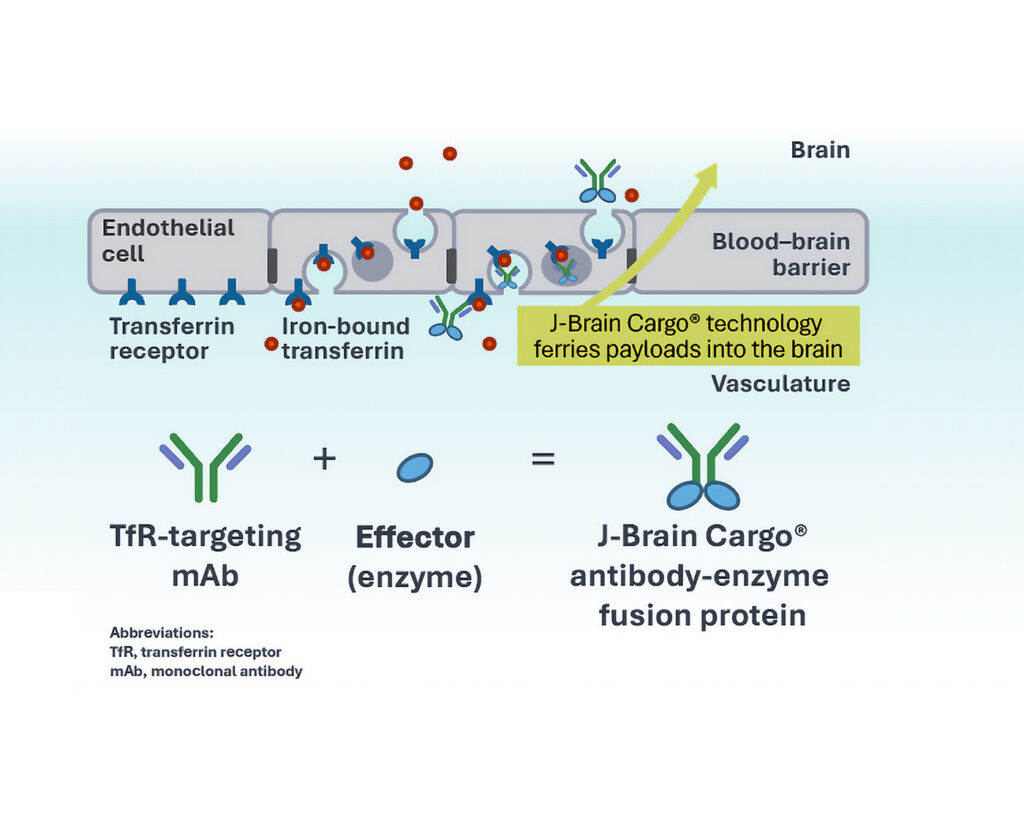
The first approved blood-brain barrier penetration technology was developed into the J-Brain Cargo platform that can help drugs cross the blood-brain barrier. [JCR Pharmaceuticals]
J‑Brain Cargo® uses RMT, mainly focusing on the transferrin receptor (TfR). Other promising candidates target different receptors. “We have successfully transported enzymes, antibodies, peptides, decoy receptors, antisense oligos, and siRNA into the CNS,” commented Sonoda. J‑Brain Cargo is particularly suited for enzyme replacement therapies in lysosomal storage disorders and conditions where dose control, reversibility, and titration are important.
For gene therapies, JCR developed the JUST-AAV platform technology. Novel changes in the capsid almost completely eliminate liver tropism. The modified capsids express miniaturized antibodies on the capsid surface against receptors on selected tissues, organs, or the BBB, enhancing targeted delivery. JUST‑AAV is for diseases where continuous transgene expression is desired to achieve the optimal effect.
Several candidates are in global clinical trials, including JR-141 (pabinafusp alfa) for individuals with MPS II (also known as Hunter syndrome), JR-171 to treat MPS I (also known as Hurler, Hurler Scheie, or Scheie syndromes), and JR-441 for individuals with MPS IIIA (also known as Sanfilippo syndrome A).
Programs in collaboration with MEDIPAL HOLDINGS CORPORATION are in different stages of clinical and pre-clinical development for individuals with MPS IIIB (also known as Sanfilippo syndrome B), Fucosidosis, and GM2 gangliosidosis (including Tay-Sachs and Sandhoff disease).
Collaborating with leading pharmaceutical companies is core to JCR’s strategy to bring these platform technologies to broader application. “We enable our partner by turning their biologics into CNS-penetrating versions of their original molecule,” said Sonoda.
JCR manufactures most of its drug products in-house. Last year, they were selected for the Ministry of Economy, Trade and Industry’s “Regenerative CDMO Subsidy” to expand biomanufacturing capacity for regenerative, cell, and gene therapies.
Optimizing BBB transport
“Protein engineering architecture differentiates our delivery technology along with its optimization for efficacy, safety, and tolerability,” said Ryan Watts, PhD, co-founder and CEO of Denali Therapeutics.
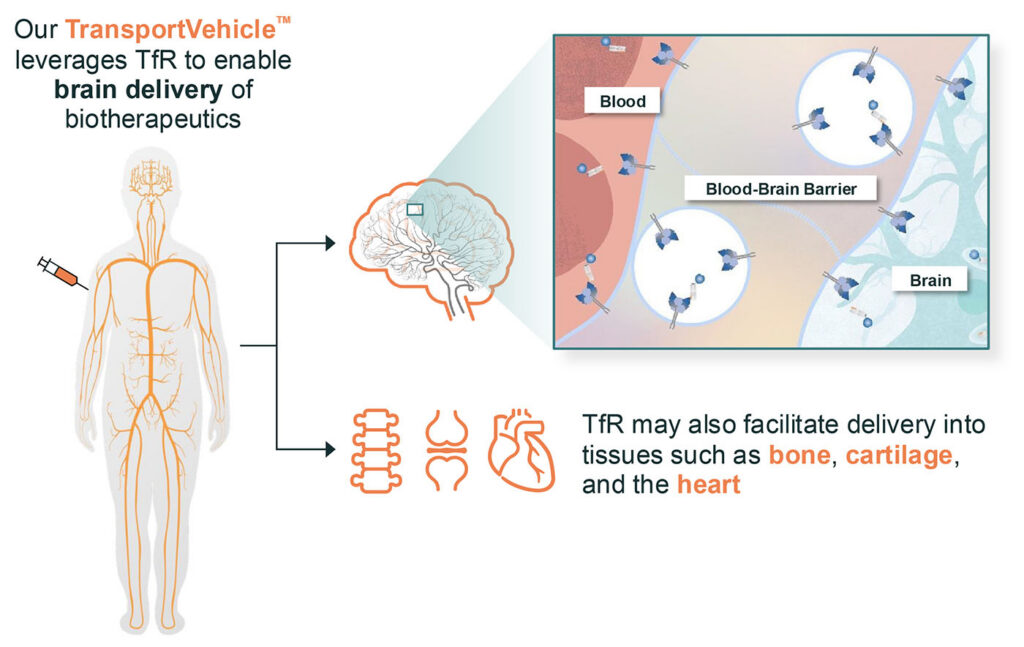
The TransportVehicle (TV) technology has the RMT binding site integrated directly into the constant domain (Fc) of an antibody for optimal properties and modularity. This allows the same TV sequences to transport a range of large molecule biotherapeutics such as enzymes, oligonucleotides, and antibodies for systemic administration. The engineered Fc domains bind to specific natural transport receptors expressed at the BBB, such as TfR.
The integration of the receptor-mediated transcytosis binding site into the TransportVehicle (TV) technology allows the same TV sequences to transport a range of large molecule biotherapeutics, such as enzymes, oligonucleotides, and antibodies, for systemic administration. [Denali Therapeutics]
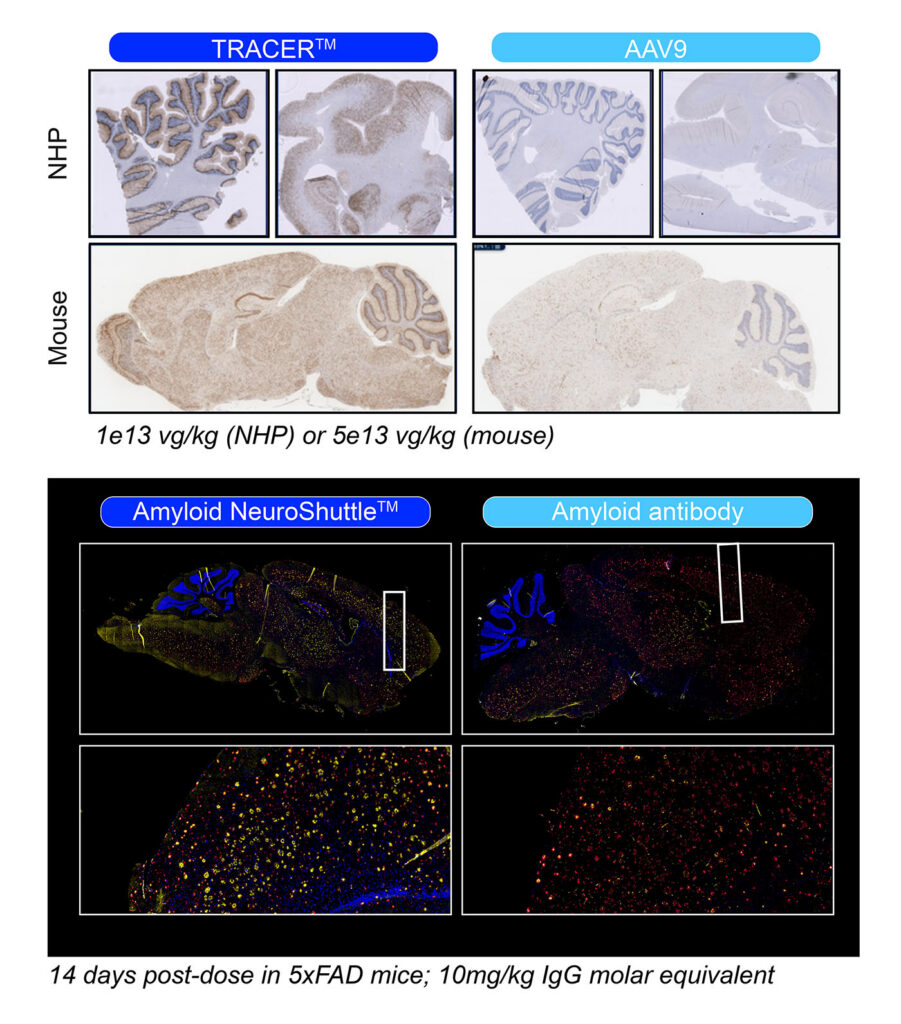
“Our research recently demonstrated that a TV platform-enabled anti-Ab antibody improved distribution in the brain and significantly reduced risk of Amyloid-Related Imaging Abnormalities (ARIA) in a mouse model of Alzheimer’s disease, when compared with a conventional anti-Ab antibody.1 The study provides the first mechanistic insight for mitigating the risk of ARIA,” detailed Watts.
The Enzyme TransportVehicle (ETV) contains a fusion of a therapeutic enzyme. The Fc portion of the fusion molecule binds the apical surface of the TfR to avoid interference with normal iron transport.
In March 2026, Denali’s lead ETV program, Avlayah (tividenofusp alfa-eknm), received FDA accelerated approval for the pediatric treatment of the lysosomal storage disorder MPS II. Avlayah is the foundation for their broader ETV franchise, addressing other lysosomal storage disorders such as MPS IIIA. Results from the open-label Phase I/II clinical trial are available.2
Their Oligonucleotide TransportVehicle (OTV) platform is an engineered TV conjugated to an oligonucleotide for the systemic delivery of genetic medicines to the brain. Extensive characterization and research demonstrate the ability of OTV to elicit broad biodistribution of oligonucleotide therapies throughout the CNS following systemic exposure.
“For example, our investigational therapy DNL628 for the treatment of Alzheimer’s disease is designed to cross the BBB and reduce the tau protein by targeting the MAPT gene that encodes for tau,” explained Watts.
Lastly, the Antibody TransportVehicle (ATV) platform is designed to enable brain delivery of antibodies capable of selective immune activation and a targeted therapeutic approach after intravenous administration. The investigational anti-Ab antibody therapy DNL921, for example, is designed to reduce amyloid plaques and avoid ARIA.
The TV-enabled clinical development portfolio also includes candidates for frontotemporal dementia-granulin and Pompe disease.
Advancing clinical options
“It is exciting to begin to see that delivery through the BBB is possible using gene therapy or shuttle approaches,” said Todd Carter, PhD, CSO at Voyager Therapeutics. Although first-generation therapeutics are demonstrating meaningful levels of delivery, optimization, and improvement of the functionality, exposure duration, and therapeutic effects are still needed.
“For some diseases, gene therapy is the preferred treatment modality, as both the capsid and the payload can be modified to perform a specific job,” said Carter. But viral vector delivery for gene therapy has had problems with liver-based toxicity.
For the best human translation opportunities, Voyager developed a model in non-human primates (NHPs) requiring cross-species activity across multiple NHP species. This strategy resulted in the company’s TRACER (Tropism Redirection of AAV by Cell-type-specific Expression of RNA) technology, used to screen tens of millions of vector variants using barcoded libraries in which capsids were modified with slight insertions of seven to nine amino acids.
TRACER, Voyager’s unbiased capsid and receptor discovery engine, identified ALPL as a broadly enabling brain delivery receptor. [Voyager Therapeutics]
Successful expression in neurons demonstrated that the capsids crossing the BBB worked. Directed evolution improved them. “Next, we needed to determine the mechanism—the receptors they were targeting,” said Carter. This led to the identification of the receptor, alkaline phosphatase (ALPL), tissue nonspecific.
Now, Voyager has multiple families of capsids that mediate delivery into the brain, are detargeted from the liver, and, for the most advanced, have improved the capsid’s ability to target the brain using ALPL. “Using the ALPL receptor elevates delivery to the brain and allows us to substantially reduce dosage,” said Carter.
“I would not have picked ALPL just on face value,” added Mihalis Kariolis, PhD, vice president of non-viral therapeutics at Voyager Therapeutics. “It highlights the power of the unbiased TRACER approach. Expanding the number of brain delivery receptors provides highly differentiated options to reduce side effects and expand the diversity of treatment modalities.”
Both gene therapy and shuttle approaches have opportunities in different indications. Once-and-done gene therapy is not tweakable, whereas shuttle-based dosing is. “In our APOE gene therapy program, we want to reduce existing APOE4 and replace it with APOE2 permanently,” said Carter. “The shuttle has advantages in situations where permanent ongoing delivery is not required.”
Voyager’s most advanced program (VY7523) is a tau monoclonal antibody that is exquisitely specific for pathological tau. Data will be available in the second half of the year. A gene therapy (VY1706) moving into the clinic this year is designed to knock down tau mRNA and protein intracellularly. A collaboration with Neurocrine Biosciences focuses on Friedreich’s ataxia (FA) and is also expected to enter the clinic this year.
Combining transport receptors
The protective BBB is crucial for maintaining homeostasis and ensuring proper neurological function. Comprised of both cellular and acellular components, this sophisticated structure tightly regulates information flow between the periphery and the brain. According to Tanya Wallace, PhD, vice president of neuroscience discovery research at AbbVie, despite the BBB’s importance, many seemingly basic biological questions remain unanswered, fueling additional global research.
The complexity of the BBB also represents a significant bottleneck for advancing therapeutics targeting brain-related disorders. Historically, achieving therapeutically relevant levels of drugs in the brain has been a major challenge in treating serious diseases such as Alzheimer’s and Parkinson’s diseases. “A notable success story is the development of L-DOPA, a prodrug that leverages existing transport mechanisms to cross the BBB,” said Wallace. Once in the brain, L-DOPA is metabolized into dopamine, offering a key symptomatic treatment for Parkinson’s disease.
Breakthroughs in delivery now allow scientists to leverage more technologies that can bring not only small molecules but also complex biologics into the brain. The Modular Delivery (MODELTM) platform exemplifies this progress. The platform enables engineering of bispecific antibodies, capable of targeting naturally expressed BBB receptors such as TfR and CD98. TfR and CD98 are well-characterized at the BBB, and, together, they offer distinct advantages for increasing brain exposure to therapeutics.
“By engaging these transport pathways, the platform can enhance the uptake of a variety of therapeutics, including antibodies and oligonucleotides,” highlighted Wallace. “This multi-receptor strategy provides flexibility to optimize the balance of uptake, release, and distribution in the brain, paving the way for potentially more effective treatments across neurological disease areas.”
This platform technology facilitated the development of ABBV-1758, which is progressing in clinical development. ABBV-1758 utilizes TfR to transport a 3pE-Ab antibody across the BBB to enable the removal of amyloid beta plaques, a pathological hallmark of Alzheimer’s disease.
As scientists aspire to further refine delivery strategies, ongoing research is exploring additional receptors and innovative approaches, including insulin-like growth factor 1 receptor (IGF-1R) and brain cell-type-specific targeting. The field is rapidly evolving to advance more precise, personalized interventions for challenging neuroscience conditions.
“Successful brain delivery requires more than just advances in transport technology; it demands interdisciplinary collaboration, novel preclinical models, and thoughtful clinical translation,” Wallace pointed out. Continued biological research and investment into innovative discovery platforms will be crucial for bringing transformative therapies to patients with the greatest unmet needs.
References
Pizzo ME, Plowey ED, Khoury N et al. Transferrin receptor-targeted anti-amyloid antibody enhances brain delivery and mitigates ARIA. Science. 2025 Aug 7;389(6760):eads3204. doi: 10.1126/science.ads3204.
Muenzer J, Burton BK, Harmatz P et al. An intravenous brain-penetrant enzyme therapy for mucopolysaccharidosis II. N Engl J Med. 2026 Jan 1;394(1):39-50. doi: 10.1056/NEJMoa2508681.
Ajay Gannerkote, president of Integrated DNA Technologies (IDT), says what’s most exciting about CRISPR is its potential to shift medicine from managing disease to directly correcting its root cause. “For patients with severe genetic conditions, especially those with no existing treatment options, that represents a fundamental change in what’s possible,” he said.
IDT played a pivotal role in manufacturing the personalized gene editing therapy given to baby KJ Muldoon to treat his rare metabolic disorder. Today, KJ is free from the toxic ammonia buildup that drives a 50% mortality rate for his condition in infancy. While his story highlights the life-changing potential of gene editing, the field now wrestles with the next challenge: expanding these therapies to benefit broader patient populations.
In contrast to KJ’s urea cycle disorder, which stemmed from a single disease-causing mutation that could be precisely targeted, many genetic disorders arise from numerous mutations scattered across a gene where individualized corrections are too resource-intensive to scale.
Gannerkote says turning powerful gene editing tools into broadly accessible clinical therapies requires progress across multiple fronts. Many CRISPR therapies are still bespoke, with manufacturing processes that are not yet standardized or easily repeatable, leading to long timelines and high costs. In regulation, therapy developers and government regulators face a learning curve when evaluating new modalities, particularly when speed is critical for patients with life-threatening conditions.
Today’s gene editing companies reflect on what’s required to scale personalized CRISPR therapies for maximized impact in the clinic.
End-to-end
Sadik Kassim, PhD, CTO of Genomic Medicines at Danaher, explains that personalized therapies do not naturally lend themselves to traditional drug-development models. Gene editing companies are now seeking “platformization,” where common manufacturing processes are standardized, and limited elements, such as guide RNAs, are customized for each patient to reduce costs and speed timelines.
“Baby KJ’s treatment succeeded because multiple elements aligned simultaneously,” explained Kassim. The foundational science, which achieved successful gene corrections in animal models of phenylketonuria (PKU), an inherited metabolic disorder caused by mutations in the PAH gene that impair the enzyme responsible for breaking down phenylalanine, had already been developed in the academic labs led by Children’s Hospital of Philadelphia (CHOP) physician scientists, Rebecca Ahrens-Nicklas, MD, PhD, and Kiran Musunuru, MD, PhD. Teams were then able to move quickly when the clinical need became clear.
Regulatory engagement was also critical. Danaher teams worked directly with the FDA to streamline the treatment approval process without compromising patient safety. That collaboration compressed a timeline that would normally take 18–24 months down to roughly six months.
“Replicating this for future patients will require moving away from one‑off efforts and toward repeatable platforms with established processes, validated assays, and clearer regulatory precedents, so that speed becomes the norm rather than the exception,” Kassim said.
Amy Pooler, PhD, CSO of ElevateBio, agrees that the transition steps between therapy design and manufacturing are often where the greatest delays occur. ElevateBio seeks to address this bottleneck by building an end-to-end genetic medicine platform.
“A critical driver for the company is making sure we have a clear line of sight into manufacturing from the very beginning,” Pooler said. “One reason Baby KJ’s case was successful is that Danaher managed the handoffs smoothly.”
Pooler also describes developing genetic medicines as “building the plane while you’re flying it.” The field still lacks enough data to reliably predict patient outcomes. Every clinical trial readout provides a valuable lesson for the field.
“I’m excited about the clinical evidence that’s starting to accumulate, showing gene editing can be transformative for patients, which we didn’t have five to ten years ago,” she said.
Large gene, generalizable therapy
ElevateBio’s expanding CRISPR toolbox includes base, prime, and epigenetic editing. Notably, the Durham-based company’s AI platform generates novel recombinases for targeted gene insertion, an approach that holds promise as a generalizable medicine that could treat patients regardless of their underlying disease-causing mutation.
Using AI-guided design, ElevateBio explores entirely new regions of protein space to discover potent and highly specific recombinases that expand the range of diseases amenable to gene editing. These engineered enzymes, which possess 50% or less homology to known proteins, can access novel genomic regions that remain difficult to target with existing CRISPR technologies.
Ben Kleinstiver, PhD, associate investigator at Massachusetts General Hospital (MGH) and co-author of the NEJM study describing KJ’s case, says the FDA’s Plausible Mechanisms Pathway has helped address some of the regulatory challenges to streamline the path to the clinic. Yet, there remains a major motivation for pan-mutation approaches that are more widely applied across patients.
Kleinstiver’s research group, in collaboration with Full Circles Therapeutics, recently developed a circular single-stranded DNA donor (ssDNA) that enables safer kilobase-scale integration for human cells.1 The technology provides an alternative to double-stranded DNA (dsDNA) donors that evoke harmful immune responses yet are required for recognition by the diverse suite of genome editing enzymes. Notably, the new circular donor maintains recombinase compatibility by attaching a short region of dsDNA that can go undetected by the cytosolic DNA sensor and immune system activator, cGAS.
Patients now
While the gene editing field often concentrates on large indications driven by a single common mutation, Edward Kaye, MD, CEO and director of Aurora Therapeutics, aims to extend these technologies beyond the “lucky few” who share the same mutation.
Aurora’s leadership team, from left: Morgan Maeder, PhD, Edward Kaye, MD, and David Litvak, MBA [Aurora]
Co-founded by Jennifer Doudna, PhD, CRISPR Nobel Laureate, and Fyodor Urnov, PhD, scientific director of the Innovative Genomics Institute, Aurora launched in January to build a sustainable pipeline to scale rare disease treatments. Traditionally, developing therapies for these ultra-rare or N-of-1 conditions can require several million dollars for a single patient.
Aurora is pursuing an “umbrella IND” strategy that allows multiple guide RNAs to be evaluated within a single clinical trial. The company’s initial focus is on PKU.
PKU offers several advantages for early clinical development. Patients are routinely identified through newborn screening programs shortly after birth, which facilitates trial participant identification and enrollment. The condition also benefits from a clear regulatory precedent: reductions in phenylalanine levels are an established clinical endpoint used to move therapies toward approval.
“What we learn from PKU will be used for many other diseases because we have the systems in place,” said Kaye. “It expands gene editing into many more patients, by going after one disease first.”
Kaye also stresses the importance of engaging patient communities, whose input can ensure studies and regulatory processes are not overly burdensome for patients and families.
Maher Masoud, CEO of MaxCyte, emphasizes putting patients at the forefront. He adds that most gene-editing therapies in the clinic require significant patient conditioning, which can lead to lengthy treatment cycles and clinical trial timelines. Yet he sees these barriers to scale being eroded over the near term. As an example, modalities, such as allogeneic cell therapies, require far less patient conditioning and easier dosing regimens to support cheaper therapies.
In 2013, MaxCyte partnered with CRISPR Therapeutics on early work that led to the first FDA-approved therapy based on CRISPR-Cas9, Casgevy, with MaxCyte’s ExPERT electroporation platform enabling the efficient delivery of gene editing machinery into cells.
More than a decade later, the company has developed more than 1,000 applications and protocols. The broad engineering platform can repeatedly engineer batches of at least 20 billion cells using CRISPR-Cas9 in addition to base and prime editing.
Masoud says low-significant gene editing commercial success has been a bottleneck to scaling personalized therapies. Yet, he reiterates that CRISPR and other gene editing technologies were discovered a short 12 years ago.
“With CRISPR, we are finally seeing cures, Casgevy, LYFGENIA, and baby KJ are proof of that,” he says. “This is just the beginning.”
References
Tou, C.J., Xie, K., Ferreira da Silva, J., et al. Invasive DNA donors and recombinases license kilobase-scale writing. Nature. 2026. DOI: 10.1038/s41586-026-10241-z.
ROME — Julia Vitarello, whose daughter Mila eight years ago received a bespoke medicine designed for her particular disease-causing mutation, said this week that she is in the process of starting a new company to try to create these individualized therapies at scale.
Vitarello’s previous effort, called EveryONE Medicines, recently folded in part because new Food and Drug Administration guidance encouraging the development of customized therapies did not go far enough in creating a pathway to satisfy EveryONE’s investors, Vitarello said.
Now Vitarello and collaborators are looking for new funders.


 (zopapogene imadenovec-drba), which generated $3.4 million in net product revenue last year after becoming the first-and-only FDA-approved treatment for adults with recurrent respiratory papillomatosis (RRP) in August; and Abeona Therapeutics’ Zevaskyn® (prademagene zamikeracel), an autologous cell sheet-based gene therapy approved to treat wounds in adults and children with recessive dystrophic epidermolysis bullosa (RDEB).