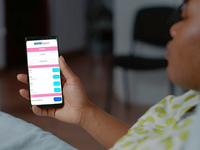
Personalized Brain Health Service and Dementia Prevention

Conditions: Subjective Cognitive Decline (SCD)

Interventions: Behavioral: Multimodal Lifestyle Intervention; Behavioral: Lifestyle Recommendations and Counseling

Sponsors: Barcelonabeta Brain Research Center, Pasqual Maragall Foundation; Hospital del Mar; Hospital del Mar Research Institute

Not yet recruiting

STAT+: Roche ends Huntington’s gene-silencing programs

Want to stay on top of the science and politics driving biotech today? Sign up to get our biotech newsletter in your inbox.

ARPA-H has unveiled a $160 million effort to speed bespoke gene-editing therapies for rare diseases into the clinic. Meanwhile, Roche has abandoned two Huntington’s gene-silencing drugs after disappointing data, and drugmakers have stepped in to promote Medicare’s new obesity drug discount program.

I got coffee with my cousin this morning here in SF. Before leaving for his job at an AI behemoth, he said the bone-chilling July gloom is perfect “working weather.” 

Continue to STAT+ to read the full story…

Sperm donors need limits, says a European fertility group

Ties van der Meer doesn’t know how many siblings he has.

The 47-year-old was conceived at a private fertility clinic in the Netherlands using sperm provided by an anonymous donor. After the Netherlands banned anonymous donation in 2004, the doctor who ran the clinic destroyed records that might have identified those donors, he says.

He describes the situation as “problematic.” Children have a right to know their biological parents, he says. While he did ultimately track down one sibling, who helped him identify his father along with other genetic relatives, he may have others he’ll never find.

Other donor-conceived people who have been able to track down siblings have found they have tens or even hundreds of them. One donor-conceived woman who found 25 half-siblings over the course of seven years told the Guardian, “It does make you feel a bit mass-produced.”

We need international limits on the number of children a single donor can contribute to, a European fertility organization argued yesterday. At a conference in London, members laid out plans to start with a Europe-wide limit.

Today many countries, including the UK, have banned anonymous egg and sperm donation. But anonymity can’t be guaranteed even in places where it is technically allowed. Genetic tests offered by companies like Ancestry and 23andMe, along with genetic registries, have made it much easier for donor-conceived people to find parents and siblings who share their genes.

And because sperm can be frozen and stored for years before it is eventually used, the current set-up can result in situations where donor-conceived people discover the identity of a genetic parent only after the person’s death. They might also find that they have siblings of very different ages, all around the world.

Some people are finding hundreds of siblings. Sperm from Jonathan Meijer, a Dutch man who began donating in 2007, was used to conceive between 550 and 600 children. (Stichting Donorkind, a foundation and advocacy group for donor-conceived people that’s chaired by van der Meer, took him to court, and he was ordered to stop donating in 2023.)

Stories like these can be distressing for donor-conceived people. And there are other reasons why limits are considered important. The offspring of a prolific donor might be at risk of unknowingly forming romantic or sexual relationships, for instance. And some people are concerned that a donor with a harmful genetic mutation might pass that down to many children.

This is unlikely, given the level of screening that most donors undergo. But it has happened. A man who donated his sperm to a sperm bank in Denmark was found to have a genetic mutation that significantly increased the risk of multiple cancers. But his sperm had already been used to conceive at least 197 children across Europe. Some of those children developed cancer. Some died.

Many countries already have legal limits for donors. In Malta and Cyprus, for example, both egg and sperm donors are allowed to contribute to the birth of just a single child, according to data presented at the European Society of Human Reproduction and Embryology (ESHRE) meeting in London on July 8.

Other countries set limits based on the number of families a single donor can contribute to, allowing recipients to have children who share a genetic link. In the UK, that limit is set at 10 families per donor.

But these limits are difficult to enforce, partly because donated gametes don’t necessarily stay in their original country. In Denmark, the national limit is set at 12 families. But the country is a major exporter of sperm. In the UK, for example, more than half of sperm donations in 2020 were imported—with most of those coming from either Denmark or the US.

“The only thing that really makes sense is a transnational limit,” Jackson Kirkman-Brown, a professor of reproductive biology at the University of Birmingham, said at the meeting.

Kirkman-Brown and his colleagues have spent months putting together a document that represents ESHRE’s position on these limits. After consulting with fertility specialists, clinics, sperm and egg banks, donors, and donor-conceived people, the team has developed a plan to start with a Europe-wide limit on sperm and egg donations.

ESHRE is calling on sperm and egg banks, as well as fertility clinics, to respect an initial limit of 50 families per donor. That’s still very high, according to a handful of people I spoke to at the meeting. But at least it’s a start.

Europe should move toward setting limits at 15 families per donor, Kirkman-Brown said. “We may find that 15 is also too high,” says Vasanti Jadva, who studies the psychological well-being of people conceived using donated eggs, sperm, and embryos at City St George’s in London. “We still don’t know what the right number is.”

It will be difficult to enforce these limits, too. And if they end up limiting the supply of donor sperm, there’s a chance that some people will turn to unregulated sperm donations from people who do not undergo health screening. Unregulated donations can lead to other problems for prospective parents, including the possibility that donors will seek parental rights over the children conceived using their sperm.

And it will be even harder to establish international limits. When I asked the American Society of Reproductive Medicine for its thoughts on ESHRE’s proposed limits, a representative directed me to a guidance document saying “it has been suggested” that for a population of 800,000, single donors should be limited to “no more than 25 births” in order to avoid the risk that relatives will have children together. (Considering the US has a population of over 340 million, the total figure could be pretty high, but many sperm banks opt to limit the number of families contributed to by a single donor at around 25.)

van der Meer thinks that even a limit of five families from a single donor would be high. International donation makes it even harder for donor-conceived people to connect with genetic relatives, so the limit for international contributions should be set at two families, he says.

Still, he thinks ESHRE’s suggested limit is a “positive first step.” Van der Meer has managed to track down a sibling, his father, and nephews, aunts, and uncles. He hopes that future policies respect the rights of donor-conceived children to know, and be in contact with, their genetic relatives.

“But,” he says, “you have to start somewhere.”

This article first appeared in The Checkup, MIT Technology Review’s weekly biotech newsletter. To receive it in your inbox every Thursday, and read articles like this first, sign up here.

STAT+: How a Boston doctor built a following as a ‘loud and unafraid’ voice in the Trump era

Jeremy Faust cuts through a hallway of Boston’s Brigham and Women’s Hospital on his way to see a patient who is struggling to breathe. It’s the start of his evening shift, and the emergency department hums with ambient sound: bleeping monitors, the rumbling wheels of medical carts, the squeaky soles of hustling staff. People on gurneys line the corridor, some wincing in pain, others chatting with relatives.

On this Wednesday evening in May, Faust is working what is typically a quieter shift, as far as emergency departments go. Still, he is overseeing a team of doctors, students, and physician assistants, and will tend to more than two dozen patients before signing off for the night.

It’s an understatement to say Faust likes to keep busy. Minutes earlier, he’d posted an article on his influential Substack newsletter, Inside Medicine, providing an update on a major international news story. An alert sent to the newsletter’s nearly 85,000 subscribers announced his “scoop”: Twenty-six passengers aboard the MV Hondius, the hantavirus-hit cruise ship docked at the time off Cape Verde, had disembarked much earlier than previously known — raising the possibility they could spread the rare virus in the United States.

Continue to STAT+ to read the full story…

RecoverEsupport—A Digital Health Intervention for Recovery After Breast Cancer Surgery: Feasibility and Acceptability Outcomes from a Pilot Randomized Controlled Trial

Background: Optimizing recovery following breast cancer surgery is critical for restoring usual function, minimizing complications, and enabling timely initiation of adjuvant therapies. Enhanced Recovery After Surgery protocols are internationally endorsed recommendations and include patient-led behaviors such as early mobilization, early oral intake of fluids and food, postoperative rehabilitation exercises, and multimodal pain management. However, adherence to these behaviors is often suboptimal, and strategies to support patients are limited. Digital health interventions (DHIs) may offer scalable solutions. Objective: The aim of the study is to assess the acceptability of the RecoverEsupport Breast DHI, designed to increase adherence to patient-led Enhanced Recovery After Surgery recommendations across the perioperative period for breast cancer surgery, and to assess the feasibility of conducting a randomized controlled trial to evaluate it. Methods: In this single-site, 2-arm randomized pilot trial, conducted at a major cancer hospital in New South Wales, Australia, between July 2024 and October 2025, participants were consecutively recruited from the surgical list at the study site, supplemented by referrals from surgeons’ private rooms, and included individuals having a mastectomy with or without implant-based reconstruction. Participants were allocated to usual care (control) or usual care plus the RecoverEsupport DHI (intervention). Trial feasibility outcomes included participant recruitment, retention, data completeness, and postoperative safety (adverse events). Intervention acceptability was assessed via the System Usability Scale, participant engagement rates, and willingness to recommend the intervention to others undergoing surgery. Descriptive analyses were conducted, and outcomes were compared to prespecified targets and progression criteria. Results: In total, 23 participants were recruited (control: n=12, intervention: n=11), which was below the target of 70, while participant retention and data completeness were 100% (23/23), both exceeding the targets. No grade 3+ adverse events occurred; minor grade 2 events occurred in both groups. Acceptability outcomes exceeded targets: usability was high (mean System Usability Scale score 83.2, SD 17.7; target >68), 100% (11/11; target >75%) of participants logged in to the DHI at least once, and 88% (10/11; target >75%) would recommend the program to others undergoing surgery. According to prespecified progression criteria, 3 of 4 feasibility targets were met, indicating that a revised recruitment strategy would be required before proceeding. The restrictive eligibility criteria may have contributed to the lower than expected recruitment rate. All 3 acceptability targets were met. Conclusions: The RecoverEsupport intervention was acceptable and safe and had high participant engagement. The trial processes were feasible; however, recruitment barriers, including restrictive eligibility criteria, highlight the need for more robust and integrated recruitment strategies to enable progression to a fully powered randomized controlled trial. Trial Registration: Australian New Zealand Clinical Trials Registry ACTRN12624000417583; https://www.anzctr.org.au/Trial/Registration/TrialReview.aspx?id=386404 International Registered Report Identifier (IRRID): RR2-10.1136/bmjopen-2024-093869

STAT+: Prime wins Beam arbitration, clearing path to clinic

Want to stay on top of the science and politics driving biotech today? Sign up to get our biotech newsletter in your inbox.

A father fights to create and then save his daughter’s gene therapy, the White House nears a decision on an FDA chief, and the Trump administration pushes drugmakers to reshore generics manufacturing.

A quest to save Grace — and help rare disease patients everywhere

With $70 million and seemingly every fiber of his being, Matt Wilsey built a gene therapy company from scratch — recruiting Nobel laureates and biotech veterans to will an experimental treatment into existence for his daughter Grace. The treatment, for the ultra-rare disorder NGLY1 deficiency, landed her back in the hospital before she slowly began to recover, STAT’s Jason Mast and Matt Herper write.

Continue to STAT+ to read the full story…

STAT+: The quest to save Grace — and clear the way for rare disease patients everywhere

SAN FRANCISCO — Matt Wilsey adjusted the plastic tube coming out of his 15-year-old daughter’s stomach and tried, again, not to think beyond the next 15 minutes. His job was to be there with Grace and let his wife, Kristen, rest. He could not think about the future. He could not wonder, again, if he had made the right choice or if his daughter would survive.

Three weeks before, Grace received a gene therapy meant to save her life and spare her further harm from NGLY1 deficiency, an ultra-rare genetic condition that came with a cascade of profound developmental challenges, preventing her from ever speaking or walking with ease. 

Wilsey fashioned the therapy himself.

He did not sit in the lab. He did not inject the rats or slice open their brains. But he had hired the scientists who did. He recruited advisers, including Nobel Prize winners, brought together the families of other children diagnosed with the condition, and pulled together an A-team of investors and donors. Through it all, he was sustained by his devout Catholic faith.

He came to accept that Grace would never live an independent life. But he hoped the drug would allow her to live longer, maybe even say a few words. And he believed the game plan he wrote might serve as a guide to curing hundreds of other rare diseases. 

“We carry the hopes of many,” he wrote to his staff once. “I’m not just talking about NGLY1 families. I receive emails, calls, and texts from professionals and other advocates. They are blown away by what we have accomplished and hope we are an ice breaker for them. Our trial has the potential to really boost / save a decimated field.”

Then the drug meant to save Grace’s life landed her back in the hospital, feebler than she had ever been. He sat beside his daughter, with her soft eyes and long braided hair, her face all puffed up, and prayed her condition would improve.

For a father and his sick child, it was a matter of life and death. But the entire pharmaceutical industry was watching, too.

Continue to STAT+ to read the full story…