Georg Schett had two things: a young patient deathly ill with lupus, and a couple of mouse studies raising the possibility that special T cells could tame the condition.
The German physician-scientist could produce the cells — chimeric antigen receptors, or CARs — at his institution, which was half the battle. Another hurdle: The patient’s parents. “They were like, ‘Don’t do that. You’re crazy,’” recalled Fabian Müller, Schett’s collaborator at the University of Erlangen-Nuremberg. A widespread fear at the time was that T cells would trigger or worsen autoimmune disease.
The rest of the story is the rare scientific fairy tale: The patient got better. Five years on, she is still in remission, and working in the very clinic where she was treated. Her case upended the world of autoimmune disease, driving a flood of experimentation and investment and offering new hope to millions of patients.
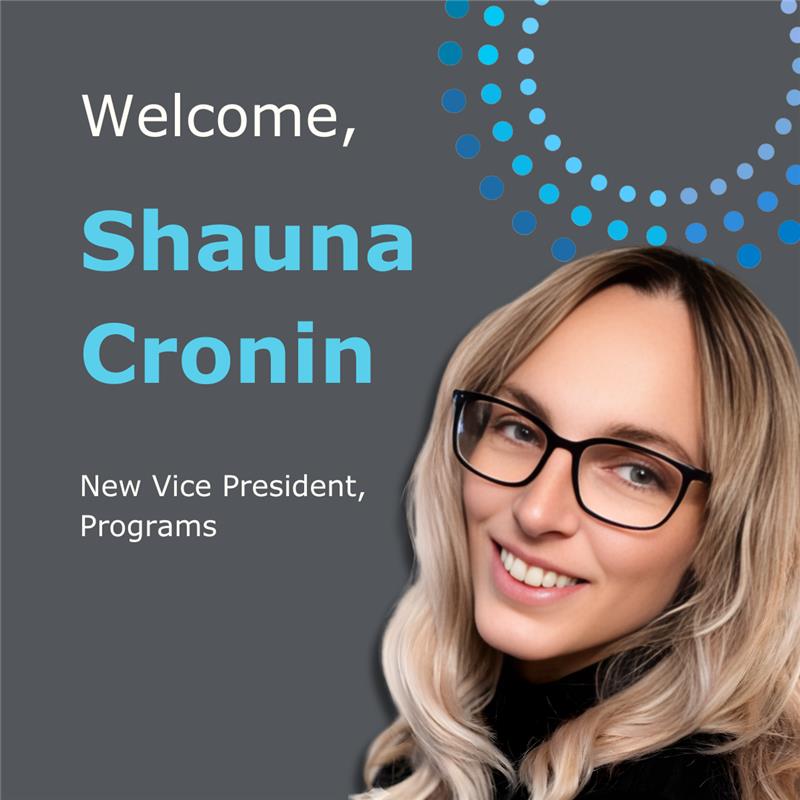
The Mental Health Commission of Canada is pleased to welcome Shauna Cronin (she/her) as our new Vice President, Programs, effective April 27, 2026.
Shauna brings nearly two decades of national leadership in mental health system transformation, program design, and policy innovation. Her experience spans complex, multi‑partner initiatives across governments, communities, and lived and living experience networks, with notable contributions through organizations such as CAMH, Frayme, Stepped Care Solutions 2.0, and the Global Leadership Exchange.
A widely respected and internationally recognized leader, Shauna is known for turning bold vision into measurable impact. Her work has consistently advanced equity, strengthened service integration, and elevated Canada’s leadership in mental health, while meaningfully valuing First Nations, Inuit, and Métis voices as part of an ongoing reconciliation journey.
Shauna holds advanced degrees in political science, strategic communications, and international affairs, is currently pursuing a Master’s in Nonprofit and Philanthropic Leadership, and holds a Health Leadership designation from the Rotman School of Management. She brings a rare combination of deep policy insight, collaborative systems leadership, and a genuine commitment to people and outcomes.
We look forward to the perspective, care, and leadership Shauna will bring as she joins our exceptional Programs team and helps advance mental health and well-being across Canada.
Background: Sexual dysfunction (SD) is common among childhood cancer survivors, affecting approximately 20% to 50% of patients. National guidelines recommend discussions about sexuality throughout cancer care, and prior work demonstrates patient interest in SD conversations. Despite its prevalence and importance, SD is widely underrecognized and undertreated, creating gaps in comprehensive whole-person care. Objective: Our research aims to collaborate with provider partners to co-design an SD screening intervention prototype for implementation in a clinical oncology setting. This study outlines the co-design process to serve as a case study, highlighting challenges and strategies to achieve a consensus-driven intervention and implementation plan. Methods: We engaged pediatric cancer providers in a series of co-design sessions at a National Cancer Institute–designated cancer center within an academic children’s hospital. For each co-design session, the research team created a template outlining considerations from formative work (eg, patient privacy) and key decisions to be made (eg, screening modality). Co-design session moderators facilitated discussion, guiding participants toward a consensus decision for each intervention component. A final process mapping session reviewed and outlined the entire SD prototype. We conducted a rapid qualitative analysis, compiling a templated summary synthesizing and organizing findings by discussion topic and decision point. Based on co-design discussions, the research team compiled a menu of options outlining key thematic findings, core screening intervention functions, and intervention form options to allow for future expansion and tailoring of the SD prototype. Results: Six provider participants, including attending physicians, advanced practice providers, and registered nurses representing multiple oncology subspecialty groups, engaged in a series of 5 co-design sessions. Participants assessed specific intervention component options, reached consensus on component decisions, and determined an intervention and implementation workflow for each. Throughout, providers needed to ensure workflows aligned with patient and provider priorities from foundational work and to ensure design feasibility, acceptability, and appropriateness. Key intervention and implementation decisions included target population, screening frequency, screening modality and workflow, management of screening results, clinic reminders and cues, and provider education and training. With several decisions being interconnected, there was often a cascade effect in which one decision influenced or limited future decisions and, in some cases, required revisiting prior decisions to ensure cohesive alignment into a single prototype. Co-design session moderators used several strategies (eg, reminders, redirection, providing information on feasibility, etc) to facilitate decision-making and implementation strategy selection. Conclusions: Engaging provider partners in co-design sessions allowed for the collaborative development of a preliminary SD screening approach for adolescents and young adults with and surviving cancer. The dynamic co-design process and moderator strategies ensured that intervention and implementation decisions reflected the patient and provider priorities identified in prior work. Future work will test, adapt, and refine the prototype SD screening approach prior to effectiveness testing and eventual dissemination.
<img src="https://jmir-production.s3.us-east-2.amazonaws.com/thumbs/b9da44ddca7fd26298725bb8085edfe5" />
Laura Cowen interviewed Teresa Castiello, MD, a cardiologist and healthcare prevention advocate, to discuss her insights on hypertension management in the era of precision medicine. Castiello shared her perspectives on the need for a proactive approach to hypertension care, the role of precision medicine and pharmacogenomics, and the potential impact of digital health Hilo in transforming how hypertension is diagnosed, monitored, and treated.
Q: Do you think there needs to be a shift in how hypertension is diagnosed and treated?
Teresa Castiello, MD: Without a doubt. We must move from reactive medicine—treating damage once it has occurred—to proactive medicine. Hypertension is frequently underdiagnosed because it often remains asymptomatic until organ damage is already underway. Furthermore, traditional office readings are often biased by the “white coat” effect, which is why clinical guidelines, including those from the ESC (European Society of Cardiology), are moving away from them. Current monitoring also has limitations; nocturnal readings from standard cuffs often wake the patient, and sporadic readings fail to reflect the true, dynamic daily blood pressure response.
Q: Are there any “uncomfortable truths” about hypertension care that we don’t talk about enough?
Castiello: A significant “uncomfortable truth” is the lingering bias that considers a rising blood pressure to be a normal part of aging. It isn’t. Data from the Yanomami population in the Amazon shows that systolic blood pressure can remain constant at approximately 100 mmHg throughout life. In our Westernized society, blood pressure increases as a response to environmental and stressful “insults” rather than as a physiological necessity. Unfortunately, current clinical practice in the U.K. has not yet fully implemented recent ESC changes. We still see values defined as “normal” when guidelines now identify them as elevated (anything above 120/70 mmHg). Cardiovascular risk actually begins to climb much sooner than most realize, often at systolic levels as low as 110–115 mmHg.
Q: Is there a risk of current treatment strategies controlling blood pressure numbers without addressing underlying mechanisms?
Castiello: Yes. Labeling most cases as “essential hypertension” is essentially admitting we are treating a multifactorial condition of unknown cause. We often fail to assess the individual holistically. Stress, hormonal shifts, poor work-life balance, diet, and physical inactivity are profound drivers of blood pressure increases. While medical therapy is a vital tool, we must not forget that humans are multifaceted and complex. We need a healthcare approach that treats the person, not just the metric.
Q: Is there a need for increased precision medicine in hypertension, e.g., with the use of pharmacogenomics? Could this information redefine high-risk?
Castiello: We are in an era where precision medicine is the only way to deliver effective care. The power of data is enabling us to target prevention and early diagnosis like never before. Pharmacogenomics is a key part of this; by understanding how a patient’s genetic profile influences their metabolism of a drug, we can move away from “trial and error.” This information redefines “high-risk” from a generic population score to an individual biological reality. It allows us to define optimal doses that maximize efficacy while minimizing the toxicity that often leads to treatment non-compliance.
Q: Are healthcare systems ready to integrate continuous blood pressure monitoring into routine care?
Castiello: Probably not yet, but they will be forced to be. COVID-19 showed that we can adapt to global interconnection and remote monitoring in a very short time when we have no choice. Prevention is the only way for healthcare systems to survive the rising burden of chronic disease. Philosophically, if we wait until we feel “ready” to take action, we will never act. The time to implement these preventive strategies is now.
Q: In ten years’ time, how do you hope hypertension will be managed differently?
Castiello: I hope every individual has access to a medical-grade wearable—whether a band, ring, or chip—empowered by AI to feed data into a proactive health system. This data will be filtered to flag those requiring care at a pre-pathological stage. We can no longer afford to wait for a crisis to occur before we treat it; global healthcare systems cannot handle that burden. We must prevent what is possible and focus our hospital resources on the conditions that occur despite our best preventive strategies
ObjectiveTo analyze the prevalence of dyslipidemia and related influencing factors in patients with early-onset schizophrenia (EOS).MethodsWe recruited 289 pediatric and adolescent EOS patients from October 2021 to June 2024 in the Third People’s Hospital of Fuyang. Researchers gathered comprehensive demographic and clinical records. Utilizing the 2023 Chinese Guidelines for Lipid Management, they calculated dyslipidemia prevalence and the incidence of irregularities in total cholesterol, triglycerides, LDL cholesterol, HDL cholesterol, and non-HDL cholesterol. Subsequently, differences in dyslipidemia among different genders, body mass index, and antipsychotic medication groups were analyzed. Finally, independent influencing factors of dyslipidemia in EOS patients were explored.ResultsThe overall prevalence of dyslipidemia was 24.9% (72/289), with abnormal rates of TG, TC, HDL-C, LDL-C, and non-HDL-C being 15.9%, 6.6%, 6.6%, 4.2%, and 7.3%, respectively. Male patients, those who were overweight or obese, and those taking two antipsychotic drugs had significantly higher rates of dyslipidemia. Regression analysis showed that male gender (OR = 2.04, P = 0.016), overweight/obesity (OR = 4.55, P < 0.001), body roundness index (OR = 1.53, P = 0.005), and the use of two antipsychotic drugs (OR = 1.90, P = 0.030) were risk factors for dyslipidemia in EOS patients.ConclusionThe prevalence of dyslipidemia in EOS patients is relatively high. When monitoring lipid levels in clinical practice, particular attention should be paid to male patients, those who are overweight or obese, and those receiving combined drug therapy.