

NHS hospitals have declared critical incidents and reported failures affecting cooling systems, diagnostic equipment and IT due to the heat.
Patient Perceptions and Acceptance of Blockchain-Based Health Data Sharing in Oncology: Cross-Sectional Survey
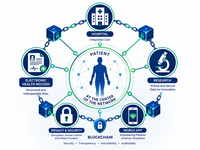
Background: Fragmentation of electronic health records in oncology hinders coordinated care, delays diagnoses, and limits therapeutic personalization. Blockchains promise to promote secure, interoperable, and patient-centered data governance; however, patient perceptions of blockchains remain underexplored, particularly in middle-income countries such as Brazil. Objective: We assessed opinions, attitudes, and willingness among patients with cancer to digitally share clinical information and the feasibility of applying blockchains to restructuring secure health data sharing in the Brazilian public health context. We had three research questions: (1) What is the level of digital health tool acceptance among patients with cancer in Brazil? (2) Which sociodemographic factors are associated with willingness to share health data? (3) Are blockchains feasible and acceptable for restructuring secure oncology data sharing? Methods: An exploratory, descriptive, cross-sectional self-report survey was conducted at Hospital Santa Izabel, a national oncology reference center in Salvador, Bahia, Brazil, between September and November 2023. A convenience sample of 110 outpatients with cancer was recruited systematically; data were collected via a self-administered questionnaire. The 20-item instrument, developed de novo and validated via expert panel and pilot testing, covered 5 content domains yielding 3 composite scoring domains: self-management, adherence, and governance. We used Cronbach α to assess internal consistency, independent 2-tailed tests, 1-way ANOVA, and Pearson correlations to compare domain scores across sociodemographic groups, and a chi-square goodness-of-fit test to examine trust proportions across recipient types. Results: We received sufficiently complete responses from 94.5% (104/110) of patients. The sample was predominantly female (63/98, 64.3%), self-identified as (mixed-race; 64/98, 65.3%), and lower income (55/96, 57.3% earned less than twice the minimum wage). Acceptance of technology was high: 86.4% (95/110) would use health apps and 89.1% (98/110) expressed interest in prevention-focused applications. Trust in data sharing varied significantly across recipient types (=210.4; <.001): 79.1% (87/110) trusted health care professionals, 51.8% (57/110) hospitals, 15.5% (17/110) the pharmaceutical industry, and 10% (11/110) the government. Anonymization and encryption significantly increased willingness to share (92/110, 83.6%). Younger patients (18‐59 years) showed significantly higher adherence scores than those aged ≥60 years (mean 76.49, SD 19.16 vs mean 65.83, SD 26.66; =2.29; =.02). Domain reliability was good to excellent (Cronbach α=0.8807 [adherence], 0.8504 [self-management], and 0.7576 [governance]). Conclusions: Patients with cancer in Brazil demonstrated high acceptance of digital health tools and openness to data sharing when privacy, security, and governance are guaranteed. This supports the feasibility of blockchain-based health data management systems, provided they incorporate patient-centered principles, digital inclusion strategies, and robust governance aligned with Brazilian regulations (the General Data Protection Law) and the Unified Health System (Sistema Único de Saúde) infrastructure. Importantly, patient support reflected acceptance of blockchain’s functional principles, data security, anonymization, and auditability rather than familiarity with the technology itself, a distinction with direct implications for future implementation studies. International Registered Report Identifier (IRRID): RR2-10.2196/89278
Omega 365 platform selected for Frimley hospital programme
Frimley Health NHS Foundation Trust has selected Omega 365’s system to support its major hospital development programme.
What will Burnham as PM mean for NHS IT?
Jon Hoeksma examines what two former health secretaries, Andy Burnham and Wes Streeting, running the country might mean for NHS IT investment.
Oxford AI studies secure NIHR funding to tackle NHS waiting times
Two studies have received funding from the National Institute for Health and Care Research (NIHR) as part of an £8 million initiative supporting AI projects aimed at reducing NHS waiting times and improving patient care. Through its Invention for Innovation (i4i) programme, the NIHR awarded £8,136,409 to six projects testing a range of AI and […]
Leveraging Self-Reporting in an Existing e-Cohort to Identify Clinically Relevant Mitral Valve Prolapse: Pilot Questionnaire Study
Background: Mitral valve prolapse (MVP) is a common valvulopathy associated, in a minority of cases, with heart failure, severe mitral regurgitation (MR), and sudden arrhythmic death. Digital tools hold promise for faster and more efficient recruitment of study participants into a large-scale MVP Registry. Objective: This study sought to evaluate the feasibility of surveying participants in an existing e-cohort to identify and clinically characterize MVP cases based on self-reporting and to recruit them in an MVP Registry at the University of California, San Francisco. Methods: We surveyed Northern Californian participants of the Health eHeart Study, a large e-cohort using the Eureka digital research infrastructure, about a prior diagnosis of MVP. MVP-positive respondents were asked to provide relevant medical records to confirm their eligibility and were invited to enroll in an MVP Registry if evidence of MVP was confirmed. A follow-up survey was sent after 1 month and after 5 years to collect data about clinical outcomes, including arrhythmias and the need for mitral valve repair. Results: The survey was delivered to 5746 participants, and 520 completed responses were collected. A prior diagnosis of MVP was self-reported by 16.3% (85/520) of respondents. Echocardiograms were obtained from 51.8% (44/85) of participants, and evidence of MVP was confirmed in 32.9% (n=28) of individuals, all of whom joined the registry. Participants with more severe MR had a higher number of correct responses regarding both MVP (odds ratio [OR] 10.58, 95% CI 3.58‐63.04; <.001) and MR diagnosis (OR 4.86, 95% CI 2.11‐16.14; =.002). Longitudinal data were available from most patients through responses to a follow-up survey sent 1 month and 5 years later (18/28, 64.3% and 17/28, 60.7% of MVP confirmed respondents, respectively). Among the patients with electronic health records available, 75% (3/4) had a correct self-reported diagnosis of arrhythmia. Conclusions: e-Cohort methods with self-reported clinical data can be used to prescreen candidates for a research study of MVP. These methods can rapidly identify and retain, among many cases of benign MVP, the minority with clinically relevant presentations such as significant MR and ventricular arrhythmias. These cases may be missed, especially when asymptomatic, by small-scale clinic-based recruitment or family screening methods.

STAT+: U.S. health spending rose sharply in 2025, thanks to GLP-1 use and more care
Americans are seeing their doctors, getting hospital procedures, and filling prescriptions more frequently than economists and budget experts anticipated. Weight loss drugs, in particular, have morphed into their own special category of spending and are pushing budgets across the country to their limits.
Combining an increased amount of care with the country’s high baseline of prices has resulted in the health care system taking up more of the economy, new data show — findings that again reflect people’s widespread discontent with how unaffordable health care has become.
The country spent $5.7 trillion on health care in 2025, a 7.3% increase from 2024, according to the latest government figures published in the journal Health Affairs on Wednesday. That amounted to almost $16,500 per person.
Predictive Modeling of Enterovirus Hospital Burden Using Machine Learning and Age-Specific Surveillance Data: Operational Forecasting in Taiwan During the Postpandemic Era
Background: Enterovirus infections cause substantial pediatric morbidity worldwide, with severe cases requiring hospitalization. Accurate forecasting of hospitalization burden supports proactive resource allocation and clinical preparedness. During the postpandemic period (2023‐2024), Taiwan experienced a resurgence of enterovirus activity following COVID-19–related suppression, although at levels below prepandemic baselines, creating unique operational forecasting challenges. Objective: This study aimed to develop and validate random forest models for 1-week-ahead enterovirus hospitalization forecasting using postpandemic surveillance data and to evaluate the impact of epidemiological regime alignment on predictive performance. Methods: We analyzed weekly enterovirus surveillance data from Taiwan’s Centers for Disease Control covering 2023 to 2024, including outpatient, emergency department, and hospitalization counts stratified by five age groups (0‐2, 3‐4, 5‐9, 10‐14, and ≥15 y). Random forest models were trained on data from 2023 week 1 to 2024 week 40 (n=91 wk after lag preprocessing) and validated on a temporally independent test set covering 2024 weeks 41 to 52 (n=11 wk). Feature engineering incorporated age-specific indicators, 1‐ to 4-week temporal lags, seasonal variables, and derived epidemiological ratios. Results: The random forest model achieved strong 1-week-ahead forecasting performance on the test set (²=0.216, root mean square error 23.5 hospitalizations per week, mean absolute percentage error 17.27%). Age-specific outpatient visits among children aged 0 to 2 and 3 to 4 years were the most influential predictors (feature importance=0.0839 and 0.0908, respectively), followed by seasonal week-of-year effects (feature importance=0.0803). The mean absolute error was 17.6 hospitalizations per week, demonstrating practical utility for hospital capacity planning. Test-period hospitalizations averaged 126.5 cases per week, representing a 3.4-fold increase from pandemic suppression levels (28.4 cases per week during 2020‐2022) while remaining 24% below prepandemic baselines (165 cases per week during 2008‐2019). Conclusions: Machine learning models trained on recent postpandemic surveillance data provide useful short-term forecasts of enterovirus hospitalization burden in Taiwan. A mean absolute percentage error of 17.27% represents reasonable accuracy for 1-week-ahead hospital resource planning. Age-specific pediatric outpatient surveillance offers valuable early signals for hospitalization forecasting, supporting the integration of such models into routine public health practice during postpandemic recovery.
<img src="https://jmir-production.s3.us-east-2.amazonaws.com/thumbs/4b565965def619d0610c3371f9fb9396" />
National NHS leaders join Summer Schools 2026 speaker line-up
Three national NHS leaders shaping the future of digital health have been confirmed for Summer Schools 2026, which takes place on 16-17 July.
Yasmeen: ‘We’ve made sense of the 10 year plan’s vision’
The absence of a delivery chapter in the NHS 10 year plan drew criticism when it was launched last summer, but it hasn’t been a problem for Salma Yasmeen.