German researchers who run a self-driving laboratory have created an agentic AI wizard to help their students rapidly design and implement new processes.
The wizard, which uses N8N software, can guide a student through establishing experiments without the need for coding, allowing them to quickly set up a new process.
According to Matthias Franzreb, PhD, a professor and departmental leader in bioengineering and biosystems at the Karlsruhe Institute of Technology, developing wizards could help any autonomous laboratory where the experimental setup needs to change fast.
“Each of our bachelor’s and master’s students has their own type of experiment and, in the beginning, going into Python scripting, it used to take two months to have the whole thing programmed,” he says.
By contrast, he says, the AI agent can help the student develop a new process within one or two days. It has so far been used to develop around six processes, he says, for a slightly larger number of students, as the same template can be used more than once.
Bioprocessing, like many other areas of human endeavor, is experiencing disruptive change with the growing use of digital tools at both the laboratory and commercial scale, Franzreb explained in a talk at Bioprocessing Summit Europe.
Among these changes is the difference between classical labs, which have automated equipment, such as liquid handling stations, but where scientists must design and set up their own experiments, and self-driving labs. In the latter, he explains, machine learning uses a first set of experiments to autonomously decide what experiments should be next.
In his talk, Franzreb also showed how a wizard could be used for designing a chromatography experiment. An experiment was set up to determine batch parameters at a small-scale in 96-well plates. From this, the software used a chromatography simulation to find the optimal conditions for the experiment and then ran it in a real chromatography system to validate the results.
According to Franzreb, the next step for the self-driving laboratory will be working with the German Research Center for Artificial Intelligence (DFKI) and other research partners to develop ontological capabilities for the wizards so they can extract context for the experiments from Standard Operating Procedures (SOPs) or the academic literature.
“I think this is simple in principle,” he explains. “But at the moment we don’t have it, and it will be a challenge to roll out.”
Cosmo Pharmaceuticals says it plans to file for FDA approval of its androgenetic alopecia (AGA) candidate clascoterone 5% topical solution early next year, after the androgen receptor inhibitor generated 12-month Phase III data showing statistically significant continued hair growth as well as positive safety for chronic use.
Data from Cosmo’s Phase III program for clascoterone confirmed the drug’s long-term safety profile was comparable to vehicle, supporting suitability for chronic use in a lifelong condition. Clascoterone also showed a novel mechanism designed to target the underlying biology of hair loss and continued efficacy with ongoing use, Cosmo said.
A total of 1,465 patients were enrolled in the Phase III program, the largest for any topical treatment candidate for male AGA, according to Cosmo. The program consists of the SCALP 1 (NCT05910450) and SCALP 2 (NCT05914805) trials, which evaluated patients across 51 study centers in the United States and Europe.
Patients who remained on continuous clascoterone treatment for the full 12 months achieved a statistically significant 239% improvement in Target Area Hair Count (TAHC) compared with patients who received clascoterone for six months and were then switched to vehicle from month 7 to month 12, according to Cosmo.
That’s down slightly from the 252% improvement in TAHC shown for clascoterone versus “vehicle” or placebo in Cosmo’s six-month results, released in December. Cosmo Pharma CEO Giovanni Di Napoli told GEN that the 6- and 12-month results were not directly comparable due to differences in Part 1 and Part 2 of the Phase III placebo-controlled program and the corresponding patient groups being compared.
Part 1 is a double-blind study assessing if clascoterone was effective and safe compared to placebo when applied twice daily for up to six months. Part 2 is a single blind study that measured clascoterone’s long-term safety and efficacy versus placebo for an additional six months in patients who had responded to the study drug in Part 1. During Part 2, participants were re-randomized to receive either clascoterone 5% solution or vehicle solution.
SCALP 1 enrolled 702 patients in the United States, while SCALP 2 enrolled 763 patients in the Unites States as well as Germany and Poland.
Primary outcome measures
Change in vellus TAHC (hair of up to 30 micrometers in diameter) from baseline was the trials’ primary outcome measure, paired with a patient-reported outcome assessing participants’ perception of hair growth improvement.
Additional assessments of the trials included investigator-reviewed global scalp photography and secondary endpoints that included changes in non-vellus TAHC (thicker, pigmented hair >30-40 micrometers in diameter), and changes in subject’s assessment of satisfaction score.
Patients treated with clascoterone for 12 months reported a statistically significant +24.5% relative improvement in treatment satisfaction versus vehicle groups, according to Cosmo. The clascoterone users also reported positive ease of use and product acceptability at month 12—results that according to the company support positive real-world usability and long-term adherence potential for the drug.
Cosmo said it plans to submit its full Phase III dataset for publication in a leading peer-reviewed medical journal and present its findings at future major dermatology congresses.
‘Defining moment’
“These 12-month Phase III results mark a defining moment for clascoterone and for the treatment of male hair loss,” Di Napoli stated. “We are now seeing the combination that matters most: positive long-term safety, statistically significant continued hair growth through one year, and clear evidence that ongoing treatment drives sustained benefit.”
Investors responded to the positive 12-month data by sending Cosmo shares traded on the SIX Swiss Exchange rising 6% on the day of the announcement, from CHF95.50 ($122.69) to CHF101.40 ($130.27) on April 15. Since then shares have fluctuated in the high CHF 90 range, closing Monday at CHF 98.50 ($126.55).
Di Napoli said clascoterone has the potential to emerge as a major new therapeutic option and a highly valuable growth platform for Cosmo by tackling the most common cause of hair loss in men. Androgenetic alopecia, also called male pattern hair loss, affects approximately 40% of men worldwide—including 39% of males in the United States (65 million men).
“We are moving with urgency toward regulatory submissions and commercialization discussions,” Di Napoli added.
Cosmo’s results “likely now enable more advanced partnership discussions, in our view, with detailed presentation of results the next step to fully de-risk the asset,” Benjamin Jackson, equity analyst with Jefferies, wrote April 15 in a research note.
Jackson predicted clascoterone could generate $4 billion in peak-year worldwide sales.
“Our $4 billion WW potential peak sales require just 4% penetration of treated and 6% penetration of untreated men at peak, assuming a capable commercial partner is successfully found,” Jackson added.
Cosmo said it is preparing to submit not only an NDA for clascoterone in the U.S., but a marketing authorization application to the European Medicines Agency.
Clascoterone’s 1% formulation is already FDA-approved and marketed as Winlevi® for topical treatment of acne vulgaris in patients ages 12 and older.
NEWS RELEASE: Freudenberg Medical launches CleanAssure, an ISO class 5 controlled cleanroom for sterile single-use assemblies New controlled cleaning and sterilization service supports biopharma customers with ready-to-use single-use assemblies Kaiserslautern, Germany — Freudenberg Medical, a global contract design and manufacturing partner to the medical device and biopharma industry, announced the launch of CleanAssure, a new ISO…
In the past, even with an icebreaker and during peak melt season, getting to the North Pole wasn’t a sure bet. It took favorable winds to crack the frozen ocean surface, and ships had to fight through ice that had grown many meters thick over several winters. In the summer of 2025, though, Jochen Knies from the Arctic University of Norway, Tromsø, and his team met little resistance on their way to 90 degrees North with the research vessel Kronprins Haakon. The geologist “didn’t hear the usual grinding of ice” against the hull that he remembered from 1996, when he first reached the pole by ship. Instead, thin floes and large stretches of open water made for an easy, quiet passage. To him, it was “a reminder of how quickly the Arctic is changing.”
Since the late 1970s, when satellite observations of the polar seas began, summer ice cover of the Arctic Ocean has declined by more than 40%. In less than half a century, a frozen area the size of the Mediterranean Sea has turned into blue open water with the rapid warming of the high northern latitudes. If this trend continues, there could soon be summers at the North Pole with no sea ice whatsoever. The last time this happened may have been some 120,000 years ago. But no one knows for certain.
That’s why Knies and his colleagues, a team of researchers from Norway and Germany, set out from Svalbard to the central Arctic last August. The aim of their five-week mission was to determine whether this region had been ice-free in recent Earth history—and if so, when. As part of a €12.5 million project financed by the European Union, they also came to answer some questions about the future of the Arctic and beyond: How does the loss of sea ice affect the marine ecosystem? What are the consequences for ocean circulation and global climate?
In search of clues, the expedition collected sediment cores up to 22 meters in length at different locations across the Arctic seafloor. Marine sediments are valuable climate archives that give scientists a window into bygone eras. Like diligent record keepers, they can log past water temperatures, sea-ice coverage, and the strength of ocean currents. These data are encrypted in the chemical and physical properties of the plankton remains and weathered rock deposited on the seabed.
The ship’s crew and researchers recover the sediment corer, a 25-meter-long steel pipe that is driven into the seafloor using a top weight of more than three metric tons.
TIM KALVELAGE
Together, the scientists pull out long plastic pipes filled with precious deep-sea mud.
TIM KALVELAGE
The pipes are cut into shorter pieces and split in half before being processed in the ship’s laboratories. Each of these one-meter sections covers several tens of thousands of years of Earth’s history.
TIM KALVELAGE
While sediment cores several meters long had been recovered on earlier expeditions in the central Arctic, there is no scientific consensus on how old the deposits actually are or whether sea ice ever completely disappeared in summer.
To decode the Arctic’s climate archive, Knies brought a team of experts from various disciplines onboard the Kronprins Haakon to dig deeper and obtain fresh samples they could subject to the latest analytical techniques.
Samples await paleomagnetic dating. Like tiny compass needles, iron-rich particles align with Earth’s shifting magnetic field as they settle on the seabed. By measuring their orientation, researchers can estimate the age of the different sediment layers.
TIM KALVELAGE
Under the microscope, PhD student Paulina Romel picks shells of unicellular foraminifera from a sample. The chemical composition of these microfossils can give clues about the age of the sediment and the surface water temperature when the organisms were still alive. “These are really cool creatures!” says Romel.
TIM KALVELAGE
Agathe Ollive, a geochemist from the Alfred Wegener Institute in Germany, takes water samples from a CTD rosette, an instrument package that measures conductivity (salinity) and temperature at various depths. She uses certain elements to trace the inflow of fresh water and seawater from rivers and adjacent ocean basins into the Arctic. “I didn’t expect there to be so little ice up here,” Ollive says. She is worried about how the Arctic will look 20 years from now.
TIM KALVELAGE
Some of this work was done while the researchers were still at sea. Now, at their home laboratories, they are finalizing their analysis of the seafloor samples. One important task is dating the sediments, which may be up to 2 million years old. The team uses a combination of methods to do this, including measuring magnetization, the decay of radioactive elements, and the exposure of mineral grains to sunlight before sinking to the depths. Once they can place them on a timeline, the materials in the cores will help researchers paint a picture of what the Arctic Ocean looked like in times that were warmer than today. For example, the presence or absence of the molecule IP25, which is produced exclusively by ice algae, could tell them how far the sea ice receded at a given time.
Toward the end of the expedition, the Kronprins Haakon passes this iceberg near the northeast coast of Greenland.
TIM KALVELAGE
At the end of the study, the team hopes to have data that could improve climate projections for a future ice-free “blue Arctic,” helping us understand how it could affect marine life and carbon storage, Atlantic Ocean circulation, or extreme weather events in Europe and North America.
Tim Kalvelage is a freelance science reporter based in Bremen, Germany, who focuses on climate, ocean, and polar research. He has been to the North Pole twice.
Freudenberg Medical, a Kaiserslautern, Germany-based contract design manufacturing partner, launched CleanAssure, a new ISO Class 5 controlled cleanroom designed to deliver clean and sterile single-use assemblies for biopharmaceutical customers, according to the company.
Freudenberg Medical manufactures silicone and thermoplastic elastomer (TPE) tubing for bioprocessing and critical fluid transfer. The company specializes in seamless, overmolded single-use assemblies used in vaccine production, cell cultivation, fluid transfer, and fill-finish operations.
The controlled cleanroom enables customers to receive ready-to-use washed, dried, and gamma sterilized single-use assemblies with the highest product quality, sterility, and process consistency, noted Rudi Gall, vp, global pharma, Freudenberg Medical.
“CleanAssure allows us to support our customers beyond component manufacturing,” he said. “By integrating controlled cleaning and sterilization into our single-use assembly services, we help reduce contamination risk, streamline validation activities, and support a reliable supply for our customers. We can now support customers with their entire component value chain and allow them to focus on their core manufacturing capability.”
Freudenberg’s cleaning process uses ultrapure water and air, operating within ISO 5 conditions. The water is produced using a multi-stage filtration process, resulting in high-purity water specifically suitable for pharmaceutical applications.
Key biopharma industry challenges
Biopharmaceutical manufacturers increasingly rely on single-use systems but face ongoing challenges related to cleaning validation, contamination risk, and production downtime. Customer-managed cleaning processes are often time-intensive, costly, and require additional resources while directly impacting supply reliability, according to Gall.
The company explained that its controlled cleaning environment addresses these challenges by reducing cross-contamination risk through tightly controlled ISO Class 5 processing; alleviating customer cleaning validation burden by delivering assemblies washed and sterilized under cGMP, validated conditions; minimizing production downtime by removing cleaning as a process step; and supporting a consistent, reliable supply of high-quality single-use assemblies.
Freudenberg will be attending INTERPHEX New York, April 21–23, Booth 1673, to exhibit its new products and services.
This is today’s edition of The Download, our weekday newsletter that provides a daily dose of what’s going on in the world of technology.
No one’s sure if synthetic mirror life will kill us all
In February 2019, a group of scientists proposed a high-risk, cutting-edge, irresistibly exciting idea that the National Science Foundation should fund: making “mirror” bacteria.
These lab-created microbes would be organized like ordinary bacteria, but their proteins and sugars would be mirror images of those found in nature. Researchers believed they could reveal new insights into building cells, designing drugs, and even the origins of life.
But now, many of them have reversed course. They’ve become convinced that mirror organisms could trigger a catastrophic event threatening every form of life on Earth. Find out why they’re ringing alarm bells.
—Stephen Ornes
This story is from the next issue of our print magazine, which is all about nature. Subscribe now to read it when it lands this Wednesday.
Chinese tech workers are starting to train their AI doubles—and pushing back
Earlier this month, a GitHub project called Colleague Skill struck a nerve by claiming to “distill” a worker’s skills and personality—and replicate them with an AI agent. Though the project was a spoof, it prompted a wave of soul-searching among otherwise enthusiastic early adopters.
A number of tech workers told MIT Technology Review that their bosses are already encouraging them to document their workflows for automation via tools like OpenClaw. Many now fear that they are being flattened into code and losing their professional identity.
In response, some are fighting back with tools designed to sabotage the automation process.
I’ve combed the internet to find you today’s most fun/important/scary/fascinating stories about technology.
1 The White House and Anthropic are working toward a compromise The Trump administration says they had a “productive meeting.” (Reuters $) + Trump had ordered US agencies to phase out Anthropic’s tech. (Guardian) + Despite the blacklist, the NSA is using Anthropic’s new Mythos model. (Axios)
2 Palantir has unveiled a manifesto calling for universal national service While denouncing inclusivity and “regressive” cultures. (TechCrunch) + It’s a summary of CEO Alex Karp’s book “The Technological Republic.” (Engadget) + One critic called the book “a piece of corporate sales material.“ (Bloomberg $)
3 Germany’s chancellor and largest company want looser AI rules Chancellor Merz said industrial AI needs more regulatory freedom. (Reuters $) + Siemens says it plans to shift investments to the US if EU rules don’t change. (Bloomberg $) + Fractures over AI regulation are also emerging in the US. (MIT Technology Review)
4 Nvidia’s once-tight bond with gamers is cracking over AI Consumer graphics cards are no longer the priority. (CNBC) + But generative AI could reinvent what it means to play. (MIT Technology Review)
5 Insurers are trying to exclude AI-related harms from their coverage And escape legal liability for AI’s mistakes. (FT $) + AI images are being used in insurance scams. (BBC)
6 AI is about to make the global e-waste crisis much worse And most of the trash will end up in non-Western countries. (Rest of World) + Here’s what we can do about it. (MIT Technology Review)
7 Tinder and Zoom have partnered with Sam Altman’s eye-scanning firm To offer a “proof of humanity” badge to users. (BBC)
8 Islamist insurgents in West Africa are driving surging demand for drones A Nigerian UAV startup is opening its first factory abroad in Ghana. (Bloomberg $)
9 Hundreds of fake pro-Trump AI influencers are flooding social media In an apparent bid to hook conservative voters. (NYT)
10 A Chinese humanoid has smashed the human half-marathon record Despite crashing into a railing near the end of the race. (NBC News) + Chinese tech firm Honor swept the podium spots. (Engadget) + Last year, humans won the race by a mile. (CNN)
Quote of the day
“This is the only issue where you’ve got Steve Bannon and Ralph Nader, Glenn Beck and Bernie Sanders fighting for the same thing.”
—Ben Cumming, head of communications at the AI safety nonprofit Future of Life Institute, tells the Washington Post that diverse public figures are endorsing a declaration of AI policy priorities.
One More Thing
NASA
The great commercial takeover of low Earth orbit
The International Space Station will be decommissioned as soon as 2030, but the story of America in low Earth orbit (LEO) will continue.
Using lessons from the ISS, NASA has partnered with private companies to develop new commercial space stations for research, manufacturing, and tourism. If they are successful, these businesses will bring about a new era of space exploration: private rockets flying to private destinations.
They will also demonstrate a new model in which NASA builds infrastructure and the private sector takes it from there—freeing the agency to explore deeper and deeper into space. Read the full story.
—David W. Brown
We can still have nice things
A place for comfort, fun and distraction to brighten up your day. (Got any ideas? Drop me a line.)
Research presented at ESCMID Global 2026 in Munich has shown that antibiotic resistance genes (ARGs) can be present in newborns within the first hours of life, with the newborn gut becoming colonized before, during, or recently after delivery.
Meconium, the first stool passed by newborns, was traditionally thought to be sterile, explained study lead Elias Iosifidis, MD, PhD, from Aristotle University of Thessaloniki in Greece. However, recent molecular studies have detected microbial genetic material in meconium samples, indicating that the neonatal gut may be exposed to bacteria during pregnancy.
It has been suggested that this early microbial exposure could contribute to the development of antibiotic resistance. Indeed, ARGs have been detected in meconium samples, and their presence at this early stage may facilitate the spread of resistance through horizonal gene transfer between bacteria.
To investigate further, Iosifidis and colleagues screened 105 meconium samples that were collected from newborns admitted to a neonatal intensive care unit within 24 hours of birth for 56 different resistance genes associated with commonly used antibiotics.
“This is the largest study of its kind exploring the effect of hospital environment on the collection of ARGs in the neonatal gut,” said lead author Argyro Ftergioti. “We analyzed meconium samples within the first 72 hours of life to capture the earliest snapshot of microbial and genetic exposure in newborns. At this stage, the collection of resistance genes is mainly shaped by maternal transmission, delivery mode, and very early hospital exposures.”
The most frequently detected ARGs were oqxA, a gene that causes resistance to fluoroquinolones (like ciprofloxacin), olaquindox, chloramphenicol, and tigecycline, and qnrS, which contributes to decreased susceptibility to quinolones. These were found in 98% and 96% of samples, respectively.
The study also identified several genes encoding beta-lactamases, enzymes that cause resistance to beta-lactam antibiotics such as penicillins and cephalosporins. Among these, the most prevalent were blaCTXM (55%), blaCMY (51%), and blaSHV (39%). Genes linked to carbapenem resistance (KPC/NDM/GES/VIM), a last-line class of antibiotics, were detected in 21% of samples.
Each sample contained a median of eight resistance genes.
“This finding suggests that a pattern of ARGs is already established at this stage. The neonatal gut harbors a diverse resistome, and the presence of clinically important ARGs so early in life is concerning,” said Ftergioti. “Although some ARGs were expected, their high prevalence across the majority of samples was striking—particularly for clinically critical genes offering carbapenem resistance.”
The team also found associations between resistance genes and several maternal and neonatal factors. The presence of the msrA (macrolide-streptogramin resistance) gene was linked with maternal hospitalization during pregnancy, while a higher number of resistance genes was associated with central venous catheter placement within the first 24 hours of life. Both findings likely reflect exposure to healthcare-associated microbes in hospital settings.
“Surprisingly, resuscitation shortly after birth was associated with fewer resistance genes,” noted Ftergioti. He cautioned, however, that “this finding should be interpreted carefully, as it may reflect differences in early microbial exposure or other clinical factors.”
Overall, the data suggest that both maternal transmissions and early exposure to the hospital environment may contribute to the establishment of ARGs in the neonatal gut.
“While further research is needed to understand how early carriage of resistance genes affects microbiome development and infection risk, these findings highlight the importance of surveillance, infection prevention and control in neonatal care,” Ftergioti concluded.
The genomics community’s long wait for 10x Genomics’ highly anticipated news is finally over. On Saturday night, at the Hard Rock Café Hotel in San Diego—across the street from the American Association for Cancer Research (AACR) conference—the company hosted the “Impossible” party to announce its new spatial instrument—the Atera.
Serge Saxonov, PhD, CEO of 10x Genomics, walking onto the stage to thunderous applause, noted that there is “a gap between what we need to see and what we have been able to measure.” The Atera, which enables whole-transcriptome spatial biology at scale, “obliterates the typical trade offs” that come with existing spatial tools, he said.
“This is the biggest launch in our history. I am the most excited I’ve ever been about any product, or any product category, across the board,” Saxonov told GEN. “It has been a long time in development, and it is what we have known the world needs for a long time. I think it will fundamentally change how we measure and understand biology, and it really puts research on a new trajectory. It is really exciting to be at a place now where we can deliver it to the world.”
Nuts and bolts
Atera offers more plex, throughput, and sensitivity than 10x Genomics’ Xenium—enabling whole-transcriptome at scale. More specifically, when compared to Xenium, Atera has four times the throughput, six times higher plex capacity for targeted assays, 3.6x higher plex, and 2–3x sensitivity for whole transcriptome assays.
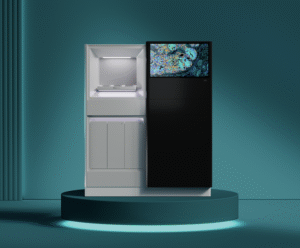
10x Genomics Atera
The price for Atera is $495,000, and the instrument measures roughly 53” x 36” x 64” or (4.42 ft × 3 ft × 5.33 ft). Orders are currently being taken, and the instrument will be available in the second half of this year.
The instrument can run up to 800 1 cm2 whole transcriptome samples (FFPE and fresh frozen) per year, with flexible run configurations, and a greater than 5 cm² imageable area per slide (for greater than 2,000 mm² total tissue per run when using all four slides.)
There are 18,000-genes on the Atera WTA (whole transcriptome) with stackable customization of 1,000-gene Atera Select panels available now, and optional stacking of up to three 1,000-gene panels coming in the future.
“Spatial genomics with whole-transcriptome profiling capabilities is the ultimate approach to measure single cells in their tissue context,” Holger Heyn, PhD, ICREA professor at the Centro Nacional de Análisis Genómico (CNAG) and member of the Human Cell Atlas, added. “All other lower-plexity approaches have been just a warm-up phase leading to this application.”
Jasmine Plummer, PhD, associate member of the St. Jude Faculty and director of the Center for Spatial OMICs points out that the whole transcriptome, while exciting, can bring a big “sticker shock” for many researchers because it will require a lot more probes in contrast to a sequencing-based platform, where a library accesses all of the genes.
The instrument uses standard glass microscopy slides, which is exciting to Plummer. In the past, she said, slides have posed a challenge when coordinating with other researchers, and using regular slides will be more “pathology friendly.”
An end to tradeoffs?
Existing spatial technologies, which are still relatively nascent in genomics, have been constrained by tradeoffs between plex, resolution, and throughput. Researchers have had to make choices and prioritize.
“In general, with the landscape as it is today, there is a tradeoff,” Nick Banovich, PhD, VP of scientific development at TGen, and professor of bioinnovation and genome sciences division and director of the Center for Spatial Multi-Omics (COSMO), told GEN. “The closer you walk toward whole transcriptome, the lower the per gene sensitivity.”
“The most exciting thing [about Atara],” he continued, “is that there is still quite good sensitivity with whole transcriptome breadth. That’s the huge advantage of this system; there is no tradeoff anymore.”
However, this launch comes just over three years after Xenium’s launch. Purchasing a new instrument so soon may pose a challenge. Plummer notes: “In this economy, with the uncertainty of scientific funding, it is concerning to ask customers—many of whom just landed a machine—to spend another several hundred thousand dollars.”
Why AACR?
Oncology is one of the most exciting, most promising applications of spatial, especially in the near term, noted Saxonov. This is, in large part, because the work exists across the spectrum—from basic discovery to translation to clinical applications. Spatial is unambiguously important, he asserted.
Unveiling at AACR “just made a lot of sense.”
In addition to the party, the company will host a digital launch event on Tuesday, April 21. Within the AACR program, a presentation from the German Cancer Research Center (DKFZ) will include data generated on the platform, highlighting Atera’s ability to uncover cancer biology not accessible with legacy approaches. Researchers distinguished multiple malignant and stem cell states across disease stages, within a single colorectal tumor sample, and mapped how these populations interact with the surrounding immune microenvironment. The data reveal a more complex immune landscape that could inform future therapeutic strategies and drug development. In addition, two posters (#7116, #6216) will include data from Atera.
The future
10x Genomics said that Atera will play a role in advancing large data studies. For example, the company noted that Atera will enable the goal of the Human Cell Atlas (HCA) as it continues its mission to map every cell type in the human body.
“With the Human Cell Atlas entering its next phase of generating spatially resolved atlases, whole-transcriptome approaches will be the workhorse for data generation,” Heyn told GEN.
“I am excited to see the Atara platform being launched now,” he added. “It is very timely as we ramp up production for the Human Cell Atlas 2.0 phase.”
Atera’s future
The company presented a roadmap with future plans at the AACR event, highlighting spatial proteomics, automation, base by base sequencing (a de novo sequencing assay) and software improvements.
Atera, Saxonov told GEN, is a fundamental platform that the company will continue enabling. It lays the groundwork for the next decade of research and work. This point in time, he said, feels similar to the early days of next generation sequencing (NGS). And although the company will continue to develop its other platforms and product lines, Atera has “massive amounts of headroom to keep building on top of it. It is the convergence of all these different technology stacks and different fields onto one.”
“What the platform can do right out of the gate is exciting. And all the things that it can do in the future will be really, really exciting,” he asserted.
Results from a large U.K. study show that vaccination against respiratory syncytial virus (RSV) at least two weeks before giving birth has a significant protective effect against hospitalization for this infection in babies born to these mothers.
As reported at the congress of the European Society of Clinical Microbiology and Infectious Diseases in Munich this week, the researchers found that vaccination reduced a baby’s risk of being admitted to hospital with serious RSV lung infections in the first months of life by around 80% versus no vaccination.
Notably, the benefit from vaccination increased if mothers were vaccinated at least four weeks before the baby was born, although even if they received the vaccine 10-13 days before delivery the risk of hospitalization for their babies in subsequent months still went down by 50%.
“As the largest study to date examining the impact of this vaccine on infant hospitalization, these findings provide robust evidence that vaccination offers substantial protection against severe illness in young infants,” commented lead author and UK Health Security Agency epidemiologist Matt Wilson in a press statement.
“We found a clear relationship between timing and protection, with effectiveness increasing as the interval between vaccination and birth lengthens, reaching close to 85% when vaccination occurs at least four weeks before delivery.”
After a national RSV vaccination campaign for pregnant women began in the U.K. in September 2024, around 55% coverage was reached by December of the same year. In total, 289,399 infants born between September 2024 and March 2025 were included in the cohort of which around 55% were vaccinated via maternal exposure. Vaccination was considered ‘full’ if mothers received it at least 14 days before giving birth.
The team followed up the babies for around three months after birth to monitor for RSV-associated lower respiratory tract infections requiring hospitalization, which affected a total of 4,594 babies.
Overall, unvaccinated babies had around seven times the rate of RSV‑related hospital admissions compared with babies whose mothers were vaccinated during pregnancy. Preterm infants also benefitted significantly from the vaccine.
“These findings are particularly important for preterm infants, who are among the most vulnerable to severe RSV infection,” said Wilson. “With sufficient time between vaccination and birth, we saw good levels of protection in these babies. Giving the vaccination early in the third trimester, as recommended by the World Health Organization, could protect most preterm infants.”
SPT Labtech and the European Molecular Biology Laboratory’s Genomics Core Facility (EMBL GeneCore) in Heidelberg, Germany, agreed to collaborate to advance fully walkaway automated genomics workflows. As part of the collaboration, SPT Labtech’s firefly®+ all-in-one liquid handling platform has been installed at EMBL GeneCore.
Officials at EMBL GeneCore say they will expand the facility’s capacity to develop new protocols and further validate and optimize existing workflows for challenging applications such as low-input and metagenomics samples to support the broader genomics community. The SPT platform is designed to simplify complex genomics workflows, combining pipetting, dispensing, incubating, and shaking technologies into a single instrument.
The automated protocols use New England Biolabs (NEB) library preparation kits, NEBNext®, to generate libraries from a wide input range. According to a SPT spokesperson, the installation of the company’s firefly+ platform at EMBL GeneCore, combined with NEB kits, creates strong foundation for fully walkaway automation, enabling more streamlined, end-to-end workflows and supporting labs to scale automation more easily.
“The installation of SPT Labtech’s firefly+ platform as part of our collaboration underscores our commitment to remain at the forefront of scientific innovation. Fully walkaway automation will address key bottlenecks in genomics workflows, helping us develop high-quality, scalable NGS protocols,” says Vladimir Benes, head of EMBL GeneCore.
“Our latest collaboration with EMBL GeneCore marks a significant step towards advancing fully walkaway automation, providing end-to-end genomics workflows for a much wider range of applications, including environmental and rare species research,” adds Morten Frost, CCO, SPT Labtech.
“Integration of our library prep kits with SPT Labtech’s firefly+ platform at EMBL GeneCore creates a compelling opportunity for faster, scalable DNA and RNA-Seq workflows,” notes Bjoern Textor, PhD, sales and senior applications manager, New England Biolabs.